
Chemical Engineering Tutoring: A Path to Academic Success

Personalized chemical engineering tutoring (online or in-person) can yield major learning gains, confidence, and improved grades. Studies show targeted one-on-one help advances students by months of progress.
Why Tutoring Matters in Chemical Engineering
Imagine you’re a high school or college student named Maya, juggling calculus equations and chemistry labs while tackling her first chemical engineering course. Subjects like thermodynamics, fluid mechanics and reaction kinetics can feel overwhelming when you’re learning on your own. When students like Maya face these tough topics, one-on-one help from a tutor or experienced teacher can make a big difference.
Indeed, research backs this up: high-impact tutoring can boost student learning by months. For example, studies show targeted one-on-one help can increase learning outcomes by roughly 3 to 15 months, and one UK analysis found about five months of extra progress in a year of tutoring.
To understand why this extra progress is so crucial, we have to look at the unique curriculum burden you face. Chemical engineering isn’t just one subject—it is the simultaneous mastery of three heavy disciplines:
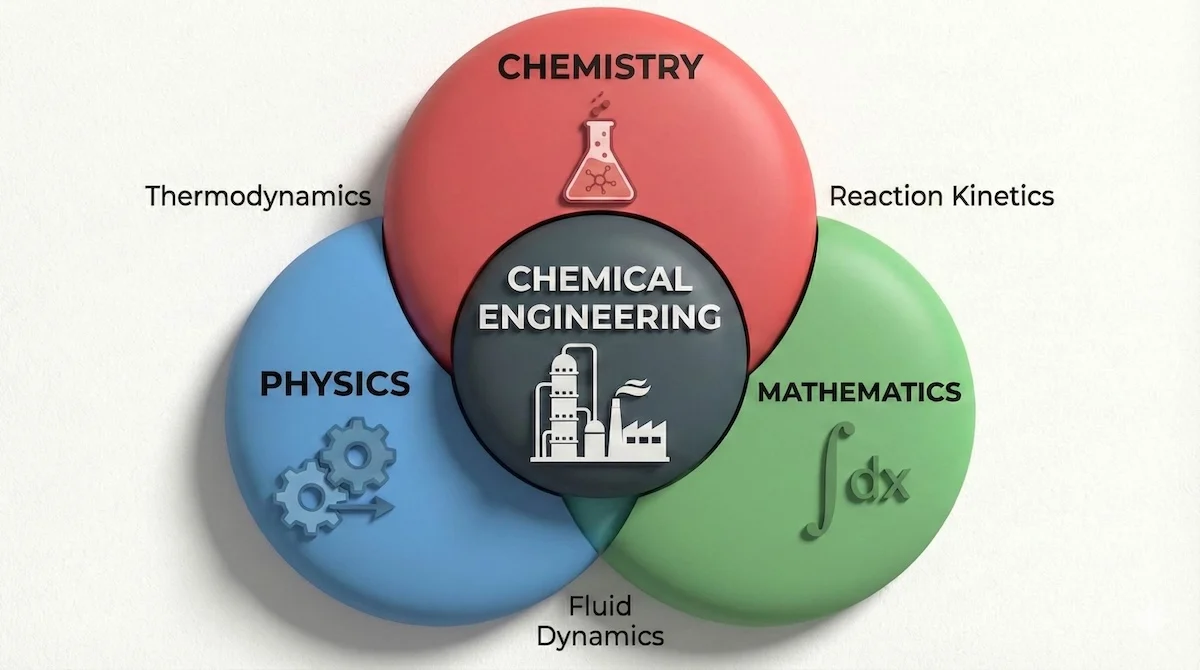
Chemical engineering combines three difficult disciplines, which is why personalized support often becomes necessary.
When these three fields collide, the complexity increases exponentially. A tutor helps navigate the specific ‘danger zones’ where these subjects overlap, like thermodynamics and kinetics.
In practice, personalized tutoring sessions help clarify complex equations, reinforce concepts, and guide students through homework, boosting both understanding and confidence.
The Benefits of Chemical Engineering Tutoring
Understanding the benefits of tutoring is key for students and parents. A skilled tutor or teacher can turn challenging problems into clear steps. Some core advantages include:
- Personalized Learning: One-on-one sessions allow a tutor to focus on a student’s specific needs. For example, if you struggle with a particular equation or theory, a chemical engineering tutor can slow down and re-explain that concept until it’s understood.
This fundamental difference between the standard classroom approach and the personalized tutoring experience is best understood when compared directly.
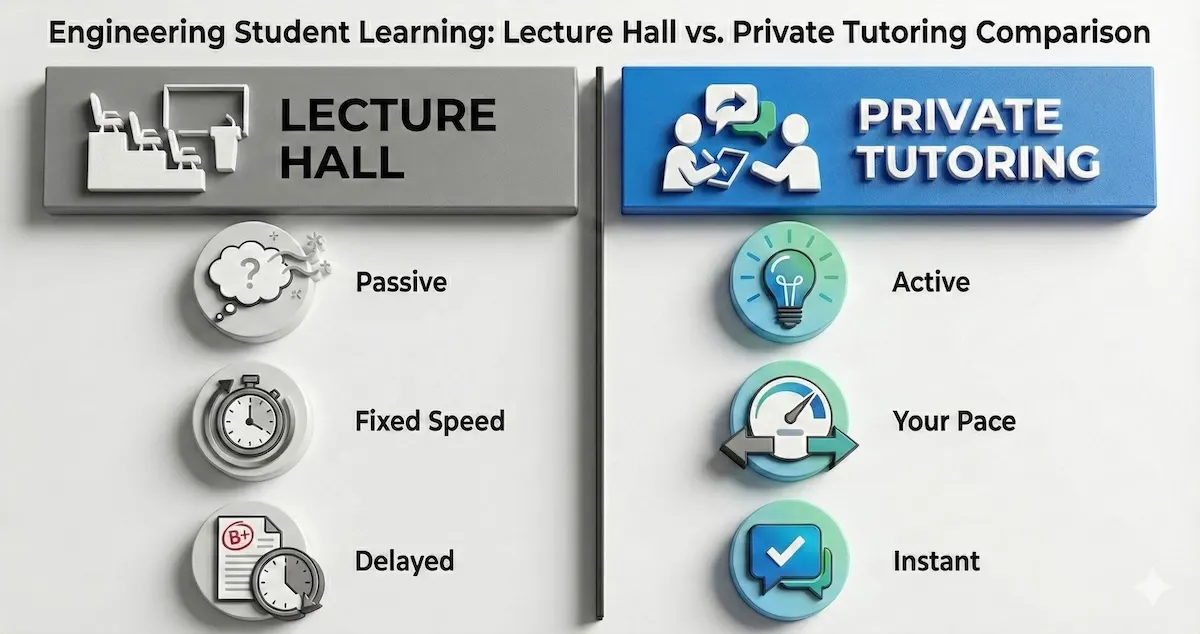
In a lecture, you follow the class pace. With a tutor, the pace adjusts entirely to you.
This shift from passive listening to active engagement is often the primary driver of rapid academic improvement.
- Homework and Assignment Help: Chemical engineering courses involve complex problems and lab reports. A tutor provides Chemical engineering homework help and assignment help by walking through each step of tough problems so students learn how to solve similar tasks independently.
True independence comes from having a reliable system. Expert tutors don’t just give answers; they teach a repeatable workflow that you can apply to almost any assignment:
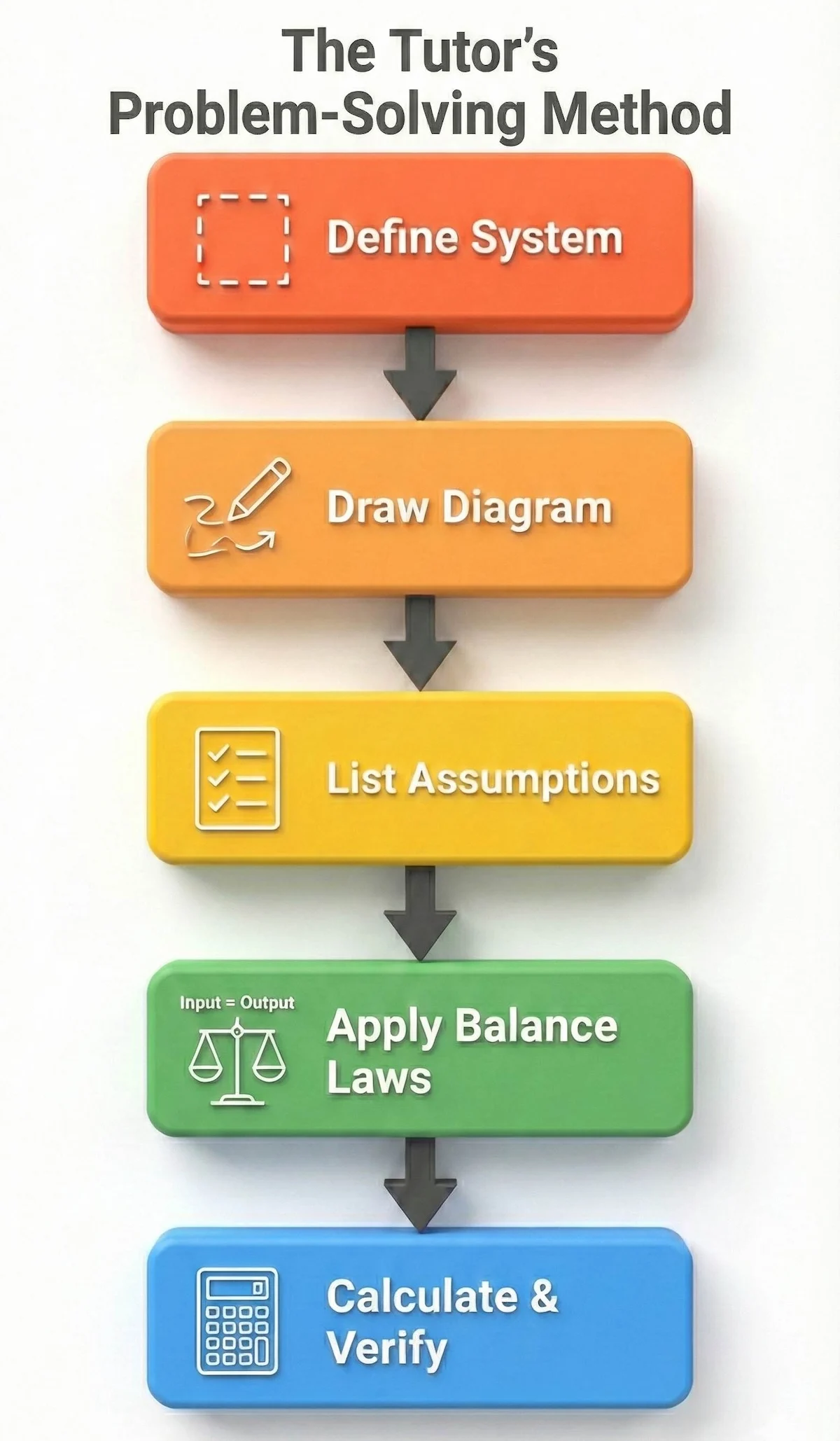
Tutors teach you a systematic workflow to break down even the most intimidating homework problems.
Once you internalize this 5-step flow, you stop staring blankly at difficult problems and start breaking them down methodically.
- Exam and Project Support: Tutors help students review before exams and prepare for big projects, reinforcing key topics. This targeted prep can boost test scores — one study found a 12% average improvement in scores after tutoring.
- Flexible Online Tutoring: Through online platforms, students worldwide can access expert instructors. Chemical engineering tutoring online fits busy schedules and connects learners with top tutors even if no local specialist is available.
- Expert Guidance: Many tutors have advanced degrees or industry experience. Learning from an experienced Chemical engineering teacher or engineer helps make abstract ideas concrete, and tutors often share real-world insights that textbooks don’t cover.
Real-world insight also means translating abstract math into physical reality. For instance, a tutor can take a dry equation like Fourier’s Law and deconstruct it visually:
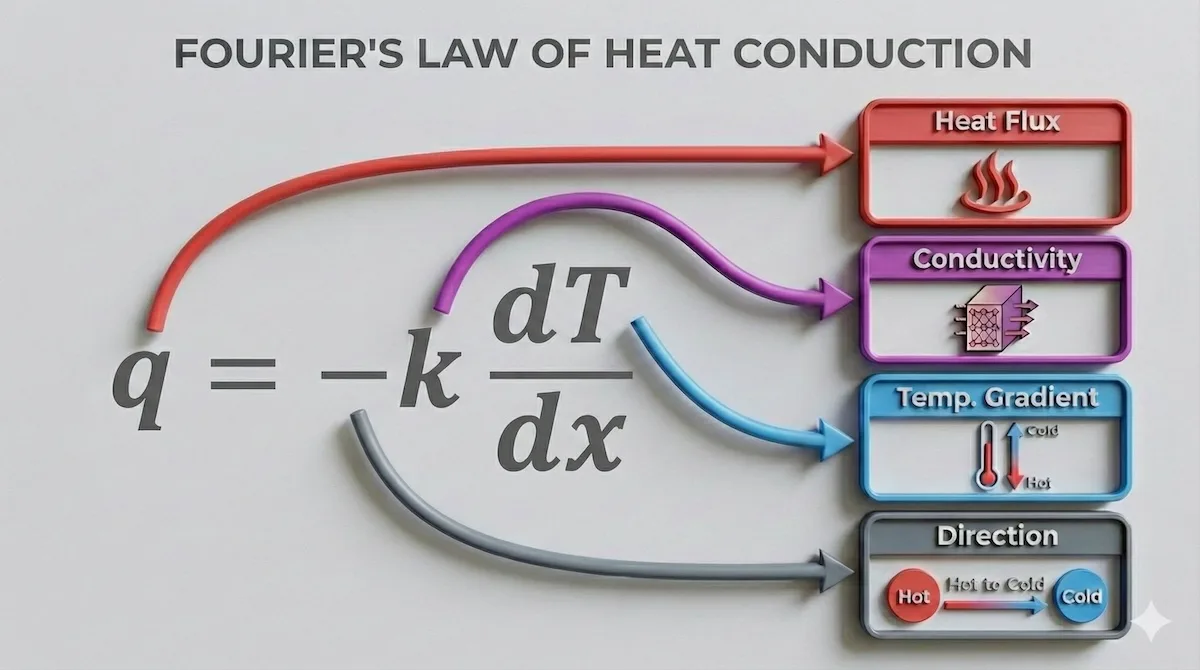
Expert tutors break down complex formulas into their physical meanings, making them easier to memorize and apply.
When you understand that ‘k’ isn’t just a letter but a specific material property, the math stops being a memory test and starts becoming an engineering tool.
- Increased Confidence: As understanding grows, students feel more confident. In fact, almost 8 out of 10 students with tutoring see better grades, and feeling successful in one subject can motivate success in others.
Finding the Right Chemical Engineering Tutor
With many options available, students should look for tutors who match their needs. Key considerations include:
- Expertise and Qualifications: Look for tutors with a strong background in chemical engineering or STEM education. Many tutors have advanced degrees or industry experience, which means they understand the curriculum and can explain concepts clearly.
- Teaching Style: A great tutor adapts to the student’s learning style. Whether it’s through visual diagrams, practice problems, or analogies, the teaching approach should match how the student learns best.
- Credentials and Reviews: Check a tutor’s credentials, references, or reviews from past students. Positive feedback and proven results (like improved grades) are good signs of a tutor’s effectiveness.
- Online vs In-Person: Decide what format works for you. A Chemical engineering tutor online gives flexibility, letting you study from home or a quiet space. In-person tutoring can provide more direct interaction, but online sessions today include interactive whiteboards and video tools to make them equally effective.
- Cost and Scheduling: Tutoring rates vary by experience and location. In general, you might find rates roughly between $20 and $40 per hour for advanced subjects. Consistent, regular sessions—ideally multiple times a week—tend to yield the best results, so consider finding a tutor who fits both your budget and schedule.
Student Success and Perspectives
Stories of improvement abound. For instance, a student struggling with a thermodynamics problem set went from a C to an A in her class after weekly tutoring sessions.
Maya’s story isn’t unique; it reflects a common trajectory we see with consistent support. Here is what that ‘C to A’ journey typically looks like over a semester:
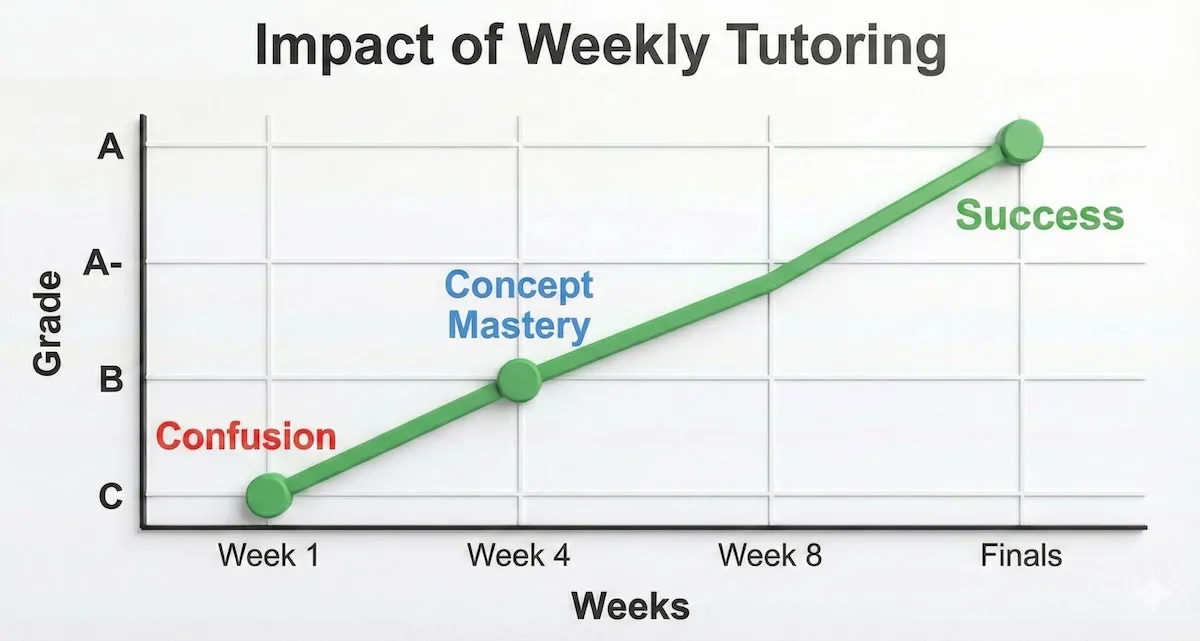
Visualizing the ‘C to A’ journey mentioned in our student success stories—consistent support leads to consistent results.
The key takeaway is the ‘Concept Mastery’ phase around week 4—once the foundation is fixed, grades often improve rapidly before finals.
Many parents notice similar gains: in a recent survey, about 70% of parents who paid for one-on-one tutoring said it was a good investment. This makes sense, because tutoring has been linked to higher grades and test scores. Over time, regular tutoring can transform confusion into confidence, helping students turn challenging subjects into areas of achievement.
Frequently Asked Questions
- Q: What is chemical engineering tutoring?
A: It’s personalized one-on-one (or small group) instruction from an expert to help students master chemical engineering topics and coursework. - Q: When should I consider hiring a chemical engineering tutor?
A: If you struggle to grasp complex topics (like thermodynamics or reaction kinetics) or want to boost your grades, consider hiring a tutor early in the course. - Q: Is online chemical engineering tutoring effective?
A: Yes – online tutoring uses video conferencing and interactive tools, making it as effective and flexible as face-to-face sessions. - Q: Can a tutor help with physics and math too?
A: Absolutely – most chemical engineering tutors also cover prerequisite physics and math, since these subjects are core to engineering coursework. - Q: How much does hiring a chemical engineering tutor cost?
A: Rates vary by experience, but many qualified tutors charge in the range of $20–40 per hour for high school or college-level engineering help. - Q: Do students really improve by using a tutor?
A: Yes, research shows one-on-one tutoring can add several months of learning, and the majority of tutored students end up with higher grades.
Related subjects:
ASPEN HYSYS
ASPEN Plus
Chemical Equations
Chemical Process Calculation Control & Equipment Design
Chemical process safety
Combustion engineering
Electrochemical engineering
Electrochemistry
Energy and Mass Balance
Molecular engineering
OpenFOAM
Phase Transformations
Reaction Engineering
Separation Processes
Transport Phenomena (Momentum Heat & Mass)
******************************
This article provides general educational guidance only. It is NOT official exam policy, professional academic advice, or guaranteed results. Always verify information with your school, official exam boards (College Board, Cambridge, IB), or qualified professionals before making decisions. Read Full Policies & Disclaimer , Contact Us To Report An Error