
Learn To Be Reviews, Alternatives, Pricing, & Offerings in 2025

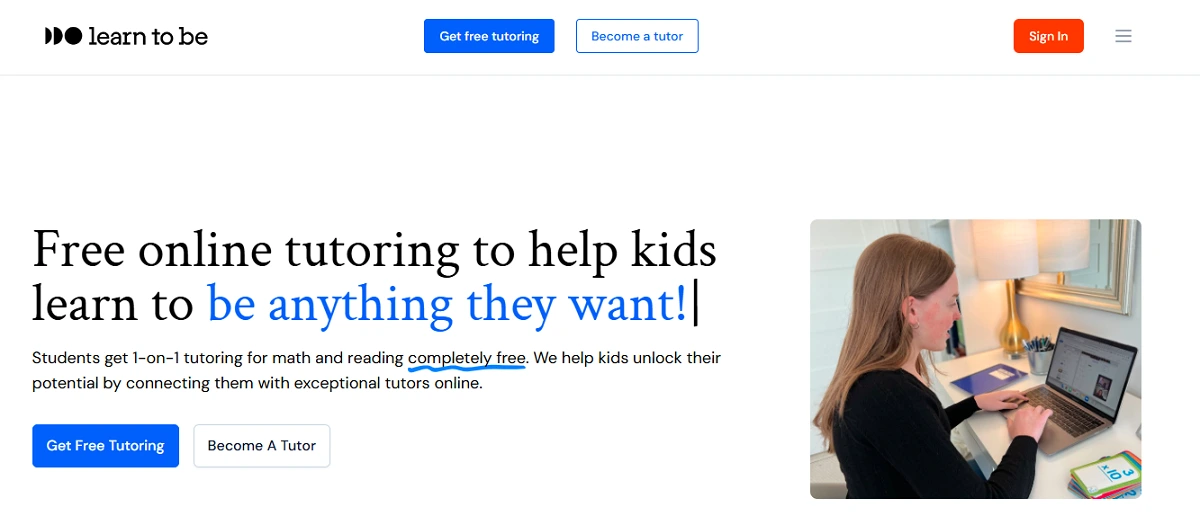
Learn To Be is a nonprofit that offers free, one-on-one online tutoring for K-12 students. It matches volunteer tutors with learners who need help in subjects like math and reading. This article looks at Learn To Be’s services, pricing, and feedback. We compare it with other tutoring platforms (including My Engineering Buddy) so students and parents can make an informed choice.
Learn To Be Reviews and Testimonials
BestCompany (56 reviews, 4.6/5): Learn To Be has 56 user reviews on BestCompany with an average rating of about 4.6. Reviewers highlight its free tutoring and dedicated volunteers as big positives. The tutors are praised for being caring and effective. BestCompany notes some negatives: the range of subjects isn’t clearly listed and not all students qualify. Overall parents and tutors describe it as a trustworthy, mission-driven program.
VolunteerMatch (3 reviews): Reviews on VolunteerMatch are very positive. One volunteer says, “Very good organization. Easy to find students to tutor.” A parent reports “Learn To Be tutoring has helped my daughter so much… We appreciate our wonderful tutor and everything Learn To Be is doing! So easy to use”. (All sessions use an online classroom.) These reviewers emphasize the impact on students. A minor complaint from a volunteer was a lack of follow-up after initial contact, but most feedback praises the service’s ease and results.
Indeed (6 reviews, 4.5/5): On Indeed (tutor/employee reviews), Learn To Be scores 4.5/5 based on 6 reviews. Tutors note a very flexible and rewarding environment. One tutor says the scheduling is flexible and “work is easy…a great community of tutors”. Another calls it “a great experience” with helpful leaders. Drawbacks: everyone mentions it’s unpaid (volunteer), which tutors accept for experience. A few say the application took a long time and you can tutor only 2 students at once. In summary, tutors praise the support and mission but note the unpaid nature and occasional admin delays.
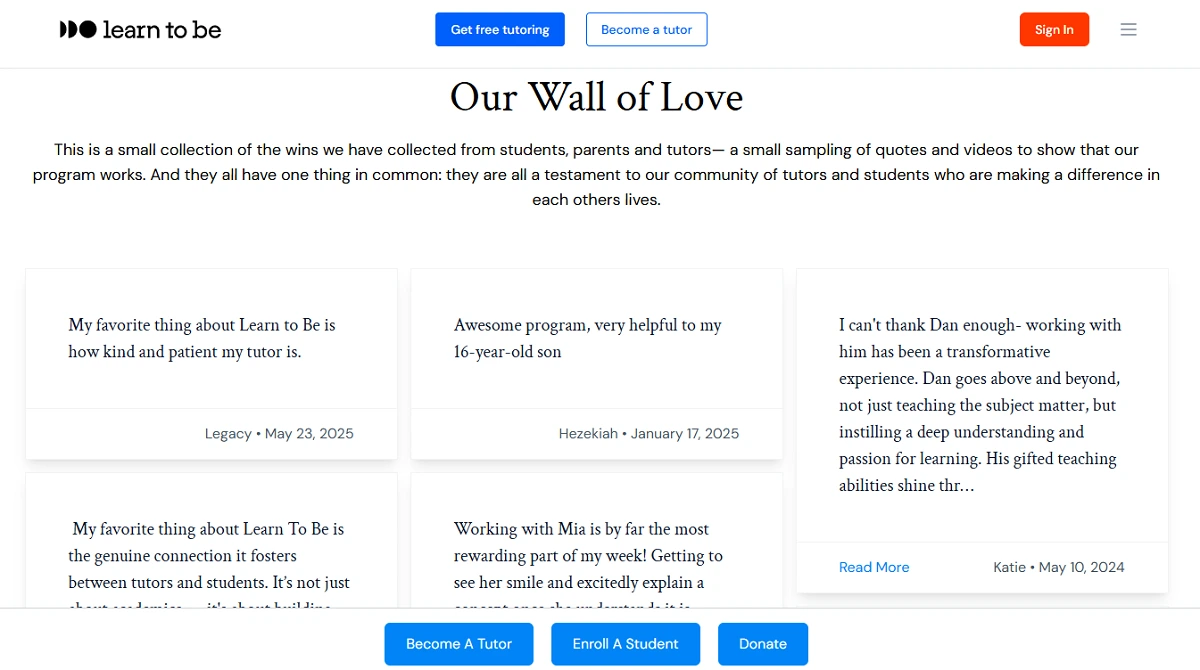
Official Website Testimonials: The Learn To Be website’s “Wall of Love” shows many glowing testimonials. Parents and students say the tutors are patient, explain concepts clearly, and build confidence. For example, one parent of a 4th grade student says the tutor “motivates [my child]… explains things in a manner he understands”. An 11th grade student calls her tutor “amazing…The best teacher I’ve had in math”. These on-site reviews emphasize improved grades, confidence and enjoyment of learning. There are no negative testimonials on the site, underscoring the program’s positive impact.
Is Learn To Be legit? Yes. Learn To Be is a registered 501(c)(3) nonprofit that’s well-regarded by tutors and families. Across platforms the feedback is overwhelmingly positive, with no signs of fraud or scam. Students and volunteers consistently praise its free, mission-driven tutoring model. All evidence indicates Learn To Be is a legitimate, reputable organization.
Learn To Be Pricing
Pricing Range
Learn To Be’s tutoring is completely free for qualifying students. There are no hourly fees or commissions charged to families, unlike paid sites. In fact, the organization’s 501(c)(3) status means they rely on donations, not tuition. (Some referrals note that foster youth get services free and other families may pay on a sliding scale.) In any case, students and parents do not pay hourly rates or membership fees. Visit their site for details.
What Students Say About Pricing
Families are delighted that Learn To Be is free. Users on forums and review sites stress that “it’s cost-free tutoring,” a huge benefit compared to paid platforms. In effect, there is no pricing complaint to justify – students only praise getting free help. For context, many private tutors charge \$30–\$60+ per hour, so Learn To Be’s no-cost model is seen as very favorable.
Hidden Costs
There are no hidden fees. Registration, ongoing tutoring, and any resources are all free. The service is fully funded by donations, so families never face unexpected charges or exam of add-ons. (Donations are encouraged but optional.) Since no one pays, there are no cancellation or subscription costs to worry about.
How Learn To Be’s Pricing Works
There is no payment process for families. Students simply sign up online and get matched with a volunteer tutor, all at no charge. There are no packages or advance payments. The platform doesn’t use promo codes or discounts (it’s free already!). In summary, eligible students begin tutoring right away without entering any billing info.
Free Trial
Because tutoring is free, Learn To Be effectively provides unlimited trials by default. Any student who qualifies can begin sessions at no cost. (No separate trial period is needed.) Families can sign up and immediately start receiving free tutoring.
Refund Policy
Learn To Be does not have a conventional refund policy because families aren’t charged anything to begin with. Since services are free by design, there is nothing to refund. User comments and parent testimonials show no issues about refunds or overcharging (there are none). In short, payment disputes don’t arise with a nonprofit providing free tutoring.
Learn To Be Alternatives
Some students may seek other options besides Learn To Be, especially if their needs lie outside Learn To Be’s focus. Below are a few popular tutoring platforms to consider. These cover different models (free vs paid, K-12 vs higher education, etc.) and include My Engineering Buddy as one option. Overall, alternatives often trade Learn To Be’s free model for broader subject coverage or paid guaranteed service.
Khan Academy
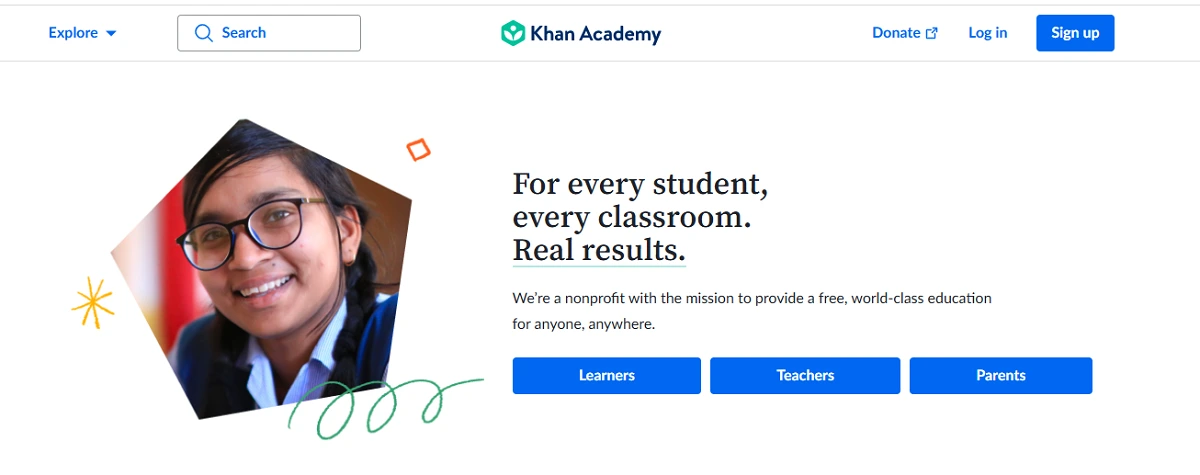
Pros: Khan Academy is also free and very reputable. It offers a massive library of over 3,400 educational videos and exercises spanning K–12 and beyond. Like Learn To Be, it’s focused on math and science fundamentals for school-aged learners. Unlike Live tutoring, Khan lets students learn at their own pace any time. Cons: However, Khan Academy has no live tutor support. It provides lessons and practice, but students must work through content on their own. For personalized help, parents must rely on parent-led explanations rather than an actual tutor. In sum, Khan is a great free resource, but it lacks the real-time interaction and accountability that Learn To Be’s one-on-one tutoring provides.
UPchieve
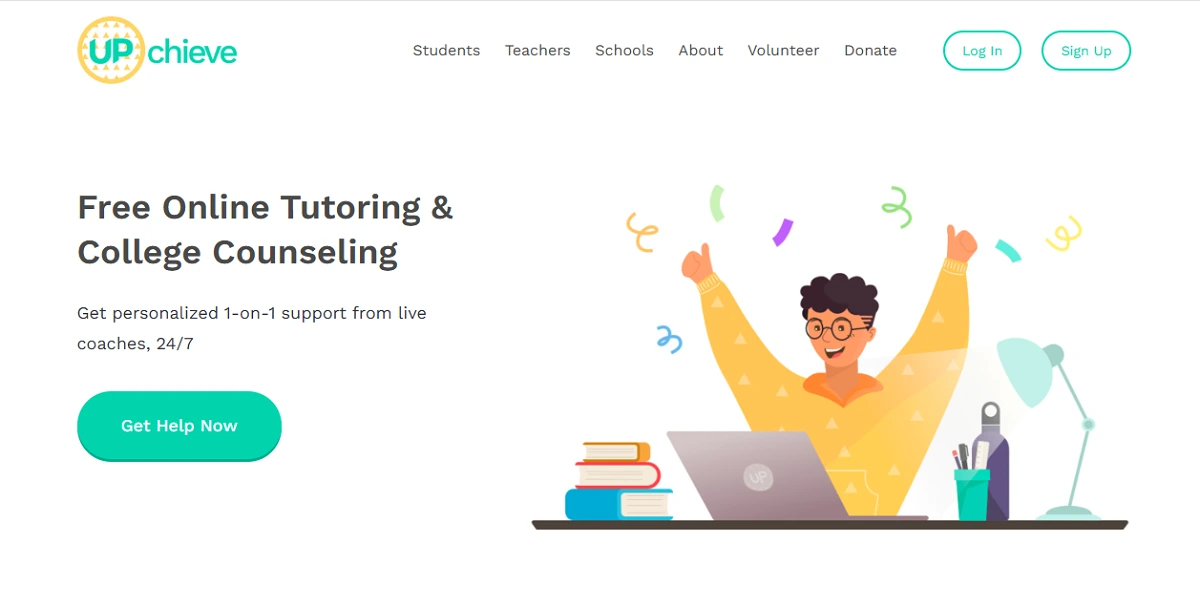
Pros: UPchieve is another nonprofit offering free online tutoring for low-income high school students. It provides on-demand help (24/7) in math, science, and writing, plus college counseling. Like Learn To Be, UPchieve targets underserved youth. Its tutors can be certified teachers or college volunteers, and sessions can happen immediately when students request help. Cons: UPchieve is mainly for middle and high school students, not elementary age, and it focuses on quick question answering (often text or instant messaging) rather than scheduled weekly sessions. It may not offer the long-term tutor-student relationship that Learn To Be does. Also, as a free service, session availability can sometimes be limited during peak demand.
Tutor.com (Princeton Review)
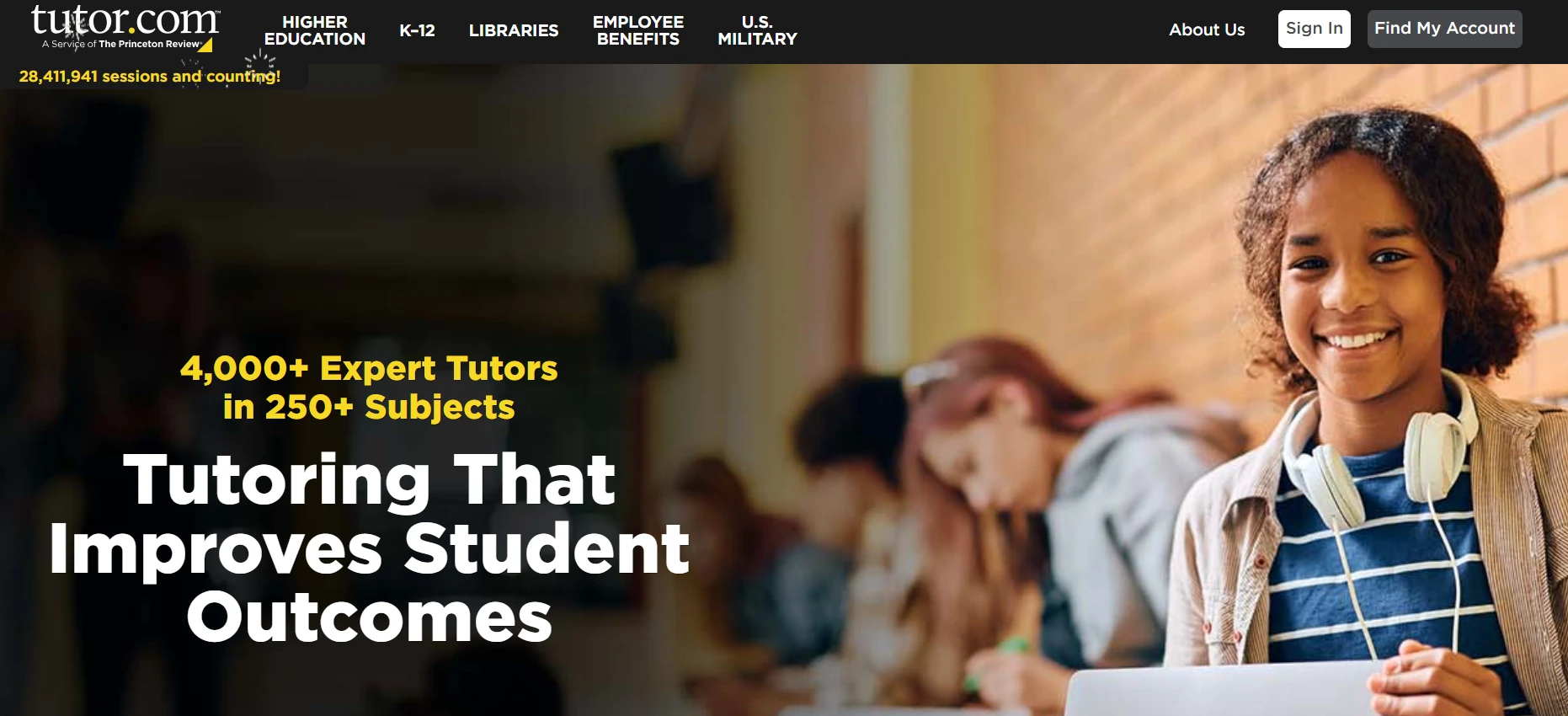
Pros: Tutor.com (now run by The Princeton Review) is a large paid tutoring platform covering hundreds of subjects from K–12 through college. It offers 24/7 availability, professional tutors, and tools similar to Learn To Be’s classroom. You can get help on pretty much any topic. This is ideal for students needing on-demand tutoring or test prep (SAT, etc.). Cons: The major difference is cost. Tutor.com charges by the minute or hour (often \$40+ per hour). For families needing ongoing help, fees add up. Learn To Be is free but volunteer-run. Tutor.com’s service is paid but has trained professionals. Also, Tutor.com may feel less personal (you may not always get the same tutor each time). Overall, Tutor.com offers guaranteed help at a price, whereas Learn To Be offers free help but with variable scheduling.

My Engineering Buddy
Pros: My Engineering Buddy (MEB) specializes in engineering, technology, and advanced STEM subjects for college and high school. Its tutors are paid experts (often from top universities) who provide detailed homework and project help. Students praise MEB for very clear explanations and quick responses. One student noted a tutor “really helped me with my Electrical and Electronics homework… clear answers made a huge difference”. MEB is global and runs 24/7 support. Cons: The trade-off is price. MEB charges per session, unlike free Learn To Be. For K-12 basics, Learn To Be covers material that MEB might consider too elementary. Also, MEB’s high-level tutors may have limited availability and charge more for their expertise. In short, MEB excels in college-level help and advanced subjects that Learn To Be doesn’t serve.
How It Works?
For Students
Sign-Up: Families create a free account on Learn To Be’s website and fill out a short survey about the student’s needs. This includes grade level and areas of struggle. The application ensures students qualify (usually based on need).
Tutor Matching: Within a few days, Learn To Be matches the student with a volunteer tutor who fits the student’s subject and schedule. The site promises the same tutor will work with the student consistently for many months or even years, building a strong connection.
Scheduling Sessions: Once matched, the student and tutor schedule sessions at convenient times (often weekly) using Learn To Be’s online calendar. All tutoring is done via the platform’s virtual classroom (video + whiteboard). Students simply log in at the session times and meet their tutor online. The flexible system allows canceling or rescheduling if needed.
For Tutors
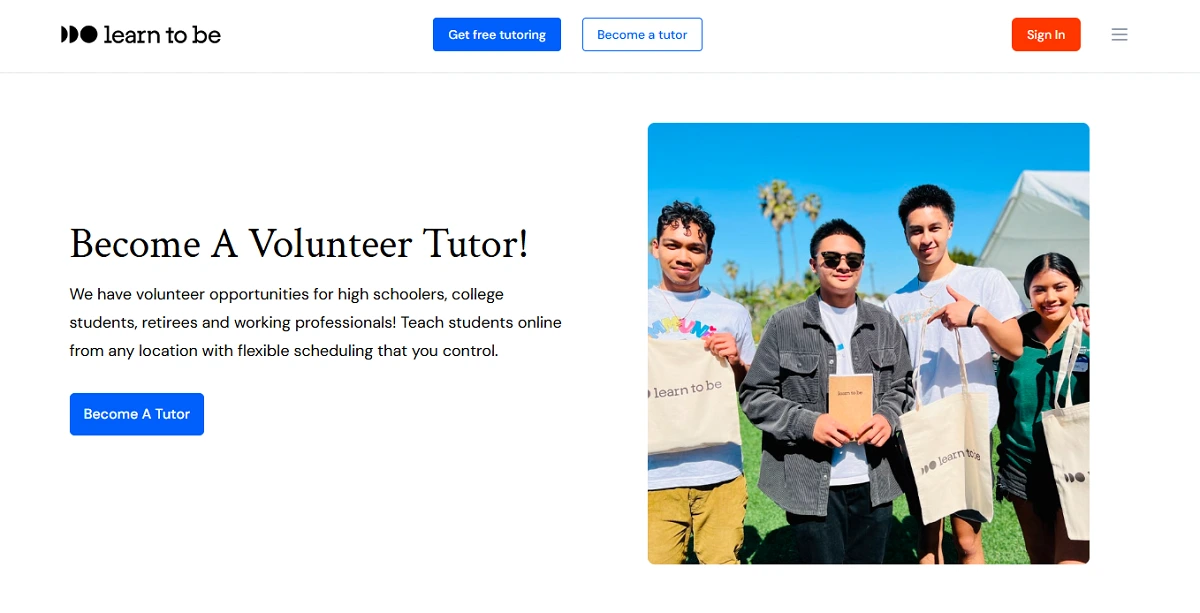
Anyone high-school age or older can apply to tutor on Learn To Be. Applicants fill out an online application form and complete a brief training. No prior experience or college degree is required; Learn To Be provides guidance for new tutors. All tutors must agree to a background check and undergo Learn To Be’s certification process. After acceptance, tutors browse the profiles of students seeking help. Each profile lists the student’s grade and subject needs. Tutors select a student they feel qualified to help. The tutor then commits to meeting that student for at least 1–2 hours per week for roughly one semester (about 4 months). Ongoing communication with the student and their parent is done through the platform. Apply now to start tutoring on Learn To Be.
FAQs:
Can tutors set their own fee or is it fixed by the company? There are no fees at Learn To Be. All tutors are volunteers and do not charge any money.
How much can a tutor expect to earn per hour? Since Learn To Be tutors volunteer their time, they earn nothing; it’s purely for experience and service.
How many hours of work can a tutor get per month? Tutors are expected to commit at least 1–2 sessions per week. That’s about 4–8 hours per month minimum, though tutors can choose more hours if available.
Is it easy for tutors to get students? Many tutors say new students are consistently available. One review noted a “consistent flow of new students” on the platform. In general, demand is high, so active tutors can usually find a student to help fairly quickly. (However, availability can vary by subject and time.)
Tips to get more students: Keep your availability updated and respond quickly when students reach out. Tutors recommend setting a regular schedule and communicating clearly with families. Being patient and building rapport also helps retain students. (These tips come from tutor community advice.)
What do tutors like about Learn To Be? Tutors praise the flexibility and mission. They enjoy choosing their own hours and subjects. Many mention that leadership is “helpful and kind” and that the platform is easy to use. They find it fulfilling to help needy kids and appreciate the training and resources provided.
What do tutors dislike about Learn To Be? The main complaints are its unpaid nature and scheduling unpredictability. Tutors note that it can be frustrating when students occasionally don’t show up (since the service is free). Others mention limits (you can only tutor up to 2 students at a time) and that application processing can be slow. Overall, volunteers accept the trade-off of no pay for the reward of helping.
Learn To Be: Company Information
Founded in 2008, Learn To Be is a nonprofit tutoring charity (501(c)(3)) based in California. The founders are Stephen Chen and Neeraj Kapoor. Its mission is to eliminate educational inequity by providing free tutoring to underserved communities. Learn To Be primarily serves students in the United States, especially those in low-income or foster-care situations. By 2025 it reports over 200,000 hours of free tutoring delivered to about 11,000 students. The organization is very small (estimated fewer than 10 staff), relying on a network of volunteer tutors nationwide.Learn To Be offers 1-on-1 online tutoring for K–12 students. The core services are focused on academic tutoring: math, reading/language arts, science, and social studies. Essentially, any standard school subject is covered through the volunteer tutors. (In practice, tutors commonly help with math and reading skills.) The platform also has summer and writing help, and is set up to let students ask questions on other topics as needed. All tutoring is done remotely through their digital classroom.
Unique features of Learn To Be include:
- Free, mission-driven tutoring. The service is entirely free for families in need, funded by donations.
- Long-term tutor matching. Each student is assigned one tutor who works with them for the long haul – often for months or years. This continuity builds trust and tailored support.
- Qualified volunteer tutors. Tutors must pass a certification process. Learn To Be “only offers certified tutors” (after training), so families know tutors have preparation. Tutors come from all walks of life (often students or teachers) but are committed to the cause.
- Robust online classroom. Sessions use a live video and whiteboard platform that records lessons. It includes Khan Academy exercises and practice problems. Tutors and students can review recordings afterward. This tech setup (using BigBlueButton) enriches the tutoring beyond just talking on Zoom.
- Service awards for tutors. The program allows tutors to earn verified community service hours and volunteer awards (like the Presidential Volunteer Service Award). This recognition (when available) motivates and rewards tutors.
- Strong impact focus. The organization constantly adds new resources: e.g., they’ve created a Learning Hub with question banks and even an AI-based study tool. Volunteers note LTB’s commitment to quality education despite limited budget.
Drawbacks of Learn To Be
- Limited student eligibility. Tutors report the service is need-based, so many students cannot sign up. Learn To Be only takes kids who meet its criteria (often low-income or underserved). There can be a waiting list if demand is high.
- Unclear subject coverage. Learn To Be doesn’t advertise a detailed catalog of courses. It generally covers basic K–12 subjects (math, reading, science), but families don’t know upfront if advanced or niche subjects are supported. This vagueness can limit who should apply.
- Volunteer-driven quality. Because all tutors are unpaid volunteers, session quality can vary. One tutor noted occasional scheduling drops when students skip or parents are unresponsive. Students also might have less consistent availability. (On the other hand, many volunteers are excellent.)
- Small organization limits. With only a few staff members, some volunteers have reported delays in communication or matching. There is no round-the-clock tech support for users, and since there’s no tuition revenue, expansions or fixes happen more slowly than commercial companies.
- Commitment required. The program asks tutors and students to commit to at least a semester of regular sessions. There is no paid “try for a day” option. Students who need only one session or short-term help might find the process too lengthy.
Comparison with My Engineering Buddy
My Engineering Buddy (MEB) is a paid tutoring platform, so it differs from Learn To Be in key ways. MEB focuses on higher-level STEM and engineering courses. Its tutors are paid professionals (often with advanced degrees) and cover college and technical subjects that Learn To Be does not. Students praise MEB for handling complex homework: for example, one said MEB helped greatly with an electrical engineering assignment. Learn To Be, by contrast, is tailored to basic K–12 learning and free support for low-income families.
Testimonials from MEB users highlight its strengths. Customers report that MEB tutors explain hard concepts simply and respond quickly. One student noted a tutor made a “huge difference” in understanding difficult material. Others mention the site is “cost effective” and covers all needed areas, with helpful, patient explanations. These comments emphasize MEB’s value for college students. In contrast, Learn To Be testimonials focus on younger learners’ progress.
Students should consider My Engineering Buddy when they need help with college or advanced subjects. MEB provides structured homework support and subject experts around the clock, which Learn To Be does not. For complex assignments and high-level topics, MEB’s paid model can offer faster, guaranteed help. Learn To Be remains an excellent choice for free tutoring in elementary and middle school basics, whereas MEB excels at specialized STEM tutoring for older students.
Customer Support and Policies
Learn To Be’s support is largely volunteer-run. Tutors say the administration is responsive and helpful – one tutor calls leadership “incredibly helpful and kind”. There are FAQs and email help, but no 24/7 live chat. Because service is free, there are no official refunds or payment guarantees to enforce. My Engineering Buddy offers paid service with 24/7 support and a clear money-back policy (several users noted prompt refunds for issues). In practical terms, Learn To Be’s non-profit model provides support through community goodwill, while MEB provides professional customer support for paying customers.
Global Reach and Localization
Learn To Be operates mainly in the United States. It follows U.S. school standards and provides English-language tutoring. There is no specific multilingual support advertised. My Engineering Buddy, however, explicitly serves students in the US, UK, Canada, Australia, and the Gulf region. This suggests MEB caters to a global audience and different curricula. In global accessibility, Learn To Be is local (US) focused, whereas MEB is structured for international students with around-the-clock availability.
Learn To Be’s Future Plans
Learn To Be is investing in new educational tech and partnerships. Notably, tutors report an “AI education tool” in their Learning Hub, hinting at future AI-driven learning resources. The nonprofit is also expanding its volunteer chapters at universities (for example at UCLA and UT Austin) to recruit more tutors and funding. They have mentioned plans to roll out more online practice problems and expand their resource library (as seen in the Learning Hub updates). Additionally, Learn To Be will resume its Presidential Volunteer Service Award program when funding returns. The overall focus is on scaling up tutoring hours, enhancing the virtual classroom, and using technology (including AI) to improve effectiveness.
FAQs About Learn To Be
How does Learn To Be compare to My Engineering Buddy? Learn To Be is a free, non-profit tutoring program for K–12 students in need, while My Engineering Buddy is a paid service focusing on higher-level STEM and college subjects. MEB’s tutors are professionals who help with technical homework (engineering, etc.), whereas Learn To Be’s volunteer tutors focus on basic school subjects. In short, Learn To Be offers free help for younger students, whereas My Engineering Buddy provides paid expertise for older students.
What grades and subjects does Learn To Be cover? Learn To Be serves K–12 students, typically starting in upper elementary (around 5th grade) up through high school. Its tutors help with all core subjects: math, reading/language arts, science and social studies. Any K–12 subject can be requested, but most tutoring focuses on foundational skills in these areas.
Who can use Learn To Be? The program is intended for students who need tutoring but whose families cannot afford private help. It primarily serves underserved or low-income communities. Any qualifying K–12 student in the U.S. can apply. (If a family is above the income cutoff, they may not be eligible.)
How do I sign up for tutoring? Families simply enroll online. You fill out a short application and profile for the student. There’s no fee or commitment upfront. Within a few days Learn To Be will match you with a volunteer tutor based on your student’s grade and needs.
How long do tutoring sessions last? Tutors are asked to hold one-hour sessions 1–2 times per week for at least a few months. In other words, plan on 1-hour lessons, usually weekly. Many tutor-student pairs continue much longer if it’s helpful. The minimum commitment is usually one semester of consistent tutoring.
Conclusion
Learn To Be’s biggest strength is its mission: free, personalized tutoring for under-resourced K–12 students. This makes it a lifeline for students who otherwise could not afford help. Its weaknesses stem from that model: limited funding and volunteer staff mean fewer spots, and it focuses only on basic school subjects. It’s excellent for young students’ foundational skills, but it can’t cover advanced courses or provide full-time paid tutors.For students needing higher-level or specialized help, My Engineering Buddy is a strong alternative. MEB offers expert tutors and guaranteed support for complex subjects (as user reviews show). In summary, Learn To Be is ideal for free basic tutoring, while My Engineering Buddy is a great choice for paid, advanced tutoring needs.
******************************
This article provides general educational guidance only. It is NOT official exam policy, professional academic advice, or guaranteed results. Always verify information with your school, official exam boards (College Board, Cambridge, IB), or qualified professionals before making decisions. Read Full Policies & Disclaimer , Contact Us To Report An Error