
Plagiarism vs. Originality: Why Only Authentic Work Builds Long-Term Success

If you want your success to last longer and need to create something that becomes your identity, then remember one thing: success that lasts is never built on shortcuts like Plagiarism.
Trust me, anyone can copy words or ideas and create content within minutes.
However, that copied work rarely earns respect or opens doors.
Therefore, the only thing that can actually set your content to a higher level is your authenticity, your ability to create something that reflects your own thinking and effort.
Believe it or not, but your readers, teachers, clients, or anyone who has read your content before can easily notice the difference between borrowed words and your genuine insight.
Therefore, if you want your work to leave an impact, you don’t just need to polish your writing skills; in fact, you have to prioritize authenticity. You need more than polished sentences, you need authenticity.
To understand why authenticity is non-negotiable, it helps to see exactly where the line is drawn. The comparison below highlights the fundamental differences between genuine engineering work and academic misconduct.
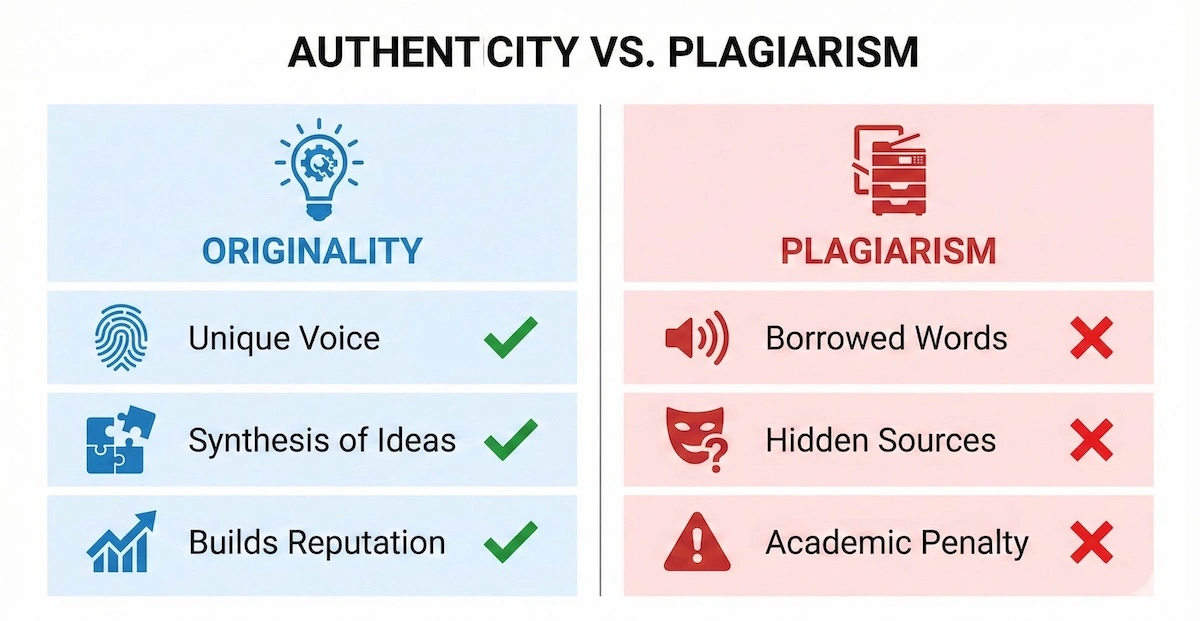
Understanding the clear distinction between original work and plagiarism is the first step toward academic integrity.
As you can see, while plagiarism focuses on hiding sources, authenticity focuses on building a unique voice—a distinction that defines your future career.
What is the Difference Between Originality and Plagiarism?
Let’s just start from the basics.
So, originality generally means creating work that reflects your own thinking, voice, and effort.
This even includes introducing new connections, fresh phrasing, or novel approaches to familiar ideas. Therefore, to maintain the originality of your work, you need to present your own understanding and credit the sources if you borrow ideas from others.
Wondering why originality even matters?
Because in academia, originality adds value and moves conversations forward.
However, if you rely on plagiarism, then plagiarism is a big no-no in academia. It can destroy years of hard work and good reputation in seconds.
Plagiarism basically means using others’ words, ideas, or structure without clear acknowledgement. It ranges from copying sentences to presenting someone else’s argument as your own.
The worst thing about plagiarism is that, whether you intentionally copy or some phrases unintentionally slip into your content, you have to face similar, and indeed severe, consequences.
It harms reputation, blocks learning, and creates legal or academic penalties.
Why Only Authentic Work Builds Long-Term Success?
Authentic work is indeed the foundation to earn the reader’s trust and attract more customers and colleagues.
Notably, original work doesn’t just get you more attention and referrals; in fact, it also shows your depth and understanding of the topic.
This way, when the readers realize that you actually understand the topic, they will surely trust your words even more.
That’s not all.
Moreover, when you create authentic content, you accumulate a unique body of work. That body becomes repayable as a reputation.
Wondering how?
So, when you tend to always publish original content, you will surely develop your unique voice, which actually makes your content stand out among the competitors. People remember the unique perspectives and fresh ideas. Therefore, being original indeed helps you easily surpass the competitors who repackage common content.
Think of your professional reputation as an investment account. The following graph illustrates how authentic work compounds over time compared to the fragility of shortcuts.
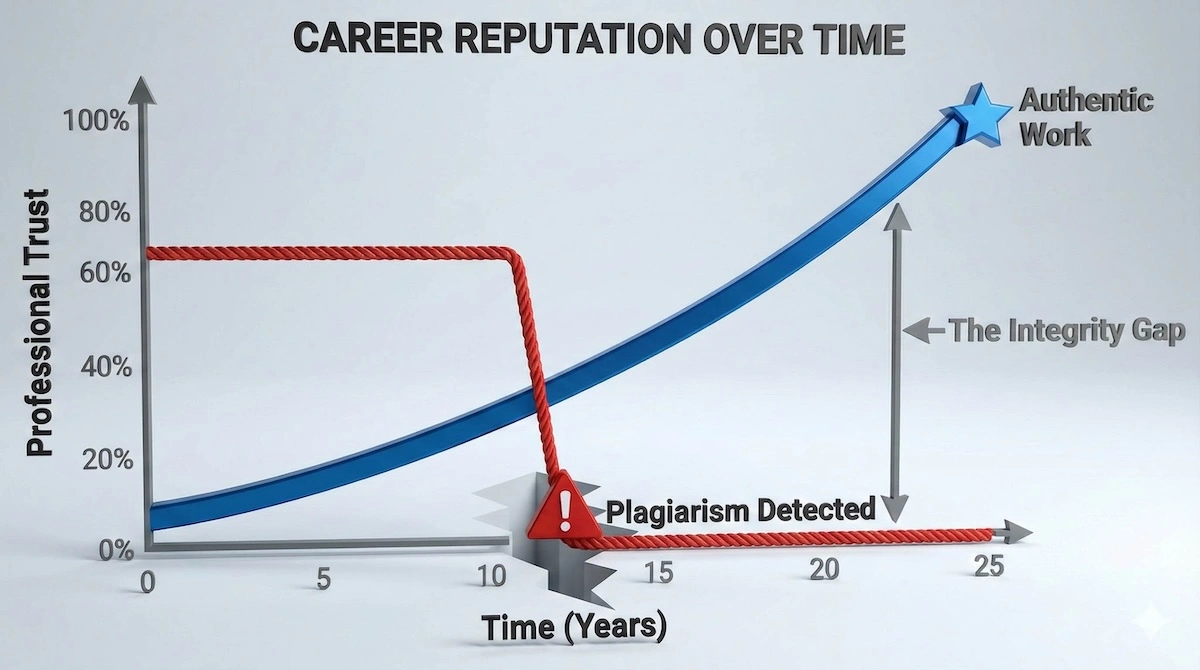
Authenticity works like compound interest for your career, while shortcuts often lead to a sudden collapse in trust.
The ‘integrity gap’ shown above represents the trust you lose instantly when a shortcut fails—a loss that is often impossible to recover.
Platforms such as MyEngineeringBuddy.com not only help learners strengthen their concepts but also encourage them to develop original solutions instead of relying on shortcuts.
Not only this, but another benefit of authentic work is that it also saves you from legal troubles and academic risks.
Hence, once you stick to originality and serve authenticity, you will surely notice how your small, genuine efforts compound into a stable career or brand.
Tips to Ensure Authenticity for Long-Term Success
Here are some professional tips that you surely have to follow if you really want to ensure content authenticity and achieve long-term success.
So, keep reading.
1) Keep a Clear Research Trail
If you really want to avoid catching plagiarism, then you need to take a few steps at the very first stage. Make sure to always start all projects with organized notes. For this, you can either reach out and save content from different sources, snap relevant information from different pages, or just note down the key points.
However, no matter what medium you choose, you need to record each reference. Write down where each referral came from.
The best practice here is to use filenames and dated folders for drafts, this reduces the chances of catching errors when citing.
Not only this, but keeping a record also makes honest paraphrasing easier.
2) Develop a Distinct Voice and Process
To ensure authenticity in your content, you need to be consistent with whatever you do.
Therefore, when writing, make sure to set a fixed routine that fits perfectly in your schedule.
If you are new to the field, you can start practicing with short templates that suit your writing angles and perspectives.
Practice regularly using the same voice until it actually starts sounding natural to you.
The tip here is to always use small reusable frameworks. For instance, it can be problem-solution-benefit, question-answer, or structure ideas.
Trust me, following such simple frameworks really helps writers produce original combinations quickly.
Building this habit doesn’t have to be complicated. Here is a streamlined 5-step workflow you can use for every assignment to guarantee your work is original.
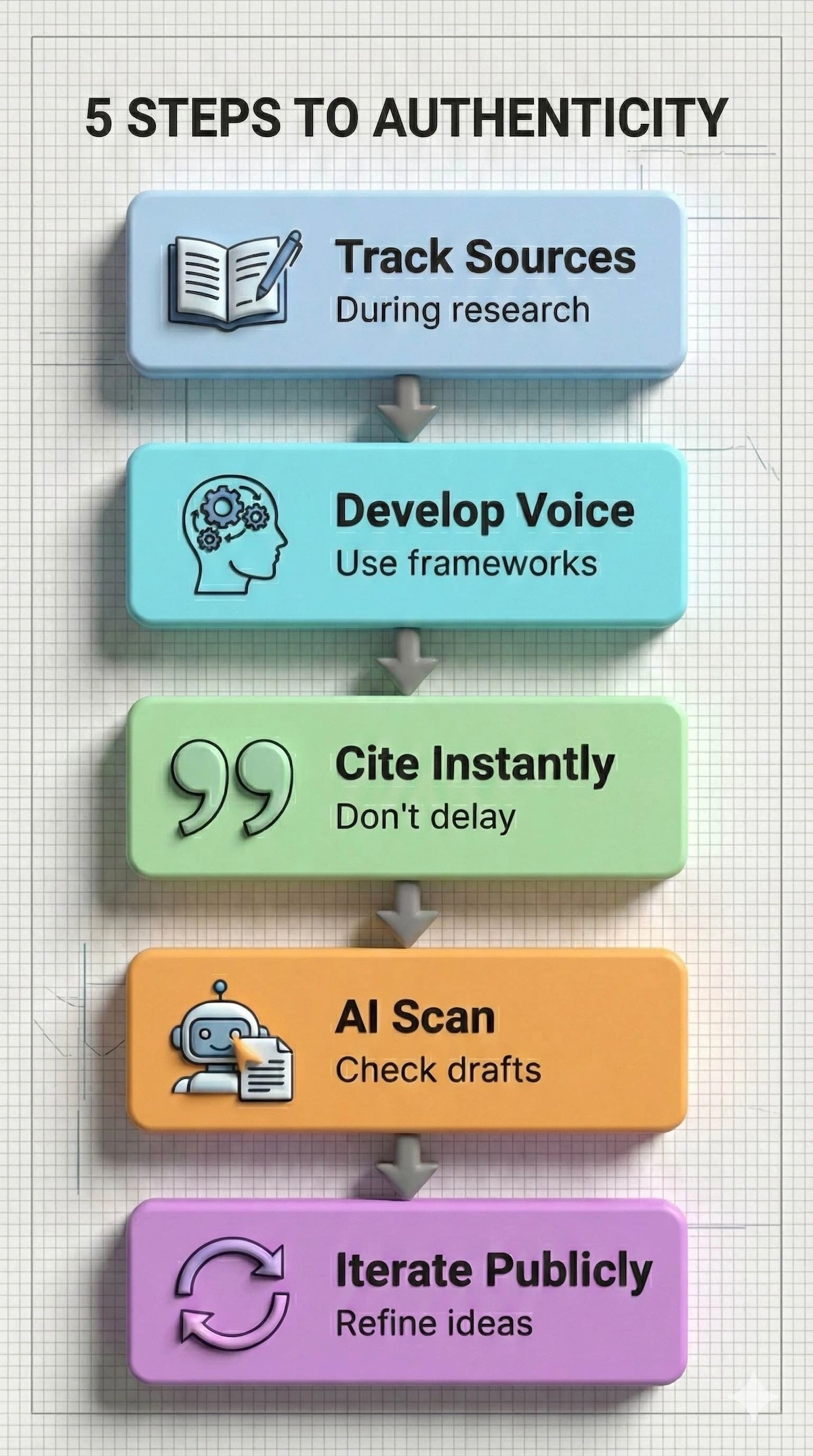
Follow this systematic workflow for every assignment to ensure your work remains 100% original and credible.
By integrating these five steps into your routine, you move from worrying about accidental plagiarism to confidently producing high-quality engineering reports.
3) Test Your Draft Before You Publish
Honestly, plagiarism is not just a risk for beginners or newbies. In fact, even careful and experienced writers sometimes echo phrasing they read earlier.
This usually happens during research and drafting.
Reason?
Because when sources are dense, deadlines are tight, or you simply copy the exact phrases in your notes, it’s understandable that similar phrases might sneak into your original content.
As mentioned earlier, even in such a case, you have to go through the same consequences.
Therefore, if you don’t want to fall into the trap, it’s best to scan your content through an AI-powered plagiarism detector before submitting it.
This tool is designed to catch accidental overlaps, missed attributions, and weak paraphrases in any content. For this, you only have to paste your text into the tool. It will instantly scan it and compare it with other online published resources to flag similar sentences and highlight exact matches.
So, treat these results as a guide, not a verdict.
If your content overlaps, don’t panic. Instead, refine it, rephrase it, add a citation, or quote correctly. Then run another check to see if it still shows matches.
4) Cite as You Go, Not Later
When writing, make sure to cite each resource on the spot, not later.
Reason?
Because usually, when you delay citations till the end, you miss the details of some resources.
Therefore, when an idea, fact, or figure comes from somewhere else, note its source immediately.
You can either save them using short inline markers, a reference manager, or a simple bracketed link.
Trust me, this simple habit can really save you from forgotten sources and sloppy paraphrasing.
Need a few more tips?
So, when you quote, copy verbatim, and mark it clearly. Similarly, if you paraphrase, write in your own words, then attach the source. And when you summarize, make sure to attribute properly.
This way, following these practices shows readers where your facts came from and strengthens your credibility without interrupting the flow.
Struggling to decide if a specific fact or figure needs a citation? Use this simple decision tree to make the right choice in seconds.
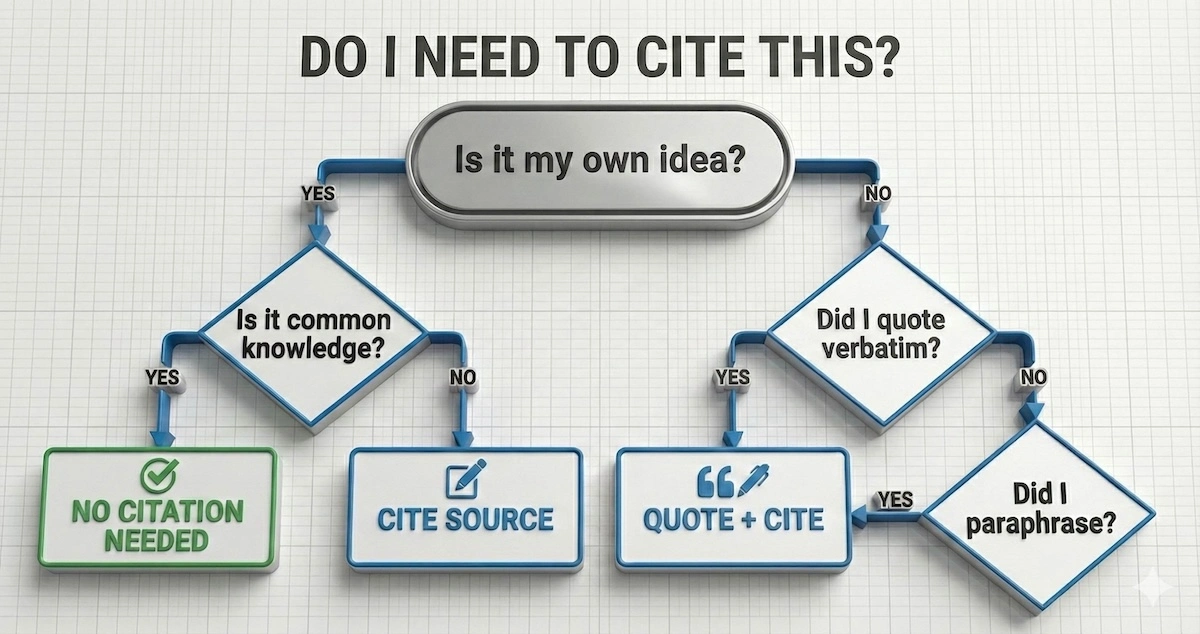
Use this logic flow to instantly decide when a citation is required, preventing accidental plagiarism.
When in doubt, always follow the path to ‘Cite Source’—it is better to over-cite than to risk your academic integrity.
5) Practice Small Experiments and Iterate Publicly
Share short drafts or outlines with a small audience. Use feedback to refine ideas and spot accidental echoes. Small, public experiments force you to own your angles. Publish short threads, note updates, or short posts that trace how an idea changed.
Those public traces serve as proof of creation and help you remember what you added. They also invite collaborators who add fresh perspectives. Regular iteration reduces pressure to copy polished material.
Over time, you develop a portfolio of small originals that combine into bigger projects. Public iteration makes originality both visible and repeatable.
Repairing Trust: What to Do If You Slip
If you ever discover unoriginal content in your work, remember one thing: you have to act fast and eliminate it. You can’t leave it as it is, no matter how small the issue looks.
Academic credibility and integrity demand transparency. So, if you can’t provide that, you surely are not reliable.
So, when writing, make sure to remove or correct the offending passages. Add clear citations and mark quotes.
However, in case you have already published or submitted the copied content, it’s best to issue a brief and clear correction notice or update note explaining what changed and why.
Apologize where appropriate and offer to fix downstream uses.
Moreover, along with this, also review your workflow to prevent a repeat: strengthen notes, run the comparison tools earlier, and ask a colleague to review drafts.
Trust me, such honest, specific fixes can really help you effectively restore your credibility and also rebuild trust.
If you do make a mistake, immediate and transparent action is required. Follow this checklist to handle the situation professionally.
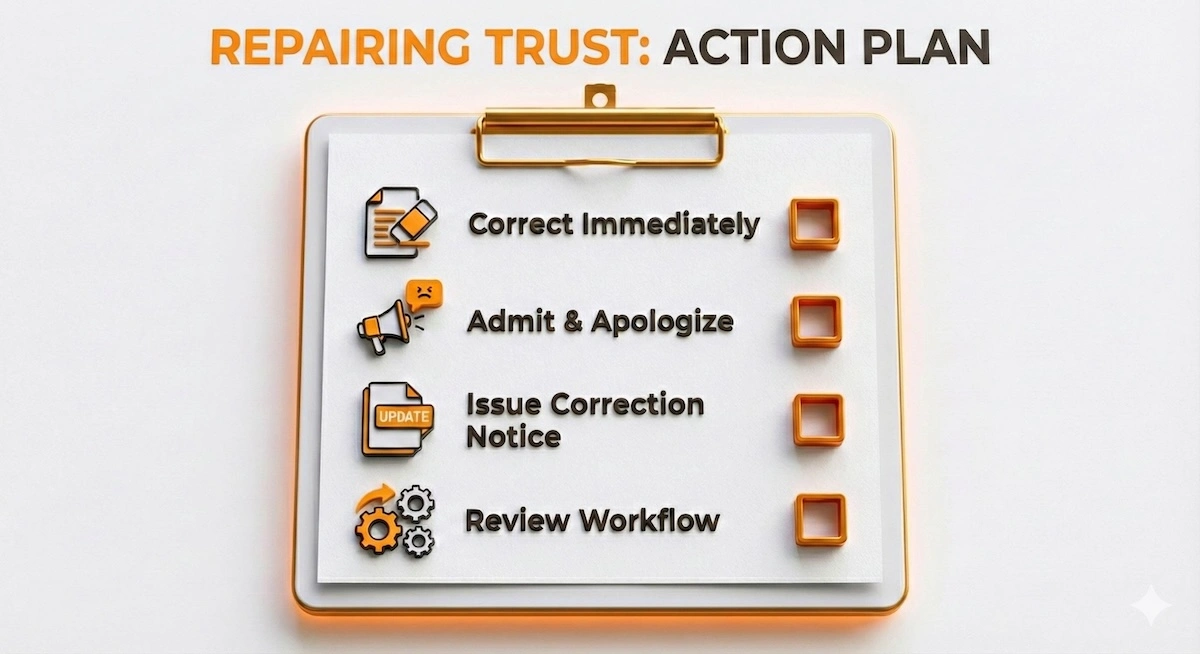
If errors happen, transparency is key. Use this checklist to handle corrections professionally and restore integrity.
Taking these specific actions shows maturity and accountability, turning a potential career-ending error into a lesson in professional responsibility.
Conclusion
Originality in writing shapes the way your readers actually perceive your work. Therefore, originality is not just about avoiding mistakes; in fact, it’s indeed about leaving behind something that carries your name with pride. Think of authenticity as a long-term investment, one that enables you to improve your reputation, influence, and trust.
******************************
This article provides general educational guidance only. It is NOT official exam policy, professional academic advice, or guaranteed results. Always verify information with your school, official exam boards (College Board, Cambridge, IB), or qualified professionals before making decisions. Read Full Policies & Disclaimer , Contact Us To Report An Error