School Solver Review: Pricing, Features, Alternatives Explained

- School Solver uses pay-per-question pricing; students set their own budget.
- The platform takes a 20% commission on every answer sold.
- Trustpilot rates School Solver around 3.6/5 stars across 120 reviews.
- A 100% refund within 30 days is available for unsatisfactory answers.
- Tutor payouts can take 2–3 weeks and require a $25 minimum balance.
School Solver is an online platform connecting students and tutors for homework help. It lets students post homework questions and set the price they will pay. The site claims to have “expert tutors” in all subjects and even offers a “pay what you can afford” model and a money-back guarantee. School Solver says it has been the “number one site in the world for online tutoring since 2014.” This article reviews School Solver’s reputation, pricing, alternatives, and features to help students and parents make informed decisions.
Students who also need support in financial accounting tutoring will find a comparison of platforms useful as they evaluate their options.

School Solver Reviews and Testimonials
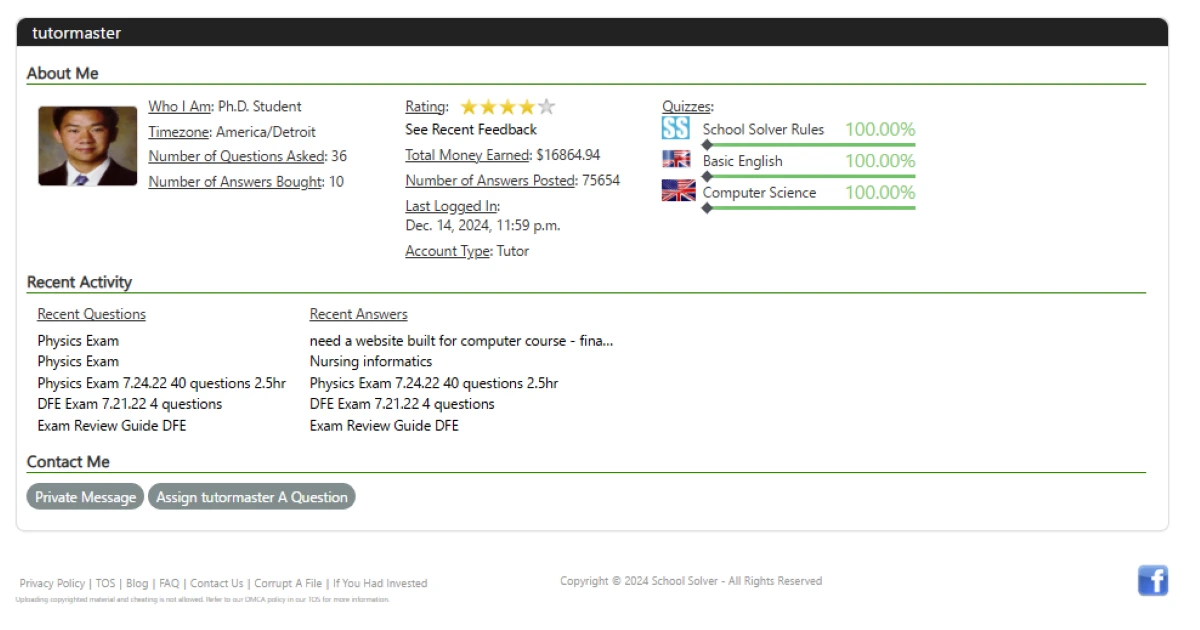
Overall reviews are mixed. On Trustpilot School Solver averages about 3.6/5 stars (120 reviews), and on Sitejabber about 3.3/5 stars (87 reviews). Many users on Reddit and review sites praise it as a legit service. For example, one tutor wrote “School solver is legit” and said he “got paid well” solving questions.
A Trustpilot reviewer noted the site provides “best quality answers” and has a refund policy for unsatisfactory work. Another Reddit user called School Solver “a household name” in homework help and pointed out it’s been mentioned by Forbes, Mashable, TechCrunch, etc.
However, several reviewers raise concerns. Some complain about the mandatory entrance quizzes and slow payouts. One user warned that quizzes cost money and sometimes seem unfair. Others have noted withdrawal delays (2–3 weeks) and a $25 minimum on cashouts. For instance, one reviewer on Scam Detector wrote that he was unable to withdraw his final $7 because of a $25 threshold. In summary, most feedback suggests School Solver is a genuine service, but with common complaints about quiz fees, commissions, and payment timing.
School Solver Pricing
Pricing Range
School Solver uses a pay-per-question model rather than fixed hourly rates. Students set the price they are willing to pay for each question. Tutors then choose which questions to answer based on that offer. The platform takes a 20% commission on each paid answer and charges a 2% withdrawal fee.
Because of this, prices can vary widely. Easy or short questions might cost only a few dollars, while difficult college-level problems can pay $50–100 or more per question. In practice, specialized subjects (like advanced math or engineering) and fast deadlines often command the highest prices.
Students who regularly need help with quantitative coursework — such as those seeking an accounts tutor — may want to compare per-question costs against hourly tutoring rates before committing to a platform.
What Students Say About Pricing
Students generally find the pay-what-you-offer model flexible. On forums, users report seeing high-paying questions (as much as $100) when the problem is tough. One Reddit poster noted that college-level questions “offer up to $100” which can yield a good income for tutors. Students themselves only pay their set price (plus a 20% fee) once they buy a solution.
Compared to industry norms, School Solver’s costs can be competitive: private tutors often charge $25–80 per hour, so a $100 per-question fee may be reasonable for a complete solution. Some users say this makes School Solver cheaper than buying a course or subscription on other sites, though pricing can still climb for very hard problems.
Hidden Costs
There are a few non-obvious fees to be aware of. Tutors must pay to take the qualification quizzes; one user mentioned paying about $2–3 to attempt the English quiz. If a tutor fails the quiz, that money is lost, which many consider an unpleasant cost. Students do not pay anything extra to use the site, but tutors sometimes pass on their quiz fees into answer prices.
There is no subscription or cancellation fee for students – you only pay for each question you buy. However, the 20% platform fee is effectively a hidden cost that reduces tutors’ earnings. Also, there is a $25 minimum balance required to withdraw, as one user discovered when he couldn’t cash out his $7 balance.
How Pricing Works
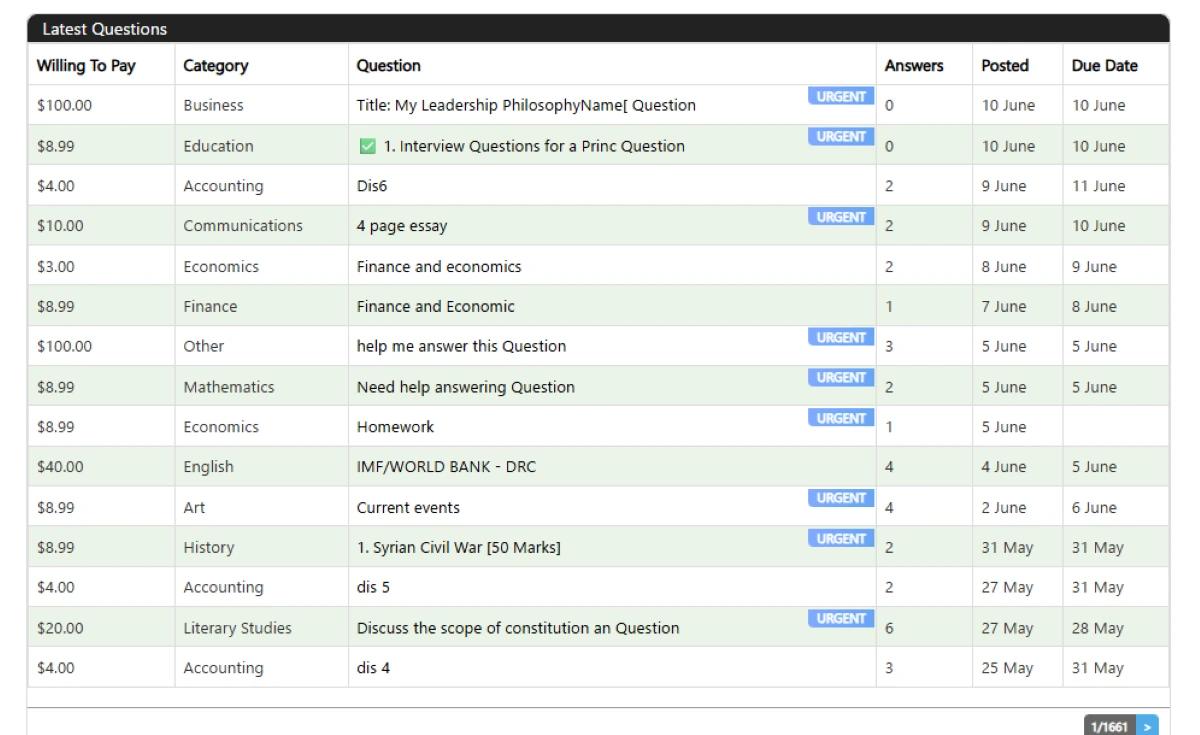
Students pay via credit card or PayPal when they accept an answer. Tutors receive payments through PayPal, once their earnings exceed the withdrawal threshold. As noted, the site charges no fees for deposits or asking questions; the 20% answer commission and 2% withdrawal fee are the main deductions.
There are no subscription packages or bulk discounts. Occasionally the site has a “Prepayment” feature where students pay an upfront deposit for a question, as mentioned by one user. But generally, no promo codes or subscription plans are advertised.
Free Trial
School Solver does not offer any free trial period for students or tutors. There is no demo or credit given; students simply pay for questions as needed. Tutors can test the platform by answering a few small questions to see if their answers sell, but there is no risk-free or trial tutoring option.
Refund Policy
School Solver promises a solid refund guarantee. Officially, it offers a “100% full refund within 30 days” if a student is not satisfied with an answer. In practice, if an answer is incorrect or incomplete, students can click “Not Satisfied” and the answer author gets a chance to fix it, or the student gets a full refund.
Reddit users confirm this. One tutor explained that students have the right to get their money back with “no problem” if a tutor gives the wrong answer. Overall, the refund policy is clear: you can get your money back for subpar work, which adds a layer of safety for buyers.
School Solver Alternatives
Chegg (Chegg Study/Tutors): A well-known homework help site. Chegg offers Q&A and tutoring (though live tutoring has shifted to subscriptions). Tutors on Chegg are vetted and can charge roughly $35–$65/hour. Chegg uses monthly subscription fees rather than per-question pricing. The user interface is polished and the site is widely trusted, but access requires an ongoing subscription (no pay-per-question). Chegg is stronger for textbook solutions and study guides, whereas School Solver is direct Q&A.

CourseHero/StudyPool: These platforms let students post questions or documents and get answers from tutors. CourseHero requires a paid subscription (around $10–$20/month), while StudyPool allows bids on questions. Tutors are peers or graduates. Both cover all subjects but often have much content from older students (CourseHero is also a document library). Unlike School Solver, answers are often written later or crowdsourced. Pricing on StudyPool is per-question (bidding), similar to School Solver, but with a large cutoff of lowball offers.
For a deeper look at how StudyPool compares to other platforms, see this EduBirdie review and alternatives breakdown.
Wyzant: A marketplace for one-on-one tutoring. Tutors set hourly rates (often $20–$100+ depending on expertise). Wyzant tutors are usually local teachers or college grads, and sessions happen live (online or in-person). This offers direct interaction, unlike School Solver’s asynchronous Q&A. Pricing is hourly, which can be simpler for budgeting. Wyzant has a lot of vetted tutors, but no money-back guarantee like School Solver.
Brainly: A peer-to-peer homework help community. Brainly has many free answers (students help each other) and a premium option for verified solutions. It covers K–12 subjects mainly. No formal payment to tutors, and quality varies. It is more of a social site. School Solver, by contrast, is for paid professional help. Brainly’s core offering is free crowdsourced answers, so its model is very different.
For another perspective on peer-learning and gamified study tools, this Kahoot review and alternatives guide covers a related category of platforms.
My Engineering Buddy (MEB): A specialist tutoring site focusing on engineering and advanced STEM courses. MEB connects students with professional engineering tutors via scheduled sessions (often by chat or video). Tutors usually charge by the hour (~$20–$35/hr) or per assignment. MEB is praised for its fast payments and personal support: many tutors report being paid promptly and having live assistance if needed. Unlike School Solver, which is question-based, MEB offers live or chat tutoring in specific engineering subjects. It is an excellent alternative if you need high-level engineering help.

How School Solver Works
For Students
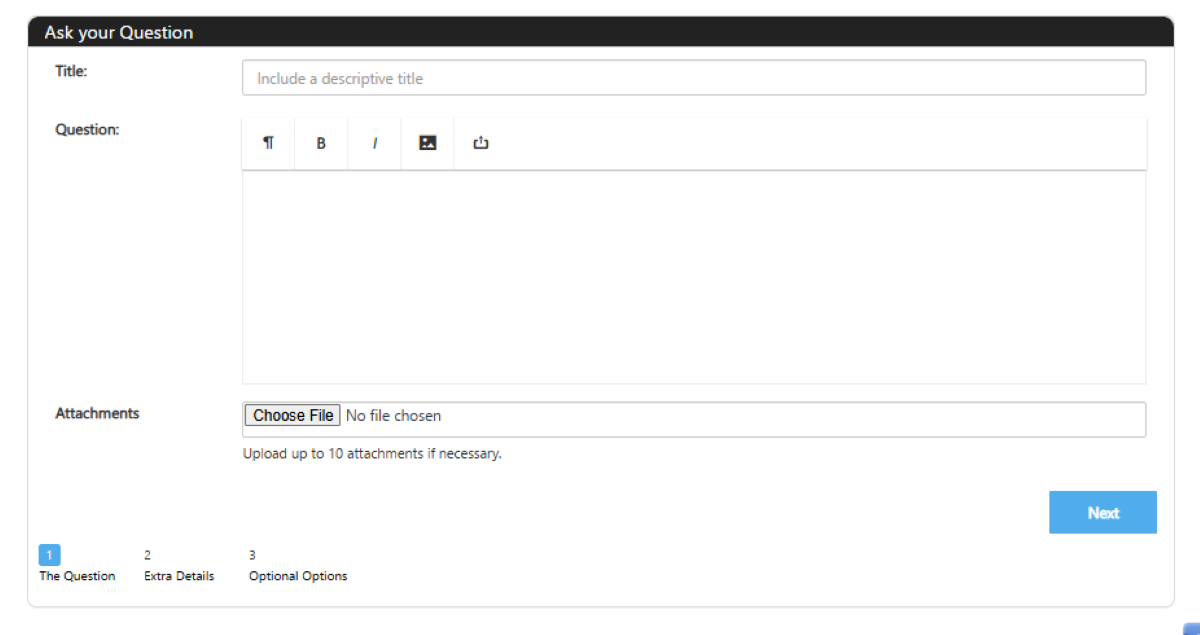
Students simply create an account and post a homework question. You can make your question private or anonymous for extra privacy. Set a budget (the maximum you’ll pay) and a deadline. Tutors on the site will see the question and can reply with answers.
You then review the answers (you usually see just a preview) and select the one you like. Once you choose an answer, you pay the quoted price and get the full solution. If the answer isn’t clear or correct, you can ask the tutor to revise it or use the “Not Satisfied” button to get a refund.
For Tutors
Tutors sign up and build a profile listing their subjects and skills. To activate an account, School Solver requires passing two short quizzes (a rules quiz and a basic English quiz) with high scores. Only after passing these quizzes can you answer questions.
Tutors browse the list of open questions (or use the “Tutor Mode” to filter unclaimed ones). They write detailed, step-by-step answers and submit them. When a student buys your answer, you earn the set price minus the 20% platform commission.
Earnings accumulate in your account, and you can withdraw them via PayPal once you hit the $25 minimum. The site pays out every week or so, though some tutors have reported 2–3 week delays. As long as you follow the rules (no plagiarism, proper formatting) your account will stay in good standing.
Students preparing for graduate admissions tests may also find it useful to compare platforms when looking for a GRE tutor who offers structured, session-based preparation rather than one-off question answers.
School Solver Company Information
School Solver was founded around 2014 and is a U.S.-based company providing a global homework help marketplace. It operates in English but serves students worldwide. The platform covers an extremely broad subject range (from elementary math to graduate-level engineering). Its mission is to connect struggling students with tutors who can provide solutions or explanations, essentially offering “pay-as-you-go” online tutoring in many fields.
Unique Selling Points
- All subjects covered: The site advertises “All Subjects Covered”, meaning students can ask anything from math problems to essay writing. In practice, School Solver does handle questions across nearly every academic field.
- Flexible pricing: Students set the price per question. This pay-what-you-can model is rare; it allows even low-budget students to get help. Tutors see the budget upfront and can decide whether to answer.
- Money-back guarantee: School Solver promises a 100% refund if you’re not satisfied. This policy is real, and covers most cases where the answer is incorrect or incomplete. It reassures users that the service has accountability.
- Media exposure: The company highlights features in outlets like TechCrunch, Forbes and The Next Web. The site’s homepage even shows their logos. This media coverage suggests credibility and trust, although it is largely marketing.
- Privacy options: Users can post questions anonymously or delete them after use. Private questions are hidden from search engines. This emphasis on privacy is delivered as advertised, which is helpful for students concerned about sharing assignments.
Some claims are more promotional than practical. For example, the tagline “Number One Site in the World” is clearly marketing hype. Not all tutors are vetted “experts,” despite the claim “only expert tutors” – quality varies. However, features like student privacy, pay-what-you-can pricing, and a refund policy are genuinely provided as advertised.
Drawbacks
- Qualification quizzes: Tutors must pass two quizzes (rules and English) before answering questions. These quizzes cost a small fee (around $2–$3) per attempt. Some users complain that the quizzes can be tricky or even faulty (one said some questions had no correct answer).
- High commission and fees: School Solver charges a 20% commission on every sale. This is higher than many peer-tutoring sites, meaning tutors keep only 80% of their earnings. Students effectively pay 20% extra over the tutor’s ask price. Additionally, a 2% withdrawal fee and $25 minimum cashout can eat into small earnings.
- Slow payouts: Several tutors report delays in withdrawals. For example, one tutor said the only drawback was that “withdrawal times… can take 2-3 weeks”. This is significantly slower than some other platforms, where payouts are often weekly or even daily.
- Variable answer sales: There is no guarantee an answer will sell. If no student buys your response, you earn nothing. Some tutors have complained that their answers never get purchased despite being correct, which can feel like wasted effort (one reviewer said “no one buys any of anyone’s answers”). This risk is important to consider.
- Support issues: While the site encourages contacting support for problems, some users have noted it can be hard to get timely help. One review even claimed there was effectively “no customer service” available when things went wrong. Poor support response can be a major inconvenience.
- Potential for low quality: Because answerers vary in skill, the quality of solutions can be inconsistent. Students need to review answers carefully. There’s a risk that answers might just “solve” a question without teaching the material, which is not ideal for learning.
Comparison with My Engineering Buddy
- Subject focus: My Engineering Buddy (MEB) specializes in engineering, math and other STEM subjects. School Solver covers all academic fields, but MEB offers more depth for advanced engineering topics. If you need help in specialized courses (e.g. circuit analysis, thermodynamics), MEB tutors (often engineers or PhDs) may have more relevant expertise.
- Pricing: MEB charges clear hourly rates (e.g. around $20–$35 per hour, depending on level). School Solver uses per-question pricing with a 20% fee, which can make costs unpredictable. For quick math problems, School Solver can be cheaper, but for in-depth help, an hourly session on MEB might be comparable or even cost-effective with guaranteed one-on-one time.
- Payments & support: MEB is known for prompt payments and 24/7 customer service (many tutors praise its quick payout and live support). In contrast, School Solver’s payouts are slower (weekly or longer) and student support may not always respond quickly. If fast payment and support are critical, MEB has the edge.
- User feedback: Many users on MEB’s site report high satisfaction (the company advertises 97% student satisfaction). School Solver’s user rating is lower (around mid 3/5). Students often report MEB’s answers as reliable and tutors as professional, whereas School Solver feedback is more mixed, reflecting its open marketplace model.
Students exploring structured alternatives to open marketplaces may also find this BrightChamps tutoring platform review a useful point of comparison.
Customer Support and Policies
School Solver provides email-based support and encourages users to contact them with any issues. The site states that support can handle deposit or payment issues faster than banks or PayPal. It also enforces strict policies: all student data is confidential and can be deleted, and cheating is forbidden.
For example, the FAQ says that plagiarism or straight “homework-solving” answers will get an account removed. In practice, official policies are strong, but some users say getting help is slow. By contrast, My Engineering Buddy highlights rapid chat or email support and a transparent refund process. Both sites allow refunds for unsatisfactory work, but School Solver’s 30-day, 100% refund is formally guaranteed. Overall, School Solver has clear policies on refunds and cheating, but its customer service responsiveness has room for improvement.
Global Reach and Localization
School Solver primarily operates in English and uses USD prices. It serves students worldwide but does not localize into other languages on its main site. Questions and tutors come from many countries. The site’s UI is straightforward and region-neutral; it does not charge different rates by country. There is no special support for non-English languages. In sum, School Solver is best for English-speaking users globally; non-English speakers may find it harder to participate.
Future Plans
Education technology is rapidly evolving, especially with AI. For example, Khan Academy recently introduced “Khanmigo” – an AI-powered tutor described as an “always-available teaching assistant”. This shows the trend toward AI helpers in education. While School Solver has not announced specific AI features, it could adopt tools for matching tutors or generating draft answers in the future.
Other platforms like MagicSchool.ai are building tools for teachers, indicating the market is shifting. We might expect School Solver to integrate AI (e.g. to auto-tag questions or pre-screen answers) to stay competitive. For now, it remains a human-powered service, but the use of AI in tutoring is likely to grow in coming years.
Students who need support in niche academic areas — such as those looking for a TSA Thinking Skills Assessment tutor — may find that specialist platforms serve them better than broad open marketplaces.
For students in humanities or religious studies programmes, platforms offering dedicated subject expertise — such as those providing A/AS Level Biblical Studies tutoring — may offer more targeted support than a general marketplace like School Solver.
For a broader look at how math-focused tutoring platforms compare, this Brighterly review and alternatives guide covers another well-known option in the space.
FAQs About School Solver
Is School Solver a legitimate tutoring platform?
Yes, School Solver is a legitimate tutoring platform. School Solver has been operating since 2014 and is covered by tech media. Many users report it works as advertised. For instance, a longtime tutor wrote “School solver is legit” and confirmed getting paid for answers. However, School Solver is an open marketplace, so experiences vary. Sites like Scam Detector give School Solver a moderate trust score (around 42/100), but the majority of user reviews on Trustpilot and Reddit are positive. If used carefully (following the rules and paying attention to policies), School Solver is considered a legitimate service rather than a scam.
How do I use School Solver as a student?
Sign up on the School Solver website and post your homework question with a description and deadline. Set the budget you’re willing to pay. Tutors will answer your question in the system. You can review each answer (with a short preview) and then pick one to buy. Payment is made at that time. If the answer doesn’t solve your problem, you can ask the tutor for a revision or click the “Not Satisfied” button to start a refund — School Solver offers a 100% guarantee on answers. That’s it – no classes or scheduling are needed, just question and answer.
How do I sign up and earn money as a tutor on School Solver?
To become a tutor on School Solver, register for an account and complete your profile (experience, subjects, etc.). Before you can answer any questions, School Solver requires passing two short quizzes: a rules quiz and a basic English quiz. These ensure you understand the platform and have enough language skill. After passing (which costs a few dollars for the quiz), your account is activated. Then you can browse unanswered questions, write detailed solutions, and submit them. If a student buys your answer, you earn the price (minus the 20% commission). Payments accumulate in your account and can be withdrawn via PayPal after you reach the $25 minimum. The site recommends actively messaging questioners to clarify needs, which can increase your sales chance.
How much does School Solver cost?
For students, School Solver costs are per question. You choose your own price when you ask a question. Whatever you pay, School Solver adds a 20% service fee on top (taken from the tutor’s payment). So if you set $10, the tutor gets $8 and the site keeps $2. There are no membership fees. If a question is complex, students have paid up to $100 for a good answer. For tutors, School Solver is free to join (aside from the quiz fee) and you get paid per answer. There are no hidden subscription costs. The main deductions are the 20% commission and a small 2% fee when you withdraw your earnings.
Are there any fees or refunds on School Solver?
School Solver charges no setup or monthly fees. The main cost is the 20% commission on answers and any PayPal withdrawal fee (2% or so). There is no cost to ask a question or to review answers. As for refunds, School Solver has a clear policy: if the answer you buy is wrong or incomplete, you can request a refund and get your money back. Many users confirm this, noting that School Solver honors refunds readily. There are no other hidden charges, and deposits/withdrawals themselves are free of charge (aside from the withdrawal fee).
Is using School Solver considered cheating?
School Solver is designed as a tutoring aid, not a cheating tool. The company emphasizes that School Solver does not support plagiarism. Tutors are instructed to provide explanations and step-by-step solutions, not just copy answers. If a tutor is found giving fully copied answers or working someone’s homework verbatim, their account will be banned. Therefore, if you use School Solver responsibly – by asking for help to learn a concept, not just to hand in answers – School Solver is generally not considered cheating. It’s similar to hiring a private tutor: students learn by studying the provided solution.
Conclusion
School Solver is a comprehensive, pay-per-question tutoring marketplace. Its advantages include a wide subject range, flexible student-driven pricing, and a solid refund guarantee. On the downside, tutors face entry quizzes, a high commission (20%), and slow payouts, and answer quality can vary. In short, School Solver can be a good way to get homework help, but users should be aware of the fees and effort required.
In comparison, My Engineering Buddy is an excellent alternative for higher-level math and engineering help. MEB offers specialized one-on-one tutoring with transparent hourly rates and prompt payment – features that some users find more reliable than School Solver’s open market. Students needing advanced STEM assistance may prefer MEB’s focused approach. Ultimately, both platforms have pros and cons, and the best choice depends on your subject needs and whether you value one-on-one sessions (MEB) versus flexible Q&A (School Solver).
Related Reading
******************************
This article provides general educational guidance only. It is NOT official exam policy, professional academic advice, or guaranteed results. Always verify information with your school, official exam boards (College Board, Cambridge, IB), or qualified professionals before making decisions. Read Full Policies & Disclaimer , Contact Us To Report An Error