
Why Modern Engineers Need More Than Technical Skills: The Rise of Real-World Preparedness

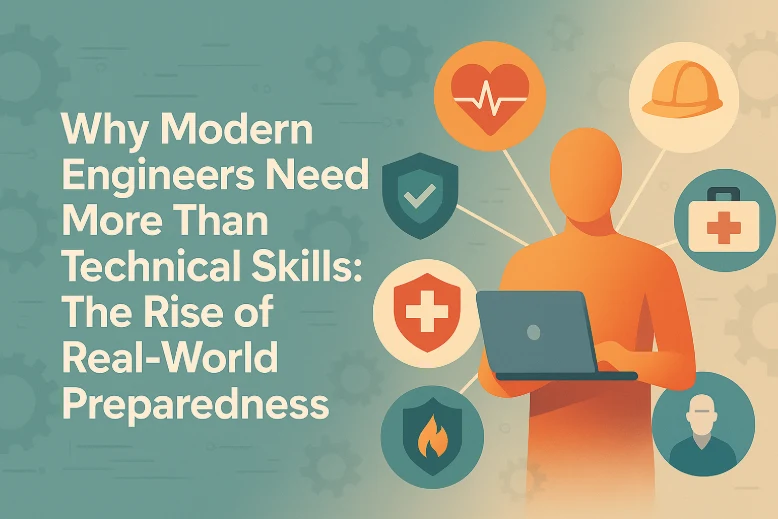 As a result, engineers are beginning to recognize the importance of well-rounded preparedness that goes beyond code, calculations, and CAD models. And that’s why more professionals are now pursuing practical skills like First aid CPR training Mississauga, adding emergency-readiness to their toolkit along with problem-solving and critical thinking.Real-world preparedness covers specific, teachable skills engineers should add to their toolkit.
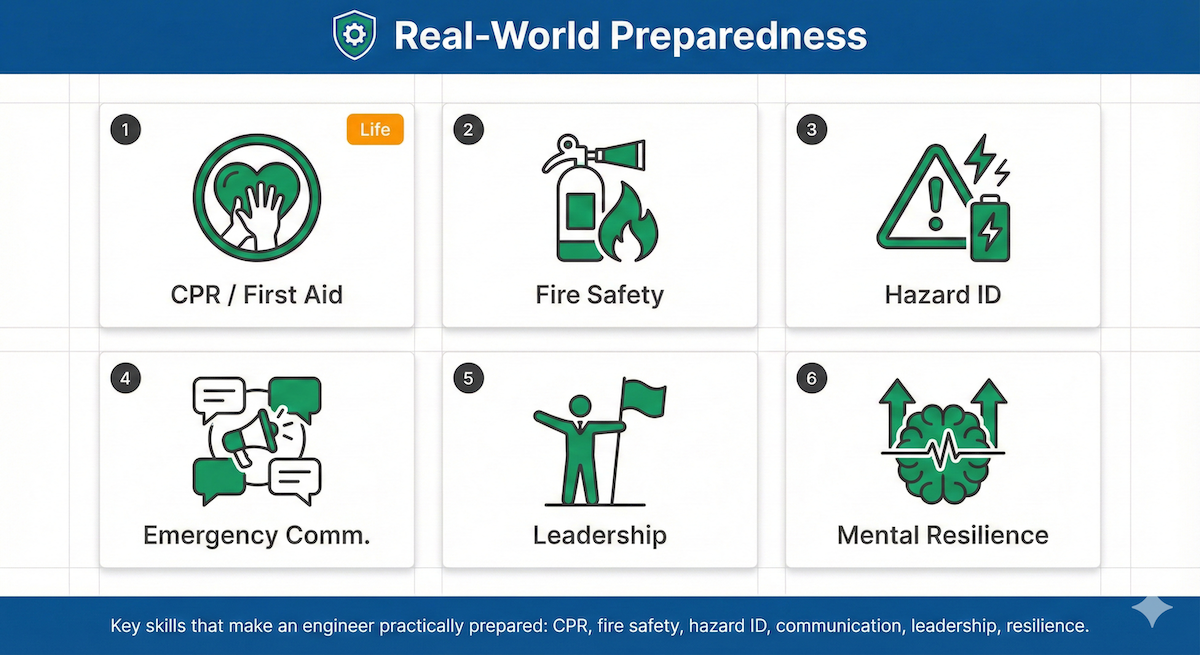
These six practical skills make technical work safer and more resilient.
Engineering Isn’t Just Technical It’s Human
When people think of engineers, they often picture individuals surrounded by schematics, formulas, and devices. But engineering is fundamentally about building systems that improve human life. Bridges exist to move communities; software exists to support users; equipment exists to keep workers safe. In every domain electrical, civil, mechanical, software, chemical, aerospace engineers make decisions that directly affect the wellbeing of real people.
How do technical skills and practical preparedness differ? The table below breaks it down.
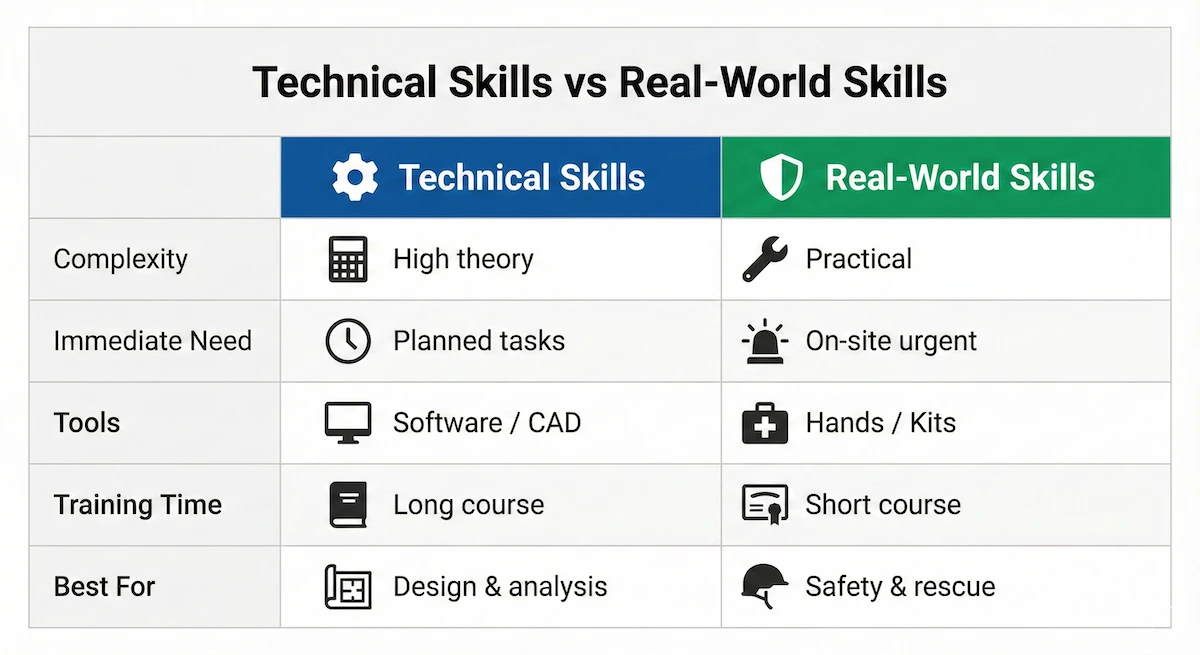
Both skillsets are needed — now you can see when each one applies.
That’s why technical competence alone is no longer enough. Today’s engineers must also be prepared to act in unpredictable real-world situations, especially those involving safety. While not every engineer works on a construction site or in a manufacturing plant, many still collaborate in labs, workshops, fabrication areas, or field environments where emergencies can occur. Having practical skills such as first aid, CPR, fire-safety awareness, or general emergency response could mean the difference between life and tragedy.
If something goes wrong, follow this five-step sequence to reduce harm in the first minutes.
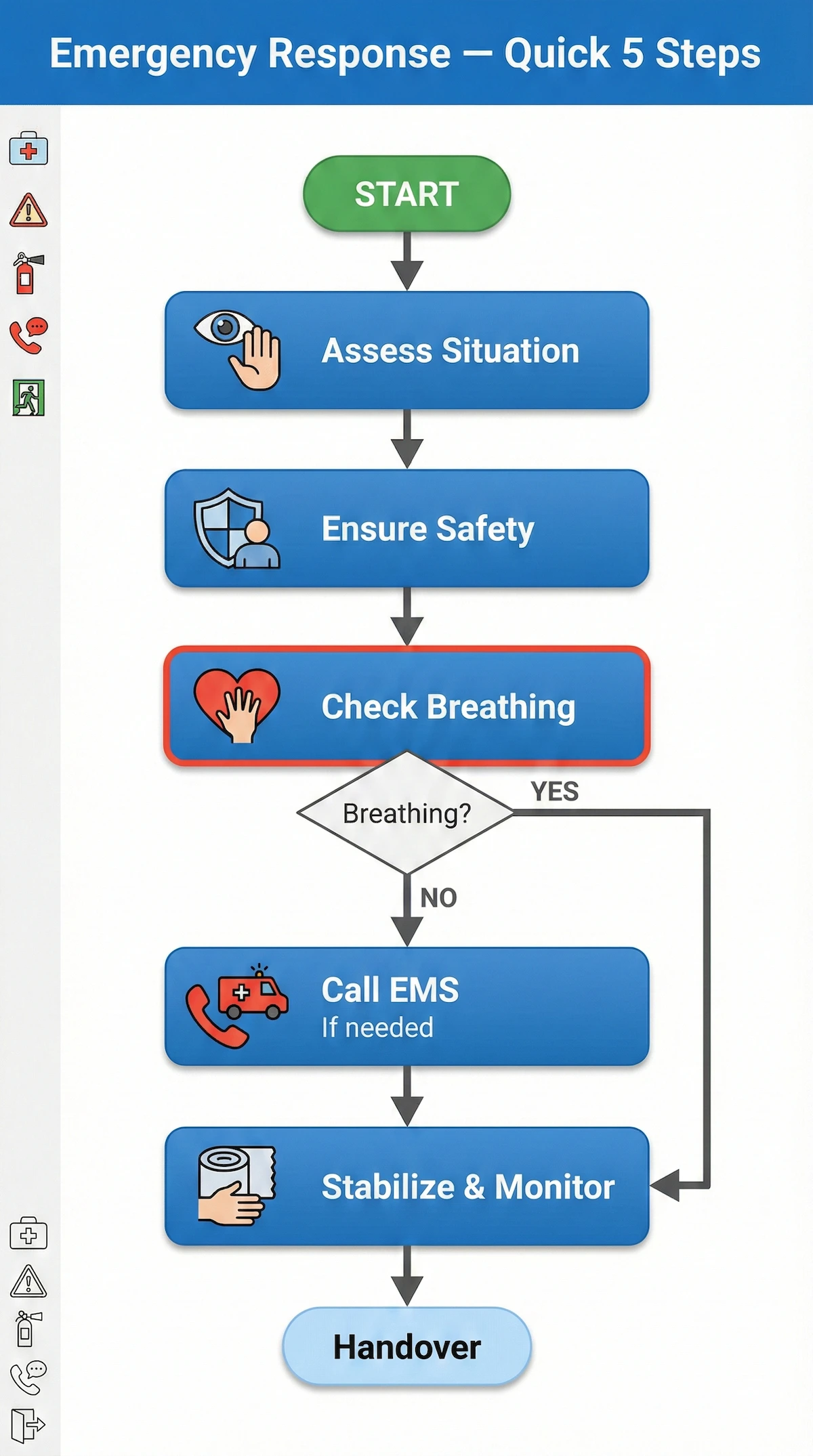
Memorize and practice these steps — they save time and lives.
Many engineering students and professionals are already turning to trusted online learning resources, including the My Engineering Buddy website, to strengthen their skills across both technical and real-world domains. Platforms like these reinforce the idea that growing as an engineer means expanding knowledge beyond the classroom or workplace.
Why Preparedness Matters More in a High-Speed, High-Tech World
Modern engineering environments are more advanced than ever. Automation, robotics, AI-driven systems, and high-voltage equipment are increasingly part of daily operations. While these tools enhance efficiency and accuracy, they also introduce new categories of risks from battery fires and chemical exposure to ergonomic injuries and electrical faults.
Engineers are problem-solvers by nature. So when something unexpected happens whether a coworker collapses, a machine malfunctions, or an environmental hazard appears the instinct is often to take action. But without proper training, even a well-intentioned response can be ineffective or unsafe.
This is where real-world preparedness comes in. Understanding safety protocols, knowing how to respond to a medical emergency, or being able to stabilize a situation until professional help arrives can dramatically reduce harm in any engineering workplace.
Preparedness Builds Stronger Engineering Teams
Every engineering project relies on teamwork. You need communication, collaboration, trust, and mutual support to achieve successful outcomes. And nothing strengthens team trust more than the assurance that everyone is capable of handling unexpected challenges.
A team where members know CPR, understand first aid, or can respond to an emergency is a team with:
- Higher confidence under pressure
- Better risk awareness
- Improved communication skills
- A deeper sense of responsibility
- Greater resilience during crises
Preparedness produces measurable team benefits — visualized below.
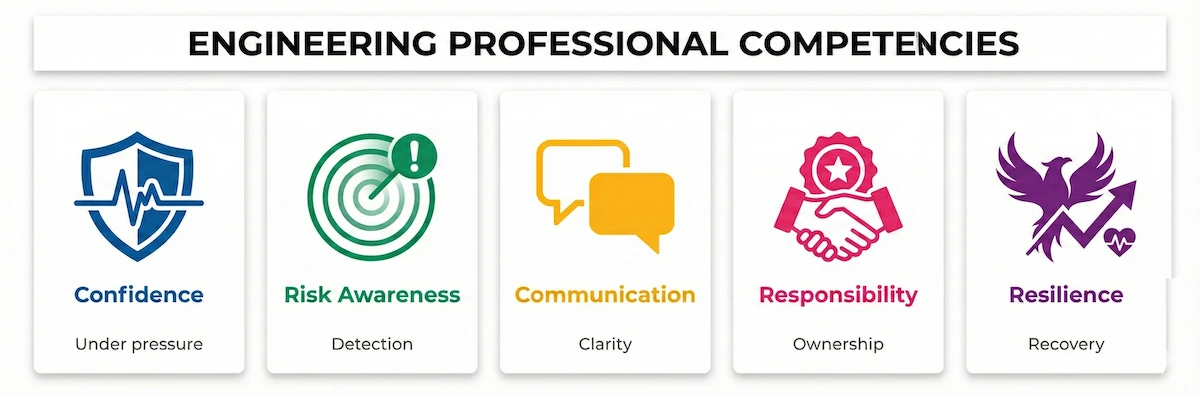
These outcomes make teams faster, safer, and more reliable under pressure.
These qualities are not separate from engineering, they enhance it. They make teams safer, more efficient, and better equipped to adapt to changing conditions.
Engineers Thrive When They Maintain a Generalist Edge
While engineering requires specialization, a growing number of professionals are embracing the idea of being multi-skilled. This doesn’t mean knowing everything, it means developing a strong, holistic foundation that blends technical expertise with practical life skills.
This generalist edge includes:
- Basic medical response skills
- Emergency communication strategies
- Safety awareness and hazard identification
- Leadership during moments of uncertainty
- Mental resilience and calm decision-making
Follow this practical five-step roadmap to build your generalist edge.
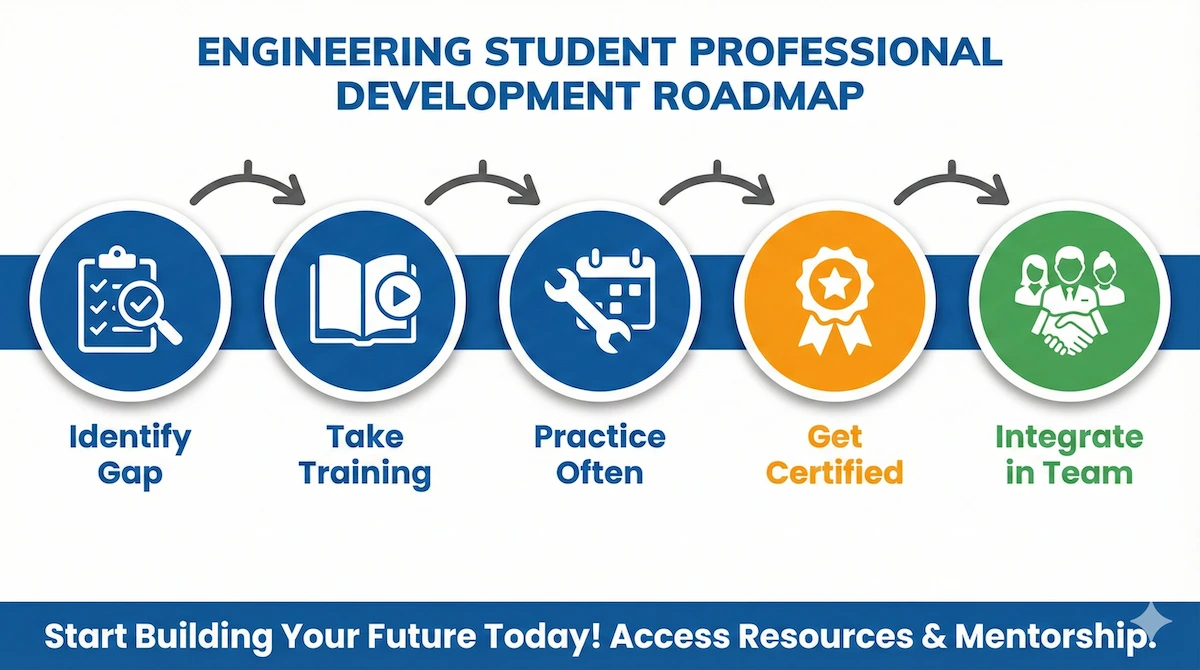
Start with identifying one gap — then take the next two steps this week.
In an industry that prizes analytical thinking, these human-centered abilities create a more well-rounded professional one who can lead, respond, and protect as well as design and innovate.
A Safer World Starts With the People Who Build It
Engineers shape the physical and digital world. They create systems that society depends on every day. This makes them uniquely positioned to influence safety standards—not just in the structures and products they create, but in the way they carry themselves as professionals.
By investing in emergency-readiness training, engineers send a powerful message:
Safety is not optional, it’s part of the foundation we build on.
Final Thoughts
In a world where engineering problems are more complex and the environments more unpredictable, modern engineers need a new kind of preparedness. One that includes, but doesn’t end with, technical expertise. One that empowers them to lead confidently in emergencies, support their teams, and protect the people around them.
Skills like first aid and CPR aren’t just for healthcare workers, they’re for anyone who works in environments with people, equipment, or risk. And for engineers, these abilities enhance not just professional capability, but personal resilience.
As the industry evolves, so too must the engineers who define it. The future belongs to those who are technically sharp, mentally strong, and practically prepared.
******************************
This article provides general educational guidance only. It is NOT official exam policy, professional academic advice, or guaranteed results. Always verify information with your school, official exam boards (College Board, Cambridge, IB), or qualified professionals before making decisions. Read Full Policies & Disclaimer , Contact Us To Report An Error