




~1 min
Average Reply Time
~1 hour
To Be Matched With A Tutor
1 Trial
75% Find Their Tutor On The 1st Trial
$1
Your First 30 Minutes
Hire The Best Animation Tutor
Top Tutors, Top Grades. Without The Stress!
Related Subjects
Your animation reel isn’t weak because you lack talent — it’s weak because nobody has stopped the timeline and shown you exactly where the motion breaks.
Animation Tutor Online
Animation is the practice of creating the illusion of movement through sequenced images, frames, or digital keyframes. It spans 2D hand-drawn, 3D CGI, stop-motion, and motion graphics, equipping students with technical, narrative, and visual storytelling skills.
MEB offers 1:1 online lessons and coaching in 2,800+ advanced subjects — and animation is one of the most in-demand. Whether you’re looking for an animation tutor near me or working across time zones, MEB connects you with a verified animation tutor online who knows your software, your style, and your deadline. Part of our broader fine arts tutoring catalogue, animation sessions are calibrated to exactly where your skills currently sit — not a generic curriculum.
- 1:1 online sessions tailored to your animation style, software, and goals
- Expert verified tutors with hands-on animation and motion design experience
- Flexible time zones — US, UK, Canada, Australia, Gulf
- Structured learning plan built after a diagnostic session
- Structured practice plans and progress tracking between sessions
52,000+ students across the US, UK, Canada, Australia, and the Gulf have used MEB since 2008 — including students in Fine Arts subjects like Animation, digital art, and illustration.
Source: My Engineering Buddy, 2008–2025.
How Much Does an Animation Tutor Cost?
Most animation tutoring sessions run $20–$40/hr depending on level and focus area. Advanced rigging, 3D character animation, or visual effects work with specialist tutors can reach $100/hr. You can test the fit first — the $1 trial gets you 30 minutes of live 1:1 coaching or one detailed walkthrough of a specific technique or project problem.
| Level / Need | Typical Rate | What’s Included |
|---|---|---|
| Beginner / Foundation | $20–$30/hr | 1:1 sessions, technique practice, software basics |
| Intermediate / Portfolio | $30–$50/hr | Project guidance, reel review, style development |
| Advanced / Specialist | $50–$100/hr | 3D rigging, VFX, professional pipeline workflows |
| $1 Trial | $1 flat | 30 min live session or one technique explained in full |
Tutor availability tightens during portfolio submission windows and semester-end crunch periods. Book early if you’re on a deadline.
WhatsApp MEB for a quick quote — average response time under 1 minute.
Who This Animation Tutoring Is For
This is for students who know what they want to create but keep hitting a wall. Whether the problem is timing, rigging, composition, or software, the gap is technical — and it closes faster with a tutor than without one.
- Undergraduate and BFA students building their first serious animation portfolio
- Students 4–6 weeks from a portfolio submission or degree show with significant gaps still to close
- Self-taught animators transitioning to professional software like Maya, Blender, or After Effects
- Graduate students in animation or motion design needing deeper critique and conceptual direction
- Parents watching a child’s confidence drop alongside their grades in a visual arts programme
- Working creatives adding animation to their skill set for freelance or studio roles
Students from programmes at institutions including the Rhode Island School of Design, Savannah College of Art and Design, the Royal College of Art, ArtCenter College of Design, and Emily Carr University have used MEB for animation coaching at various stages of their studies.
1:1 Tutoring vs Self-Study vs AI vs YouTube vs Online Courses
Self-study works if you’re disciplined, but animation without feedback produces bad habits baked into muscle memory. AI tools explain concepts fast but can’t watch your timeline and tell you why your walk cycle looks robotic. YouTube is brilliant for technique overviews — it stops when you’re stuck on your specific rig or your specific frame. Online courses give structure but move at a fixed pace with no one correcting your spline tangents in real time. With 1:1 animation tutoring through MEB, the tutor watches you work, catches the moment the arc breaks, and fixes it before it becomes a habit — calibrated to your software, your project, and your deadline.
Outcomes: What You’ll Be Able To Do in Animation
After working with an MEB animation tutor, you’ll be able to apply the 12 principles of animation — squash and stretch, anticipation, follow-through — with intentional control rather than guesswork. You’ll analyse your own work critically, identifying where timing or spacing undermines the illusion of weight. You’ll model and rig characters in Maya or Blender with clean deformation. You’ll present a portfolio reel that demonstrates range across at least two animation disciplines. You’ll solve problems in your workflow independently — whether that’s a broken rig, a render error, or a scene that simply doesn’t read.
Based on feedback from 40,000+ sessions collected by MEB from 2022 to 2025, students working 1:1 on Animation consistently report noticeably stronger technical control and faster improvement in timing and motion quality than self-directed practice alone. Progress varies by starting level and practice frequency.
Source: MEB session feedback data, 2022–2025.
Try your first session for $1 — 30 minutes of live 1:1 tutoring or one technique or project problem explained in full. No registration. No commitment. WhatsApp MEB now and get matched within the hour.
What We Cover in Animation (Syllabus / Topics)

2D Animation & Traditional Principles
- The 12 principles: timing, spacing, arcs, anticipation, squash and stretch
- Hand-drawn and frame-by-frame animation in Toon Boom Harmony or TVPaint
- Character walk cycles, lip sync, and emotion through body mechanics
- Scene staging, camera angles, and storyboard-to-animation workflow
- Rough animation, clean-up, and ink-and-paint pipeline
- Animating to dialogue and music using X-sheets
Core references: The Animator’s Survival Kit by Richard Williams; Cartoon Animation by Preston Blair; How to Cheat in Toon Boom Harmony by Adam Phillips.
3D Animation & Character Rigging
- Keyframe animation and graph editor curves in Maya and Blender
- Character rigging: joint placement, skinning, blend shapes, and corrective shapes
- Walk cycles, runs, jumps, and physical simulations in 3D space
- Facial animation and morph targets for performance capture
- Camera animation and cinematography principles applied in 3D scenes
- Render setup, lighting basics, and delivering a polished 3D shot
Core references: Stop Staring: Facial Modeling and Animation Done Right by Jason Osipa; Character Animation Crash Course by Eric Goldberg; official Autodesk Maya and Blender documentation.
Motion Graphics & Digital Effects
- Motion graphics design in Adobe After Effects — keyframes, expressions, easing
- Typography in motion: kinetic text, title design, lower thirds
- Compositing: green screen, masking, and layered visual effects
- Designing for broadcast, social media, and interactive formats
- Intro to particle systems and simulation effects in After Effects and Cinema 4D
Core references: Motion Design by Ian Albinson; Creating Motion Graphics with After Effects by Chris Meyer and Trish Meyer; Adobe’s official After Effects documentation.
At MEB, we’ve found that animation students improve fastest when the tutor pauses the session, takes control of the timeline briefly, and demonstrates the fix live — then hands it back immediately. Watching and doing in the same session is what sticks.
What a Typical Animation Session Looks Like
The tutor opens by reviewing the practice task from last time — usually a specific principle like follow-through on a tail or the spacing on a ball drop. You share your screen and walk through what you attempted. The tutor watches closely, then uses a digital pen-pad to annotate your timeline or sketch the correct arc directly over your frames. You work on a specific scene or rig problem together — maybe fixing graph editor curves on a character jump, or troubleshooting why a mesh is deforming badly around a shoulder joint. The tutor has you replicate the correction yourself before the session ends. A concrete task is set: three polished walk cycles, or one 10-second lip-sync shot. Next session’s focus is noted before you log off.
How MEB Tutors Help You with Animation (The Learning Loop)
Diagnose: In the first session, the tutor asks you to show recent work — a reel clip, a practice animation, or a reference exercise. They identify the exact breakdown: is it timing, arc quality, graph editor misuse, or a conceptual misunderstanding of weight and physics? That diagnosis shapes everything that follows.
Explain: The tutor works through a live example on screen using a digital pen-pad or iPad and Apple Pencil — sketching motion paths, annotating your timeline, or demonstrating a corrected spline curve. Nothing is abstract. Every explanation is tied to your actual file.
Practice: You attempt the correction or the exercise while the tutor watches. They don’t take over — they prompt. “What happens if you push that spacing further?” “Where’s the anticipation?” You learn by doing it wrong first and fixing it with guidance.
Feedback: Step-by-step error correction follows every practice attempt. The tutor names what you did well and exactly what broke the illusion — and why. Not just “the timing is off” but “your spacing is even across frames 10–18, which removes the sense of acceleration.”
Plan: Each session ends with a clear next task and the topic for the following session. Over 4–8 weeks, the tutor tracks your progress across principles, software skills, and portfolio quality — adjusting pace based on what’s actually improving.
Sessions run over Google Meet. The tutor uses a digital pen-pad or iPad with Apple Pencil to annotate your work live. Before your first session, share a recent animation file or reel clip, the software you’re using, and your goal — portfolio deadline, specific skill gap, or course requirement. The first session covers a diagnostic review plus one focused technique correction. Start with the $1 trial — 30 minutes of live coaching that also serves as your first diagnostic.
Tutor Match Criteria (How We Pick Your Tutor)
Not every animator makes a good animation tutor. MEB matches on four criteria.
Subject depth: The tutor’s background must match your focus — 2D character animation, 3D rigging, motion graphics, or VFX. A generalist won’t be placed with a student who needs Houdini simulations or Toon Boom Harmony expertise.
Tools: Every MEB animation tutor works with a digital pen-pad or iPad and Apple Pencil during sessions. They can annotate your timeline, sketch arc corrections, and demonstrate in your software in real time.
Time zone: Matched to your region — US, UK, Gulf, Canada, or Australia — so sessions run at a civilised hour without negotiation.
Goals: Whether you’re building a portfolio reel, fixing a specific technique, or developing conceptual range for a degree programme, the tutor is chosen based on what you’re actually trying to achieve.
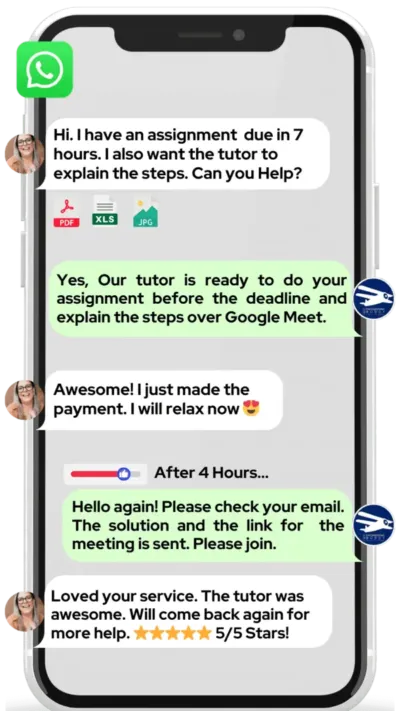
Unlike platforms where you fill out a form and wait, MEB responds in under a minute, 24/7. Tutor match takes under an hour. The $1 trial means you test before you commit. Everything runs over WhatsApp — no logins, no intake forms.
Pricing Guide
Animation tutoring starts at $20/hr for foundational technique and software coaching. Intermediate portfolio work and project critique typically runs $30–$50/hr. Specialist sessions in 3D rigging, VFX pipelines, or professional studio workflows can reach $100/hr depending on tutor background and topic complexity.
Rate factors: your current level, the software involved, timeline pressure, and tutor availability. Spots fill quickly during portfolio submission seasons at major art schools.
For students targeting admission to programmes at SCAD, RCA, CalArts, or similar — tutors with professional studio and film production backgrounds are available at higher rates. Share your specific goal and MEB will match the tier to your ambition.
Start with the $1 trial — 30 minutes, no registration, no commitment. WhatsApp MEB for a quick quote.
Students consistently tell us that the gap between “almost right” and “actually good” in animation is smaller than they think — but invisible without a trained eye on their work. The tutor’s job is to make that gap visible and then close it.
FAQ
Is animation hard to learn?
The core principles — timing, spacing, arcs — take weeks to grasp and years to master. Software adds a technical layer on top. Most students find that 1:1 feedback accelerates progress significantly because bad habits are caught early rather than reinforced.
How many sessions are needed?
For a focused skill gap — one software tool or one principle — four to six sessions often makes a clear difference. For portfolio development from scratch, most students work with a tutor over eight to sixteen weeks, typically one or two sessions per week.
How do you structure practice between sessions?
The tutor sets a specific practice task at the end of each session — one focused exercise, not open-ended practice. You bring that work to the next session for review. Progress compounds quickly when practice is deliberate and feedback is consistent.
Will the tutor match my current level and goals?
Yes. MEB matches based on your software, your current skill level, and your specific goal — whether that’s a university portfolio, a freelance reel, or a course requirement. You won’t be paired with a generalist when you need someone who knows Maya rigging specifically.
What happens in the first session?
The tutor reviews work you’ve brought — a reel clip, a practice animation, or a reference exercise — and identifies where the technique is breaking down. You agree on a focus area. The session then moves into one targeted correction or technique walkthrough.
Are online animation lessons as effective as in-person?
For most animation work, yes — screen sharing, digital pen annotation, and real-time file access replicate the studio critique experience closely. The tutor sees exactly what you’re working on and can annotate your timeline directly. The main difference is physical model drawing, which adapts well to camera or image sharing.
Can I get animation help at midnight or on weekends?
Yes. MEB tutors cover multiple time zones, and WhatsApp availability is 24/7 for matching and scheduling. If you’re on a deadline at 11pm, contact MEB and a tutor match is typically confirmed within the hour, with a session bookable for the same day.
What if I don’t click with my assigned tutor?
Tell MEB via WhatsApp and you’ll be rematched. No explanation required. The $1 trial is designed specifically so you test the fit before committing to a longer run of sessions.
Do you cover 3D animation software like Maya and Blender specifically?
Yes. MEB tutors cover Maya, Blender, Cinema 4D, After Effects, Toon Boom Harmony, and TVPaint among others. When you make contact, share the software you’re using and the specific version — the tutor matched will have hands-on working knowledge of that tool.
What’s the difference between 2D and 3D animation tutoring, and can I get help with both?
2D tutoring focuses on frame-by-frame principles, timing charts, and software like Toon Boom. 3D covers rigging, graph editor curves, and rendering workflows in Maya or Blender. Some students need both — MEB can match a tutor who covers both disciplines, or arrange separate specialists for each.
How do I get started with an animation tutor?
Start with the $1 trial — 30 minutes of live 1:1 coaching or one specific technique explained in full. Three steps: WhatsApp MEB, get matched with an animation tutor within the hour, start your trial session.
How do I find an animation tutor near me?
MEB’s animation sessions are fully online via Google Meet, so location doesn’t restrict your options. Students across the US, UK, Canada, Australia, and the Gulf access the same verified tutor pool. Matching is based on your time zone, not your postcode.
MEB has served 52,000+ students since 2008 across 2,800+ subjects — with a 4.8/5 rating from 40,000+ verified reviews. Animation tutoring sits within a broader arts and creative disciplines network that includes drawing coaching, photography tutoring, and motion design support.
Source: My Engineering Buddy, 2008–2025.
Trust & Quality at My Engineering Buddy
Every MEB animation tutor is vetted through a multi-stage process: portfolio and credential review, a live demo session assessed by an MEB subject lead, and ongoing review based on student feedback. Tutors hold degrees in animation, film, visual arts, or related disciplines — many have professional studio experience in broadcast, games, or film production. Rated 4.8/5 across 40,000+ verified reviews on Google.
MEB tutoring is guided learning — you understand the work, then apply it yourself. For full details on what we help with and what we don’t, read our Academic Integrity policy and Why MEB.
MEB has been serving students in the US, UK, Canada, Australia, Gulf, and Europe since 2008 — across 2,800+ subjects in Fine Arts and beyond. Students working on art tutoring, performing arts coaching, and animation often move between disciplines as their portfolios develop. MEB covers the full range. See our tutoring methodology for how sessions are structured.
Our experience across thousands of sessions shows that animation students who arrive with a specific problem — “my walk cycle looks floaty” or “my rig keeps collapsing” — make faster progress than those who ask for general help. The more specific the problem, the faster the fix.
Explore Related Subjects
Students studying Animation often also need support in:
Next Steps
To get matched with the right animation tutor, have these ready:
- Your software (Maya, Blender, After Effects, Toon Boom, or other) and your current project or course brief
- A recent animation file, reel clip, or exercise you’ve attempted — even if it’s not working
- Your deadline or portfolio submission date, and your time zone
MEB matches you with a verified animation tutor — usually within an hour of your first message. The first session opens with a diagnostic review so every minute is spent on what actually needs fixing.
Before your first session, have ready: your course outline or personal project brief, a recent animation attempt you struggled with, and your deadline date. The tutor handles the rest.
Visit www.myengineeringbuddy.com for more on how MEB works.
WhatsApp to get started or email [email protected].
52,000+ Happy Students From Various Universities




Reviewed by Subject Expert
This page has been carefully reviewed and validated by our subject expert to ensure accuracy and relevance.
