


Hire The Best Civil3D Tutor
Top Tutors, Top Grades. Without The Stress!




52,000+ Happy Students From Various Universities






How Much For Private 1:1 Tutoring & Hw Help?
Private 1:1 Tutoring and HW help Cost $20 – 35 per hour* on average.
Civil3D won’t cooperate. Alignments break, pipe networks refuse to connect, and the deadline is Tuesday.
Civil3D Tutor Online
AutoCAD Civil 3D is an Autodesk civil engineering design software used for road design, grading, pipe networks, surveying, and land development. It equips engineers and students to produce construction-ready drawings and surface models.
Finding a Civil3D tutor near me who actually knows the software — not just the theory — is the problem most students describe when they contact MEB. Our 1:1 online tutoring in civil engineering covers every module in Civil 3D: from first-time setup through to production-level corridor modelling. The tutor diagnoses your specific gap in session one and works through it with you on screen.
- 1:1 online sessions tailored to your course outline or project brief
- Expert-verified tutors with hands-on Civil 3D and civil engineering project experience
- Flexible time zones — US, UK, Canada, Australia, Gulf covered
- Structured learning plan built after a diagnostic session
- Guided project support — we explain the workflow, you produce the output
52,000+ students across the US, UK, Canada, Australia, and the Gulf have used MEB since 2008 — including students in civil engineering subjects like Civil 3D, Autodesk InfraWorks, and highway design.
Source: My Engineering Buddy, 2008–2025.
How Much Does a Civil3D Tutor Cost?
Most Civil 3D tutoring sessions run $20–$40/hr. Advanced project work — corridor design for a graduate thesis, for example, or drainage modelling for a professional submission — sits at $50–$100/hr depending on the tutor’s industry background. The $1 trial gets you 30 minutes of live help or one full workflow explained before you commit to anything.
| Level / Need | Typical Rate | What’s Included |
|---|---|---|
| Undergraduate / coursework | $20–$35/hr | 1:1 sessions, project guidance |
| Graduate / professional project | $35–$70/hr | Industry-experienced tutor, niche depth |
| $1 Trial | $1 flat | 30 min live session or 1 workflow question |
Tutor availability tightens at the end of each semester. If your submission is within four weeks, contact MEB now rather than later.
WhatsApp MEB for a quick quote — average response time under 1 minute.
Who This Civil3D Tutoring Is For
Civil 3D sits at the intersection of software skill and engineering knowledge. Students struggle when they know the theory but can’t get the software to do what they need — or when they’re new to both at once.
- Undergraduate civil engineering students learning Civil 3D as part of a design module
- Graduate students using Civil 3D for thesis work in transportation, hydrology, or land development
- Students who failed a previous submission and need to rebuild their workflow from a solid base
- Engineers and technicians in the US, UK, Canada, or Australia upskilling for a new role or project
- Students with a project deadline approaching and significant gaps still to close
- Students at institutions such as Georgia Tech, Purdue, University of Waterloo, University of Leeds, or UNSW who have Civil 3D embedded in their design modules
At MEB, we’ve found that Civil 3D struggles almost always come down to one of three things: incorrect surface setup, misapplied corridor assembly, or a pipe network that wasn’t built on a proper alignment. Fix those foundations and the rest tends to follow quickly.
1:1 Tutoring vs Self-Study vs AI vs YouTube vs Online Courses
Self-study works if you have time and patience — but Civil 3D error messages rarely explain what went wrong in plain language. AI tools give fast answers, yet can’t see your drawing file or diagnose why your grading solution keeps producing negative depths. YouTube covers the basics well; it stops being useful when your specific corridor template breaks. Online courses are structured but fixed — they won’t pause on your subassembly problem. A 1:1 Civil3D tutor from MEB looks at your actual file, on screen, and corrects the specific error rather than the generic version of it.
Outcomes: What You’ll Be Able To Do in Civil 3D
After working with an online Civil3D tutor through MEB, students consistently report that they can build and manage surfaces from point cloud or survey data without losing contour accuracy. They apply corridor assemblies correctly for road design — choosing the right subassemblies for cut, fill, and daylight conditions. Students also model pipe and pressure networks with correct invert levels and cover depths, produce grading solutions for sites with complex slope constraints, and generate sheets and plan-profile drawings ready for construction documentation. These are not generic software skills. They translate directly to marks on assessed projects and to output a graduate employer can use.
Based on feedback from 40,000+ sessions collected by MEB from 2022 to 2025, 58% of students improved by one full grade after approximately 20 hours of 1:1 tutoring in subjects like Civil 3D. A further 23% achieved at least a half-grade improvement.
Source: MEB session feedback data, 2022–2025.
What We Cover in Civil 3D (Topics)

Track 1: Surfaces, Survey Data & Grading
- Creating TIN and grid surfaces from survey point data and point clouds
- Surface editing: breaklines, boundaries, and contour smoothing
- Grading objects and grading groups for site earthworks
- Volume dashboards and cut/fill calculations between surfaces
- Watershed analysis and surface slope analysis tools
- Feature lines and their role in grading feature control
Core references: Civil 3D 2024 Official Help Documentation (Autodesk); Mastering AutoCAD Civil 3D by Lousberg, Tallman & Eischen.
Track 2: Alignments, Profiles & Corridors
- Horizontal alignment creation using fixed, floating, and free entities
- Vertical profile design — existing ground versus finished grade
- Corridor modelling: selecting and configuring subassemblies
- Assembly editor: cut, fill, daylight, and lane subassembly configurations
- Intersection design and roundabout corridor workflows
- Sample lines, sections, and materials quantity take-off
- Superelevation design and design speed compliance checking
Core references: Mastering AutoCAD Civil 3D by Lousberg et al.; Federal Aviation Administration advisory circulars for airport pavement design (for students covering airfield design modules).
Track 3: Pipe Networks, Pressure Pipes & Sheets
- Gravity pipe network creation from scratch and from feature lines
- Pressure network design for water distribution systems
- Structure and pipe rules: cover depth, slope, and invert matching
- Interference detection between crossing utilities
- Plan-profile sheet generation and data band customisation
- Plan production: sheet set manager, page setup, and viewport scaling
Core references: Civil 3D 2024 Official Help Documentation (Autodesk); AutoCAD Civil 3D 2023: Fundamentals (Autodesk Authorised Training Centre series).
What a Typical Civil3D Session Looks Like
The tutor starts by checking where you got stuck last time — usually a specific corridor region rule or a surface that’s behaving unexpectedly. You share your screen on Google Meet. The tutor works through the problem on their end using a digital pen-pad, annotating what they’re doing and why: which command sequence, which parameter is wrong, which setting in the corridor properties is causing the daylight line to miss. Then you replicate it in your file while they watch. If you go wrong at a step, they catch it before it compounds. The session closes with a specific task: build the next section of the alignment, set up the pressure network on the second street, check your cover depths against local standards. The tutor logs the next topic before you disconnect.
How MEB Tutors Help You with Civil 3D (The Learning Loop)
Diagnose: In the first session, the tutor asks you to walk through your current file or assignment brief. They look for the specific error pattern — wrong surface boundary, missing baseline, incorrect subassembly parameter — rather than starting from scratch with theory you may already know.
Explain: The tutor works the problem live on screen with a digital pen-pad or iPad and Apple Pencil, narrating each step. You see the command sequence, the parameter choice, and the outcome — not a pre-recorded walkthrough.
Practice: You attempt the same workflow in your file while the tutor watches. This is where most of the learning actually happens — not in watching, but in doing with someone present.
Feedback: The tutor stops you when something is about to go wrong. They explain why — which Civil 3D rule you’ve hit, what the consequence would be downstream in the model, and how to avoid it next time.
Plan: Each session ends with a named next topic and a short task. Progress is tracked across sessions so nothing is re-explained unnecessarily.
Students consistently tell us that the biggest shift in Civil 3D learning comes when they stop watching tutorials and start building files with someone watching them. Errors that felt random become patterns. Patterns become habits. That’s when the software starts to feel manageable.
Sessions run on Google Meet. The tutor uses a digital pen-pad or iPad with Apple Pencil for annotation. Before your first session, share your course outline or project brief and the specific file or task you’re stuck on. The first session covers the diagnostic and gets at least one core issue resolved. Start with the $1 trial — 30 minutes of live tutoring that also serves as your first diagnostic.
Tutor Match Criteria (How We Pick Your Tutor)
Not every Civil 3D tutor is right for every brief. MEB matches on four criteria.
Subject depth: The tutor must have direct experience with the Civil 3D module you’re working in — corridor design, drainage networks, or land parcelling — not general CAD experience.
Tools: All tutors use Google Meet with screen share and a digital pen-pad or iPad and Apple Pencil. You see the software operated in real time, not described in slides.
Time zone: Matched to your region — US, UK, Gulf, Canada, or Australia. Evening and weekend slots are available in all regions.
Goals: Whether the goal is passing a university design module, completing a graduate thesis deliverable, or clearing a professional upskilling gap, the tutor is briefed on it before session one.
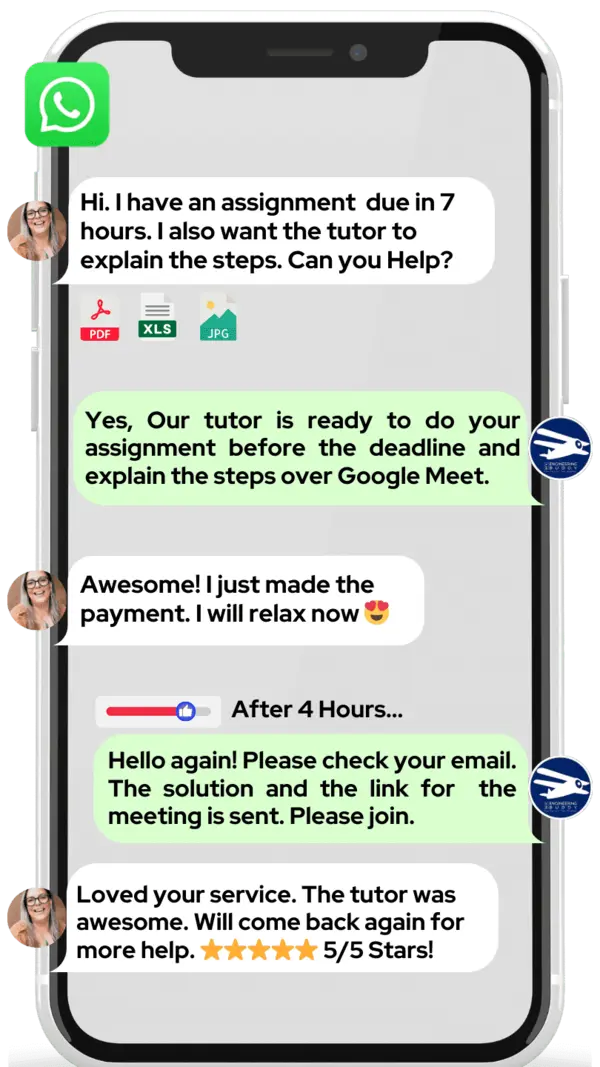
Unlike platforms where you fill out a form and wait, MEB responds in under a minute, 24/7. Tutor match takes under an hour. The $1 trial means you test before you commit. Everything runs over WhatsApp — no logins, no intake forms.
Pricing Guide
Civil 3D tutoring starts at $20/hr for undergraduate coursework and standard design modules. Graduate-level sessions — particularly where the tutor brings industry project experience in transportation, drainage, or land development — run $50–$100/hr. Rate depends on the complexity of the Civil 3D task, how quickly the tutor is needed, and the student’s level.
For students targeting graduate roles at major infrastructure firms or preparing Civil 3D deliverables for professional submissions, tutors with industry backgrounds in road design, water infrastructure, or site development are available at higher rates — share your specific goal and MEB will match the tier to your needs.
Availability tightens at semester end in the US, UK, and Australia. Book early if your submission is within three weeks.
Start with the $1 trial — 30 minutes, no registration, no commitment. WhatsApp MEB for a quick quote.
MEB has covered civil engineering software and design subjects — including ETABS tutoring, HEC-RAS help, and structural engineering tutoring — since 2008. The platform runs across 2,800+ subjects with the same 1:1 model throughout.
Source: My Engineering Buddy, 2008–2025.
FAQ
Is Civil 3D hard to learn?
It has a steep learning curve. The software logic — surfaces feeding alignments, alignments feeding corridors — is not obvious until you’ve built a complete model end to end. Most students get stuck at corridors or pipe networks. A tutor cuts that learning time significantly.
How many sessions will I need?
For a specific project gap, two to four sessions often resolves it. For a full design module covering surfaces, corridors, and drainage, eight to twelve sessions over a semester is a common pattern. The tutor estimates this after the first diagnostic session.
Can you help with projects and portfolio work?
Yes — MEB tutors explain Civil 3D workflows, debug your model with you, and guide your design decisions. All project work is produced and submitted by you. See our Policies page for full details on what we help with and what we don’t.
Will the tutor match my exact syllabus or software version?
Yes. MEB tutors work across Civil 3D versions from 2020 through to 2024. If your university module uses a specific workflow or assessment rubric, share it before session one and the tutor aligns to it directly.
What happens in the first session?
The tutor reviews your file or brief, identifies where the model is going wrong, and resolves at least one concrete issue before the session ends. You leave with a clear next step and a topic plan for subsequent sessions.
Is online tutoring as effective as in-person for Civil 3D?
For software-based subjects, online is arguably better. The tutor sees your exact screen, annotates on your drawing file, and can take control if needed. There’s no geography constraint and you can record sessions for review.
Can I get Civil 3D help at short notice — same day or late at night?
Yes. MEB operates 24/7 across time zones. WhatsApp MEB and a tutor match typically happens within the hour. Late-night sessions before a submission deadline are common — mention your urgency when you message.
What if I don’t get along with the assigned tutor?
Tell MEB on WhatsApp and a replacement is arranged, usually within the same day. The $1 trial exists precisely so you can test the fit before committing to a full session block.
Do you offer group Civil 3D sessions?
No. Every MEB session is 1:1. Civil 3D problems are specific to each student’s file and workflow — group sessions don’t allow the tutor to work through your actual model, which is where the value is.
What’s the difference between Civil 3D and AutoCAD — do I need both?
Civil 3D runs on the AutoCAD platform but adds civil engineering objects — surfaces, alignments, corridors, pipe networks — that don’t exist in standard AutoCAD. Most civil engineering programmes require Civil 3D specifically. Basic AutoCAD drawing skills help but are not a prerequisite.
Can your tutors help with the Autodesk Civil 3D certification exam?
Yes. MEB tutors familiar with the Autodesk Certified Professional: Civil 3D for Infrastructure Design exam can guide preparation — covering the specific workflows and tool knowledge the exam tests. Share the exam date and your current skill gaps when you message.
How do I get started?
WhatsApp MEB, share your project brief or the specific Civil 3D task you’re stuck on, and you’ll be matched with a tutor. First step is the $1 trial — 30 minutes live or one full workflow explained. No registration needed.
Trust & Quality at My Engineering Buddy
Every MEB tutor goes through a subject-specific screening process that includes a live demo session and review of their Civil 3D project history. Tutors hold degrees in civil engineering, transportation engineering, or closely related fields — and most have professional project experience alongside their academic background. Rated 4.8/5 across 40,000+ verified reviews on Google, MEB has maintained the same standard since 2008 through ongoing session feedback review.
MEB provides guided learning support. All project work is produced and submitted by the student. See our Policies page for details.
MEB serves students across the US, UK, Canada, Australia, the Gulf, and Europe in 2,800+ subjects. Within civil engineering, that includes subjects like geotechnical engineering tutoring, transportation engineering help, and water resources engineering tutoring. The platform has operated since 2008 with a consistent 1:1 model — no group classes, no pre-recorded courses, no generic session scripts.
The same 1:1 model that covers Civil 3D at MEB also runs across surveying tutoring, structural analysis help, and foundation design engineering tutoring — subjects civil engineering students regularly need alongside Civil 3D.
Source: My Engineering Buddy, 2008–2025.
Try your first session for $1 — 30 minutes of live 1:1 tutoring or one homework question explained in full. No registration. No commitment. WhatsApp MEB now and get matched within the hour.
Explore Related Subjects
Students studying Civil 3D often also need support in:
Next Steps
When you message MEB, share three things: your Civil 3D version and course or project brief, the specific task or error you’re stuck on, and your deadline or exam date. That’s enough to get a tutor matched.
- Share your availability and time zone
- MEB matches you with a verified Civil 3D tutor — usually within an hour
- First session starts with a diagnostic so every minute is used on your actual gap
Before your first session, have ready: your course outline or project brief, a recent file or task you struggled with, and your submission or exam date. The tutor handles the rest.
Visit www.myengineeringbuddy.com for more on how MEB works.
WhatsApp to get started or email meb@myengineeringbuddy.com.
Reviewed by Subject Expert
This page has been carefully reviewed and validated by our subject expert to ensure accuracy and relevance.