




~1 min
Average Reply Time
~1 hour
To Be Matched With A Tutor
30 Min Trial
75% Find Their Tutor On The 1st Trial
$20-35+/hr
Premium Yet Affordable Learning
Latin at GCSE is unforgiving. Students who coast through Year 10 on memorised vocab lists hit the unseen translation paper and freeze — and by then, there are usually six weeks left.
GCSE Latin Tutor Online
GCSE Latin is a formal qualification offered by exam boards including OCR and WJEC, assessing students on Latin language (grammar, vocabulary, translation) and classical civilisation texts. It is graded 9–1 under the reformed UK secondary framework.
If you’re searching for a GCSE Latin tutor near me, MEB offers 1:1 online GCSE Latin tutoring across the US, UK, Canada, Australia, and the Gulf — live sessions tailored to your exact exam board, whether that’s OCR or WJEC. Our GCSE tutoring covers 2,800+ subjects, and Latin is one of the most consistently requested classical language courses. A structured tutor won’t just translate texts with you — they’ll show you exactly where your grammar is costing marks.
- 1:1 online sessions aligned to your OCR or WJEC Latin syllabus
- Expert-verified tutors with classical languages backgrounds
- Flexible time zones — US, UK, Canada, Australia, Gulf
- Structured learning plan built after a diagnostic session
- Ethical homework and assignment guidance — you understand the work before you submit
52,000+ students across the US, UK, Canada, Australia, and the Gulf have used MEB since 2008 — including students in GCSE subjects like GCSE Latin, GCSE Classical Greek, and GCSE English Literature.
Source: My Engineering Buddy, 2008–2025.
How Much Does a GCSE Latin Tutor Cost?
Most GCSE Latin tutoring sessions run $20–$40/hr. Specialist tutors with classical research backgrounds or Oxford/Cambridge preparation experience may go up to $100/hr. The $1 trial gets you 30 minutes of live tutoring or a full explanation of one question — no registration required.
| Level / Need | Typical Rate | What’s Included |
|---|---|---|
| Standard GCSE (Year 10–11) | $20–$35/hr | 1:1 sessions, grammar, translation, homework guidance |
| Advanced / Oxbridge prep | $35–$100/hr | Expert tutor, unseen translation strategy, prose composition |
| $1 Trial | $1 flat | 30 min live session or one homework question explained in full |
Availability tightens in April and May when GCSE exam season peaks — early booking makes a real difference. WhatsApp MEB for a quick quote — average response time under 1 minute.
Who This GCSE Latin Tutoring Is For
GCSE Latin draws students from very different starting points. Some have studied it from Year 7; others pick it up in Year 10 with almost no prior language exposure. Either way, the gaps that open up tend to follow the same pattern: grammar rules half-learned, vocabulary recognised but not retained, and unseen translations approached as guesswork rather than method.
- Students struggling with Latin morphology — declensions, conjugations, subjunctive clauses
- Students who can read set texts but fall apart on unseen passages
- Students with a conditional university offer depending on their GCSE Latin grade
- Students 4–6 weeks from their OCR or WJEC exam with significant gaps still to close
- Parents watching a child’s confidence drop alongside their Latin grades
- Students aiming for Classics or Ancient History at universities like Oxford, Cambridge, Durham, or St Andrews
If your school doesn’t offer Latin — increasingly common — an online tutor for classical languages is often the only realistic route to sitting the exam.
1:1 Tutoring vs Self-Study vs AI vs YouTube vs Online Courses
Self-study works if you’re disciplined, but Latin grammar errors compound — nobody catches them. AI tools can explain ablative absolutes in seconds, but can’t watch you translate a sentence and catch the exact moment you misread a verb ending. YouTube is genuinely useful for grammar overviews; it stops cold when you’re stuck on a specific OCR verse paper. Online courses move at a fixed pace — if you miss a step, the rest still plays. With MEB, a 1:1 online GCSE Latin tutor works through your actual exam board’s texts, corrects errors in the moment, and adjusts the session when you’re stuck on gerundives rather than ploughing ahead to the next topic.
Outcomes: What You’ll Be Able To Do in GCSE Latin
After structured 1:1 sessions, students typically move from passive recognition to active command of the language. You’ll be able to apply noun declensions and verb conjugations without looking up paradigms mid-translation. You’ll analyse OCR set texts — Virgil’s Aeneid or Caesar’s Gallic Wars — and explain the grammar driving each sentence. You’ll approach unseen translation systematically: identify the main verb, parse the subject, work outward. You’ll write answers to comprehension and literary-effect questions that address the mark scheme directly. You’ll present a timed translation under exam conditions without freezing on unfamiliar vocabulary.
Supporting a student through GCSE Latin? MEB works directly with parents to set up sessions, track progress, and keep coursework on schedule. WhatsApp MEB — average response time is under a minute, 24/7.
Based on feedback from 40,000+ sessions collected by MEB from 2022 to 2025, 58% of students improved by one full grade after approximately 20 hours of 1:1 tutoring in subjects like GCSE Latin. A further 23% achieved at least a half-grade improvement.
Source: MEB session feedback data, 2022–2025.
What We Cover in GCSE Latin (Syllabus / Topics)
OCR is the dominant board for GCSE Latin in England; WJEC covers Wales. Both assess Latin language skills and classical literature. The breakdown below reflects OCR’s structure, which most UK students follow.
Latin Language: Grammar and Translation
- Noun declensions (1st–5th) and adjective agreement
- Verb conjugations: present, imperfect, perfect, pluperfect, future — active and passive
- Subjunctive clauses: purpose, result, indirect statement, cum clauses
- Participles: present, perfect passive, future active
- Gerunds, gerundives, and the ablative absolute construction
- Unseen translation technique: parsing strategy and working from main verb
- Vocabulary retention across the OCR defined word list
Core texts: Latin to GCSE (Cullen & Taylor, Bloomsbury), Latin: An Intensive Course (Moreland & Fleischer), OCR-published vocabulary and grammar guide.
Set Texts: Prose and Verse
- Caesar, Gallic Wars: narrative structure, military vocabulary, indirect speech
- Livy: historical prose style, rhetorical devices, nominative and ablative usage
- Virgil, Aeneid: dactylic hexameter, epic conventions, literary effects
- Ovid, Metamorphoses: elegiac couplets, imagery, transformation themes
- Comprehension questions: identifying grammar, explaining effects, translating with accuracy
- Literary-effect questions: how word order, alliteration, and enjambment create meaning
Core texts: OCR-set text editions with commentary, Reading Latin (Jones & Sidwell, Cambridge University Press), board-specific approved anthologies.
Classical Civilisation Component (where applicable)
- Roman history and society as context for set texts
- The world of the Roman army (Caesar background)
- Roman religion and mythology (Virgil and Ovid context)
- Connecting literary choices to Roman cultural values
- Short-answer and extended response question technique
Core texts: The Romans: An Introduction (Aldrete, Oxford), OCR Classical Civilisation GCSE student book, board-supplied source booklets.

At MEB, we’ve found that GCSE Latin students who struggle with unseens are almost never short on vocabulary — they’ve skipped the parsing step. Once a tutor walks through that process once, on a real passage, the improvement in timed conditions is immediate and measurable.
What a Typical GCSE Latin Session Looks Like
The tutor opens by checking the previous session’s topic — usually a grammar point like the gerundive construction or an OCR set-text passage from Caesar or Virgil. You share your screen or a scanned attempt at a past-paper question. The tutor uses a digital pen-pad to annotate directly: marking up where you parsed the verb correctly, where you misread the case, and how the mark scheme awards partial credit. You then attempt a new sentence or passage with the tutor present — not watching, but prompting. The session closes with a specific practice task set for before the next meeting, and the tutor notes which topic comes next in the sequence. Sessions run on Google Meet, and no prior software setup is needed on your end.
How MEB Tutors Help You with GCSE Latin (The Learning Loop)
Diagnose: In the first session, the tutor asks you to translate a passage cold — usually an unseen extract at your level. They’re not testing your confidence; they’re mapping exactly which grammar rules you apply automatically and which ones collapse under time pressure.
Explain: The tutor works through problems on screen using a digital pen-pad, annotating verb paradigms or diagramming a sentence’s clause structure in real time. No lecture. No slides. Live worked examples drawn from your actual OCR or WJEC exam board texts.
Practice: You attempt the next sentence or question with the tutor present. The tutor doesn’t intervene immediately — they let you work, then step in at the point of error rather than at the end.
Feedback: Step-by-step error correction with explicit explanation of why a mark would be lost under OCR’s mark scheme. “Your translation is acceptable English but ignores the passive — that’s one mark dropped per line.”
Plan: Each session ends with a clearly stated next topic, a practice task, and an updated sequence. If your exam is eight weeks away, the tutor maps which grammar units and which set-text sections need covering in which order.
Sessions run on Google Meet. The tutor uses a digital pen-pad or iPad with Apple Pencil. Before your first session, have your OCR or WJEC syllabus, a recent past paper attempt, and your exam date ready. The first session serves as your diagnostic and sets the entire plan.
Start with the $1 trial — 30 minutes of live tutoring that also serves as your first diagnostic session.
Students consistently tell us that the moment they stop treating Latin vocabulary as a list to memorise and start treating it as a grammatical system to decode, the unseen paper becomes far less intimidating. That shift usually happens in one session with the right tutor.
Tutor Match Criteria (How We Pick Your Tutor)
Not every tutor who has studied Latin is right for GCSE preparation. Here’s what MEB matches on:
Subject depth: Tutors hold degrees in Classics, Ancient History, or Classical Languages — or have a demonstrable track record with OCR and WJEC GCSE Latin specifically. Exam board familiarity is verified.
Tools: Every tutor operates on Google Meet with a digital pen-pad or iPad and Apple Pencil. Real-time annotation is non-negotiable for Latin grammar work.
Time zone: Matched to your region — UK, US, Canada, Australia, or Gulf. Evening and weekend slots are available across all zones.
Goals: Whether you’re aiming for a Grade 9, closing a gap before resits, or preparing for Classics at a selective university, the tutor match reflects that target — not just the subject name.
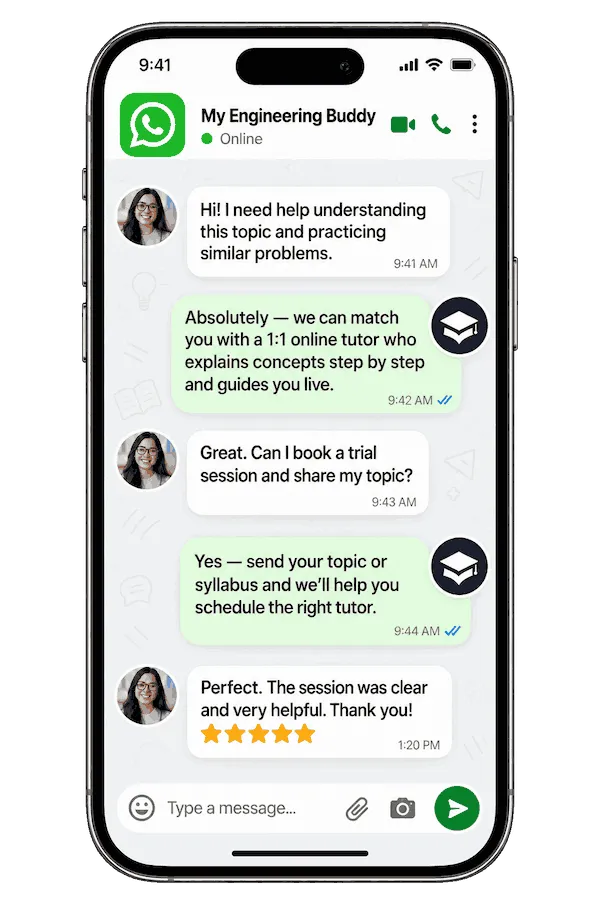
Unlike platforms where you fill out a form and wait, MEB responds in under a minute, 24/7. Tutor match takes under an hour. The $1 trial means you test before you commit. Everything runs over WhatsApp — no logins, no intake forms.
Study Plans (Pick One That Matches Your Goal)
After the diagnostic session, your tutor builds a specific sequence. Three common structures: a catch-up plan (1–3 weeks) for students with a specific grammar gap or a resit in sight; an exam-prep plan (4–8 weeks) covering all OCR or WJEC components in a structured revision sequence; or weekly ongoing support, aligned to your school’s teaching schedule and homework deadlines. The plan is built around your exam date — not a generic GCSE Latin syllabus order.
Pricing Guide
GCSE Latin tutoring starts at $20/hr for standard Year 10–11 support. Sessions targeting Grade 8–9 outcomes, Oxbridge preparation, or verse composition run $40–$100/hr depending on tutor background. Rate factors: the level of exam board complexity, how many weeks remain before the exam, and tutor availability during peak April–May exam windows.
For students aiming for Classics at Oxford, Cambridge, Durham, or St Andrews, tutors with undergraduate or postgraduate Classics research backgrounds are available at higher rates — share your specific goal and MEB will match the tier to your ambition.
Start with the $1 trial — 30 minutes, no registration, no commitment. WhatsApp MEB for a quick quote.
MEB has been running since 2008. That means 18 years of tutors who have seen every variation of the OCR Latin paper — and know exactly which grammar points the mark scheme rewards and which common errors it penalises.
Source: My Engineering Buddy, internal operations data, 2008–2025.
Try your first session for $1 — 30 minutes of live 1:1 tutoring or one homework question explained in full. No registration. No commitment.
WhatsApp MEB now
and get matched within the hour.
FAQ
Is GCSE Latin hard?
It has a steep grammar curve — Latin is a heavily inflected language, and GCSE requires command of multiple declensions, conjugation tables, and subordinate clause types. Students who get systematic help early find it manageable. Those who let gaps build find it brutal by Year 11.
How many sessions are needed?
Most students see clear improvement in 8–12 sessions. Students starting from significant gaps — or aiming for Grade 8–9 — typically work over 15–20 hours. Your tutor maps a specific plan after the first diagnostic session based on your actual exam date.
Can you help with homework and assignments?
Yes. MEB tutoring is guided learning — you understand the work, then submit it yourself. The tutor explains the grammar driving each sentence and guides your translation process. See our Academic Integrity policy and Why MEB page for full details on what we help with and what we don’t.
Will the tutor match my exact syllabus or exam board?
Yes. OCR and WJEC GCSE Latin differ in set-text selection and paper structure. MEB matches you with a tutor who knows your specific board — not just a generalist Latin tutor. Mention your board and year group when you WhatsApp.
What happens in the first session?
The tutor asks you to attempt a translation cold — an unseen or a set-text passage. This maps your grammar command quickly and honestly. By the end of the session, you have a clear picture of your gaps and a draft plan for the weeks ahead.
Is online tutoring as effective as in-person for Latin?
For Latin grammar and translation, yes — often more so. The tutor annotates directly on shared documents or a pen-pad, which is faster and clearer than writing on paper across a table. OCR past papers are easy to work through digitally, and sessions are recorded on request for review.
Does OCR Latin GCSE have a prose composition component?
OCR offers prose composition as part of some qualification routes, including the Latin Language paper. It requires students to translate English sentences into Latin accurately. This is one of the hardest components and benefits significantly from 1:1 practice — tutors work through common error patterns systematically using classical language session techniques developed across years of exam prep.
What’s the difference between OCR Latin and OCR Classical Civilisation?
OCR GCSE Latin requires reading and translating actual Latin texts. OCR Classical Civilisation uses English throughout — no language requirement. Some students take both. MEB tutors cover both qualifications; mention which one (or both) when you get in touch.
Can I take GCSE Latin if my school doesn’t offer it?
Yes. Private candidates can sit OCR GCSE Latin through an approved exam centre. You don’t need school teaching — a 1:1 online GCSE Latin tutor can cover the full syllabus independently. MEB has experience supporting private candidates through the full course. Get help with independent GCSE study across multiple subjects if needed.
Can I get GCSE Latin help at midnight or over weekends?
Yes. MEB operates 24/7 across time zones. WhatsApp at midnight in London, early morning in the Gulf, or late afternoon in Sydney — response time is typically under a minute. Sessions are booked around your schedule, not a fixed timetable.
How do I get started?
Three steps: WhatsApp MEB with your exam board, current year group, and hardest topic. MEB matches you with a verified GCSE Latin tutor — usually within 24 hours. Your first session is the $1 trial: 30 minutes live or one question explained in full, no registration required.
Do you offer group GCSE Latin sessions?
No. Every MEB session is 1:1. Latin grammar work is highly individual — a shared session can’t address the specific parsing errors one student makes versus another. The 1:1 format is the reason the outcomes data holds up across subjects.
Trust & Quality at My Engineering Buddy
Every tutor on the MEB platform goes through subject-specific vetting before taking a session. For GCSE Latin, that means a verified classical languages background — a degree in Classics, Ancient History, or a related discipline — and a live demo evaluation before onboarding. Ongoing session feedback is reviewed, and tutors with consistently low ratings are removed. Rated 4.8/5 across 40,000+ verified reviews on Google.
MEB tutoring is guided learning — you understand the work, then submit it yourself. For full details on what we help with and what we don’t, read our Academic Integrity policy and Why MEB.
MEB has served 52,000+ students since 2008 across the US, UK, Canada, Australia, the Gulf, and Europe — in 2,800+ subjects, including GCSE Latin, GCSE French tutoring, GCSE German help, and GCSE Spanish tutoring. Our tutoring methodology is built on a diagnostic-first approach that has been refined over 18 years of working with secondary and university students. For broader classical humanities context, Oxford University Press’s Very Short Introductions series covers the Roman world in depth — useful reading alongside exam prep.
Most students who come to MEB for GCSE Latin help are not struggling because Latin is too hard. They’re struggling because no one has ever walked them through the parsing process on a real exam passage — only through exercises in a textbook.
Source: MEB tutor observation data, 2022–2025.
A common pattern our tutors observe is that GCSE Latin students spend hours on vocabulary lists and almost no time practising under timed conditions. The exam rewards speed and systematic parsing — neither of which improves from a word list alone.
Explore Related Subjects
Students studying GCSE Latin often also need support in:
Next Steps
Before your first session, have ready: your exam board and syllabus (OCR or WJEC), a recent past paper attempt or a translation you struggled with, and your exam or deadline date. The tutor handles the rest.
- Share your exam board, hardest component, and current timeline
- Share your availability and time zone
- MEB matches you with a verified GCSE Latin tutor — usually within 24 hours
The first session starts with a diagnostic, so every minute is used well. Visit www.myengineeringbuddy.com for more on how MEB works.
WhatsApp to get started or email [email protected].
Reviewed by Subject Expert
This page has been carefully reviewed and validated by our subject expert to ensure accuracy and relevance.




