~1 min
Average Reply Time
~1 hour
To Be Matched With A Tutor
30 Min Trial
75% Find Their Tutor On The 1st Trial
$20-35+/hr
Premium Yet Affordable Learning
Hire The Best Intermediate Accounting Tutor

Deferred taxes tripped you up in Intermediate Accounting II. Your GPA depends on what happens next.
Intermediate Accounting Tutor Online
Intermediate Accounting is a second- and third-year university course covering GAAP-based financial reporting, including revenue recognition, leases, pensions, and deferred taxes. An Intermediate Accounting tutor helps students apply these standards accurately across complex, multi-step problems.
If you have searched for an Intermediate Accounting tutor near me, MEB connects you with a 1:1 online Intermediate Accounting tutor who knows your exact course — whether that is Kieso, Spiceland, or your university’s custom sequence. Sessions are live, structured, and built around what you are actually stuck on. Most students see measurable progress within three to five sessions.
- 1:1 online sessions tailored to your course syllabus and textbook
- Verified tutors with subject-specific knowledge of GAAP and IFRS standards
- Flexible time zones — US, UK, Canada, Australia, Gulf
- Structured learning plan built after a diagnostic session
- Ethical homework and assignment guidance — you understand before you submit
52,000+ students across the US, UK, Canada, Australia, and the Gulf have used MEB since 2008 — across 2,800+ subjects, from AP Calculus to A Level Music Technology to Data Science.
Source: My Engineering Buddy, 2008–2025.
How Much Does an Intermediate Accounting Tutor Cost?
Most Intermediate Accounting tutoring sessions run $20–$40/hr. Graduate-level or highly specialized work can reach $100/hr. The $1 trial gives you 30 minutes of live 1:1 tutoring or one homework question explained in full — no registration required.
| Level / Need | Typical Rate | What’s Included |
|---|---|---|
| Standard (most undergrad levels) | $20–$35/hr | 1:1 sessions, homework guidance |
| Advanced / Graduate-Level | $35–$100/hr | Expert tutor, niche depth, CPA prep alignment |
| $1 Trial | $1 flat | 30 min live session or 1 homework question |
Tutor availability tightens significantly during midterms and finals. Book early if your exam is within four weeks.
WhatsApp MEB for a quick quote — average response time under 1 minute.
Who This Intermediate Accounting Tutoring Is For
Intermediate Accounting covers some of the hardest material in an accounting degree. If you are losing marks on topics you thought you understood, or if the sheer volume of standards is catching up with you, 1:1 support makes a real difference.
- Second- and third-year accounting students working through Kieso, Spiceland, or equivalent texts at universities including Ohio State, Michigan, UT Austin, University of Toronto, Manchester, and Macquarie
- Students retaking Intermediate Accounting after a failed first attempt, needing to close gaps before the next sitting
- Students with a CPA exam pathway who need to lock down GAAP reporting standards before moving on
- Students struggling with deferred tax, lease accounting under ASC 842, or pension obligations
- Students with a final exam in four to six weeks and significant gaps still to close
- Anyone needing financial reporting tutoring alongside their core Intermediate Accounting coursework
Supporting a student through Intermediate Accounting? MEB works directly with parents to set up sessions, track progress, and keep coursework on schedule. WhatsApp MEB — average response time is under a minute, 24/7.
1:1 Tutoring vs Self-Study vs AI Tools
Self-study works for straightforward topics, but Intermediate Accounting is not straightforward. Without feedback, students often apply the wrong lease classification or misstate a deferred tax entry the same way across an entire problem set — and never realise it. AI tools can explain a standard in plain language, but they cannot watch you work through a bond amortization table in real time, catch where your logic breaks down, and redirect you before the exam. The specific reason human instruction matters here: GAAP application requires judgment, and judgment only develops through live problem-solving with someone who can challenge your reasoning. MEB gives you online flexibility with a structured feedback loop calibrated to your exact course and textbook.
Outcomes: What You’ll Be Able To Do in Intermediate Accounting
After working with an Intermediate Accounting tutor through MEB, you will be able to apply the five-step revenue recognition model under ASC 606 to multi-element contracts, analyze right-of-use asset calculations under the new lease standard, solve deferred tax problems involving temporary differences and valuation allowances, explain the corridor method and projected benefit obligation in pension accounting, and present a complete set of financial statements with correctly classified notes under US GAAP. These are not general accounting skills — they are the exact competencies tested in Intermediate Accounting II and on the FAR section of the CPA exam.
Based on feedback from 40,000+ sessions collected by MEB from 2022 to 2025, 58% of students improved by one full grade after approximately 20 hours of 1:1 tutoring in a single subject. A further 23% achieved at least a half-grade improvement.
Source: MEB session feedback data, 2022–2025.
What We Cover in Intermediate Accounting (Syllabus / Topics)

Financial Reporting Foundations
- Conceptual framework: qualitative characteristics, recognition criteria
- Income statement formats: single-step vs multi-step, discontinued operations
- Comprehensive income and other comprehensive income (OCI) components
- Balance sheet classification: current vs non-current assets and liabilities
- Cash flow statement: direct and indirect methods, operating/investing/financing
- Notes to financial statements and disclosure requirements under GAAP
Core texts: Kieso, Weygandt & Warfield Intermediate Accounting (17th ed.); Spiceland, Nelson & Thomas Intermediate Accounting (10th ed.). The AICPA publishes current guidance on US GAAP application standards referenced throughout this track.
Assets, Liabilities, and Equity
- Cash and receivables: allowance methods, factoring, notes receivable
- Inventory valuation: FIFO, LIFO, weighted average, lower of cost or net realizable value
- Property, plant & equipment: cost model, depreciation methods, impairment
- Intangible assets: goodwill, finite vs indefinite life, amortization and testing
- Right-of-use assets and lease liabilities under ASC 842 (finance vs operating)
- Long-term debt: bonds payable, effective interest method, fair value option
- Stockholders’ equity: share issuance, treasury stock, dividends, EPS calculation
Supported texts: Stice & Stice Intermediate Accounting; course packs from Michigan, Toronto, and UT Austin accounting programmes. Students needing parallel support can also access financial statement analysis tutoring alongside this track.
Advanced Measurement and Disclosure
- Revenue recognition: ASC 606 five-step model, variable consideration, contract modifications
- Income taxes: temporary vs permanent differences, deferred tax assets and liabilities, valuation allowance
- Pensions: defined benefit obligation, service cost, corridor method, OCI treatment
- Accounting changes and error corrections: retrospective vs prospective application
- Earnings per share: basic and diluted, treasury stock method, if-converted method
- Fair value measurement: Level 1, 2, 3 hierarchy under ASC 820
Supported texts: Kieso (chapters 19–23); Spiceland (chapters 16–21); supplementary CPA FAR review materials from Becker and Wiley CPAexcel. Students preparing for professional exams can pair this with GAAP tutoring or advanced accounting help.
At MEB, we’ve found that Intermediate Accounting students who struggle with deferred taxes almost always have a gap in how they think about the balance sheet approach versus the income statement approach. The tutor identifies which framing a student is using in the first session — and fixes it there.
What a Typical Intermediate Accounting Session Looks Like
The tutor opens by checking the previous topic — say, the indirect method cash flow statement you worked on last time. You share your screen or a scanned attempt. The tutor reviews your classification of operating activities and finds where you misplaced a gain on asset disposal. From there, you move into the current topic: lease accounting under ASC 842. The tutor works through a finance lease amortization schedule on a digital pen-pad, talking through each entry. You replicate the schedule, then explain the journal entries back. If you stumble on the right-of-use asset derecognition, the tutor walks through it again from a different angle. The session ends with two practice problems set for before next time, and the next topic — deferred tax liabilities — is noted.
How MEB Tutors Help You with Intermediate Accounting (The Learning Loop)
Diagnose: In the first session, the tutor identifies exactly where your understanding breaks down — whether that is misapplying the effective interest method, confusing temporary and permanent tax differences, or losing marks on OCI presentation. No guessing, no generic review.
Explain: The tutor works through live problems on a digital pen-pad — you see every step annotated in real time. Complex multi-step problems like bond amortization or pension corridor calculations are broken into decision points so you can follow the logic, not just the arithmetic.
Practice: You attempt a parallel problem while the tutor watches. This is where real learning happens — not passively watching, but doing, with support available the moment you get stuck.
Feedback: The tutor goes through your attempt step by step, explaining not just what went wrong but why the examiner would deduct marks there. You leave knowing the exact reasoning the grader expects.
Plan: At the end of every session, you know the next topic, the specific problems to work through, and how the sequence connects to your exam or assignment deadline.
Sessions run on Google Meet with a digital pen-pad or iPad and Apple Pencil. Before your first session, share your course outline or syllabus, a recent homework attempt or past exam question, and your exam or assignment date. The first session covers both diagnostic and at least one full worked problem. Start with the $1 trial — 30 minutes of live tutoring that also serves as your first diagnostic.
Students consistently tell us that Intermediate Accounting clicked when they stopped trying to memorise journal entries and started understanding the economic event behind each one. That shift usually happens in the second or third session once the tutor has reframed the conceptual foundation.
Tutor Match Criteria (How We Pick Your Tutor)
Every tutor assigned to Intermediate Accounting sessions is matched on six criteria.
Subject depth: Tutors hold accounting degrees or CPA qualifications and have direct experience with Intermediate Accounting at the level you are studying — including familiarity with your specific textbook edition and university’s exam format.
Tools: All sessions use Google Meet with a digital pen-pad or iPad and Apple Pencil for annotating financial statements, journal entry tables, and amortization schedules in real time.
Time zone: Tutors cover New York, Los Angeles, Chicago, London, Dubai, Toronto, Sydney, and Melbourne — including evenings and weekends across all major US, UK, Gulf, Canadian, Australian, and European time zones.
Learning style: The tutor calibrates pace and explanation style from the first session — some students need the conceptual framework first; others need to see a worked example before theory makes sense.
Communication: Clear, plain English adapted to the student’s level. No jargon without explanation.
Goals: Whether your goal is passing Intermediate Accounting II, building toward CPA exam readiness, or improving homework grades this semester, the tutor builds the session plan around that specific target.
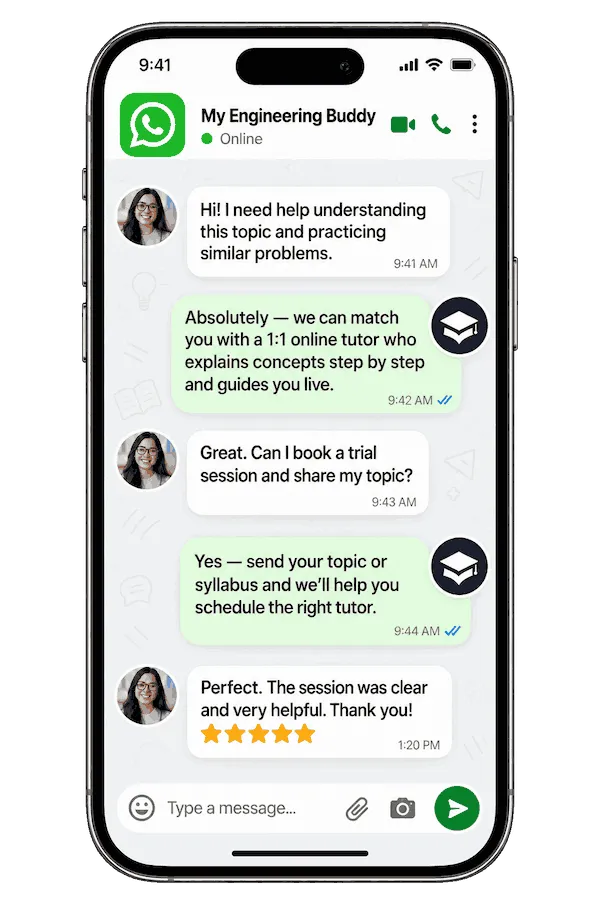
Unlike platforms where you fill out a form and wait, MEB responds in under a minute, 24/7. Tutor match takes under an hour. The $1 trial means you test before you commit. Everything runs over WhatsApp — no logins, no intake forms.
Study Plans (Pick One That Matches Your Goal)
After the first diagnostic session, your tutor builds the sequence around one of these structures: a catch-up plan (one to three weeks, daily focus on the highest-priority gaps before an exam or assignment deadline), an exam prep plan (four to eight weeks of structured revision through the full Intermediate Accounting syllabus with timed practice), or ongoing weekly support aligned to your semester schedule and coursework deadlines. The tutor adjusts the plan after each session based on what you have actually covered.
Pricing Guide
Intermediate Accounting tutoring starts at $20/hr for standard undergraduate levels and runs to $40/hr for most sessions. Graduate-level support or highly specialized work — including CPA FAR exam alignment or IFRS comparative analysis — can reach $100/hr. Rate factors include topic complexity, tutor experience, timeline urgency, and availability.
Availability is limited during midterms and finals. Students who book early consistently get better tutor matches and more flexible scheduling.
For students targeting Big Four graduate programmes or CPA licensure, tutors with professional audit and reporting backgrounds are available at higher rates — share your specific goal and MEB will match the tier to your ambition.
Start with the $1 trial — 30 minutes, no registration, no commitment. WhatsApp MEB for a quick quote.
Try your first session for $1 — 30 minutes of live 1:1 tutoring or one homework question explained in full. No registration. No commitment.
WhatsApp MEB now
and get matched within the hour.
FAQ
Is Intermediate Accounting hard?
Yes — it consistently ranks among the most failed courses in accounting programmes. The volume of GAAP standards, the multi-step problem formats, and the conceptual shift from introductory accounting all contribute. Most students find that targeted 1:1 support cuts through the difficulty faster than any other approach.
How many sessions are needed?
Students with specific gaps — say, deferred taxes or lease accounting — often need three to five focused sessions. Students working through a full semester of Intermediate Accounting typically benefit from weekly sessions across eight to twelve weeks. The tutor maps a specific plan after the first diagnostic.
Can you help with homework and assignments?
Yes. MEB tutors explain the concept and the method — you work through the problem and submit your own answers. That is how the learning sticks, and it is how we operate.
MEB tutoring is guided learning — you understand the work, then submit it yourself. For full details on what we help with and what we don’t, read our Academic Integrity policy and Why MEB.
Will the tutor match my exact syllabus or exam board?
Yes. Before your first session, share your course outline, textbook, and university. MEB matches tutors by specific syllabus — Kieso vs Spiceland, GAAP vs IFRS emphasis, or a custom course pack. The tutor works with your actual material, not a generic Intermediate Accounting curriculum.
What happens in the first session?
The tutor reviews what you share beforehand — a recent homework attempt, a past exam, or a topic list. The session covers a diagnostic and at least one full worked problem. By the end, you have a clear picture of where your gaps are and what the next three to five sessions will address.
Is online tutoring as effective as in-person?
For Intermediate Accounting, yes — and in some ways more so. The digital pen-pad lets the tutor annotate journal entries, T-accounts, and financial statement formats in real time on your screen. Students report that seeing each step written out live is clearer than working from a whiteboard across a table.
Can I get Intermediate Accounting help at midnight?
Yes. MEB operates across all major time zones and accepts WhatsApp messages 24/7. If your exam is tomorrow morning or your assignment is due at midnight, message MEB now. Response time averages under one minute. Tutor availability at late hours depends on time zone and subject demand.
What if I don’t like my assigned tutor?
Tell MEB via WhatsApp. Tutor reassignment is straightforward — no forms, no waiting. The $1 trial exists precisely so you can test the match before committing to a full session rate. If the fit is not right, MEB rematch you, usually within the hour.
Do you cover IFRS alongside US GAAP in Intermediate Accounting?
Yes. Many Intermediate Accounting courses at universities in Canada, Australia, the UK, and Gulf institutions run parallel GAAP and IFRS comparisons — particularly on lease accounting, revenue recognition, and financial instrument classification. Confirm your course emphasis when you message MEB and the tutor will cover both where needed.
How do I get started?
Three steps: WhatsApp MEB, get matched with a verified Intermediate Accounting tutor, then start your $1 trial — 30 minutes of live tutoring or one homework question explained in full. No registration, no commitment, no intake form. Match happens within the hour.
Trust & Quality at My Engineering Buddy
Every MEB tutor goes through a multi-stage screening process: subject knowledge assessment, live demo evaluation with an MEB reviewer, and ongoing feedback review from students after each session. Tutors hold relevant degrees or professional qualifications — for Intermediate Accounting, that means accounting degrees, CPA credentials, or equivalent professional experience in audit and financial reporting. Rated 4.8/5 across 40,000+ verified reviews on Google.
MEB has served 52,000+ students since 2008 across 2,800+ subjects. The screening process means you are not matched with a generalist — you get someone who has worked through deferred tax problems and ASC 842 lease schedules many times before.
Source: My Engineering Buddy, 2008–2025.
MEB tutoring is guided learning — you understand the work, then submit it yourself. For full details on what we help with and what we don’t, read our Academic Integrity policy and Why MEB.
MEB has served students across the US, UK, Canada, Australia, the Gulf, and Europe since 2008 — in 2,800+ subjects. Students working through Intermediate Accounting often need parallel support in managerial accounting tutoring, cost accounting help, or auditing tutoring. MEB covers all of them. See our tutoring methodology for how sessions are structured across subjects.
Explore Related Subjects
Students studying Intermediate Accounting often also need support in:
- Financial Accounting
- Advanced Accounting
- Income Tax Accounting
- Consolidation Accounting
- Corporate Taxation
- Budgeting
- Cash Flow Analysis
Next Steps
Getting started takes less than two minutes. Here is what to have ready before your first session:
- Your course outline or syllabus (or the textbook and chapter you are currently on)
- A recent homework attempt or past exam question you struggled with
- Your exam date or assignment deadline
Share your hardest topic, your current timeline, and your time zone. MEB matches you with a verified Intermediate Accounting tutor — usually within 24 hours, often within the hour. The first session starts with a diagnostic so every minute is used well.
Visit www.myengineeringbuddy.com to learn more about how MEB works across all subjects and levels.
WhatsApp to get started or email [email protected].
Reviewed by Subject Expert
This page has been carefully reviewed and validated by our subject expert to ensure accuracy and relevance.