

Contact MEB Today To Get The Best
MRCP(UK) SCE Nephrology (ESENeph) Tutoring Online
Email: [email protected]



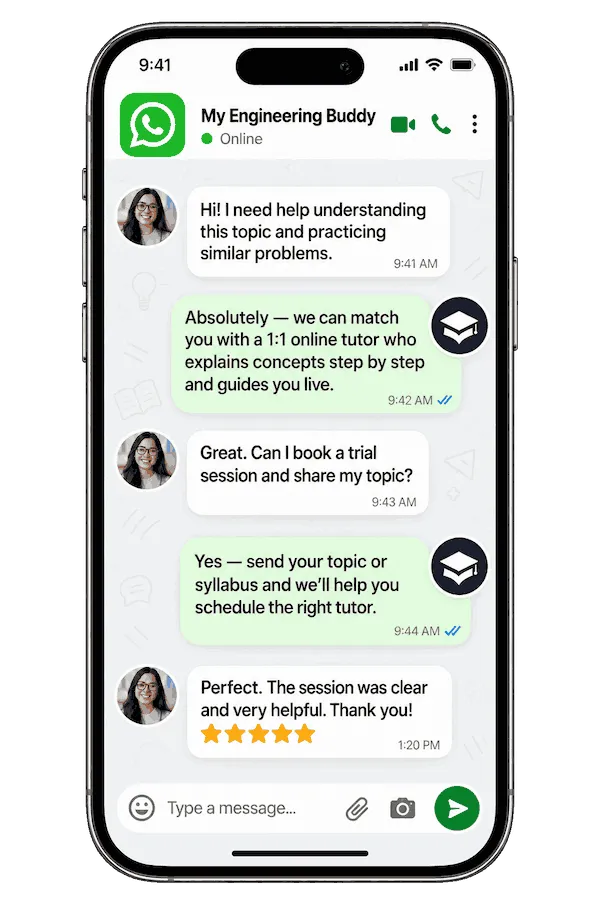
~1 min
Average Reply Time
~1 hour
To Be Matched With A Tutor
30 Min Trial
75% Find Their Tutor On The 1st Trial
$20-35+/hr
Premium Yet Affordable Learning
Most SCE Nephrology candidates know their weak areas going in. What they lack is someone who can drill those exact gaps — glomerulonephritis staging, AKI management, dialysis indications — before the exam date arrives.
MRCP(UK) SCE Nephrology (ESENeph) Tutor Online
The MRCP(UK) Specialty Certificate Examination in Nephrology (ESENeph) is a postgraduate clinical exam delivered by the Joint Royal Colleges of Physicians Training Board, assessing specialist-level knowledge in kidney disease, dialysis, and transplantation for physicians pursuing nephrology training.
MEB offers 1:1 online tutoring and academic guidance in 2,800+ advanced subjects, including the full MRCP(UK) examination suite. If you’ve searched for a MRCP(UK) SCE Nephrology tutor near me, MEB matches you with a verified nephrology specialist — usually within the hour. Tutors cover the ESENeph syllabus topic by topic, from CKD staging and transplant immunology to the clinical data interpretation questions that trip most candidates up.
- 1:1 online sessions tailored to the ESENeph syllabus and JRCPTB blueprint
- Expert-verified tutors with nephrology clinical and exam experience
- Flexible time zones — US, UK, Canada, Australia, Gulf
- Structured learning plan built after a diagnostic session
- Ethical academic guidance — you understand the material before you submit
52,000+ students across the US, UK, Canada, Australia, and the Gulf have used MEB since 2008 — including candidates preparing for MRCP(UK) exams like SCE Nephrology, SCE Endocrinology and Diabetes, and SCE Respiratory Medicine.
Source: My Engineering Buddy, 2008–2025.
How Much Does a MRCP(UK) SCE Nephrology Tutor Cost?
Most ESENeph tutoring sessions run at $20–$40/hr. Senior nephrology specialists with clinical research backgrounds are available at higher rates. Start with the $1 trial — 30 minutes of live 1:1 tutoring or one exam question explained in full, no registration required.
| Level / Need | Typical Rate | What’s Included |
|---|---|---|
| Standard SCE preparation | $20–$40/hr | 1:1 sessions, SBA question drilling, case-based reasoning |
| Advanced / specialist tutor | $40–$100/hr | Clinical nephrology depth, research-level explanation, niche topics |
| $1 Trial | $1 flat | 30 min live session or one full SBA question explained |
Tutor availability tightens significantly in the weeks before the ESENeph sitting window. Book early.
WhatsApp MEB for a quick quote — average response time under 1 minute.
Who This MRCP(UK) SCE Nephrology Tutoring Is For
ESENeph candidates come to MEB at different stages — some are preparing systematically months out, others are two weeks from sitting and need targeted gap-filling fast. What they share is a need for someone who knows the JRCPTB blueprint and can explain the reasoning behind the answer, not just the answer itself.
- Physicians who have passed MRCP(UK) Parts 1 and 2 and are now preparing the specialty certificate
- Candidates retaking after a failed first ESENeph attempt — the most common profile MEB sees for this exam
- Trainees 4–6 weeks from the exam sitting with gaps in glomerular disease, transplant medicine, or AKI/CKD management
- International medical graduates sitting the ESENeph from the Gulf, Australia, or North America who want UK-trained tutor guidance
- Candidates who want structured SBA question practice with step-by-step reasoning, not just an answer bank
- Trainees at nephrology registrar level at programmes including those affiliated with NHS deaneries, Royal Colleges, or equivalent bodies in Australia and the Gulf
At MEB, we’ve found that ESENeph candidates who struggle most aren’t weak on basic science — they misread the clinical scenario. The question tests your management decision at a branch point, not your ability to name a mechanism. Tutors spend real time on that exact skill.
1:1 Tutoring vs Self-Study vs AI vs YouTube vs Online Courses
Self-study with question banks works — if you’re already strong on reasoning and just need volume. AI tools give fast definitions but can’t probe why you chose the wrong branch in an AKI management scenario. YouTube explains pathophysiology well but stops when you need someone to review your actual answer logic. Online courses give structure but run at a fixed pace regardless of where your gaps are. With a 1:1 online MRCP(UK) SCE Nephrology tutor at MEB, the session is built around your specific weak SBA categories, your exam date, and the ESENeph blueprint — live, corrective, and calibrated to you.
Outcomes: What You’ll Be Able To Do in MRCP(UK) SCE Nephrology (ESENeph)
After working with an MEB tutor, you’ll be able to apply the KDIGO CKD staging criteria correctly in clinical SBA scenarios and distinguish the management steps at each eGFR threshold. You’ll analyze glomerulonephritis presentations — distinguishing IgA nephropathy, FSGS, membranous nephropathy, and lupus nephritis — and select the correct biopsy interpretation and first-line treatment. You’ll explain the indications for acute and maintenance dialysis, model renal replacement therapy decisions under time pressure, and present a structured approach to transplant rejection workup. You’ll solve AKI-on-CKD scenarios where the distractor answers are clinically plausible, which is exactly where marks are won or lost in the ESENeph.
Based on feedback from 40,000+ sessions collected by MEB from 2022 to 2025, 58% of students improved by one full grade after approximately 20 hours of 1:1 tutoring in subjects like MRCP(UK) SCE Nephrology (ESENeph). A further 23% achieved at least a half-grade improvement.
Source: MEB session feedback data, 2022–2025.
Try your first session for $1 — 30 minutes of live 1:1 tutoring or one homework question explained in full. No registration. No commitment. WhatsApp MEB now and get matched within the hour.
What We Cover in MRCP(UK) SCE Nephrology (ESENeph) (Syllabus / Topics)

Acute Kidney Injury and CKD Management
- AKI classification: KDIGO criteria, staging, causes, and immediate management
- CKD staging by eGFR and albuminuria — G and A categories under KDIGO 2012
- CKD progression risk factors and nephroprotective strategies
- Cardiorenal syndrome: types, pathophysiology, and clinical management
- Fluid and electrolyte disturbances: sodium, potassium, acid-base disorders in renal disease
- Drug dosing in CKD: adjustments, nephrotoxins to avoid, contrast nephropathy prevention
Key texts: Comprehensive Clinical Nephrology (Feehally, Floege & Johnson); Oxford Handbook of Nephrology and Hypertension (Steddon et al.).
Glomerular Disease and Nephrology SBA Reasoning
- Primary glomerulonephritides: IgA nephropathy, FSGS, minimal change disease, membranous nephropathy
- Secondary glomerular disease: lupus nephritis (ISN/RPS classification), diabetic nephropathy, vasculitis-associated GN
- Renal biopsy interpretation: histological patterns and clinical correlation
- Nephrotic vs nephritic syndrome — clinical differentiation and management priorities
- Rapidly progressive GN: causes, diagnosis, and emergency immunosuppression
- ESENeph SBA question structure: distractor analysis, branch-point decision-making
Key texts: Essential Revision Notes for the MRCP SCE in Nephrology; Renal Medicine (Levy & Pusey, Kumar & Clark series).
Dialysis, Transplantation, and Renal Replacement Therapy
- Haemodialysis principles: access, adequacy (Kt/V), complications, and prescription
- Peritoneal dialysis: types, adequacy assessment, peritonitis management
- Indications for starting and stopping renal replacement therapy
- Renal transplantation: immunosuppression protocols, rejection types, and monitoring
- Post-transplant complications: infection, malignancy, calcineurin inhibitor toxicity
- End-stage renal disease: conservative management pathway and advance care planning
Key texts: Comprehensive Clinical Nephrology; JRCPTB ESENeph curriculum and American Medical Association clinical practice frameworks for transplant ethics.
What a Typical MRCP(UK) SCE Nephrology Session Looks Like
The tutor opens by reviewing the previous session’s topic — for example, whether you correctly applied the KDIGO AKI staging criteria under time pressure. You then work through five to eight ESENeph-style SBA questions together on screen: the tutor watches your reasoning in real time, not just your answer selection. When you pick a plausible distractor on a transplant rejection question, the tutor stops, draws the rejection timeline on a digital pen-pad, and walks through why acute cellular rejection and antibody-mediated rejection demand different first steps. You attempt the next question independently, explain your reasoning aloud, and the tutor identifies whether the error was knowledge-based or pattern-recognition-based. The session closes with a targeted practice set — five questions on glomerulonephritis management — and the next topic is logged: peritoneal dialysis adequacy and the Kt/V calculation.
How MEB Tutors Help You with MRCP(UK) SCE Nephrology (ESENeph) (The Learning Loop)
Diagnose: In the first session, the tutor runs a short timed SBA set covering AKI, CKD, glomerular disease, and RRT — then maps exactly which domains are losing you marks and which are solid. No guesswork about where to start.
Explain: Tutors work through live SBA questions using a digital pen-pad on Google Meet. The explanation goes beyond “the answer is B” — it covers why A and C are clinically plausible distractors and what the question is actually testing at the branch point.
Practice: You attempt exam-format questions with the tutor present, thinking aloud. This is the step most self-study candidates skip entirely. It surfaces reasoning errors that a question bank alone never catches.
Feedback: Error correction is step-by-step — the tutor identifies whether you lost the mark on clinical knowledge, interpretation of the stem, or distractor recognition, and adjusts the session plan accordingly.
Plan: After each session, the next topic is set, weak areas are logged, and the revision schedule is updated against your exam date. Get SCE Gastroenterology or SCE Neurology support through the same loop if you’re sitting multiple SCEs.
All sessions run over Google Meet with a digital pen-pad or iPad and Apple Pencil. Before your first session, share your ESENeph sitting date, any past score breakdowns if you’re resitting, and two or three SBA questions you got wrong recently. The tutor uses that information to build the first session’s diagnostic set. Start with the $1 trial — 30 minutes of live tutoring that also serves as your first diagnostic.
Students consistently tell us that the hardest part of ESENeph isn’t knowing the nephrology — it’s reading the question correctly. The scenario is designed to mislead. Our tutors spend the first few sessions purely on stem dissection before touching new content.
Tutor Match Criteria (How We Pick Your Tutor)
MEB doesn’t assign whoever is next available. Match criteria for an online MRCP(UK) SCE Nephrology tutor are specific.
Subject depth: Tutors hold nephrology-relevant clinical qualifications or postgraduate examination experience aligned to the JRCPTB ESENeph blueprint — not just general medicine or internal medicine background.
Tools: All sessions use Google Meet with a digital pen-pad or iPad and Apple Pencil. If your tutor can’t draw a GFR-albuminuria grid live on screen, they’re not the right match for this exam.
Time zone: Matched to your region — UK deanery trainees, Gulf-based IMGs, and North American candidates all have different availability windows. MEB covers them all.
Goals: Whether you need a first-pass systematic build, a resit rescue plan, or weekly SBA drilling to hit the pass mark, the tutor match reflects your actual goal — not a generic tutoring template.
Unlike platforms where you fill out a form and wait, MEB responds in under a minute, 24/7. Tutor match takes under an hour. The $1 trial means you test before you commit. Everything runs over WhatsApp — no logins, no intake forms.
Study Plans (Pick One That Matches Your Goal)
The tutor builds your specific sequence after the first diagnostic session. Three common tracks: Catch-up (1–3 weeks) — intensive daily or every-other-day sessions targeting the lowest-scoring ESENeph domains; Exam prep (4–8 weeks) — full syllabus pass with SBA question drilling, timed practice sets, and a final mock review in the week before sitting; Weekly support — one or two sessions per week running alongside clinical work and self-study, filling gaps as they appear through the training cycle.
Pricing Guide
ESENeph tutoring starts at $20/hr for standard sessions and runs up to $100/hr for senior nephrology specialists with clinical research or subspecialty transplant backgrounds. Rate factors include tutor experience, topic complexity, and how close your exam date is.
For candidates targeting pass marks at competitive NHS deaneries or international training programmes, tutors with genuine consultant-level nephrology backgrounds are available — share your specific goal and MEB will match the tier to your timeline.
Availability tightens in the six weeks before each ESENeph sitting window. Start with the $1 trial — 30 minutes, no registration, no commitment. WhatsApp MEB for a quick quote.
Rated 4.8/5 across 40,000+ verified reviews. Since 2008, MEB has matched physicians, trainees, and graduate students with expert tutors across 2,800+ advanced subjects — including the full MRCP(UK) SCE suite.
Source: My Engineering Buddy, 2008–2025.
FAQ
Is MRCP(UK) SCE Nephrology hard?
The ESENeph pass rates vary by sitting, but the exam is considered demanding — it tests specialist-level clinical reasoning, not just factual recall. Distractor quality is high. Candidates who pass typically combine solid question bank volume with focused reasoning practice on the hardest SBA domains.
How many sessions are needed?
Most candidates preparing from a solid MRCP Part 2 base need 10–20 sessions over 6–8 weeks. Resit candidates with identified weak domains often make significant progress in 8–12 focused sessions. The diagnostic session maps exactly what you need before a plan is set.
Can you help with homework and assignments?
MEB tutoring is guided learning — you understand the work, then submit it yourself. For SBA question packs, case-based reasoning tasks, or written assignment components of nephrology training programmes, tutors explain the reasoning and methodology. See our Academic Integrity policy and Why MEB page for full details on what we help with and what we don’t.
Will the tutor match my exact syllabus or exam board?
Yes. ESENeph tutors work to the current JRCPTB Specialty Certificate Examination in Nephrology blueprint. If you’re sitting through a different body or jurisdiction, share the syllabus document on WhatsApp before your first session and the tutor will align accordingly.
What happens in the first session?
The tutor runs a short diagnostic SBA set covering the main ESENeph domains — AKI, CKD, glomerular disease, dialysis, and transplant medicine. Scores and reasoning errors are mapped. The session plan for subsequent weeks is built from that diagnostic, not from a generic template.
Is online tutoring as effective as in-person?
For ESENeph preparation, yes — and in some ways better. The digital pen-pad means the tutor can annotate clinical diagrams, draw rejection timelines, and mark up SBA stems in real time. Most candidates find the format at least as useful as face-to-face, and significantly more flexible given clinical rotas.
Can I get MRCP(UK) SCE Nephrology help at midnight or on weekends?
Yes. MEB operates 24/7. WhatsApp is the fastest route — average response under a minute. Tutors cover multiple time zones, so late-night sessions for Gulf-based candidates or early-morning slots for US-based IMGs are standard, not exceptions.
What if I don’t like my assigned tutor?
Tell MEB via WhatsApp. A different tutor is matched — usually within the hour. There is no lock-in, no administration process, and no requirement to explain further. The $1 trial is specifically designed so you can test the match before committing to a full rate.
Do you offer group ESENeph sessions?
MEB’s model is 1:1 only. Group sessions dilute the feedback loop that makes the tutoring effective — especially for an exam where individual reasoning errors are the primary failure cause. If you have a study partner, both can book individual sessions with the same tutor on the same day.
How do I get started?
Three steps: WhatsApp MEB → get matched to a verified ESENeph tutor within the hour → start your $1 trial session. Bring your exam date, your weakest ESENeph domains, and one or two recent SBA questions you got wrong. The tutor takes it from there.
How does the ESENeph differ from MRCP Part 2, and does that change how I should prepare?
MRCP Part 2 tests broad internal medicine. The ESENeph tests specialist nephrology depth — the SBA stems are longer, the distractors are clinically plausible at consultant level, and management decisions require subspecialty precision. Tutors explicitly retrain your reasoning approach for this difference, not just add nephrology content on top of Part 2 revision.
Which ESENeph topics carry the most marks, and should I prioritise them?
The JRCPTB blueprint weights glomerular disease, AKI/CKD management, and renal replacement therapy most heavily. Transplant medicine and electrolyte disorders also appear consistently. Tutors use the blueprint to weight session time accordingly — highest-yield domains get the most focus early in the plan.
Trust & Quality at My Engineering Buddy
Every MEB tutor goes through subject-specific screening before being matched to a student. For ESENeph tutors, that means verifying clinical nephrology background, postgraduate examination experience, and a live demo evaluation — not just a CV check. Ongoing session feedback is reviewed to maintain standards. Rated 4.8/5 across 40,000+ verified reviews on Google.
MEB tutoring is guided learning — you understand the work, then submit it yourself. For full details on what we help with and what we don’t, read our Academic Integrity policy and Why MEB.
MEB has served 52,000+ students across the US, UK, Canada, Australia, the Gulf, and Europe since 2008, covering 2,800+ advanced subjects. Within the MRCP(UK) suite, that includes candidates preparing for MRCP(UK) Part 1 tutoring, MRCP(UK) Part 2 help, and specialty certificates across acute medicine, geriatrics, and oncology. The MEB tutoring methodology is the same across every subject: diagnostic first, then structured 1:1 sessions built around your specific exam target.
Explore Related Subjects
Students studying MRCP(UK) SCE Nephrology often also need support in:
- MRCP(UK) PACES
- MRCP(UK) SCE Acute Medicine
- MRCP(UK) SCE Dermatology
- MRCP(UK) SCE Geriatric Medicine
- MRCP(UK) SCE Medical Oncology
- MRCP(UK) SCE Rheumatology
- MRCP(UK) SCE Palliative Medicine
Next Steps
Before your first session, have ready: your ESENeph sitting date, the JRCPTB blueprint or any domain score breakdown from a previous attempt, and two or three SBA questions you got wrong recently. The tutor handles the rest.
- Share your exam board (JRCPTB), hardest ESENeph domain, and current timeline
- Share your availability and time zone
- MEB matches you with a verified nephrology tutor — usually within the hour
- First session starts with a diagnostic so every minute is used well
Visit www.myengineeringbuddy.com for more on how MEB works.
WhatsApp to get started or email [email protected].
Reviewed by Subject Expert
This page has been carefully reviewed and validated by our subject expert to ensure accuracy and relevance.




