

Contact MEB Today To Get The Best
MRCP(UK) SCE Palliative Medicine Tutoring Online
Email: [email protected]



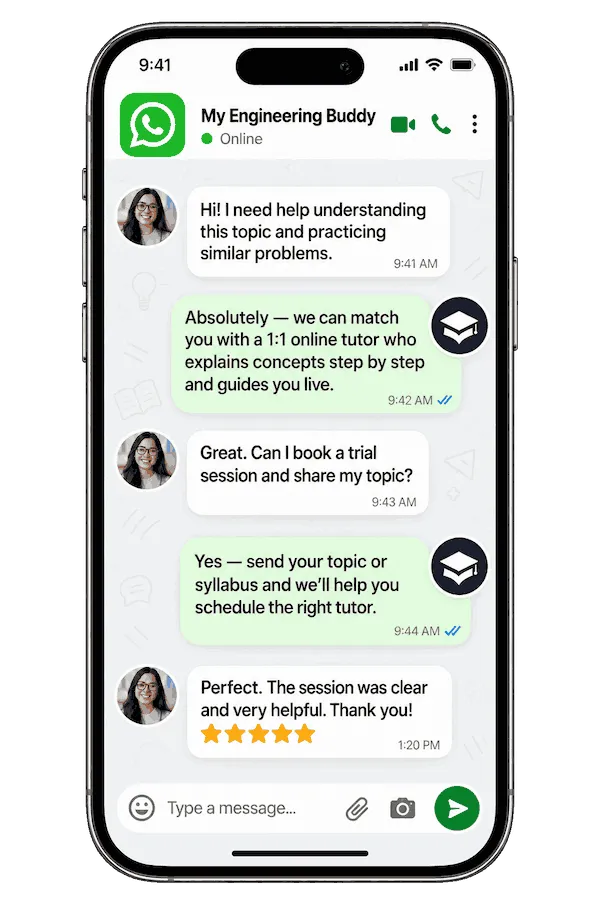
~1 min
Average Reply Time
~1 hour
To Be Matched With A Tutor
30 Min Trial
75% Find Their Tutor On The 1st Trial
$20-35+/hr
Premium Yet Affordable Learning
Most SCE Palliative Medicine candidates don’t fail because they don’t care — they fail because symptom management guidelines and communication frameworks blur together under exam pressure.
MRCP(UK) SCE Palliative Medicine Tutor Online
The MRCP(UK) SCE Palliative Medicine is a Specialty Certificate Examination set by the Royal College of Physicians, assessing advanced clinical knowledge in symptom control, end-of-life care, and palliative communication for doctors pursuing specialist recognition.
MEB provides 1:1 online tutoring and academic guidance in 2,800+ advanced subjects, including MRCP(UK) specialty exams. If you’ve searched for an MRCP(UK) SCE Palliative Medicine tutor near me, MEB connects you with a verified specialist — matched to your exam date, weak topics, and time zone — without a wait. One diagnostic session is enough to map exactly where your revision needs to go.
- 1:1 online sessions tailored to the SCE Palliative Medicine syllabus
- Expert tutors with clinical and palliative care specialty knowledge
- Flexible time zones — US, UK, Canada, Australia, Gulf
- Structured revision plan built after a diagnostic session
- Ethical guidance on SCE question technique and case-based reasoning — you understand before you submit
52,000+ students across the US, UK, Canada, Australia, and the Gulf have used MEB since 2008 — including doctors preparing for MRCP(UK) SCE exams like SCE Palliative Medicine, SCE Medical Oncology, and SCE Geriatric Medicine.
Source: My Engineering Buddy, 2008–2025.
How Much Does a MRCP(UK) SCE Palliative Medicine Tutor Cost?
Most SCE Palliative Medicine tutoring sessions run $20–$40/hr. Tutors with advanced palliative care or academic medicine backgrounds are available up to $100/hr. Start with the $1 trial — 30 minutes of live tutoring or one clinical question explained in full, no registration needed.
| Level / Need | Typical Rate | What’s Included |
|---|---|---|
| Standard SCE prep | $20–$40/hr | 1:1 sessions, question technique, case-based reasoning |
| Advanced / specialist | $40–$100/hr | Clinical expert tutor, niche palliative cases, research depth |
| $1 Trial | $1 flat | 30 min live session or one SCE question fully explained |
Tutor slots fill quickly in the months before SCE sittings. Book early if you have a fixed exam window.
WhatsApp MEB for a quick quote — average response time under 1 minute.
Who This MRCP(UK) SCE Palliative Medicine Tutoring Is For
This is for doctors who have passed MRCP(UK) Parts 1 and 2 and are now preparing for specialty recognition in palliative medicine. It suits candidates at any stage of SCE prep — from first serious revision to final-week consolidation.
- Doctors retaking the SCE after a first unsuccessful attempt
- Candidates with a specific exam date 4–8 weeks away and significant syllabus gaps still to close
- Clinicians working full rotations who need structured, time-efficient revision
- Doctors in the UK, Australia, Gulf, or Canada whose palliative care exposure has been uneven across the syllabus
- Candidates struggling with the communication-based and ethics-heavy question stems that distinguish this SCE from other specialty papers
- Those needing SCE Acute Medicine tutoring alongside palliative prep for broader specialty knowledge
The SCE Palliative Medicine paper has a reputation for testing clinical nuance — not just textbook definitions. Knowing the guideline is not enough if you can’t apply it to a complex case stem.
1:1 Tutoring vs Self-Study vs AI vs YouTube vs Online Courses
Self-study works if you have a clear plan and consistent discipline — most busy clinicians don’t have both. AI tools give fast answers but can’t identify why you’re consistently missing opioid dose-titration questions or misreading prognosis stems. YouTube covers palliative concepts well at surface level but stops when the question gets clinically complex. Online courses are structured but fixed-pace, with no space to drill the exact topics where your reasoning breaks down. 1:1 tutoring with MEB is live, calibrated to the SCE Palliative Medicine syllabus, and corrects your clinical reasoning errors in real time — not after you’ve already sat the exam.
Outcomes: What You’ll Be Able To Do in MRCP(UK) SCE Palliative Medicine
After working with an MEB tutor, you’ll be able to apply WHO analgesic ladder principles to complex multi-symptom cases, analyse palliative emergency scenarios — including hypercalcaemia and spinal cord compression — with confident clinical reasoning, explain the ethical and legal framework around advance care planning and capacity in SCE question contexts, present a structured approach to nausea management in cancer patients using drug mechanism logic rather than rote recall, and solve extended-matching and best-of-five questions involving end-of-life communication with accuracy and speed. These outcomes are tied to specific SCE components — not generic test-taking skills.
Based on feedback from 40,000+ sessions collected by MEB from 2022 to 2025, 58% of students improved by one full grade after approximately 20 hours of 1:1 tutoring in subjects like MRCP(UK) SCE Palliative Medicine. A further 23% achieved at least a half-grade improvement.
Source: MEB session feedback data, 2022–2025.
Students consistently tell us that the SCE Palliative Medicine paper caught them off guard — not because they lacked clinical experience, but because exam-style reasoning in palliative care requires a different kind of precision than ward-based decisions. We build that precision session by session.
What We Cover in MRCP(UK) SCE Palliative Medicine (Syllabus / Topics)

Track 1: Symptom Control and Pharmacology
- Opioid dose conversion, titration, and rotation across routes
- Management of cancer pain including breakthrough dosing
- Nausea and vomiting: antiemetic selection by mechanism and site of action
- Breathlessness, secretions, and agitation in the dying patient
- Syringe driver drug compatibility and subcutaneous prescribing
- Corticosteroids in palliative care: indications, doses, and side-effect management
- Non-cancer pain management including neuropathic pain pathways
Key references: Oxford Handbook of Palliative Care (Watson et al.), Palliative Medicine (Fallon & Hanks), and the Palliative Adult Network Guidelines.
Track 2: Palliative Emergencies and Oncological Complications
- Hypercalcaemia of malignancy: diagnosis, treatment ladder, bisphosphonate use
- Malignant spinal cord compression: imaging, steroids, radiotherapy indications
- Superior vena cava obstruction: presentation and acute management
- Haematological emergencies: neutropenic sepsis in the palliative context
- Bowel obstruction in advanced cancer: medical versus surgical decision-making
- Haemorrhage and catastrophic events: anticipatory prescribing principles
Key references: ESMO Clinical Practice Guidelines for Palliative Care and Twycross’s Symptom Management in Advanced Cancer.
Track 3: Ethics, Communication, and End-of-Life Frameworks
- Mental Capacity Act principles and their application to SCE scenarios
- Advance care planning: DNACPR, ReSPECT, lasting power of attorney
- Best interests decision-making in patients lacking capacity
- Breaking bad news frameworks and prognostic uncertainty in exam stems
- Withdrawal of clinically assisted nutrition and hydration
- Children and palliative care: ethical dimensions tested in SCE
- Cultural and religious considerations in end-of-life care planning
Key references: Difficult Conversations in Medicine (Salter), Mental Capacity Act 2005 Code of Practice, and NICE Guideline NG31: Care of Dying Adults in the Last Days of Life.
A common pattern our tutors observe is that candidates score well on straightforward symptom management questions but drop marks on ethics and communication stems — not because they don’t know the principles, but because they haven’t practised applying them under exam conditions. That’s exactly what we fix.
What a Typical MRCP(UK) SCE Palliative Medicine Session Looks Like
The tutor opens by checking how you approached a question from the previous session — typically an opioid conversion or a communication scenario that was flagged as difficult. From there, you work through three to five best-of-five questions on screen together, with the tutor asking you to reason aloud through each stem before revealing your answer. Topics covered in a single session might span subcutaneous midazolam dosing and a capacity assessment scenario for a patient refusing further chemotherapy. The tutor uses a digital pen-pad to annotate drug dose tables and decision trees in real time. You replicate the reasoning structure yourself on the next question. The session closes with two or three practice questions set independently, and the next session topic — often the track where your accuracy is weakest — is confirmed before you disconnect.
How MEB Tutors Help You with MRCP(UK) SCE Palliative Medicine (The Learning Loop)
Diagnose: In the first session, the tutor identifies which of the three syllabus tracks — symptom pharmacology, palliative emergencies, or ethics and communication — is producing the most errors, and whether the issue is knowledge gaps, question misreading, or reasoning sequencing.
Explain: The tutor works through live SCE-style questions using a digital pen-pad, annotating drug dose ladders, mechanism diagrams, and ethical frameworks while narrating clinical reasoning. Not definitions — applied decision logic.
Practice: You attempt the next question independently with the tutor present. No shortcuts. If you hesitate on a syringe driver calculation or stall on a best interests scenario, the tutor catches it before it becomes a pattern.
Feedback: Every wrong answer gets a step-by-step breakdown — what the question was actually testing, where your reasoning deviated, and which guideline principle resolves it. Marks aren’t just lost; they’re explained.
Plan: Each session ends with a concrete topic sequence for the next one, adjusted for your exam date. If you’re six weeks out, that plan is tight. If you have twelve weeks, it’s broader. The tutor tracks which topics have been covered and tested.
Sessions run on Google Meet. The tutor uses a digital pen-pad or iPad with Apple Pencil. Before your first session, share your exam date, which SCE sitting you’re targeting, and any past paper attempts or topic lists you’ve already worked through. The first session is diagnostic — so every session after it is targeted.
Start with the $1 trial — 30 minutes of live tutoring that also serves as your first diagnostic.
Our experience across thousands of sessions shows that SCE Palliative Medicine candidates who work through clinical reasoning aloud — not just reading notes alone — close knowledge gaps faster and make fewer reasoning errors under timed conditions.
Source: My Engineering Buddy, 2008–2025.
Try your first session for $1 — 30 minutes of live 1:1 tutoring or one homework question explained in full. No registration. No commitment. WhatsApp MEB now and get matched within the hour.
Tutor Match Criteria (How We Pick Your Tutor)
Every tutor matched to an SCE Palliative Medicine candidate is assessed on four criteria before the first session is confirmed.
Subject depth: Tutors hold clinical experience or academic training in palliative medicine, oncology, or related specialty medicine. SCE-specific question familiarity is verified during screening.
Tools: All tutors use Google Meet with a digital pen-pad or iPad and Apple Pencil — essential for annotating drug dose tables and ethical frameworks in real time.
Time zone: Matched to your region — UK, Gulf, Canada, Australia, or US — so sessions run at a time that fits your clinical rota, not around it.
Goals: Whether you need to close specific knowledge gaps, improve question technique, or consolidate a broad syllabus review before a fixed sitting date, the tutor’s approach is set accordingly after the diagnostic.
Unlike platforms where you fill out a form and wait, MEB responds in under a minute, 24/7. Tutor match takes under an hour. The $1 trial means you test before you commit. Everything runs over WhatsApp — no logins, no intake forms.
Study Plans (Pick One That Matches Your Goal)
Catch-up (1–3 weeks): for candidates with a sitting date approaching and specific tracks still uncovered — sessions are dense, topic-focused, and built around the highest-yield SCE areas. Exam prep (4–8 weeks): structured revision across all three tracks with timed question practice built in from week three. Weekly support: ongoing sessions aligned to your training schedule, covering one topic area per week with cumulative review. The tutor builds the specific sequence after the first diagnostic — your exam date and weakest track determine where the plan starts.
Pricing Guide
SCE Palliative Medicine tutoring runs $20–$40/hr for most candidates. Tutors with specialist clinical backgrounds in palliative care or academic medicine are available up to $100/hr. Rate factors include topic complexity, tutor seniority, and how close your exam date is when you book.
For candidates targeting fellowship-level depth or preparing for consultant-level clinical reasoning, tutors with professional palliative care or oncology backgrounds are available at higher rates — share your specific goal and MEB will match the tier to your exam ambition.
Availability tightens significantly in the weeks before SCE sitting windows. Book early if your date is fixed.
Start with the $1 trial — 30 minutes, no registration, no commitment. WhatsApp MEB for a quick quote.
FAQ
Is the MRCP(UK) SCE Palliative Medicine hard?
Yes — it’s a specialist-level exam targeting doctors who already hold MRCP(UK) Parts 1 and 2. The paper demands applied clinical reasoning, not just knowledge recall. Ethics and communication stems are particularly challenging because the “best answer” requires nuanced judgement, not protocol lookup.
How many sessions are needed to prepare for the SCE?
Most candidates benefit from 8–20 hours of 1:1 tutoring depending on their starting point and exam timeline. Candidates with 4–6 weeks before their sitting and specific topic gaps typically need 8–12 focused sessions. The tutor maps the session count after the first diagnostic.
Can you help with SCE homework and past paper questions?
MEB tutoring is guided learning — you work through past paper questions and case stems with the tutor explaining the clinical reasoning behind each answer, then apply that reasoning yourself. See our Academic Integrity policy and Why MEB page for full details on what we help with and what we don’t.
Will the tutor match my exact SCE Palliative Medicine syllabus?
Yes. Tutors are familiar with the Royal College of Physicians SCE framework and the specific topic weightings for palliative medicine. Sessions are built around the syllabus domains, not a generic palliative care curriculum. Share your exam date and any topic breakdown you have at the start.
What happens in the first session?
The first session is a diagnostic. The tutor asks you to work through two or three SCE-style questions and reasons through your answers with you. This identifies your weakest track — symptom pharmacology, palliative emergencies, or ethics — and sets the topic sequence for every session that follows.
Is online tutoring as effective as in-person for SCE prep?
For an exam-based qualification like the SCE, online tutoring is fully effective. The digital pen-pad replicates whiteboard annotation for drug dose tables and clinical frameworks. Most MEB SCE candidates are working clinicians — online sessions fit a clinical rota in a way that in-person sessions cannot.
Can I get SCE Palliative Medicine help at midnight or on weekends?
Yes. MEB operates 24/7 via WhatsApp. Tutors across multiple time zones mean late-night or weekend sessions are available — particularly relevant for clinicians in the Gulf or Australia whose working hours don’t align with UK business time. WhatsApp MEB and you’ll hear back within a minute.
What if I don’t connect with my assigned tutor?
Tell MEB. Tutor changes are handled over WhatsApp — no forms, no waiting. The $1 trial is specifically designed to test the match before you commit to a session package. If the fit isn’t right, MEB rematch you, usually within the same day.
How do the SCE Palliative Medicine ethics questions differ from clinical practice?
SCE ethics stems follow a structured best-of-five format that prioritises the Mental Capacity Act framework and NICE guideline logic over clinical instinct. A response that would be defensible on a ward may not be the “best answer” in an exam. Tutors specifically train you to read and answer these stems using the correct regulatory and ethical framework.
Does the SCE Palliative Medicine cover non-cancer palliative care?
Yes. The exam includes non-malignant conditions — heart failure, COPD, renal failure, and neurological conditions in advanced stages all appear in SCE question stems. Candidates often underrevise these areas. MEB tutors cover non-cancer palliative care as a dedicated track alongside oncological symptom management.
How do I get started?
Start with the $1 trial — 30 minutes of live tutoring or one SCE question fully explained. Three steps: WhatsApp MEB, get matched with a palliative medicine tutor (usually within an hour), and start your trial session. No registration. No commitment before you’ve tested the fit.
Do you offer group SCE Palliative Medicine sessions?
No. All MEB sessions are 1:1. Group revision dilutes the diagnostic precision that makes SCE prep effective — your reasoning errors are different from your colleague’s. Every session is calibrated to one candidate’s syllabus gaps and exam date.
Trust & Quality at My Engineering Buddy
Every tutor who works with MEB goes through subject-specific screening — not a generic tutor application. For SCE Palliative Medicine, that means verified clinical or academic background in palliative care or specialty medicine, live demo session evaluation, and ongoing feedback review tied to student outcomes. Rated 4.8/5 across 40,000+ verified reviews on Google.
MEB tutoring is guided learning — you understand the work, then submit it yourself. For full details on what we help with and what we don’t, read our Academic Integrity policy and Why MEB.
MEB has served 52,000+ students across the US, UK, Canada, Australia, the Gulf, and Europe since 2008 — covering 2,800+ advanced subjects. Within MRCP(UK), tutors support candidates across all parts and specialty papers, including MRCP(UK) Part 1 tutoring, MRCP(UK) Part 2 help, and the full SCE range. The platform is built around one principle: a student who understands the material gets the result. Tutors are the mechanism, not the shortcut.
At MEB, we’ve found that SCE candidates who enter tutoring with a clear exam date and a specific weak track close their gaps faster — and arrive at their sitting date with confidence that feels earned, not assumed.
Source: My Engineering Buddy, 2008–2025.
Explore Related Subjects
Students studying MRCP(UK) SCE Palliative Medicine often also need support in:
- MRCP(UK) PACES
- MRCP(UK) SCE Neurology
- MRCP(UK) SCE Respiratory Medicine
- MRCP(UK) SCE Nephrology
- MRCP(UK) SCE Rheumatology
- MRCP(UK) SCE Endocrinology and Diabetes
- MRCP(UK) SCE Gastroenterology
- MRCP(UK) SCE Dermatology
Next Steps
Before your first session, have ready: your exam board and SCE sitting date, a recent past paper attempt or question set you struggled with, and any topic breakdown or syllabus guide you’ve been working from. The tutor handles the rest.
- Share your exam date, hardest syllabus track, and current revision stage
- Share your availability and time zone
- MEB matches you with a verified SCE Palliative Medicine tutor — usually within an hour
The first session starts with a diagnostic so every minute after it is targeted.
Visit www.myengineeringbuddy.com for more on how MEB works.
WhatsApp to get started or email [email protected].
Reviewed by Subject Expert
This page has been carefully reviewed and validated by our subject expert to ensure accuracy and relevance.




