Contact MEB Today To Get The Best
MRCP(UK) SCE Endocrinology and Diabetes Tutoring Online
Email: [email protected]



~1 min
Average Reply Time
~1 hour
To Be Matched With A Tutor
30 Min Trial
75% Find Their Tutor On The 1st Trial
$20-35+/hr
Premium Yet Affordable Learning
Most candidates who fail the SCE in Endocrinology and Diabetes don’t fail on the common conditions — they fail on the edge cases in thyroid disorders, adrenal pathology, and rare diabetes complications that appear once and cost four marks.
MRCP(UK) SCE Endocrinology and Diabetes Tutor Online
The MRCP(UK) SCE Endocrinology and Diabetes is a Specialty Certificate Examination administered by the Joint Royal Colleges of Physicians Training Board (JRCPTB), assessing advanced clinical knowledge in endocrinology and diabetes for physicians pursuing specialist registration in the UK.
MEB offers 1:1 online tutoring and academic guidance in 2,800+ advanced subjects — including the full MRCP(UK) programme. If you’ve searched for a MRCP(UK) SCE Endocrinology and Diabetes tutor near me, the format is fully online, so location doesn’t limit who you can work with. Our tutors are clinicians and specialist physicians who know exactly which SCE topics carry the most weight and where prepared candidates drop marks unnecessarily.
- 1:1 online sessions built around the SCE Endocrinology and Diabetes syllabus
- Expert verified tutors with specialist clinical and examination knowledge
- Flexible scheduling across US, UK, Canada, Australia, and Gulf time zones
- Structured learning plan built after a diagnostic session
- Ethical exam guidance — you understand the reasoning, then sit the paper yourself
52,000+ students across the US, UK, Canada, Australia, and the Gulf have used MEB since 2008 — including physicians preparing for MRCP(UK) examinations such as the SCE Endocrinology and Diabetes, MRCP(UK) SCE Acute Medicine, and MRCP(UK) SCE Respiratory Medicine.
Source: My Engineering Buddy, 2008–2025.
How Much Does a MRCP(UK) SCE Endocrinology and Diabetes Tutor Cost?
Tutoring starts at $20–$40/hr for most subjects. The SCE Endocrinology and Diabetes is a postgraduate specialist examination, so rates typically sit in the $40–$100/hr range depending on tutor seniority, topic complexity, and your timeline. The $1 trial gives you 30 minutes of live 1:1 tutoring or one full question explained before you commit to anything.
| Level / Need | Typical Rate | What’s Included |
|---|---|---|
| SCE Standard Prep | $40–$70/hr | 1:1 sessions, question bank review, syllabus gaps |
| Senior Specialist Tutor | $70–$100/hr | Consultant-level tutor, edge-case depth, exam strategy |
| $1 Trial | $1 flat | 30 min live session or one full question explained |
Availability tightens significantly in the weeks before each SCE sitting window. Book early if your exam date is confirmed.
WhatsApp MEB for a quick quote — average response time under 1 minute.
Who This MRCP(UK) SCE Endocrinology and Diabetes Tutoring Is For
This tutoring is aimed at core and specialty medical trainees preparing for the SCE Endocrinology and Diabetes. Most candidates sitting this exam are already working clinically — the challenge is not clinical exposure, it’s the depth and precision the SCE demands in areas you may not have encountered frequently on the wards.
- Specialty registrars preparing for their first or subsequent SCE attempt
- Physicians retaking after a failed first attempt — the mark often comes down to a handful of endocrine edge cases, not the core diabetes content
- Trainees with a CCT timeline dependent on passing this sitting
- Candidates 4–6 weeks from the exam with clear gaps still in adrenal, pituitary, or thyroid pathology
- International medical graduates sitting the SCE as part of CESR or specialist registration applications
- Trainees at NHS trusts including those affiliated with Imperial College London, University of Edinburgh, King’s College London, and University of Birmingham, as well as those in Gulf hospital training programmes
1:1 Tutoring vs Self-Study vs AI vs YouTube vs Online Courses
Self-study works if you can identify your own blind spots — most SCE candidates can’t, because they don’t know what they don’t know. AI tools give fast summaries but can’t quiz you adaptively on pituitary biochemistry or walk back through where your reasoning failed. YouTube covers the basics of diabetes management well; it stops when you need to distinguish between two rare causes of hypercalcaemia under exam pressure. Online courses follow a fixed syllabus at a fixed pace — useful for structure, not for closing a specific 3-topic gap in week six before the SCE. One-to-one tutoring with MEB is live, calibrated to the exact JRCPTB Endocrinology and Diabetes syllabus, and corrects your clinical reasoning errors in the moment they appear.
Outcomes: What You’ll Be Able To Do in MRCP(UK) SCE Endocrinology and Diabetes
After working with an MEB tutor, you’ll be able to apply a systematic approach to interpreting dynamic function tests — including the short Synacthen, insulin tolerance, and water deprivation tests — and explain the reasoning behind each diagnostic step. You’ll analyze complex cases involving multiple endocrine pathology and select the correct management pathway without hesitation. You’ll solve extended matching questions on thyroid disorders, MEN syndromes, and disorders of calcium and phosphate metabolism that consistently trip up candidates who rely on surface-level revision. You’ll explain the evidence base behind current diabetes pharmacology — GLP-1 receptor agonists, SGLT-2 inhibitors, and insulin regimens — at the depth the SCE requires, not just the prescribing level. Confidence in the examination room comes from having worked through the hard cases beforehand, not from hoping they don’t appear.
“Based on feedback from 40,000+ sessions collected by MEB from 2022 to 2025, 58% of students improved by one full grade after approximately 20 hours of 1:1 tutoring in subjects like MRCP(UK) SCE Endocrinology and Diabetes. A further 23% achieved at least a half-grade improvement.”
Source: MEB session feedback data, 2022–2025.
What We Cover in MRCP(UK) SCE Endocrinology and Diabetes (Syllabus / Topics)
The SCE Endocrinology and Diabetes syllabus is defined by JRCPTB and covers the full breadth of the specialty at consultant-entry level. MEB tutors work directly from this syllabus. Sessions are structured to address the highest-yield areas first, then fill secondary gaps identified in the diagnostic session.

Diabetes Mellitus and Metabolic Disorders
- Type 1 and Type 2 diabetes: diagnosis, monitoring, and long-term complications
- Insulin pharmacology, regimens, and adjustment in hospital and outpatient settings
- GLP-1 receptor agonists, SGLT-2 inhibitors, DPP-4 inhibitors — mechanism, evidence, and exam applications
- Hypoglycaemia: causes, biochemical classification, and management including rare causes
- Diabetic ketoacidosis and hyperosmolar hyperglycaemic state — management protocols
- Diabetes in pregnancy: gestational diabetes, pre-existing diabetes, and fetal risk
- Lipid disorders, metabolic syndrome, and obesity pharmacotherapy
Key references: Williams Textbook of Endocrinology (Melmed et al.); Oxford Handbook of Endocrinology and Diabetes (Wass & Owen); JRCPTB SCE Curriculum.
Pituitary, Hypothalamic, and Adrenal Disease
- Hypothalamic-pituitary axis: anatomy, feedback loops, and dynamic function tests
- Acromegaly, Cushing’s disease, prolactinoma — diagnosis, biochemical confirmation, and management
- Hypopituitarism: causes, replacement strategies, and monitoring
- Adrenal insufficiency: primary vs secondary, Synacthen testing, and steroid replacement
- Cushing’s syndrome: the diagnostic algorithm from screening to subtype localisation
- Phaeochromocytoma and paraganglioma — clinical features, biochemistry, and pre-operative management
- Adrenal incidentaloma — when to investigate further and when to watch
Key references: Endocrinology: Adult and Pediatric (Jameson & De Groot); Davidson’s Principles and Practice of Medicine; Endocrine Society Clinical Practice Guidelines.
Thyroid, Parathyroid, Calcium, and Reproductive Endocrinology
- Thyroid function interpretation: TSH, free T4/T3, and common pitfalls including sick euthyroid
- Hypothyroidism and hyperthyroidism: causes, management, and thyroid storm
- Thyroid nodules and thyroid cancer — risk stratification and the SCE approach
- Calcium and phosphate metabolism: PTH, vitamin D, hyperparathyroidism, and hypoparathyroidism
- Hypercalcaemia: distinguishing the causes — malignancy, primary hyperparathyroidism, granulomatous disease, and rarer aetiologies
- MEN1, MEN2A, MEN2B — genetics, screening, and clinical presentations for the SCE
- Reproductive endocrinology: PCOS, amenorrhoea, male hypogonadism, and fertility-related presentations
Key references: Oxford Handbook of Endocrinology and Diabetes (Wass & Owen); Greenspan’s Basic and Clinical Endocrinology; Stanford Medicine endocrinology resources.
At MEB, we’ve found that SCE candidates often over-prepare on the conditions they already manage day-to-day and under-prepare on the rarer presentations that appear on the exam. The tutor’s job in the first session is to find that gap — not to teach what you already know.
What a Typical MRCP(UK) SCE Endocrinology and Diabetes Session Looks Like
The tutor opens by checking the topic from the previous session — typically a dynamic function test question or a multi-part case on Cushing’s syndrome — to confirm the reasoning has stuck before moving on. From there, you work through a set of SCE-format questions together on screen: the tutor presents a stem, you work through your answer aloud, and the tutor interrupts when your reasoning drifts. Digital pen-pad is used to draw out the diagnostic algorithm for pituitary disease or the insulin titration logic for DKA. You then attempt a block of questions independently while the tutor watches, identifying exactly where marks are being dropped. The session closes with a clear task — three extended matching question sets on MEN syndromes, for example — and the next session topic is agreed.
How MEB Tutors Help You with MRCP(UK) SCE Endocrinology and Diabetes (The Learning Loop)
Diagnose: In the first session, the tutor runs a focused diagnostic across the highest-yield SCE topic areas — not a generic quiz, but targeted questions in dynamic endocrine testing, diabetes pharmacology, and calcium metabolism. Where you lose marks becomes visible quickly.
Explain: The tutor works through the reasoning live, using a digital pen-pad to map diagnostic algorithms, draw feedback loops, and annotate question stems. No slide decks. No recorded content. Real-time worked problems only.
Practice: You attempt SCE-format questions with the tutor present. The tutor does not give answers — they guide you back toward the correct reasoning when you go off track, which is what the exam itself requires.
Feedback: After each question block, the tutor goes through every error step by step. Not just the right answer — the mechanism, the distinguishing feature, and why the distractor options were placed there. That level of breakdown is where understanding actually forms.
Plan: Each session ends with a written topic plan: what’s been covered, what’s next, and what independent practice to do before the following session. Accountability is built into the structure.
Sessions run over Google Meet. The tutor uses a digital pen-pad or iPad with Apple Pencil for live annotations. Before your first session, share your exam date, a recent question bank result or mock paper attempt, and any specific topics you already know are weak. The first session covers diagnostics and builds the session sequence from there. Start with the $1 trial — 30 minutes of live tutoring that also serves as your first diagnostic.
Students consistently tell us that the biggest shift happens when they stop reading answers and start explaining their reasoning out loud. The tutor’s role is to make that uncomfortable — in a structured way — before the exam does it without any support.
Tutor Match Criteria (How We Pick Your Tutor)
Every MRCP(UK) SCE Endocrinology and Diabetes tutor at MEB is matched on four criteria:
Subject depth: Tutors hold postgraduate medical qualifications and have demonstrable specialist knowledge of the JRCPTB Endocrinology and Diabetes curriculum — not just general internal medicine.
Tools: All sessions run on Google Meet with digital pen-pad or iPad and Apple Pencil for live worked solutions and diagram annotation.
Time zone: Matched to your region — UK, Gulf, North America, Australia, or Europe — so sessions run at a time that fits your clinical rota.
Goals: Whether you’re targeting a first pass, a resit, or a specific mark threshold for CCT progression, the tutor’s session structure is set to match that goal, not a generic exam course.
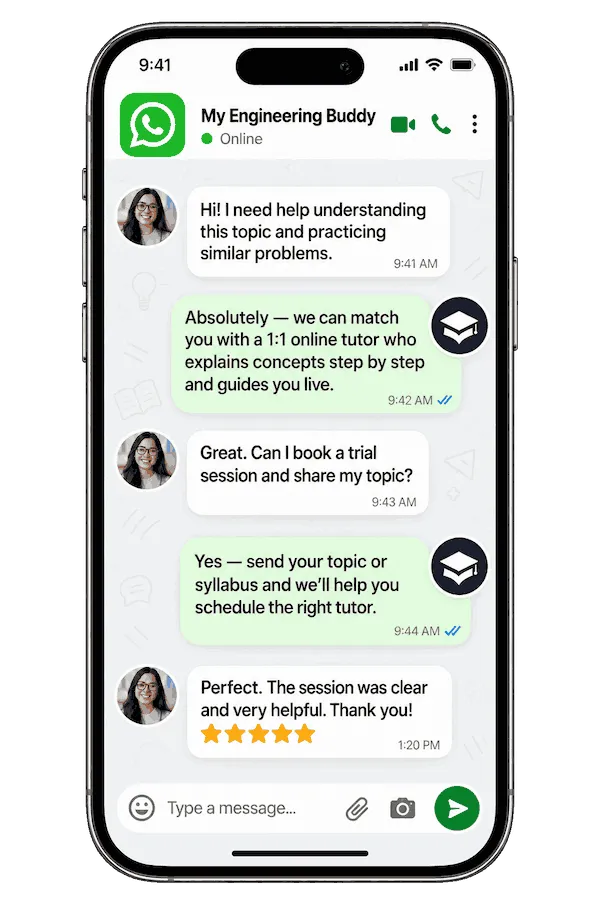
Unlike platforms where you complete a form and wait days for a response, MEB responds in under a minute, 24/7 over WhatsApp. Tutor match takes under an hour. The $1 trial means you test the fit before committing to a package. No logins, no intake forms, no waiting rooms.
Study Plans (Pick One That Matches Your Goal)
After the diagnostic session, your tutor builds a specific sequence. Three common tracks: Catch-up (1–3 weeks) — for candidates close to the exam with defined topic gaps, sessions are daily and tightly focused on the highest-yield areas. Exam prep (4–8 weeks) — structured weekly sessions working systematically through the JRCPTB syllabus with regular question bank review. Ongoing weekly support — for trainees preparing over a longer cycle or working through the specialty curriculum alongside clinical work. The tutor builds the specific sequence after the first diagnostic.
Pricing Guide
MRCP(UK) SCE Endocrinology and Diabetes tutoring sits at $40–$100/hr depending on tutor seniority, topic complexity, and how close the exam date is. Rate factors include the level of specialist knowledge required, the urgency of the timeline, and tutor availability in your time zone.
For candidates targeting a specific SCE mark threshold or preparing for a CESR portfolio, tutors with clinical specialist and research backgrounds are available at higher rates — share your exact goal and MEB will match the tutor tier to what you actually need.
Availability tightens before each SCE sitting window. Book before that point if your date is fixed. Start with the $1 trial — 30 minutes, no registration, no commitment. WhatsApp MEB for a quick quote.
FAQ
Is the MRCP(UK) SCE Endocrinology and Diabetes hard?
Yes — it consistently has pass rates below 60% at first sitting. The difficulty is not breadth but depth: the exam tests rare presentations, biochemical reasoning, and nuanced interpretation of dynamic function tests at a level most trainees haven’t needed in routine clinical work.
How many sessions are needed?
Most candidates preparing over 6–8 weeks use 10–16 sessions. Those with 2–3 weeks and targeted gaps can close ground in 6–8 focused sessions. The tutor sets the plan after the first diagnostic — there’s no standard package that fits everyone.
Can you help with homework and assignments?
MEB tutoring is guided learning — you understand the work, then submit it yourself. For SCE candidates, this means working through question sets and mock papers together, not being given answers. See our Academic Integrity policy and Why MEB page for full details on what we help with and what we don’t.
Will the tutor match my exact syllabus or exam board?
Yes. The tutor works from the JRCPTB SCE Endocrinology and Diabetes curriculum directly. If you’re sitting a specific exam window with a particular question bank or mock paper set, tell MEB when you make contact and the tutor will align sessions accordingly.
What happens in the first session?
The tutor runs a focused diagnostic — targeted questions across pituitary disease, thyroid, adrenal, and diabetes pharmacology — to find where marks are being lost. From that, a session sequence is built. Nothing is wasted on topics you’ve already mastered.
Is online tutoring as effective as in-person?
For a written examination like the SCE, online is often more effective. Screen sharing, live annotation with a digital pen-pad, and question bank review in real time replicate everything an in-person session does — without geography limiting which specialist tutor you can access.
Can I get MRCP(UK) SCE Endocrinology and Diabetes help at midnight or on weekends?
Yes. MEB tutors work across time zones and many are available evenings and weekends. Clinical rota patterns mean odd hours are normal — contact MEB over WhatsApp with your availability and a tutor will be matched to fit it.
What if I don’t get on with my assigned tutor?
Request a change. It happens, and MEB handles it without friction. The $1 trial exists partly for this reason — 30 minutes is enough to know whether the working style is right for you before committing further.
How do sessions on the SCE Endocrinology and Diabetes differ from general MRCP Part 2 prep?
SCE Endocrinology and Diabetes goes significantly deeper into specialist areas — adrenal pathophysiology, MEN syndromes, calcium disorders, reproductive endocrinology — than Part 2 requires. Tutors who cover general Part 2 are not always equipped for SCE-level depth. MEB matches tutors specifically for SCE subjects.
Do you support candidates using Passmedicine, Pastest, or Onexamination question banks?
Yes. Tutors can work through any question bank alongside you, review why specific distractors are placed, and build sessions around topics where your question bank performance is weakest. Share your account results before the first session if you have them.
How do I get started?
Start with the $1 trial — 30 minutes of live 1:1 tutoring or one question explained in full. Three steps: WhatsApp MEB, get matched with a specialist SCE tutor within the hour, and begin your first session. No registration, no forms, no wait.
How do I find a MRCP(UK) SCE Endocrinology and Diabetes tutor in my city?
You don’t need to. All MEB MRCP(UK) SCE Endocrinology and Diabetes tutoring runs online — Google Meet, any device, any city. Candidates in London, Dubai, Toronto, Sydney, and across the Gulf all access the same tutor pool. Location is not a constraint.
Trust & Quality at My Engineering Buddy
Every MEB tutor for the MRCP(UK) SCE Endocrinology and Diabetes is screened for specialist clinical knowledge, not just general medical training. The screening process includes a live demo evaluation, subject-specific vetting against the JRCPTB curriculum, and ongoing review based on session feedback. Tutors hold postgraduate medical qualifications and have direct examination or clinical specialist experience in endocrinology and diabetes. Rated 4.8/5 across 40,000+ verified reviews on Google.
MEB tutoring is guided learning — you understand the work, then submit it yourself. For full details on what we help with and what we don’t, read our Academic Integrity policy and Why MEB.
MEB has served 52,000+ students across the US, UK, Canada, Australia, Gulf, and Europe since 2008 — across 2,800+ advanced subjects. Within the MRCP(UK) suite, this includes candidates preparing for MRCP(UK) SCE Nephrology tutoring, MRCP(UK) SCE Rheumatology help, and the full MRCP(UK) SCE Neurology tutoring programme, alongside the Endocrinology and Diabetes SCE. See our tutoring methodology for how sessions are structured and quality is maintained.
A common pattern our tutors observe is that candidates arrive having done hundreds of questions but without a clear picture of which topic areas are genuinely weak. Quantity without a feedback loop is the most common reason a second attempt looks like the first one.
Explore Related Subjects
Students studying MRCP(UK) SCE Endocrinology and Diabetes often also need support in:
- MRCP(UK) Part 1
- MRCP(UK) Part 2
- MRCP(UK) PACES
- MRCP(UK) SCE Geriatric Medicine
- MRCP(UK) SCE Medical Oncology
- MRCP(UK) SCE Respiratory Medicine
- MRCP(UK) SCE Gastroenterology
- MRCP(UK) SCE Palliative Medicine
Next Steps
When you contact MEB, have the following ready:
- Your SCE exam date or target sitting window
- A recent question bank result or mock paper attempt you’ve struggled with
- Your availability and time zone
MEB matches you with a verified SCE Endocrinology and Diabetes tutor — usually within the hour. The first session starts with a diagnostic so every minute from the second session forward is spent on what actually needs work.
Before your first session, have ready: your JRCPTB curriculum printout or question bank access, a recent past paper attempt or specific question sets you’ve struggled with, and your exam date. The tutor handles the rest.
Visit www.myengineeringbuddy.com for more on how MEB works.
WhatsApp to get started or email [email protected].
Try your first session for $1 — 30 minutes of live 1:1 tutoring or one homework question explained in full. No registration. No commitment. WhatsApp MEB now and get matched within the hour.
Reviewed by Subject Expert
This page has been carefully reviewed and validated by our subject expert to ensure accuracy and relevance.