Contact MEB Today To Get The Best
MRCP(UK) SCE Gastroenterology (ESEGH) Tutoring Online
Email: [email protected]



~1 min
Average Reply Time
~1 hour
To Be Matched With A Tutor
30 Min Trial
75% Find Their Tutor On The 1st Trial
$20-35+/hr
Premium Yet Affordable Learning
The ESEGH catches out doctors who thought MRCP Part 2 had prepared them. It hasn’t — not for hepatology depth at this level.
MRCP(UK) SCE Gastroenterology (ESEGH) Tutor Online
The MRCP(UK) SCE Gastroenterology (ESEGH) is a specialty certificate examination set by the Joint Royal Colleges of Physicians of the United Kingdom, assessing advanced clinical knowledge in gastroenterology and hepatology for physicians pursuing specialist certification.
Finding a qualified MRCP(UK) SCE Gastroenterology tutor is hard. The ESEGH tests hepatology, IBD, endoscopy interpretation, and GI oncology at a depth that general medical revision resources simply don’t reach. MEB offers 1:1 online tutoring and academic guidance across 2,800+ advanced subjects — including the full MRCP(UK) pathway. If you’re searching for an MRCP(UK) SCE Gastroenterology tutor near me, an online session with a subject-matched expert is faster and more effective. One outcome you can expect: sharper clinical reasoning on SBA questions drawn from cases you’ve actually worked through.
- 1:1 online sessions built around the ESEGH syllabus and past question patterns
- Expert-verified tutors with specialist gastroenterology and hepatology knowledge
- Flexible scheduling across US, UK, Canada, Australia, and Gulf time zones
- Structured learning plan built after a diagnostic of your weak topic areas
- Ethical exam guidance — you understand the reasoning before you sit the paper
52,000+ students across the US, UK, Canada, Australia, and the Gulf have used MEB since 2008 — including physicians preparing for MRCP(UK) subjects like MRCP(UK) SCE Gastroenterology (ESEGH), MRCP(UK) SCE Nephrology, and MRCP(UK) SCE Respiratory Medicine.
Source: My Engineering Buddy, 2008–2025.
How Much Does a MRCP(UK) SCE Gastroenterology (ESEGH) Tutor Cost?
Most ESEGH tutoring sessions run $35–$70/hr given the specialist level required. Standard clinical medicine tutoring starts from $20/hr. The $1 trial gives you 30 minutes of live 1:1 tutoring or one full SBA question explained — no registration needed.
| Level / Need | Typical Rate | What’s Included |
|---|---|---|
| Standard clinical medicine | $20–$35/hr | 1:1 sessions, SBA question guidance |
| Advanced / Specialist (ESEGH) | $35–$70/hr | Expert tutor, hepatology and IBD depth |
| $1 Trial | $1 flat | 30 min live session or 1 SBA explained |
Tutor availability tightens significantly in the weeks before the ESEGH sitting window. Book early if your exam date is firm.
WhatsApp MEB for a quick quote — average response time under 1 minute.
Who This MRCP(UK) SCE Gastroenterology (ESEGH) Tutoring Is For
This is for doctors at registrar level and above who are preparing for the ESEGH and want more than a question bank. The exam demands clinical reasoning across complex hepatology, IBD, and GI oncology scenarios — not just factual recall.
- Physicians sitting the ESEGH for the first time who want a structured study plan
- Doctors retaking after a failed first attempt — the tutor diagnoses exactly where reasoning broke down
- Registrars 4–6 weeks from their exam date with specific topic gaps still open
- Candidates who score well on question banks but struggle under real exam conditions
- Doctors trained outside the UK who need to align their clinical knowledge to JRCPTB standards
- Physicians at hospitals in the US, UK, Canada, Australia, and Gulf preparing for specialist certification
Many candidates find the ESEGH harder than MRCP Part 2. That’s not a reflection of ability — it’s a reflection of how specific and deep the syllabus goes. A $1 trial session is often enough to identify the exact topic cluster holding a candidate back.
1:1 Tutoring vs Self-Study vs AI vs YouTube vs Online Courses
Self-study works if you’re disciplined — but the ESEGH requires someone to challenge your reasoning, not just confirm it. AI tools give fast explanations, but can’t simulate a clinical vignette discussion or catch the reasoning error underneath a right answer. YouTube covers GI physiology well; it stops short when you need hepatology management at ESEGH depth. Online courses are structured but fixed-pace with no adaptation to your actual weak points. 1:1 tutoring with MEB is live, calibrated to the ESEGH syllabus, and corrects the clinical logic errors that cost marks in real time. For a high-stakes specialty exam like the ESEGH, that correction loop matters more than content volume.
Outcomes: What You’ll Be Able To Do in MRCP(UK) SCE Gastroenterology (ESEGH)
After structured 1:1 ESEGH tutoring, you’ll be able to apply diagnostic algorithms for complex liver disease presentations with confidence, analyse IBD management decisions across biological therapy options, explain the EASL and BSG guidelines behind hepatitis B and C treatment choices, solve SBA questions on GI oncology staging without second-guessing the evidence base, and present a structured approach to acute GI bleeding that holds up under exam pressure. Every outcome is grounded in ESEGH question patterns — not generic gastroenterology revision.
Based on feedback from 40,000+ sessions collected by MEB from 2022 to 2025, 58% of students improved by one full grade after approximately 20 hours of 1:1 tutoring in subjects like MRCP(UK) SCE Gastroenterology (ESEGH). A further 23% achieved at least a half-grade improvement.
Source: MEB session feedback data, 2022–2025.
At MEB, we’ve found that ESEGH candidates often know the facts but reason through vignettes the way they would for Part 2. That gap — between factual recall and specialist-level clinical judgement — is exactly what 1:1 tutoring closes. It takes targeted practice, not more reading.
What We Cover in MRCP(UK) SCE Gastroenterology (ESEGH) (Syllabus / Topics)

Hepatology and Liver Disease
- Cirrhosis: diagnosis, staging (Child-Pugh, MELD), and management of complications
- Acute liver failure: aetiology, King’s College Criteria, and transplant indications
- Viral hepatitis B and C: natural history, treatment thresholds, and antiviral regimens
- Alcoholic liver disease and NAFLD/NASH: spectrum and intervention
- Hepatocellular carcinoma: surveillance protocols, Barcelona staging, treatment options
- Cholestatic liver diseases: PBC, PSC, diagnosis, and UDCA evidence base
- Portal hypertension: variceal screening, banding, TIPSS indications
Core references: Sherlock and Dooley’s Diseases of the Liver and Biliary System; BSG and EASL clinical guidelines (current versions).
Inflammatory Bowel Disease and Luminal Gastroenterology
- Crohn’s disease vs ulcerative colitis: distinguishing features, Montreal classification
- Biological therapy in IBD: anti-TNF agents, vedolizumab, ustekinumab — indications and failure
- Microscopic colitis, coeliac disease, and small bowel disorders
- Colorectal cancer screening and surveillance: colonoscopy intervals, high-risk groups
- Functional GI disorders: Rome IV criteria, IBS, functional dyspepsia
- Upper GI: Barrett’s oesophagus surveillance, H. pylori eradication strategies
Core references: Oxford Textbook of Medicine; BSG guidelines on IBD and colorectal cancer surveillance.
GI Oncology, Endoscopy, and Nutrition
- Oesophageal, gastric, and pancreatic cancer: staging, MDT approach, palliative options
- Endoscopic findings interpretation: EGD, colonoscopy, ERCP, EUS — ESEGH SBA patterns
- Pancreatitis: acute severity scoring (Atlanta), chronic management, autoimmune type 1
- GI manifestations of systemic disease: scleroderma, amyloid, diabetes, lymphoma
- Nutritional support in GI disease: enteral vs parenteral, refeeding syndrome
Core references: Clinical Gastroenterology and Hepatology (Elsevier); NICE guidelines on nutrition support.
The ESEGH is a 100-question single best answer (SBA) paper with a 2.5-hour sitting window. Questions draw heavily on UK guidelines (BSG, NICE, EASL) and require candidates to apply specialist-level reasoning — not just recall. Understanding which guideline governs a management decision is often what separates a pass from a fail.
What a Typical MRCP(UK) SCE Gastroenterology (ESEGH) Session Looks Like
The tutor opens by revisiting the previous session’s topic — for example, the management algorithm for acute variceal haemorrhage — and asks you to walk through your reasoning before any new material starts. From there, you and the tutor work through 8–10 SBA questions on screen together, pausing on each distractor to discuss why it’s wrong rather than just marking it. Topics might move from hepatic encephalopathy grading to anti-TNF failure in Crohn’s disease in the same session, mirroring how the ESEGH itself switches between sub-specialties. The tutor uses a digital pen-pad to annotate clinical decision trees as you talk. You replicate the reasoning structure — not just the answer. The session closes with a specific set of 15–20 practice SBAs to complete before next time, and a note of the two or three topic clusters that still need consolidation.
How MEB Tutors Help You with MRCP(UK) SCE Gastroenterology (ESEGH) (The Learning Loop)
Diagnose: In the first session, the tutor works through 10–15 SBAs with you and identifies exactly which topic areas are producing wrong answers — and whether the errors are factual gaps or reasoning failures. These are different problems with different fixes.
Explain: The tutor presents live worked vignettes using a digital pen-pad, walking through the clinical logic behind every correct and incorrect option. This is not a lecture — it’s a dialogue about how a specialist thinks through a case.
Practice: You attempt questions while the tutor is present. Immediate feedback means errors don’t consolidate into bad habits. The tutor adjusts difficulty based on what you’re getting right.
Feedback: Every session ends with a breakdown of which reasoning steps failed and why. The tutor explains the exact mark-scoring logic — what the examiner is testing with each distractor, not just what the right answer is.
Plan: The tutor maps the next session’s topics based on the current session’s findings. You don’t move on until the reasoning is solid. Progress is tracked across sessions, not just within them.
Sessions run on Google Meet with a digital pen-pad or iPad with Apple Pencil for annotation. Before the first session, share your exam date, your most recent practice paper score, and the topic areas where you’re consistently losing marks. The first session is both a diagnostic and a productive working session — nothing is wasted. Start with the $1 trial — 30 minutes of live tutoring that also serves as your first diagnostic.
Students consistently tell us that what changed their ESEGH preparation wasn’t more question bank questions — it was having someone explain the examiner’s logic behind each distractor. That shift from answer-hunting to clinical reasoning is what the tutor works on from session one.
Tutor Match Criteria (How We Pick Your Tutor)
Every ESEGH tutor is matched on four criteria before your first session.
Subject depth: The tutor must have specialist knowledge in gastroenterology and hepatology at ESEGH level — not just general internal medicine. We verify this before matching.
Tools: All tutors work on Google Meet with a digital pen-pad or iPad and Apple Pencil for real-time annotation of clinical algorithms and vignettes.
Time zone: Matched to your region — UK, US, Gulf, Canada, or Australia — so sessions run at times that don’t cost you sleep before an exam.
Goals: Whether you need targeted gap-filling 3 weeks before the sitting, a full 8-week structured programme, or specific support on hepatology alone, the tutor’s approach is built around your actual position.
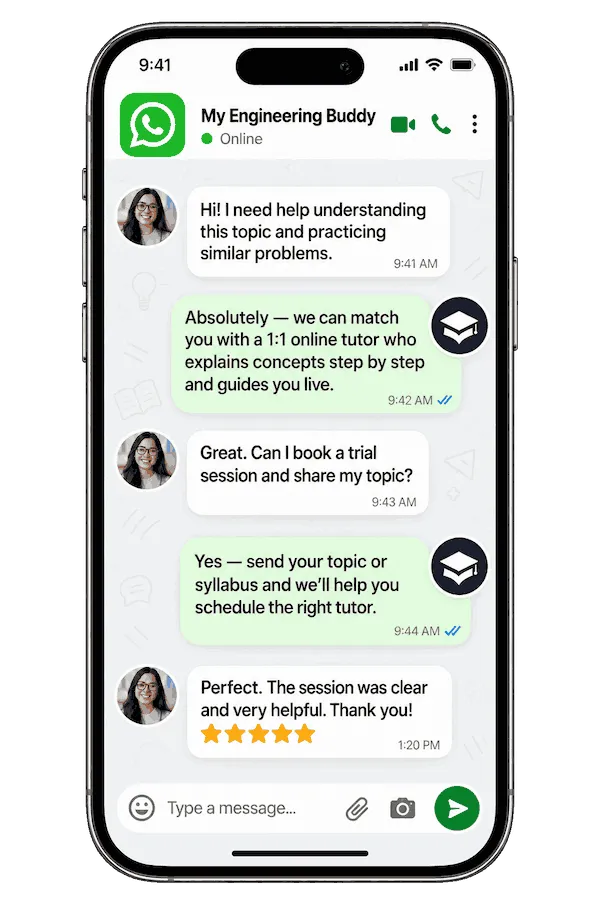
Unlike platforms where you fill out a form and wait, MEB responds in under a minute, 24/7. Tutor match takes under an hour. The $1 trial means you test before you commit. Everything runs over WhatsApp — no logins, no intake forms.
Study Plans (Pick One That Matches Your Goal)
The tutor builds a specific sequence after the diagnostic session, but most ESEGH candidates fit one of three structures. Catch-up (1–3 weeks): intensive focus on the 2–3 topic clusters with the highest failure rate for your profile — hepatology, IBD biologics, or GI oncology depending on your gaps. Exam prep (4–8 weeks): systematic coverage of the full ESEGH syllabus with weekly SBA practice sets and a mock paper in week six. Weekly support: ongoing sessions aligned to your clinical rota, with flexible session lengths and topic selection each week.
Pricing Guide
ESEGH-level tutoring typically runs $35–$70/hr given the specialist depth required. Graduate and niche clinical subjects can reach $100/hr for tutors with professional clinical backgrounds. Rate factors include topic complexity, tutor seniority, timeline pressure, and session frequency.
For candidates targeting a pass in a specific ESEGH sitting window, tutors with active clinical gastroenterology backgrounds are available at higher rates — share your exam date and current score position and MEB will match the right tier.
Availability drops sharply in the four weeks before an ESEGH sitting. Early booking is not just advisable — it’s often the difference between getting the right tutor and getting whoever is left.
Start with the $1 trial — 30 minutes, no registration, no commitment. WhatsApp MEB for a quick quote.
MEB has supported physicians across the full MRCP(UK) pathway since 2008 — from MRCP(UK) Part 1 through to specialty certificates including MRCP(UK) SCE Endocrinology and Diabetes and the ESEGH. Specialist tutors. Real exam depth.
Source: My Engineering Buddy, 2008–2025.
FAQ
Is the MRCP(UK) SCE Gastroenterology (ESEGH) hard?
Yes — significantly harder than MRCP Part 2 for most candidates. The ESEGH tests specialist-level clinical reasoning across hepatology, IBD, GI oncology, and endoscopy at a depth that general medical revision does not cover. Pass rates vary by sitting but are consistently below 70%.
How many sessions do I need?
Most ESEGH candidates benefit from 12–20 hours of 1:1 tutoring spread across 6–8 weeks. Candidates retaking after a fail often need fewer sessions because the diagnostic is faster — specific reasoning errors are already identifiable from the previous attempt.
Can you help with exam preparation and practice questions?
Yes. MEB tutors work through SBA practice questions with you, explain the reasoning behind every distractor, and build your clinical decision-making for the exam. MEB tutoring is guided learning — you understand the work, then sit the paper yourself. See our Academic Integrity policy and Why MEB page for full details on what we help with and what we don’t.
Will the tutor match my exact ESEGH syllabus and exam board?
Yes. The tutor is matched to the JRCPTB ESEGH syllabus specifically — covering BSG, NICE, and EASL guidelines as they appear in SBA question patterns. If you have a specific past paper or question set you’re working from, share it before the first session.
What happens in the first session?
The tutor works through 10–15 SBAs with you, identifies where errors are occurring — factual gap vs reasoning failure — and sets the study plan for subsequent sessions. You leave with a clear picture of your weakest topic clusters and a structured next step.
Is online tutoring as effective as in-person for the ESEGH?
For a written SBA exam like the ESEGH, online tutoring is equally effective. Digital pen-pad annotation on Google Meet replicates what a whiteboard session would offer, and you can share question banks or past papers on screen in real time. Location is not a limiting factor.
Can I get MRCP(UK) SCE Gastroenterology help at short notice — including late at night?
Yes. MEB operates 24/7 via WhatsApp. If your ESEGH exam is in two weeks and you need a tutor matched tonight, message MEB now. Tutor matching typically takes under an hour. Last-minute intensive prep is something MEB handles regularly.
What if I don’t get on with my assigned tutor?
Tell MEB via WhatsApp and you’ll be rematched — usually the same day. The $1 trial exists partly for this reason. If the first session doesn’t feel right, you haven’t committed to anything beyond one dollar.
Do you offer group ESEGH sessions?
MEB specialises in 1:1 tutoring only. Group sessions aren’t offered because ESEGH preparation is too candidate-specific — two doctors failing on different topic clusters need different diagnostic approaches and different session content.
How do I know which ESEGH topics to prioritise?
The diagnostic session in your first MEB session does this for you. If you have a recent practice paper or question bank performance breakdown, share it before the session — the tutor can pre-identify your priority topic clusters and arrive with targeted material ready.
What’s the difference between the ESEGH and the general MRCP Part 2 in terms of gastroenterology content?
MRCP Part 2 tests broad internal medicine including some GI. The ESEGH tests gastroenterology and hepatology exclusively, at specialist consultant-level depth — including guideline-specific management decisions, endoscopic findings interpretation, and GI oncology staging that Part 2 does not examine at that level.
How do I get started?
Message MEB on WhatsApp, share your exam date and current position. You’ll be matched with a verified ESEGH tutor, usually within the hour. The $1 trial — 30 minutes live or one SBA explained in full — is your first step. No forms, no waiting.
Trust & Quality at My Engineering Buddy
Every MEB tutor is screened through subject-specific vetting before working with any student. For ESEGH tutors, this means verified clinical and academic background in gastroenterology or hepatology, a live demo session evaluated by MEB’s academic team, and ongoing review based on student session feedback. Rated 4.8/5 across 40,000+ verified reviews on Google.
MEB tutoring is guided learning — you understand the work, then submit it yourself. For full details on what we help with and what we don’t, read our Academic Integrity policy and Why MEB.
MEB has served 52,000+ students across the US, UK, Canada, Australia, the Gulf, and Europe since 2008 — covering 2,800+ advanced subjects. In the MRCP(UK) pathway specifically, that includes support across MRCP(UK) SCE Neurology tutoring, MRCP(UK) SCE Rheumatology help, and the full spectrum of specialty certificates. The tutoring methodology behind every session is documented at MEB’s tutoring methodology page.
Our experience across thousands of sessions shows that the doctors who improve fastest on the ESEGH are not the ones who do the most questions — they’re the ones who stop and understand why each wrong answer looked plausible in the first place. That’s the work tutoring is built around.
Explore Related Subjects
Students studying MRCP(UK) SCE Gastroenterology (ESEGH) often also need support in:
- MRCP(UK) PACES
- MRCP(UK) Part 2
- MRCP(UK) SCE Acute Medicine
- MRCP(UK) SCE Geriatric Medicine
- MRCP(UK) SCE Medical Oncology
- MRCP(UK) SCE Palliative Medicine
- MRCP(UK) SCE Dermatology
Next Steps
Here’s what to do before your first session:
- Your ESEGH sitting date (or target window) and your most recent practice score
- The 2–3 topic areas where you’re consistently losing marks
- Any past papers or question bank performance reports you can share on screen
Share your availability and time zone. MEB matches you with a verified ESEGH tutor — usually within an hour. The first session starts with a diagnostic so no time is wasted on topics you’ve already mastered.
Visit www.myengineeringbuddy.com for more on how MEB works.
Try your first session for $1 — 30 minutes of live 1:1 tutoring or one homework question explained in full. No registration. No commitment. WhatsApp MEB now and get matched within the hour.
WhatsApp to get started or email [email protected].
Reviewed by Subject Expert
This page has been carefully reviewed and validated by our subject expert to ensure accuracy and relevance.