Hire Verified & Experienced
Product design Tutors
4.8/5 40K+ session ratings collected on the MEB platform
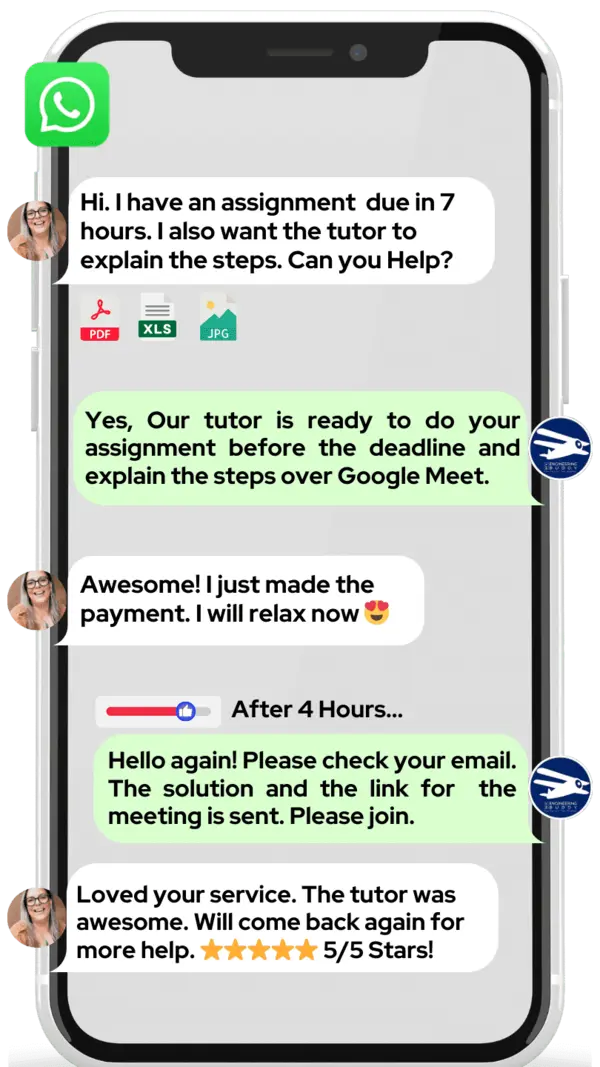



Hire The Best Product design Tutor
Top Tutors, Top Grades. Without The Stress!
52,000+ Happy Students From Various Universities






How Much For Private 1:1 Tutoring & Hw Help?
Private 1:1 Tutoring and HW help Cost $20 – 35 per hour* on average.
Most students who struggle with Product design don’t lack ability — they lack a tutor who can connect DFM constraints to real manufacturing cost before the deadline hits.
Product design Tutor Online
Product design is the process of creating functional, manufacturable products by integrating user needs, engineering constraints, and material selection. It spans concept generation, prototyping, DFM analysis, and iterative refinement across undergraduate and graduate engineering programmes.
MEB offers 1:1 online tutoring and homework help in 2,800+ advanced subjects — including Mechanical Engineering and specialisms like Product design. If you’ve searched for a product design tutor near me and found only generalist platforms, MEB is different: every tutor is matched to your exact module, exam board, and current gap. One focused session often shifts what weeks of lecture notes couldn’t.
- 1:1 online sessions tailored to your specific course and syllabus
- Expert-verified tutors with hands-on product development and engineering design knowledge
- Flexible time zones — US, UK, Canada, Australia, Gulf covered
- Structured learning plan built after a first diagnostic session
- Ethical homework and assignment guidance — you understand the work before you submit it
52,000+ students across the US, UK, Canada, Australia, and the Gulf have used MEB since 2008 — including students in Mechanical Engineering subjects like Product design, Design of Machine Elements, and Rapid Prototyping.
Source: My Engineering Buddy, 2008–2025.
How Much Does a Product design Tutor Cost?
Most Product design tutoring sessions run $20–$40/hr depending on level and topic complexity. Graduate-level or niche areas — DFM for injection moulding, tolerance stack-up analysis, PLM integration — can reach $70–$100/hr. Not sure yet? Start with the $1 trial: 30 minutes live or one homework question fully explained.
| Level / Need | Typical Rate | What’s Included |
|---|---|---|
| Undergraduate (most modules) | $20–$40/hr | 1:1 sessions, homework guidance |
| Graduate / Advanced Specialist | $40–$100/hr | Expert tutor, niche depth, project support |
| $1 Trial | $1 flat | 30 min live session or 1 homework question |
Tutor availability tightens around end-of-semester submission windows and final exam periods. Book early if your deadline is within three weeks.
WhatsApp MEB for a quick quote — average response time under 1 minute.
Who This Product design Tutoring Is For
Product design sits at the intersection of engineering rigour and creative problem-solving. Students often get lost when the two demands collide — when a concept sketch needs to survive a stress analysis or when a prototype fails a DFM review. MEB tutoring is built for exactly that gap.
- Undergraduate engineering students tackling their first full design project from brief to prototype
- Students with a university conditional offer depending on their final year module grade
- Students 4–6 weeks from a design portfolio submission with significant gaps still to close
- Graduate students working on product innovation, systems design, or human-centred design coursework
- Students struggling to connect FEA outputs to design decisions in Finite Element Analysis modules that feed into their product design coursework
- Students progressing toward roles at firms like Dyson, Apple, Boeing, Siemens, or IDEO who need a rigorous design foundation
At MEB, we’ve found that Product design students most often stall not on creativity — they stall when engineering constraints hit their concept. The tutor’s job in that moment is to bridge the gap, not simply point to the formula.
1:1 Tutoring vs Self-Study vs AI vs YouTube vs Online Courses
Self-study works if your discipline is solid — but no one corrects a flawed DFM assumption at 11 pm. AI tools generate explanations fast; they can’t diagnose why your stress analysis is giving nonsense outputs. YouTube covers morphological charts well; it stops when your specific brief has conflicting constraints. Online courses are structured but move at one speed — not yours. A 1:1 Product Lifecycle Management or Product design session with MEB is live, calibrated to your exact module, and corrects reasoning errors in the moment — not after you’ve submitted.
Outcomes: What You’ll Be Able To Do in Product design
After focused 1:1 sessions, students consistently report concrete capability shifts — not just improved confidence. You’ll be able to apply QFD (Quality Function Deployment) to translate user requirements into engineering specifications. You’ll analyse competing design concepts using weighted decision matrices and defend your selection. You’ll model material choices against cost, weight, and manufacturability constraints. You’ll present a complete design report — from concept ideation through DFM analysis to prototyping rationale — with the structure markers actually want to see.
Based on feedback from 40,000+ sessions collected by MEB from 2022 to 2025, 58% of students improved by one full grade after approximately 20 hours of 1:1 tutoring in subjects like Product design. A further 23% achieved at least a half-grade improvement.
Source: MEB session feedback data, 2022–2025.
Supporting a student through Product design? MEB works directly with parents to set up sessions, track progress, and keep coursework on schedule. WhatsApp MEB — average response time is under a minute, 24/7.
Try your first session for $1 — 30 minutes of live 1:1 tutoring or one homework question explained in full. No registration. No commitment. WhatsApp MEB now and get matched within the hour.
What We Cover in Product design (Syllabus / Topics)

Design Process and Concept Development
- Design brief interpretation and stakeholder requirement analysis
- Concept generation: brainstorming, SCAMPER, morphological analysis
- Quality Function Deployment (QFD) and House of Quality
- Pugh matrix and weighted decision analysis
- Ergonomics, human factors, and user-centred design principles
- Intellectual property basics: patents, design rights, and NDAs in product development
Recommended texts: Product Design and Development (Ulrich & Eppinger), The Design of Everyday Things (Norman), Engineering Design (Dieter & Schmidt).
Engineering Analysis and DFM
- Material selection: mechanical properties, cost trade-offs, sustainability criteria
- Design for Manufacture and Assembly (DFM/DFMA) principles
- Tolerance analysis and geometric dimensioning & tolerancing (GD&T)
- Failure Mode and Effects Analysis (FMEA)
- Basic stress and fatigue analysis applied to product components — linking to Mechanics of Materials fundamentals
- Sustainability and lifecycle assessment (LCA) in product design
Recommended texts: Engineering Design (Dieter & Schmidt), Materials Selection in Mechanical Design (Ashby), Mechanical Engineering Design (Shigley).
Prototyping, CAD, and Product Realisation
- Prototyping methods: low-fidelity (foam, card) through high-fidelity (SLA, FDM, CNC)
- CAD modelling for product design — SolidWorks, CATIA, or Fusion 360 depending on your course
- Design for Computer-Aided Manufacturing workflows
- Testing protocols: functional testing, user testing, iteration cycles
- Technical drawing, BOM creation, and design documentation standards
- Costing models and supplier consideration in product realisation
Recommended texts: Product Design and Development (Ulrich & Eppinger), Rapid Prototyping (Chua et al.), course-specific CAD reference guides.
What a Typical Product design Session Looks Like
The tutor opens by checking where you got stuck since last time — usually a specific DFM constraint, a material selection decision, or a QFD matrix that isn’t resolving cleanly. From there, you work through the problem on screen together: the tutor annotates your concept sketch or CAD model directly using a digital pen-pad, walking through why a particular manufacturing process conflicts with your wall thickness or draft angle. You then replicate the reasoning on a parallel design scenario, explaining your choices aloud so the tutor can catch where logic breaks down rather than just where the answer is wrong. The session closes with a concrete task — complete the FMEA for two critical components, or revise the Pugh matrix with corrected weighting — and the next topic is noted before you log off.
How MEB Tutors Help You with Product design (The Learning Loop)
Diagnose: In the first session, the tutor identifies exactly where your understanding breaks — is it the concept generation phase, the DFM analysis, the engineering calculations, or the way you’re structuring your design report? Not a guess. A live conversation with your brief and current work in front of both of you.
Explain: The tutor works through real examples on a digital pen-pad — a QFD matrix built from scratch, a tolerance stack-up calculated step by step, a material selection decision argued with Ashby charts. You see the reasoning, not just the result.
Practice: You attempt the next problem with the tutor present. Not after the session. During it — so errors get caught before they become habits.
Feedback: The tutor goes through exactly where marks were lost and why. In Product design, that’s often not a calculation error — it’s a justification that reads as opinion rather than engineered reasoning.
Plan: Before the session ends, the tutor maps the next two or three topics in sequence, sets a focused practice task, and notes what you should bring to the next session. Accountability built in.
Sessions run on Google Meet with a digital pen-pad or iPad and Apple Pencil. Before your first session, share your module brief, any assignment or past paper you’ve struggled with, and your submission or exam date. The first session covers a diagnostic review of your current position and immediately begins closing the most urgent gap. Start with the $1 trial — 30 minutes of live tutoring that also serves as your first diagnostic.
Students consistently tell us that the shift happens when they stop treating Product design as two separate tasks — the creative bit and the engineering bit — and start seeing them as one integrated process. That’s what the Learning Loop is designed to do.
Source: My Engineering Buddy, internal session feedback.
Tutor Match Criteria (How We Pick Your Tutor)
Not every engineer makes a good Product design tutor. MEB matches on four criteria.
Subject depth: The tutor must have demonstrable experience at your specific level — undergraduate product design module, graduate systems design course, or professional product development background — and familiarity with your exam board or institution’s marking criteria.
Tools: Every session uses Google Meet with a digital pen-pad or iPad and Apple Pencil. Tutors who can’t annotate live are not matched for design subjects.
Time zone: Matched to your region — US, UK, Gulf, Canada, or Australia. No scheduling across 12-hour gaps.
Goals: Whether you’re targeting a first-class grade, closing a specific DFM knowledge gap, or preparing a design portfolio for a graduate application, the match accounts for your actual objective — not a generic “engineering” category.
Unlike platforms where you fill out a form and wait, MEB responds in under a minute, 24/7. Tutor match takes under an hour. The $1 trial means you test before you commit. Everything runs over WhatsApp — no logins, no intake forms.
Study Plans (Pick One That Matches Your Goal)
After the diagnostic, your tutor builds a session sequence around one of three modes. Catch-up (1–3 weeks): for students behind on a specific module section — DFM, concept selection, or report structure — with a submission close. Exam or portfolio prep (4–8 weeks): structured revision covering the full syllabus in priority order, with past paper or brief practice built in. Weekly ongoing support: aligned to your semester, covering each new topic as it lands and keeping coursework on track. The tutor maps the specific sequence after the first session — not before.
Pricing Guide
Product design tutoring starts at $20/hr for most undergraduate modules. Graduate-level work — systems design, advanced DFM, product innovation strategy — runs $40–$100/hr depending on tutor specialisation and timeline pressure. Rate factors include module level, topic complexity, your deadline, and tutor availability during peak periods.
For students targeting graduate design roles at top engineering firms or admission to competitive MEng and MSc programmes, tutors with professional product development backgrounds are available at higher rates — share your specific goal and MEB will match the tier to your ambition.
Start with the $1 trial — 30 minutes, no registration, no commitment. WhatsApp MEB for a quick quote.
A common pattern our tutors observe is that students leave the pricing conversation until they’re already behind. The $1 trial removes that barrier entirely — you’re not committing to a course, you’re testing whether one session makes a difference. Almost always, it does.
FAQ
Is Product design hard?
It depends on where you are in the programme. Most students find concept generation manageable — the difficulty spikes when engineering analysis (stress, DFM, tolerance) has to be integrated with design decisions. That integration is exactly where 1:1 tutoring closes the gap fastest.
How many sessions are needed?
Students closing a single gap — a stuck FMEA or a failing Pugh matrix — often need 2–4 sessions. A full module from behind typically takes 8–12 hours spread over 4–6 weeks. The tutor gives a clearer estimate after the first diagnostic session.
Can you help with homework and assignments?
Yes. MEB tutoring is guided learning — you understand the work, then submit it yourself. The tutor explains the method, works through the reasoning, and you produce the output independently. See our Academic Integrity policy and Why MEB page for full details on what we help with and what we don’t.
Will the tutor match my exact syllabus or exam board?
Yes. When you message MEB, share your university, module name, and current assessment. The tutor matched to you will have worked at that level with that type of brief. Generic engineering tutors who don’t know your marking criteria are not used.
What happens in the first session?
The tutor reviews your current work — a design brief, a half-completed assignment, or a past paper — and identifies the specific gaps. From that point, the session starts closing the most urgent one immediately. No generic introductions. No wasted time.
Is online tutoring as effective as in-person?
For Product design, yes — because the tutor can annotate your CAD file, sketch, or report live on screen using a digital pen-pad. You often get clearer visual feedback than you would across a shared desk. The live correction loop is identical.
Can I get Product design help at short notice — even late at night?
Yes. MEB operates 24/7 via WhatsApp. Average response time is under a minute. If your submission is tomorrow morning, message now — tutors are available across time zones, and the $1 trial can begin within the hour.
What if I don’t connect with my assigned tutor?
Tell MEB over WhatsApp. A different tutor is matched, usually within the same day. The $1 trial is specifically designed so you experience the match before spending anything significant. If it’s not right, nothing is lost.
Do Product design tutors help with CAD modelling as part of the design process?
Yes — tutors can support CAD work in SolidWorks, CATIA, and Fusion 360 when it’s part of your product design module. The focus is on understanding design decisions behind the model, not just operating the software. If you need deeper Solid Edge or Computational Mechanics support, MEB covers those too.
What’s the difference between a Product design module and a Design of Machine Elements module?
Product design typically spans the full development cycle — brief, concept, DFM, prototyping, and reporting. Design of Machine Elements focuses on the engineering analysis of specific components — shafts, gears, bearings, fasteners. Many students take both; the tutoring is matched to whichever module you’re working on.
How do I get started?
Three steps: WhatsApp MEB with your module name and current gap → get matched to a tutor within the hour → start the $1 trial (30 minutes live or one assignment question fully explained). No registration. No intake form. No commitment beyond $1.
Can MEB help with the design report and written justification, not just the calculations?
Yes. In Product design, marks are frequently lost not on the engineering numbers but on how decisions are justified. The tutor helps you structure arguments — why this material, why this manufacturing process, why this concept over the alternatives — so your report reads as engineered reasoning rather than personal preference.
Trust & Quality at My Engineering Buddy
Every MEB tutor goes through subject-specific screening before their first session: degree verification, a live demo session evaluated against marking criteria in their declared subjects, and ongoing review based on student feedback. Rated 4.8/5 across 40,000+ verified reviews on Google. That rating is maintained because tutors who consistently underperform are removed — not retained to fill slots.
MEB tutoring is guided learning — you understand the work, then submit it yourself. For full details on what we help with and what we don’t, read our Academic Integrity policy and Why MEB.
MEB has served 52,000+ students across the US, UK, Canada, Australia, Gulf, and Europe in 2,800+ subjects since 2008 — with particular depth in Mechanical Engineering and adjacent fields. Students working through Engineering Thermodynamics, Manufacturing Processes, and product design modules regularly use MEB alongside each other because the subjects overlap in real coursework. See our tutoring methodology for how sessions are structured across engineering subjects.
Explore Related Subjects
Students studying Product design often also need support in:
- Engineering Dynamics
- Fluid Mechanics
- Heat Transfer
- Kinematics of Machines
- Nonlinear Finite Element Analysis
- Strength of Materials
- Theory of Machines
Next Steps
When you message MEB, share your exam board or institution, your module name, the component you’re most stuck on, and your submission or exam date. Include your time zone and available hours — the tutor match accounts for both.
Before your first session, have ready:
- Your module brief or syllabus (or course outline from your university portal)
- A recent assignment attempt, past paper, or design task you struggled with
- Your submission deadline or exam date
The tutor handles the rest — diagnostic first, then a session plan built around your actual gaps. Visit www.myengineeringbuddy.com for more on how MEB works.
WhatsApp to get started or email meb@myengineeringbuddy.com.
Reviewed by Subject Expert
This page has been carefully reviewed and validated by our subject expert to ensure accuracy and relevance.