




~1 min
Average Reply Time
~1 hour
To Be Matched With A Tutor
1 Trial
75% Find Their Tutor On The 1st Trial
$1
Your First 30 Minutes
Hire The Best Data Lakes Tutor
Top Tutors, Top Grades. Without The Stress!



Related Subjects
Most students who struggle with Data Lakes don’t have a concept problem. They have an architecture problem — they can’t see how ingestion, storage, and querying connect into one working system.
Data Lakes Tutor Online
A data lake is a centralised storage repository that holds raw data in its native format — structured, semi-structured, and unstructured — at scale, enabling batch and real-time analytics across large datasets without pre-defined schema constraints.
MEB offers 1:1 online tutoring and homework help across 2,800+ advanced subjects, including Data Lakes at undergraduate, graduate, and professional levels. Whether you’re searching for a Data Lakes tutor near me or need help with a specific assignment on Delta Lake architecture or Apache Spark ingestion pipelines, MEB connects you with a verified expert tutor — fast. Our Computer Science tutoring programme covers the full stack, from theory to applied data engineering. One session can close gaps that weeks of lecture replay won’t.
- 1:1 online sessions tailored to your course syllabus and assignment deadlines
- Expert-verified tutors with hands-on data engineering and academic backgrounds
- Flexible scheduling across US, UK, Canada, Australia, and Gulf time zones
- Structured learning plan built after a first-session diagnostic
- Ethical homework and assignment guidance — you understand the work, then submit it yourself
52,000+ students across the US, UK, Canada, Australia, and the Gulf have used MEB since 2008 — including students in Computer Science subjects like Data Lakes, Data Warehousing, and Distributed Systems.
Source: My Engineering Buddy, 2008–2025.
How Much Does a Data Lakes Tutor Cost?
Most Data Lakes tutoring sessions run between $20 and $40 per hour. Graduate-level topics — Delta Lake internals, lakehouse architecture, or Databricks optimisation — can run up to $100/hr depending on tutor expertise and timeline. New students can start with the $1 trial: 30 minutes of live 1:1 tutoring or one homework question explained in full.
| Level / Need | Typical Rate | What’s Included |
|---|---|---|
| Undergraduate (introductory) | $20–$35/hr | 1:1 sessions, homework guidance |
| Graduate / Advanced | $35–$70/hr | Expert tutor, architecture depth |
| Niche / Professional | Up to $100/hr | Industry-experienced tutor, specific toolchain |
| $1 Trial | $1 flat | 30 min live session or 1 homework question |
Tutor availability tightens significantly at semester end and during project submission windows. Book early if you’re within four weeks of a deadline.
WhatsApp MEB for a quick quote — average response time under 1 minute.
Who This Data Lakes Tutoring Is For
Data Lakes is taught across computer science, data engineering, and information systems programmes. Students hit walls at very different points — schema-on-read vs schema-on-write, partitioning strategies, or getting a Spark job to actually run on their dataset. MEB tutors have seen every version of that wall.
- Undergraduates in CS or data science programmes with a Data Lakes or Big Data module
- Masters and PhD students building or evaluating lakehouse architectures for research
- Students with a conditional offer from programmes at universities like Carnegie Mellon, University of Toronto, Imperial College London, ETH Zürich, or University of Melbourne — and this module is one they cannot afford to drop
- Students retaking after a failed first attempt at a data engineering or database systems course
- Professionals upskilling in Apache Spark, Delta Lake, or AWS S3-based data lake patterns who need structured 1:1 guidance rather than generic tutorials
- Students 4–6 weeks from submission with gaps in ingestion pipeline design, data governance, or query optimisation still open
Parents supporting a student through a data engineering module at university — MEB works with you directly to set up sessions and keep coursework on track. WhatsApp MEB any time; response time averages under a minute.
1:1 Tutoring vs Self-Study vs AI vs YouTube vs Online Courses
Self-study works if you’re disciplined — but Data Lakes has too many interdependent moving parts for most students to diagnose their own gaps accurately. AI tools give fast answers, but can’t watch you build a broken ingestion pipeline and tell you exactly where the schema inference failed. YouTube covers the concepts well and stops the moment your environment throws an error. Online courses are structured but fixed-pace, with no one to catch a misconception before it compounds. With a 1:1 cloud computing-aware Data Lakes tutor at MEB, every session is calibrated to your exact course, your exact error, and your exact deadline — corrections happen in the moment, not three days later when you re-read a forum post.
Outcomes: What You’ll Be Able To Do in Data Lakes
After targeted 1:1 sessions, students consistently report being able to design a multi-zone data lake architecture — raw, cleansed, and curated layers — and justify the design choices for a given use case. You’ll be able to apply schema-on-read principles correctly, distinguish when a data lake beats a data warehousing approach and when it doesn’t, and explain the tradeoffs without guessing. You’ll write and troubleshoot Spark jobs for batch ingestion, model data governance policies for a lake environment, and present a coherent lakehouse design — including Delta Lake ACID compliance — to an academic or professional audience.
Based on feedback from 40,000+ sessions collected by MEB from 2022 to 2025, 58% of students improved by one full grade after approximately 20 hours of 1:1 tutoring in subjects like Data Lakes. A further 23% achieved at least a half-grade improvement.
Source: MEB session feedback data, 2022–2025.
Try your first session for $1 — 30 minutes of live 1:1 tutoring or one homework question explained in full. No registration. No commitment. WhatsApp MEB now and get matched within the hour.
What We Cover in Data Lakes (Syllabus / Topics)

Track 1: Data Lake Fundamentals and Architecture
- Data lake vs data warehouse vs data lakehouse — when each applies
- Zone architecture: landing, raw, cleansed, curated, and consumption layers
- Schema-on-read vs schema-on-write: trade-offs and implementation
- Object storage fundamentals: AWS S3, Azure Data Lake Storage Gen2, Google Cloud Storage
- Metadata management and data cataloguing (Apache Atlas, AWS Glue Data Catalog)
- Data lake governance: access control, lineage tracking, and audit trails
- Partitioning strategies and their impact on query performance
Textbooks: Architecting Data Lakes by Ben Sharma; The Enterprise Big Data Lake by Alex Gorelik; Data Management at Scale by Piethein Strengholt.
Track 2: Ingestion, Processing, and Storage Formats
- Batch ingestion patterns using Apache Spark and Apache NiFi
- Real-time and streaming ingestion with Apache Kafka and AWS Kinesis
- File formats: Parquet, ORC, Avro, Delta — when and why
- Delta Lake: ACID transactions, time travel, and compaction
- ETL vs ELT in a lake context — design decisions and pitfalls
- Data quality and validation frameworks within ingestion pipelines
Textbooks: Learning Spark by Damji et al. (2nd ed.); Delta Lake: Up and Running by Corey Abshire and Tristen Wentling; Streaming Systems by Tyler Akidau et al.
Track 3: Querying, Analytics, and the Lakehouse Pattern
- Query engines on data lakes: Presto, Trino, AWS Athena, Databricks SQL
- Lakehouse architecture — combining data lake flexibility with warehouse performance
- Apache Iceberg and Apache Hudi as open table formats
- Performance tuning: caching, Z-ordering, and predicate pushdown
- Integration with BI tools and OLAP layers for reporting
- Data mesh principles and how they interact with centralised lake architectures
Textbooks: Designing Data-Intensive Applications by Martin Kleppmann; The Data Lakehouse by Databricks documentation series; Fundamentals of Data Engineering by Joe Reis and Matt Housley.
Platforms, Tools & Textbooks We Support
Data Lakes is inherently tool-heavy. MEB tutors actively work across the platforms students encounter in coursework and industry projects. Support covers Apache Spark (PySpark and Scala), Databricks, AWS (S3, Glue, Athena, Lake Formation), Azure Data Lake Storage Gen2, Google Cloud Storage, Apache Kafka, Delta Lake, Apache Iceberg, Presto/Trino, Apache NiFi, and Jupyter Notebooks. Tutors also help with database management systems concepts that underpin lake design, and can work through assignments set in university-specific environments including cloud sandbox accounts.
What a Typical Data Lakes Session Looks Like
The tutor opens by checking the previous session’s topic — usually partitioning logic or a specific ingestion pipeline the student was building. From there, the student shares their screen and walks through the problem: a Spark job failing on schema inference, a Delta Lake merge operation producing unexpected duplicates, or a design question on whether to use Parquet or Iceberg for a given workload. The tutor uses a digital pen-pad to annotate architecture diagrams and write out query logic live. The student rewrites the code or redraws the design and explains their reasoning out loud. The session closes with a concrete task — usually a small pipeline modification or a design document section — and the next topic is noted before the call ends.
At MEB, we’ve found that students who talk through their reasoning during a session — not just watch the tutor explain — close gaps in Data Lakes architecture two to three times faster than those who treat sessions as passive walkthroughs.
How MEB Tutors Help You with Data Lakes (The Learning Loop)
Diagnose: In the first session, the tutor identifies exactly where understanding breaks down — often it’s not Spark syntax but the underlying mental model of how data flows through a lake. That distinction changes what the next four sessions cover.
Explain: The tutor works through live examples on a digital pen-pad — building a zone architecture diagram from scratch, writing a PySpark ingestion script, or tracing how a Delta Lake transaction log tracks changes. Nothing is abstract for long.
Practice: The student attempts the next problem with the tutor present. In data structures and algorithms thinking applied to data lakes, this means designing the right data structure for a given query pattern — not just copying a template.
Feedback: Errors are corrected step by step. The tutor explains not just what went wrong but why — which is what prevents the same mistake from appearing in the next assignment or exam.
Plan: Each session ends with a next-topic note and a short independent task. Progress is tracked session to session so the tutor knows exactly what to address next time.
Sessions run over Google Meet. The tutor uses a digital pen-pad or iPad with Apple Pencil to annotate architecture diagrams and write live query logic. Before the first session, share your course syllabus or assignment brief, a recent piece of work you found difficult, and your deadline or exam date. The first session covers a diagnostic and starts building the session plan immediately. Start with the $1 trial — 30 minutes of live tutoring that also serves as your first diagnostic.
Students consistently tell us that the moment a Data Lakes concept clicks — usually when they see the full ingestion-to-query flow drawn out live and then replicate it themselves — the rest of the architecture starts making sense on its own.
Source: My Engineering Buddy tutor feedback, 2022–2025.
Tutor Match Criteria (How We Pick Your Tutor)
Not every data engineer makes a good tutor. MEB matches on four criteria, and all four have to fit before a name goes forward.
Subject depth: Tutors must demonstrate working knowledge of data lake architecture at the level you’re studying — undergraduate module, graduate research, or professional toolchain. A tutor covering Delta Lake internals has different credentials from one covering introductory lake concepts.
Tools: Every MEB session runs over Google Meet with a digital pen-pad or iPad and Apple Pencil. Tutors who can’t draw architecture live don’t get matched to Data Lakes students.
Time zone: Matched to your region — US, UK, Canada, Australia, Gulf. No fixed schedule, no waiting until Monday.
Goals: Tutors are briefed on whether you need conceptual depth, homework completion support, research-level architecture review, or something in between. The match reflects that — not just availability.
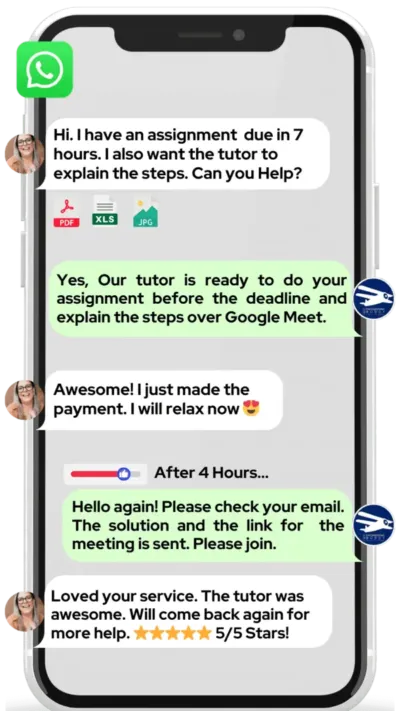
Unlike platforms where you fill out a form and wait, MEB responds in under a minute, 24/7. Tutor match takes under an hour. The $1 trial means you test before you commit. Everything runs over WhatsApp — no logins, no intake forms.
Study Plans (Pick One That Matches Your Goal)
The tutor builds a specific session sequence after the diagnostic, but most Data Lakes students fall into one of three patterns. Catch-up (1–3 weeks): you’re behind on ingestion pipeline design or architecture fundamentals and have a deadline coming fast. Exam and project prep (4–8 weeks): structured work through the full syllabus, with past assignments and design reviews built in. Weekly support: ongoing sessions aligned to your semester schedule, covering each new topic as it’s introduced in lectures. The tutor adjusts the plan as you progress — it’s not fixed after session one.
Pricing Guide
Data Lakes tutoring starts at $20/hr for standard undergraduate modules and runs to $40/hr for most graduate-level coursework. Highly specialised topics — lakehouse architecture at research level, Databricks performance tuning, or data governance framework design — can reach $100/hr depending on tutor background and timeline pressure.
Rate factors: your course level, the specific topics covered, how much preparation the tutor needs, and how quickly you need sessions booked. Availability drops sharply in the final two to three weeks of a semester.
For students targeting roles at organisations like Google, AWS, or Microsoft — or graduate programmes with a strong data engineering track — tutors with professional data engineering backgrounds are available at higher rates. Share your specific goal and MEB matches the tier to it.
Start with the $1 trial — 30 minutes, no registration, no commitment. WhatsApp MEB for a quick quote.
A common pattern our tutors observe is that students who spend the first two sessions on architecture fundamentals — before touching Spark or Delta Lake — progress significantly faster in weeks three and four than students who jump straight to code without the mental model in place.
FAQ
Is Data Lakes hard?
It’s not the syntax that trips students up — it’s the architecture logic. Schema-on-read, zone design, and knowing when to use a data lake versus a warehouse are conceptual challenges. Once the mental model is clear, the implementation side follows quickly.
How many sessions are needed?
Most students with a single assignment need 2–4 sessions. Students building conceptual depth for a full module typically work through 8–12 sessions over a semester. The tutor sets a realistic plan after the first diagnostic session.
Can you help with homework and assignments?
Yes. MEB tutoring is guided learning — you understand the work, then submit it yourself. Tutors work through the concepts and methods with you; the final submission is always yours. See our Academic Integrity policy and Why MEB page for full details on what we help with and what we don’t.
Will the tutor match my exact syllabus or exam board?
Yes. Before matching, MEB asks for your course name, university, and assignment brief. Tutors are selected based on that specific context — not just general data engineering familiarity. A Databricks-focused course gets a different match than an AWS-based one.
What happens in the first session?
The tutor runs a short diagnostic — asking you to explain a concept or walk through a recent assignment. From that, they identify exactly where the gap is and build the session plan. Most students cover real content in the first session, not just introduction.
Is online tutoring as effective as in-person?
For Data Lakes specifically, yes — often more so. Architecture diagrams drawn live on a shared screen with a digital pen-pad are easier to follow than a whiteboard in a classroom. Students can also share their actual code and cloud environments directly.
What is the difference between a data lake and a data lakehouse?
A data lake stores raw data without enforcing structure at write time. A lakehouse adds a transactional metadata layer — using formats like Delta Lake or Apache Iceberg — giving the lake ACID compliance and SQL query performance closer to a warehouse. Many students confuse the two in assignments.
Can a tutor help me with Apache Spark and PySpark specifically?
Yes. Spark and PySpark are core tools in most Data Lakes courses. Tutors help with ingestion pipeline design, debugging job failures, optimising transformations, and understanding how Spark interacts with object storage and table formats like Delta or Iceberg. Get distributed systems help alongside Spark if your course covers both.
Can I get Data Lakes help at midnight?
Yes. MEB operates 24/7 across time zones. WhatsApp is the primary contact channel and average response time is under one minute regardless of when you message. Tutor matching for the next available session typically happens within the hour.
What if I don’t like my assigned tutor?
Tell MEB via WhatsApp and a replacement is arranged. The $1 trial exists specifically so you test the fit before committing to a longer plan. No contract, no lock-in — the match has to work for you.
How do I find a Data Lakes tutor online without waiting days for a response?
WhatsApp MEB directly. Share your subject, level, and deadline. MEB responds in under a minute and matches you with a verified information systems or data engineering tutor within the hour — no form, no wait.
How do I get started?
Start with the $1 trial — 30 minutes of live 1:1 tutoring or one full homework question explained. Three steps: WhatsApp MEB, get matched with a verified Data Lakes tutor within the hour, then start your trial session. No registration required.
Trust & Quality at My Engineering Buddy
Every MEB tutor goes through subject-specific vetting before they’re matched to a student. That means a live demo session, a review of academic and professional credentials, and ongoing quality checks based on student feedback after each session. Rated 4.8/5 across 40,000+ verified reviews on Google. Tutors covering Data Lakes hold degrees in computer science, data engineering, or related fields — many have professional experience building production data pipelines at scale alongside their tutoring work.
MEB tutoring is guided learning — you understand the work, then submit it yourself. For full details on what we help with and what we don’t, read our Academic Integrity policy and Why MEB.
MEB has served 52,000+ students across the US, UK, Canada, Australia, Gulf, and Europe in 2,800+ subjects since 2008. Within Computer Science, the platform covers everything from foundational topics to graduate-level specialisations — including database design tutoring, Big-O notation help, and CI/CD tutoring for students working across the full engineering stack. Data Lakes sits at the intersection of database systems, distributed computing, and applied data engineering — a combination MEB tutors cover end to end.
MEB has been operating since 2008 — before most current undergraduates started secondary school. That history means the screening process, the tutor feedback loop, and the session structure have been tested across hundreds of thousands of sessions, not just described in a marketing page.
Source: My Engineering Buddy, 2008–2025.
Explore Related Subjects
Students studying Data Lakes often also need support in:
- Algorithms
- Relational Databases
- Normalization
- Distributed Algorithms
- Parallel Computing
- High Performance Computing
- Transactions
Next Steps
Getting started takes less than five minutes.
- Share your course name, university, and the specific topic or assignment you’re stuck on
- Share your time zone and when you’re available this week
- MEB matches you with a verified Data Lakes tutor — usually within the hour
- Your first session starts with a diagnostic so every minute is used on what actually matters
Before your first session, have ready:
- Your course syllabus or assignment brief
- A recent piece of work you found difficult — a failed Spark job, a design question, or an assignment you’re unsure about
- Your submission deadline or exam date
The tutor handles the rest. Visit www.myengineeringbuddy.com for more on how MEB works.
WhatsApp to get started or email [email protected].
52,000+ Happy Students From Various Universities






Reviewed by Subject Expert
This page has been carefully reviewed and validated by our subject expert to ensure accuracy and relevance.

