Software Engineering Explained: A Student’s Guide to Concepts, Tutoring, and Study Support

- Software engineering combines programming, algorithms, and system design — all challenging without extra support.
- One-on-one tutoring can accelerate learning by an extra 3 to 15 months compared to standard study.
- Online tutoring removes geographic limits, connecting students with experts worldwide.
- Tutors provide immediate feedback on coding errors, preventing small mistakes from growing.
- Choosing a tutor with relevant credentials and discussing your goals upfront leads to better outcomes.
Software Engineering can be a challenging subject for high school and college students. It combines complex concepts like programming, algorithms, and system design. For many learners, classroom lessons and textbooks may not be enough to master these topics. Students who need broader engineering tutor support will find that one-on-one instruction provides personalised guidance beyond the classroom setting, helping students tackle difficult problems at their own pace.  Personalised tutoring sessions let students work at their own pace. A tutor can offer additional practice problems, real-world coding examples, and step-by-step guidance. With this extra support, students often build confidence and achieve better grades. Industry reports show that demand for online tutoring is soaring: the global tutoring market reached about $10.4 billion in 2024 and is expected to keep growing. Subjects in STEM fields (science, technology, engineering, mathematics) are driving this growth, so areas like computer science and software engineering have particularly high demand for tutors.
Understanding Software Engineering Tutoring
Tutoring in software engineering usually means one-on-one or small group instruction with a specialist. Unlike a large classroom, the tutor focuses solely on the student’s needs. This can involve reviewing lecture material, solving coding assignments together, or preparing for exams. A tutor often has practical software development experience or advanced study in computer science, so they bring real-world insights to the lessons. The goal is to fill gaps in understanding and reinforce what the student learned in class.
Software Engineering Teacher vs Tutor
In school, a teacher or professor sets the curriculum and teaches a whole class. Time is limited, so the teacher might move on before every student fully grasps a topic. A private tutor adapts to an individual student’s needs. If you need more time on a concept — say, debugging a program — an expert tutor will stay on that topic until you understand. Tutors also tend to use different examples or explanations. For example, a teacher might demonstrate an algorithm in class, while a tutor will often break down that algorithm step-by-step and answer all your questions. A tutor is also available outside of lecture time for additional questions. The one-on-one teaching style means lessons are tailored exactly to your pace and interests. Students who also struggle with related areas can benefit from working with a tutor for engineering dynamics alongside their software studies. It can be helpful to visualize exactly how a private tutor differs from a standard classroom environment. The comparison below highlights the key differences in attention and flexibility.
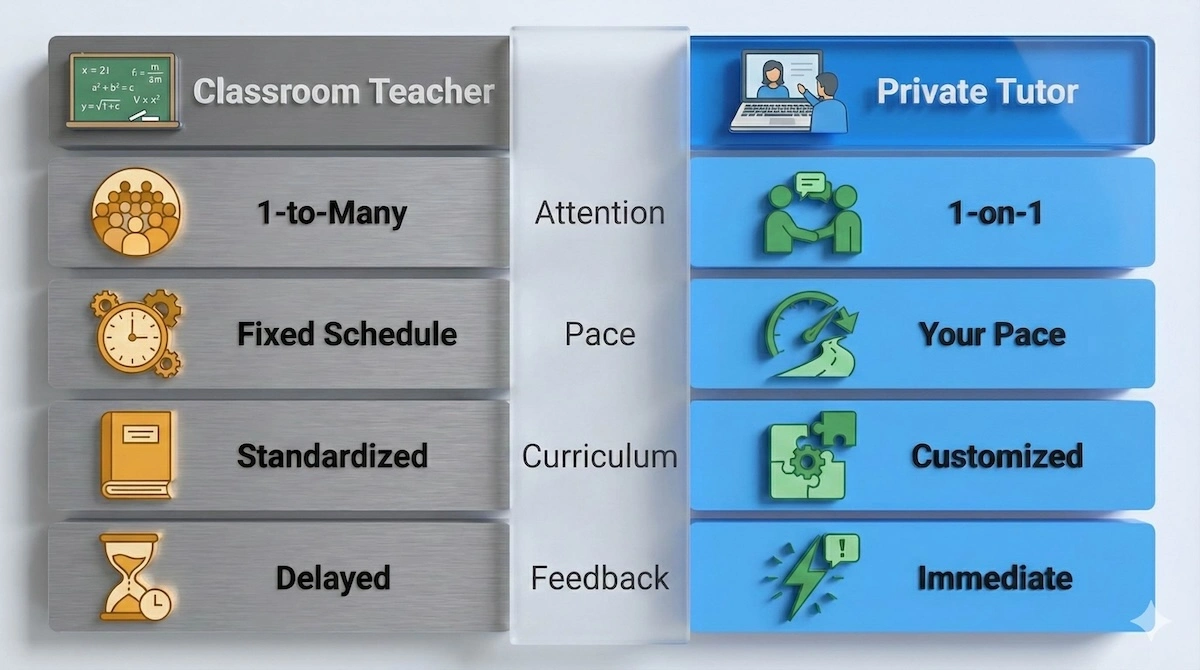
See how one-on-one tutoring adapts to your learning style compared to standard classroom instruction.
As shown, the primary advantage of a tutor is the shift from a fixed curriculum to a pace that matches your personal learning speed.
Benefits of Software Engineering Tutoring
Working with a software engineering tutor offers many advantages. The tutor provides personalised attention that can be hard to get in a busy classroom. They tailor each session to your current skills and challenges. This often leads to faster progress and a deeper understanding of the material. Students who receive tutoring usually see improved test scores and project grades. Educational studies show high-impact tutoring can boost a student’s learning by an extra 3 to 15 months of progress, meaning students advance much faster than with standard study alone. The impact of this personalized support is measurable. The chart below illustrates the potential acceleration in learning progress you can expect.
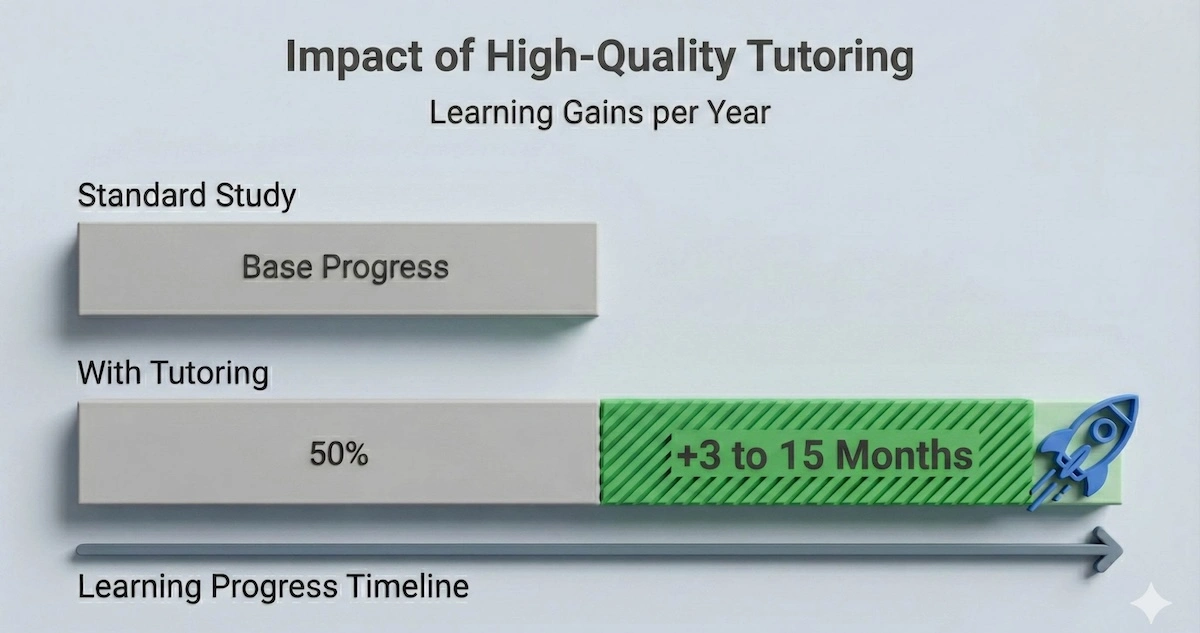
Data shows that personalized tutoring can accelerate your learning curve by significantly increasing progress.
Gaining significantly more progress in the same amount of time can be the difference between barely passing and truly mastering the subject.
- Targeted skill building: A tutor identifies exactly which topics (for example, data structures, programming languages, or software design principles) you find most difficult and focuses practice on them.
- Immediate feedback: When you get stuck on a homework problem or coding error, the tutor can correct misunderstandings right away, preventing small mistakes from becoming big problems later.
- Improved problem-solving: Working through real coding projects with a tutor teaches you systematic strategies for debugging and implementing algorithms, skills that transfer to other classes and future work.
- Confidence and motivation: Regular sessions and encouragement from a tutor help students feel more confident tackling tough coursework. This often reduces anxiety around software engineering subjects and keeps you motivated to study more.
- Flexible scheduling: Especially with online tutoring, sessions can fit any schedule. You can get help when you need it most, even during evenings or weekends, without needing to travel.
Overall, software engineering tutoring turns abstract concepts into clear, understandable lessons. Instead of struggling alone, you have an expert guiding you. Many students find that after just a few tutoring sessions, they can solve problems they previously thought were impossible. This kind of progress and confidence is the key benefit of hiring a good tutor. Students preparing for exams may also find it useful to review A-Level engineering past papers for 2025 alongside their tutoring sessions.
Software Engineering Tutoring Online
Online tutoring makes software engineering help accessible to everyone. Using video calls and screen sharing, a tutor can code alongside you in real time. This means you are not limited to local tutors; you can connect with experts anywhere in the world. For example, a student in India could learn from a tutor in the USA, or someone in Dubai could connect with a software engineering expert from Europe, all without leaving home. Many experienced software engineers who provide online mentoring have built their careers working on international software projects. Countries recognized for outsourcing to Romania, for example, have become home to development teams delivering enterprise applications, cloud solutions, and custom software for global clients. Learning from professionals with this hands-on commercial experience gives students practical insights into modern development workflows, coding standards, and real-world software engineering practices that extend well beyond academic coursework. The rise of online tutoring is driven by convenience and technology. The market is booming: one report found that the global online tutoring industry was $10.4 billion in 2024 and expected to grow rapidly. Students primarily seek help in STEM subjects online, and software engineering is among the most requested areas. Advanced features like session recordings, chat messaging, and collaborative coding environments help reinforce lessons. In fact, even regions like the Middle East have expanded online tutoring; for example, a Kuwait-based edtech company launched AI-powered tutoring tools for students across several Gulf countries.
- Global tutor pool: You can choose from a wide range of tutors worldwide, finding someone whose expertise matches your needs (for example, specific programming languages or exam prep).
- Learn from home: No commuting means more time for study. You can do online sessions from your bedroom, dorm, or any quiet place with internet.
- Interactive digital tools: Many platforms offer shared coding editors, virtual labs, and quizzes during the session. These tools make practicing software engineering hands-on and engaging.
- Flexible plans: Online tutors often provide packages or hourly plans that fit any budget or schedule. You pay for exactly the help you need, whether it’s a few sessions or ongoing support.
In summary, online software engineering tutoring combines expert teaching with flexible, modern methods. It has opened up opportunities for students in all countries. Whether you live in New York, London, Riyadh or elsewhere, high-quality help is just a click away. Students who struggle with exam nerves alongside their coursework may also benefit from reading about managing A-Level exam anxiety in engineering.
Software Engineering Homework and Assignment Help
Besides teaching concepts, many tutors offer dedicated help with homework and assignments. This includes reviewing your programming assignment step-by-step, explaining tricky instructions, and helping structure projects. For example, if you have an assignment to build a simple game or a data-driven app, a tutor can guide you through planning the code and tackling challenging parts. Tutors focus on learning: they help you understand the solution process, not just give you the final answer. When you browse for help, you might see terms like “Software Engineering homework help” or “Software Engineering HW help”. These phrases mean the tutor specializes in assisting with coursework and programming tasks. Typical areas of support include:
- Code debugging: Finding and fixing errors in your programs, with explanations of what went wrong and how to fix it.
- Project planning: Guidance on organizing larger projects or lab assignments, such as outlining program structure or choosing the right algorithms.
- Practice problems: Extra exercises and challenges similar to your homework to reinforce skills and prepare you for tests.
- Concept review: Going over lecture notes (like those on databases or networking) to make sure you have the foundation to do your assignments correctly.
Whether you are stuck on a bug or planning a major project, support is available. These are the four core pillars where expert help makes the biggest difference:
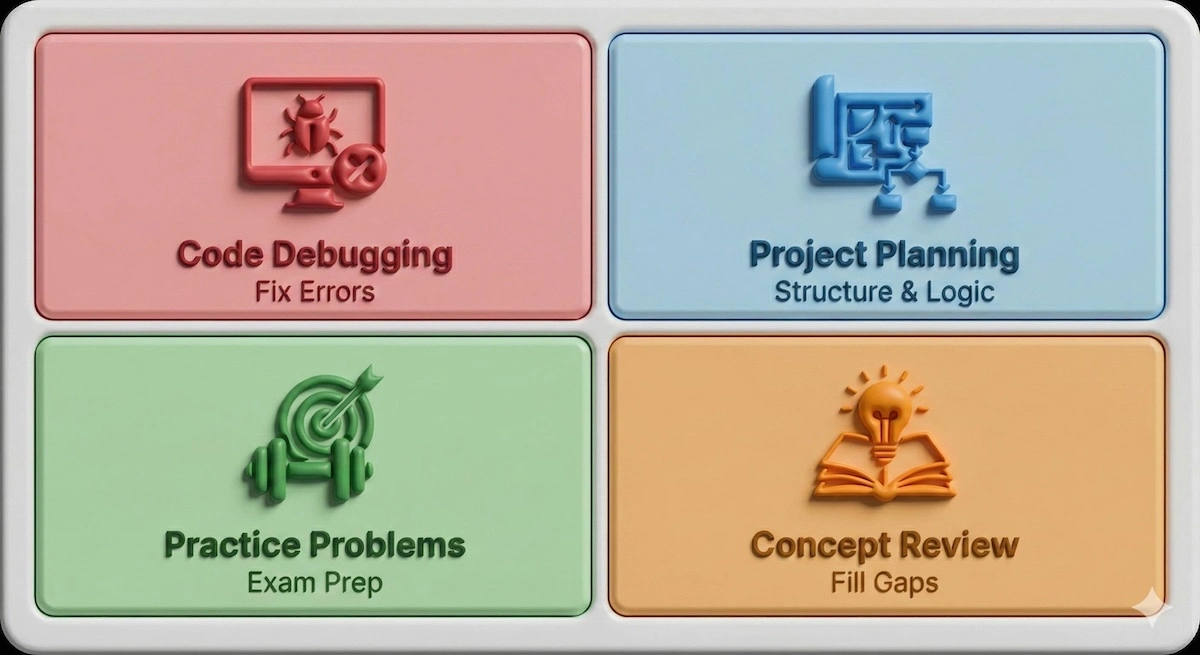
Expert tutors provide support across these four critical areas of software engineering education.
Identifying which of these areas you struggle with most will help you communicate better with your potential tutor. In effect, homework help makes difficult assignments more manageable. Instead of guessing at each step, you learn the reasoning behind each solution. Many students find that with a few tutoring sessions, their homework completion time drops and their grades improve. Combining regular lessons with assignment assistance means you’re building mastery while staying on top of daily school work. International students planning to study engineering abroad may also want to explore guidance on PTE mock tests for engineering students studying abroad.
How to Find a Software Engineering Tutor
Ready to get extra help? Here are steps to find a software engineering tutor who suits your needs:
- Identify your goals: Are you seeking help with homework, test preparation, or understanding certain topics? Clear goals help you find a tutor with the right expertise (for example, one who knows Java if your course uses it).
- Search for qualified tutors: Look on reputable tutoring websites or local academic services. Filter by experience in software engineering or computer science. Check if they teach your specific grade level (high school AP, college level, etc.).
- Compare tutors: Read reviews and tutor profiles. Many platforms allow you to see ratings from other students. You might book a short trial session or free consultation to see if the teaching style is a good fit.
- Check credentials: Make sure the tutor has a strong background. Good signs include degrees in computer science, professional development experience, or proven teaching skills. A certified teacher or a professional engineer can both be excellent tutors.
- Discuss expectations: Before finalizing, talk about your specific course and what you need. For example, tell the tutor about your current software engineering project or exam dates. This ensures the tutor can prepare the right materials.
- Start lessons: Once you’ve found a good match, schedule the first session. Begin with the topics you find most challenging. Keep track of progress and give feedback to the tutor so they can tailor future sessions.
Ready to get started? Follow this simple roadmap to ensure you find a qualified expert who matches your specific requirements.
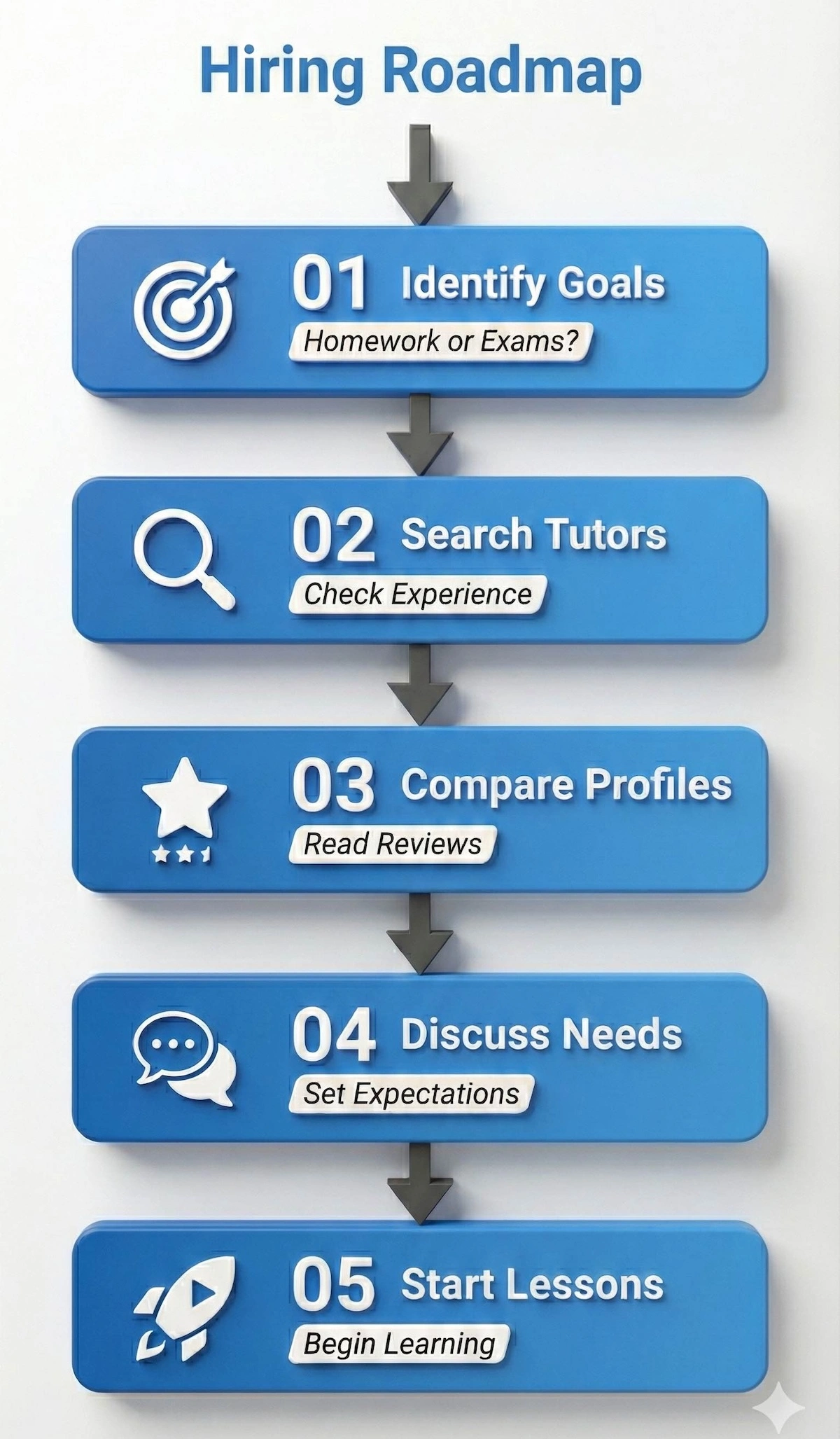
Follow this 5-step roadmap to find and hire the perfect software engineering tutor for your needs.
Taking time to discuss your expectations in step 4 is crucial for a successful long-term tutoring relationship. Finding the right tutor is an investment in your education. With consistent sessions, you will likely see noticeable improvements in your understanding and grades. It’s okay to try a different tutor if something isn’t working; you want the best fit for your learning style. By following these steps, you can hire a tutor who will help you succeed in software engineering. And with this support, yes, you can improve quickly and achieve your goals. Students applying to engineering programmes may also find it helpful to read about writing a strong UCAS 2026 engineering personal statement. Those who want to deepen their understanding of structural topics can also explore resources on mechanics of materials and online tutoring for computational fluid dynamics.
Conclusion
Software engineering tutoring and homework help offer a proven path to success for struggling students. Whether you need to grasp the basics of coding, complete assignments on time, or prepare for a big exam, a skilled tutor can guide you. With their support, difficult concepts become clear and studying becomes more effective. Students around the world — from the USA and UK to the Middle East — use online tutoring to excel in STEM courses. The key is to choose a qualified tutor and commit to regular practice. By working consistently, you accelerate your learning. In short, professional software engineering tutoring opens the door to mastery. If you’re currently studying software engineering, consider finding a tutor who can help you reach your academic goals. With expert guidance and dedication, you can achieve success in software engineering. Related Subjects are below: Adobe XD AJAX Amazon Web Services (AWS) Anaconda (Software) Android Animation Ansible Apache App development Asana (Software) ASP.NET Atom Editor Autodesk Maya AWS Redshift Azure DevOps Back-End Development Benchmarking Blender Software Blockchain BlueJ Software Burp Suite CentOS CircleCI Platform Cloud Architecture Code Optimization Competitive Programming Datadog DevOps Django (software) Docker (software) Dreamweaver Eclipse ElasticSearch Emacs (Editor Lisp & GNU) Embedded Linux Enterprise Architecture Envoy Proxy Express.js Fedora Linux Firebase Flutter Front-End Development Full Stack GIMP Git GitLab GitLab CI/CD GNS3 Google Cloud Platform (GCP) Google Colab Google Sheets Heroku Infrastructure (Cloud Server Network & IT) Infrastructure as Code Integration Testing IntelliJ iOS J2EE Java Multithreading Jenkins JQuery JSON JUnit Jupyter Notebook Kaggle Kali Linux Keras Kibana (ELK Stack) LAMP Stack (Linux Apache MySQL Perl/PHP/Python) Linux Logstash Matplotlib MEAN Stack MERN Stack Metasploit Microservices Microsoft Azure Microsoft Loop Microsoft Office Microsoft PowerPoint Microsoft Windows Microsoft Word Minikube Mobile App Development Mockito MongoDB Monitoring MySQL Nagios NetBeans Next.js Nmap Node.js NoSQL Oracle OWASP Packet Tracer Pair Programming Parrot OS PostgreSQL Postman Prometheus Puppet DevOps PyCharm PyTorch Random Forests RDBMS React Recursion Red Hat Linux Redis Redux Reverse Engineering scikit-learn Selenium (software) Serverless Site Reliability Engineering (SRE) Slack Software Software Architecture Software Development Life Cycle (SDLC) Software Quality Assurance (SQA) Software Testing Solution architecture SonarQube Spring Boot SQLite Sublime Text System Design Tailwind CSS Terraform Test Automation Test Driven Development (TDD) Travis CI Trello Ubuntu UML (Unified Modeling Language) Unit Testing Unity (game engine) Unix Unreal Engine VirtualBox Visual Studio VMware Vue.js Vulnerability Assessment WAMP Web Design Web Development Wireframing WordPress XAMPP Xcode Zabbix
Related Reading
******************************
This article provides general educational guidance only. It is NOT official exam policy, professional academic advice, or guaranteed results. Always verify information with your school, official exam boards (College Board, Cambridge, IB), or qualified professionals before making decisions. Read Full Policies & Disclaimer , Contact Us To Report An Error