Computer Science Explained: Topics, Tutoring Methods, and Study Tips

- Computer science covers algorithms, programming, networks, and data structures.
- High-impact 1:1 tutoring can move students from the 50th to 66th percentile.
- Online CS tutoring offers flexible scheduling and real-time screen sharing.
- Choosing a tutor with domain expertise and a trial session improves fit.
- Consistent preparation and honest feedback maximize every tutoring session.
Quality computer science tutor support, whether in-person or online, provides one-on-one help with complex topics like algorithms, programming and networks, boosting understanding and grades. Personalized tutoring addresses each student’s needs and builds confidence.

Why Computer Science Tutoring Matters
Computer Science is a high-demand STEM field with strong job prospects. U.S. data show computer and IT jobs projected to grow much faster than average from 2023–33, with roughly 356,700 openings per year. Yet many students find topics like algorithms, automata theory or data structures challenging.
In a typical classroom, a computer science teacher covers broad curriculum content for many students, leaving little time for individual questions. Imagine a student named Alex struggling to understand Big O notation and binary trees in a packed lecture. With no time to stop and explain each step, the classroom setting can leave gaps. If you need a Python tutor or support in any other language, personalized sessions can step in to fill those gaps, reviewing difficult material one-on-one at the student’s pace.
To understand the tangible value of this personalized approach, consider the statistical impact on student performance.
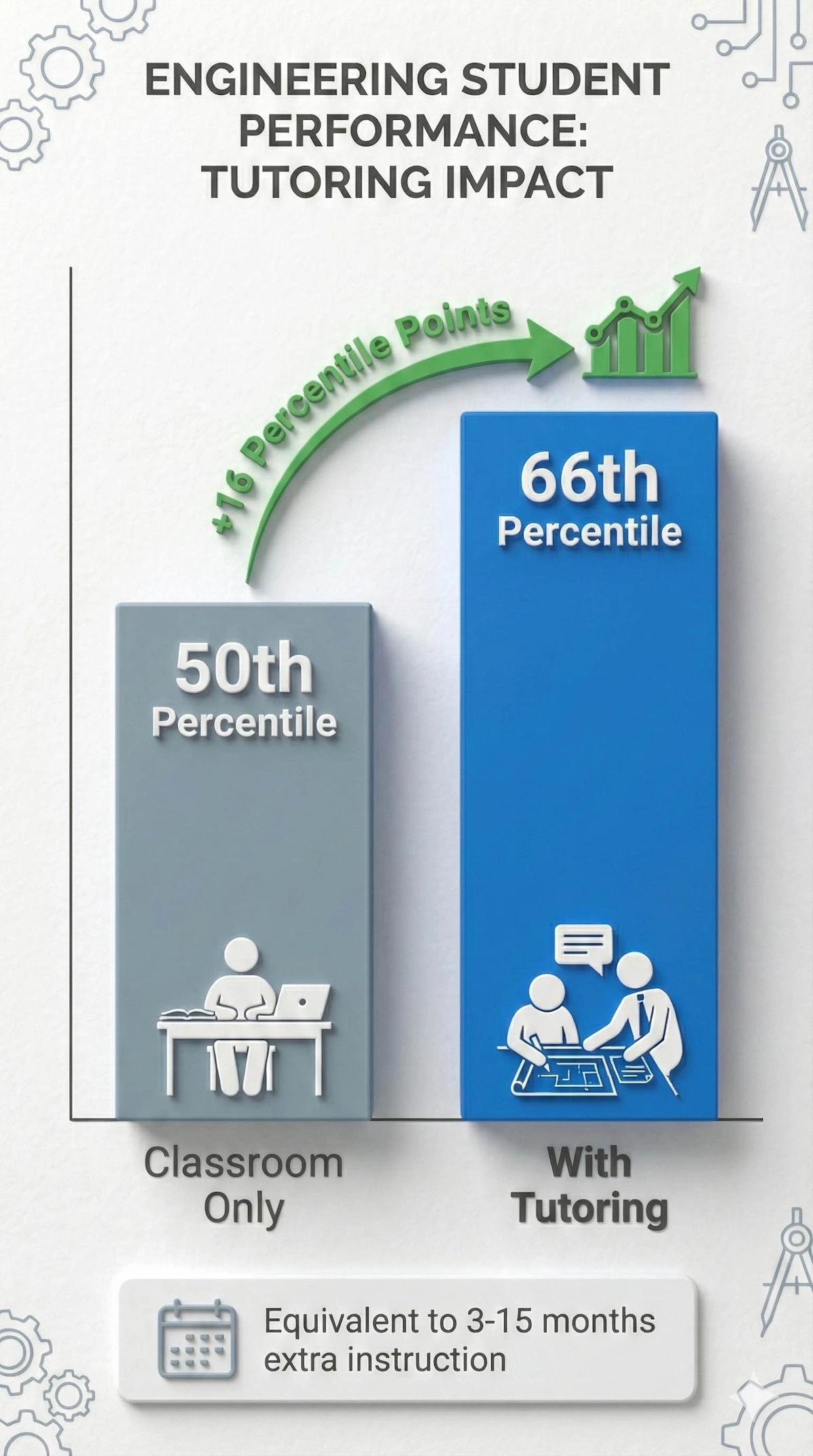
Research shows personalized computer science tutoring can significantly boost test scores and learning speed.
This significant jump in performance—equivalent to months of extra schooling—demonstrates why personalized support is so effective.
Benefits of Personalized Computer Science Tutoring
Personalized tutoring sessions let students work on specific problems – whether it’s writing code, tackling a theory proof, or getting guidance on computer science homework. Tutors provide immediate feedback on assignments and projects, so misunderstandings are caught early. For example, if a student needs computer science assignment guidance on a coding project, a tutor can walk through each function or class diagram needed.
Research shows the impact of tutoring can be dramatic. High-impact tutoring (small groups or 1:1 sessions) has produced learning gains equivalent to an extra 3–15 months of instruction and is dozens of times more effective than typical help. Intensive tutoring has moved average students from the 50th to the 66th percentile in test scores. In practical terms, a student stuck on a cryptography problem might master key concepts and feel motivated after a few guided sessions.
Students and parents often search for support with computer science homework or assignments. A qualified CS tutor can explain code line-by-line, review algorithms, and help debug programs, making homework time less stressful. The tutor’s role is like a coach: guiding practice, correcting mistakes, and celebrating progress, which helps students learn actively rather than passively.
For a broader look at how structured support works across languages and tools, the guide on computer programming tutoring for students covers the topic in depth.
Online vs In-Person Computer Science Tutoring
Online computer science tutoring has become increasingly popular. With video conferencing and screen-sharing tools, students can collaborate with expert tutors from anywhere. Many families in the USA, UK or Gulf regions find that online CS tutoring offers flexibility: sessions can fit after school or on weekends.
A strong internet connection lets the tutor see the student’s code in real time, share example code or diagrams, and guide them through problem solving. In fact, Statista projects the global online tutoring market (including computer science tutoring) will reach about $203.8 billion by 2025, reflecting booming demand.
In-person tutoring has its own advantages. A local CS tutor can meet face-to-face, using physical materials or a whiteboard. This helps for hands-on topics like digital logic or computer hardware (see image above).
Whether online or in a study session at home, a dedicated tutor provides consistent support. Many tutors blend both approaches: meeting online for coding help and in-person for lab work or exam prep. Ultimately, either format can work well – what matters most is consistent support and student engagement.
Deciding between these two formats often depends on your specific learning style and schedule. The comparison below highlights the key differences to help you choose.
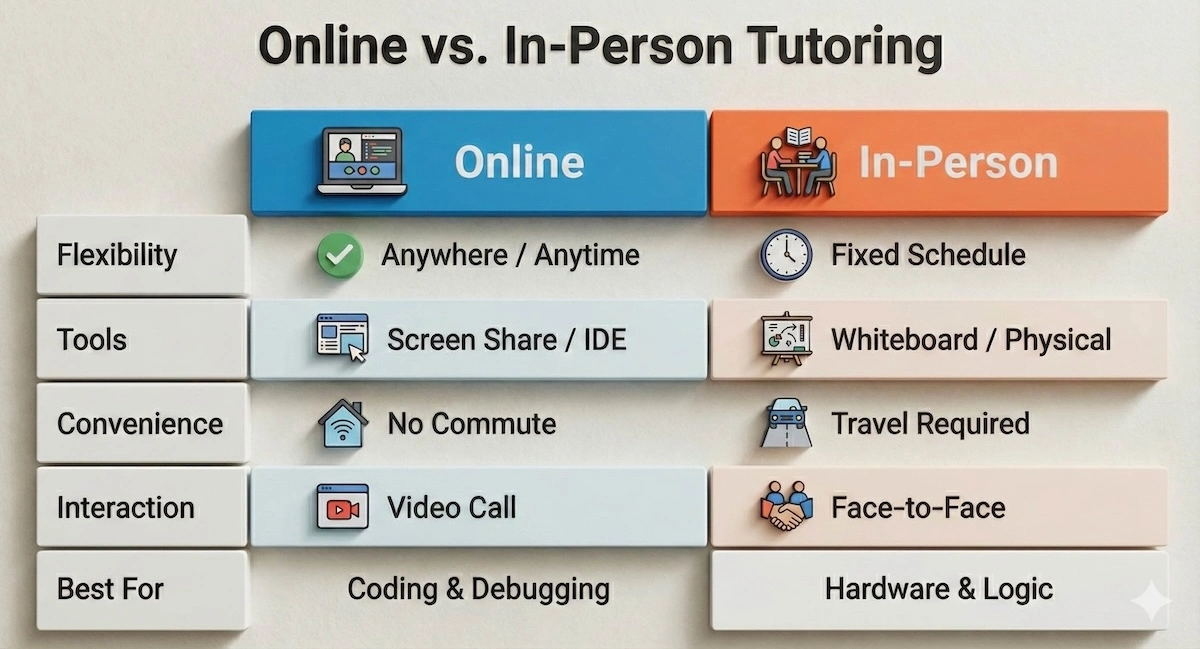
Compare online and in-person tutoring options to find the right fit for your schedule and learning style.
Whether you prioritize the flexibility of online tools or the hands-on nature of in-person sessions, selecting the format that fits your lifestyle is key to consistency.
For a data-backed look at how these two formats compare across subjects, see this online vs classroom tutoring 2026 comparison.
Key Computer Science Topics Covered in Tutoring
Computer Science tutoring can cover nearly any topic in the field. Experienced tutors help with core concepts as well as advanced subjects. Below are examples of common areas where tutors assist students.
Computer science encompasses a vast array of subjects, from theoretical foundations to practical applications. This visual map organizes the core topics most students cover.
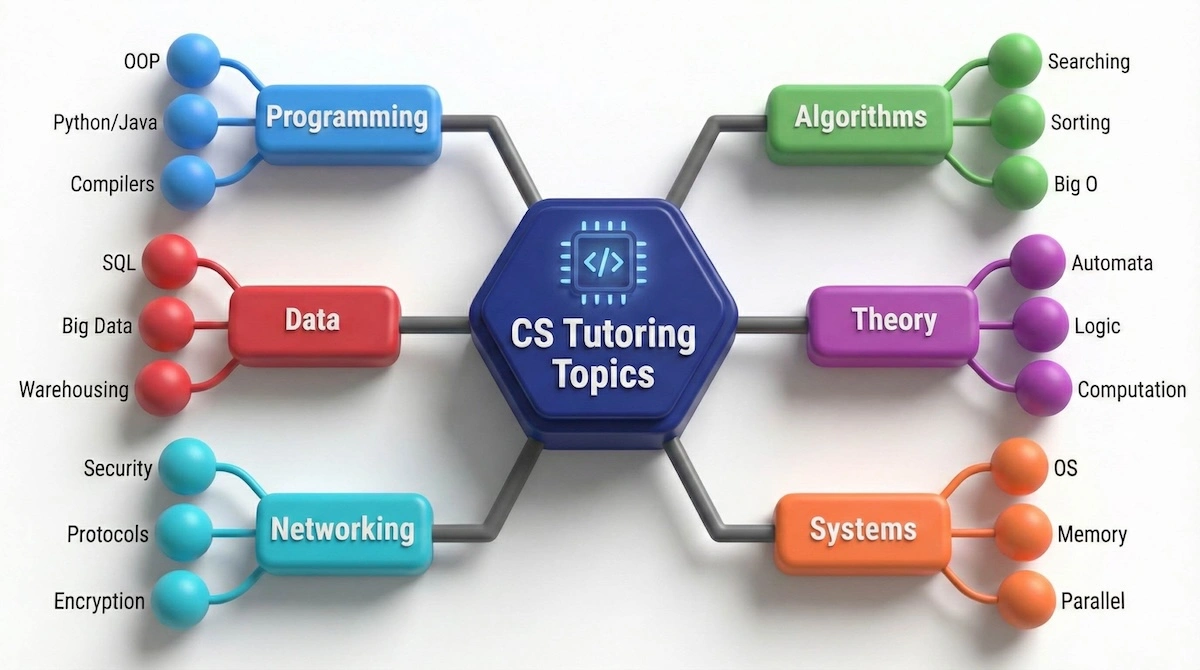
From algorithms to security, a comprehensive tutoring plan covers these essential computer science domains.
Identifying exactly which of these branches you are struggling with will help you find a tutor with the specific expertise you need.
Programming and Software Design
- Languages and Paradigms: Procedural programming, Object-Oriented Programming (OOP), functions, classes and class diagrams, design patterns, and compilers.
- Software Concepts: Parsing, regular expressions (regex), systems programming basics, and fundamentals of compiler design.
Algorithms and Data Structures
- Algorithm Analysis: Big-O notation, space/time complexity, and algorithm design techniques.
One of the most common stumbling blocks in this area is understanding algorithmic efficiency. Here is a visual breakdown of Big O complexity to clarify the concept.
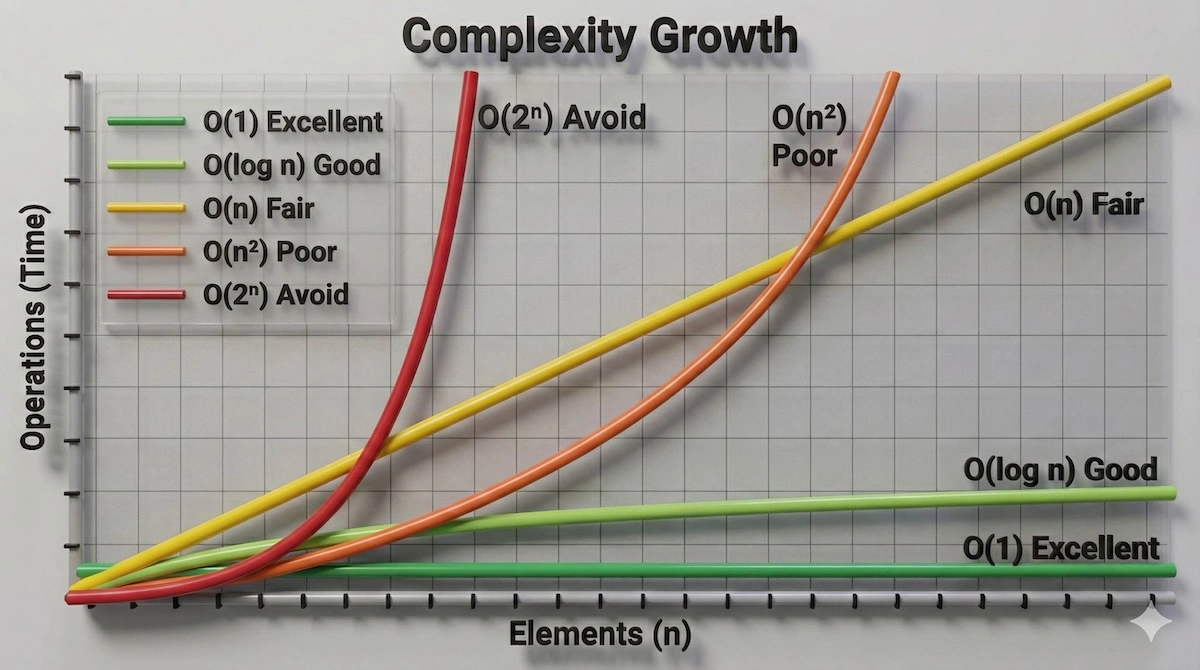
Mastering Big O notation helps you write efficient code—a key focus area in computer science tutoring.
Keep this chart handy when analyzing your code; aiming for the ‘green’ zones (Constant or Logarithmic time) ensures your programs run efficiently.
- Key Algorithms: Searching and sorting (binary search, Quicksort), graph algorithms, greedy and reverse-greedy strategies, and advanced topics like the Lenstra–Lenstra–Lovász (LLL) algorithm.
- Data Structures: Arrays, linked lists, stacks, queues, binary trees, and other data structures.
Students preparing for AP-level coursework can also find dedicated support; working with a tutor for AP Computer Science A helps bridge the gap between classroom instruction and exam readiness.
Theoretical Computer Science
- Formal Foundations: Automata theory, formal languages, and theory of computation (e.g. P vs NP).
- Advanced Topics: Fuzzy logic, knowledge representation, and related computational theory concepts.
Systems and Architecture
- Computer Architecture: CPU design, digital logic design, memory organization and allocation.
- Operating Systems: Processes and threads, concurrency and synchronization, memory management, and parallel/high-performance computing (HPC).
- Distributed Systems: Multi-core/parallel processing, distributed algorithms, and networking fundamentals (sockets programming).
Networking and Security
- Networking: IP addressing, routing protocols, wireless and sensor networks, and network troubleshooting tools (e.g. Wireshark).
- Security: Cryptography (encryption/decryption, SSL/TLS), ethical hacking and penetration testing, firewalls and VPNs, and malware analysis.
Databases and Data Engineering
- Databases: Relational database design (ER diagrams, normalization), SQL/DBMS queries, stored procedures, and transactions (OLTP/OLAP).
- Data Management: Data warehousing, data lakes, and big data concepts.
Students working at the intersection of CS and analytics may also benefit from reading about data science tutoring and online support for excelling in data science.
Emerging Technologies
- Cloud computing, continuous integration/continuous delivery (CI/CD), and AI/machine learning tools (TensorFlow, OpenCV).
- Human-Computer Interaction (HCI) design and other modern technology tools.
Simulation-heavy coursework sometimes calls for specialist tools; students who need help with Abaqus assignments can find targeted support alongside their broader CS studies.
Choosing the Right Computer Science Tutor
When looking to hire a computer science tutor, focus on both expertise and teaching ability. A great tutor has a strong background (often a CS degree or industry experience) and the patience to explain concepts clearly. For example, if you need help with networking, find someone who really understands protocols and can walk through IP addressing step by step.
Check credentials or reviews, and consider a trial session to make sure the tutor’s style is a good fit. In many regions, tutors charge around $20–$40 per hour for advanced high school or college-level CS help, depending on subject and experience. A tutor can explain code line-by-line, review algorithms, and help debug programs, making homework time less stressful.
Students who also want to sharpen their Java skills alongside general CS work can connect with a Java tutor for focused language-level support.
Getting the Most Out of Computer Science Tutoring
To maximize the benefits, come prepared with questions or topics for each session. Reviewing notes or attempting assignments beforehand helps the tutor identify trouble spots. Practice new skills by asking for extra exercises (for example, sorting problems or network troubleshooting labs).
Feedback matters, so speak up when you’re confused. Tutoring is a partnership: the more honest you are about what you do and don’t understand, the better the tutor can tailor lessons. Over time, this collaboration builds deeper understanding and confidence in computer science skills.
To maximize your learning, consistency is key. We recommend following this cycle for every tutoring session to ensure continuous improvement.
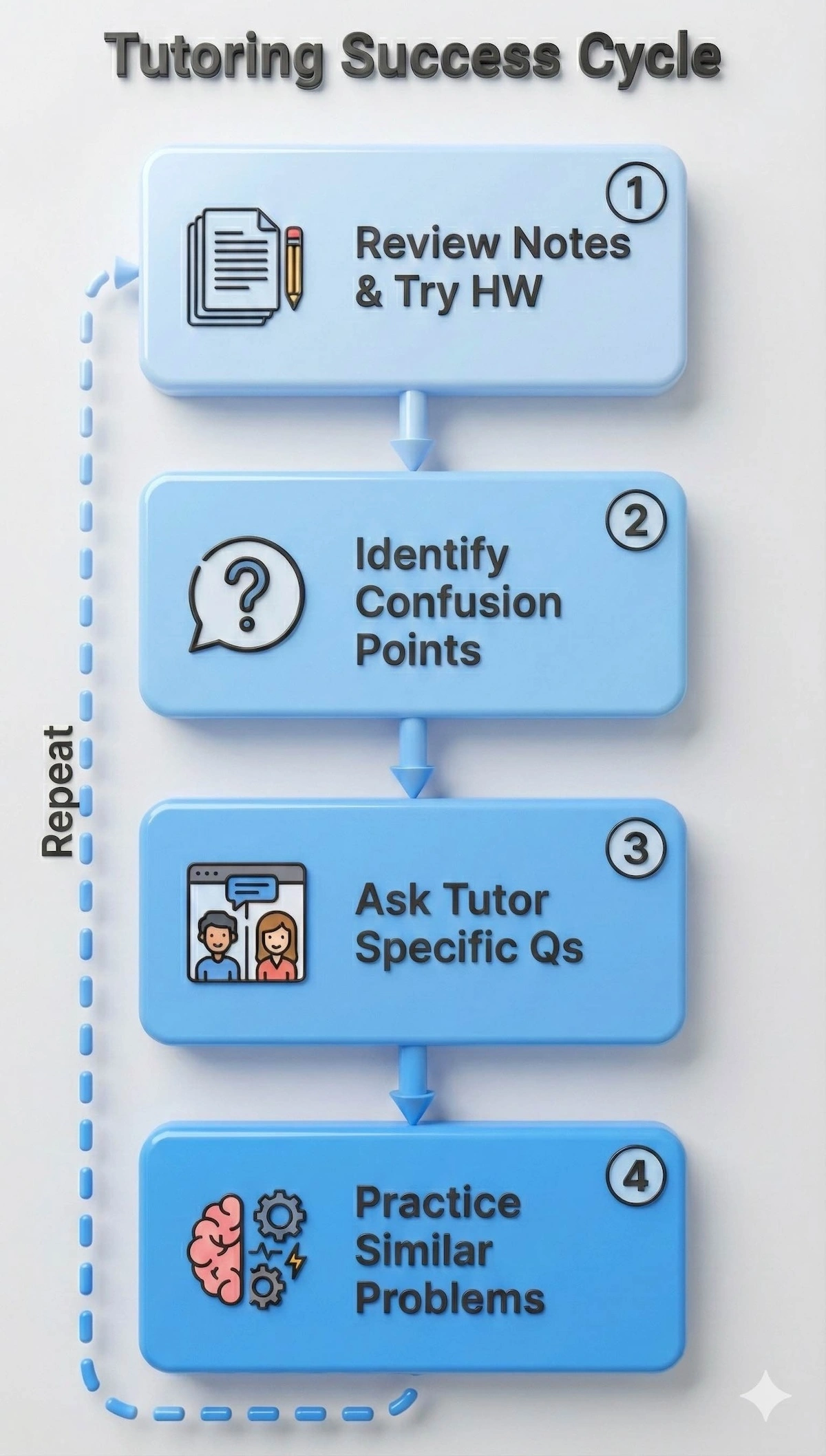
Follow this cycle to get the maximum value from every tutoring session.
By repeating this process, you turn passive listening into active mastery, ensuring that you don’t just solve the current problem but learn how to tackle future ones.
Students who want to apply structured thinking beyond CS may find the guide on mastering linear programming a useful companion resource.
FAQs About Computer Science Tutoring
What is computer science tutoring?
Computer science tutoring is personalized instruction where an expert helps a student understand CS concepts one-on-one.
How can online computer science tutoring help students?
Online computer science tutoring offers flexible scheduling and digital tools (like screen sharing) so a student can get help from anywhere.
Can a CS tutor help with homework and assignments?
Yes, a CS tutor provides targeted guidance on programming projects, math problems or theory questions to clarify each step.
What is the difference between a computer science teacher and a computer science tutor?
A computer science teacher leads whole-class lessons, while a computer science tutor gives individualized attention tailored to a single student’s needs.
How do I choose a computer science tutor?
Look for someone with strong CS knowledge and good teaching skills and consider a trial session to see if it’s a good fit.
Why hire a computer science tutor?
A computer science tutor offers extra support on tough topics and assignments, helping students learn more effectively and improve grades.
Related Reading
******************************
This article provides general educational guidance only. It is NOT official exam policy, professional academic advice, or guaranteed results. Always verify information with your school, official exam boards (College Board, Cambridge, IB), or qualified professionals before making decisions. Read Full Policies & Disclaimer , Contact Us To Report An Error