DIY Engineering Projects: A Complete Guide for Students

- Beginner DIY projects can be completed in a weekend and teach real engineering principles.
- Filming your build process develops communication skills and creates a visual portfolio.
- Documenting mistakes and solutions makes your project more valuable to other students.
- Posting across multiple platforms multiplies your reach without creating entirely new content.
- A structured build log — brief, schematic, BOM, test results — is standard engineering practice.
Creating DIY engineering projects is the ultimate way for a student to get real hands-on skills. Many of us spend nights in the lab or at a messy desk, building cool stuff. Sharing these builds in video content helps you to reach a global audience and show your masterpieces to people from around the planet. If you find the underlying theory challenging, working with an online tutor for circuit analysis can help you bridge the gap between concept and build.
Share your work on social media and connect with others who enjoy creative home engineering and hardware hacks. Demonstrating your progress is just as important as the end working machine you created. It helps you build a solid personal brand even when you are an engineering student.
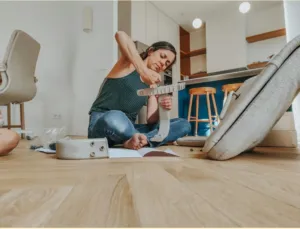
DIY Engineering Project Ideas for Students
Choosing the right project is the first challenge. The best beginner projects are achievable in a weekend but demonstrate real engineering principles. More advanced projects take two to four weeks and produce portfolio-worthy results. Here is a curated list across different engineering disciplines:
| Project | Discipline | Difficulty | Key Skills |
|---|---|---|---|
| ESP32 weather station with display | Electrical / Software | Beginner | Microcontrollers, sensors, Wi-Fi APIs |
| Mini trebuchet (physics-based) | Mechanical | Beginner | Statics, kinematics, materials |
| Home automation with Raspberry Pi | Software / Electrical | Intermediate | Python, GPIO, IoT protocols |
| Bridge load testing model | Civil / Structural | Intermediate | Structural analysis, material testing |
| Line-following robot | Robotics / Electronics | Intermediate | PID control, motor drivers, sensors |
| Solar-powered water pump | Renewable / Mechanical | Intermediate | Energy conversion, fluid mechanics |
| 3D-printed prosthetic hand | Biomedical / Mechanical | Advanced | CAD, biomechanics, materials |
| Grid-tied inverter simulation | Electrical / Power | Advanced | Power electronics, control theory |
Start with a project one level above your current comfort zone. Projects that push your skills but remain achievable produce better learning outcomes and better portfolio pieces than either trivial builds or overambitious failures. The line-following robot and grid-tied inverter simulation, for example, both draw heavily on control systems tutoring concepts that many students find easier to grasp with one-to-one support.
Why Students Should Film Their Build Process
Recording your work requires you to understand your own design much better than you might have when it was all on paper. You need to be able to present your technical decisions to people who are not maths experts. This process helps you to explain complex ideas to a non-technical audience clearly.
It also develops a visual portfolio that future employers will actually want to see. A video demonstrates your actual problem-solving skills in a better way than a standard paper resume. You can show the world how you solve various types of engineering challenges in time.
Creating content also helps you find your place among engineering community groups online. You can receive great advice from experts when you reach a hard technical wall. Other builders may recommend a superior component or a cheaper method of solving the problem. This is a feedback loop that makes you a better maker and a more effective learner.
Read More: How PTE Mock Tests Help Engineering Students Crack Study Abroad Requirements
Best Platforms and Gear for Production
There are many places to post video online to share your work. You will need to make decisions about which platform suits your particular style of making and teaching. Most students use a combination of these sites to get the most views.
- YouTube — The key home for long tutorials and deep technical dives. A successful channel posts one project per week and builds a searchable library over time.
- Instagram and TikTok — These platforms are ideal for quick reveals and fast-paced montages. Use them to represent the most exciting parts of your build.
- Reddit — Subreddits such as r/Engineering or r/DIY are good for getting niche audiences. You will find specific advice and high engagement on technical posts.
You do not need a massive budget to create good-quality video production today. A simple tripod and natural lighting are sufficient to make your DIY engineering projects look professional. You can also create timelapse videos to show long assembly sessions quickly. These clips demonstrate hours of hard work in a few seconds of footage.
For platform strategy, posting across multiple platforms multiplies your reach without requiring you to create entirely new content for each one. A YouTube long-form video can be cut into Instagram reels and a Reddit post with the project write-up.
Step-by-Step Build Process: How to Document as You Go
Documenting a project as you build it is far easier than reconstructing the process after the fact. A structured approach to documentation also makes your build more useful to other students who want to replicate or adapt your work. Students tackling mechanical builds in particular will find that a solid grounding in mechanical engineering tutoring concepts makes the documentation stage much clearer.
- Start with a design brief. Write a single paragraph stating what you are building, why, and what constraints you are working within (budget, tools available, time).
- Draw a block diagram or schematic before ordering parts. This forces you to think through the entire system before committing to components.
- Log your components list with costs. A simple spreadsheet works. This becomes your bill of materials, a standard engineering document.
- Film or photograph each major assembly step. Focus on connections, critical tolerances, and any modifications you had to make to the original plan.
- Record your test results. Even informal notes (“LED lit when I connected 5V, didn’t light at 3.3V expected from the spec sheet”) show systematic thinking.
- Write a retrospective. What worked, what didn’t, what you would change. This reflection is the most valuable part of the documentation for your own learning.
If you are preparing for formal assessments alongside your builds, the guide to A-Level engineering past papers is a useful companion resource.
Capturing the Technical Heart of the Project
The best engineering videos get into the “how” and “why” of the design in depth. Do not simply have the end product spinning on a clean table. Record your mistakes and the things that went completely wrong in the build.
People love to see how you solved a broken part or an unexpected error. This helps to build trust with your audience and makes the project feel much more real. It shows that creative home engineering is often about persistence through trial and error.
Be sure to shoot good close-ups of your circuit boards, gears, and code blocks. This transparency is useful for other students who may wish to reproduce your work later. High-quality visual documentation is evidence that you are aware of the fine details of your work. It transforms a simple hobby project into a professional display of your technical skills.
Projects involving sensors and motor drivers also touch on core electronics principles — understanding these deeply will show in the quality of your explanations on camera.
Editing and Sharing Your Story
Once you have your footage, use video editing to make a story out of it. You can use Movavi Video Editor to cut out the boring parts easily. Insert text overlays to name parts or describe a particular step clearly. If you made a mistake during a demonstration, you can use a video reverser to create fun effects or fix a sequence.
Look at the best YouTube channels for engineers to see how they frame their shots. Your personality is a key part of your channel just as much as the technical content itself. Let your excitement for the project show through in every shot. Be honest about what you are still learning while in the build process.
Students who struggle with exam pressure during project-heavy terms may also find the advice in this guide to managing A-Level exam anxiety in engineering helpful for keeping momentum.
Final Thoughts on DIY Engineering Projects for Students
Recording your build is a great way to get better at communication skills. Your videos serve as evidence of your hard work and dedication to the craft. They demonstrate that you can take an idea and make something out of it. Every video you create is a step towards a better working career.
Do not be afraid to show the parts of the build that failed. Failure is a huge part of being a successful student today. Showing how you solved a problem is very valuable to your viewers. It teaches them that the key to success in any project is persistence.
Your documentation will help you become both a better maker and a better person. Start your first project this weekend and see where it takes you. Your documentation process will eventually transform your small builds into world-class DIY engineering projects.
For structured support with the engineering concepts behind your builds, connect with a verified tutor at My Engineering Buddy — whether you need guidance in engineering mechanics or any other discipline, expert support accelerates your learning and the quality of your projects. You can reach the team on WhatsApp at +91 8971 383660 or by email at [email protected].
If you are also thinking about your university application, the resource on writing a UCAS 2026 engineering personal statement is worth reading alongside your project work.
Related Reading
******************************
This article provides general educational guidance only. It is NOT official exam policy, professional academic advice, or guaranteed results. Always verify information with your school, official exam boards (College Board, Cambridge, IB), or qualified professionals before making decisions. Read Full Policies & Disclaimer , Contact Us To Report An Error