Language Learning and Tutoring: A Student’s Guide for 2025

- Students who receive tutoring can boost test scores by about 12%.
- Around 8 in 10 tutored students see their grades improve.
- Bilingual speakers enjoy roughly 35% more job opportunities.
- The online language tutoring segment is growing about 18% per year.
- Tutors cover nearly any language, from Spanish to Sanskrit.
Why Language Learning Matters
Imagine Sofia, a high school junior in Texas, struggling with French verb conjugations. She started working with an online language tutor and within weeks saw her confidence and grades improve. Learning a language like French, Mandarin or Arabic opens doors to global opportunities: for example, 90% of U.S. employers rely on employees who speak languages besides English.UNESCO notes that more than 7,000 languages are spoken worldwide, and around the globe (from New York to London to Dubai) parents and educators see multilingualism as a valuable academic and career asset. For example, UNESCO reports that more than a quarter-billion learners globally do not receive education in the language they understand best. For these students, tutoring in their native or target language can be crucial to bridging learning gaps.Across the USA, UK, and Gulf countries, language skills are highly valued in schools and the workforce. Studies show bilingual speakers enjoy roughly 35% more job opportunities, and 9 in 10 employers value having bilingual staff.The demand for multilingual employees is growing rapidly across all industries. The data below highlights exactly why language skills are a powerful career asset.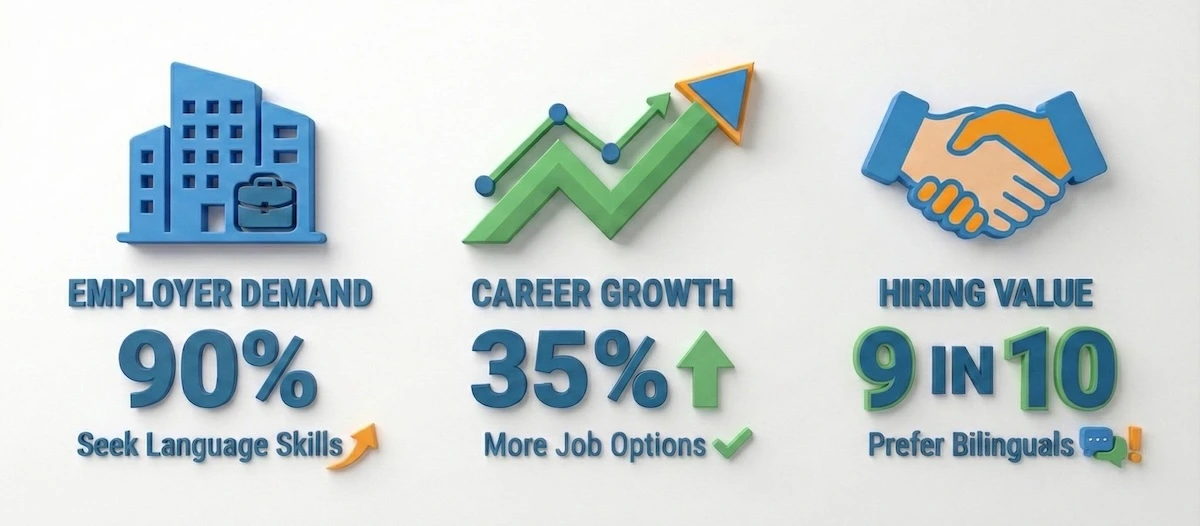
Data shows that mastering a second language significantly boosts employability and career opportunities.
Academic and Cognitive Benefits of Tutoring
Working with a language tutor often leads to measurable improvements. Studies show that students who receive tutoring can boost their test scores by about 12%. In fact, around 8 in 10 students who get tutoring see their grades improve.This targeted support also builds confidence and motivation. By getting one-on-one help, students develop better study habits and a positive attitude toward learning language skills. Tutors can align lessons with the student’s curriculum, addressing exactly the concepts or skills needed.For example, if a student has an upcoming exam or needs to complete a Spanish essay, the tutor will focus on that task. Tutors can even create mock quizzes or flashcards to help prepare for tests, making sure students grasp the material they will be tested on.Language Tutors vs Teachers: Personalized Support
A school language teacher must divide attention among many students in a classroom. In contrast, a language tutor works with just one student at a time. Research shows one-on-one tutoring means the student is the sole focus of the session.Understanding the difference between classroom instruction and private tutoring is key to making the right choice. Here is a direct comparison of the learning environment provided by each.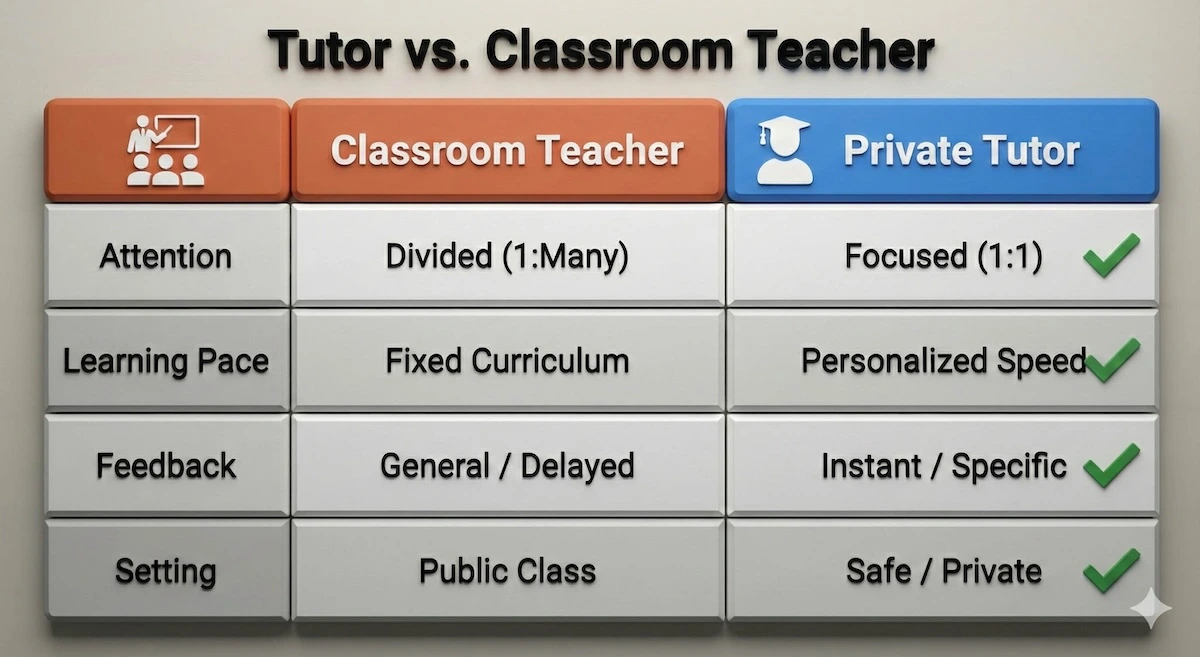
While classroom teachers manage many students, private tutors provide the 1-on-1 attention required to master difficult concepts.
Online Language Tutoring: Flexibility and Global Access
Advances in technology have made language tutoring more accessible than ever. The global online language learning market was valued at about $22.1 billion in 2024 and is projected to grow around 16.6% annually. North America alone accounts for 36% of that market, reflecting high demand in the USA and similar regions.The language tutoring segment itself is booming and expected to grow about 18% per year, as students and adults seek flexible, on-demand help. In fact, after the pandemic shift to remote schooling, about 1 in 5 higher-income families hired a tutor for language and other subjects during distance learning.This growth means students in the US, UK, Gulf states and elsewhere can connect with language tutors around the world. Many tutors teach via live video calls and use interactive tools. Many tutors incorporate games, quizzes, and multimedia (like videos or flashcards) into sessions, turning lessons into interactive experiences.For example, a busy college student in Dubai might schedule evening Mandarin lessons with a native speaker in China, and a London high-schooler could practice French with a tutor in Paris during their free hours. Online platforms handle scheduling and resources (like shared documents or whiteboards), so distance and time zones are no barrier to learning languages.A review of Outschool’s offerings and pricing shows how online platforms have expanded access to live language instruction for younger learners.Modern technology has transformed tutoring from a local necessity to a global opportunity. This ecosystem connects you to native speakers regardless of location.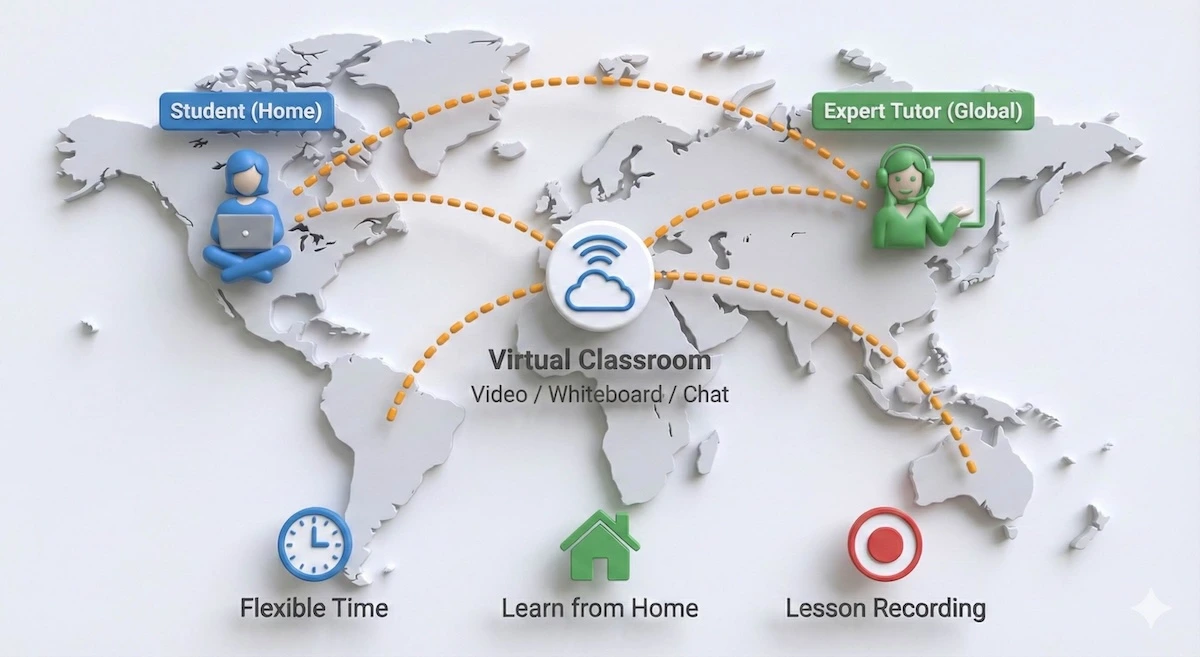
Online platforms remove geographical barriers, allowing students to connect with expert native speakers from anywhere in the world.
Wide Range of Languages
No matter which language you’re learning, you can find a tutor. Experts cover popular languages like English, Spanish, Mandarin Chinese, French, and German, and also less common ones. In fact, UNESCO notes over 7,000 languages are spoken globally, and tutoring services reflect that diversity. For example:- Common languages: English, Spanish, French, German, Mandarin Chinese, Russian, Portuguese.
- Other modern languages: Arabic, Hindi, Bengali, Urdu, Japanese, Korean, Thai, Malay, Swahili, etc.
- Classical and regional: Latin, Ancient Greek, Sanskrit, Persian (Farsi), Hebrew, Italian, Polish, Greek (modern), etc.
- Literature and special topics: Spanish literature, French literature, Russian literature, and other language arts courses.
Academic Support and Homework Guidance
Language tutors often act as academic coaches for language classes. They can break down difficult grammar rules, teach new vocabulary, and guide speaking and writing practice. For instance, if a student is stuck on a Spanish homework problem or an Arabic translation, the tutor can work through each step until it’s clear.Tutors often align these examples with the student’s assignments. Before exams, a tutor might create practice quizzes to reinforce learning. This kind of support is commonly offered as language homework guidance within tutoring sessions.When students need to write an essay in their target language, some turn to the DoMyEssay service for reference examples showing proper structure and idiomatic expressions.Tutors review assignments with students in real time, correcting mistakes and explaining tricky parts, so the student learns while completing the work.In practical terms, a tutoring session might involve reading a German essay together or practicing verb conjugations in conversation. By turning homework into an interactive lesson, students not only get the assignment done, but also deepen their understanding. As a result, homework becomes a learning opportunity rather than a frustrating chore, and academic confidence grows.College students can also use tutors for advanced support, such as navigating foreign-language research papers or presentations. Tutors can tailor lessons to specific exams or curriculums — for example, GCSE French, AP Spanish, or SAT foreign-language sections — giving students practice on exactly the material they will face.For students who want to compare AI-assisted tools with human tutoring, a detailed look at Gauth’s reviews, alternatives, and pricing offers useful context. Similarly, those evaluating structured online programs may find the K12 reviews and alternatives guide helpful. Students exploring AI tutoring companions should also read about Khanmigo’s offerings and pricing before deciding on an approach.How to Choose a Language Tutor
When hiring a language tutor, start by considering your goals. Is the focus on improving grades, mastering conversation, or preparing for a test? Then find tutors who specialize in those areas. Good tutors often have qualifications like language degrees or teaching certificates, and experience helping students.Many online platforms let you filter tutors by subject, credentials, or native language. Some platforms even let you watch short introduction videos or read student reviews before committing. You can also try a short trial lesson to see if the tutor’s teaching style and personality are a good fit. Scheduling is flexible: tutors often offer evenings or weekends to fit student calendars.Pricing varies by subject and tutor experience, but many services remain affordable for families (often around $20–40 per hour depending on the level and language). Tutors can also help with standardized language exams. For example, a tutor can guide a student preparing for the SAT II Spanish exam, the AP French test, or international certificates like IELTS or DELF, by practicing similar questions and teaching test strategies.To find a language tutor online, you can use reputable tutoring websites or language schools. These services match you with qualified instructors so you can start sessions quickly and safely, knowing you’ve found a good fit. Students who also need a data structures and algorithms tutor for computer science coursework will find that the same platform-based matching process applies.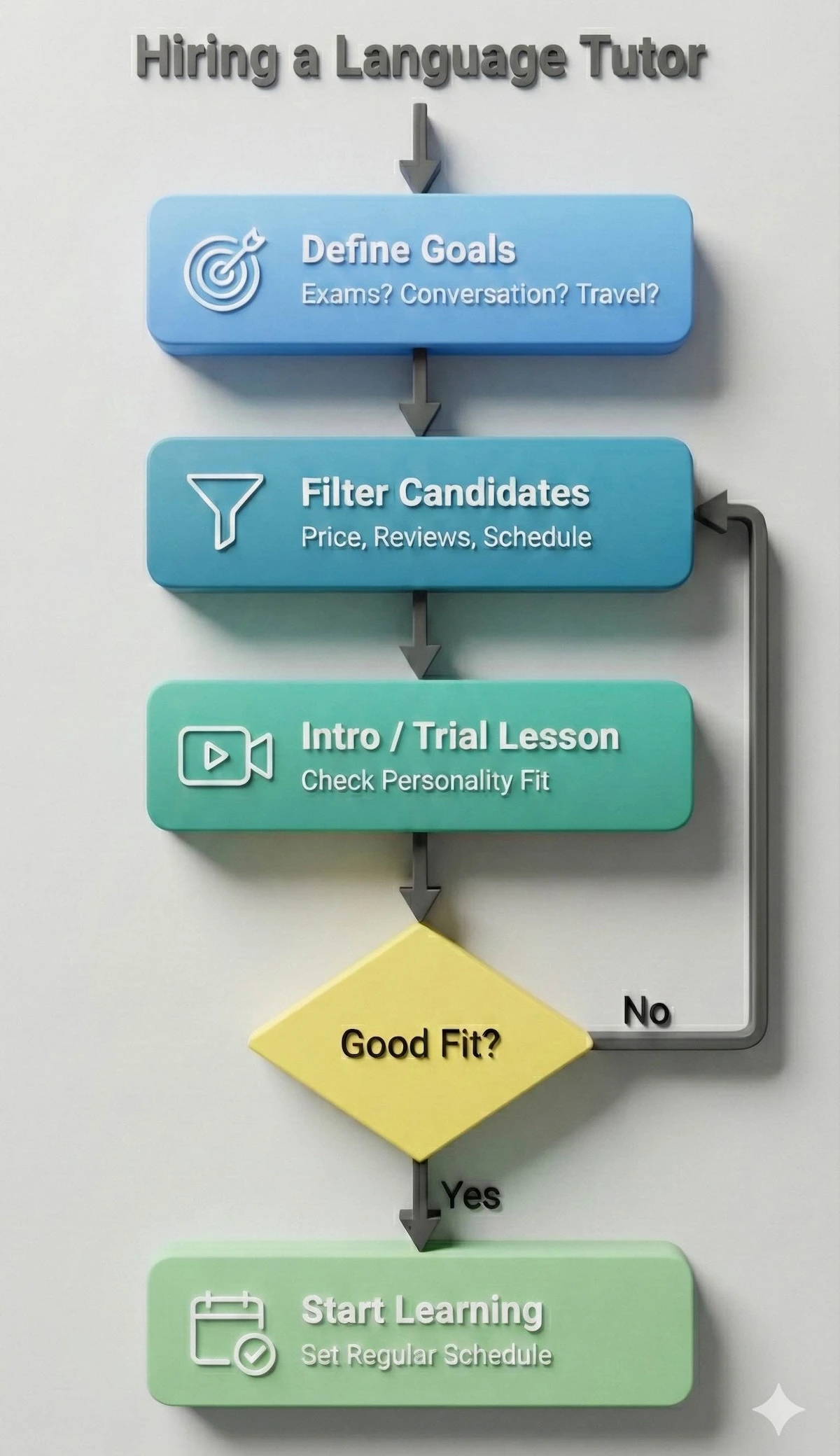
Follow this simple process to ensure you find a tutor that matches your specific learning goals and personality.
FAQs About Language Tutoring
What is language tutoring?
Language tutoring means one-on-one instruction to help a student learn or improve in a specific language.How does online language tutoring work?
Online language tutoring works by meeting with a tutor via video chat or messaging tools for live, interactive language lessons.Which languages can I study with a tutor?
Tutors cover nearly any language — from popular ones like Spanish, Mandarin, and Arabic to classical languages like Latin and Sanskrit.Can a language tutor help with homework and assignments?
Yes, language tutors often provide guidance on homework and assignments to reinforce what you learn in class.Is a language tutor different from a language teacher?
Yes, a language tutor gives individualized support, whereas a language teacher typically leads a larger classroom.How do I find a language tutor?
You can find a language tutor through reputable online platforms or language schools that match you with qualified instructors.Related Subjects
Ancient Greek Arabic Bengali Chinese Dutch English Foreign Language French French literature German Greek Gujarati Hebrew Hindi Hindi Literature Italian Italian Literature Japanese Korean Latin Malay Persian Polish Portuguese Russian Russian Literature Sanskrit Spanish Spanish literature Swahili Thai UrduRelated Reading
******************************
This article provides general educational guidance only. It is NOT official exam policy, professional academic advice, or guaranteed results. Always verify information with your school, official exam boards (College Board, Cambridge, IB), or qualified professionals before making decisions. Read Full Policies & Disclaimer , Contact Us To Report An Error