
Petroleum Engineering Tutoring Online: Homework and Assignment Help for Students in 2025

Petroleum engineering tutoring—online or in person—can demystify difficult topics, improve grades, and build confidence. Tutors offer personalized homework and assignment help to ensure student success.
Understanding Petroleum Engineering Tutoring
Many petroleum engineering students find their courses extremely challenging. Petroleum engineering is “widely regarded as one of the more challenging majors” because it combines advanced math, physics, geology, and chemistry. Students often juggle complex topics like reservoir behaviors, drilling techniques, and production processes at the same time, which can be overwhelming. One-on-one petroleum engineering tutoring provides targeted support to break down these concepts. A tutor (often called a petroleum engineering teacher in a tutoring context) can adapt explanations to the student’s level, clarify homework problems, and guide them through difficult assignments.
Because this major combines four distinct scientific fields, it can be helpful to visualize exactly how these subjects overlap.
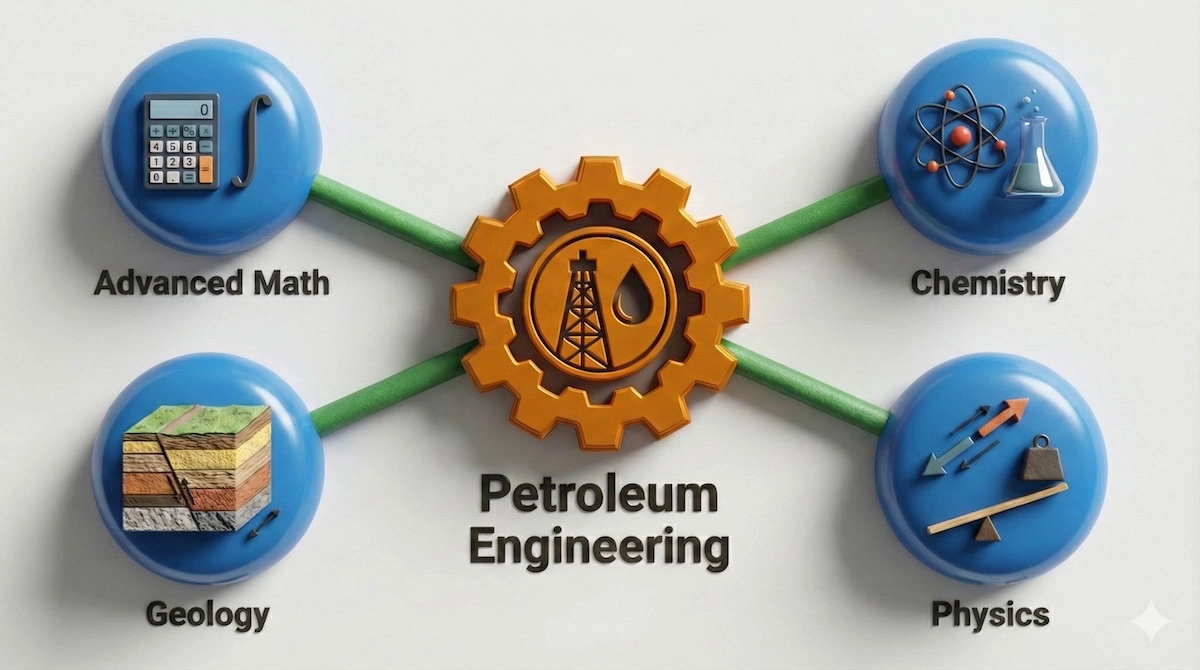
Mastering Petroleum Engineering requires balancing four complex scientific disciplines simultaneously.
A tutor helps you strengthen the specific pillar—whether it’s math or geology—that is currently weakening your overall performance.
Why Pursue Petroleum Engineering?
Despite its difficulty, petroleum engineering offers exciting opportunities and rewards. Petroleum engineers are crucial to the global economy, designing ways to extract oil and gas safely and efficiently. This field also offers some of the highest salaries in engineering. For example, the U.S. Bureau of Labor Statistics reports a median salary of about $141,280 per year. In the UK, starting salaries are around £25,000–£45,000 and can rise to £55,000–£100,000 with experience. Work in this field can also be adventurous: drilling engineers might travel to remote oil rigs or offshore platforms as part of their job. This sense of adventure and innovation can motivate students despite the hard coursework.
When considering the return on investment for your hard work, the data speaks for itself.
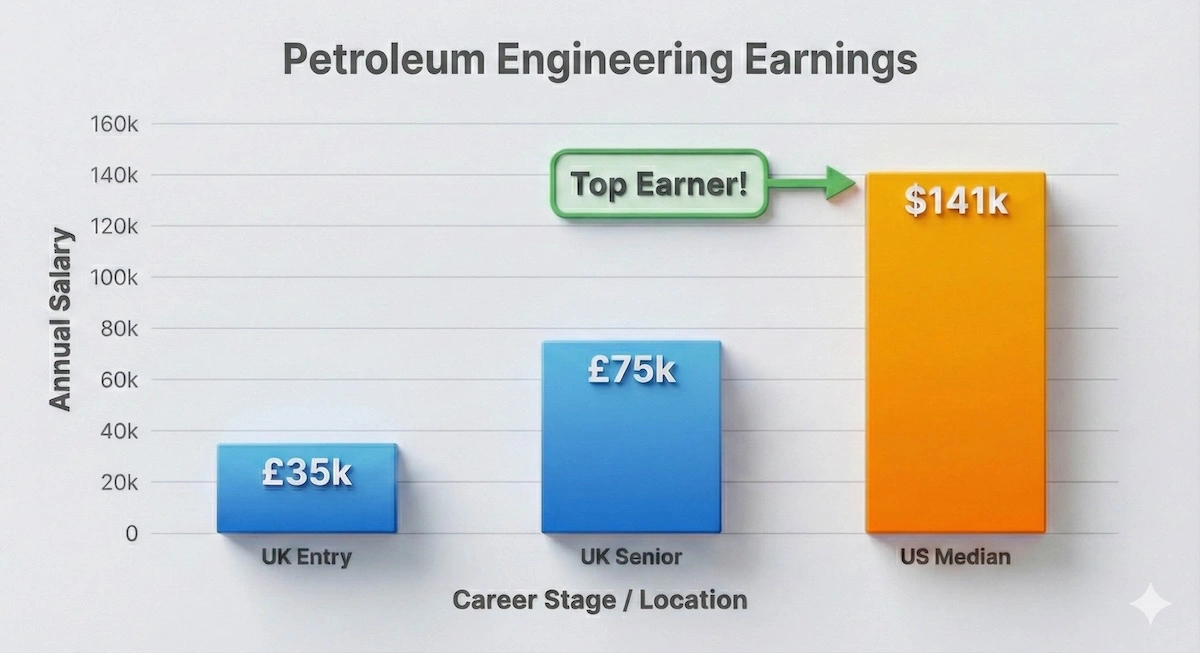
Despite the academic challenges, the financial rewards in the energy sector remain among the highest in engineering.
With median salaries significantly higher than many other engineering disciplines, the effort to master these tough concepts pays off.
Key Topics in Petroleum Engineering
Tutors can assist with all core petroleum engineering subjects, including:
- Reservoir Engineering – Using mathematical models and simulations to predict and optimize how much oil or gas can be recovered from underground fields.
- Drilling Engineering – Designing and planning how to safely drill oil and gas wells (drilling engineers are responsible for well construction and safety).
- Production Engineering – Managing wells after drilling, maximizing production flow, and solving on-site production problems.
- Petroleum Geology – Studying rock formations and earth structures to locate hydrocarbon deposits (high school courses in geology and chemistry provide useful background).
- Fluid Mechanics & Chemistry – Applying thermodynamics, chemistry, and fluid dynamics to understand how oil, gas, and water move underground and through processing systems.
Benefits of Tutoring for Petroleum Engineering Students
Working with a skilled tutor can turn a daunting oil-rig problem into understandable concepts. Research shows that one-on-one tutoring has a “significant, positive impact” on learning outcomes. Tutors offer personalized instruction that adapts to each student’s pace and learning style. In practice, tutoring brings several key benefits:
- Expert Guidance: An experienced tutor can focus on the specific topics where a student struggles, providing clear explanations beyond what a packed classroom might allow.
- Homework & Assignment Help: Tutors assist with petroleum engineering homework and projects, giving step-by-step support and feedback (often called “Petroleum Engineering hw help”). This ensures students learn how to solve problems correctly, rather than guessing.
- Personalized Learning: Tutoring sessions are tailored to the student’s needs. If calculus or fluid flow is a weak spot, the tutor will spend more time reinforcing those concepts until the student catches up.
- Increased Confidence: Regular tutoring builds a student’s confidence. As difficult concepts become clearer, students feel more prepared for exams and projects.
- Flexible Scheduling: Especially online tutoring allows sessions to fit into busy schedules. Students can arrange tutoring before tests or after tough lectures without the need to commute.
Online vs. In-Person Tutoring
Both online and in-person tutoring can be effective. In fact, the U.S. online private tutoring market was valued at $4.32 billion in 2024 and is projected to reach $8.08 billion by 2030. Students increasingly favor online petroleum engineering tutoring for its convenience. Industry reports note that online sessions allow students to connect with qualified tutors anywhere, without geographical constraints. In-person tutoring still benefits some learners and formats. The key is to choose the format that fits your schedule and learning style.
To help you decide between the two formats, here is a quick comparison of the key factors that matter most to students.
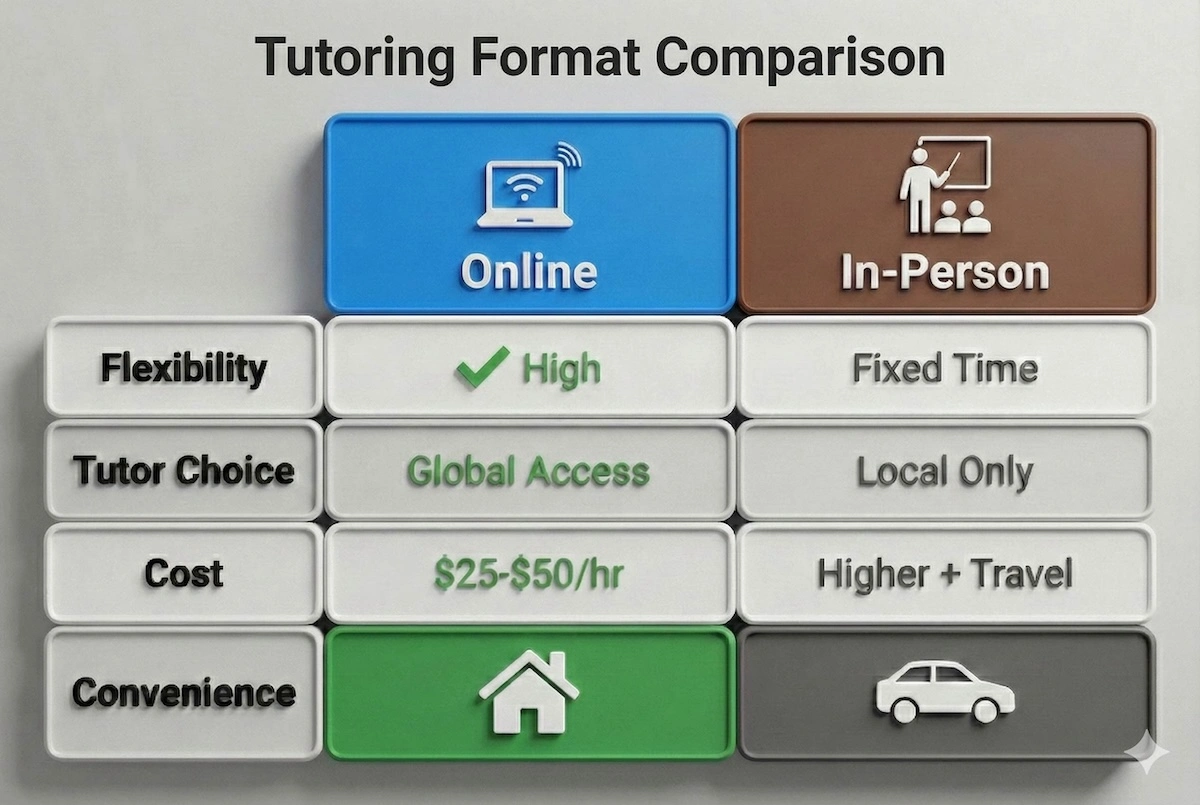
Compare the features of online and in-person tutoring to decide which fits your lifestyle and budget best.
While in-person learning has its place, the flexibility and cost-efficiency of online tutoring make it the preferred choice for 2025.
Finding and Hiring a Petroleum Engineering Tutor
When looking to hire a petroleum engineering tutor, start by identifying qualified candidates. Many online platforms let you search for tutors by subject. Look for tutors who have a degree in petroleum engineering, relevant industry experience, or teaching credentials. You can often review their profiles, specializations, and student feedback. For example, a tutor might advertise expertise in drilling or reservoir engineering courses. Trial sessions are common and can help ensure a good fit.
Tutoring rates vary. Many online tutors charge in the range of $25 to $50 per hour, though prices depend on location, tutor credentials, and session length. Comparing a few tutors can help you find reasonable rates. Clear communication is key: a good petroleum engineering tutor should be able to explain concepts clearly and have patience. Ask potential tutors about their teaching approach and familiarity with your course material.
Finally, set specific goals for tutoring. Whether it’s improving a grade, completing a tough assignment, or preparing for an exam, being clear about objectives will help the tutor tailor each session. With careful selection, hiring a qualified petroleum engineering tutor can be an affordable and effective way to boost learning and performance.
Ready to get help? Use this simple checklist to ensure you hire the right professional for your needs.
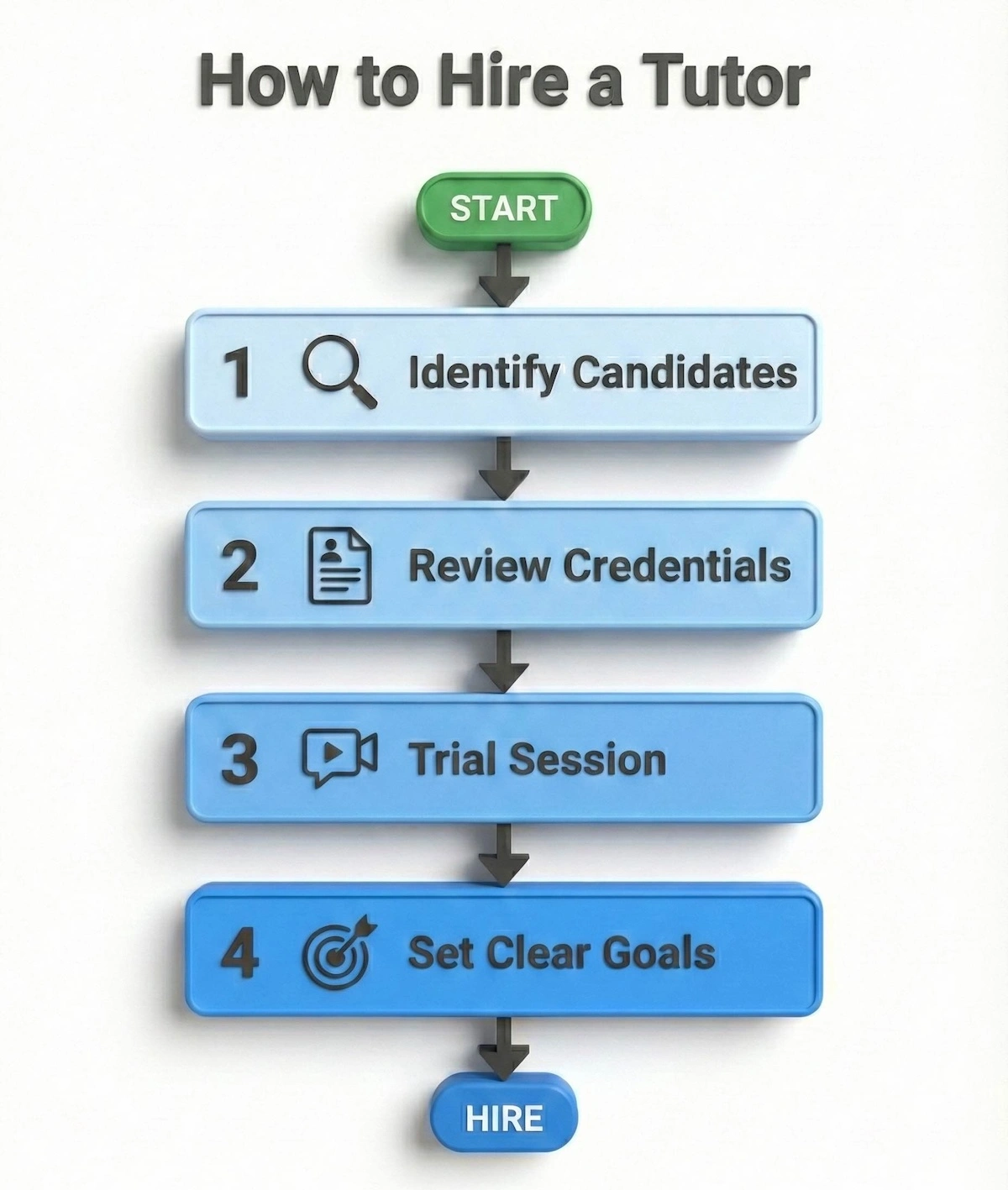
Follow this simple 4-step roadmap to find a tutor who matches your specific academic needs.
Following these steps ensures you don’t just find a tutor, but the right tutor for your specific coursework.
FAQs
Q: What is petroleum engineering tutoring?
A: It’s personalized help—typically one-on-one or small-group sessions—where an expert tutor guides students through complex petroleum engineering concepts and problems.
Q: How can online tutoring help petroleum engineering students?
A: Online tutoring lets students connect with expert petroleum engineering tutors remotely, providing flexible, one-on-one assistance with challenging topics and homework.
Q: How do I hire a petroleum engineering tutor?
A: You can find and hire qualified tutors via reputable online tutoring platforms or agencies, choosing someone with strong credentials and good reviews in petroleum engineering.
Q: What subjects can a petroleum engineering tutor help with?
A: Tutors cover core areas like drilling engineering, reservoir engineering, production optimization, petroleum geology, and the supporting math and science.
Q: What is the difference between a petroleum engineering teacher and a tutor?
A: A petroleum engineering teacher provides classroom instruction to many students, whereas a tutor offers individualized, one-on-one guidance tailored to a single student’s needs.
Q: How much does petroleum engineering tutoring cost?
A: Online petroleum engineering tutoring usually costs roughly $25–$50 per hour, though rates vary by tutor experience and location.
******************************
This article provides general educational guidance only. It is NOT official exam policy, professional academic advice, or guaranteed results. Always verify information with your school, official exam boards (College Board, Cambridge, IB), or qualified professionals before making decisions. Read Full Policies & Disclaimer , Contact Us To Report An Error