
Your Ultimate Guide to Conquering the Dental Admission Test (DAT)

The DAT is a critical, multi-faceted exam for aspiring dentists. Success hinges on a deep understanding of its structure, strategic preparation, and knowing when to seek expert guidance and personalized help.

The First Step on a Long Road: Meet Sarah
Sarah had known she wanted to be a dentist since she was ten, the day her orthodontist showed her a 3D model of her own teeth. The blend of science, artistry, and patient care fascinated her. Throughout high school and into her first years of college, that dream was a bright, guiding star. Then, she encountered the first great gatekeeper on her path: the Dental Admission Test, or DAT.
Suddenly, the dream felt distant, obscured by a mountain of organic chemistry formulas, spatial reasoning puzzles, and dense scientific passages. Sarah felt overwhelmed, just like thousands of other pre-dental students across the USA, UK, and Gulf countries. If you’re in a similar position, know this: the DAT is a challenge, but it is a conquerable one. This guide is your map and compass.
What Exactly is the Dental Admission Test (DAT)?
The DAT is more than just another standardized test; it’s a specialized assessment designed by the American Dental Association (ADA) to measure academic ability, scientific understanding, and perceptual skills essential for success in dental school. Think of it as the dental world’s MCAT. Your score is a major factor that admissions committees consider, giving them a standardized way to compare applicants from different universities and backgrounds.
According to the ADA, over 12,000 individuals take the DAT each year. With a limited number of seats in dental schools, a competitive score is crucial to stand out. It demonstrates that you have the foundational knowledge and the cognitive abilities to handle the rigorous curriculum ahead.
Breaking Down the Beast: A Section-by-Section Guide
The DAT is a marathon, not a sprint, lasting approximately 4 hours and 15 minutes. It’s composed of four distinct multiple-choice sections. Understanding each one is the first step in building a winning strategy.
To help you visualize the challenge ahead, here is a snapshot of the exam’s four main pillars, including the time limits and question counts you will face.
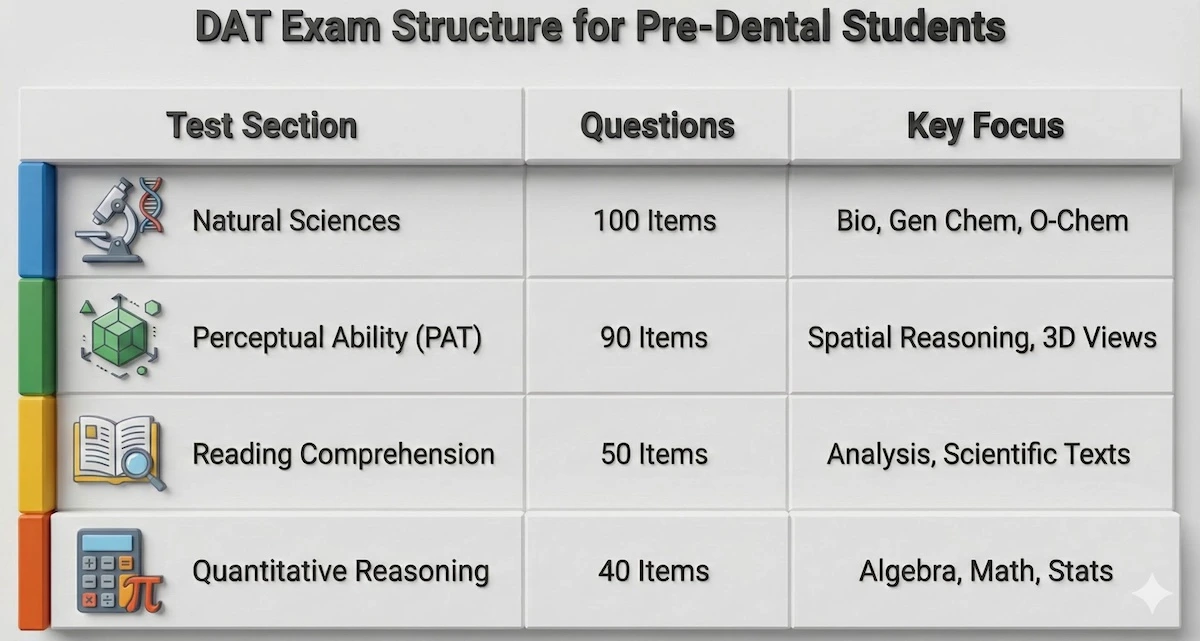
A quick breakdown of the four DAT sections, question counts, and key topics you need to master.
Memorizing this structure is your first tactical advantage—knowing exactly how many questions to expect in each section allows you to manage your pacing effectively.
Survey of the Natural Sciences
This is the heavyweight champion of the DAT, covering the core sciences. It includes 100 questions broken down into three parts:
- Biology (40 questions): Expect a wide range of topics, from cell and molecular biology to anatomy, physiology, developmental biology, and genetics. It’s less about deep problem-solving and more about broad knowledge.
- General Chemistry (30 questions): This section covers everything from stoichiometry and gases to acids and bases, chemical equilibria, and thermodynamics. A solid conceptual and mathematical foundation is key.
- Organic Chemistry (30 questions): For many, this is the most daunting part. It tests your knowledge of nomenclature, reaction mechanisms, stereochemistry, and the properties of organic compounds. Understanding the “why” behind reactions is more important than pure memorization. This is an area where focused Dental Admission Test (DAT) teaching can be incredibly beneficial.
Since the Natural Sciences section is the ‘heavyweight champion’ of the exam, let’s break down exactly how those 100 questions are distributed across the three scientific disciplines.
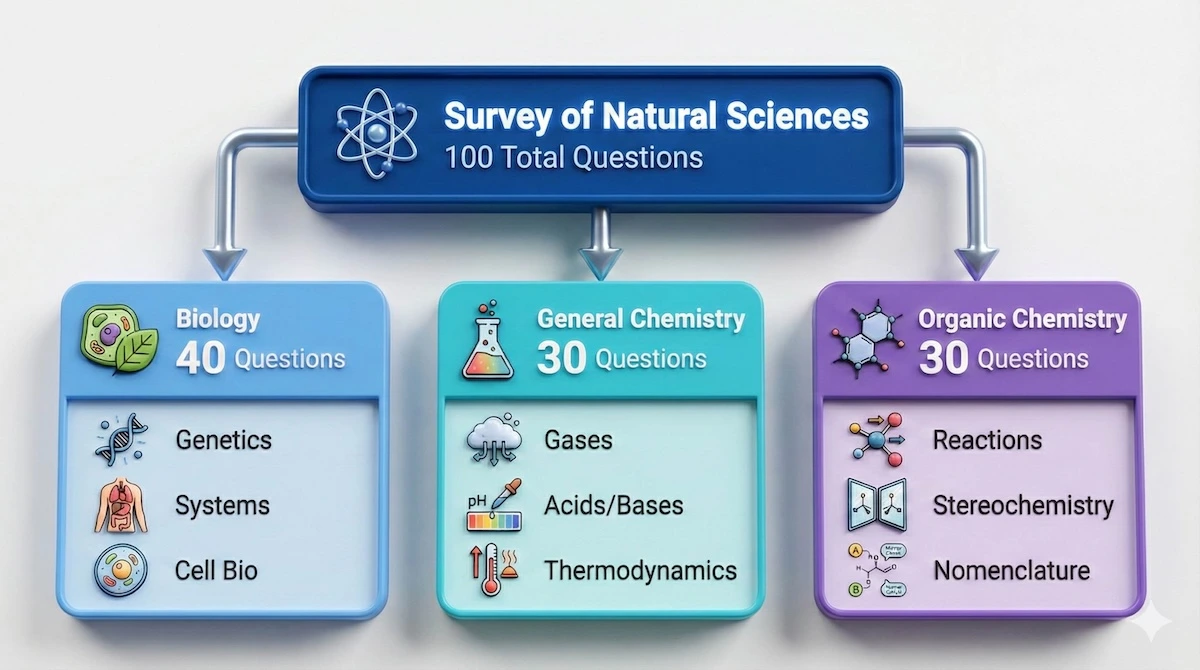
The Natural Sciences section is the largest part of the DAT—here is exactly how the 100 questions are distributed.
As you can see, Biology takes the largest share, but a weakness in General or Organic Chemistry can still significantly drag down your overall Natural Sciences score.
Perceptual Ability Test (PAT)
The PAT is unique to the DAT and often catches students off-guard. It’s a 90-item section designed to test your spatial reasoning and 3D visualization skills—crucial for a profession that requires intricate work in small spaces. The six sub-sections are:
- Keyholes (Apertures)
- Top-Front-End Visualization
- Angle Ranking
- Hole Punching
- Cube Counting
- Pattern Folding
These terms might sound abstract if you haven’t seen them before. The visual guide below illustrates exactly what kind of puzzles you will solve in each of the six PAT categories.
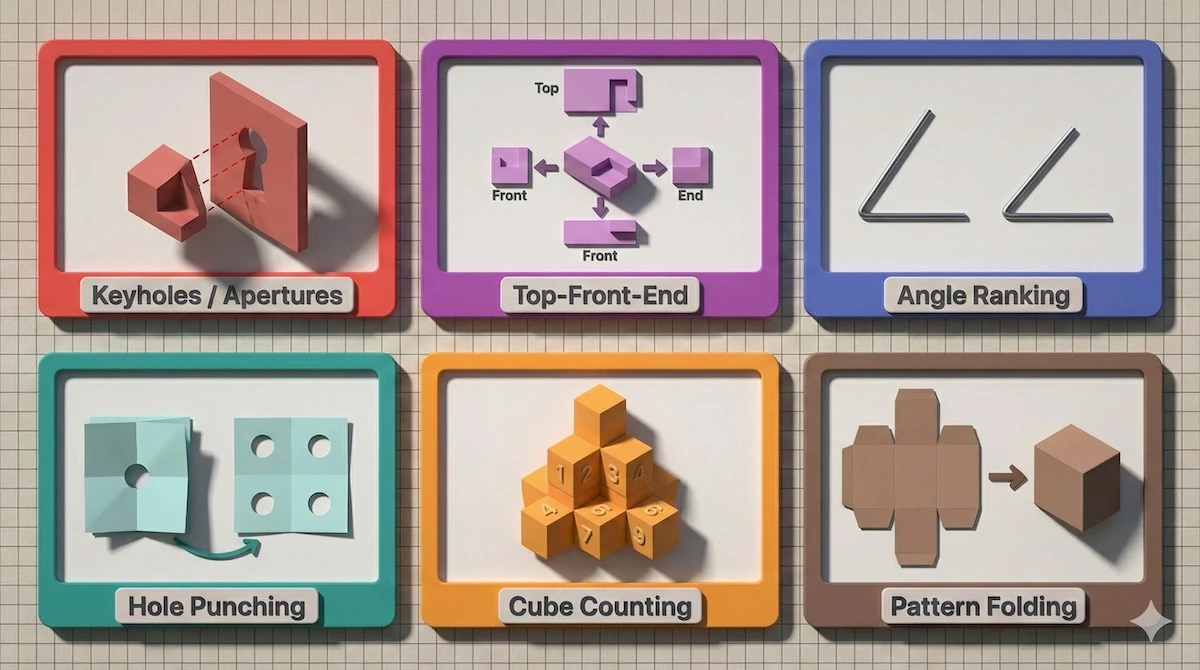
The PAT tests your spatial reasoning—familiarize yourself with these six specific problem types.
Mastering these six specific visual puzzle types is less about memorization and more about training your brain to mentally rotate and manipulate 3D objects.
This section is all about practice. The more you train your brain to see in three dimensions, the faster and more accurate you will become. Many students find that working with a skilled Dental Admission Test (DAT) teacher helps them develop the right visualization techniques.
Reading Comprehension Test
This section consists of three academic passages on various scientific topics. You’ll have 60 minutes to read the dense texts and answer 50 questions. The key challenges are time management and the ability to extract specific information without getting bogged down in details you don’t need.
Quantitative Reasoning Test
This is the math section, comprising 40 questions that test your understanding of algebra, data analysis, probability, and basic trigonometry. While the concepts aren’t typically advanced, the problems require quick thinking and the ability to use the on-screen calculator efficiently. This is another area where targeted Dental Admission Test (DAT) homework help can sharpen your problem-solving speed.
Decoding Your Score: What Do the Numbers Mean?
The DAT is scored on a scale of 1 to 30 for each section. One of the most important numbers you’ll receive is your Academic Average (AA), which is the rounded average of your scores in the Survey of the Natural Sciences, Reading Comprehension, and Quantitative Reasoning sections.
So, what’s a “good” score? According to the American Dental Education Association (ADEA), the average DAT AA score for applicants accepted into dental school is typically around 20-21. A score in this range makes you a competitive candidate. Scores above 22 are considered excellent and can significantly strengthen your application, especially if your GPA isn’t perfect.
It helps to see where you stand in the competitive landscape. This chart maps out the difference between an ‘average’ score and one that makes admissions officers take notice.
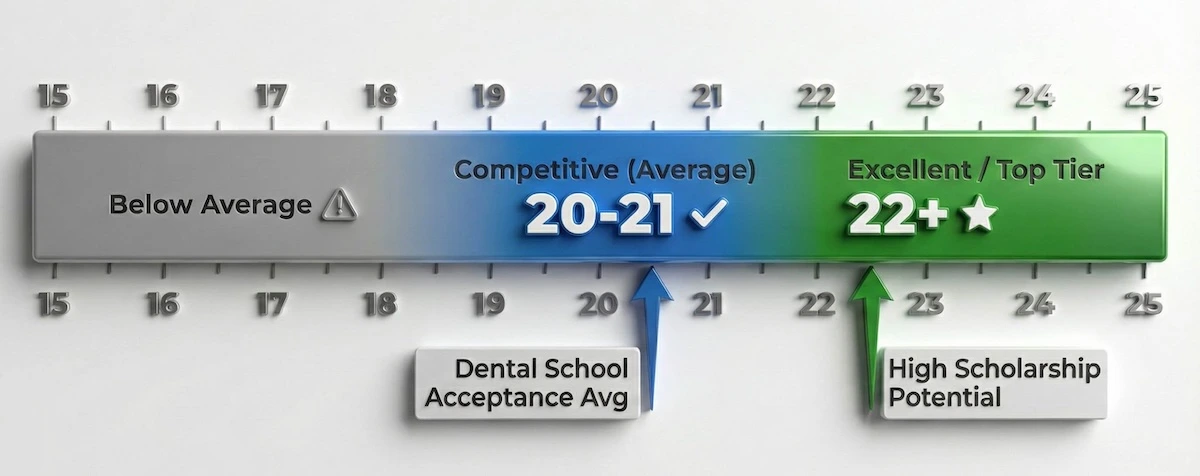
Aiming for a 20+ puts you in the competitive range, while a 22+ significantly boosts your chances of admission.
Your goal should be to move your practice test results from the blue ‘Competitive’ zone into the green ‘Top Tier’ range before your actual test date.
Crafting Your Study Plan: A Roadmap to a 20+ Score
Imagine trying to build a house without a blueprint. That’s what studying for the DAT without a plan is like. A structured approach is non-negotiable.
Establish a Realistic Timeline
Most successful students dedicate 3-4 months to focused DAT preparation, studying for about 20 hours per week. This allows enough time to cover all the content, identify weaknesses, and work on them without burning out. Block out study time in your calendar just as you would for a class or a job.
A four-month timeline might seem long, but it passes quickly. Here is a month-by-month roadmap to keep your preparation structured and efficient.
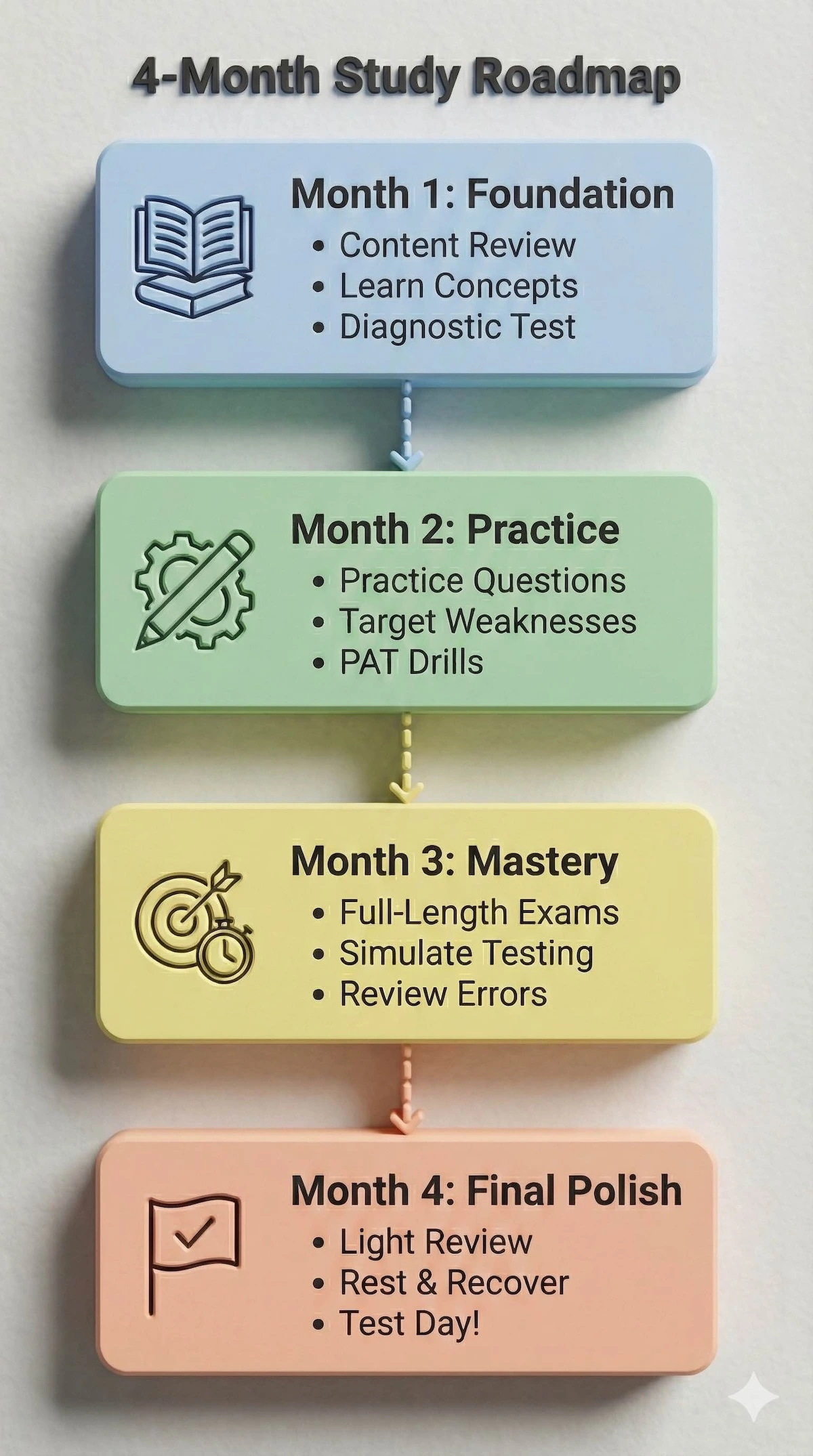
Structure your preparation with this proven 4-month roadmap to ensure you cover all bases without burnout.
Notice how the focus shifts from learning content in Month 1 to rigorous full-length practice by Month 3—skipping that practice phase is the most common mistake students make.
Gather High-Quality Resources
Start with official materials from the ADA, including the sample test. Supplement these with reputable prep books, online question banks, and video tutorials. Don’t spread yourself too thin; it’s better to master two or three high-quality resources than to skim through ten mediocre ones.
The Power of Full-Length Practice Tests
Taking full-length, timed practice tests under realistic conditions is the single most important part of your preparation. It builds stamina, exposes your pacing issues, and reveals weak spots. Your goal should be to complete at least 5-6 full-length exams before your test day. Analyzing what you got wrong—and why—is just as important as taking the test itself.
The X-Factor: When Self-Study Isn’t Enough
Let’s go back to Sarah. After a month of studying on her own, she hit a wall. Her practice scores plateaued, and no matter how many videos she watched, she couldn’t grasp certain organic chemistry reactions. She was putting in the hours, but her score wasn’t improving. This is a common and frustrating experience.
This is the point where smart students recognize that they need a different approach. While self-discipline is vital, sometimes the most efficient path to improvement is through personalized guidance.
Why Consider a Dental Admission Test (DAT) Tutor?
Studying alone can feel like you’re in an echo chamber. A tutor provides a fresh, expert perspective. If you’re struggling with specific topics, a Dental Admission Test (DAT) tutor can quickly diagnose your misconceptions and provide targeted explanations that click. They can create a customized study plan focused on your weaknesses, saving you countless hours of inefficient work.
The rise of online learning has made expert help more accessible than ever. Opting for Dental Admission Test (DAT) tutoring online means you can connect with a top-tier educator from anywhere in the world, scheduling sessions that fit your busy life. This flexibility is a game-changer for college students juggling coursework, labs, and other commitments.
More Than Just Tutoring: Targeted Assignment Help
Sometimes, you don’t need a full-blown tutoring plan. You might just be stuck on a particularly tricky set of PAT practice problems or a difficult chemistry concept. In these cases, seeking out Dental Admission Test (DAT) assignment help can provide the breakthrough you need. This kind of targeted support, often called Dental Admission Test (DAT) hw help, allows you to overcome a specific hurdle and get back on track with your study plan.
Ultimately, the decision to hire a Dental Admission Test (DAT) tutor is an investment in your future. It’s a strategic move to maximize your score, strengthen your application, and get one step closer to that white coat.
Your Journey to the White Coat
The path to becoming a dentist is demanding, and the DAT is one of its most formidable challenges. But with a solid understanding of the exam, a well-crafted study plan, and the courage to ask for help when you need it, you can and will succeed.
Remember Sarah? She decided to find a Dental Admission Test (DAT) tutor online. Her tutor helped her finally understand reaction mechanisms and taught her a new way to approach the PAT’s pattern folding section. Two months later, she walked out of the testing center with a score of 22. The dream was no longer distant; it was right in front of her. Your dream can be, too.
Frequently Asked Questions (FAQs)
Q1 How long is the DAT exam?
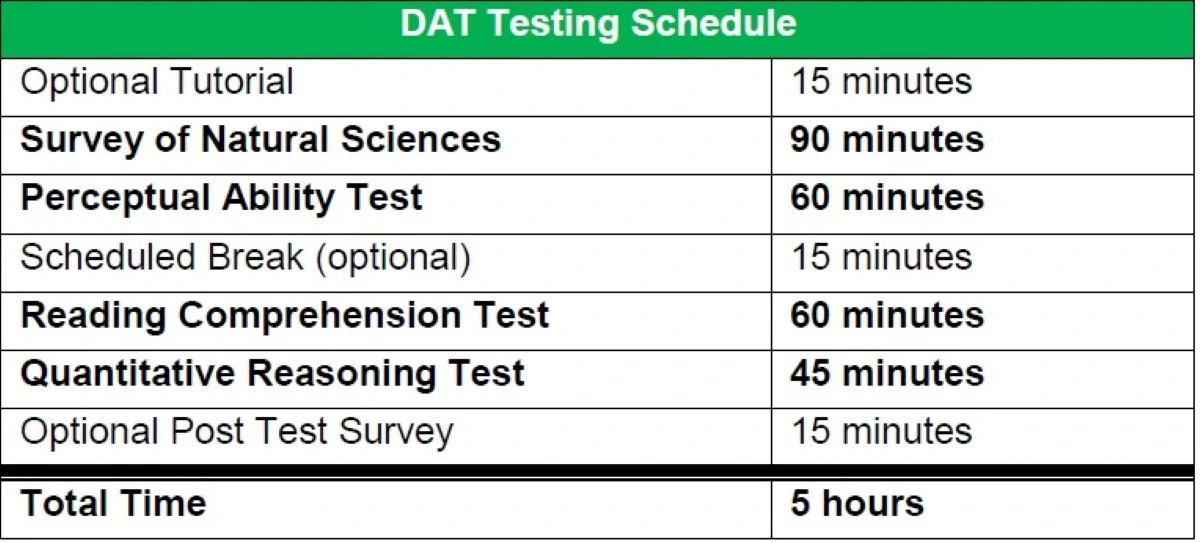
The entire test appointment is about 5 hours, including a tutorial, survey, and a scheduled break.
Q2 Can I use a calculator on the DAT?
Yes, a simple on-screen calculator is provided for the Quantitative Reasoning section only.
Q3 How often can I retake the DAT?
You must wait 90 days between attempts and can only take the test a total of three times without special permission from the ADA.
Q4 What is a good DAT score to aim for?
Aim for a score of 20 or higher to be considered a competitive applicant at most US dental schools.
Q5 Is the Canadian DAT different from the American DAT?
Yes, the Canadian DAT has a different format, including an optional Manual Dexterity Test and no organic chemistry section.
Q6 Where can I find a reliable Dental Admission Test (DAT) tutor?
Online tutoring platforms are excellent resources for finding experienced tutors who specialize in DAT preparation.
Related Subjects
DAT Perceptual Ability
DAT Quantitative Reasoning
DAT Reading Comprehension
DAT Survey of the Natural Sciences
******************************
This article provides general educational guidance only. It is NOT official exam policy, professional academic advice, or guaranteed results. Always verify information with your school, official exam boards (College Board, Cambridge, IB), or qualified professionals before making decisions. Read Full Policies & Disclaimer , Contact Us To Report An Error