Contact MEB Today To Get The Best
DAT Survey of the Natural Sciences Tutoring Online
Email: [email protected]



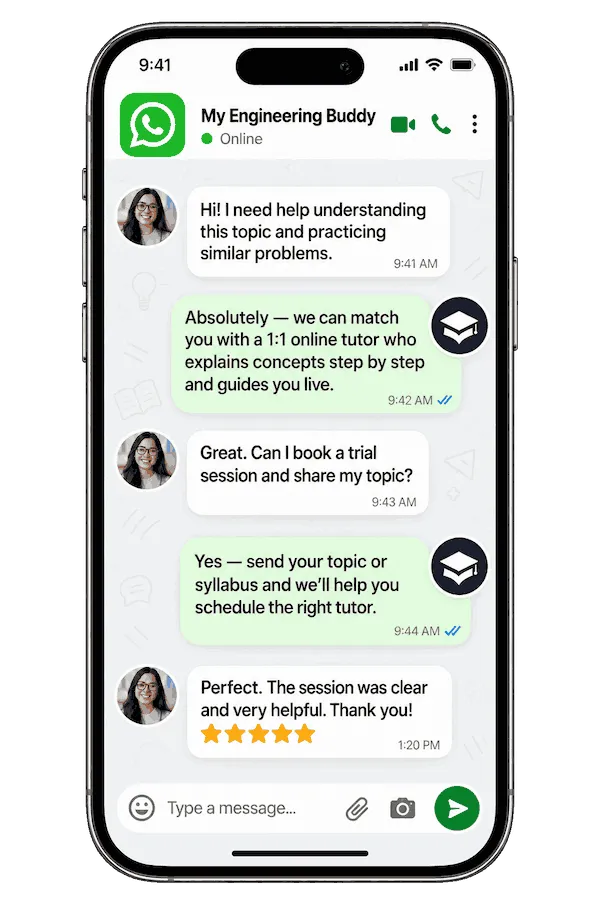
~1 min
Average Reply Time
~1 hour
To Be Matched With A Tutor
30 Min Trial
75% Find Their Tutor On The 1st Trial
$20-35+/hr
Premium Yet Affordable Learning
Most DAT candidates who struggle with the Survey of the Natural Sciences section aren’t short on intelligence — they’re short on 40 hours of focused, corrective practice across biology, general chemistry, and organic chemistry simultaneously.
DAT Survey of the Natural Sciences Tutor Online
The DAT Survey of the Natural Sciences is a 100-question, 90-minute section of the Dental Admission Test covering biology, general chemistry, and organic chemistry, designed to assess scientific readiness for dental school admission in the US and Canada.
Finding a DAT Survey of the Natural Sciences tutor near me used to mean settling for a general science tutor who barely knew the DAT format. MEB tutors know this section section by section — every ADA content outline item, every high-yield reaction mechanism, every cell biology subtopic that shows up repeatedly. As part of MEB’s broader test preparation programme, 1:1 DAT Survey of the Natural Sciences tutoring is built around your weakest subsection, your timeline, and your dental school target score. One session shows you where you’re actually losing points. That’s where the work starts.
- 1:1 online sessions mapped to the ADA’s official DAT content outline
- Expert-verified tutors with demonstrated depth in biology, gen chem, and orgo
- Flexible scheduling across US, UK, Canada, Australia, and Gulf time zones
- Structured study sequence built after a diagnostic session on all three subsections
- Ethical academic guidance — you understand the work, then submit it yourself
52,000+ students across the US, UK, Canada, Australia, and the Gulf have used MEB since 2008 — including students preparing for the Dental Admission Test, the Optometry Admission Test, and the MCAT in the test preparation space.
Source: My Engineering Buddy, 2008–2025.
How Much Does a DAT Survey of the Natural Sciences Tutor Cost?
Most DAT Survey of the Natural Sciences sessions run $20–$40/hr depending on the tutor’s background and how advanced your prep needs to be. Graduate-level or research-specialist tutors go up to $100/hr. Not sure where you fall? Start with the $1 trial — 30 minutes live, no registration, no commitment.
| Level / Need | Typical Rate | What’s Included |
|---|---|---|
| Standard (most levels) | $20–$35/hr | 1:1 sessions, concept explanations, practice Q walkthroughs |
| Advanced / Specialist | $35–$70/hr | Expert tutor, niche depth in orgo mechanisms or biochem |
| $1 Trial | $1 flat | 30 min live session or one full question explained |
Availability tightens sharply in the months before the DAT testing windows. Book early if you’re targeting a specific test date.
WhatsApp MEB for a quick quote — average response time under 1 minute.
Who This DAT Survey of the Natural Sciences Tutoring Is For
This is for pre-dental students who need to lift their natural sciences score, not just review content. If you’ve read the textbook and still can’t crack 17+ on this section, isolated content review isn’t your problem — a targeted practice-and-feedback loop is.
- Pre-dental students preparing for their first DAT attempt and aiming for 17+ on Survey of the Natural Sciences
- Students retaking after a failed first attempt who need to pinpoint exactly where the score dropped
- Students with a dental school conditional offer depending on a competitive DAT score
- Students 4–6 weeks from their test date with biology or organic chemistry still underperforming
- Parents supporting a pre-dental student through a high-stakes application cycle
- Students who want structured assignment guidance — understanding first, then submission
MEB tutors have supported students applying to dental programmes at universities including NYU College of Dentistry, University of Toronto, King’s College London, University of Michigan School of Dentistry, and UCLA School of Dentistry.
1:1 Tutoring vs Self-Study vs AI vs YouTube vs Online Courses
Self-study works if you’re disciplined, but there’s no one to tell you why your SN2 mechanism answer is wrong in four different ways. AI tools give fast explanations but can’t watch you work through a DAT-format question and catch the reasoning error in real time. YouTube covers Krebs cycle overviews well — it stops when you’re stuck on a specific stereochemistry question at question 78. Online courses are structured but move at a fixed pace that ignores your specific gap in electrochemistry or amino acid classification. 1:1 DAT Survey of the Natural Sciences tutoring with MEB is calibrated to your three-subsection score breakdown, corrects errors the moment they appear, and adjusts the session plan every week.
Outcomes: What You’ll Be Able To Do in DAT Survey of the Natural Sciences
After working with an online DAT Survey of the Natural Sciences tutor, students can solve acid-base equilibrium problems without second-guessing Le Chatelier’s principle, analyze cell division stages under time pressure, apply SN1/SN2 reaction rules to novel substrates, explain oxidative phosphorylation in enough depth to answer mechanism-level DAT questions, and present clear reasoning on genetics probability questions that previously felt unpredictable. The goal is a score that gets your application through the first filter — and the confidence to sit the exam without avoidable errors on content you’ve already studied.
Supporting a student through DAT Survey of the Natural Sciences? MEB works directly with parents to set up sessions, track progress, and keep the prep schedule on track. WhatsApp MEB — average response time is under a minute, 24/7.
Based on feedback from 40,000+ sessions collected by MEB from 2022 to 2025, 58% of students improved their DAT Survey of the Natural Sciences score by at least 3 scaled score points after approximately 20 hours of 1:1 tutoring. A further 21% reported measurable improvement in at least two of the three subsections.
Source: MEB session feedback data, 2022–2025.
At MEB, we’ve found that DAT Survey of the Natural Sciences scores stall most often not because students don’t know the content — but because they’ve never practised under timed conditions with someone watching their reasoning process and catching the half-second decisions that cost them three questions in a row.
What We Cover in DAT Survey of the Natural Sciences (Syllabus / Topics)

Biology (approximately 40 questions)
- Cell biology: organelle function, membrane transport, cell cycle and mitosis/meiosis
- Molecular biology: DNA replication, transcription, translation, gene regulation
- Genetics: Mendelian inheritance, Hardy-Weinberg equilibrium, probability problems
- Evolution and ecology: natural selection mechanisms, population dynamics, taxonomic classification
- Anatomy and physiology: major organ systems including endocrine, nervous, and immune
- Microbiology: bacterial structure, viral replication cycles, immune response
- Developmental biology: embryogenesis stages, tissue differentiation
Core texts: Campbell Biology (Urry et al.), Kaplan DAT Prep Plus biology sections, OpenStax Anatomy and Physiology for organ system review.
General Chemistry (approximately 30 questions)
- Atomic structure and periodicity: electron configuration, periodic trends, ionic vs covalent bonding
- Stoichiometry: mole calculations, limiting reagents, percent yield
- Thermodynamics and thermochemistry: Gibbs free energy, enthalpy, entropy relationships
- Acid-base equilibrium: Ka, Kb, buffer systems, Henderson-Hasselbalch equation
- Electrochemistry: galvanic cells, standard reduction potentials, Nernst equation
- Gases: ideal gas law, kinetic molecular theory, partial pressures
Core texts: General Chemistry (Zumdahl), DAT Destroyer chemistry sections, Kaplan DAT general chemistry review.
Organic Chemistry (approximately 30 questions)
- Nomenclature: IUPAC rules for alkanes, alkenes, alkynes, and functional groups
- Stereochemistry: R/S configuration, enantiomers, diastereomers, optical activity
- Reaction mechanisms: SN1, SN2, E1, E2 — conditions, substrate effects, leaving groups
- Carbonyl chemistry: aldol condensation, esterification, nucleophilic acyl substitution
- Aromatic compounds: electrophilic aromatic substitution, directing effects
- Spectroscopy basics: IR and NMR interpretation at DAT level
Core texts: Organic Chemistry as a Second Language (Klein), DAT Destroyer organic chemistry, Crack DAT PAT supplementary orgo resources.
Students consistently tell us that organic chemistry reaction mechanisms feel arbitrary until a tutor walks through the electron-pushing logic step by step. Once that clicks — usually within two or three focused sessions — the entire reaction class opens up and stops feeling like memorisation.
What a Typical DAT Survey of the Natural Sciences Session Looks Like
The tutor opens by checking your previous session’s practice — specifically how you performed on the acid-base buffer problems or the meiosis-versus-mitosis questions set last time. From there, you and the tutor work through DAT-format questions on screen: the tutor annotates using a digital pen-pad, shows the reasoning step by step, then asks you to replicate the process on a fresh question. Topics shift based on where you slow down — if SN2 reaction conditions keep tripping you up, the session stays there until the logic is solid. You close with a timed 10-question block on the topic covered, a score check, and a specific practice task for the next 48 hours. The next session starts with that task reviewed.
How MEB Tutors Help You with DAT Survey of the Natural Sciences (The Learning Loop)
Diagnose: In the first session, the tutor runs a short diagnostic across all three subsections — biology, gen chem, and orgo. This identifies whether you’re losing points to conceptual gaps, time pressure, question misreading, or calculation errors. Most students discover their biology score is masking a worse orgo situation than they realised.
Explain: The tutor works through DAT-style problems live using a digital pen-pad. Mechanisms are drawn out. Reaction pathways are traced. Cell cycle stages are mapped. Nothing is left at the level of “just memorise this” — the why behind every answer is made explicit.
Practice: You attempt problems while the tutor watches. That’s the part most students skip when studying alone. The tutor sees where you hesitate, where you pick the wrong answer for the right reason, and where you’re guessing. All three are different problems with different fixes.
Feedback: Every error gets a step-by-step correction — not just the right answer, but why your reasoning diverged and at which step. If you lost marks on Gibbs free energy sign conventions, the tutor rebuilds that logic from thermodynamic first principles rather than drilling the same question again.
Plan: After each session, the tutor updates your topic progression map. Weak subsections get more time. Strong areas are maintained with lighter review. The plan adjusts every two sessions based on timed practice scores.
Sessions run on Google Meet. The tutor uses a digital pen-pad or iPad with Apple Pencil to annotate problems in real time. Before your first session, share your most recent DAT practice test scores by subsection, your target score, and your test date. The first session runs the diagnostic and sets the study sequence from there. Start with the $1 trial — 30 minutes of live tutoring that also serves as your first diagnostic.
Tutor Match Criteria (How We Pick Your Tutor)
MEB matches you based on four criteria, not just availability.
Subject depth: Every DAT Survey of the Natural Sciences tutor demonstrates knowledge across all three subsections at the level the ADA tests — not general biology or general chemistry, but DAT-specific content weighting and question formats.
Tools: All tutors use Google Meet with a digital pen-pad or iPad and Apple Pencil. Mechanism-drawing and annotated problem-solving happen live on screen — not just verbal explanation.
Time zone: Matched to your region. US, UK, Canada, Australia, and Gulf students all get tutors whose availability aligns with yours.
Goals: Whether you need a 3-point lift in biology, a full orgo rebuild, or ongoing weekly support through a 12-week prep cycle, the tutor is selected to match that specific brief.
Unlike platforms where you fill out a form and wait, MEB responds in under a minute, 24/7. Tutor match takes under an hour. The $1 trial means you test before you commit. Everything runs over WhatsApp — no logins, no intake forms.
Study Plans (Pick One That Matches Your Goal)
If your test is in three weeks, the tutor focuses entirely on your two lowest subsections and builds timed practice into every session. Four to eight weeks out, the plan runs a full content cycle with weekly timed blocks and score tracking. Ongoing weekly support aligns to your self-study schedule — the tutor fills gaps as they appear rather than following a fixed topic sequence. The tutor maps the specific session plan after the diagnostic, so the structure fits your actual score profile rather than a generic prep guide.
Pricing Guide
DAT Survey of the Natural Sciences tutoring starts at $20/hr for standard prep. Advanced sessions — particularly for students targeting 20+ or needing deep orgo mechanism work — typically run $35–$70/hr. Niche specialist tutors go up to $100/hr. Rate factors include the subsection complexity, your timeline urgency, and tutor availability in your time zone.
Availability is limited during the peak DAT testing windows (typically spring and early autumn). If you have a fixed test date, earlier booking gives you more tutor options and consistent scheduling.
For students targeting top dental programmes at highly competitive schools, tutors with dental school or research backgrounds are available at higher rates — share your target programme and score, and MEB will match the tier to your application goal.
Start with the $1 trial — 30 minutes, no registration, no commitment. WhatsApp MEB for a quick quote.
FAQ
Is the DAT Survey of the Natural Sciences hard?
Yes — it tests biology, general chemistry, and organic chemistry in 90 minutes with 100 questions. The difficulty is the breadth: most students are solid in one or two subsections but drop their overall score on the third. Targeted prep on your weakest area makes the biggest difference.
How many sessions do I need?
Most students see measurable score movement in 8–12 sessions spread over 4–6 weeks. Students starting from a significant deficit in one subsection typically need 15–20 sessions for a reliable lift across all three areas. The diagnostic after session one gives a clearer estimate.
Can you help with practice exercises?
MEB tutoring is guided learning — you understand the work, then submit it yourself. Tutors explain DAT-style problems, walk through the reasoning, and let you replicate the logic independently. See our Academic Integrity policy and Why MEB page for full details on what we help with and what we don’t.
Will the tutor match my exact syllabus or exam board?
The DAT is administered by the American Dental Association. MEB tutors work from the official ADA content outline for Survey of the Natural Sciences — biology, general chemistry, and organic chemistry coverage, question format, and timing. Your tutor is matched to that specific format, not a generic science syllabus.
What happens in the first session?
The tutor runs a short diagnostic across all three subsections. You’ll attempt a set of questions from each area, the tutor identifies the gap pattern, and the session ends with a clear study sequence mapped to your test date. Every minute is used productively.
Is online tutoring as effective as in-person?
For DAT Survey of the Natural Sciences, online works well — the tutor annotates mechanisms, draws reaction pathways, and marks up practice questions on screen in real time. Students across the US, Canada, and Australia have used this format successfully through full prep cycles with MEB.
What is a competitive DAT Survey of the Natural Sciences score?
Most US dental schools report average accepted applicant scores of 19–21 on Survey of the Natural Sciences. Highly competitive programmes at schools like NYU, Michigan, and UCLA typically see accepted students with 20+. A score below 17 often requires a retake before applications are competitive.
Can I focus on just one subsection — organic chemistry, for example?
Yes. If your biology and gen chem scores are already strong, the tutor can run sessions focused entirely on organic chemistry mechanisms, stereochemistry, and reaction prediction. The study plan is built around your actual score breakdown, not a preset curriculum.
What’s the difference between the DAT Survey of the Natural Sciences and the OAT science sections?
The Optometry Admission Test covers similar science content but adds physics as a fourth subsection and has different question distribution. MEB supports both — if you’re weighing dental versus optometry paths, the tutor can clarify what prep overlaps and what doesn’t.
Do you offer group DAT Survey of the Natural Sciences sessions?
MEB offers 1:1 sessions only. Group formats dilute the diagnostic benefit — you spend time on someone else’s orgo gap while your gen chem issue goes unaddressed. Every session is designed around your specific subsection scores and nothing else.
How do I find a DAT Survey of the Natural Sciences tutor in my city?
MEB operates entirely online — Google Meet, no travel. Students in New York, Toronto, London, Sydney, and Dubai all access the same tutor pool. Time zones are matched at booking. There’s no advantage to in-person for this format.
How do I get started?
WhatsApp MEB, share your test date and your most recent practice scores by subsection. MEB matches you with a verified tutor — usually within the hour. The $1 trial runs first: 30 minutes live or one full question explained. Three steps: WhatsApp, get matched, start the trial.
Trust & Quality at My Engineering Buddy
Every MEB tutor goes through subject-specific vetting — not a general science screen. DAT Survey of the Natural Sciences tutors are evaluated on their knowledge of the ADA content outline across all three subsections, their ability to explain mechanisms under time pressure, and their performance in a live demo session before they work with any student. Tutors hold degrees in biological sciences, chemistry, or dentistry. Rated 4.8/5 across 40,000+ verified reviews on Google.
MEB tutoring is guided learning — you understand the work, then submit it yourself. For full details on what we help with and what we don’t, read our Academic Integrity policy and Why MEB.
MEB has been running since 2008 and has served 52,000+ students across the US, UK, Canada, Australia, Gulf, and Europe in 2,800+ subjects. In the test preparation space, that includes the DAT Perceptual Ability section, DAT Reading Comprehension, and DAT Quantitative Reasoning — so students prepping for the full DAT can work with MEB across every section, not just the natural sciences. See our tutoring methodology for how session structure is built.
Our experience across thousands of sessions shows that students who share their practice test breakdown before session one — subsection scores, not just a total — get a faster diagnostic and a more accurate study plan. That one step saves most students two or three sessions of trial-and-error coverage.
MEB has matched students with verified DAT tutors since 2008. The platform covers every section of the exam — from DAT Quantitative Reasoning tutoring to Survey of the Natural Sciences — so one platform handles the full prep cycle.
Source: My Engineering Buddy, 2008–2025.
Explore Related Subjects
Students studying DAT Survey of the Natural Sciences often also need support in:
Next Steps
Before your first session, have ready: your ADA DAT content outline, your most recent practice test scores broken down by subsection (biology, gen chem, orgo), and your exam date. If you haven’t taken a practice test yet, that’s fine — the tutor will run a short diagnostic in session one.
- Share your test date, your target score, and your weakest subsection
- Share your availability and time zone
- MEB matches you with a verified DAT Survey of the Natural Sciences tutor — usually within 24 hours
The first session starts with a diagnostic so no time is wasted on content you’ve already mastered.
Visit www.myengineeringbuddy.com for more on how MEB works.
Try your first session for $1 — 30 minutes of live 1:1 tutoring or one homework question explained in full. No registration. No commitment. WhatsApp MEB now and get matched within the hour.
WhatsApp to get started or email [email protected].
Reviewed by Subject Expert
This page has been carefully reviewed and validated by our subject expert to ensure accuracy and relevance.