~1 min
Average Reply Time
~1 hour
To Be Matched With A Tutor
30 Min Trial
75% Find Their Tutor On The 1st Trial
$20-35+/hr
Premium Yet Affordable Learning
Most students who struggle with Herpetology aren’t missing intelligence — they’re missing someone who can explain thermoregulation, cladistics, and field identification without making it feel like a lecture from a textbook.
Herpetology Tutor Online
Herpetology is the branch of zoology focused on reptiles and amphibians — covering their taxonomy, physiology, ecology, and behaviour. A Herpetology tutor online guides students through species classification, evolutionary biology, and fieldwork methodology at undergraduate and graduate levels.
If you’ve searched for a Herpetology tutor near me and come up empty, that’s exactly the problem MEB solves. As part of a broader Zoology tutoring network covering 2,800+ subjects, MEB connects you with verified specialists who know the difference between anuran metamorphosis and squamate phylogenetics — and can teach both clearly. Sessions run live, 1:1, and are built around your actual course material. No generic slides. No recycled explanations.
- 1:1 online sessions tailored to your university syllabus or research module
- Expert verified tutors with hands-on herpetology and zoology backgrounds
- Flexible time zones — US, UK, Canada, Australia, Gulf
- Structured learning plan built after a diagnostic session
- Ethical academic guidance — you understand before you submit
52,000+ students across the US, UK, Canada, Australia, and the Gulf have used MEB since 2008 — including students in Zoology subjects like Herpetology, Ichthyology, and Ornithology.
Source: My Engineering Buddy, 2008–2025.
How Much Does a Herpetology Tutor Cost?
Most Herpetology tutoring sessions at MEB run $20–$40/hr. Graduate-level or highly specialised topics — venomous species biology, conservation genetics, advanced systematics — can reach up to $100/hr. Not sure where you fall? Start with the $1 trial and let MEB match you to the right tier.
| Level / Need | Typical Rate | What’s Included |
|---|---|---|
| Standard (most undergrad levels) | $20–$35/hr | 1:1 sessions, homework guidance |
| Advanced / Specialist (grad, research) | $35–$100/hr | Expert tutor, niche depth, research support |
| $1 Trial | $1 flat | 30 min live session or 1 homework question explained |
Tutor availability tightens around semester-end lab submissions and dissertation deadlines. WhatsApp MEB for a quick quote — average response time under 1 minute.
Who This Herpetology Tutoring Is For
This is for students who are past the Wikipedia stage but still hitting walls in their coursework. Whether you’re decoding phylogenetic trees or trying to make sense of a herpetofaunal survey report, a specialist tutor accelerates the work.
- Undergraduate biology or zoology students taking a dedicated herpetology module
- Graduate students whose thesis involves reptile or amphibian ecology
- Students retaking after a failed first attempt at a herpetology exam or practical
- Students with a conditional university offer depending on their biology grade
- Parents watching a student’s confidence drop alongside their lab marks
- Students needing guided academic guidance — structured, ethical, and clear
Students come to MEB from programmes at institutions like the University of Florida, UC Davis, University of Queensland, University of Exeter, and Wageningen University — where herpetology and wildlife biology modules sit inside competitive, research-heavy degrees.
At MEB, we’ve found that herpetology students often struggle not with memorisation but with application — knowing the anatomy of a caecilian is one thing; explaining its evolutionary significance in an exam answer is another. That gap is exactly where a 1:1 tutor makes the clearest difference.
1:1 Tutoring vs Self-Study vs AI vs YouTube vs Online Courses
Self-study works if you’re disciplined — but herpetology has enough taxonomic and ecological nuance that gaps compound fast without feedback. AI tools explain concepts quickly but can’t probe your reasoning or catch the specific error in your phylogenetic analysis. YouTube is fine for overviews of amphibian life cycles; it stops short when you’re stuck on interpreting a mark scheme. Online courses are structured but move at a fixed pace that rarely matches a real semester. With MEB’s 1:1 Herpetology tutoring, every session is calibrated to your exact module, your errors, and your timeline — not a generic herpetology curriculum.
Outcomes: What You’ll Be Able To Do in Herpetology
After working with an MEB tutor, you’ll be able to analyze phylogenetic relationships across major reptile and amphibian clades with confidence. You’ll apply thermoregulation theory to explain behavioural patterns in ectotherms across different ecological contexts. Expect to write structured exam answers on amphibian decline and conservation genetics that directly address mark scheme criteria. You’ll solve species identification problems using morphological keys — the kind that trip students up in practical assessments. Present field survey methodology clearly, including sampling design and herpetofaunal diversity indices, without reaching for vague generalities.
Based on feedback from 40,000+ sessions collected by MEB from 2022 to 2025, 58% of students improved by one full grade after approximately 20 hours of 1:1 tutoring in subjects like Herpetology. A further 23% achieved at least a half-grade improvement.
Source: MEB session feedback data, 2022–2025.
Try your first session for $1 — 30 minutes of live 1:1 tutoring or one homework question explained in full. No registration. No commitment. WhatsApp MEB now and get matched within the hour.
What We Cover in Herpetology (Syllabus / Topics)

Track 1: Taxonomy, Systematics, and Evolutionary Biology
- Major clades: Testudines, Squamata, Crocodilia, Sphenodontia, Anura, Urodela, Gymnophiona
- Morphological and molecular approaches to species identification
- Phylogenetic tree construction and interpretation
- Evolutionary origins of amniotic egg and terrestrial adaptation
- Biogeography of reptile and amphibian distributions
- Taxonomic keys and museum specimen analysis
Core texts include Vitt and Caldwell’s Herpetology: An Introductory Biology of Amphibians and Reptiles and Pough et al.’s Herpetology — both widely assigned at undergraduate level.
Track 2: Physiology, Ecology, and Behaviour
- Ectothermy and thermoregulatory behaviour in reptiles
- Amphibian osmoregulation and cutaneous respiration
- Reproductive strategies: oviparity, viviparity, and paedomorphosis
- Predator-prey dynamics and cryptic coloration
- Habitat requirements and microhabitat selection
- Seasonal activity patterns and dormancy mechanisms
- Venom biology in snakes and Heloderma — biochemistry and ecological function
Students at this level regularly use Spotila’s Sea Turtles and Greene’s Snakes: The Evolution of Mystery in Nature alongside lecture materials.
Track 3: Conservation, Field Methods, and Global Decline
- Amphibian decline: chytrid fungus (Batrachochytrium dendrobatidis), habitat loss, climate shifts
- IUCN Red List categories applied to reptile and amphibian species
- Field survey design: transect methods, mark-recapture, acoustic monitoring for anurans
- Herpetofaunal diversity indices and data interpretation
- Conservation genetics: population fragmentation and captive breeding programmes
- Legislation and international frameworks: CITES listings for traded species
This track draws heavily on journal literature; tutors help students engage with primary sources from Nature Climate Change and similar outlets covering amphibian vulnerability to climate-linked stressors.
What a Typical Herpetology Session Looks Like
The tutor opens by checking where you left off — usually the topic that caused the most friction last time, whether that was interpreting a cladogram of squamate relationships or working through an anuran metamorphosis question. From there, you and the tutor work through a live problem on screen: the tutor writes out reasoning step by step using a digital pen-pad, then hands it back to you to replicate or challenge. Topics like thermoregulation models, species identification using dichotomous keys, and conservation genetics calculations get broken into stages until the logic is clear. The session closes with a concrete practice task — a past exam question, a fieldwork data set to interpret, or a short written answer to draft — and the next topic is noted so you arrive prepared.
How MEB Tutors Help You with Herpetology (The Learning Loop)
Diagnose: In the first session, the tutor identifies exactly where your understanding breaks down — whether that’s phylogenetic reasoning, applying ecological theory, or structuring exam answers on amphibian conservation.
Explain: The tutor works through live examples on a digital pen-pad — drawing out phylogenetic trees, annotating anatomical diagrams, or stepping through a mark scheme line by line. No pre-made slides.
Practice: You attempt problems with the tutor present. This is where the real learning happens — not watching, but doing, with immediate course-correction available.
Feedback: Every error gets a reason attached. Why that answer loses marks. What the examiner is looking for in a question on ectotherm physiology. How to restructure a conservation argument to hit higher bands.
Plan: The tutor sets the next topic sequence, flags the highest-priority gaps before your submission or exam, and adjusts the plan as you improve.
Sessions run over Google Meet. The tutor uses a digital pen-pad or iPad with Apple Pencil for live annotation. Before your first session, share your course outline or module handbook, a recent assignment you found difficult, and your exam or submission date. The first session covers the diagnostic and the first gap — you won’t spend it on paperwork. Whether you need a quick catch-up before a practical assessment, structured revision over 4–8 weeks, or ongoing weekly support through the semester, the tutor maps the session sequence after that first diagnostic. Start with the $1 trial — 30 minutes of live tutoring that also serves as your diagnostic.
Students consistently tell us that the moment herpetology clicks is when abstract taxonomy connects to something visible — a real specimen, a field photo, a distribution map. Our tutors build that bridge deliberately, using annotated visuals every session rather than relying on definitions alone.
Tutor Match Criteria (How We Pick Your Tutor)
Not every zoology tutor is right for herpetology. Here’s what MEB checks.
Subject depth: The tutor must have worked with reptile or amphibian biology at the level you’re studying — undergraduate systematics is a different task from graduate-level conservation genetics.
Tools: Every tutor uses Google Meet plus a digital pen-pad or iPad with Apple Pencil. Live annotation is non-negotiable for a subject this diagram-heavy.
Time zone: Matched to your region — US, UK, Gulf, Canada, or Australia — so sessions don’t require either party to be awake at 3am.
Goals: Matched to your actual objective — exam performance, conceptual depth, animal physiology integration, or dissertation research support.
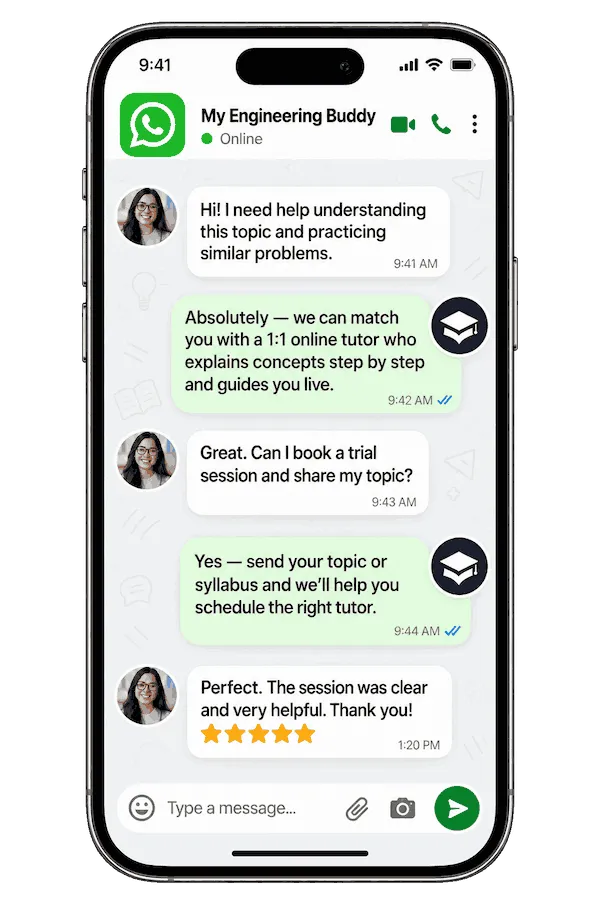
Unlike platforms where you fill out a form and wait, MEB responds in under a minute, 24/7. Tutor match takes under an hour. The $1 trial means you test before you commit. Everything runs over WhatsApp — no logins, no intake forms.
Pricing Guide
Standard herpetology tutoring runs $20–$40/hr. Graduate-level work — advanced systematics, conservation genetics, dissertation chapter review — runs higher, up to $100/hr. Rate factors include level, topic complexity, how soon you need sessions, and tutor availability.
Peak demand hits during semester-end lab submission windows and around dissertation deadlines. Tutor slots fill quickly at those points.
For students targeting wildlife biology research programmes, conservation biology graduate schools, or professional herpetological society certifications, tutors with active fieldwork or research backgrounds are available at higher rates — share your specific goal and MEB will match the tier to your target.
Start with the $1 trial — 30 minutes, no registration, no commitment. WhatsApp MEB for a quick quote.
MEB has served 52,000+ students across 2,800+ subjects since 2008 — rated 4.8/5 across 40,000+ reviews. For students in biology and zoology, that depth of verified experience matters when the subject gets specific.
Source: My Engineering Buddy, 2008–2025.
FAQ
Is Herpetology hard?
It depends on your background. Students with solid cell biology and ecology foundations adapt quickly. The taxonomy volume and the shift to clade-based thinking trip most people up early. A tutor who maps your specific gaps in session one saves weeks of unfocused revision.
How many sessions are needed?
Most students working on a specific exam or assignment gap need 6–12 sessions. Graduate students supporting dissertation chapters often work longer. The diagnostic in session one gives a clearer picture of what’s realistic for your timeline and current level.
Can you help with homework and assignments?
Yes. MEB tutoring is guided learning — you understand the work, then submit it yourself. See our Academic Integrity policy and Why MEB page for full details on what we help with and what we don’t. Guidance covers exam questions, lab reports, and essay structure.
Will the tutor match my exact syllabus or exam board?
Yes. Share your module handbook, course outline, or university reading list before the first session. The tutor aligns to your specific assessment structure — not a generic herpetology curriculum that may not match your institution’s weighting or focus areas.
What happens in the first session?
The tutor runs a short diagnostic — asking you to explain a concept or attempt a question — to pinpoint where understanding breaks down. The remainder of that session addresses the most urgent gap. You leave with a clear picture of the next steps and a practice task.
Is online tutoring as effective as in-person?
For herpetology, yes — arguably more so. Live annotation of phylogenetic diagrams, real-time markup of your written answers, and screen-shared specimen images replicate most of what an in-person session offers. Eighteen years of MEB sessions back that up.
Can I get Herpetology help at midnight?
Yes. MEB operates 24/7 across time zones. WhatsApp MEB at any hour — average response time is under a minute. Tutors are available across US, UK, Gulf, Australian, and European time zones, so there’s almost always someone available when you need them.
What if I don’t click with my assigned tutor?
Tell MEB via WhatsApp and a replacement is arranged, usually within the hour. The $1 trial exists precisely so you can test the match before committing to a full session block. No friction, no lengthy forms to fill out.
What’s the difference between Herpetology and Zoology tutoring?
Zoology tutoring covers the full animal kingdom. Herpetology tutoring goes deep on reptiles and amphibians specifically — phylogenetics, ectotherm physiology, field survey methods, and amphibian conservation. If your module is dedicated to herps, a specialist tutor outperforms a generalist zoologist every time.
Do MEB tutors know the chytrid fungus and amphibian decline literature?
Yes. Conservation biology and Batrachochytrium dendrobatidis impacts on global amphibian populations are recurring exam and dissertation topics. Tutors working in this area are familiar with the primary literature and can help you engage with it analytically, not just descriptively.
How do I get started?
WhatsApp MEB, share your subject and exam date, and get matched to a verified tutor — usually within the hour. The $1 trial gives you 30 minutes of live 1:1 tutoring or one homework question explained in full before you commit to anything further.
Trust & Quality at My Engineering Buddy
Every MEB tutor goes through subject-specific screening before taking a session. That includes a live demo evaluation, degree and credential verification, and ongoing session feedback review. Rated 4.8/5 across 40,000+ verified reviews on Google. For herpetology, tutors are checked for hands-on familiarity with the core sub-disciplines — systematics, field ecology, and conservation biology — not just general zoology competence.
MEB tutoring is guided learning — you understand the work, then submit it yourself. For full details on what we help with and what we don’t, read our Academic Integrity policy and Why MEB.
MEB has been running since 2008, serving 52,000+ students across the US, UK, Canada, Australia, Gulf, and Europe in 2,800+ subjects. Within Zoology, that includes dedicated support for Entomology tutoring, Mammalogy help, and specialist herpetology modules that don’t fit neatly into a general biology tutor’s scope. The MEB tutoring methodology — diagnostic first, structured practice, specific feedback — applies consistently across every subject on the platform.
Explore Related Subjects
Students studying Herpetology often also need support in:
From amphibian conservation genetics to squamate systematics, MEB tutors cover the full scope of herpetology — at undergraduate and graduate level, across all time zones.
Source: My Engineering Buddy, 2008–2025.
Next Steps
Here’s how to get started:
- Share your module name, exam board or university, hardest topic, and how soon your exam or submission falls
- Share your availability and time zone — MEB matches tutors accordingly
- MEB matches you with a verified herpetology tutor — usually within 24 hours, often within the hour
- First session starts with a diagnostic so every minute is used well
Before your first session, have ready:
- Your course outline, module handbook, or syllabus
- A recent assignment, past paper attempt, or lab report you struggled with
- Your exam or submission deadline date — the tutor plans around it from session one
Visit www.myengineeringbuddy.com for more on how MEB works.
WhatsApp to get started or email [email protected].
Reviewed by Subject Expert
This page has been carefully reviewed and validated by our subject expert to ensure accuracy and relevance.