How to Master Physics: A Complete Guide for Students and Parents

- Physics sits at the intersection of abstract theory and complex mathematics, making it uniquely challenging.
- One-on-one tutoring can accelerate learning by the equivalent of 3–15 extra months of study.
- Online physics tutoring gives students flexible, around-the-clock access to expert help from anywhere.
- Tutors typically charge $20–$40 per hour, varying by expertise and topic level.
- Effective tutoring focuses on understanding methods, not just obtaining answers.
Physics tutoring — even online — helps students master challenging topics and improve grades, often boosting their confidence in science. If you are looking for an online physics tutor, tutors typically charge about $20–$40/hr for this personalized help.
Why Physics Tutoring?
Physics is a core STEM subject but also one of the most challenging. It covers everything from Newton’s Laws of motion and Thermodynamics to Quantum Mechanics and Relativity. Students often find the abstract concepts and complex math overwhelming.
Physics is uniquely difficult because it sits right at the intersection of two challenging skill sets. The diagram below illustrates why this combination creates a ‘double challenge’ for many students.
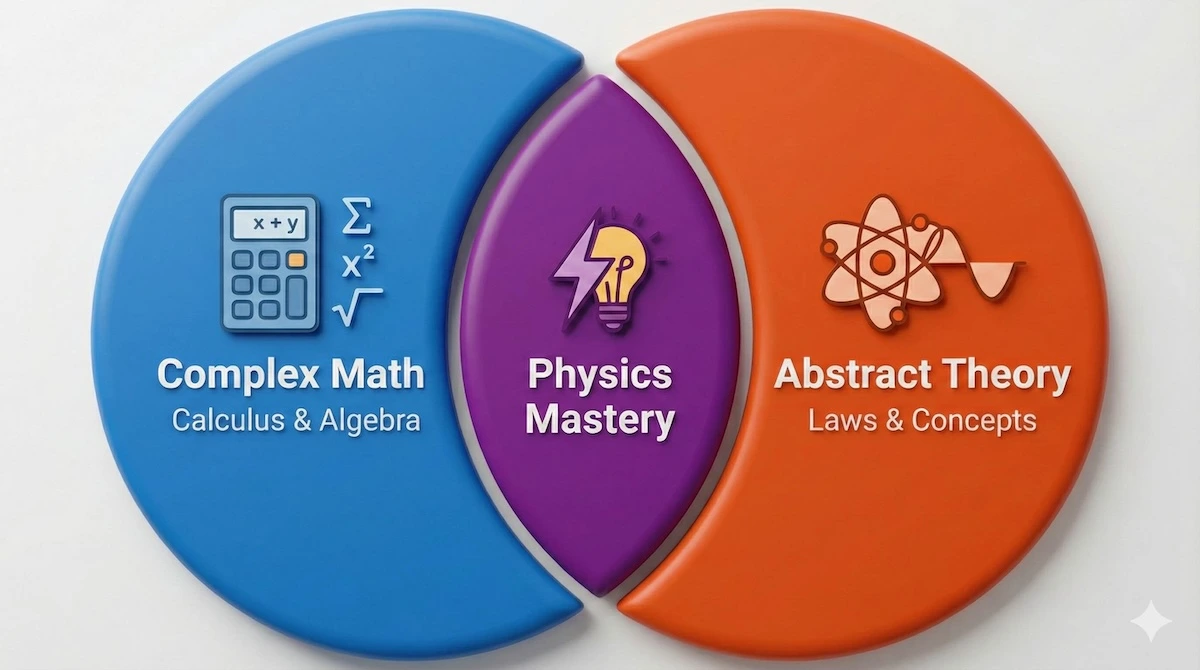
Mastering physics requires bridging the gap between advanced mathematics and abstract theoretical concepts.
As you can see, mastery only happens when you can comfortably navigate both the abstract theory and the rigorous mathematics simultaneously.
In a busy classroom, even an excellent physics teacher may not have time to address every question or revisit tricky topics. One-on-one physics tutoring fills those gaps. An expert tutor can tailor explanations to a student’s pace and learning style, turning confusion into clarity.
Research shows that tutoring can make a real difference. For example, studies of intensive one-on-one instruction report learning gains equivalent to 3–15 extra months of study. In practical terms, many students who get help see tangible improvements — they finally understand the material and earn higher scores.
Physics can seem like an intimidating subject. The formulas, the calculations, and the theories can feel overwhelming, especially when you’re trying to keep up with a busy schedule of classes, homework, and extracurricular activities. Many students find themselves feeling lost or unsure of how to approach problems that involve forces, motion, energy, and other physical phenomena.
It’s easy to think that you either “get” physics or you don’t, but the truth is that physics understanding can be nurtured with the right guidance and practice. Instead of passively watching a lecture, tutoring actively targets a learner’s weak spots. This personalized approach can quickly boost understanding and grades.
Benefits of Physics Tutoring
Tutoring isn’t just about solving a homework problem for you. It offers a range of benefits:
- Personalized attention: The tutor focuses entirely on your needs, reviewing concepts as many times as needed.
- Flexible pacing: You can pause, rewind, or skip ahead at your own pace until the topic clicks.
- Active problem-solving: Tutors guide you through practice problems step-by-step, so you learn the methods instead of just getting answers.
- Confidence building: A supportive tutor creates a judgment-free zone where it’s safe to ask questions and make mistakes. Over time this builds real confidence in physics.
- Convenient learning: Sessions (especially online physics tutoring) can fit into a busy schedule, eliminating commute time and scheduling issues.
- Immediate feedback: You get instant corrections and explanations, so misconceptions are fixed right away.
All these factors add up. Instead of struggling alone, a student can turn frustration into understanding, making each study session more effective. In fact, high-impact tutoring has been shown to accelerate learning dramatically. One review noted that intensive tutoring programs often move the average student from the 50th percentile to the 66th, compared to typical classroom teaching.
While better grades are the obvious goal, the advantages of one-on-one instruction go much deeper. Here is a snapshot of the six core benefits that transform a student’s experience.
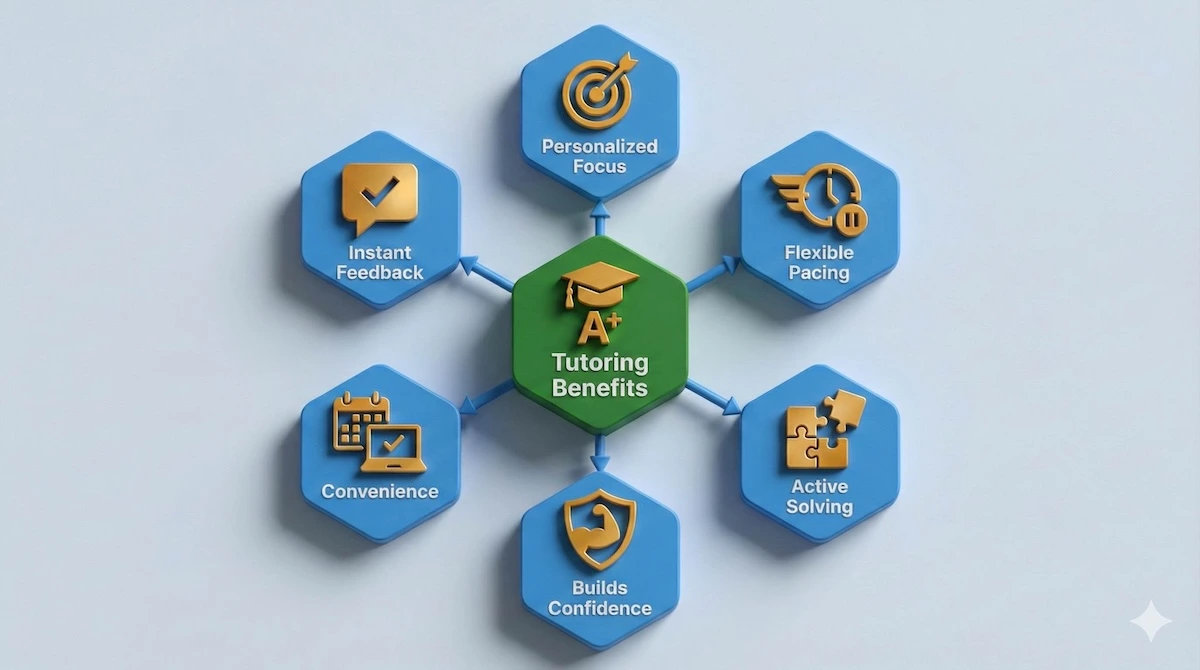
Online tutoring offers six key advantages that traditional classroom settings often cannot provide.
These combined factors — especially confidence and immediate feedback — create a positive feedback loop that accelerates learning far faster than classroom study alone.
Physics Tutoring Online
Today most physics tutoring happens online. This gives students around-the-clock access to tutors from anywhere. Busy teens and college students love the flexibility: they can schedule a session after school, late at night, or on weekends. Online platforms often use digital tools (like virtual whiteboards, shared simulations, and video chat) to make lessons interactive. This means you still get step-by-step instruction just as you would in person, but without leaving home.
For example, imagine needing help with a circuit diagram or a quantum problem at 9 PM. With online tutoring, you can log on and work live with an expert immediately. This convenience is a game-changer for many learners. According to educators, students who use online tutoring regularly often develop better study habits and see improved results. And with no travel time, even students in remote locations (U.S., UK, Gulf, etc.) can connect with top tutors worldwide.
Students preparing for high-stakes exams can also find specialist support — for instance, those studying for AP Physics benefit from tutors who know the exact curriculum and exam format. Understanding the top benefits of learning physics online can help you decide whether this mode of study suits your goals.
What Subjects Can Tutors Help With?
“Physics” is a huge field, so different tutors specialize in different areas. A general physics tutor can cover broad topics, while some may focus on niche subjects. Here are some examples of subtopics a physics tutor might cover.
Subfields of Physics: Antenna Theory, Applied Physics, Astronomy, Astrophysics, Atomic Physics, Biophysics, Classical Mechanics, College Physics, Computational Physics, Condensed Matter Physics, Cosmology, Electricity and Magnetism, Electromagnetism and Electrodynamics, Electrostatics, Engineering Physics, Galactic and Space Dynamics, High School Physics, Kinematics, Kinetics, Laser Physics, Modern Physics, Neurophysics, Newtonian Mechanics, Nuclear Physics, Optical Amplifier, Optical Fiber Communication, Optical Instruments, Optics, Orbital and Celestial Mechanics, Oscillations, Particle Physics, Photonics, Physics Lab, Plasma Physics, Polymer Physics, Projectile Motion, Psychophysics, Quantum Computing, Quantum Field Theory (QFT), Quantum Mechanics, Quantum Optics, Radiation Physics, Radiographic Physics, Semiconductor Physics, Solid State Physics, Special Relativity, Statistical Mechanics, Thermal Physics, Transformers, Waveguides, and Waves and Optics.
That list is exhaustive, but it can be hard to digest. Let’s organize these topics visually so you can quickly identify exactly where you need support.
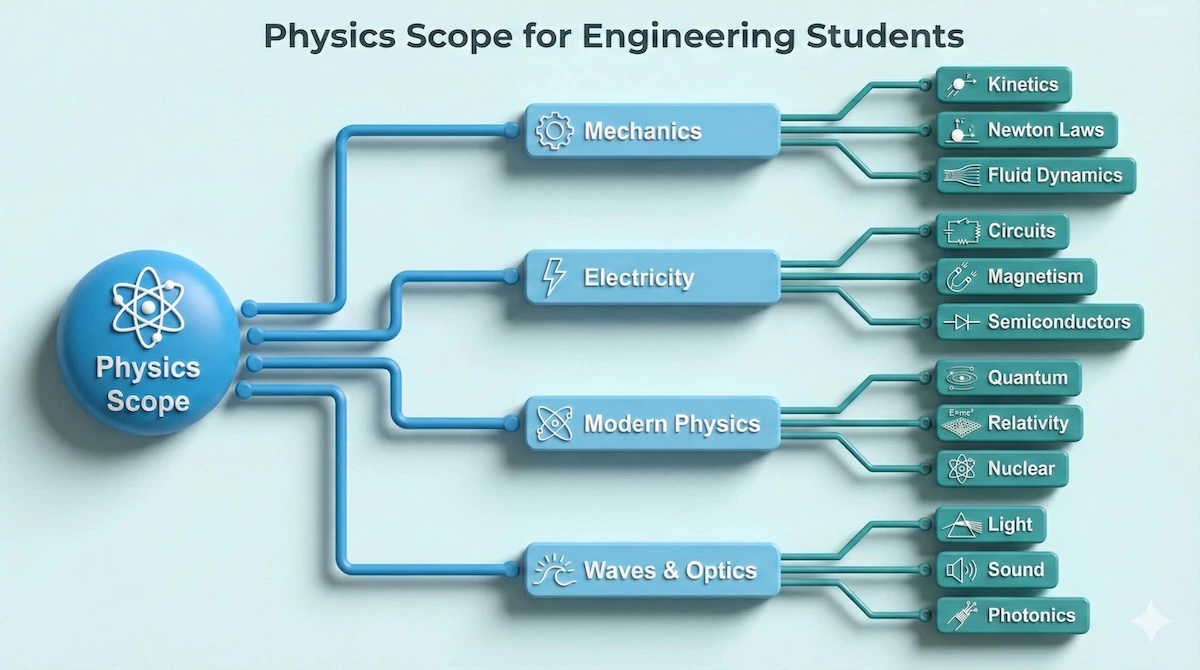
From classical mechanics to quantum theory, expert tutors specialize in every branch of the physics family tree.
Whether you are stuck in the classical mechanics branch or struggling with modern quantum theory, there is a specialist tutor for that specific node of the physics tree.
In practice, if you’re taking a physics course, you’ll find tutors for your exact class level. High school students might need help with topics like mechanics or wave optics, while college students might seek a tutor for E&M or quantum. Some tutors even help with lab reports or project work, covering both theory and hands-on experiments. Having a tutor familiar with your coursework (AP Physics, IB Physics, calculus-based college physics, etc.) makes the sessions much more effective.
Students tackling two-dimensional problems can also benefit from resources like this guide on motion in two dimensions in physics, which complements what a tutor covers in session. For broader strategies, the guide on how to approach complex topics in physics is equally useful.
How to Find a Physics Tutor
If you decide you need help, there are a few steps to find the right tutor or service.
Finding the right mentor doesn’t have to be a guessing game. Follow this proven step-by-step workflow to ensure you hire the perfect match.
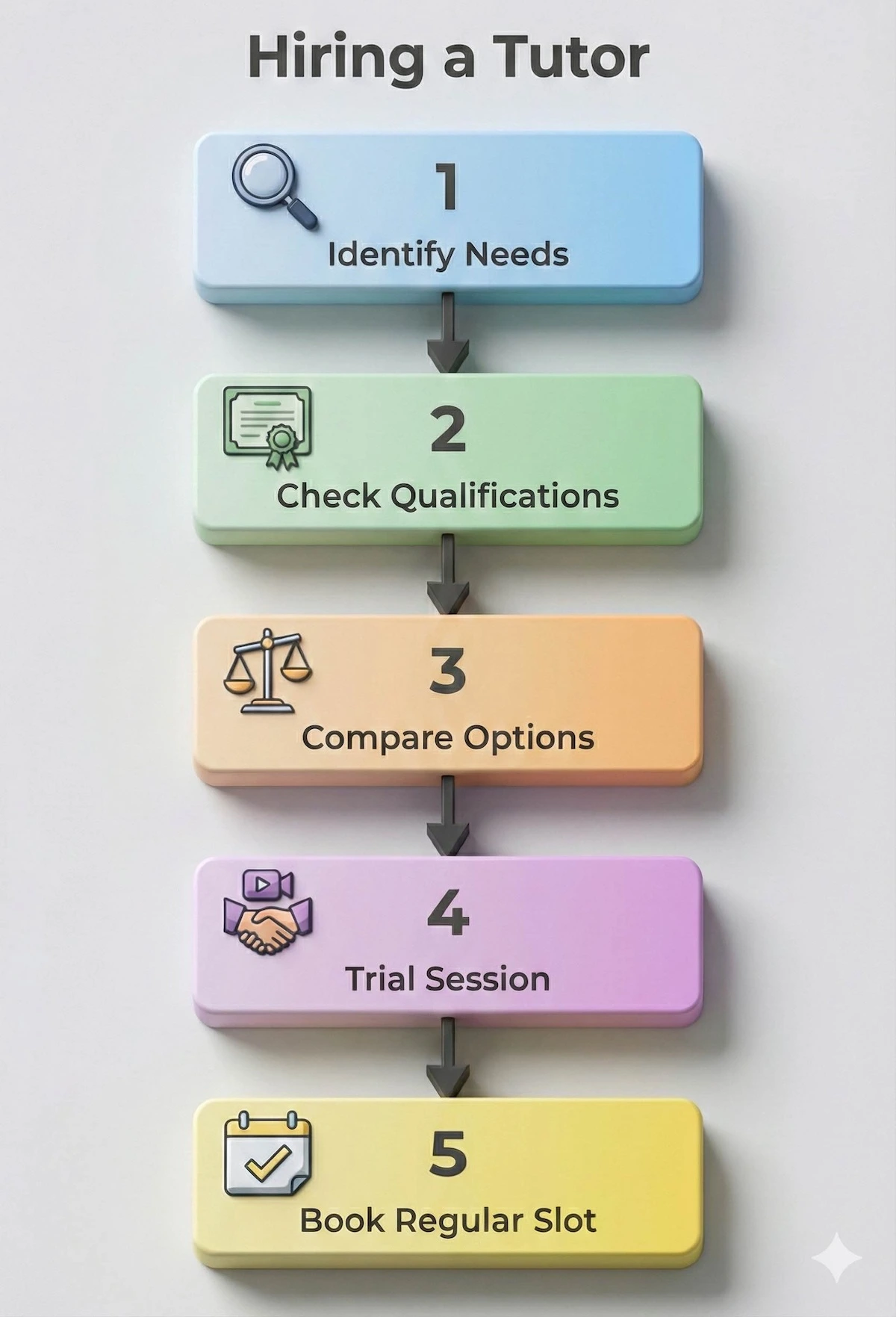
Follow this simple five-step process to ensure you find a tutor who matches your specific learning needs.
By following this sequence, specifically the ‘Trial Session’ step, you avoid locking yourself into a commitment before you are sure the teaching style works for you.
- Identify your needs: Pinpoint which topics or assignments are giving you trouble. Is it your online homework, an upcoming exam, or a lab report? Knowing this helps you find a tutor with the right expertise.
- Check qualifications: Look for tutors with strong backgrounds — e.g. physics majors or experienced instructors. A good tutor explains concepts clearly and has good reviews.
- Compare options: You can search for private tutors, ask at school, or use online platforms. Many tutoring websites list hourly rates and tutor profiles so you can choose someone that fits your level (grade and subject).
- Trial session: Many services offer a short trial or introduction. Use it to see if the tutor’s teaching style works for you. Good chemistry between student and tutor is important!
- Book sessions: Once you’re comfortable, schedule regular sessions. Reputable platforms (like MyEngineeringBuddy) often let you hire a physics tutor online with just a few clicks. You can also pay per session or hour without any subscription commitments.
When searching, keywords like Physics tutor online or Physics homework help will turn up many tutoring companies and freelance tutors. You should see what each offers: some focus on step-by-step solutions, while others emphasize teaching concepts. Read testimonials or ask for sample lessons. Always ensure the help is aimed at your learning, not just getting answers. (Legitimate tutors will walk you through the reasoning, not just give you a quick fix.)
Those preparing specifically for the AP Physics 1 exam can find dedicated support — a tutor for AP Physics 1 will know the exact scope and style of questions on that paper.
Cost and Value of Tutoring
The price of tutoring varies by subject and tutor expertise. As a benchmark, most academic tutors charge around $20–$40 per hour. Physics is a technical subject, so tutors on the higher end of that range usually have strong credentials (like a college degree in physics or engineering). Even at $40/hr, many parents and students find it worth the cost: it is often much cheaper than extra college courses or remedial classes, and the targeted help pays off on tests and grades.
Consider the time saved: a few hours with a tutor can clear up confusion that might otherwise take you many days to self-study. Plus, strong physics foundations will pay dividends in future science and engineering classes. Some sites (including MyEngineeringBuddy) emphasize value for money by offering multiple subjects and flexible packages. Always ask in advance about pricing — reputable tutors will be clear about rates based on grade level, topic difficulty, and session length.
Physics Homework and Assignment Help
Physics homework help or physics assignment help is a common phrase used by tutoring services. What does it mean? In essence, it’s the same tutoring process focused specifically on homework or project tasks. A tutor will typically go through your homework problems with you, explaining each step. The goal is for you to understand and learn from the solutions, not just to see answers. In many cases, tutors will also teach tricks for checking work and avoiding common mistakes.
There is a fine line between getting help and cheating yourself out of an education. Use this comparison guide to ensure your tutoring sessions remain ethical and productive.
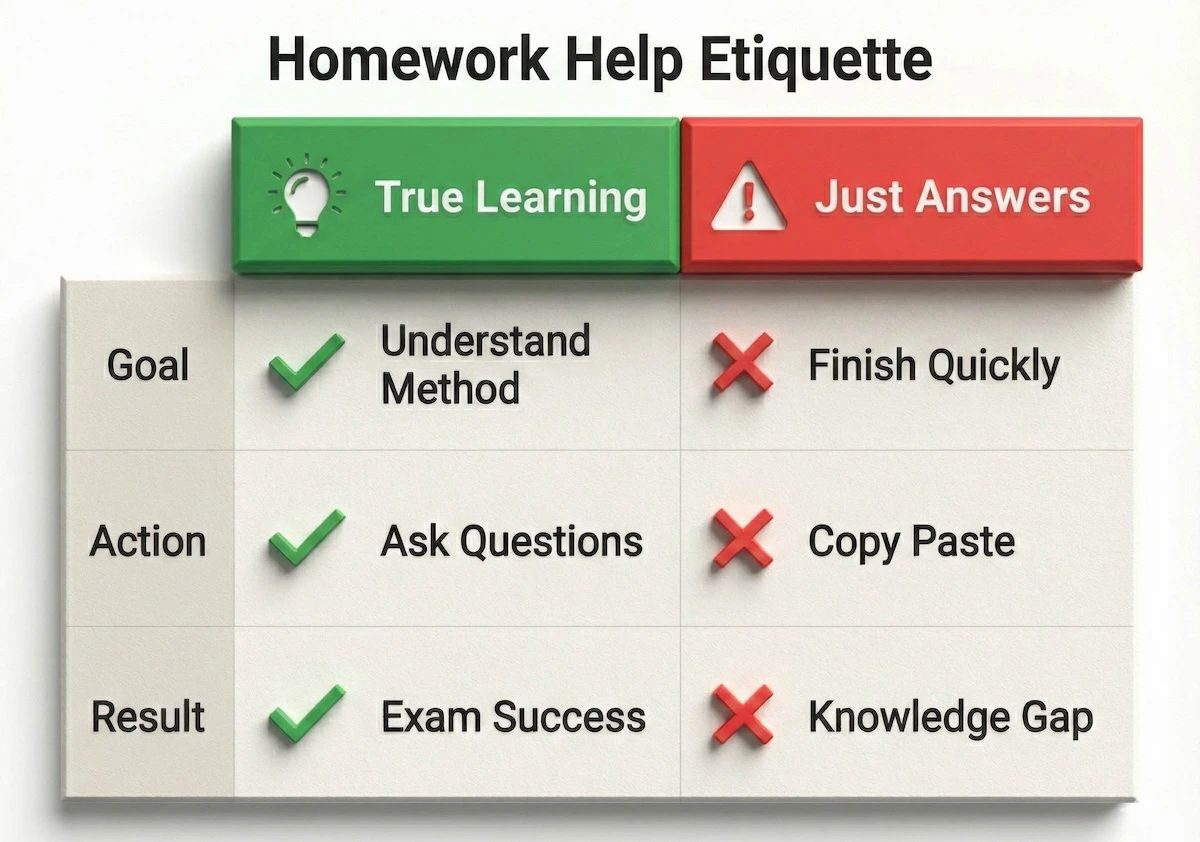
Use tutoring to understand the ‘how’ and ‘why’ of a problem, rather than just seeking the final answer.
Always aim for the ‘True Learning’ column — where you ask questions and understand the method — rather than the ‘Just Answers’ trap.
It’s important to use homework help ethically. If you’re really stuck or under time pressure, getting guidance is fine. But the learning comes when you participate. For example, you might ask your tutor to explain a homework solution and then re-do it yourself. That way the tutor is reinforcing the teacher’s lessons, not replacing them. In fact, physics tutoring and teaching go hand-in-hand. Think of the tutor as your private physics coach: they work together with your classroom learning to strengthen it.
Students who want to understand the specific advantages of working with a specialist can read more about the benefits of an AP Physics tutor online. For students studying A-Level, working with an A-Level Physics teacher online who knows the syllabus in depth can make a significant difference to exam outcomes.
Is Online Physics Tutoring Right for You?
If you’re a student (or parent/teacher of one) wondering whether to seek one-on-one physics instruction, consider these points. Are you struggling to keep up in class? Do you have upcoming exams (like AP or GCSE Physics) that need extra preparation? Do you get frustrated working through certain problems alone? One-on-one help can make a big difference in these situations.
Conversely, if you’re already doing well but want to challenge yourself, tutoring can introduce you to advanced topics and problem-solving techniques. Remote or international students (for example in the Gulf) also benefit greatly, since quality tutors may not be available locally. Online tutoring overcomes that hurdle. And even in the UK or US, many students simply prefer the convenience of digital lessons.
Ultimately, tutoring works when you use it actively: ask questions, do practice problems, and treat the sessions as mini-classes. In return, you’ll likely see your understanding grow, your homework mistakes shrink, and your grades improve.
Frequently Asked Questions About Physics Tutoring
What is physics tutoring?
Physics tutoring is one-on-one (or small group) instruction where an expert tutor helps you learn physics concepts and solve problems at your own pace.
How do I find physics tutoring online?
You can search tutoring platforms or service websites; for example, MyEngineeringBuddy lets you quickly find an online physics tutor by grade and topic.
What is physics homework help?
Physics homework help refers to a tutor guiding you through your assignment problems step-by-step, so you learn the methods while completing your work.
How can a physics tutor improve my grades?
A physics tutor identifies and explains concepts you find confusing, provides practice problems, and gives feedback, which strengthens your understanding and boosts exam scores.
What subjects can physics tutors help with?
Physics tutors cover everything from basic mechanics and thermodynamics to advanced topics like electromagnetism, quantum physics, optics, and even specialized fields like astrophysics or engineering physics.
Is hiring a physics tutor worth the cost?
Yes — many families find the $20–$40/hr investment is worthwhile because targeted physics tutoring often leads to significantly better grades and deeper understanding.
Related Reading
******************************
This article provides general educational guidance only. It is NOT official exam policy, professional academic advice, or guaranteed results. Always verify information with your school, official exam boards (College Board, Cambridge, IB), or qualified professionals before making decisions. Read Full Policies & Disclaimer , Contact Us To Report An Error