Mastering Anthropology: Your Guide to Academic Success with Online Tutoring

Anthropology is a dynamic, interdisciplinary field with broad career applications. Students can overcome its unique academic challenges, like complex writing and critical thinking, with online anthropology tutoring—a proven, high-impact method for boosting grades and building skills for a successful career.
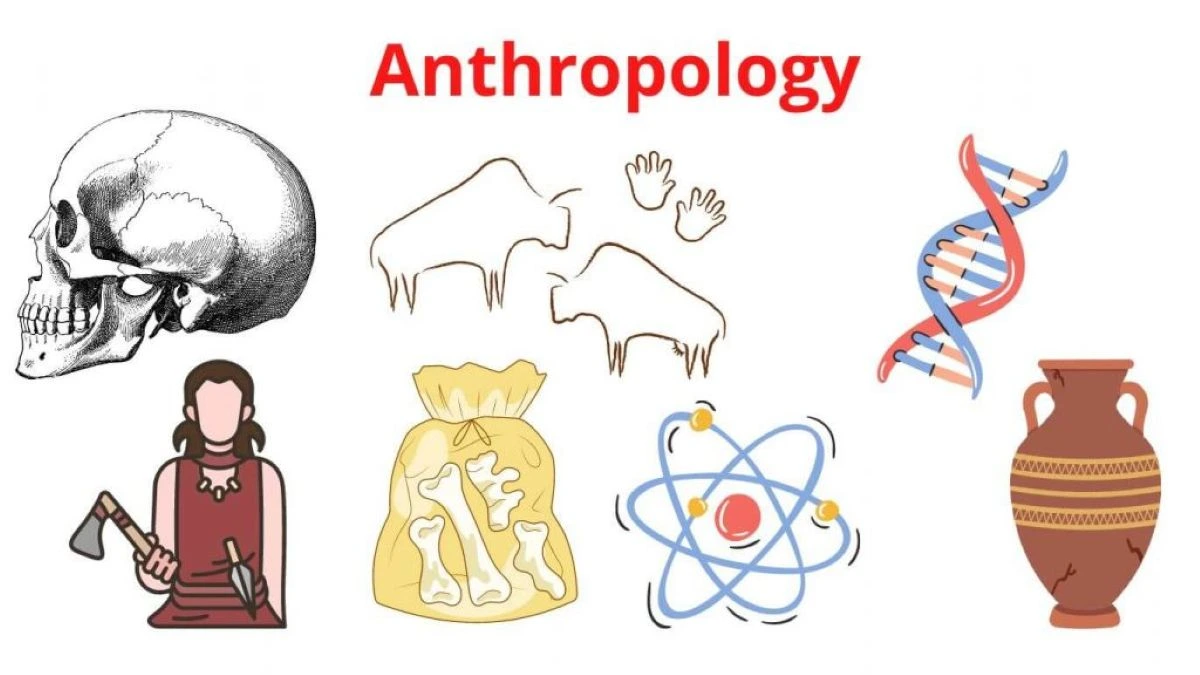
Beyond the Bones: Unpacking the Surprising World of Anthropology
Every semester, it’s the same story. A student, let’s call her Sarah, enrolls in an introductory anthropology course. She’s picturing Indiana Jones, dusty pyramids, and maybe a few dinosaur bones. But a few weeks in, she’s lost. The textbook isn’t about ancient tombs; it’s about cultural relativism, kinship structures, and linguistic phonemes. This initial anthropology teaching experience isn’t what she expected, and she starts to wonder if she’s made a terrible mistake. Sarah’s confusion is a universal starting point for many students encountering this rich, but often misunderstood, field.
To navigate this confusion, it helps to first visualize exactly what the discipline covers. Anthropology isn’t just one thing; it is a holistic field divided into four distinct yet interconnected branches.
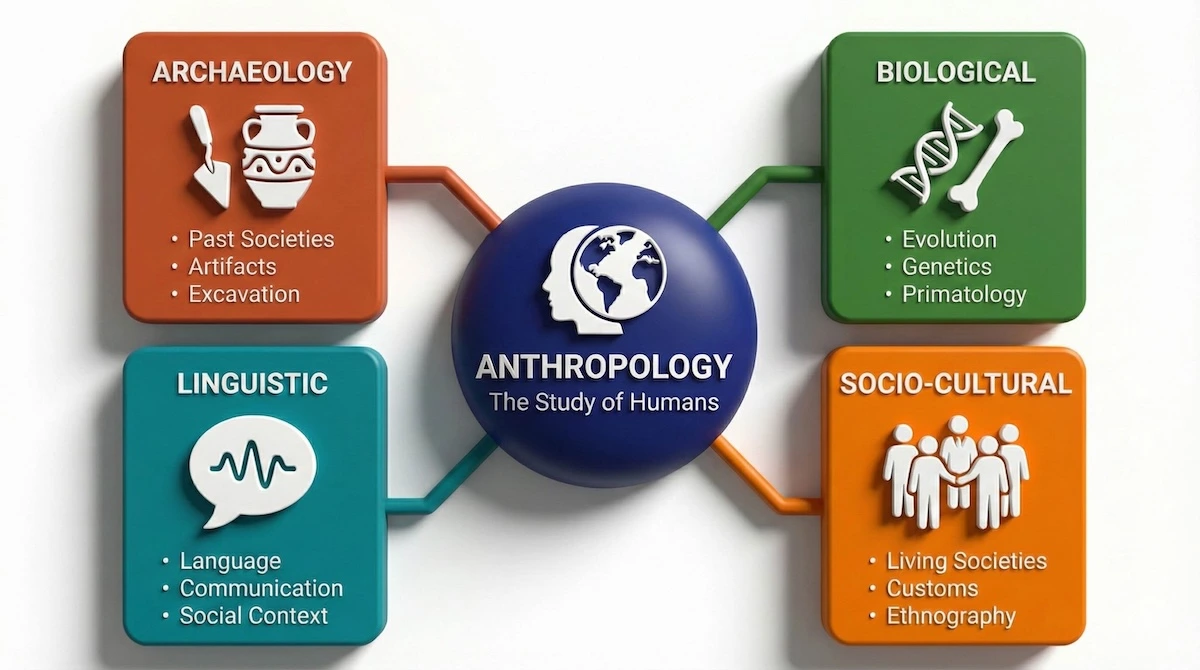
The ‘Four-Field Approach’ integrates these distinct disciplines to form a holistic understanding of humanity.
As you can see, the field spans everything from ancient history to modern linguistics, which is why a specialized tutor can be so valuable in navigating these diverse areas.
Busting the Myths: It’s Not All Mysticism and Dinos
One of the biggest misconceptions about anthropology is that it is a mystical study of ancient civilizations or a branch of paleontology. This perception is rooted in popular culture but is far from the truth. Anthropology is, at its core, the holistic study of humans—our past, present, and future, across all cultures and places. It is an inherently interdisciplinary field that pulls from the humanities and sciences alike, which is why it has been called “the most humanistic of the sciences and the most scientific of the humanities”. For this reason, anthropologists do not study dinosaurs, as these creatures were not around at the same time as humans.
Pop culture has given us a very specific, and often wrong, idea of what anthropologists do. Let’s look at the reality behind the Hollywood image.
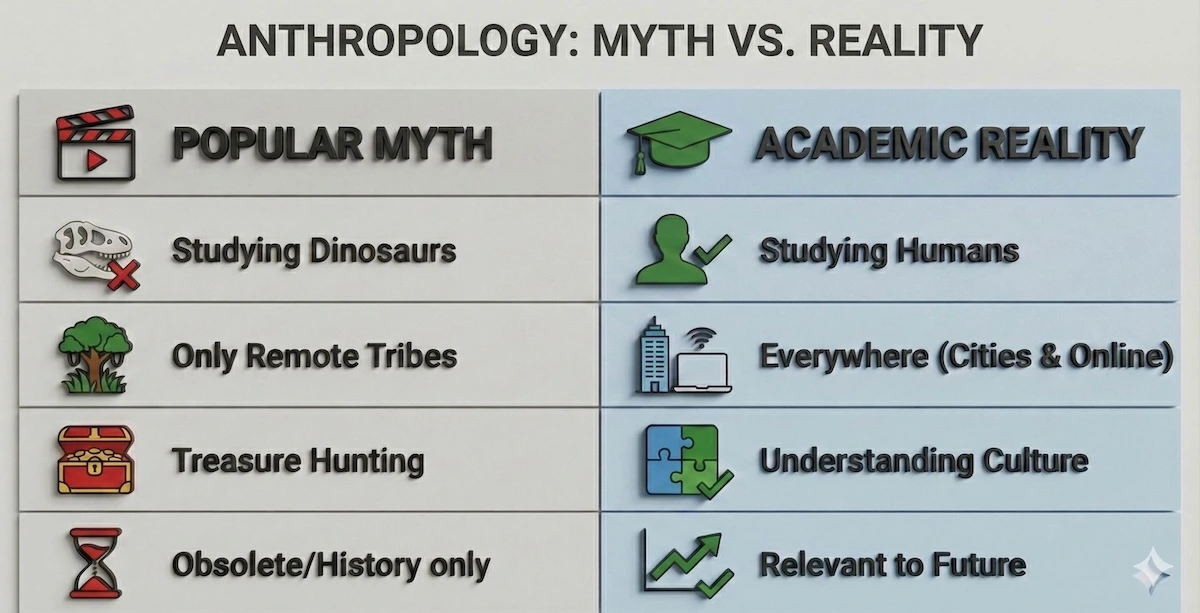
Don’t let Hollywood fool you—anthropology is the study of humans, not dinosaurs.
Moving past these myths is the first step toward academic success. As the comparison shows, the real work is about understanding human culture, not chasing dinosaurs.
Furthermore, many people assume the discipline is only about the study of ‘tribal’ peoples or cultures in ‘remote’ areas. This is another fundamental misunderstanding. Anthropology is the study of human beings through space and time, which means it can be applied to everything and everywhere, from ancient societies to the dynamics of a modern workplace or a contemporary online community. The field’s unique four-field approach—archaeology, biological, linguistic, and socio-cultural anthropology—makes it exceptionally flexible and holistic. Navigating these diverse subfields and understanding their interconnectedness is a core skill students must learn, and it is where a specialized anthropology tutor can provide invaluable guidance.
A Unique Contradiction: The Art of Seeing from the Inside and Out
What makes the discipline truly unique, yet deeply challenging, is its central paradox. Anthropology requires two seemingly contradictory approaches: looking from the inside out and simultaneously looking from the outside in. The “from the inside” stance involves sharing the point of view of the people being studied, immersing oneself in their lives and experiences to understand their perspective. This is a deeply humanistic and empathetic endeavor. At the same time, the “from the outside” stance requires an academic to step back and contribute to a general theory about what human beings are like as a species, detached from any specific cultural viewpoint.
This mental switch between ‘being inside’ and ‘looking from the outside’ is difficult to grasp with words alone. The visual below illustrates this critical change in perspective.
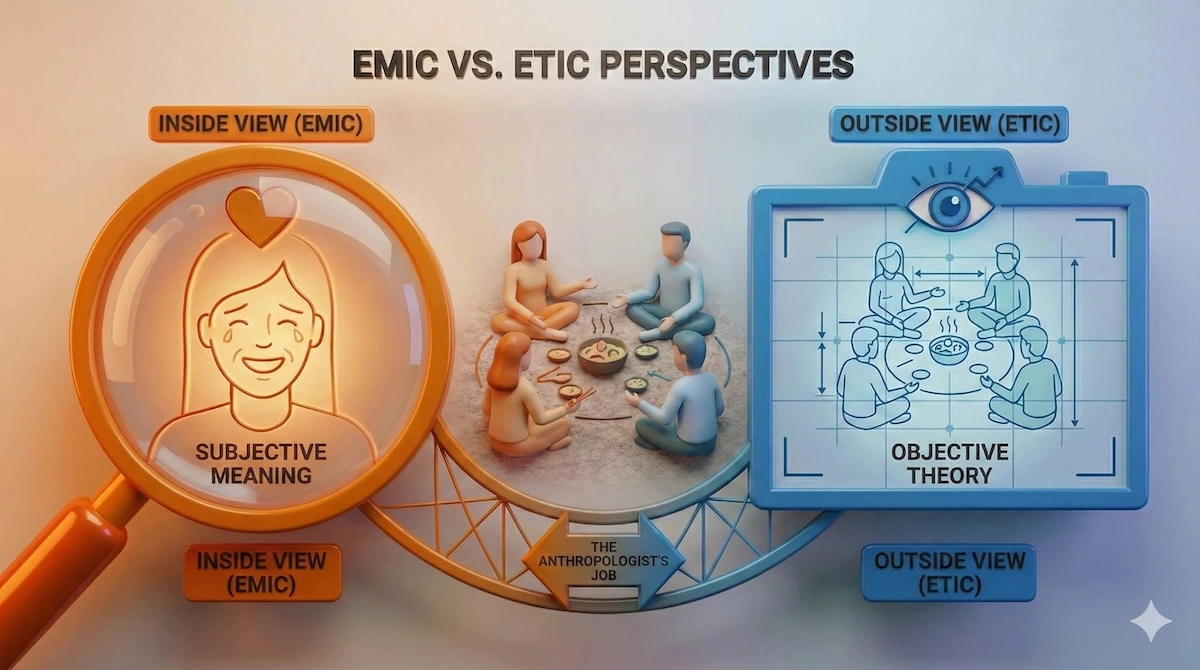
Mastering the balance between the ‘Inside’ (Emic) and ‘Outside’ (Etic) perspectives is crucial for academic success.
Mastering this ‘Emic’ to ‘Etic’ shift is often the difference between a B and an A grade on your papers.
Navigating this conceptual tension is a core skill students must master. It is the difference between merely observing a ritual and understanding its profound social meaning within a community’s unique worldview. This dual-perspective thinking is not intuitive, and it is often where students first realize they need help. They may understand the facts of a case study but struggle to apply a theoretical framework to it without imposing their own biases. A skilled anthropology tutor can guide them through this cognitive shift, teaching them how to maintain a scholarly, objective perspective while also showing respect for the subjective experiences of the people they study. This fundamental intellectual challenge is a primary reason students seek specialized support.
The Unexpected Pathways: What an Anthropology Degree Can Really Do
If anthropology isn’t just about digging up artifacts, what are the career opportunities? For many students and their parents, this is the critical question. The reality is that the skills learned in an anthropology program are highly valued and incredibly versatile, opening doors to a wide array of fields well beyond academia or museums. The subject’s interdisciplinary nature—combining insights from biology, history, sociology, and linguistics—prepares students for complex, real-world problem-solving.
From Theory to Practice: An In-Demand Skillset
While traditional academic jobs are limited, the demand for applied anthropologists is on the rise. The outdated perception of anthropology as a major with limited professional prospects is being challenged by a growing need for its unique skillset. Corporations now rely on anthropologists to understand consumer behavior and diverse workforces. Governments and non-profits use their expertise for policy analysis, community development, and public health initiatives. The ability to understand human behavior and cultural context is a critical asset in today’s globalized world, where businesses operate across international boundaries and organizations serve diverse populations.
In fact, a degree in anthropology suggests an appreciation for cultural differences and an ability to work with people from all walks of life—abilities that employers highly value. It is becoming increasingly clear that the value of an anthropology degree is not in the job title it confers, but in the flexible, analytical, and empathetic toolkit it provides. Students often seek an anthropology tutor online to help bridge the gap between abstract concepts and practical applications, a key step toward securing a professional career.
Career Outlook and Salaries: The Data Speaks for Itself
The financial and professional rewards of an anthropology degree are often underestimated. According to the U.S. Bureau of Labor Statistics (BLS), the median annual wage for anthropologists and archeologists was $64,910 in May 2024, with the highest 10 percent earning more than $104,510. Furthermore, the BLS projects a 4% growth for anthropologists and archeologists from 2024 to 2034, which is about as fast as the average for all occupations.
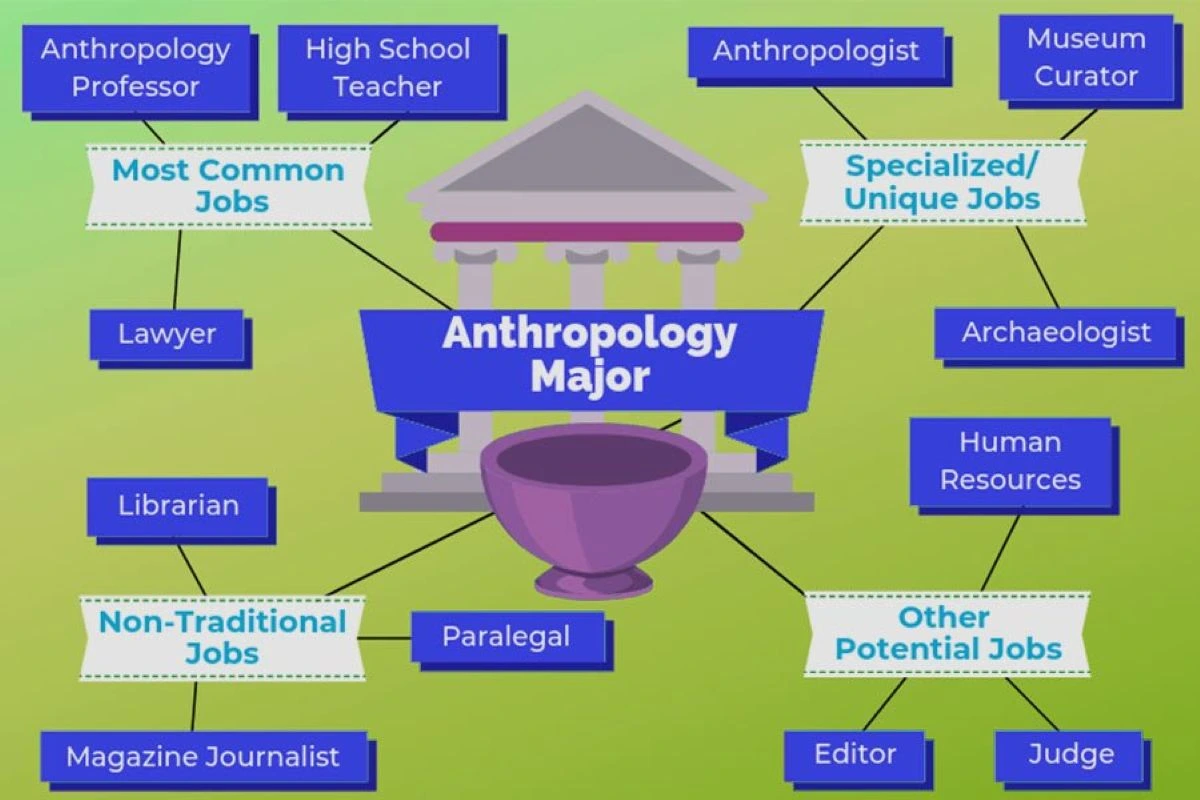
The job market is expanding beyond its traditional research and academic settings. Employers in management consulting, engineering services, and government are increasingly hiring professionals with an anthropology background. A bachelor’s degree in anthropology can also lead to high-paying jobs in related fields like human resources management, market research, and public health. This broad range of professional opportunities demonstrates the clear return on investment for mastering this subject.
When we look at the numbers, the financial outlook is stronger than many expect. Here is a breakdown of the current salary potential for anthropology graduates.
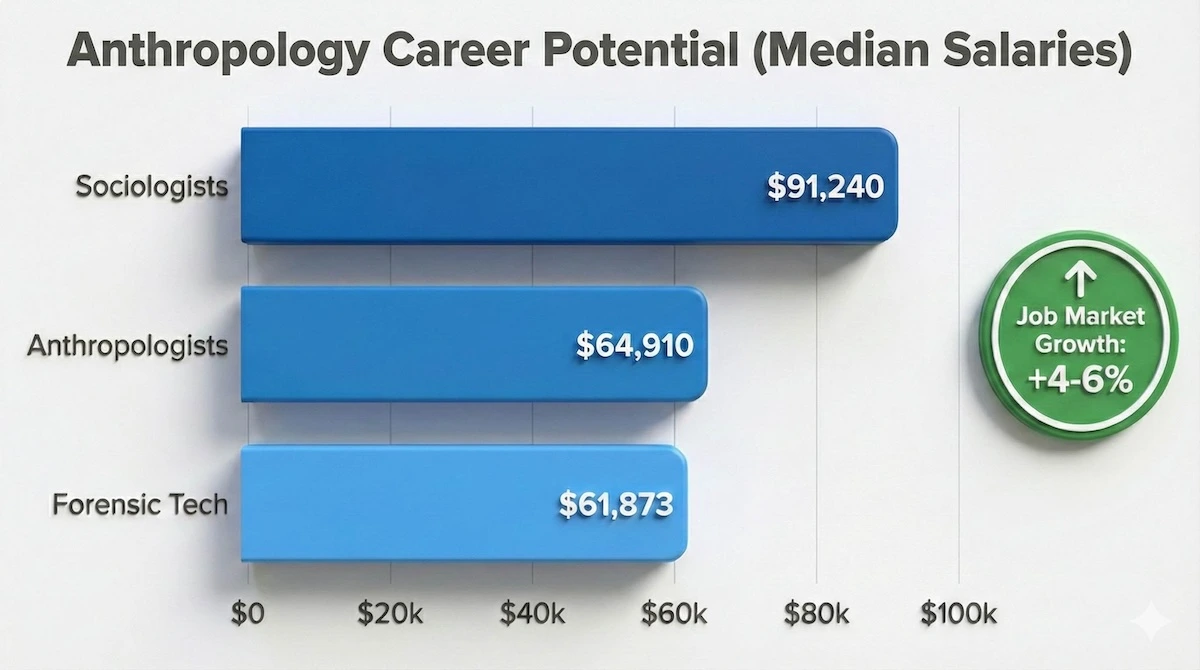
Anthropology skills are in demand—sociologists and anthropologists command competitive salaries in a growing market.
With growth rates holding steady and salaries competitive with other social sciences, the degree offers a solid return on investment.
Table: Diverse Career Paths for Anthropology Majors
This table illustrates the wide range of professional opportunities available to graduates, showcasing the return on investment for mastering this subject.
| Job Title | Median Annual Salary (2024) | Projected Job Growth (2024-2034) |
|---|---|---|
| Anthropologists and Archeologists | $64,910 | 4% |
| Sociologists | $91,240 | 2.38% |
| Forensic Science Technicians | $61,873 | 6.43% |
1Data from the U.S. Bureau of Labor Statistics and College Board
The Academic Gauntlet: Common Hurdles in Anthropology
The road from student to successful professional is paved with unique academic challenges. As a student, a person will be faced with assignments that demand more than just rote memorization or standard five-paragraph essays. Anthropology coursework requires a new way of thinking and writing, which can be a major source of stress for students and their families.
Cultural Relativism vs. Ethnocentrism
One of the first major hurdles is learning to think “anthropologically.” This means temporarily suspending one’s own assumptions and biases about the world to understand other cultures on their own terms. This is called cultural relativism, and it is a core principle of the discipline. A common error is ethnocentrism, which involves judging other cultures by the standards of one’s own, often leading to judgmental writing and biased analysis. An expert anthropology teacher can help students recognize and avoid this, teaching them how to develop a cognitive muscle that sees cultural differences without arranging them in a hierarchy.
Mastering the “Thick Description”
Assignments in anthropology often require “thick ethnographic description”. This means going beyond a simple report to create a rich, evocative description of events, people, and interactions. It is a blend of scientific observation and narrative storytelling, where a student must use their own field notes or interviews as evidence. This is a point where many students struggle, finding it difficult to transition from traditional academic writing to a more personal, descriptive style that still maintains scholarly rigor. This challenge requires a unique form of guidance, as the problem is not a lack of knowledge but a need for a new way to write and express ideas.
Writing a ‘thick description’ isn’t just about adding more words; it’s a specific four-step process. Follow this flowchart when drafting your next ethnography assignment.
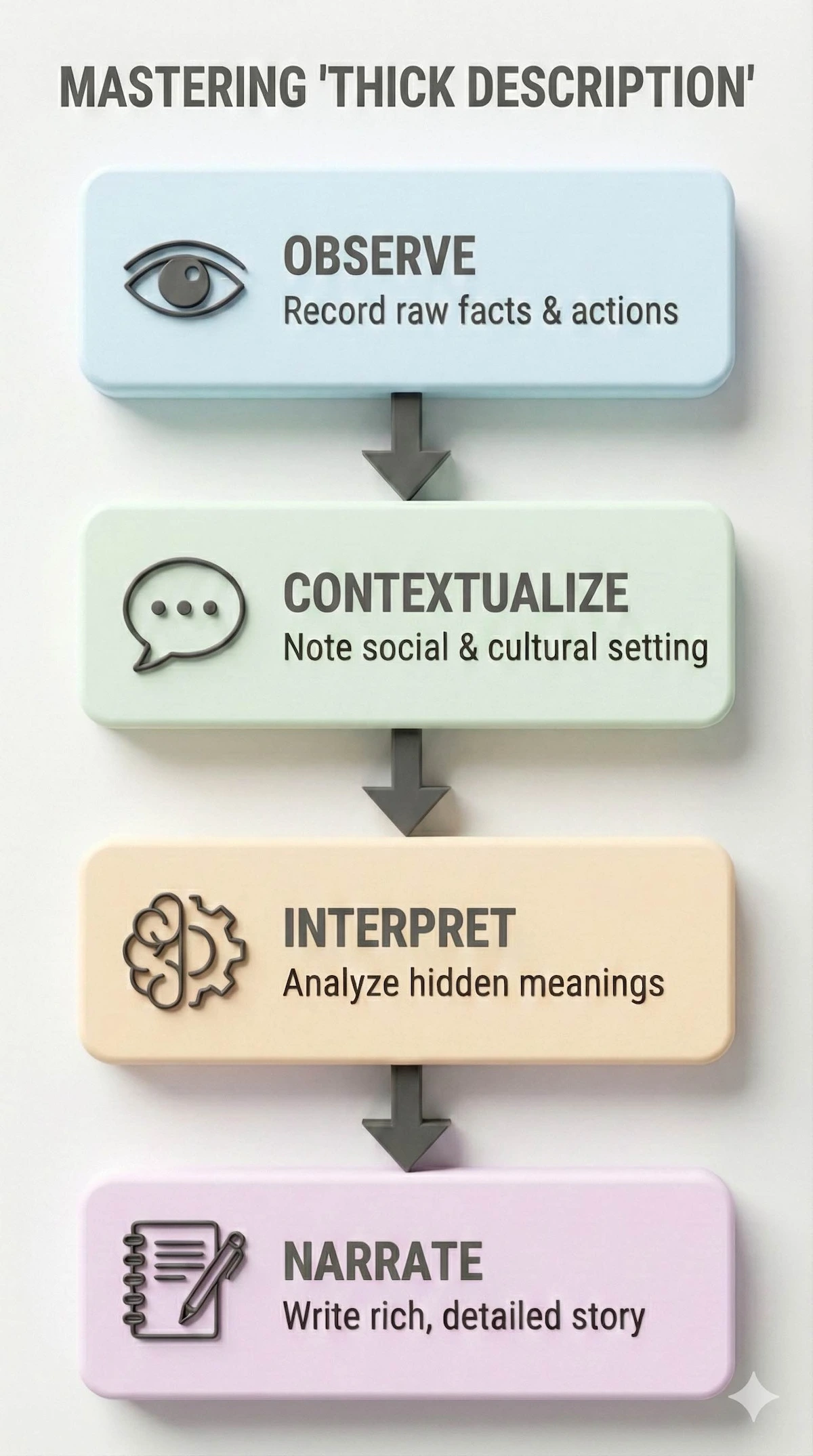
Move beyond simple reporting—follow these four steps to master the art of ‘Thick Description’ in your essays.
By moving systematically from observation to narration, you ensure your writing meets the high standards of anthropological analysis.
When facing these complex assignments, a student might look for anthropology homework help or anthropology assignment help. The unique nature of these tasks means they require guidance beyond what a general academic support center can provide. The challenge is not just what to write, but how to write it in a way that respects the subject’s core principles and demonstrates a deep understanding of its intellectual demands. This is also why students often seek an anthropology hw help expert.
The Proven Edge: How Expert Guidance Transforms Your Learning
For many students, the complexity of anthropology feels like an insurmountable wall. But what if there was a proven, data-backed way to overcome these challenges? The solution lies in one-on-one academic support.
The Unprecedented Power of One-on-One Tutoring
The evidence for one-on-one tutoring is overwhelming and has been for decades. In a groundbreaking 1984 study, educational psychologist Benjamin Bloom found that students who received one-on-one tutoring performed two standard deviations higher than the average student in a traditional classroom. This is not a small boost; it means that students who regularly engage in tutoring performed better than 98% of their peers. This finding reframes the conversation around academic support, showing that anthropology tutoring is not just a crutch for struggling students but a powerful tool for achieving mastery and excellence.
The data from Bloom’s research proves that one-on-one tutoring is a highly effective way to fundamentally shift a student’s academic potential, helping them move from a C-average to a mastery level that is rarely achieved in a traditional classroom setting. This makes tutoring a valuable investment for students at all levels, from those who need to catch up to those who are striving to get ahead.
Real-World Results: Higher Grades, Brighter Futures
This isn’t just theory. Institutional data confirms Bloom’s findings in practice. A study from San Bernardino Valley College found that students who used their tutoring services had an overall success rate 7% higher than their peers who did not. This success rate jumped to an impressive 13% for students in STEM courses. These statistics show a clear, measurable benefit to seeking academic support. The data proves that with consistent, expert help, a student’s chances of passing a difficult course, or achieving a top grade, are significantly higher.
Despite these clear benefits, a significant portion of students who could benefit from tutoring do not use it. This may be due to a variety of factors, including logistical barriers, cost concerns, or a feeling of stigma. Online tutoring, however, is uniquely positioned to address these issues, offering a flexible, affordable, and private environment that encourages students to seek the help they need without hesitation. It is a way to bridge the gap between knowing that help is available and actually utilizing it.
Table: The Impact of Tutoring on Academic Success
This table provides a snapshot of the tangible benefits of tutoring, using real-world data.
| Academic Year | Success Rate for Tutored Students | Campus-Wide Average Success Rate |
|---|---|---|
| 2011-2012 | 76% | 68% |
| 2012-2013 | 75% | 69% |
| 2013-2014 | 74% | 67% |
| 2014-2015 | 73% | 67% |
*Based on a study of students at San Bernardino Valley College
More Than Just a Class: The Rise of Online Anthropology Tutoring
The online education market is experiencing explosive growth, projected to reach $23.73 billion by 2030, which is more than double its size in 2024. This is not just a post-pandemic trend; it is a fundamental shift driven by technology and a desire for flexible, personalized learning. For a student facing a complex anthropology hw help crisis, an online solution offers immediate, tailored support that traditional methods can’t match.
Unparalleled Flexibility and Accessibility
Online tutoring removes geographical barriers, allowing a student in London to work with an expert anthropology tutor in California. Sessions can be scheduled at any time, from the comfort of home, which is ideal for students with busy schedules. This level of convenience is a major reason why the on-demand tutoring segment now accounts for over 76% of the online tutoring market revenue, demonstrating a clear preference among consumers for flexible, immediate support. This accessibility is particularly important in a field like anthropology, where an expert tutor with a specific subfield specialization may be difficult to find locally.
The growth of this market is a global phenomenon. While North America dominated the market in 2024, holding a revenue share of over 35%, the Asia Pacific region is identified as the fastest-growing market. This global trend underscores that online academic support is becoming the new standard for students and their families worldwide.
Technological Innovations for Deeper Learning
Online tutoring platforms leverage advanced tools that enhance the learning experience. Features like real-time screensharing, interactive whiteboards, and session recording allow tutors to break down complex concepts visually and enable students to revisit the material later. These tools make learning more interactive and effective, especially for a subject like anthropology that requires visual and conceptual understanding. For instance, a tutor can guide a student through the analysis of a specific ethnographic map or break down a complex theoretical diagram in real time.
Additionally, advanced platforms offer data tracking and early alert programs to identify when a student is struggling with a particular concept, enabling immediate intervention. This proactive approach to learning is a significant advantage over traditional methods, ensuring that small problems are addressed before they become major academic hurdles. The ability of tutors to provide “personalized support tailored to each student’s unique needs” is what sets online tutoring apart. These technological advantages, combined with the convenience of remote learning, make anthropology tutoring online and working with an anthropology tutor online the most effective choice for the modern student.
Your Journey Starts Now: Finding Your Expert Anthropology Tutor
Whether a student is struggling with a specific anthropology assignment help query, a parent is looking to give their child a competitive edge, or a teacher is seeking a supplementary resource, the path to success is clear. The data confirms that expert one-on-one anthropology tutoring online is the most effective way to not only improve grades but also to develop the critical thinking, communication, and analytical skills that are crucial for a successful career. This is not just a solution for a single course; it is an investment in a student’s long-term academic and professional future.
The entire academic journey, from initial confusion to achieving mastery, is a process that can be greatly accelerated with the right guidance. By addressing the specific intellectual challenges of anthropology, from understanding complex theories to mastering ethnographic writing, an expert tutor provides the support needed to turn a difficult subject into a rewarding intellectual pursuit. It is time for a student to take control of their academic journey. They can hire a Anthropology tutor who understands the unique challenges of the discipline and is equipped to help them master them, setting them on a path toward academic excellence and a world of career possibilities.
Frequently Asked Questions
Q1. What makes anthropology a difficult subject?
Its difficulty stems from its interdisciplinary nature and the need to combine insights from multiple fields like history, biology, and sociology.
Q2. Is anthropology tutoring online effective?
Yes, online tutoring has been proven highly effective, offering personalized support, flexibility, and advanced digital tools.
Q3. How can a tutor help with my anthropology homework?
A tutor can provide tailored guidance on complex theories, writing ethnographic descriptions, and developing critical thinking skills.
Q4. Can an anthropology degree lead to a good job?
Yes, an anthropology degree provides versatile skills for careers in fields like business, government, and healthcare with competitive salaries.
Q5. What is a thick ethnographic description?
It is a detailed, rich, and evocative form of writing that brings to life your experiences and observations for the reader.
Q6. Is online tutoring more affordable than in-person?
Online tutoring is often more affordable due to flexible subscription models and a wider access to tutors at varying rates.
Related Subjects
Archaeology
Biological Anthropology
Ethnolinguistics
Forensic Anthropology
******************************
This article provides general educational guidance only. It is NOT official exam policy, professional academic advice, or guaranteed results. Always verify information with your school, official exam boards (College Board, Cambridge, IB), or qualified professionals before making decisions. Read Full Policies & Disclaimer , Contact Us To Report An Error