




~1 min
Average Reply Time
~1 hour
To Be Matched With A Tutor
30 Min Trial
75% Find Their Tutor On The 1st Trial
$20-35+/hr
Premium Yet Affordable Learning
Struggling with primate evolution, skeletal analysis, or human variation? Most students hit the wall around week four — here’s how to get past it.
Biological Anthropology Tutor Online
Biological anthropology is the scientific study of human evolution, biological variation, genetics, and primate behaviour. It equips students to analyse fossil records, interpret skeletal morphology, and apply evolutionary theory to human populations.
MEB offers 1:1 online tutoring and academic guidance in 2800+ advanced subjects — including Biological Anthropology. Whether you’re searching for a Biological Anthropology tutor near me or need flexible online sessions that fit your time zone, MEB matches you with a tutor who knows your exact syllabus. You understand the material, work through real problems, and submit your own assignments. If you’re a student in social science courses looking for specialist support in the biological side of anthropology, this is the right place to start.
- 1:1 online sessions tailored to your course outline and exam board
- Expert tutors with verified academic backgrounds in biological anthropology and related disciplines
- Flexible time zones — US, UK, Canada, Australia, Gulf
- Structured learning plan built after a diagnostic session
- Ethical academic guidance — you understand before you submit
52,000+ students across the US, UK, Canada, Australia, and the Gulf have used MEB since 2008 — including students in Social Science subjects like Biological Anthropology, Forensic Anthropology, and Archaeology.
Source: My Engineering Buddy, 2008–2025.
How Much Does a Biological Anthropology Tutor Cost?
Most Biological Anthropology tutoring sessions run $20–$40/hr. Graduate-level or specialist topics — paleoanthropology, ancient DNA analysis, osteological methods — may reach up to $100/hr. Not sure if it’s worth committing? Start with the $1 trial first: 30 minutes of live 1:1 tutoring, or one homework question explained in full.
| Level / Need | Typical Rate | What’s Included |
|---|---|---|
| Undergraduate (intro level) | $20–$35/hr | 1:1 sessions, homework guidance |
| Advanced / Graduate | $35–$100/hr | Expert tutor, niche depth (paleoanthropology, osteology) |
| $1 Trial | $1 flat | 30 min live session or 1 homework question explained |
Tutor availability tightens during finals weeks and semester-end coursework deadlines. If you’re within four weeks of a submission, book early.
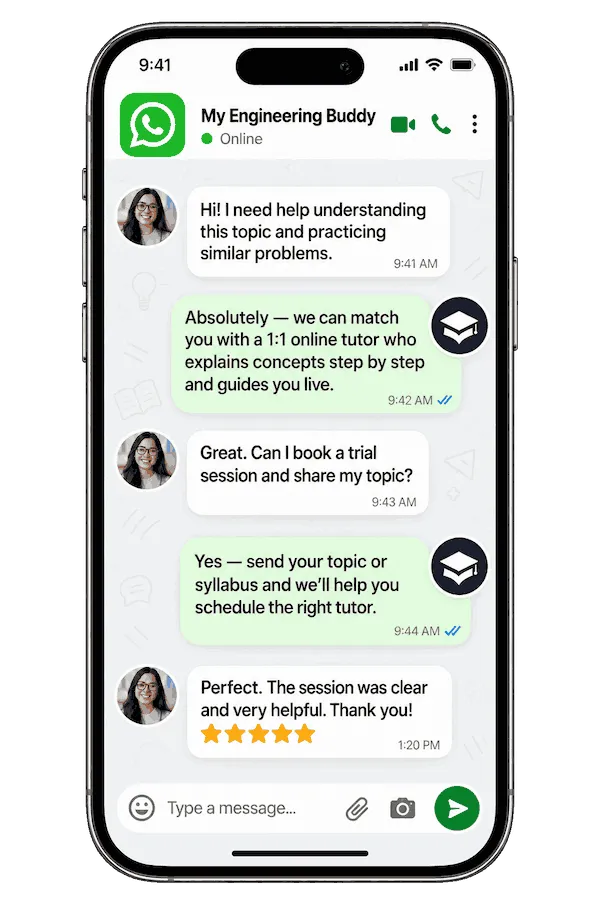
WhatsApp MEB for a quick quote — average response time under 1 minute.
Who This Biological Anthropology Tutoring Is For
This isn’t a course for casual interest. Biological Anthropology combines genetics, evolutionary biology, skeletal anatomy, and primate studies into one demanding programme — and most students underestimate at least two of those four areas.
- Undergraduate students struggling with human osteology labs, primate taxonomy, or evolutionary genetics essays
- Students with a university conditional offer that depends on passing this module
- Students 4–6 weeks from finals with significant gaps in fossil hominid sequences or skeletal variation still to close
- Graduate students working through methods courses in bioarchaeology or forensic osteology
- Students retaking after a failed first attempt who need a different approach, not more of the same notes
- Parents watching a child’s confidence drop alongside their grades in a subject that mixes hard science with social theory
Students from programmes at institutions including UC Berkeley, University of Michigan, Arizona State University, University of Toronto, University of Edinburgh, Australian National University, and Durham University regularly use MEB for support in biological anthropology modules.
At MEB, we’ve found that students who struggle with biological anthropology usually aren’t weak in science — they’re caught between two disciplines. The biological side demands anatomy precision; the anthropology side demands theoretical fluency. Most tutors are strong in one. MEB matches you to someone who can hold both.
1:1 Tutoring vs Self-Study vs AI vs YouTube vs Online Courses
Self-study works if you’re disciplined — but skeletal morphology and cladistic analysis don’t explain themselves. AI tools can define australopithecine gracility in seconds but can’t diagnose why your essay argument keeps collapsing. YouTube covers the broad strokes of human evolution well, then stops when you’re staring at a specific osteometric problem. Online courses move at a fixed pace — that’s fine until you hit primate socioecology and need to slow down. With a 1:1 Biological Anthropology tutor from MEB, every session is calibrated to your exact course, your specific gaps, and the week you’re actually in.
Outcomes: What You’ll Be Able To Do in Biological Anthropology
After structured 1:1 sessions, you won’t just recognise terms — you’ll use them accurately under pressure. Analyze skeletal remains to estimate age, sex, and ancestry using established osteological methods. Apply evolutionary frameworks — natural selection, sexual selection, genetic drift — to specific hominin lineages with confidence. Explain primate social structures and connect them to broader theories of human behaviour. Write well-evidenced essays on topics like bipedalism, the aquatic ape hypothesis, or Neanderthal admixture without losing the argument halfway through. Present comparative anatomical data clearly in lab reports and short-answer exams.
Based on feedback from 40,000+ sessions collected by MEB from 2022 to 2025, 58% of students improved by one full grade after approximately 20 hours of 1:1 tutoring in subjects like Biological Anthropology. A further 23% achieved at least a half-grade improvement.
Source: MEB session feedback data, 2022–2025.
Supporting a student through Biological Anthropology? MEB works directly with parents to set up sessions, track progress, and keep coursework on schedule. WhatsApp MEB — average response time is under a minute, 24/7.
Try your first session for $1 — 30 minutes of live 1:1 tutoring or one homework question explained in full. No registration. No commitment. WhatsApp MEB now and get matched within the hour.
What We Cover in Biological Anthropology (Syllabus / Topics)

Human Evolution and Paleoanthropology
- Hominin phylogeny: Australopithecus, Homo habilis, Homo erectus, archaic Homo sapiens
- Bipedalism: anatomical evidence, competing hypotheses, fossil record interpretation
- Brain size evolution and the encephalisation quotient
- Neanderthal and Denisovan genomics — admixture evidence and ancient DNA methods
- Out of Africa model vs multiregional continuity: current evidence
- Dating methods: stratigraphy, potassium-argon, radiocarbon limitations
Key texts: The Last Human (Sawyer & Deak), Human Evolutionary Genetics (Jobling, Hollox, Hurles, Kivisild, Tyler-Smith), Paleoanthropology (Tattersall & Schwartz).
Human Osteology and Skeletal Biology
- Bone identification and skeletal inventory — cranial and post-cranial elements
- Age estimation: epiphyseal fusion, dental eruption, degenerative changes
- Sex determination from the pelvis, skull, and long bones
- Stature estimation and population affinity methods
- Pathological conditions: trauma, infectious disease, metabolic disorders on bone
- Taphonomy: what happens to bone after death and how it affects interpretation
- Get forensic anthropology help if your course extends into medicolegal osteology
Key texts: Human Osteology (White, Black & Folkens), The Bone Lady (Manhein) for applied context, Skeletal Trauma (Lovell).
Primatology and Human Variation
- Primate taxonomy: prosimians, New World monkeys, Old World monkeys, apes
- Primate socioecology: mating systems, dominance hierarchies, kin selection
- Human biological variation: skin colour genetics, lactase persistence, altitude adaptation
- The race concept in biology — scientific critique and historical misuse
- Reproductive ecology and life history theory in human populations
- Molecular anthropology: mitochondrial DNA, Y-chromosome haplogroups
Key texts: Primate Behavioral Ecology (Strier), Biological Anthropology (Jurmain, Kilgore, Trevathan & Ciochon), Our Origins (Larsen).
What a Typical Biological Anthropology Session Looks Like
The tutor starts by checking where the previous topic ended — usually something like skeletal age estimation methods or hominin cladistics — and asking you to explain one concept back in your own words. That one question tells them more than ten minutes of re-reading your notes would. From there, the session moves into the specific problem: walking through a skeletal analysis exercise on screen, working through an essay plan on human variation, or untangling why your primate socioecology argument isn’t landing. The tutor uses a digital pen-pad to annotate diagrams, label skeletal landmarks, or sketch phylogenetic trees in real time. You replicate the reasoning step by step. The session ends with one focused practice task — a short identification exercise, a paragraph to draft, a set of past-paper questions — and the next topic is noted so the following session doesn’t start cold.
How MEB Tutors Help You with Biological Anthropology (The Learning Loop)
Diagnose: In the first session, the tutor identifies exactly where understanding breaks down — not just which topic, but which type of problem. Is it memorisation of osteological landmarks? Applying evolutionary theory to specific populations? Structuring an argument in a lab report? The gap is specific, so the fix is specific.
Explain: The tutor works through live examples on screen — annotating a skeletal diagram, building a hominin phylogeny step by step, or walking through a genetics calculation for a human variation question. No recorded videos. No static slides. The explanation responds to where you are right now.
Practice: You attempt the next problem with the tutor present. That’s different from homework. If you go wrong at step two of a taphonomic interpretation, the tutor catches it before the error becomes a habit.
Feedback: Step-by-step correction. Not “that’s wrong” — but why the marks were lost and what the examiner or marker was actually looking for in that answer.
Plan: Each session closes with a clear next topic, a specific task to complete before the following session, and a note on where you are against your deadline. No drift.
Sessions run on Google Meet. The tutor uses a digital pen-pad or iPad with Apple Pencil to draw, annotate, and label in real time. Before your first session, share your course outline or syllabus, a recent assignment or essay you struggled with, and your exam or submission date. The first session covers diagnosis and the single highest-priority topic — no time wasted on areas you already have. Start with the $1 trial — 30 minutes of live tutoring that also serves as your first diagnostic.
Students consistently tell us that the moment biological anthropology clicks is when someone makes the evolutionary biology concrete — not abstract. That’s what a good tutor does in session two or three. Not session twelve.
Source: My Engineering Buddy tutor feedback records, 2022–2025.
Tutor Match Criteria (How We Pick Your Tutor)
Not every anthropology graduate can teach biological anthropology well. The match matters.
Subject depth: MEB looks for tutors with direct academic or research experience in the relevant sub-field — osteology, paleoanthropology, primatology, or human genetics — not just a general social science background.
Tools: Every tutor runs sessions on Google Meet with a digital pen-pad or iPad and Apple Pencil. Biological anthropology involves a lot of diagram work — skeletal labelling, phylogenetic trees, variation charts. That requires a tutor who can draw and annotate live, not just talk.
Time zone: Matched to your region — US, UK, Canada, Australia, Gulf. No scheduling across twelve time zones unless you request it.
Goals: The match is also based on what you need — whether that’s exam preparation, conceptual depth in a specific area like forensic osteology, or steady academic guidance through the semester.
Unlike platforms where you fill out a form and wait, MEB responds in under a minute, 24/7. Tutor match takes under an hour. The $1 trial means you test before you commit. Everything runs over WhatsApp — no logins, no intake forms.
Study Plans (Pick One That Matches Your Goal)
Catch-up (1–3 weeks): for students behind on core topics — skeletal analysis, hominin sequences, primate taxonomy — with a lab report or exam closing in fast. Exam prep (4–8 weeks): structured revision against specific exam components, past papers, and essay practice. Weekly support: ongoing, aligned to your semester schedule and coursework deadlines. After the first diagnostic session, the tutor builds the specific sequence — no generic plan copied from another student’s course.
Pricing Guide
Biological Anthropology tutoring starts at $20/hr for introductory undergraduate work. Advanced topics — paleoanthropology, ancient DNA analysis, bioarchaeology methods — and graduate-level support typically run $35–$70/hr, with specialist tutors available up to $100/hr. Rate factors include topic complexity, your timeline, and tutor availability at your preferred hours.
Availability tightens in the four weeks before finals. If you’re planning ahead, book earlier rather than later.
For students targeting graduate programmes in human evolutionary biology, forensic science, or physical anthropology at research universities, tutors with active research backgrounds in those areas are available at higher rates — share your specific goal and MEB will match the tier to your ambition.
Start with the $1 trial — 30 minutes, no registration, no commitment. WhatsApp MEB for a quick quote.
FAQ
Is Biological Anthropology hard?
It’s harder than most students expect, because it combines two demanding skill sets: precise biological and anatomical knowledge alongside theoretical social science reasoning. The osteology lab work is particularly hands-on. Most students underestimate one of the two sides until they hit an exam.
How many sessions are needed?
For a specific gap — a single topic or assignment — two to four sessions often resolve it. For sustained grade improvement across a semester, most students find a consistent rhythm of one to two sessions per week delivers the best results. The tutor advises after the diagnostic.
Can you help with practice exercises?
Yes — MEB tutoring is guided learning. You understand the work, then submit it yourself. The tutor explains the method, walks through the reasoning, and checks your understanding — not your submission. See our Academic Integrity policy and Why MEB page for full details on what we help with and what we don’t.
Will the tutor match my exact syllabus or exam board?
Yes. Share your course outline or exam board before the first session and the tutor is matched to that specific framework — whether it’s a US semester course, a UK undergraduate module, or a graduate methods course in bioarchaeology or primatology.
What happens in the first session?
The tutor runs a short diagnostic — asking you to explain a concept, attempt a problem, or walk through a past answer. This identifies exactly where understanding breaks down. The remainder of the session addresses the highest-priority gap. No time spent on topics you already know.
Is online tutoring as effective as in-person?
For biological anthropology, yes — and in some respects better. Digital pen-pad annotation lets tutors label skeletal diagrams, draw phylogenetic trees, and sketch population charts in real time on screen. You can share a lab report or essay draft directly. No commute, no scheduling friction.
Can I get Biological Anthropology help late at night or on weekends?
Yes. MEB operates 24/7 across time zones. WhatsApp response typically comes within a minute regardless of hour. If you’re in the US and your deadline is tomorrow morning, or in the Gulf and it’s 11 pm, the process is the same — message, match, start.
What if I don’t like my assigned tutor?
Request a different one. No lengthy process. WhatsApp MEB, explain what wasn’t working — topic fit, teaching style, pace — and a replacement tutor is matched, usually within the hour. The $1 trial exists partly so you know before you commit to a longer block.
How do I find a Biological Anthropology tutor in my city?
You don’t need to. MEB sessions run online via Google Meet. Your tutor can be in a different country — what matters is that they’re matched to your syllabus and available at your hours. Students in New York, London, Dubai, Toronto, and Sydney all use the same platform.
What’s the difference between biological anthropology and forensic anthropology?
Biological anthropology is the broader field — covering human evolution, genetics, primatology, and skeletal biology across all contexts. Forensic anthropology tutoring focuses specifically on applying osteological methods within medicolegal and criminal justice settings. Many undergraduate modules overlap; some students need support in both.
Is the race concept covered in biological anthropology — and how should I approach it in essays?
Yes, and it’s one of the most commonly mishandled topics in student essays. The key is distinguishing biological variation (which is real, clinal, and polygenic) from race as a social and historical construct. Examiners expect you to engage with both the science and the critique — not pick one and ignore the other.
How do I get started?
Start with the $1 trial — 30 minutes of live tutoring or one assignment question explained in full. Three steps: WhatsApp MEB, get matched to a Biological Anthropology tutor (usually within the hour), then start your trial session. No forms, no registration, no waiting.
Trust & Quality at My Engineering Buddy
Every MEB tutor goes through a structured screening process: subject-specific application review, a live demo session evaluated by senior tutors, and ongoing feedback review based on student ratings after each session. Biological Anthropology tutors are vetted specifically for their background — academic degrees in biological anthropology, human evolutionary biology, physical anthropology, or closely related disciplines. Degrees alone aren’t sufficient; tutors must demonstrate they can explain osteology and evolutionary theory clearly to a student under time pressure. Rated 4.8/5 across 40,000+ verified reviews on Google.
MEB tutoring is guided learning — you understand the work, then submit it yourself. For full details on what we help with and what we don’t, read our Academic Integrity policy and Why MEB.
MEB has served 52,000+ students across the US, UK, Canada, Australia, Gulf, and Europe since 2008, covering 2,800+ subjects. Within Social Science, this includes Anthropology tutoring, Sociology tutoring, and Psychology tutoring — as well as specialist sub-disciplines like Biological Anthropology. The same 1:1 model, the same tutor-matching process, the same diagnostic-first approach applies across all of them. See our tutoring methodology for how sessions are structured from first contact through to exam day.
A common pattern our tutors observe is that students arrive having read the textbook and still failing the essay. The textbook gives you facts. A 1:1 tutor shows you how to argue with them — which is what the examiner is actually marking.
Source: My Engineering Buddy tutor observation records, 2022–2025.
Our experience across thousands of sessions shows that the biggest risk in biological anthropology isn’t covering too little content — it’s spending all your time on the parts you already understand. A tutor redirects you to the gaps that actually cost marks. Students consistently tell us this is the switch that changes their grade.
Explore Related Subjects
Students studying Biological Anthropology often also need support in:
- Demography
- Ethnolinguistics
- Native American Studies
- Global Studies
- Development Studies
- Environmental Sociology
- Political Science
- Social Inequality
Next Steps
Before your first session, have ready: your exam board and syllabus (or course outline), a recent past paper attempt or homework you struggled with, and your exam or deadline date. The tutor handles the rest.
- Share your course outline, hardest component, and current timeline
- Share your availability and time zone
- MEB matches you with a verified Biological Anthropology tutor — usually within 24 hours
The first session starts with a diagnostic so every minute is used well. Visit www.myengineeringbuddy.com for more on how MEB works.
WhatsApp to get started or email [email protected].
Reviewed by Subject Expert
This page has been carefully reviewed and validated by our subject expert to ensure accuracy and relevance.




