
Environmental Science Tutoring: Your Complete Guide to Academic Success

Sarah was struggling with her Environmental Science assignment on climate change mitigation strategies. The complexity of connecting atmospheric chemistry with policy implications left her feeling overwhelmed. After just three sessions with an Environmental Science tutor online, she not only understood the interconnections but also developed a passion for environmental policy that shaped her career path.
This transformation story isn’t unique. As environmental concerns become increasingly critical to our planet’s future, Environmental Science tutoring has emerged as an essential educational support system, helping students navigate one of today’s most interdisciplinary and vital fields of study.
The Growing Demand for Environmental Science Education
Environmental Science has experienced remarkable growth in recent years, with degree completions increasing by 24% since 2016. This surge reflects society’s growing awareness of environmental challenges and the increasing demand for environmental professionals across diverse industries.
The field encompasses multiple disciplines, including biology, chemistry, geology, geography, atmospheric science, soil science, ecology, and oceanography. Students often find themselves juggling complex concepts from various scientific domains while also considering social, economic, and political implications of environmental issues.
It can be difficult to visualize how these distinct fields overlap. The diagram below illustrates how Environmental Science sits at the intersection of these major disciplines.
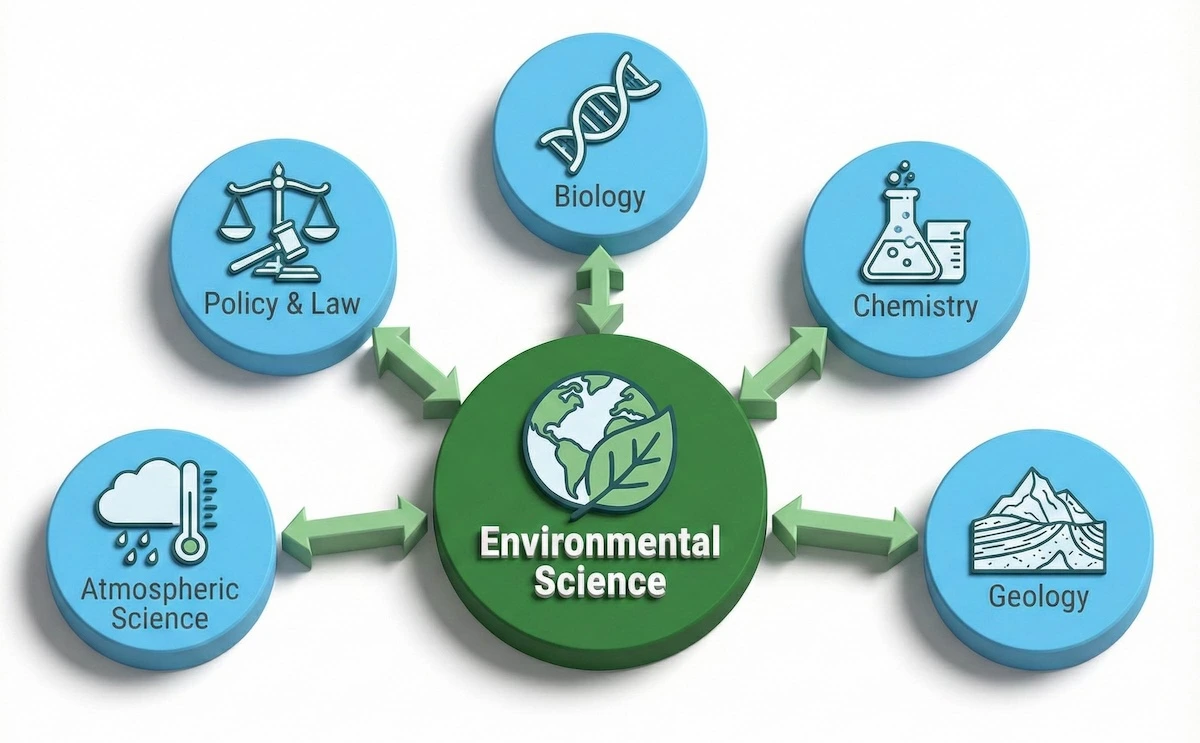
Environmental Science is an interdisciplinary field that synthesizes knowledge from biology, chemistry, geology, and public policy.
Understanding this interdisciplinary structure is the first step toward mastering the curriculum.
According to the U.S. Bureau of Labor Statistics, environmental scientist jobs are expected to grow at a compound annual growth rate of 6% from 2022 to 2032, much faster than the average for all occupations. This growth translates into approximately 80,500 current positions with expanding opportunities in government agencies, consulting firms, and private sector companies.
The market data confirms that this is a wise educational investment. The chart below highlights the projected growth and earning potential for graduates.

With a 6% growth rate and strong median salaries, Environmental Science offers a stable and lucrative career path.
With growth rates double the national average, environmental expertise is becoming one of the most secure career paths available.
Why Students Seek Environmental Science Tutoring
The interdisciplinary nature of Environmental Science creates unique challenges that often lead students to seek specialized tutoring support. Unlike traditional single-subject courses, Environmental Science requires students to synthesize knowledge across multiple scientific disciplines while understanding their real-world applications.
Many students struggle with the mathematical aspects of environmental modeling, statistical analysis of environmental data, and the chemistry behind pollution processes. Additionally, the field’s emphasis on critical thinking and problem-solving can be particularly challenging for students accustomed to more straightforward memorization-based learning approaches.
Environmental Science teaching in traditional classroom settings often covers broad concepts rapidly, leaving little time for individual understanding of complex interconnections. This is where personalized tutoring becomes invaluable, allowing students to work at their own pace while receiving targeted support for specific challenging areas.
The Advantages of Online Environmental Science Tutoring
The shift toward Environmental Science tutoring online has revolutionized how students access specialized academic support. Online platforms offer unprecedented flexibility, allowing students to connect with expert tutors regardless of geographical limitations.
Research indicates that online education paradigms result in carbon profiles approximately 90% lower than traditional face-to-face instruction, making online tutoring an environmentally conscious choice that aligns with the values of Environmental Science students.
Beyond the educational benefits, the logistical differences are stark. Here is a direct comparison of the environmental and practical impact of online versus traditional learning.
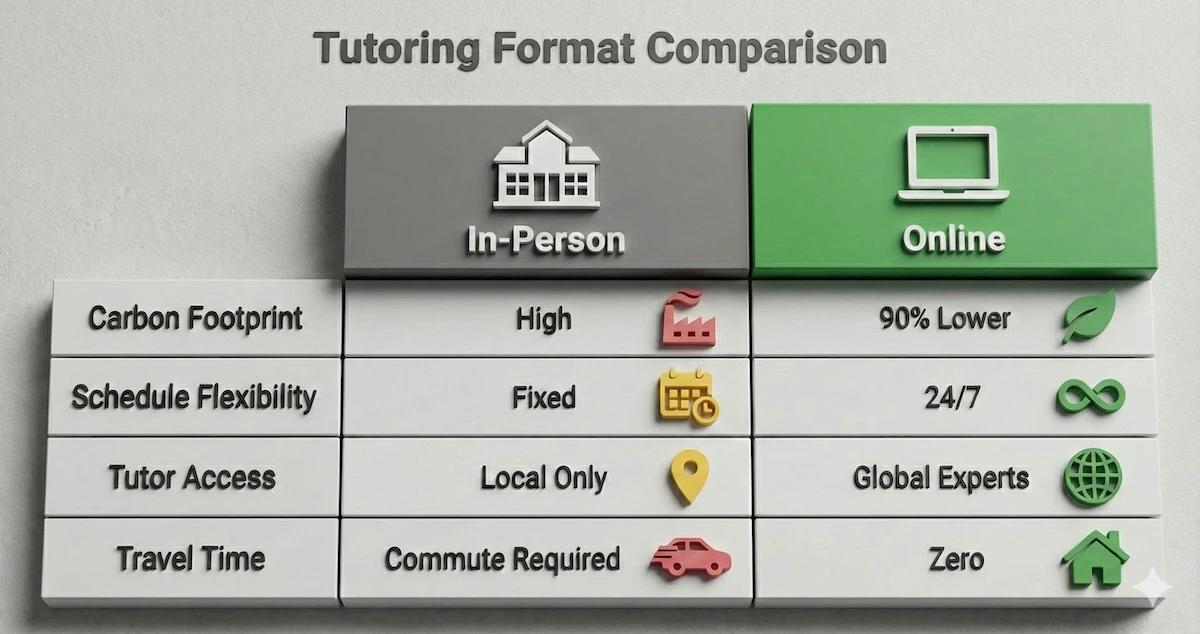
Online tutoring offers significant advantages in sustainability, flexibility, and access to global experts compared to traditional methods.
For students dedicated to sustainability, choosing a learning method with a lower carbon footprint is a practical application of their studies.
Online tutoring platforms leverage interactive technologies, including virtual whiteboards, shared documents, and multimedia resources, to create engaging learning experiences. Students can access recorded sessions for review, participate in virtual field trips, and utilize specialized software for environmental modeling and data analysis.
The convenience factor cannot be overstated. Students can schedule sessions around their busy academic and extracurricular commitments, eliminate commute times, and access support during critical study periods, including evenings and weekends.
Essential Areas Covered in Environmental Science Tutoring
Professional Environmental Science tutors provide comprehensive support across the field’s diverse subject areas. Core topics include ecosystem dynamics, biodiversity conservation, pollution control, climate science, environmental chemistry, and natural resource management.
Students frequently require support with quantitative skills, including statistical analysis of environmental data, mathematical modeling of environmental processes, and interpretation of scientific graphs and charts. Many tutors specialize in helping students understand complex chemical reactions involved in environmental processes, such as photochemical smog formation or acid rain chemistry.
To reduce the feeling of overwhelm, it helps to categorize these requirements. We have broken down the essential skills into ‘Quantitative’ and ‘Core Topic’ areas below.
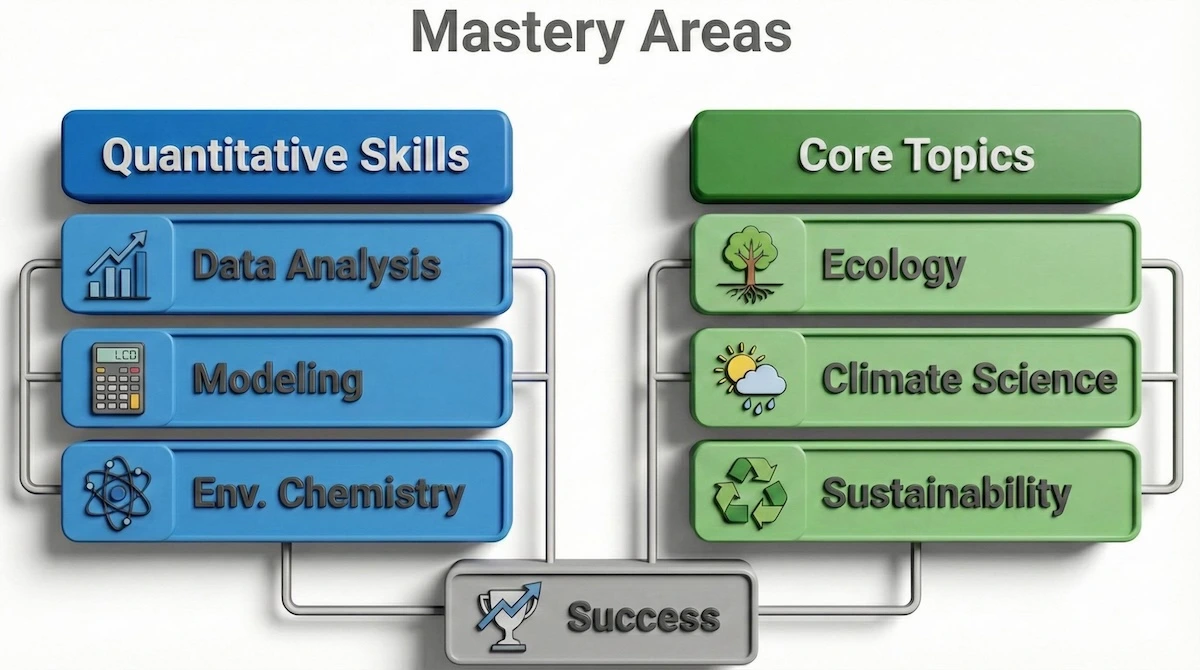
Success in Environmental Science requires balancing quantitative analysis skills with core field knowledge like ecology and sustainability.
Your tutor will likely alternate between these two pillars to ensure you build a balanced skillset.
Field-specific skills development is another crucial component of tutoring support. This includes guidance on environmental impact assessments, sustainability analysis, policy evaluation, and research methodology. Tutors often help students connect theoretical knowledge to practical applications through case study analysis and real-world problem-solving exercises.
Specialized Support for Environmental Science Assignments
Environmental Science assignment help addresses the unique challenges students face when tackling complex projects and research papers. Unlike assignments in traditional sciences, Environmental Science projects often require interdisciplinary approaches and consideration of multiple stakeholder perspectives.
Tutors provide guidance on research methodology, helping students identify credible sources, understand peer-reviewed literature, and develop critical analysis skills. They assist with data interpretation, statistical analysis, and the integration of scientific findings with policy implications.
Many students struggle with the writing aspects of Environmental Science, particularly in communicating technical concepts to diverse audiences. Professional tutors help students develop clear, concise writing skills while maintaining scientific accuracy and incorporating appropriate technical terminology.
Project-Based Learning Support
Environmental Science education increasingly emphasizes hands-on, project-based learning experiences. Tutors support students through complex research projects, from initial hypothesis development through data collection, analysis, and presentation of findings.
Managing a semester-long project requires a systematic approach. The flowchart below outlines the standard research lifecycle you should follow.
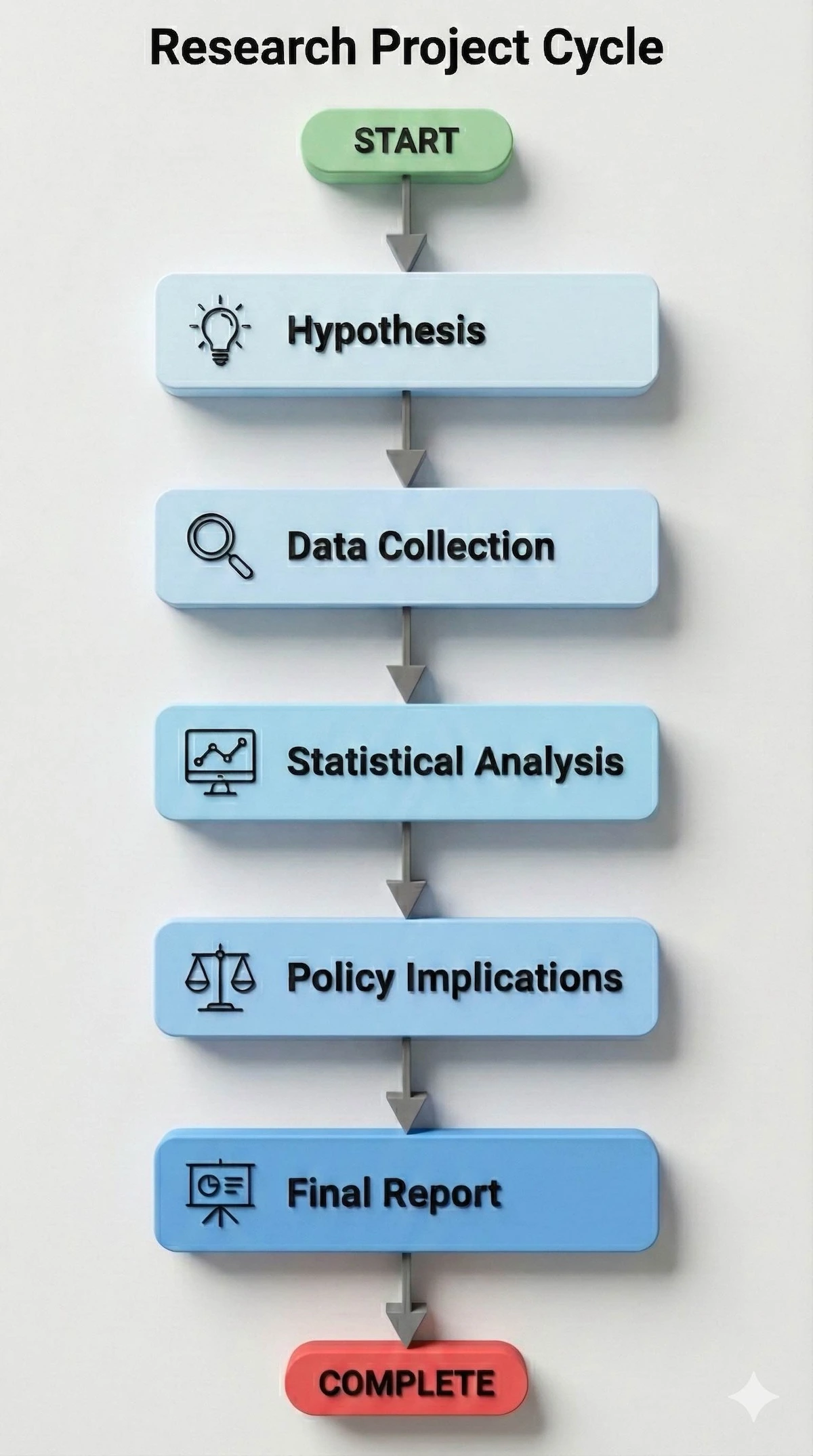
Following a structured workflow from hypothesis to policy analysis ensures comprehensive and high-quality research projects.
Following these steps in order prevents the common panic of having data but no clear hypothesis.
This support is particularly valuable for capstone projects, independent research opportunities, and collaborative group assignments. Tutors help students manage project timelines, develop research protocols, and navigate the challenges of working with real environmental data.
Homework Help and Study Strategies
Environmental Science homework help extends beyond simple problem-solving to encompass comprehensive study strategy development. Effective Environmental Science tutors teach students how to approach complex, multi-faceted problems systematically.
Students learn to break down complex environmental issues into manageable components, identify relevant scientific principles, and synthesize information from multiple sources. This approach is particularly important given the field’s emphasis on systems thinking and interconnected relationships.
This is where the ‘Systems Thinking’ method becomes essential. Visualizing the problem-solving cycle can help you apply it to your next assignment.
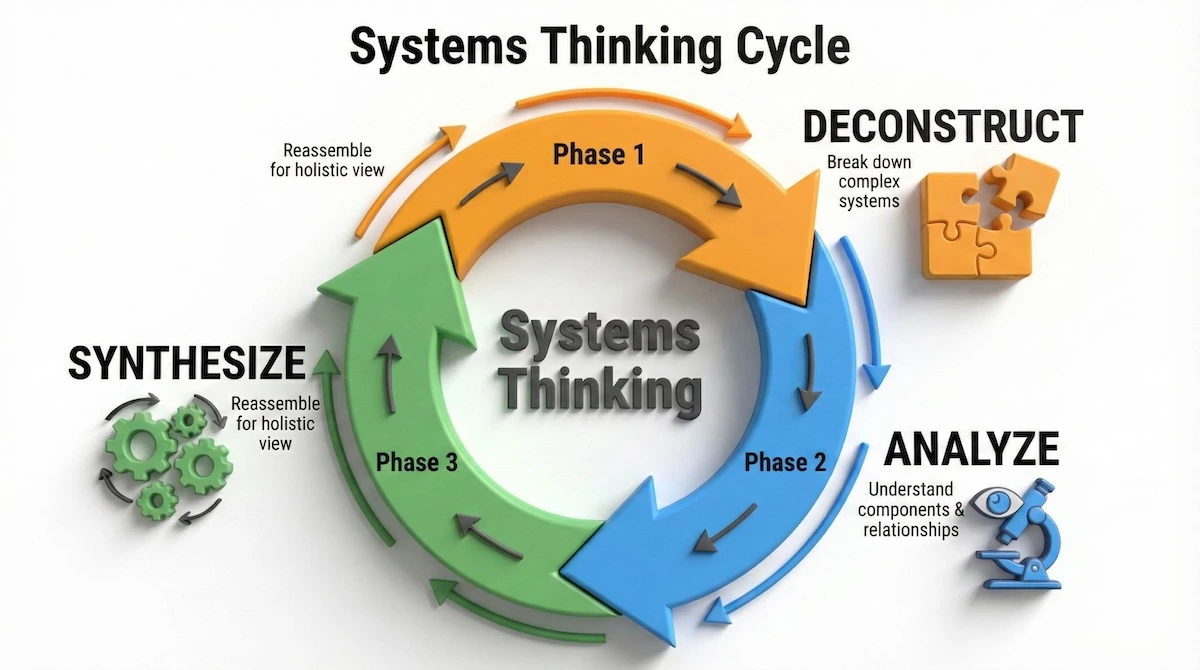
Mastering ‘Systems Thinking’ allows students to break down complex environmental issues and reconstruct them into viable solutions.
By consistently cycling through deconstruction and synthesis, complex environmental problems become manageable tasks.
Tutors often introduce students to specialized software and analytical tools commonly used in environmental research, including GIS applications, statistical software packages, and environmental modeling programs. This technical skill development enhances both academic performance and career preparation.
Exam Preparation and Test-Taking Strategies
Environmental Science examinations often combine multiple-choice questions testing factual knowledge with essay questions requiring critical analysis and synthesis. Experienced tutors help students develop effective study strategies for both components.
Many students benefit from practice with case study analysis, a common examination format in Environmental Science. Tutors provide structured approaches to analyzing complex environmental scenarios, identifying key issues, and proposing evidence-based solutions.
Test anxiety is particularly common in Environmental Science due to the field’s complexity and interdisciplinary nature. Tutors help students develop confidence through practice sessions, time management strategies, and stress reduction techniques.
Career Guidance and Professional Development
Experienced Environmental Science teachers and tutors often provide valuable career guidance, helping students understand the diverse career paths available within the field. Environmental professionals work in government agencies, consulting firms, non-profit organizations, research institutions, and private companies.
Career opportunities include environmental consulting, sustainability management, conservation biology, environmental education, policy analysis, and environmental law. The median annual wage for environmental scientists and specialists was $76,530 in 2022, with significant variation based on specialization and location.
Tutors often help students identify relevant internship opportunities, develop professional networks, and prepare for graduate school applications. They provide guidance on certification programs, such as the Certified Environmental Scientist (CES) designation, which requires a bachelor’s degree in an environmentally related discipline and three years of relevant work experience.
Technology Integration in Environmental Science Tutoring
Modern Environmental Science tutoring online leverages cutting-edge technology to enhance learning experiences. Virtual field trips allow students to explore diverse ecosystems and environmental challenges without geographical constraints.
Interactive simulations help students understand complex environmental processes, such as nutrient cycling, population dynamics, and climate patterns. These tools are particularly valuable for visual learners who benefit from seeing abstract concepts represented graphically.
Data analysis software training is increasingly important, as environmental professionals must be proficient in statistical analysis, geographic information systems (GIS), and environmental modeling applications. Tutors provide hands-on training with these tools, preparing students for both academic success and professional careers.
Addressing Diverse Learning Styles
Environmental Science attracts students with diverse academic backgrounds and learning preferences. Effective tutors adapt their teaching approaches to accommodate different learning styles, from visual learners who benefit from diagrams and charts to kinesthetic learners who prefer hands-on activities.
Some students excel at memorizing scientific facts but struggle with conceptual understanding and application. Others may have strong analytical skills but need support with scientific communication. Professional tutors identify individual strengths and challenges, developing personalized learning strategies.
Language support is increasingly important as Environmental Science programs attract international students. Tutors help non-native English speakers master technical vocabulary, understand complex scientific texts, and develop academic writing skills specific to environmental science.
The Investment in Environmental Science Tutoring
The cost of Environmental Science hw help varies significantly based on tutor qualifications, session duration, and delivery format. However, students and parents increasingly view tutoring as a valuable investment in academic success and career preparation.
The return on investment is particularly strong in Environmental Science, given the field’s growing job market and competitive salaries. Many students find that tutoring support not only improves their grades but also enhances their understanding and passion for environmental issues.
Group tutoring options provide cost-effective alternatives while still offering personalized attention. Many tutoring services offer flexible pricing plans, including package deals and sliding fee schedules to accommodate different budget constraints.
Success Stories and Student Outcomes
Students who engage with qualified Environmental Science tutors consistently report improved academic performance, enhanced understanding of complex concepts, and increased confidence in their ability to tackle environmental challenges.
Many students discover new areas of interest through tutoring support, leading to specialized career paths in emerging fields such as environmental data science, green energy consulting, and climate change adaptation planning.
The personalized attention provided through tutoring often helps students develop critical thinking skills that extend beyond academic coursework. These skills prove invaluable in professional settings where environmental scientists must analyze complex, multi-faceted problems and communicate solutions to diverse stakeholders.
Choosing the Right Environmental Science Tutor
When seeking to hire an Environmental Science tutor, students should consider several key factors. Educational background is crucial – look for tutors with advanced degrees in Environmental Science, Environmental Engineering, or related fields such as ecology, geology, or atmospheric science.
Professional experience adds significant value, particularly for students interested in specific career paths. Tutors with industry experience can provide insights into real-world applications and current environmental challenges facing professionals.
Teaching experience and communication skills are equally important. The most knowledgeable expert may not be effective if they cannot communicate complex concepts clearly and adapt to individual learning styles.
The Future of Environmental Science Education
As environmental challenges continue to evolve, Environmental Science education must adapt to prepare students for emerging career opportunities. Climate change adaptation, renewable energy systems, environmental justice, and sustainable development are becoming increasingly prominent focus areas.
The integration of artificial intelligence and big data analysis into environmental research creates new learning requirements for students. Tutors who stay current with technological developments can provide valuable preparation for future career demands.
Interdisciplinary collaboration is becoming even more important as environmental challenges require solutions that bridge scientific, economic, social, and political domains. Tutoring that emphasizes these connections prepares students for the collaborative nature of modern environmental work.
Frequently Asked Questions
Q1 What qualifications should I look for in an Environmental Science tutor?
Seek tutors with at least a bachelor’s degree in Environmental Science or related fields, plus teaching experience and proven track record of student success.
Q2 How much does Environmental Science tutoring typically cost?
Tutoring rates range from $20-60 per hour depending on tutor qualifications, location, and session format, with online options often being more affordable.
Q3 Can online Environmental Science tutoring be as effective as in-person sessions?
Yes, research shows online tutoring can be equally effective, offering additional benefits like scheduling flexibility and access to specialized tutors regardless of location.
Q4 What types of assignments do Environmental Science tutors help with?
Tutors assist with research papers, lab reports, data analysis projects, environmental impact assessments, case studies, and exam preparation across all environmental science subdisciplines.
Q5 How often should I schedule tutoring sessions for Environmental Science?
Most students benefit from weekly sessions, though frequency can be adjusted based on course difficulty, individual needs, and specific assignment deadlines.
Q6 Will tutoring help me decide on an Environmental Science career path?
Yes, experienced tutors often provide career guidance, helping students explore different specializations and understand professional opportunities in the expanding environmental sector.
Related Subjects
Climate Change
Climatology
Environmental Biotechnology
Environmental Pollution
Geostatistics
Industrial and Environmental microbiology
Natural Resource Management
Sustainability
******************************
This article provides general educational guidance only. It is NOT official exam policy, professional academic advice, or guaranteed results. Always verify information with your school, official exam boards (College Board, Cambridge, IB), or qualified professionals before making decisions. Read Full Policies & Disclaimer , Contact Us To Report An Error