Dentistry Education: Academic Challenges, DAT Prep, and Tutoring

- Dental school acceptance is highly competitive, with enrollment rising 14% over ten years.
- 74% of dental students report financial stress that impacts their academic performance.
- DAT preparation, oral pathology, and clinical transition are the hardest hurdles students face.
- Quality dentistry tutoring typically costs $20–$40 per hour.
- Online tutoring platforms offer flexible scheduling suited to demanding clinical rotation timetables.
 The journey to becoming a dentist is both rewarding and demanding, requiring mastery of complex scientific concepts, clinical skills, and critical thinking abilities. With dental education costs reaching $350,000 or more and acceptance rates remaining highly competitive, students need every advantage to succeed. Professional dentistry tutoring has emerged as a crucial resource, offering personalized support that can make the difference between academic struggle and professional success.Whether you’re preparing for the rigorous pre-dental coursework, tackling the Dental Admission Test (DAT), or navigating the intensive four-year dental program, expert academic support can accelerate your learning and boost your confidence. Students who struggle with the quantitative sections of the DAT often find that working with an AP Statistics tutor beforehand sharpens their data-reasoning skills considerably. Dentistry tutoring online has revolutionized access to quality education, connecting students with experienced professionals who understand both the academic challenges and real-world applications of dental science.
The Growing Demand for Dentistry Education Support
Today’s dental education landscape presents unique challenges that make academic support more valuable than ever. Recent data from the American Dental Association reveals that first-year dental school enrollment increased by 14% between 2013 and 2023, bringing more competition and higher academic standards. Women now comprise 56% of first-year dental students — the highest rate in history — while enrollment among Hispanic and Black students has increased significantly.To understand why academic support is becoming so critical, look at the recent shifts in the dental education landscape. The data below highlights the rising competition and diversity that are reshaping the field.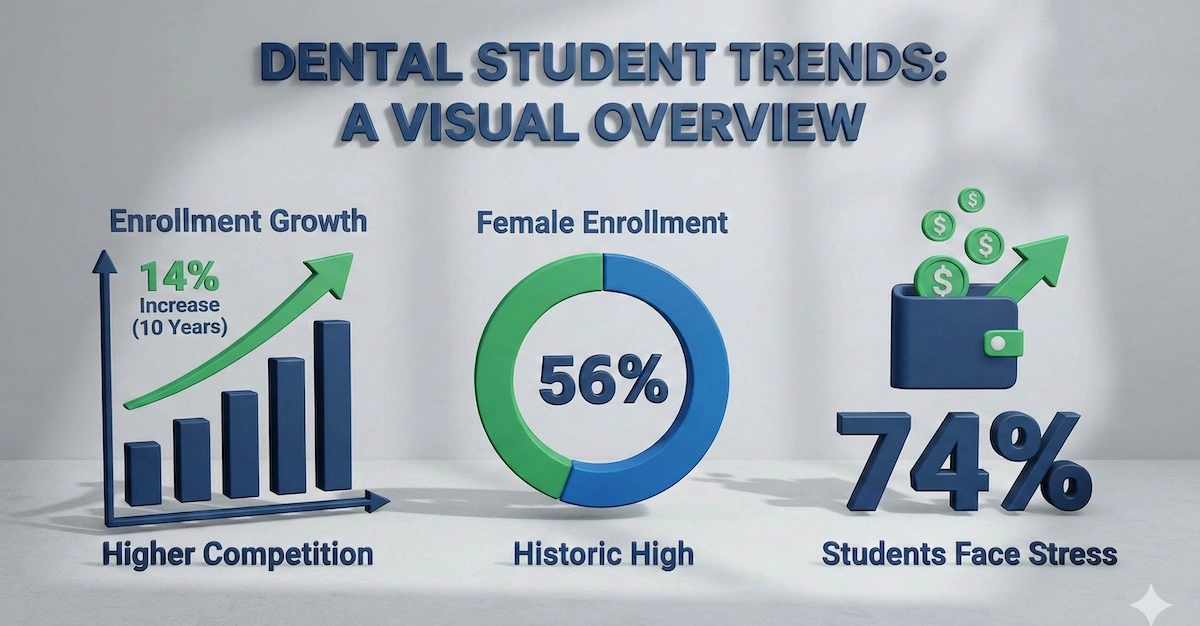
Recent data highlights the increasing competition and diversity in dental education, underscoring the need for academic support.
Common Academic Challenges in Dental Education
Dental school is a unique beast, presenting obstacles that general science degrees often don’t. These are the four primary hurdles that students consistently report facing: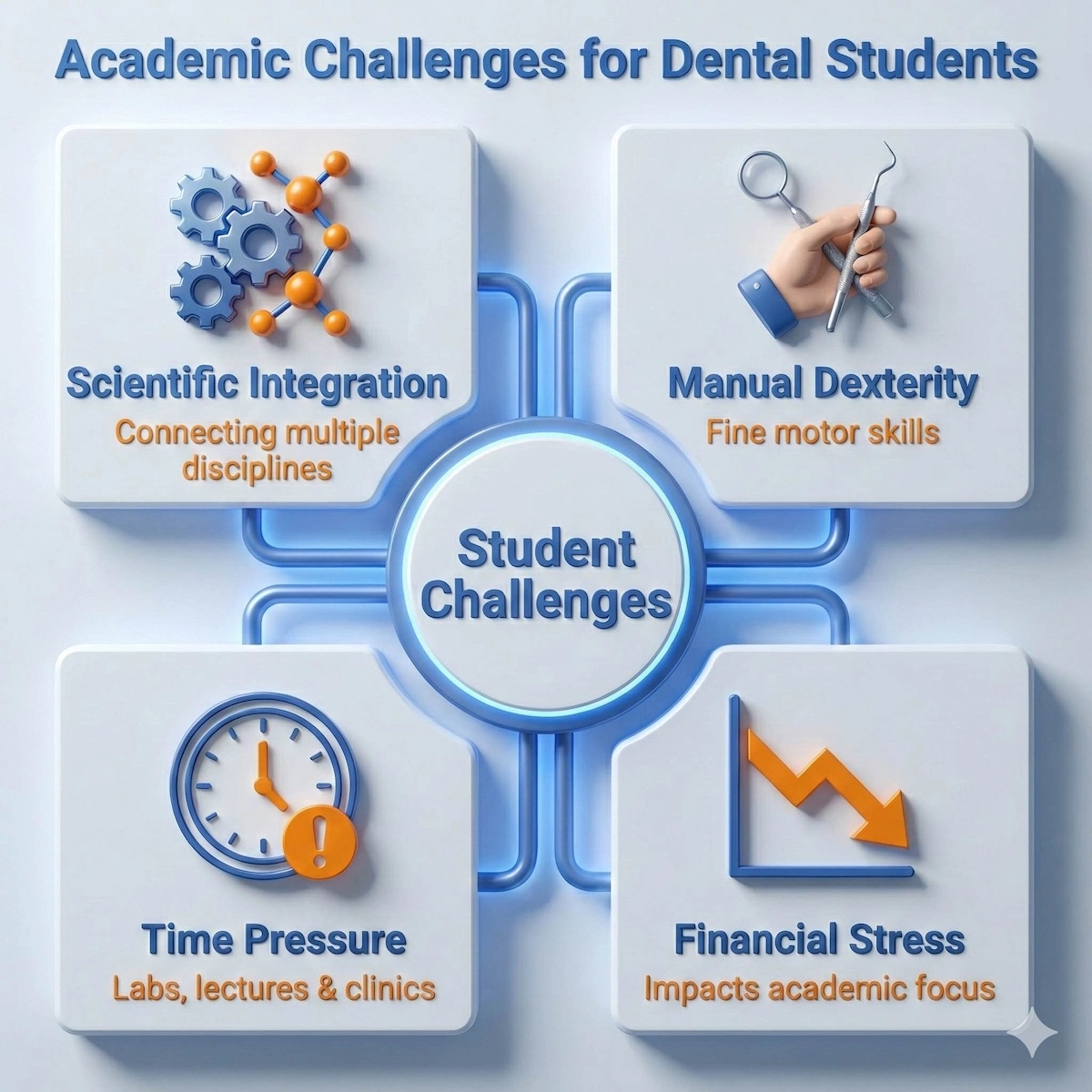
Understanding these four core challenges is the first step toward developing a successful academic strategy.
Benefits of Professional Dentistry Tutoring Services
Quality dentistry academic support offers numerous advantages that extend far beyond simple homework completion. When students work with experienced tutors, they develop deeper understanding, improved study habits, and greater confidence in their abilities.Personalized Learning Approaches
Every student learns differently, and professional tutoring recognizes this fundamental truth. A skilled dentistry teacher adapts their instruction to match individual learning styles, whether visual, auditory, or kinesthetic. This personalized approach is particularly important in dentistry, where students must grasp both conceptual knowledge and practical applications.Research from the University of Minnesota’s School of Dentistry demonstrates that peer and professional tutoring significantly improves student outcomes. Their robust tutoring program, employing 50 teaching assistants and tutors, provides support for first- and second-year students in reviewing classroom concepts, assisting with laboratory work, and answering questions about navigating dental school successfully.Expert Knowledge and Real-World Experience
Professional dentistry tutoring connects students with experienced practitioners and educators who bring real-world perspective to academic concepts. These tutors understand not just the theoretical aspects of dental science, but also how concepts apply in clinical practice. This bridge between academia and practice proves invaluable for student comprehension and motivation.Dr. Jennifer Thompson, a practicing periodontist who provides tutoring services, explains: “When I help students understand periodontal disease, I don’t just cover the textbook material. I share clinical cases, show them how diagnostic decisions are made, and help them see the human impact of their future work. This context makes the learning more meaningful and memorable.”Flexible Scheduling and Accessibility
Modern dentistry tutoring online platforms offer unprecedented flexibility, allowing students to access expert help when they need it most. Whether preparing for a challenging exam, working through complex assignments, or seeking clarification on lecture material, online tutoring provides 24/7 support that fits demanding academic schedules.This accessibility is particularly valuable for students in different time zones or those with irregular clinical rotation schedules. The ability to connect with qualified tutors regardless of geographic location expands opportunities for all students to receive high-quality academic support.For students exploring how different online learning platforms compare in terms of flexibility and value, a detailed Skillshare review covering alternatives and pricing offers useful context for evaluating your options.Specialized Areas of Dentistry Education Support
Professional tutoring services cover the full spectrum of dental education, from foundational prerequisites through advanced clinical training. Understanding these specialized areas helps students identify where they might benefit most from additional support.Pre-Dental Coursework and DAT Preparation
The path to dental school begins with rigorous undergraduate preparation. Most dental schools require extensive prerequisite coursework including biology, general chemistry, organic chemistry, physics, and mathematics. Each subject demands mastery of complex concepts that build upon one another throughout the program.DAT preparation represents a critical milestone that can determine dental school acceptance. The exam covers natural sciences, perceptual ability, reading comprehension, and quantitative reasoning. Professional tutoring services specializing in DAT preparation offer structured study plans, practice tests, and personalized feedback that can significantly improve scores.Mark Chen, who achieved a 95th percentile DAT score with tutoring support, recalls: “The perceptual ability section seemed impossible until my tutor taught me systematic approaches for each question type. What initially felt like guesswork became a methodical process that I could master through practice.”Students who want to strengthen their mathematical foundations before tackling the DAT’s quantitative reasoning section may find that working with an A-Level Mathematics tutor builds the rigorous problem-solving skills the exam demands.Core Dental School Curriculum Support
Once in dental school, students encounter increasingly specialized coursework that requires deep understanding and integration. Key areas where students frequently seek academic support include:Oral Anatomy and Physiology: Understanding the complex structures of the head, neck, and oral cavity requires three-dimensional thinking and detailed memorization. Tutors help students develop effective study strategies and create mental frameworks for organizing this extensive information.Dental Materials Science: The properties and applications of various dental materials demand understanding of chemistry, physics, and engineering principles. Professional tutoring helps students connect theoretical knowledge with practical applications in restorative procedures.The curriculum moves fast, building layer upon layer of complexity. Here is the typical progression path you will need to master, from foundational sciences to clinical intervention: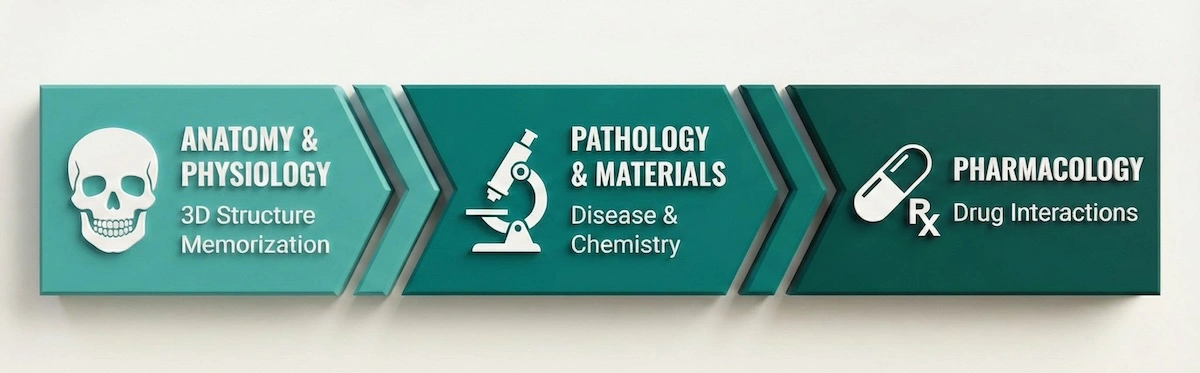
Mastering these core curriculum pillars requires integrating complex scientific theories with practical application.
Clinical Skills Development
Moving from the classroom to the clinic is often the steepest learning curve. Successful student clinicians follow a structured cycle of care for every patient interaction: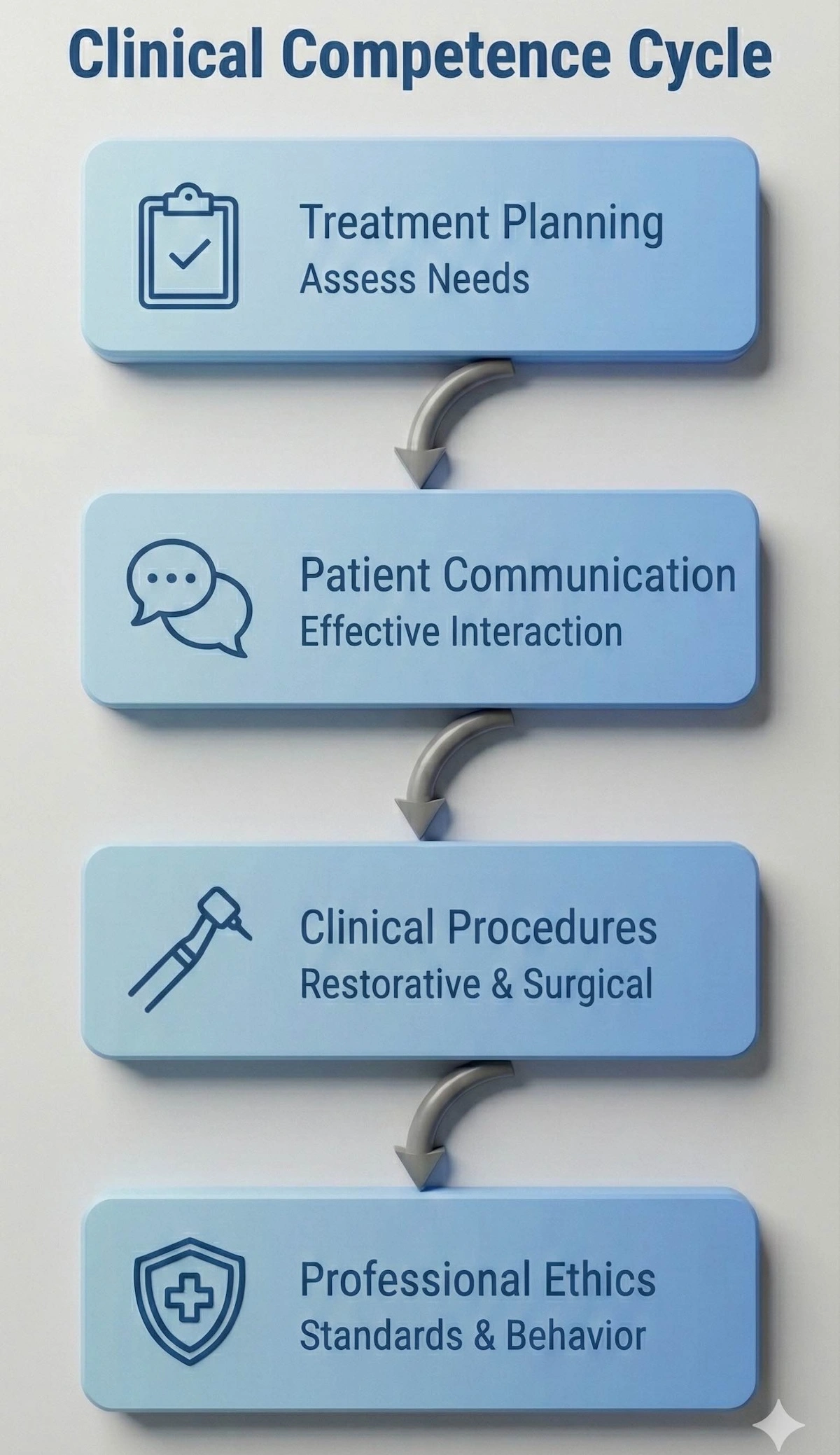
Developing clinical competence is a structured process involving planning, communication, execution, and ethics.
- Treatment planning: Learning to assess patient needs and develop comprehensive care plans
- Patient communication: Developing skills for effective interaction with diverse patient populations
- Clinical procedures: Building competence in restorative, surgical, and preventive treatments
- Professional behavior: Understanding ethical obligations and professional standards
The Technology Advantage in Modern Dentistry Education
Digital innovations have transformed both dental practice and education, creating new opportunities for enhanced learning through technology-enhanced tutoring. Modern dentistry tutoring online leverages various technological tools to improve educational outcomes.Virtual reality simulations, 3D modeling software, and interactive case studies allow tutors to create immersive learning experiences that were impossible just a few years ago. Students can now practice procedures virtually, explore anatomical structures in three dimensions, and analyze complex cases through digital platforms.Online tutoring platforms also provide valuable features such as session recording, digital whiteboards, screen sharing, and real-time collaboration tools. These capabilities enable tutors to create dynamic, engaging lessons that rival or exceed traditional in-person instruction.Students curious about how online learning tools are evaluated more broadly will find this Cymath review and alternatives guide a useful reference for understanding what separates effective digital learning resources from weaker ones.Choosing the Right Dentistry Tutoring Service
Not all academic help is created equal. When evaluating potential tutors, use this checklist to ensure you are getting professional-grade support rather than just general homework help: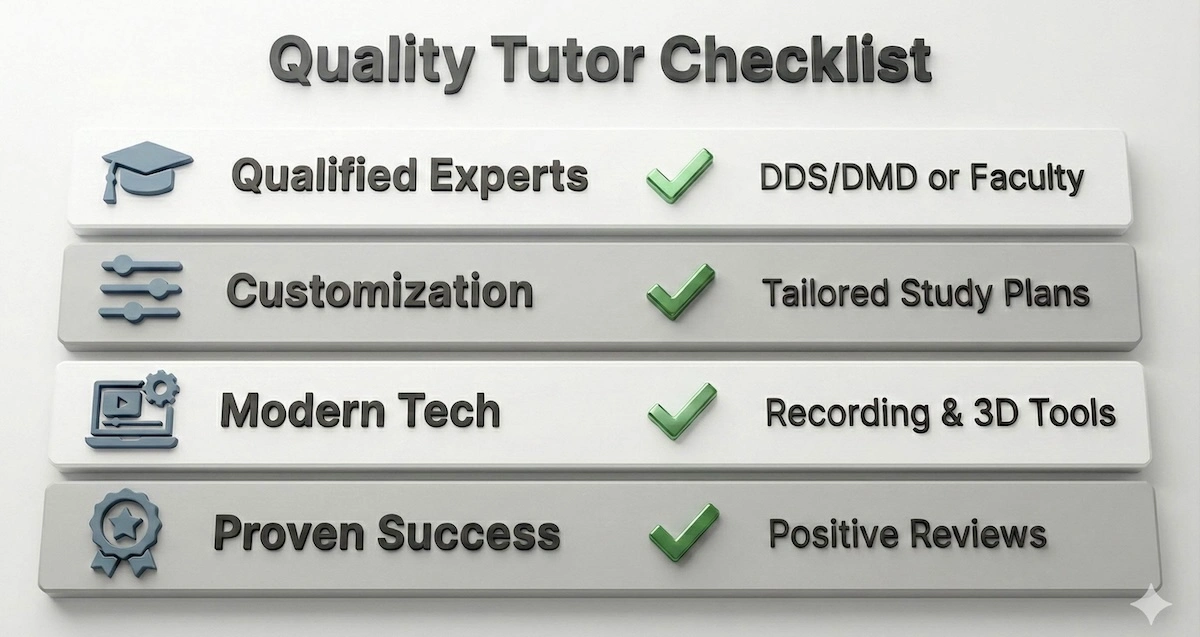
Ensure your tutoring service meets these four critical criteria to guarantee the best academic outcomes.
Tutor Qualifications and Experience
The most important consideration is tutor expertise. Look for services that employ practicing dentists, dental school faculty, or recent graduates with strong academic records. Qualified tutors should possess both deep subject knowledge and teaching ability, ideally with experience in dental education.Reputable services provide detailed tutor profiles including educational background, clinical experience, and student feedback. Some platforms require tutors to demonstrate their expertise through testing or portfolio review before joining their network.Customization and Flexibility
Effective dentistry academic support services offer personalized approaches tailored to individual student needs. This includes initial assessments to identify strengths and weaknesses, customized study plans, and flexible scheduling options.Quality services also provide multiple tutoring formats, from one-on-one sessions to small group instruction, allowing students to choose the approach that works best for their learning style and budget.Technology Platform and Resources
Modern tutoring platforms should offer reliable technology, user-friendly interfaces, and comprehensive educational resources. Look for services that provide recorded sessions, practice materials, and progress tracking tools.The platform should also ensure data privacy and security, particularly important when discussing academic performance and personal information.Understanding how to evaluate the cost-effectiveness of academic support tools is a skill in itself; students managing tight budgets may also benefit from reading about project management tutoring online, which covers how structured learning support translates into measurable academic and career outcomes.Cost Considerations and Value Proposition
Understanding the investment in professional tutoring requires considering both immediate costs and long-term benefits. Quality dentistry tutoring services typically range from $20 to $40 per hour, though specialized services or highly experienced tutors may charge more.When evaluating costs, consider the potential return on investment. Improved academic performance can lead to better clinical skills, higher board exam scores, and enhanced career opportunities. For students struggling academically, tutoring may prevent the need to repeat courses or extend their education timeline, ultimately saving both time and money.Many tutoring services offer package deals, group rates, or sliding scale pricing to improve accessibility. Some also provide satisfaction guarantees, allowing students to request refunds if they’re not satisfied with the service quality.Dental students who also carry coursework in health economics or resource allocation may find that building skills through engineering economics tutoring sharpens the analytical thinking needed to evaluate cost-benefit decisions in both academic and clinical contexts.Success Stories and Academic Outcomes
The impact of professional dentistry tutoring extends beyond improved grades to encompass enhanced understanding, increased confidence, and better preparation for dental careers. Students who utilize these services often report transformative educational experiences.Lisa Rodriguez, now practicing general dentistry in Texas, reflects on her tutoring experience: “Struggling with organic chemistry threatened my dental school dreams. My tutor didn’t just help me pass the course — they taught me how to think systematically about chemical reactions and molecular interactions. That foundation served me throughout dental school and continues to help me understand new materials and techniques in practice.”Academic institutions also recognize the value of tutoring support. The University of California, Los Angeles School of Dentistry reports that students who participate in tutoring programs show significantly higher clinical competency scores and improved patient care outcomes.Future Trends in Dentistry Education and Tutoring
The landscape of dental education continues evolving, driven by technological advances, changing patient needs, and new understanding of effective teaching methods. These trends are shaping the future of dentistry teaching and tutoring services.Artificial intelligence and machine learning are beginning to personalize educational experiences, identifying individual learning patterns and adapting content accordingly. Virtual and augmented reality technologies promise to revolutionize clinical skills training, allowing students to practice procedures in risk-free environments.The integration of interprofessional education is also expanding, with dental students increasingly learning alongside medical, nursing, and other healthcare students. This trend creates new opportunities for collaborative tutoring approaches that emphasize teamwork and communication skills.Additionally, the growing emphasis on evidence-based practice in dentistry is influencing educational approaches. Tutoring services are incorporating more research methodology, critical thinking, and data analysis into their offerings to prepare students for careers in modern dental practice.Students interested in how structured, flexible learning models are evolving across disciplines may find the discussion of physical education tutoring online a useful parallel — it explores how expert-led online support adapts to hands-on, skills-based subjects much like dentistry.Getting Started with Dentistry Tutoring
For students considering professional tutoring support, the first step involves honest assessment of academic needs and goals. Identify specific subjects or skills where additional help would be most beneficial, then research available services and tutor qualifications.Most reputable tutoring services offer initial consultations or trial sessions, allowing students to evaluate teaching style and compatibility before making longer-term commitments. Use these opportunities to discuss learning objectives, preferred communication methods, and scheduling requirements.When beginning tutoring, come prepared with specific questions, recent assignments, and clear goals for each session. The most successful tutoring relationships involve active student participation and honest communication about challenges and progress.Remember that tutoring is most effective when combined with consistent individual study and active class participation. View tutoring as a complement to, not replacement for, personal effort and engagement with course material.Frequently Asked Questions About Dentistry Tutoring
What qualifications should I look for in a dentistry tutor?
Look for dentistry tutors with dental degrees, teaching experience, or advanced training in the specific dental subjects you need help with.
How much does professional dentistry tutoring typically cost?
Quality dentistry tutoring services generally range from $20–$40 per hour, though rates vary based on tutor experience and specialization.
Can online dentistry tutoring be as effective as in-person sessions?
Yes, modern online platforms offer interactive tools and resources that can match or exceed traditional in-person dentistry instruction effectiveness.
When should dental students consider getting tutoring support?
Dental students should consider tutoring when struggling with specific subjects, preparing for major exams, or wanting to enhance their understanding of complex material.
How do I find reputable dentistry tutoring services?
Research dentistry tutoring services with qualified tutors, positive student reviews, transparent pricing, and comprehensive support resources for dental education.
What subjects do dentistry tutors typically cover?
Professional dentistry tutors cover pre-dental coursework, DAT preparation, basic sciences, clinical subjects, and specialized dental topics like oral pathology and periodontics.
Related Subjects
Dental anatomy Dental materials Dental Occlusion Endodontics Operative dentistry Oral histology Oral Medicine and Radiology Oral pathology Oral Surgery Orthodontics Periodontology ProsthodonticsRelated Reading
******************************
This article provides general educational guidance only. It is NOT official exam policy, professional academic advice, or guaranteed results. Always verify information with your school, official exam boards (College Board, Cambridge, IB), or qualified professionals before making decisions. Read Full Policies & Disclaimer , Contact Us To Report An Error