The Unseen Science: A Deep Dive into Food Engineering Explained

- Food engineering applies engineering principles to food production, safety, and distribution.
- Core subjects include thermodynamics, fluid mechanics, mass transfer, and process design.
- Food engineers differ from food scientists: engineers design the process, scientists design the product.
- Career paths span process engineering, R&D, quality assurance, packaging, and regulatory affairs.
- The field is growing, driven by food safety demands and new product innovation.
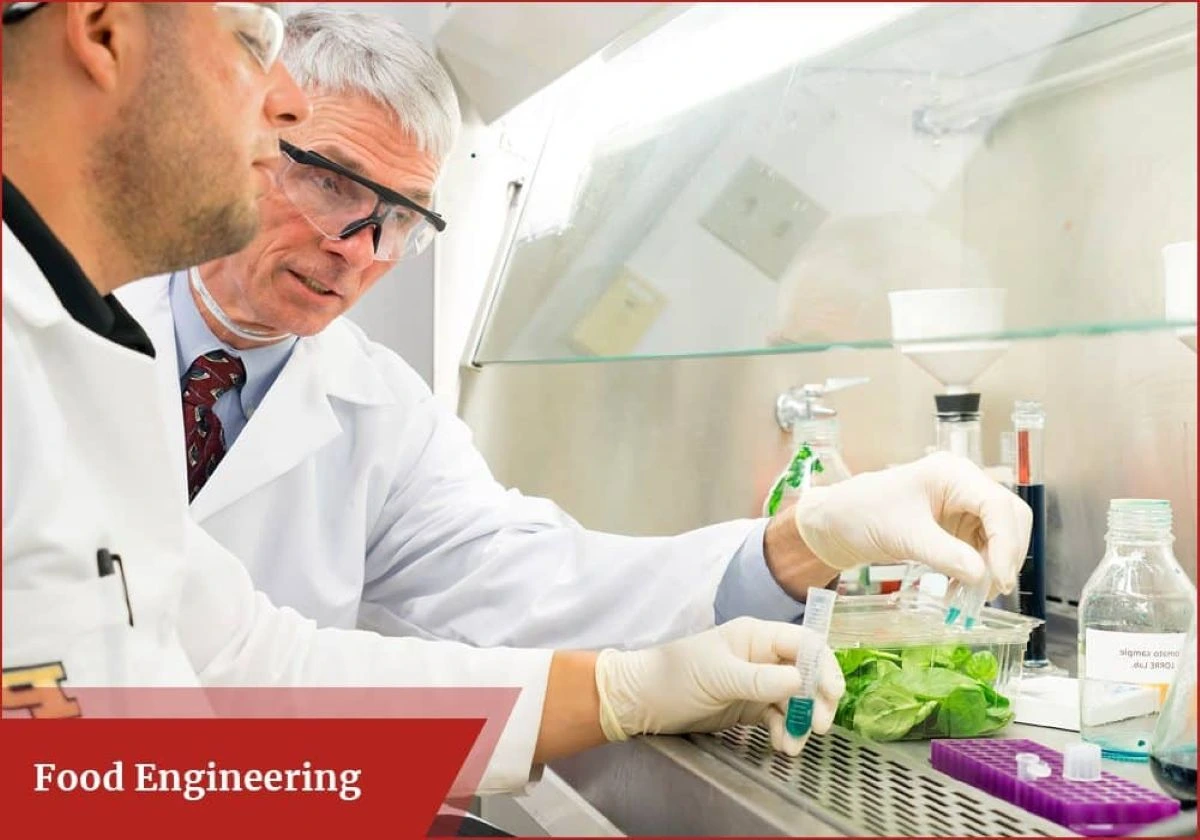 Have you ever wondered how your favorite potato chips always have the perfect crunch? Or how milk can travel hundreds of miles to your grocery store without spoiling? The answer isn’t magic; it’s a fascinating field of science and problem-solving called Food Engineering.It’s the invisible force that shapes our modern food supply, blending biology, chemistry, and physics with hardcore engineering principles. It’s a world where thermodynamics ensures your ice cream is perfectly frozen and where fluid dynamics helps design a system that can fill thousands of juice bottles an hour without a single spill.
What Exactly Is Food Engineering?
At its core, food engineering is the application of engineering principles to the storage, processing, and distribution of food materials. Think of a civil engineer designing a bridge. They must understand materials, stress points, and environmental factors to build a structure that is safe and efficient. A food engineer does something similar, but their “structure” is the entire process of transforming raw agricultural products into the safe, tasty, and convenient foods we enjoy every day.To understand this better, let’s compare it to a field you might be more familiar with: Civil Engineering.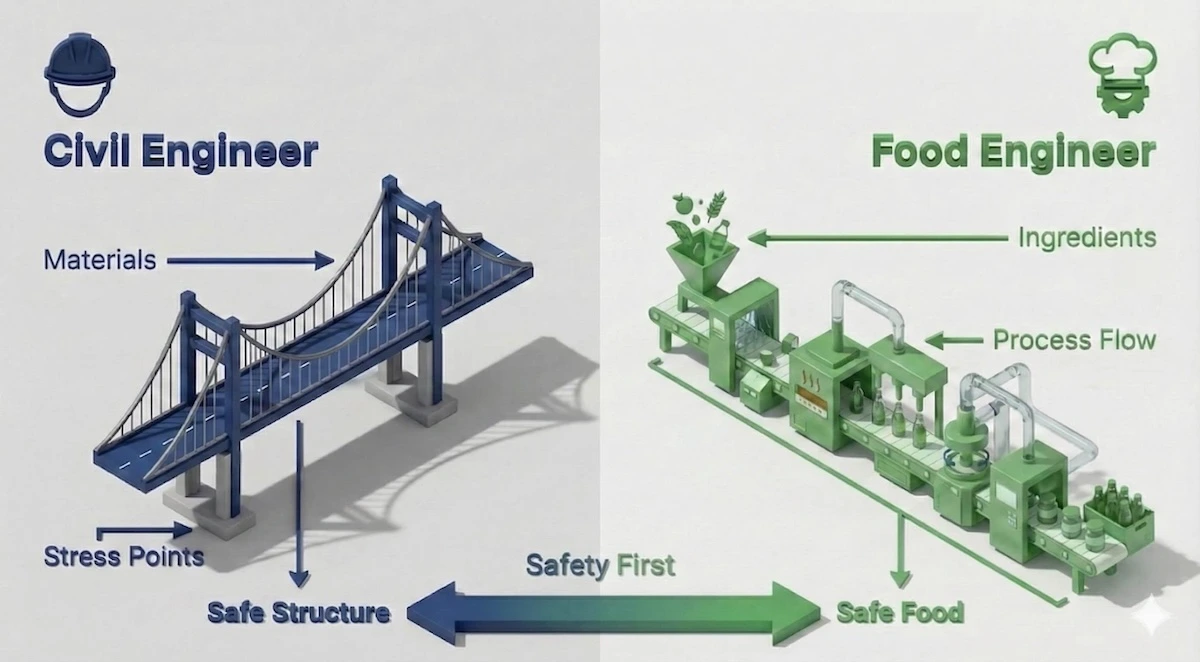
Just as civil engineers design safe bridges, food engineers design safe processing lines for our food supply.
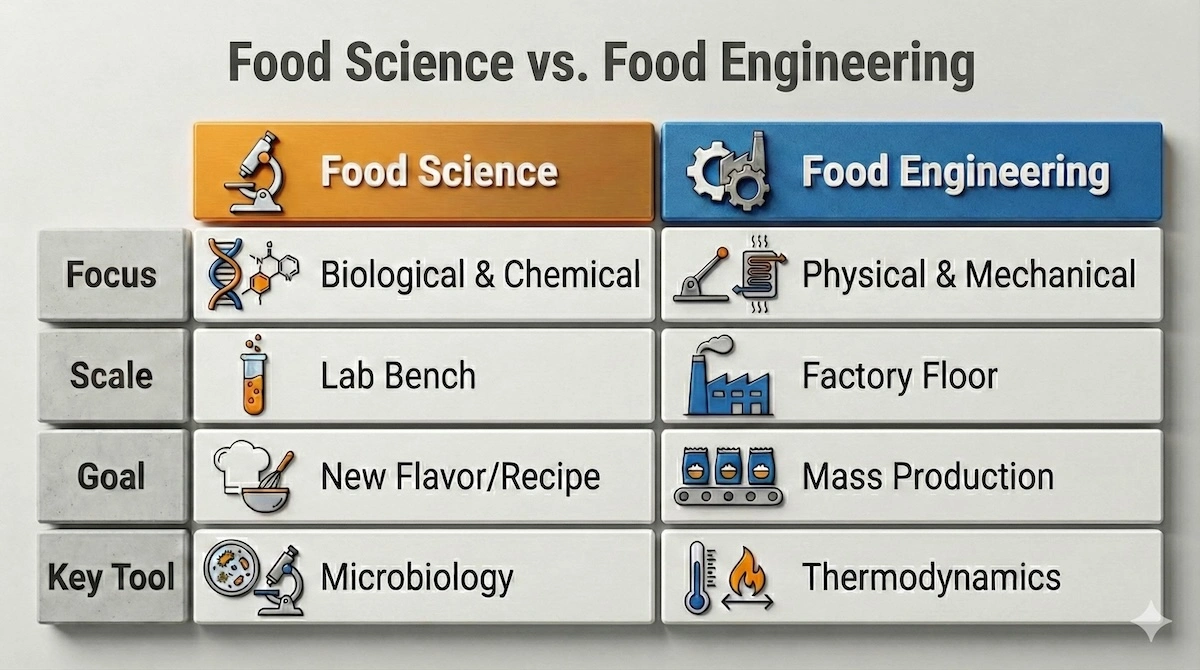
While scientists develop the recipe in the lab, engineers design the process to make it at scale.
The Challenging Journey of a Food Engineering Student
The curriculum for a food engineering student is intense and multidisciplinary. It’s not just about a love for food; it’s about mastering complex technical subjects. Students dive deep into:- Food Chemistry and Microbiology: Understanding the molecular composition of food and the microorganisms that can affect it, for better or worse.
- Thermodynamics: The principles governing heat transfer, are crucial for designing processes like pasteurization, freezing, and drying.
- Fluid Mechanics: How do you efficiently pump a thick substance like tomato paste through pipes? This is where fluid mechanics comes in.
- Mass Transfer: Essential for processes like dehydration or creating carbonated beverages.
- Process Design and Control: This is the capstone of their studies, where students learn to design an entire food production facility, from raw material intake to final packaging.
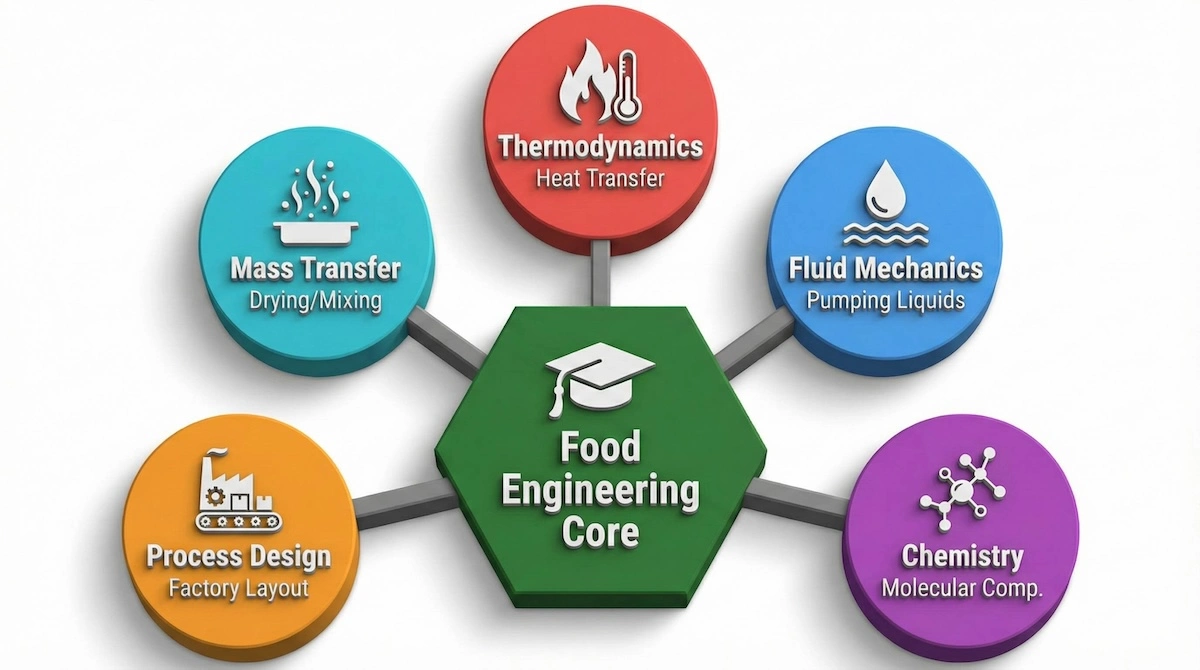
Mastering these five core disciplines is essential for designing safe and efficient food production systems.
Why Food Engineering Is More Important Than Ever
The work of a food engineer impacts our lives daily in ways we often take for granted. Their innovations are key to solving some of the world’s biggest challenges.Ensuring Food Safety
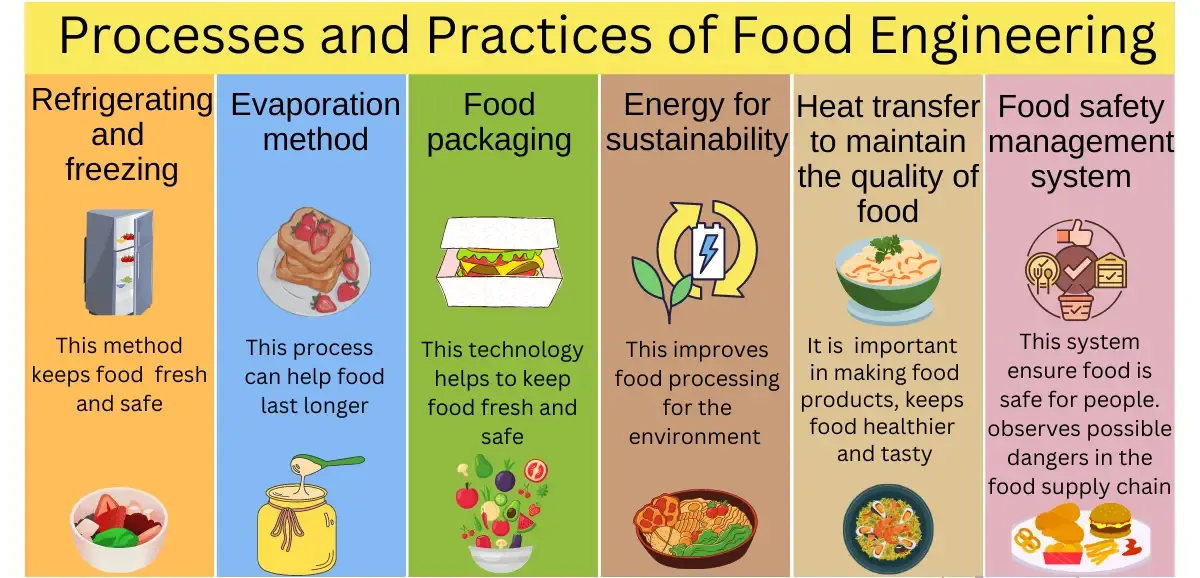
From designing Hazard Analysis and Critical Control Points (HACCP) systems to developing pasteurization techniques that kill harmful bacteria without destroying nutrients, food engineers are the guardians of our food supply’s safety.How does engineering actually ensure safety? Let’s look at the journey from the farm to your table.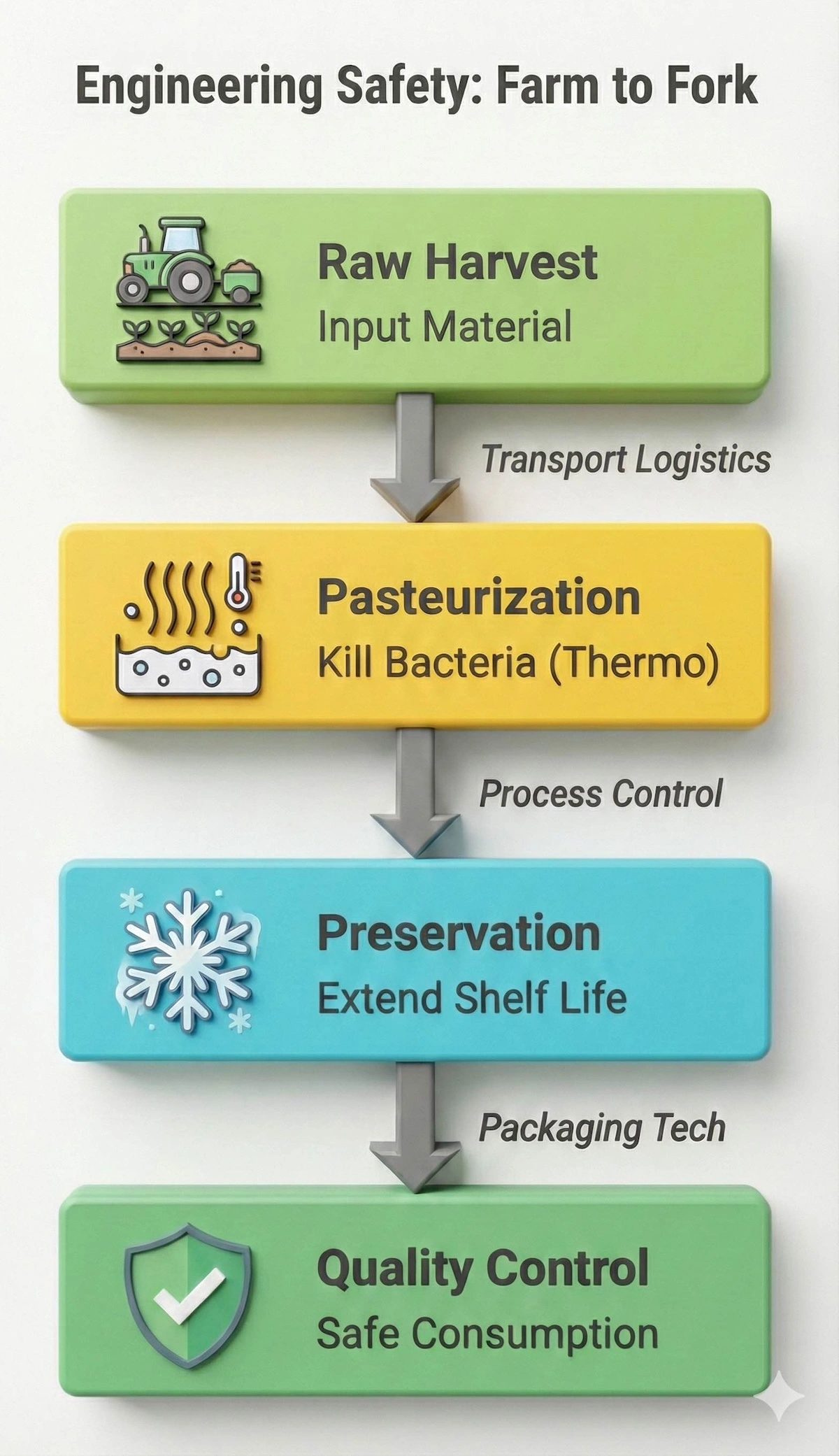
From pasteurization to packaging, engineering principles ensure safety at every step of the food supply chain.
Extending Shelf Life and Reducing Waste
Modified atmosphere packaging that keeps your salad greens fresh, aseptic packaging that allows milk and soups to be stored for months without refrigeration—these are all triumphs of food engineering. They dramatically reduce food waste and make food more accessible to people in remote areas.Innovation and New Product Development
The explosion of new food products—from gluten-free bread that actually tastes good to the next generation of plant-based burgers—is driven by food engineers. They figure out how to scale up new ideas from a lab bench to a factory floor, creating the foods that meet changing consumer demands for health, convenience, and sustainability.The global processed food market is a multi-trillion dollar industry, and its growth is powered by the constant innovation that food engineers bring to the table. This creates a high demand for skilled graduates.Navigating the Toughest Academic Hurdles
Sarah’s struggle with thermodynamics is just one example. Many students find the jump to advanced process design particularly challenging. A final year project might ask them to design a complete potato chip factory, calculating the energy requirements for the fryers, the logistics of the conveyor belts, and the specifications for the packaging line. It’s a massive undertaking that requires integrating knowledge from half a dozen different courses.This is where many students and even their parents start looking for support beyond the classroom. One-on-one sessions allow for a focused approach, turning abstract equations into real-world solutions. When a student can ask questions freely and work through problems at their own pace, their confidence and competence soar.For complex projects and reports, getting expert guidance is a game-changer. Many students seek out specialized support to structure their work, verify their calculations, and ensure their final design is sound. It’s about learning from a mentor who has been there before.Students who also need to strengthen their grasp of motion and forces will find that working with an engineering dynamics tutor can directly support the process design and mechanical analysis components of their coursework. For those preparing for licensure exams, resources on the FE Civil exam offer useful context on how foundational engineering principles are tested professionally.
Finding the Right Support in a Digital World
In today’s interconnected world, help is no longer limited by geography. For students in the USA, UK, or the Gulf countries, finding a local expert in a niche field like food engineering can be difficult. This is why online tutoring for food engineering has become such a valuable resource.Imagine being able to connect with an experienced food engineering teacher from halfway across the world, at a time that fits your schedule. This flexibility is crucial for busy college students juggling classes, labs, and part-time jobs. Using virtual whiteboards, shared screens, and instant messaging, a good online tutor can be just as effective, if not more so, than an in-person one.When looking for support, it’s important to find more than just an answer-giver. The goal is to find a true mentor who can foster a deeper understanding of the subject. The best tutoring doesn’t just solve a problem; it teaches the student how to solve the problem, building skills that last a lifetime.Students who want to benchmark their exam readiness alongside their degree studies may also find it helpful to review preparation strategies for the FE Mechanical exam, which covers many of the same core engineering principles. For broader context on engineering study strategies, the guide on A-Level engineering past papers offers practical advice on working through technical problem sets.A World of Career Opportunities
A degree in food engineering opens doors to a vast and stable industry. Graduates are in high demand across various sectors. The U.S. Bureau of Labor Statistics projects steady employment growth for agricultural and food scientists, a closely related field, highlighting the stable and growing need for these skills.Some exciting career paths include:- Process Engineer: Working in a manufacturing plant to optimize production lines, improve efficiency, and ensure quality control.
- Research & Development (R&D) Scientist: Creating the next generation of food products, from innovating new flavors to developing healthier formulations.
- Quality Assurance Manager: Ensuring that all products leaving the factory meet strict safety and quality standards.
- Packaging Engineer: Designing sustainable, durable, and innovative packaging solutions that protect food and appeal to consumers.
- Regulatory Affairs Specialist: Navigating the complex world of food law and government regulations to ensure products are compliant.
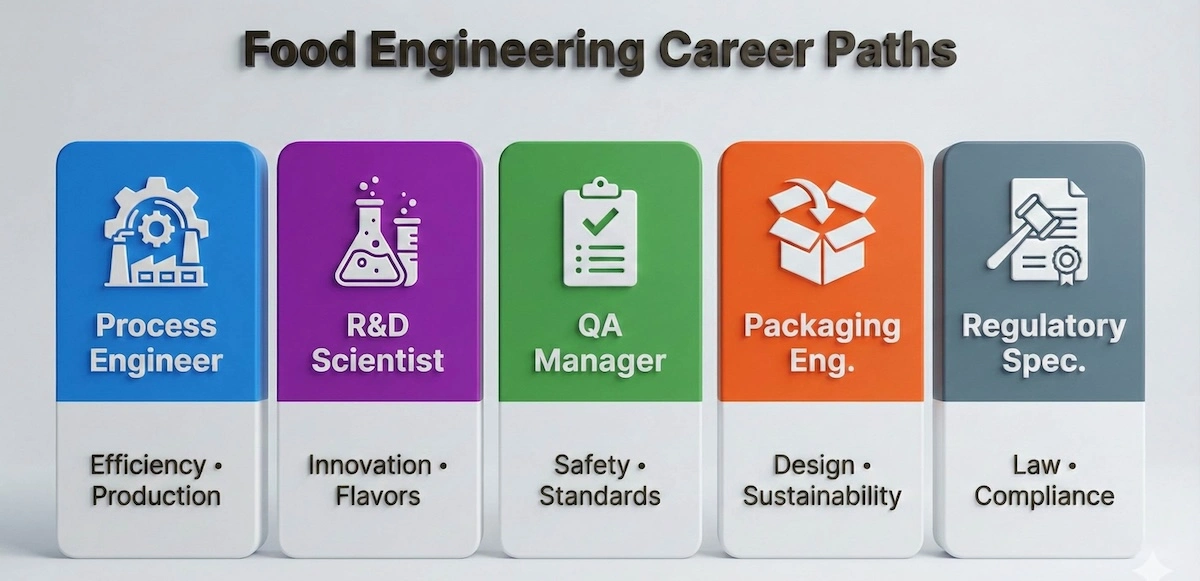
A degree in food engineering opens doors to diverse roles in production, research, quality assurance, and design.
The Future Is Flavorful and Engineered
The field of food engineering is constantly evolving. From using AI to optimize supply chains to developing 3D-printed food, the future is full of exciting challenges and opportunities. It’s a career path for the curious, the problem-solvers, and those who want to make a tangible impact on the world.The journey through a food engineering degree is demanding, but it’s also incredibly rewarding. For those moments when the path gets tough, remember that support is available. Whether it’s through dedicated tutoring or collaborative study, the key is to build a deep and lasting understanding of the principles that feed the world.Students applying to engineering programs who want to strengthen their personal statement can find guidance in this resource on writing a UCAS 2026 engineering personal statement.Frequently Asked Questions About Food Engineering
Is food engineering a good career?
Yes, food engineering offers stable, well-paying careers in a resilient industry with a direct impact on global health and sustainability.
What is the difference between food science and food engineering?
Food science focuses on the chemistry and microbiology of food, while food engineering applies engineering principles to design large-scale production processes.
Are online tutors effective for a hands-on subject like food engineering?
Absolutely, online tutors use interactive tools to effectively explain complex theories and guide students through design problems and assignments.
What kind of student succeeds in food engineering?
Students who are strong in math and science, enjoy problem-solving, and are curious about how things work tend to excel in food engineering.
Can I get help with a specific food engineering project?
Yes, many services offer specialized project and assignment help to guide students through complex design and analysis tasks in food engineering.
How much does food engineering support typically cost?
Quality tutoring and academic help for food engineering are often available at reasonable hourly rates, making expert guidance accessible for most students.
Related Subjects
Food Biotechnology Food Preservation Food Processing Food ScienceRelated Reading
******************************
This article provides general educational guidance only. It is NOT official exam policy, professional academic advice, or guaranteed results. Always verify information with your school, official exam boards (College Board, Cambridge, IB), or qualified professionals before making decisions. Read Full Policies & Disclaimer , Contact Us To Report An Error