From Classrooms to Careers: How Linguistics Tutoring Online Empowers Students for the Future

Linguistics tutoring online offers personalized support for students navigating the complex scientific study of language, providing expert guidance in phonetics, syntax, semantics, and morphology while addressing common academic challenges through flexible, technology-enhanced learning experiences that prepare students for diverse career opportunities in an increasingly AI-driven linguistic landscape.
Understanding Linguistics: The Scientific Gateway to Human Communication
The study of linguistics represents one of humanity’s most fascinating academic pursuits, examining the intricate systems that govern how we communicate, express ideas, and connect across cultures. Linguistics is the scientific study of language, encompassing everything from the physical production of speech sounds to the complex social dynamics that shape how different communities use language.
This multifaceted field attracts students from diverse backgrounds, each drawn to understand the fundamental questions about human language: How do children acquire their native languages so effortlessly? Why do languages change over time? How do different cultures encode meaning through linguistic structures? These questions form the foundation of linguistic inquiry and drive the academic pursuits of thousands of students worldwide.
Consider Sarah, a second-year linguistics major who initially struggled with phonetic transcription and syntactic analysis. Through dedicated linguistics tutoring online, she not only mastered the International Phonetic Alphabet but also developed a deep appreciation for how sound systems vary across languages. Her story illustrates the transformative power of personalized academic support in this challenging but rewarding field.
The Expansive Branches of Modern Linguistics
Contemporary linguistics encompasses numerous specialized subfields, each offering unique insights into different aspects of human language. Theoretical linguistics forms the core of the discipline, focusing on universal properties of language through phonetics (speech sound production), phonology (sound systems), morphology (word structure), syntax (sentence structure), semantics (meaning), and pragmatics (language in context).
To help you visualize how these diverse fields connect to form the complete science of language, refer to the breakdown below.
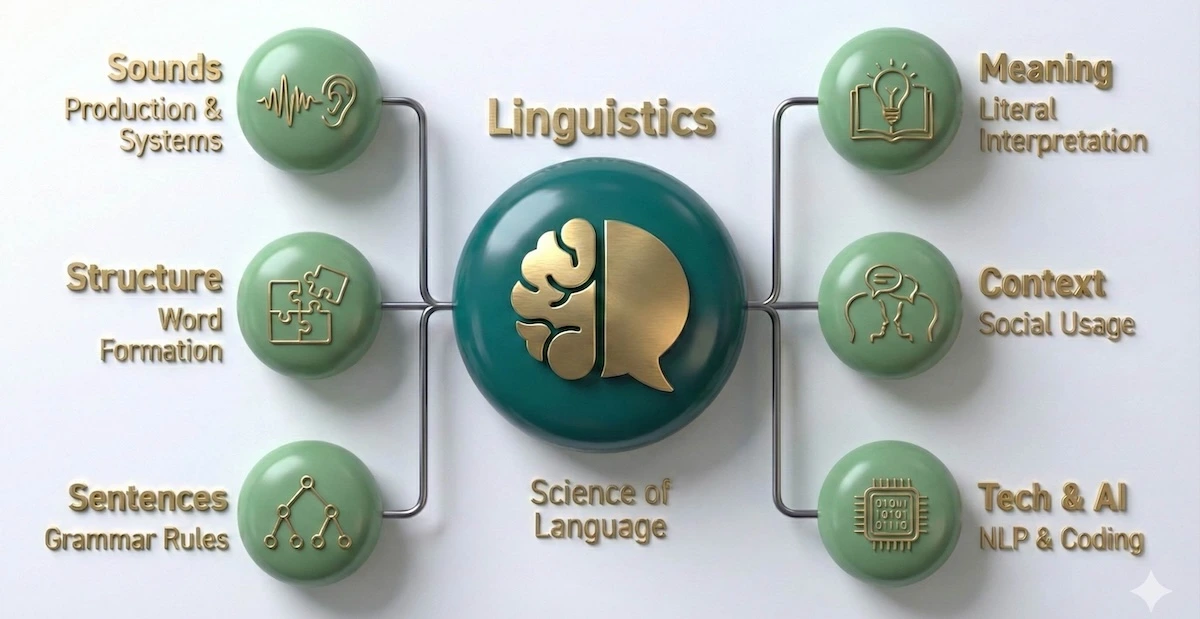
Visualizing the core branches of linguistics helps students understand how different subfields connect to form the complete science of human communication.
As you can see, while each branch is distinct, they all interconnect to explain the complex phenomenon of human communication.
Applied linguistics bridges theoretical knowledge with practical applications, addressing real-world language problems through language education, translation, computational linguistics, and speech therapy. This field has experienced remarkable growth, with the global language learning market projected to reach $120.5 billion by 2030, growing at a CAGR of 10.5%.
Sociolinguistics examines how language varies across different social groups and contexts, while psycholinguistics investigates the cognitive processes underlying language acquisition, comprehension, and production. Historical linguistics traces language evolution over time, and neurolinguistics explores the brain mechanisms that support language function.
Computational linguistics represents one of the fastest-growing areas, combining linguistic theory with computer science to develop natural language processing systems, machine translation tools, and artificial intelligence applications. The average salary for computational linguists ranges from $75,519 in the United States to £54,521 in the United Kingdom.
Emerging Interdisciplinary Connections
Modern linguistics increasingly intersects with other disciplines, creating exciting opportunities for students interested in interdisciplinary research. Biolinguistics examines the biological foundations of language capacity, while forensic linguistics applies linguistic analysis to legal contexts, including authorship identification and voice analysis.
Clinical linguistics focuses on language disorders and therapeutic interventions, connecting directly to speech-language pathology careers that typically offer salaries ranging from $80,000 to $90,000 annually, with potential for six-figure earnings with experience.
Academic Challenges in Linguistics Studies
Students pursuing linguistics degrees encounter several distinctive challenges that require targeted support and effective study strategies. Understanding complex theoretical frameworks represents one of the most significant hurdles, particularly when grappling with abstract concepts in generative grammar, phonological theory, or semantic analysis.
Data analysis difficulties frequently emerge when students must work with linguistic datasets, parse syntactic structures, or conduct phonetic analysis. Many students report feeling overwhelmed by the volume and complexity of data involved in empirical linguistic research, especially those new to quantitative methods and statistical analysis.
Terminology mastery poses another substantial challenge, as linguistics employs extensive specialized vocabulary across its various subfields. Students must learn not only basic linguistic terms but also field-specific jargon for areas like morphophonology, pragmatic inference, or corpus linguistics.
Academic writing requirements in linguistics differ significantly from other humanities disciplines, demanding students to balance theoretical understanding with empirical data analysis. Linguistics essays must often integrate statistical findings, phonetic transcriptions, syntactic trees, and theoretical argumentation in a cohesive, scholarly format.
Interdisciplinary integration challenges arise when linguistics coursework draws from psychology, anthropology, computer science, or cognitive neuroscience, requiring students to quickly assimilate concepts from unfamiliar academic domains.
Language-Specific Learning Barriers
International students and non-native English speakers face additional obstacles in linguistics programs. Research indicates that language barriers significantly impact academic performance, affecting students’ ability to comprehend lectures, participate in discussions, and complete written assignments effectively. These challenges extend beyond basic language proficiency to include understanding cultural nuances embedded in linguistic examples and theoretical discussions.
The Transformative Benefits of Online Linguistics Tutoring
Linguistics tutoring online addresses these academic challenges through personalized, flexible support systems designed specifically for linguistic studies. Unlike traditional classroom settings, online tutoring provides individualized attention that allows students to progress at their own pace while receiving immediate feedback on complex concepts.
Personalized learning approaches represent the primary advantage of online linguistics tutoring. Expert tutors can adapt their teaching methods to match individual learning styles, whether students are visual learners who benefit from syntactic trees and phonetic charts, or auditory learners who need to hear pronunciation examples and theoretical explanations.
Flexible scheduling enables students to receive support when they need it most, particularly valuable for linguistics students who often encounter assignment deadlines across multiple challenging courses simultaneously. The 24/7 availability of online tutoring platforms ensures that students can access help during optimal study times, whether they prefer early morning sessions or late-night review periods.
Access to specialized expertise through online platforms connects students with linguistics professionals who possess advanced degrees and practical experience in specific subfields. This access proves particularly valuable for students working on specialized topics like endangered language documentation, computational phonology, or cross-linguistic syntactic analysis.
Technology-enhanced learning tools available through online tutoring platforms include interactive whiteboards for drawing syntactic trees, audio recording capabilities for phonetic practice, and screen-sharing features for collaborative data analysis. These technological advantages create engaging learning environments that support the visual and auditory components essential to linguistics education.
Cost-effective support makes linguistics tutoring accessible to a broader range of students. Online tutoring typically costs 20-50% less than in-person alternatives while providing comparable or superior educational outcomes.
When we compare traditional classroom methods with modern online tutoring, the advantages in flexibility and personalization become clear.
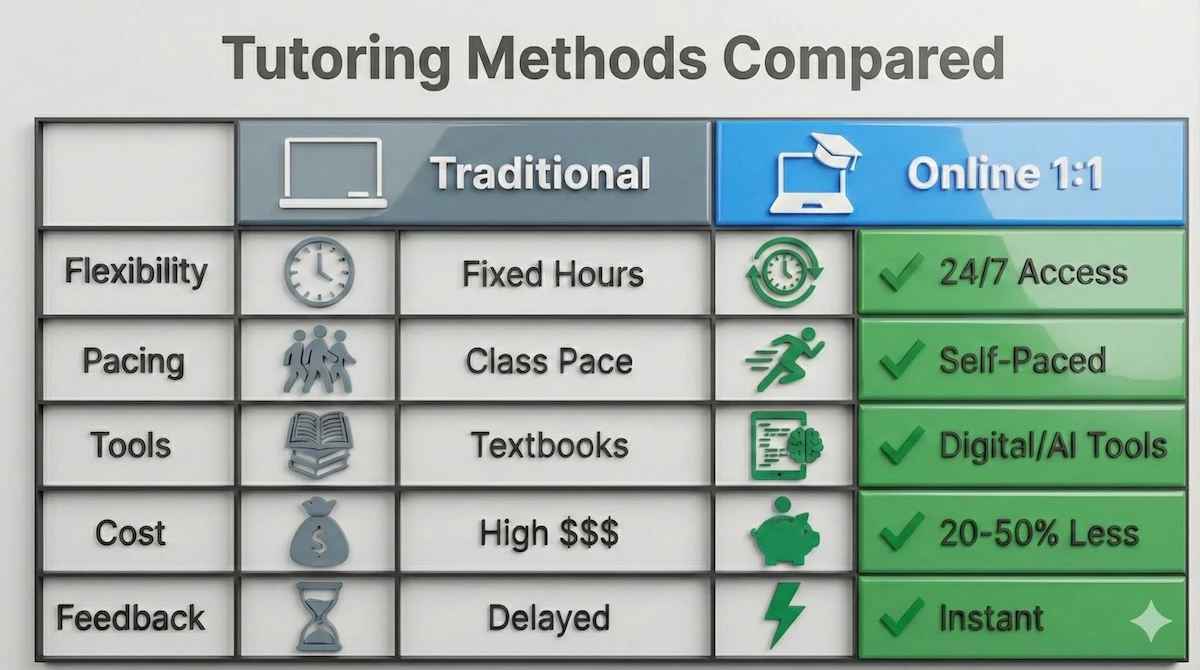
Comparing traditional methods with online linguistics tutoring reveals significant advantages in flexibility, cost-effectiveness, and personalized learning speeds.
The shift to online learning doesn’t just offer convenience; it provides the specific tools and feedback loops essential for mastering complex linguistic data.
Homework and Assignment Support
Linguistics homework help through online tutoring addresses specific assignment types common in linguistic coursework. Students receive targeted support for phonetic transcription exercises, morphological analysis problems, syntactic parsing assignments, and semantic interpretation tasks.
Linguistics assignment help extends beyond basic homework completion to include guidance on research methodology, data collection techniques, and academic writing conventions specific to linguistic scholarship. Tutors help students understand how to formulate research questions, design experiments, and present findings according to disciplinary standards.
Career Prospects and Professional Opportunities
The linguistics job market offers diverse opportunities across multiple sectors, with particularly strong growth in technology-related fields. Average linguist salaries range from $67,293 for entry-level positions to $135,000 for experienced professionals, with the national average reaching $81,575.
The financial outlook for linguistics graduates is strong, particularly for those who combine their skills with technology. The chart below illustrates current salary trends.
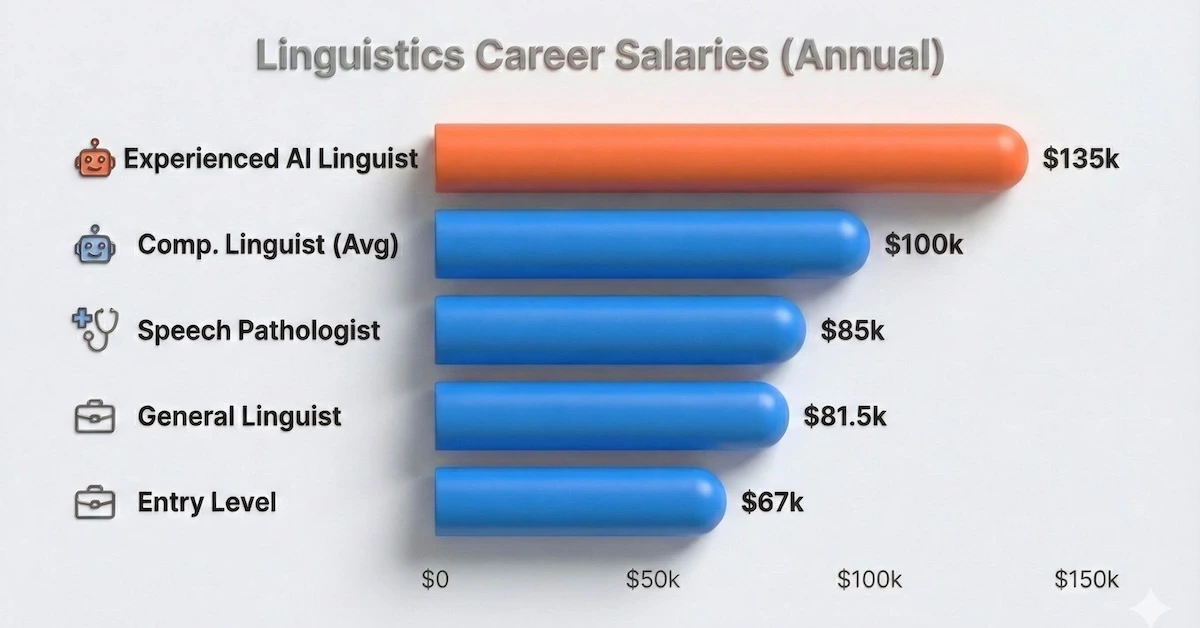
Current market data shows strong earning potential for linguistics graduates, particularly in computational and technology-focused roles.
As shown, specialization in computational fields significantly increases earning potential, though traditional roles remain stable and rewarding.
- Technology sector careers provide some of the most lucrative opportunities for linguistics graduates. Computational linguists working in artificial intelligence, natural language processing, and speech recognition technologies earn average salaries of $75,519-$125,000 annually. Major technology companies actively recruit linguistics graduates for roles in machine learning, voice assistant development, and language model training.
- Education and academia remain popular career paths, offering opportunities to teach at secondary schools, colleges, and universities while conducting original research. Foreign language instruction, English as a Second Language (ESL) teaching, and curriculum development provide stable career options with growing demand globally.
- Government and public service positions include roles with intelligence agencies, diplomatic services, and research institutions. The U.S. government employs linguists for translation, analysis, and cultural consultation services, particularly in national security contexts.
- Healthcare applications connect linguistics to speech-language pathology, audiology, and therapeutic interventions. These careers typically require additional specialized training but offer strong job security and competitive compensation.
- Private sector opportunities span consulting, market research, publishing, and media industries. Companies increasingly value employees with linguistic expertise for international business development, cultural sensitivity training, and multilingual communication strategies.
Emerging Career Trends
The integration of artificial intelligence with linguistic applications creates new career possibilities in voice technology, chatbot development, and automated translation systems. Industry experts predict continued growth in AI-related linguistic careers, with demand for professionals who understand both theoretical linguistics and practical technology applications.
Effective Study Strategies for Linguistics Success
- Active learning techniques prove particularly effective for linguistics students. Rather than passively reading textbooks or listening to lectures, successful students engage with linguistic data through hands-on analysis, practice exercises, and collaborative problem-solving.
- Spaced repetition methods help students master the extensive vocabulary and complex theoretical frameworks encountered in linguistics courses. Regular review sessions spaced over time improve long-term retention of key concepts, terminology, and analytical procedures.
Success in linguistics isn’t about memorization; it requires a cycle of active engagement. Here is a proven workflow to master new concepts.
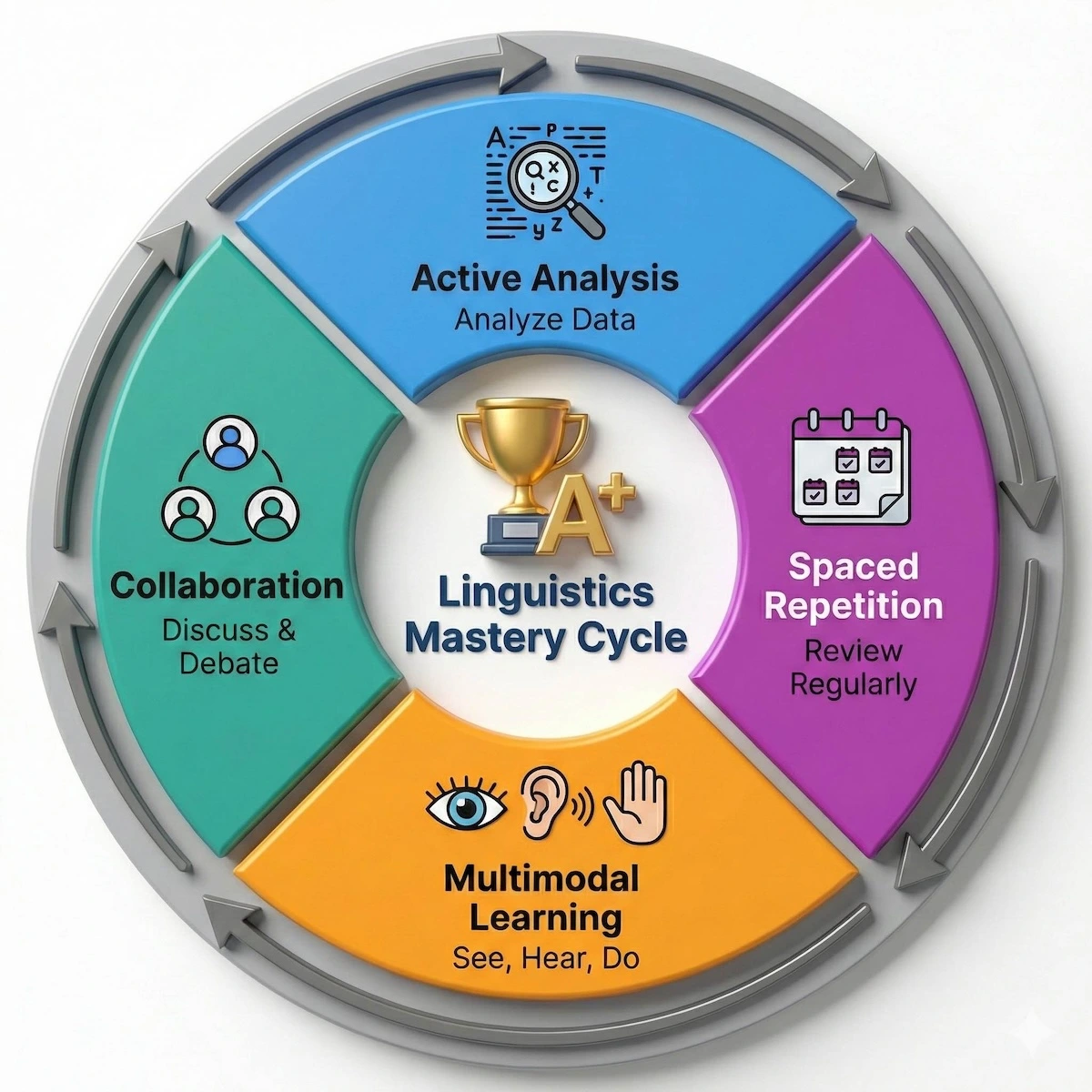
Implementing this four-step active study cycle helps students retain complex linguistic concepts and master data analysis more effectively.
By following this cycle—analyzing, repeating, and discussing—you move information from short-term memory to deep understanding.
- Multimodal learning approaches leverage different learning styles to reinforce understanding. Students benefit from combining visual elements (syntactic trees, phonetic charts), auditory components (pronunciation practice, recorded lectures), and kinesthetic activities (hands-on data collection, experimental participation).
- Collaborative study groups provide opportunities for peer learning and knowledge sharing. Students working together on linguistic analysis problems often discover alternative approaches and gain deeper insights through discussion and debate.
- Regular practice with authentic data builds analytical skills essential for professional success. Students should work with real linguistic data from diverse languages and contexts, developing proficiency in transcription, parsing, and interpretation techniques.
Technology Integration in Learning
Digital tools and resources enhance linguistics learning through corpus analysis software, phonetic analysis programs, and online language databases. Students who incorporate these technologies into their study routines develop valuable technical skills while deepening their understanding of linguistic phenomena.
Future Trends and Technological Integration
The future of the discipline lies at the intersection of human language and machine intelligence.
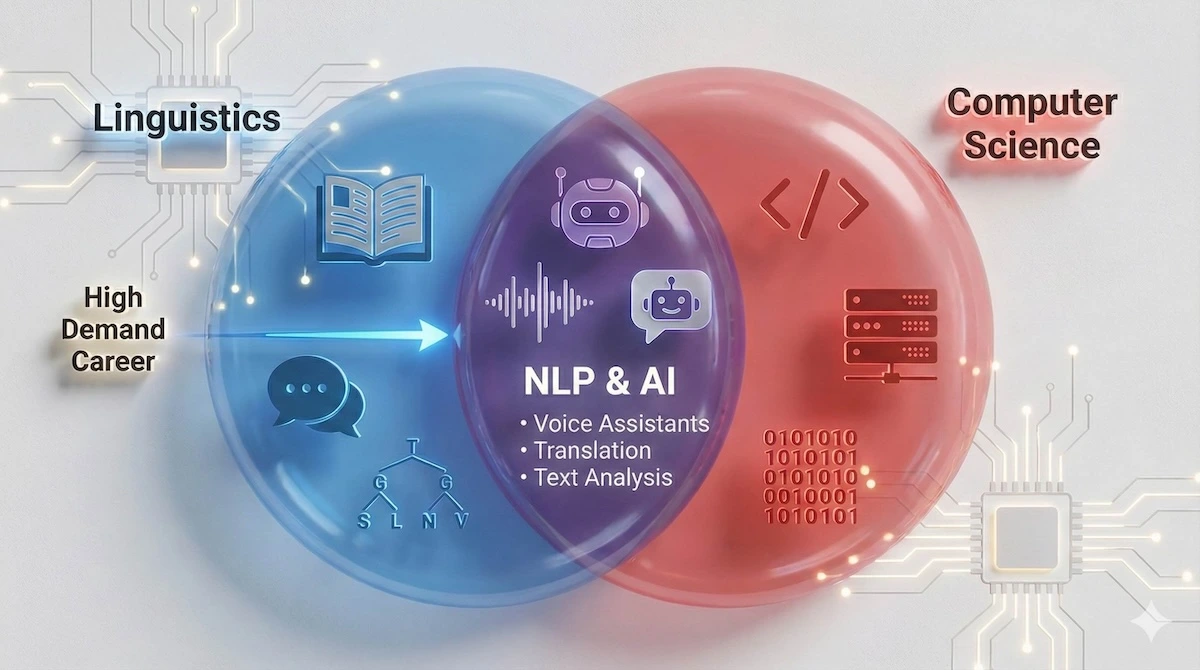
The convergence of linguistics and computer science creates the rapidly growing field of NLP, offering some of the most exciting career opportunities for graduates.
This convergence is creating entirely new industries, from Natural Language Processing (NLP) to ethical AI development.
The future of linguistics increasingly intertwines with technological advancement, particularly in artificial intelligence and natural language processing. AI-driven language technologies are reshaping how linguists conduct research, analyze data, and apply theoretical knowledge to practical problems.
- Machine learning applications enable linguists to process vast amounts of language data, identify patterns across languages, and test hypotheses at unprecedented scales. These developments create new research possibilities while requiring linguists to develop computational skills alongside traditional analytical methods.
- Real-time language analysis capabilities allow researchers to study language change as it occurs, monitoring social media, news sources, and digital communications for emerging linguistic trends. This technology transforms sociolinguistic research by providing access to massive, continuously updated language corpora.
- Multilingual AI systems require linguistic expertise to ensure accurate representation of diverse languages and cultures. This need creates career opportunities for linguists who can bridge the gap between theoretical knowledge and practical technology development.
- Voice technology advancement depends heavily on linguistic research in phonetics, phonology, and speech perception. The growing market for voice assistants, automated customer service, and accessibility technologies drives demand for linguistics professionals with relevant expertise.
Ethical Considerations and Social Impact
As linguistics increasingly intersects with technology, important ethical questions emerge regarding data privacy, linguistic diversity preservation, and cultural representation in AI systems. Future linguists must consider these broader social implications while developing technical competencies.
Maximizing Online Learning Success
Students seeking linguistics tutor online support should actively engage with their tutoring sessions by preparing specific questions, bringing actual coursework problems, and participating in collaborative analysis exercises. The most successful students view online tutoring as an interactive partnership rather than passive instruction delivery.
- Effective communication with online tutors involves clearly articulating areas of confusion, sharing relevant course materials, and providing feedback about learning preferences and goals. Students should utilize available technologies like screen sharing and digital whiteboards to maximize the educational value of each session.
- Consistent scheduling helps students maintain steady progress through challenging linguistic concepts. Regular tutoring sessions, even brief ones, prove more effective than infrequent lengthy sessions for building cumulative understanding.
- Active application of tutoring insights to coursework assignments and exam preparation ensures that students internalize and retain the knowledge gained through online support. The combination of expert guidance and practical application creates optimal learning conditions.
Conclusion
The field of linguistics offers intellectually rewarding academic experiences and diverse career opportunities for students willing to engage with its challenges. Through comprehensive support systems including linguistics teaching resources, linguistics teacher guidance, and specialized linguistics assignment help, students can successfully navigate the complexities of this fascinating discipline.
The integration of technology, particularly through linguistics tutoring online platforms, provides unprecedented access to expert instruction and personalized learning experiences. As artificial intelligence and computational methods continue transforming the linguistic landscape, students who develop strong foundational knowledge alongside technological competencies will find themselves well-positioned for success in academia, industry, and research.
The future of linguistics education lies in combining traditional scholarly rigor with innovative technological tools, creating learning environments that prepare students for the evolving demands of this dynamic field. Whether pursuing careers in technology, education, research, or applied linguistics, students who take advantage of comprehensive linguistics hw help and strategic study approaches will discover that the scientific study of language opens doors to understanding fundamental aspects of human cognition, culture, and communication.
Frequently Asked Questions
Q1 What makes linguistics different from simply learning multiple languages?
A: Linguistics is the scientific study of language structure, evolution, and use across cultures, while language learning focuses on practical communication skills in specific languages.
Q2 How can online tutoring specifically help with complex linguistic analysis assignments?
A: Online tutoring provides personalized guidance for phonetic transcription, syntactic parsing, and data analysis through interactive tools and expert feedback.
Q3 What career salary ranges can linguistics graduates expect in technology sectors?
A: Computational linguists earn average salaries of $75,519-$125,000 annually, with higher compensation for specialized AI and machine learning applications.
Q4 Are there good job prospects for linguistics majors outside of teaching?
A: Yes, diverse opportunities exist in technology, government, healthcare, consulting, and media, with particularly strong growth in AI-related fields.
Q5 How do I know if I need professional linguistics homework help?
A: Consider tutoring support if you struggle with theoretical concepts, data analysis, academic writing, or integrating interdisciplinary knowledge in assignments.
Q6 What’s the most effective way to study complex linguistic theories and terminology?
A: Use active learning techniques, spaced repetition, collaborative study groups, and hands-on practice with authentic linguistic data for optimal comprehension.
Related Subjects
Applied linguistics
Bilingualism
Computational linguistics
Discourse analysis
Historical linguistics
Morphology (linguistics)
Orthography
Phonetics
Phonology
Pragmatics
Psycholinguistics
Semantics
Sociolinguistics
Syntax
Verbal Reasoning
******************************
This article provides general educational guidance only. It is NOT official exam policy, professional academic advice, or guaranteed results. Always verify information with your school, official exam boards (College Board, Cambridge, IB), or qualified professionals before making decisions. Read Full Policies & Disclaimer , Contact Us To Report An Error