




Hire The Best Phonology Tutor
Top Tutors, Top Grades. Without The Stress!
52,000+ Happy Students From Various Universities



How Much For Private 1:1 Tutoring & Hw Help?
Private 1:1 Tutoring and HW help Cost $20 – 35 per hour* on average.
Struggling to tell a phoneme from a phone? Most students hit that wall in week three.
Phonology Tutor Online
Phonology is the branch of linguistics that studies sound systems in human languages — how phonemes, syllable structures, stress patterns, and tonal rules operate within a given language to produce and distinguish meaning.
MEB’s 1:1 online tutoring and homework help covers 2,800+ advanced subjects, including Phonology and the full range of linguistics tutoring subjects. Whether you’re decoding feature matrices for the first time or preparing a phonological analysis assignment, finding a Phonology tutor near me online means you get expert guidance matched to your exact course — without the commute. Sessions are live, corrective, and built around what your syllabus actually tests.
- 1:1 online sessions tailored to your course outline and syllabus
- Expert-verified tutors with postgraduate-level phonology knowledge
- Flexible time zones — US, UK, Canada, Australia, Gulf
- Structured learning plan built after a diagnostic session
- Ethical homework and assignment guidance — you understand the work before you submit
52,000+ students across the US, UK, Canada, Australia, and the Gulf have used MEB since 2008 — including students in Linguistics subjects like Phonology, Phonetics, and Morphology.
Source: My Engineering Buddy, 2008–2025.
How Much Does a Phonology Tutor Cost?
Most Phonology sessions run $20–$40/hr depending on level and topic complexity. Graduate and specialist phonology work (optimality theory, laboratory phonology, autosegmental frameworks) can reach up to $100/hr. New students can start with the $1 trial — 30 minutes of live 1:1 tutoring or one homework question explained in full.
| Level / Need | Typical Rate | What’s Included |
|---|---|---|
| Undergraduate (intro/intermediate) | $20–$35/hr | 1:1 sessions, homework guidance |
| Advanced / Graduate Level | $35–$100/hr | Expert tutor, specialist frameworks |
| $1 Trial | $1 flat | 30 min live session or 1 homework question |
Tutor availability tightens at the end of semester and during assignment submission weeks. Book early if your deadline is within four weeks.
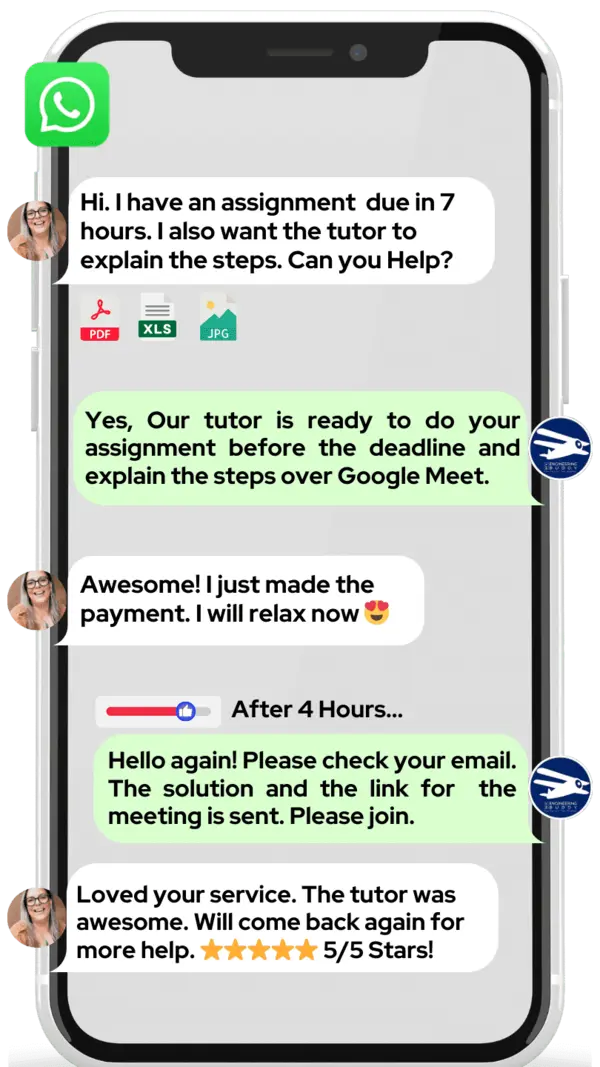
WhatsApp MEB for a quick quote — average response time under 1 minute.
Who This Phonology Tutoring Is For
Phonology attracts students from linguistics, speech-language pathology, cognitive science, and education programmes. The subject cuts across theory and analysis — and most students need support in at least one of those directions.
- Undergraduate linguistics students struggling with distinctive features, syllable trees, or phonological rules
- Graduate students writing phonological analyses for thesis chapters or seminar papers
- Students retaking after a failed first attempt at a phonology module
- Speech-language pathology students who need phonology grounded in clinical application
- Students with a university conditional offer depending on passing this module
- Parents watching a student’s confidence drop alongside their grades in a linguistics programme
MEB tutors have supported students at institutions including UCLA, University of Toronto, University College London, University of Edinburgh, University of Amsterdam, and Australian National University — among others. Start with the $1 trial and see whether the fit is right before committing to a full plan.
At MEB, we’ve found that phonology students often arrive knowing the terminology but unable to apply it. The gap isn’t vocabulary — it’s the analytical move from data to rule. That’s the skill a tutor targets in the first two sessions.
1:1 Tutoring vs Self-Study vs AI vs YouTube vs Online Courses
Self-study works if you’re disciplined, but phonological analysis is hard to self-check. AI tools explain rules quickly and can’t tell whether your rule ordering is wrong for the data you gave it. YouTube covers the basics well and stops when the problem gets specific to your dialect data or your assignment brief. Online courses move at a fixed pace with no room for the detour your actual homework requires. 1:1 tutoring with MEB is live, calibrated to your phonology course and syllabus, and corrects your analysis in the moment — before it becomes a pattern that costs marks.
Outcomes: What You’ll Be Able To Do in Phonology
After consistent 1:1 sessions, students can analyze phoneme inventories and write phonological rules with proper formalism, apply distinctive feature theory to explain contrasts in unfamiliar languages, model syllable structure using CV and moraic frameworks, explain the difference between underlying and surface representations, and present a phonological analysis of natural language data in the format their course requires. These aren’t abstract goals — they map directly to the assignment types and exam questions tutors see most often.
Based on feedback from 40,000+ sessions collected by MEB from 2022 to 2025, 58% of students improved by one full grade after approximately 20 hours of 1:1 tutoring in subjects like Phonology. A further 23% achieved at least a half-grade improvement.
Source: MEB session feedback data, 2022–2025.
Supporting a student through Phonology? MEB works directly with parents to set up sessions, track progress, and keep coursework on schedule. WhatsApp MEB — average response time is under a minute, 24/7.
What We Cover in Phonology (Syllabus / Topics)

Core Phonological Theory
- Phonemes, allophones, and complementary distribution
- Minimal pairs and contrastive analysis
- Distinctive feature theory (Chomsky & Halle SPE framework)
- Phonological rules: assimilation, deletion, insertion, metathesis
- Rule ordering and derivations
- Underlying vs surface representations
- Natural classes and phonological generalisation
Core texts: The Sound Pattern of English (Chomsky & Halle), Phonology: An Introduction to Basic Concepts (Lass), Introductory Phonology (Hayes).
Prosody and Suprasegmental Phonology
- Syllable structure: onset, nucleus, coda, rhyme
- CV and moraic theory
- Stress assignment: primary, secondary, stress feet
- Tone systems: level tones, contour tones, tone sandhi
- Intonation patterns and their grammatical functions
- Prosodic domains: the word, the phrase, the utterance
Core texts: The Handbook of Phonological Theory (Goldsmith, ed.), Metrical Stress Theory (Hayes), A Course in Phonetics (Ladefoged & Johnson).
Optimality Theory and Non-Linear Phonology
- OT fundamentals: GEN, EVAL, constraint ranking
- Markedness vs faithfulness constraints
- Tableau construction and violation marks
- Autosegmental phonology: feature geometry, spreading
- Lexical phonology and cyclic rule application
- Laboratory phonology: phonetics-phonology interface
Core texts: Optimality Theory (Prince & Smolensky), Optimality Theory: An Introduction (Kager), Autosegmental Phonology (Goldsmith).
What a Typical Phonology Session Looks Like
The tutor opens by checking the previous topic — usually whatever rule or framework the student last applied in homework, such as a distinctive feature matrix or a syllabification exercise. From there, the session moves to the current problem: the student shares their attempt on screen, and the tutor works through it using a digital pen-pad, annotating directly on the student’s analysis. Specific topics might include writing ordered rules for a set of Turkish vowel harmony data, or constructing a moraic representation for a CVC word in a language with weight-sensitive stress. The student then replicates the analysis on a new data set with the tutor present. The session closes with a concrete practice task — typically two or three data sets to analyse — and the next topic is noted so the tutor can prepare materials in advance.
How MEB Tutors Help You with Phonology (The Learning Loop)
Diagnose: In the first session, the tutor identifies exactly where the analysis breaks down — whether it’s the move from phonetic data to phonemic inventory, the application of rule ordering, or the construction of OT tableaux. This is not a general assessment. It’s targeted to the assignment or exam component causing the most damage to your grade.
Explain: The tutor works through a live example on a digital pen-pad — annotating feature matrices, drawing syllable trees, or building constraint rankings step by step. You see the reasoning, not just the answer.
Practice: You attempt the next problem with the tutor present. No waiting until the next session to find out you did it wrong.
Feedback: The tutor identifies each error and explains what went wrong at the rule level — not just “this is incorrect” but “your rule didn’t bleed because the ordering is reversed.” That’s the kind of correction that prevents the same mistake on the exam.
Plan: After each session, the tutor sets a specific sequence for the next one — topic, data set type, framework. You know exactly what you’re working toward and why.
Sessions run over Google Meet. Tutors use a digital pen-pad or iPad with Apple Pencil for annotation. Before your first session, share your course outline, the specific topic or assignment causing difficulty, and your exam or submission date. The first session starts with a diagnostic — that’s also your $1 trial, so 30 minutes of live tutoring doubles as the baseline assessment.
Students consistently tell us that the moment phonology clicks is when they stop trying to memorise rules and start reading the data. The tutor’s job is to create that shift as fast as possible — usually within the first two sessions.
Tutor Match Criteria (How We Pick Your Tutor)
Not every linguist knows every phonological framework. MEB matches on four dimensions.
Subject depth: Tutors are matched to your specific level — intro undergraduate, advanced phonological theory, or graduate-level work — and to the framework your course uses (SPE, OT, autosegmental, or laboratory phonology).
Tools: Every tutor works over Google Meet with a digital pen-pad or iPad and Apple Pencil. Annotation is live — not a static slide deck.
Time zone: Matched to your region: US, UK, Gulf, Canada, or Australia. Late-night and early-morning slots available.
Goals: Whether the aim is passing an assignment, improving exam scores, or developing research-level analysis skills, the tutor is selected accordingly.
Unlike platforms where you fill out a form and wait, MEB responds in under a minute, 24/7. Tutor match takes under an hour. The $1 trial means you test before you commit. Everything runs over WhatsApp — no logins, no intake forms.
Study Plans (Pick One That Matches Your Goal)
Tutors build the session sequence after the first diagnostic — but here’s how the plans typically break down. Catch-up (1–3 weeks): targeted at students behind on a specific topic like rule ordering or OT tableau construction, with the goal of closing the gap before a submission deadline. Exam prep (4–8 weeks): structured revision covering each testable framework in sequence, with past paper practice and timed analysis exercises. Weekly support: ongoing sessions aligned to your lecture schedule, covering each new topic as it’s introduced so nothing compounds into a crisis later.
Pricing Guide
Phonology tutoring starts at $20/hr for standard undergraduate modules. Rates reach $35–$70/hr for advanced theory courses covering OT, autosegmental phonology, or laboratory phonology methods. Graduate-level work — dissertation analysis support, phonological fieldwork data, or research paper preparation — can run up to $100/hr depending on tutor background and topic complexity.
Rate factors include your level, the framework your course uses, your timeline, and tutor availability. Availability narrows during end-of-semester submission periods.
For students targeting postgraduate programmes in linguistics, cognitive science, or speech science at institutions with strong phonology research profiles, tutors with postgraduate research backgrounds in phonology are available at higher rates — share your specific goal and MEB matches the tier to your ambition.
Start with the $1 trial — 30 minutes, no registration, no commitment. WhatsApp MEB for a quick quote.
A common pattern our tutors observe is that students arrive two weeks before an assignment deadline having learned phonological rules but never applied them to raw data. One session on data analysis changes that faster than ten hours of re-reading the textbook.
FAQ
Is Phonology hard?
Yes — for most students. The difficulty isn’t the terminology but the analytical process: moving from raw phonetic data to abstract rules using formal notation. Students who get 1:1 support on that move early typically find the rest of the course significantly more manageable.
How many sessions are needed?
For a specific assignment or exam topic, most students need 3–5 sessions. For full-course support across a semester, weekly sessions — around 12–15 total — are typical. The first diagnostic session sets the sequence and gives a clearer estimate for your situation.
Can you help with homework and assignments?
MEB tutoring is guided learning — you understand the work, then submit it yourself. See our Academic Integrity policy and Why MEB page for full details on what we help with and what we don’t. Tutors explain the framework, work through examples, and check your reasoning — you produce the final analysis.
Will the tutor match my exact syllabus or exam board?
Yes. Before matching, MEB asks for your course outline, institution, and the specific framework your module uses — SPE rules, OT, autosegmental, or prosodic theory. The tutor assigned has direct experience with that framework at your level.
What happens in the first session?
The first session is a diagnostic. The tutor identifies where your analysis breaks down — feature notation, rule application, or derivational logic — then addresses the highest-priority gap immediately. You leave with a clear topic sequence and a practice task for the next session.
Is online tutoring as effective as in-person?
For phonology, yes. The work happens on screen: annotating feature matrices, drawing syllable trees, building OT tableaux. A digital pen-pad over Google Meet replicates the whiteboard experience closely. Most MEB students report no meaningful difference from face-to-face once the first session runs.
What’s the difference between phonology and phonetics, and does MEB cover both?
Phonetics studies how speech sounds are physically produced and perceived. Phonology studies how those sounds function as abstract units within a language system. They overlap but are distinct courses. MEB covers both — see our Phonetics tutoring page for that side of the work.
Can I get phonology help for a language other than English?
Yes. MEB tutors work with phonological data from a wide range of languages — including tonal languages, languages with complex consonant clusters, and languages with non-Latin scripts. Share the language and data type when you contact MEB and the match will reflect that.
Do you help with Optimality Theory specifically?
Yes. OT is one of the most requested areas in advanced phonology tutoring. Tutors cover constraint ranking, tableau construction, markedness vs faithfulness conflicts, and how to write a well-formed OT analysis. It’s a common source of lost marks in upper-level phonology courses.
Can I get phonology help at midnight or over a weekend?
Yes. MEB operates 24/7 across time zones. WhatsApp MEB at any hour — response time averages under a minute. Tutors in compatible time zones are matched for late-night US, early-morning UK, and Gulf evening slots.
How do I get started?
WhatsApp MEB, share your course outline and the specific topic or assignment you need help with, and MEB matches you with a tutor — usually within the hour. Your first session is the $1 trial: 30 minutes of live tutoring or one question explained in full. No registration required.
Try your first session for $1 — 30 minutes of live 1:1 tutoring or one homework question explained in full. No registration. No commitment. WhatsApp MEB now and get matched within the hour.
Trust & Quality at My Engineering Buddy
Every MEB tutor goes through subject-specific screening: a qualification review, a live demo evaluation, and ongoing session feedback monitoring. For phonology, that means tutors hold postgraduate degrees in linguistics or a related field and have direct experience with the frameworks — SPE, OT, prosodic theory — that courses actually test. Rated 4.8/5 across 40,000+ verified reviews on Google, MEB has been running since 2008 across the US, UK, Canada, Australia, and the Gulf.
MEB tutoring is guided learning — you understand the work, then submit it yourself. For full details on what we help with and what we don’t, read our Academic Integrity policy and Why MEB.
MEB serves students in 2,800+ subjects across Linguistics and related fields. Students working on Syntax tutoring, Semantics tutoring, and Sociolinguistics tutoring regularly combine those subjects with Phonology support — especially in programmes where linguistic analysis is assessed across multiple modules. MEB’s tutoring methodology is built around diagnostic-first sessions, not generic lesson plans.
MEB has been serving linguistics students since 2008 — across Phonology, Pragmatics, Discourse Analysis, and the broader language sciences. The 4.8/5 rating across 40,000+ reviews reflects a consistent standard across subjects and levels.
Source: My Engineering Buddy, 2008–2025.
Explore Related Subjects
Students studying Phonology often also need support in:
- Applied Linguistics
- Bilingualism
- Computational Linguistics
- Historical Linguistics
- Psycholinguistics
- Orthography
Next Steps
Before your first session, have ready: your course outline or syllabus, a recent assignment or exercise you struggled with, and your submission or exam date. The tutor handles the rest.
- Share your exam board or course framework and the specific topic causing difficulty
- Share your availability and time zone
- MEB matches you with a verified phonology tutor — usually within 24 hours
First session starts with a diagnostic so every minute is used well. Visit www.myengineeringbuddy.com for more on how MEB works.
WhatsApp to get started or email meb@myengineeringbuddy.com.
Reviewed by Subject Expert
This page has been carefully reviewed and validated by our subject expert to ensure accuracy and relevance.

