

Hire Verified & Experienced
Historical linguistics Tutors
4.8/5 40K+ session ratings collected on the MEB platform
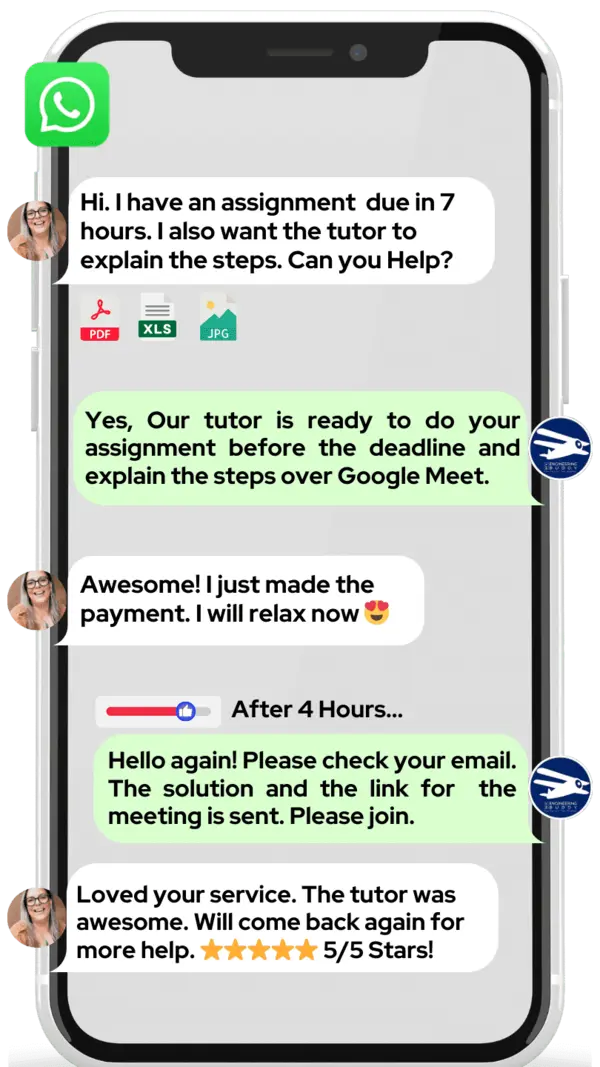



Hire The Best Historical linguistics Tutor
Top Tutors, Top Grades. Without The Stress!
52,000+ Happy Students From Various Universities



How Much For Private 1:1 Tutoring & Hw Help?
Private 1:1 Tutoring and HW help Cost $20 – 35 per hour* on average.
Most students hit a wall with sound change rules or Proto-Indo-European reconstruction — and a textbook can’t talk back.
Historical Linguistics Tutor Online
Historical linguistics is the scientific study of language change over time, covering sound change, morphological evolution, syntactic shift, language family classification, and reconstruction of proto-languages using the comparative method.
MEB connects you with a specialist historical linguistics tutor near me — or wherever you study — for live 1:1 online sessions built around your exact course. Whether you’re working through the comparative method at undergraduate level or reconstructing Proto-Germanic morphology at postgraduate level, MEB’s linguistics tutoring covers the full range of diachronic analysis. Sessions run from $20/hr. You understand the material and submit your own work.
- 1:1 online sessions tailored to your syllabus and reading list
- Expert-verified tutors with specialist knowledge in diachronic linguistics
- Flexible time zones — US, UK, Canada, Australia, Gulf
- Structured learning plan built after a diagnostic session
- Ethical homework and assignment guidance — you understand before you submit
52,000+ students across the US, UK, Canada, Australia, and the Gulf have used MEB since 2008 — including students in Linguistics subjects like Historical linguistics, Phonology, and Morphology.
Source: My Engineering Buddy, 2008–2025.
How Much Does a Historical Linguistics Tutor Cost?
Most historical linguistics sessions run $20–$40/hr. Advanced postgraduate work — Proto-Indo-European reconstruction, philological analysis, or dissertation-level research support — can reach $60–$100/hr. A $1 trial gets you 30 minutes of live tutoring or one assignment question explained in full.
| Level / Need | Typical Rate | What’s Included |
|---|---|---|
| Undergraduate (most modules) | $20–$40/hr | 1:1 sessions, homework guidance |
| Postgraduate / Specialist | $40–$100/hr | Expert tutor, dissertation support |
| $1 Trial | $1 flat | 30 min live session or 1 homework question |
Tutor availability tightens at semester end and around dissertation submission windows. WhatsApp MEB for a quick quote — average response time under 1 minute.
Who This Historical Linguistics Tutoring Is For
Historical linguistics sits at the intersection of language analysis and historical reasoning. Students who struggle here are usually strong readers who get lost the moment reconstruction rules or correspondence sets enter the picture.
- Undergraduates working through the comparative method for the first time
- Students retaking after a failed first attempt at a diachronic linguistics module
- Postgraduate students whose dissertation involves language change, etymological analysis, or proto-language data
- Students with a university conditional offer depending on their linguistics grade this semester
- Parents watching a child’s confidence drop alongside their grades in a linguistics degree
- Students needing phonetics and sound change reinforced before a final exam
Students have come to MEB from degree programmes at universities including Oxford, Cambridge, UCLA, Michigan, Toronto, Edinburgh, and Sydney — working on modules ranging from Indo-European comparative grammar to the history of English.
1:1 Tutoring vs Self-Study vs AI vs YouTube vs Online Courses
Self-study works if the material is linear — historical linguistics rarely is. AI tools can explain Grimm’s Law in seconds but cannot diagnose why your correspondence set is wrong. YouTube handles overviews of the Great Vowel Shift; it stops when you’re stuck on an irregular reflex in a specific daughter language. Online courses move at a fixed pace with no space for your actual gaps. 1:1 tutoring with MEB is live, calibrated to your exact module reading list, and corrects your reasoning — not just your answers — in the moment. For a subject where one misunderstood rule cascades into every reconstruction you attempt, that correction loop matters.
Outcomes: What You’ll Be Able To Do in Historical Linguistics
After focused sessions, students can apply the comparative method to reconstruct proto-language forms from attested cognate sets. They can explain and use Grimm’s Law, Verner’s Law, and the major regular sound changes in Indo-European branches. Students can analyze morphological change across documented stages of a language — Old English to Middle English, for example — and identify the mechanisms driving it. They can write structured essays on language family classification, evaluate competing reconstruction hypotheses, and read primary philological sources with confidence.
Supporting a student through Historical Linguistics? MEB works directly with parents to set up sessions, track progress, and keep coursework on schedule. WhatsApp MEB — average response time is under a minute, 24/7.
Based on feedback from 40,000+ sessions collected by MEB from 2022 to 2025, 58% of students improved by one full grade after approximately 20 hours of 1:1 tutoring in subjects like Historical linguistics. A further 23% achieved at least a half-grade improvement.
Source: MEB session feedback data, 2022–2025.
What We Cover in Historical Linguistics (Syllabus / Topics)

Sound Change and Phonological History
- Regular sound change vs sporadic change — neogrammarian hypothesis
- Grimm’s Law and Verner’s Law in Germanic
- Vowel shifts: the Great Vowel Shift, i-mutation, umlaut
- Conditioned and unconditioned sound change
- Reconstructing phoneme inventories from daughter language correspondences
- Analogical change and its interaction with regular sound change
Core texts for this track include Trask’s Historical Linguistics, Campbell’s Historical Linguistics: An Introduction, and Hock’s Principles of Historical Linguistics.
The Comparative Method and Reconstruction
- Establishing cognate sets and ruling out loanwords
- Applying the comparative method step by step
- Proto-Indo-European reconstruction: vowel system, laryngeal theory basics
- Tree model vs wave model of language spread
- Internal reconstruction and its limits
- Language family classification — subgrouping criteria
- Glottochronology and its controversies
Recommended reading includes Meier-Brügger’s Indo-European Linguistics, Fortson’s Indo-European Language and Culture, and Clackson’s Indo-European Linguistics: An Introduction.
Morphosyntactic and Semantic Change
- Grammaticalization — how lexical items become grammatical markers
- Morphological change: fusion, agglutination, and analogy
- Syntactic change: word order shifts, case system erosion
- Semantic change types: narrowing, broadening, pejoration, amelioration
- Language contact, borrowing, and convergence
- Pidgins, creoles, and their role in understanding language change
Key references include Hopper and Traugott’s Grammaticalization, Heine and Kuteva’s World Lexicon of Grammaticalization, and Thomason and Kaufman’s Language Contact, Creolization, and Genetic Linguistics.
At MEB, we’ve found that students who struggle with historical linguistics are almost always stuck on one thing: they understand what sound change is in the abstract, but they haven’t worked through enough reconstruction problems by hand to make the rules feel automatic. The sessions that shift things most are the ones where the tutor sits with the student through a live reconstruction, wrong turns and all.
What a Typical Historical Linguistics Session Looks Like
The tutor opens by checking the previous session’s topic — usually a specific sound change rule or a cognate set the student reconstructed independently. From there, the session moves into the current sticking point: often establishing regular correspondences across two or three daughter languages, or working out why a particular form doesn’t fit the expected reflex. The tutor uses a digital pen-pad to trace the derivation step by step — showing where each sound change applies, in what environment, and in what order. The student then replicates the process for a parallel set of data, explaining their reasoning as they go. The session closes with a short reconstruction problem set for independent practice before next time, and the next topic — often internal reconstruction or a move into morphological change — is flagged so the student can do the relevant reading first.
How MEB Tutors Help You with Historical Linguistics (The Learning Loop)
Diagnose: In the first session, the tutor identifies exactly where reconstruction breaks down for you — whether it’s applying sound change rules in the right environment, handling exceptions, or building a coherent argument for a subgrouping claim. The gap is almost always more specific than “I don’t understand the comparative method.”
Explain: The tutor works through a live reconstruction on the pen-pad — a real cognate set from Indo-European or another family — showing every decision point. Nothing is assumed. Every symbol, every arrow, every correspondence is explained as it’s written.
Practice: You attempt the next problem with the tutor present. Not after the session. Right there, so errors surface immediately and don’t get cemented through independent repetition.
Feedback: The tutor shows you exactly where your reasoning diverged from the correct path — not just the wrong answer, but the wrong assumption behind it. This is where students gain the most ground fastest.
Plan: The tutor maps the next two or three topics in sequence — what to read, what exercises to do, and what to bring to the next session. Progress in historical linguistics is cumulative; the plan keeps it that way.
Sessions run over Google Meet with a digital pen-pad or iPad and Apple Pencil. Before your first session, have your module reading list, a recent essay or problem set you struggled with, and your submission or exam date. Whether you need a quick catch-up before an exam, structured revision over 4–8 weeks, or ongoing weekly support through the semester, the tutor maps the session plan after the first diagnostic. Start with the $1 trial — 30 minutes of live tutoring that also serves as your first diagnostic.
Students consistently tell us that the moment historical linguistics clicks is when they stop trying to memorise rules and start treating sound change as a logical system with predictable inputs and outputs — the tutor’s job is to get them there faster.
Source: My Engineering Buddy, session feedback summaries, 2022–2025.
Tutor Match Criteria (How We Pick Your Tutor)
Not every linguistics tutor is the right fit for historical linguistics. Here’s what MEB looks for specifically.
Subject depth: Tutors hold postgraduate qualifications in linguistics with demonstrated work in diachronic analysis, the comparative method, or Indo-European studies. Generalist tutors are not assigned to historical linguistics.
Tools: Every tutor uses Google Meet with a digital pen-pad or iPad and Apple Pencil — essential for working through reconstruction problems in real time.
Time zone: Matched to your region — US, UK, Gulf, Canada, or Australia — so session times are realistic for your schedule.
Goals: The match accounts for whether you need exam preparation, essay planning and feedback, dissertation-level reconstruction support, or help with syntax and morphological change as part of a broader module.
Unlike platforms where you fill out a form and wait, MEB responds in under a minute, 24/7. Tutor match takes under an hour. The $1 trial means you test before you commit. Everything runs over WhatsApp — no logins, no intake forms.
Pricing Guide
Historical linguistics tutoring starts at $20/hr for standard undergraduate modules. Postgraduate and dissertation-level support — particularly work involving Proto-Indo-European, philological analysis, or language contact research — runs $40–$100/hr depending on tutor background and topic depth.
Rate factors include your level, the complexity of the topic, how close your deadline is, and tutor availability. Demand increases at semester end and around dissertation submission windows — availability narrows.
For students targeting top MA or PhD programmes in linguistics at institutions like Oxford, Cambridge, Michigan, or UCLA, tutors with active research backgrounds in historical and comparative linguistics are available at higher rates. Share your specific goal and MEB matches the tier to your ambition.
Start with the $1 trial — 30 minutes, no registration, no commitment. WhatsApp MEB for a quick quote.
Try your first session for $1 — 30 minutes of live 1:1 tutoring or one homework question explained in full. No registration. No commitment. WhatsApp MEB now and get matched within the hour.
FAQ
Is historical linguistics hard?
It’s demanding but learnable. The main difficulty is that the comparative method requires procedural fluency — not just understanding rules, but applying them in the right order across real data. Students who get 1:1 practice with corrective feedback close this gap faster than any amount of re-reading.
How many sessions are needed?
Most students see meaningful progress in 6–10 sessions. Students approaching a dissertation or preparing for a module exam with major gaps typically work for 12–20 hours. The tutor maps a specific sequence after the first diagnostic so no session is spent on material you’ve already mastered.
Can you help with homework and assignments?
Yes. MEB tutoring is guided learning — you understand the work, then submit it yourself. The tutor explains the method, works through comparable examples, and helps you develop your own analysis. See our Academic Integrity policy and Why MEB page for full details on what we help with and what we don’t.
Will the tutor match my exact syllabus or exam board?
Yes. Before the first session, share your module outline, reading list, and any past papers or essay prompts. The tutor covers your specific syllabus — whether that’s a UK undergraduate historical linguistics module, a North American university course, or a postgraduate seminar programme.
What happens in the first session?
The tutor runs a short diagnostic — usually a reconstruction problem or an essay question from your course — to locate exactly where your understanding breaks down. From that point, every session is targeted to the actual gap, not a generic overview of the subject.
Is online tutoring as effective as in-person?
For historical linguistics, yes. The work is paper-based and diagrammatic — reconstruction problems, correspondence tables, and derivation chains all translate naturally to a shared screen and digital pen-pad. Many students find the recorded session notes more useful than anything produced in a physical room.
What’s the difference between historical linguistics and comparative linguistics — do you cover both?
The two overlap heavily. Historical linguistics is the broader field covering language change over time; comparative linguistics refers specifically to the method of comparing related languages to reconstruct earlier forms. MEB tutors cover both, including the comparative method as a core analytical tool within historical linguistics.
Can you help with Proto-Indo-European reconstruction specifically?
Yes. PIE reconstruction — including the laryngeal theory, the ablaut system, and reconstructing nominal and verbal paradigms — is one of the areas where students most often seek specialist help. MEB tutors with postgraduate training in Indo-European studies handle this work directly.
Do you offer help with the history of a specific language, like Old English or Old French?
Yes. Many historical linguistics modules focus on the documented history of a single language — Old and Middle English, Old French, Classical Latin to Romance, or Old Norse. Tutors can work through the phonological and morphological history of specific languages alongside the general theoretical framework of sound change and reconstruction.
Can you help with sociolinguistic dimensions of language change — dialect contact, koineization?
Yes. Language contact, dialect levelling, koineization, and the social mechanisms of change fall within the scope of sociolinguistics tutoring and historical linguistics. MEB tutors cover both the internal and external drivers of language change depending on your module focus.
How do I get started?
Three steps: WhatsApp MEB with your module name and current difficulty, get matched with a verified tutor within the hour, then start your $1 trial — 30 minutes of live tutoring or one assignment question explained in full. No registration, no commitment required.
A common pattern our tutors observe is that students who have done the reading but still can’t complete a reconstruction problem are missing one thing: they’ve learned what sound changes occurred, but not how to apply them as ordered rules to a specific input form. That procedural gap is fixable in one or two sessions.
Source: My Engineering Buddy tutor observation records, 2022–2025.
Trust & Quality at My Engineering Buddy
Every MEB tutor goes through a subject-specific vetting process: credential check, live demo session evaluation, and ongoing review based on student feedback. Tutors assigned to historical linguistics hold postgraduate degrees in linguistics or a closely related field and have demonstrable experience with diachronic analysis, the comparative method, or philological work. Rated 4.8/5 across 40,000+ verified reviews on Google. MEB has been running since 2008 across 2,800+ subjects — tutor quality is what kept it running that long.
MEB tutoring is guided learning — you understand the work, then submit it yourself. For full details on what we help with and what we don’t, read our Academic Integrity policy and Why MEB.
MEB serves students in the US, UK, Canada, Australia, the Gulf, and Europe across 2,800+ subjects. In the Linguistics category, that includes applied linguistics tutoring, semantics tutoring, and pragmatics help alongside historical linguistics. The MEB tutoring methodology — diagnostic first, targeted sessions, progress review — applies consistently across all subjects.
Our experience across thousands of sessions shows that the students who make the fastest progress in historical linguistics are the ones who arrive with a specific question — a reconstruction they couldn’t finish, a rule they can’t apply — rather than a general sense of being lost. Specific problems get solved. Vague anxiety doesn’t.
Explore Related Subjects
Students studying Historical Linguistics often also need support in:
Next Steps
Before your first session, have ready: your exam board or course outline, a recent past paper attempt or homework you struggled with, and your exam or deadline date. The tutor handles the rest.
- Share your module name, hardest topic, and current timeline
- Share your availability and time zone
- MEB matches you with a verified tutor — usually within 24 hours, often within the hour
The first session starts with a diagnostic so every minute is used well.
Visit www.myengineeringbuddy.com for more on how MEB works.
WhatsApp to get started or email meb@myengineeringbuddy.com.
Reviewed by Subject Expert
This page has been carefully reviewed and validated by our subject expert to ensure accuracy and relevance.

