Unlocking Success in Neuroscience: The Ultimate Guide to Expert Tutoring and Homework Help

Professional neuroscience tutoring provides targeted academic support for challenging coursework, improving student outcomes through personalized instruction, comprehensive homework help, and expert guidance in this demanding interdisciplinary field.
In 2026, with neuroscience programs expanding across North America, the UK, and the Gulf, and with graduate school competition intensifying, knowing which courses demand the most support and what kind of tutoring actually makes a difference is more consequential than ever.
Check Out: Get Personalized Online Tutoring
The Growing Demand for Neuroscience Education Support
Sarah stared at her neurobiology textbook, overwhelmed by the intricate details of synaptic transmission and neural pathways.
As a junior psychology major with dreams of becoming a neuropsychologist, she had worked tirelessly through multiple prerequisites to reach this pivotal course.
Yet despite her passion and previous academic success, she found herself struggling with her second exam, joining the ranks of students who discover that neuroscience education presents unique challenges that traditional study methods often cannot address.
The field of neuroscience has experienced remarkable growth over the past decades. According to recent educational data, more than 100 institutions now offer undergraduate neuroscience programs, with over 2,000 college graduates majoring in neuroscience annually.
This expansion reflects both the increasing recognition of neuroscience’s importance across multiple disciplines and the growing career opportunities in this dynamic field.
However, with this growth comes increased academic pressure.
Neuroscience tutoring has emerged as a critical educational support service, helping students navigate the complex interdisciplinary nature of brain science that combines biology, psychology, chemistry, physics, and mathematics into a cohesive yet challenging curriculum.
To understand why this major is so demanding, we must look at its foundation. The diagram below illustrates how five distinct scientific disciplines converge to form modern neuroscience.
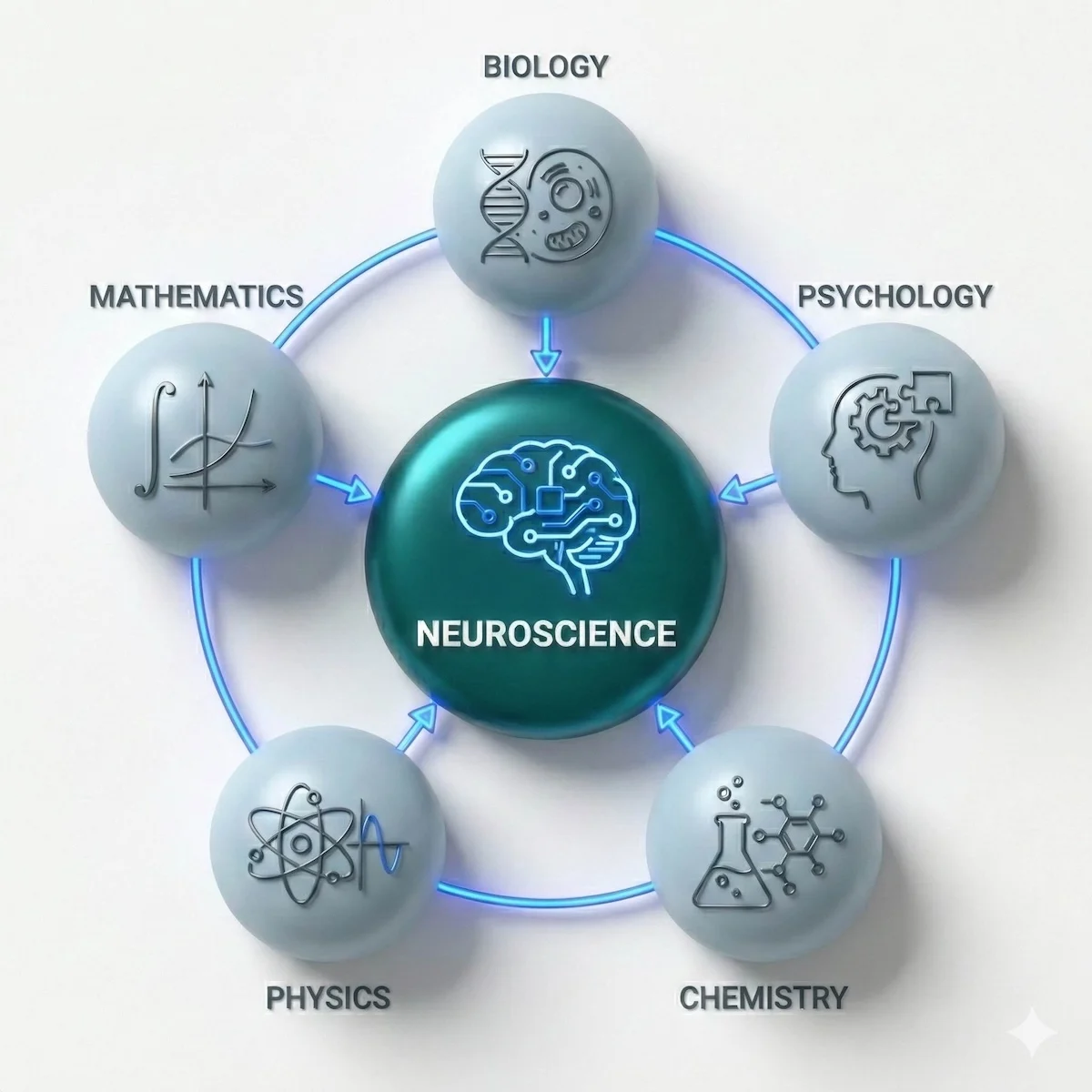
Neuroscience combines five distinct scientific disciplines, making it one of the most complex and rewarding fields of study.
Mastering this unique intersection requires more than just memorization; it demands the ability to switch between mathematical, biological, and psychological frameworks instantly.
Read more to get quick, reliable support for any homework
Understanding the Unique Challenges of Neuroscience Education
The Interdisciplinary Complexity
Unlike traditional single-discipline majors, neuroscience requires students to master concepts from multiple scientific domains simultaneously.
This interdisciplinary approach, while intellectually enriching, creates significant academic challenges.
Students must understand molecular biology mechanisms while also grasping psychological theories, statistical analysis, and research methodology.
Research indicates that neuroscience faculty have identified several key barriers students face, including the difficulty of other required major courses and the sheer volume of content that must be mastered.
The curriculum typically follows a three-tiered vertical structure: introductory foundational concepts, intermediate deep exploration, and advanced original research capabilities.
Academic Performance and Support Needs
Studies reveal that students struggle to apply biological core concepts to neuroscience contexts, with only 17% demonstrating adequate understanding of structure-function relationships and 33% showing comprehension of evolutionary concepts.
This gap highlights the critical need for specialized academic support.
These statistics reveal a concerning trend in student performance. As shown in the chart below, there is a significant gap between what professors expect and what students actually grasp.
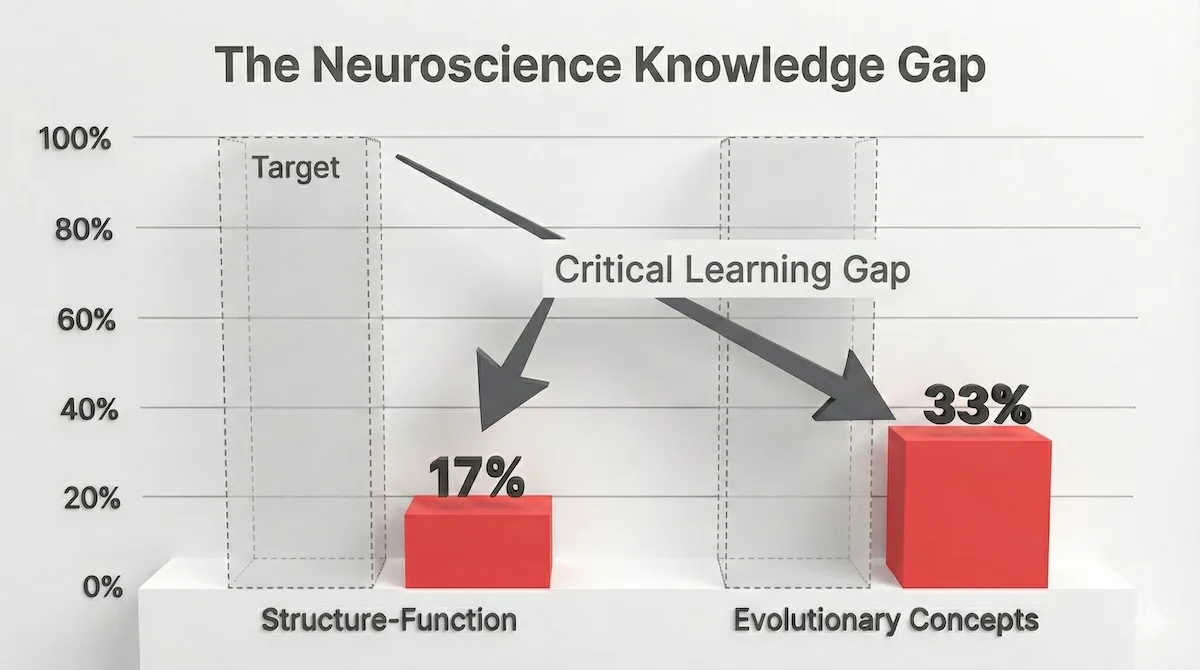
Research shows a significant gap between required mastery and actual student understanding in core neuroscience concepts.
This 83% proficiency gap in structure-function relationships is exactly where expert intervention can make the difference between passing and excelling.
Neuroscience teaching requires sophisticated pedagogical approaches that address these learning challenges.
Students often find themselves overwhelmed by the content volume, complex terminology, and the need to integrate knowledge across multiple levels of analysis, from molecular mechanisms to behavioral outcomes.
The Science Behind Effective Tutoring
Neuroplasticity and Learning
Ironically, neuroscience itself provides insights into why neuroscience tutoring online can be so effective. The brain’s capacity for neuroplasticity – its ability to reorganize and form new neural connections throughout life – supports the effectiveness of personalized tutoring interventions.
Active learning strategies, which form the foundation of quality tutoring, promote the brain’s natural inclination to explore, discover, and construct knowledge. When students engage in problem-solving tasks, discussions, and hands-on experiences with a skilled neuroscience tutor, multiple brain areas are stimulated, enhancing both engagement and knowledge retention.
But how exactly does tutoring change the brain? The following flowchart breaks down the biological process of converting a weak memory trace into a permanent long-term memory.
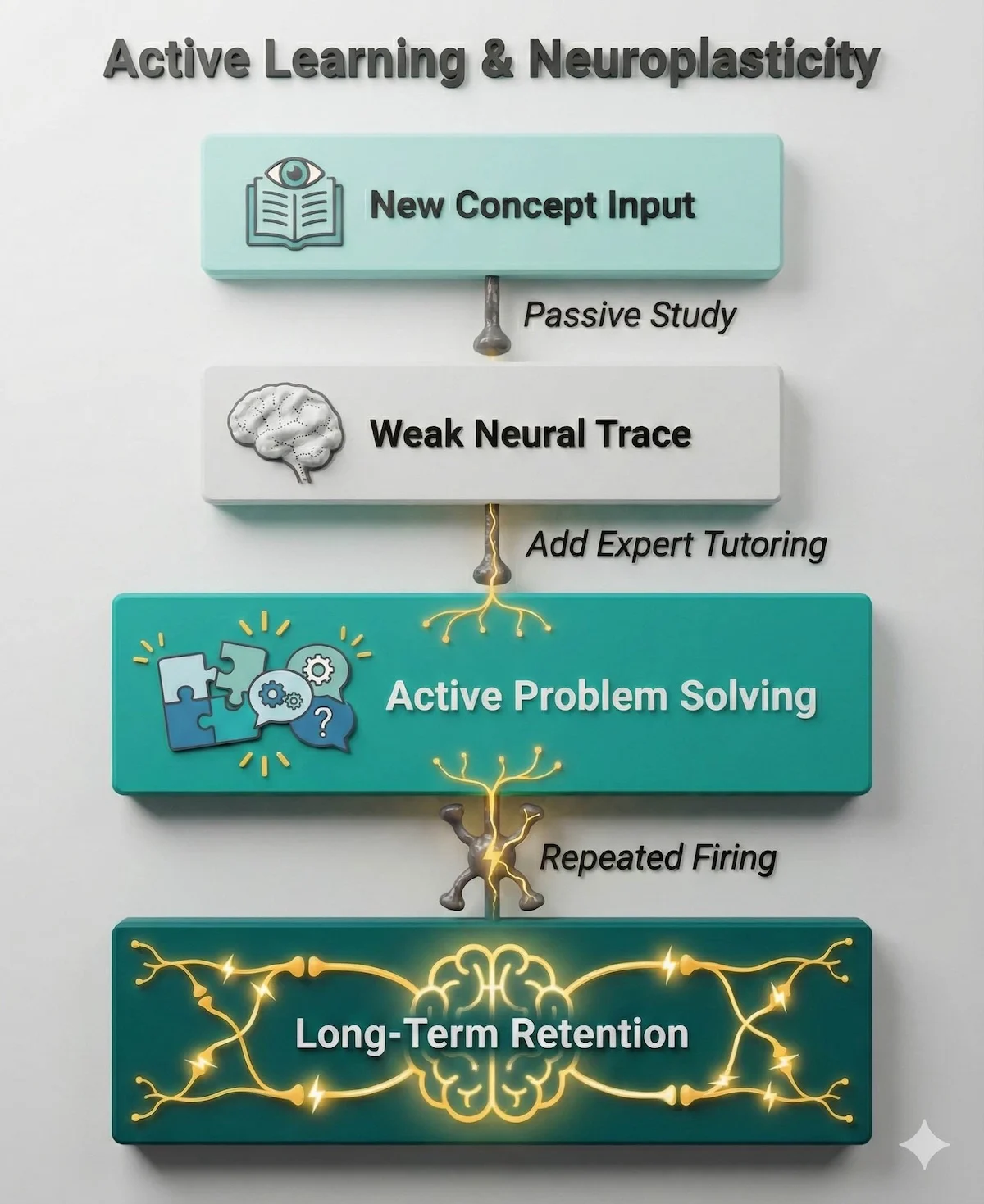
Active tutoring stimulates neuroplasticity, transforming temporary understanding into permanent knowledge retention.
By moving from passive study to active problem-solving, you physically strengthen neural connections, making recall effortless during exams.
Evidence-Based Tutoring Benefits
Comprehensive research demonstrates that tutoring produces significant academic improvements. Studies show that students receiving individual tutoring can achieve gains equivalent to 0.23 standard deviations in academic performance, with higher-dosage tutoring yielding even stronger effects.
Online neuroscience tutoring has proven particularly effective, with research indicating that students who participate regularly in virtual tutoring sessions show substantial academic improvements comparable to in-person instruction. The key factors for success include consistent participation, quality tutor preparation, and individualized attention.
Check out top-rated online tutoring to boost your learning speed
Which Neuroscience Courses Are Hardest and Where Should You Focus Tutoring Time?
Neuroscience courses are not equally demanding, and students who treat all modules with the same study intensity consistently underperform relative to those who prioritize based on difficulty.
The five core course categories in most undergraduate neuroscience programmes differ substantially in the type of cognitive load they impose and therefore in the kind of tutoring support that delivers the highest grade return.
The table below ranks core neuroscience course types by typical student difficulty, based on survey data from neuroscience undergraduates and faculty difficulty assessments published by Research.com (2026) and course evaluation data from Duke, Princeton, and Harvard neuroscience programmes.
| Course Area | Difficulty Level | Primary Challenge | Where Tutoring Helps Most |
| Cellular & Molecular Neuroscience | ★★★★★ Hardest | Complex biochemical pathways, molecular biology techniques, microscopic mechanisms requiring chemistry + biology integration simultaneously | Connecting molecular mechanisms to functional outcomes; translating pathway diagrams into clinical implications |
| Neurophysiology / Systems Neuroscience | ★★★★★ Hardest | Quantitative electrophysiology; action potential mathematics; circuit analysis requiring physics + biology + maths | Electrophysiological data interpretation; working through Hodgkin-Huxley model problems; understanding voltage-clamp data |
| Neuroanatomy | ★★★★☆ Very Hard | Three-dimensional spatial reasoning; memorization of 400+ structures; linking structure to function under timed exam conditions | Spatial memory techniques; mnemonics for structure-function pairs; exam simulation with clinical vignettes |
| Cognitive Neuroscience | ★★★☆☆ Moderate-Hard | Experimental design; neuroimaging data analysis; interdisciplinary integration of psychology + imaging + statistics | Study design critique; fMRI/EEG result interpretation; connecting imaging findings to cognitive theories |
| Research Methods in Neuroscience | ★★★☆☆ Moderate-Hard | Statistical analysis; experimental design; interpreting complex datasets under time pressure | Choosing appropriate statistical tests; interpreting ANOVA and regression outputs; writing methods sections |
| Behavioral Neuroscience | ★★☆☆☆ Moderate | Biological foundations of behavior; familiar territory for psychology-background students | Essay structuring; linking neuroscience findings to behavioral outcomes; exam technique for long-form questions |
Why Cellular and Molecular Neuroscience Produces the Most Failed Exams
Cellular and Molecular Neuroscience covers complex biochemical pathways and molecular biology techniques, requiring students to grasp detailed theoretical mechanisms at the microscopic level.
The challenge is not the biology alone it is the simultaneous chemistry requirement. Students who excelled at introductory biology but are weak in organic chemistry find themselves unable to follow signal transduction cascades, ion channel gating kinetics, or receptor pharmacology arguments.
A survey cited by Research.com found that 68% of neuroscience undergraduates report difficulty managing advanced neuroanatomy and neurochemistry classes.
The tutoring approach that works here is mechanistic: tracing each molecular pathway step-by-step with a tutor who can bridge the chemistry and biology simultaneously, rather than treating them as separate subjects to revise in isolation.
Why Neuroanatomy Demands a Different Study Method
When tackling neuroanatomy, memorizing the myriad structures and functions within the brain is akin to learning an entirely new language with its own complex grammar rules.
Students approaching neuroanatomy with flashcard memorisation alone consistently hit a ceiling at the moderate grade band.
What examiners assess is not recall of structure names, but the ability to predict the functional and clinical consequences of a lesion at a specific location a skill that requires three-dimensional spatial reasoning and clinical application thinking.
A tutor who can present neuroanatomical structures from multiple spatial orientations and construct lesion-consequence vignettes in real time is substantially more effective than any textbook for this course.
Hire Verified & Experienced Homework Help Tutors
What Are the Most Common Neuroscience Exam Formats and How Does Tutoring Help With Each?
Neuroscience programmes use a wider variety of assessment formats than most students expect, and each format rewards a different kind of preparation.
A student who prepares only for multiple-choice exams will be unprepared for clinical vignette questions; one who prepares only for essays will struggle with quantitative data-analysis tasks.
Understanding the assessment landscape before exam season not during it is the preparation advantage that tutoring consistently provides.
| Exam Format | Common Courses | What It Tests | Tutoring Advantage |
| Multiple-Choice (MCQ) | Cellular neuroscience, introductory courses, GRE Psychology Subject Test | Recall, concept discrimination, clinical vignette reasoning | Targeted drill on high-yield concepts; eliminating distractor traps; time-management under 205-question conditions |
| Short Answer / Identification | Neuroanatomy, neurophysiology | Structure-function recall; diagram labelling; mechanism description | Targeted labelling practice; timed identification under exam simulation |
| Data Analysis / Quantitative | Systems neuroscience, research methods, computational neuroscience | Interpreting electrophysiology traces, fMRI outputs, statistical results | Step-by-step data interpretation with a tutor who can read the output type fluently |
| Extended Essay / Case Analysis | Cognitive neuroscience, clinical neuroscience, behavioral neuroscience | Critical reasoning; integrating evidence; evaluative conclusions | Argument structure coaching; mark-scheme awareness; feedback on draft responses |
| Research Proposal / Methods Section | Research Methods, senior thesis | Experimental design; statistical planning; hypothesis formulation | Experimental design review; statistical test selection; methodology critique |
| Oral Examination / Viva | Graduate coursework, thesis defence | Deep conceptual understanding; ability to reason under questioning | Mock viva practice; question anticipation; responding analytically under pressure |
The High-Yield Approach to Multiple-Choice Neuroscience Exams
Multiple-choice questions in neuroscience differ fundamentally from MCQs in introductory biology or psychology.
At the intermediate and advanced level, they are written as clinical or experimental vignettes a patient presents with a specific deficit, or a researcher observes a particular result and the student must identify the neural mechanism, brain region, or treatment implication.
Students who have memorised definitions but not applied them to scenarios consistently select attractive wrong answers.
A tutor accelerates MCQ performance by drilling vignette-style questions and explicitly teaching the “eliminate-and-reason” technique: eliminating implausible options first, then choosing between the remaining two based on mechanism logic rather than partial recognition.
How Tutoring Improves Data Analysis Questions
Data analysis questions in neuroscience interpreting an action potential trace, reading an fMRI contrast map, or working through an ANOVA output are the format most students have encountered the least in previous courses. Many students freeze on these questions simply from unfamiliarity with the output format, not from lack of the underlying knowledge.
A tutor who regularly works with neuroimaging or electrophysiological data can teach a student to read the output systematically in three to five sessions: what the axes mean, what a significant finding looks like, and which aspects of the result the question is actually asking about.
This is a learnable skill, and it transfers across data formats once the interpretive logic is established.
How to Choose Reliable Homework Help Websites: 5 Red Flags to Avoid
What Are the Best Neuroscience Career Paths and Salaries in 2026?
Neuroscience in 2026 offers career paths with some of the widest salary variance in any scientific discipline from research roles starting near $47,000 to clinical neurologist positions averaging above $271,000.
Understanding this range helps students make deliberate choices about degree level, specialisation, and the coursework they prioritise during their undergraduate years.
The table below maps the primary neuroscience career tracks to their 2026 salary ranges and growth outlook, drawing on Bureau of Labor Statistics (BLS) data, Medscape’s 2024 Neurologist Compensation Report, and Research.com’s 2026 degree-level salary analysis.
| Career Path | Typical Entry Role | 2026 Salary Range | Degree Required | Growth Outlook |
| Neurologist (MD) | Resident Physician | $239,200–$343,000+ (BLS median; Medscape total compensation) | MD + Residency (10+ years) | Steady; neurodegenerative disease and stroke care driving demand |
| Clinical / Research Neuroscientist | Research Associate, Postdoc | $46,770 starting; $80,580 average; up to $166,550 senior | PhD (typically) | 13% projected growth (BLS medical scientists) |
| Cognitive Neuroscientist | Lab Manager, Research Scientist | $80,580–$98,490 mid-career | PhD preferred | Growing; AI + brain-computer interface research expanding |
| Computational Neuroscientist | Data Scientist, Modelling Analyst | $95,000–$140,000 | PhD or strong MS | Fast-growing; highest demand among non-clinical tracks in 2026 |
| Neuropsychologist (licensed) | Assessment Clinician | $95,000–$130,000 | PsyD or PhD + licensure | Stable; ageing population driving neuropsychological testing demand |
| Neuroscience PhD (Academia) | Assistant Professor | $75,000–$120,000 base | PhD + Postdoc | Competitive; publication record and grant-writing critical |
| Biotech / Pharma Researcher | Research Scientist II | $90,000–$125,000 | MS or PhD | Strong; neuropharmacology and CNS drug development expanding |
| ML Engineer (neuroscience-focused) | Data Scientist, ML Engineer | $120,000–$160,000 | BS/MS in neuroscience + programming skills | Fastest growing; AI-neuroscience convergence creating new roles |
Does Your Undergraduate GPA Actually Affect Neuroscience Career Outcomes?
Yes and more directly than in most STEM fields. For competitive graduate programs in neuroscience and clinical psychology, most top-ranked programmes expect a GPA of 3.5 or above, with the most competitive programmes (e.g., Harvard, Stanford, Caltech neuroscience PhD) routinely admitting students with GPAs of 3.7–4.0 combined with strong research experience.
For medical school entry toward neurology, MCAT performance and undergraduate science GPA are both threshold requirements.
Even for industry roles in biotech, pharmaceutical companies assess undergraduate neuroscience course performance as a proxy for analytical rigour.
The practical implication: GPA in the hardest courses Cellular Neuroscience, Neurophysiology, Research Methods has an outsized impact on the range of options available after graduation.
This is precisely the domain where targeted tutoring produces the highest career return.
The Salary Premium for Specialisation in 2026
Among neuroscience career tracks, the highest salary growth in 2026 is concentrated in three areas: computational neuroscience (driven by AI and neural interface development), neuropsychology (driven by an ageing population requiring cognitive assessment), and clinical neurology subspecialties (with vascular neurology and neurocritical care leading compensation at $400,000+ in outpatient care centres per BLS data).
Students who identify their target track early and build the relevant quantitative or clinical skills during their undergraduate years enter graduate programmes and industry roles with a meaningful competitive advantage.
How Is Neuroscience Tutoring Different From General Biology Tutoring?
Neuroscience tutoring is substantively different from general biology tutoring not just in content breadth, but in the cognitive demands it must address.
A general biology tutor can support a student struggling with cell division, genetics, or ecology using content knowledge from a single disciplinary frame.
A neuroscience tutor must simultaneously navigate molecular biology, electrophysiology mathematics, cognitive psychology theory, experimental statistics, and clinical neuroanatomy often within a single exam question.
The table below identifies the specific capabilities where neuroscience tutoring diverges from general biology support.
| Capability | General Biology Tutor | Specialist Neuroscience Tutor |
| Content breadth | Single discipline (biology) | Multi-discipline: biology + chemistry + physics + psychology + maths simultaneously |
| Electrophysiology support | Limited; action potentials covered briefly | Full: Hodgkin-Huxley model, patch-clamp interpretation, voltage-clamp data reading |
| Neuroimaging literacy | Typically absent | Can read and explain fMRI, EEG, and PET outputs in the context of student coursework |
| Research design for neuro experiments | Basic experimental design | Neuroscience-specific design: control conditions for imaging, animal model considerations, statistical power for neural data |
| Clinical vignette reasoning | Generic clinical framing | Lesion-consequence reasoning, neurological exam interpretation, brain-behaviour mapping |
| Exam format familiarity | General MCQ and essay | Subject-specific: vignette MCQ, data analysis questions, and research proposal formats specific to neuroscience programmes |
Why General Science Tutors Miss the Key Difficulty Layer in Neuroscience
The most common failure of general biology tutors working with neuroscience students is treating neuroscience as biology with extra content.
This misdiagnoses where students actually lose marks. In neuroscience, the grade-determining questions at intermediate and advanced level are not “what is an action potential” they are “given this EEG trace from a patient with a reported seizure, identify the likely focus and explain the ionic mechanism.
” Answering that question requires neuroanatomy literacy, electrophysiology reading skills, and clinical reasoning applied simultaneously.
A tutor without genuine neuroscience expertise cannot model this reasoning process they can only provide content confirmation, which is the least valuable form of support at this level.
The Molecular-Cognitive Integration Problem That Only Specialists Can Solve
A uniquely challenging aspect of advanced neuroscience courses is the requirement to integrate molecular-level mechanisms with cognitive-level outcomes within the same analytical argument.
For example, explaining how antidepressant mechanisms at the serotonin synapse (molecular level) produce changes in mood and affect (cognitive/behavioural level) requires fluency in both biochemistry and cognitive neuroscience simultaneously.
This integration is exactly where students plateau without specialist guidance.
A neuroscience tutor particularly one with a graduate-level background in a specific subfield has built this integrative reasoning through their own research and can make the crossover visible in a way that textbook study cannot.
Tutoring for Struggling Students 2026: How to Help Without Harm
How Does a Neuroscience Tutor Support Research Methodology?
Research methodology is one of the most tutoring-responsive areas of the neuroscience curriculum, yet it is also one of the most consistently underprepared.
Most students encounter research methods as a standalone course but struggle to apply the principles to actual neuroscience data the kind they encounter in their own lab reports, journal club assignments, and eventually their senior thesis or capstone project.
Experimental Design for Neuroscience Studies
Neuroscience experiments have design features that do not appear in introductory research methods courses and are rarely explained clearly in textbooks.
The choice between a within-subjects and between-subjects design matters differently in neuroimaging research than in psychology experiments, because of individual variation in brain morphology.
The selection of control conditions in fMRI studies involves understanding the hemodynamic response function and the logic of subtraction paradigms knowledge that a general statistics tutor does not have.
A specialist neuroscience tutor can explain why a particular experimental design is used, not just how to describe it for a methods section.
Practical example: a student writing a lab report on a working memory experiment using fMRI needs to explain why the control condition uses a perceptual matching task rather than a simple fixation cross.
Understanding that distinction requires knowing what the hemodynamic subtraction is trying to isolate a specific neuroscience concept that tutors from psychology or biology backgrounds rarely know in sufficient depth to explain confidently.
Statistical Analysis for Neural Data
Neural data has statistical properties that standard introductory statistics courses do not address.
Temporal autocorrelation in EEG data, multiple comparisons correction in neuroimaging (familywise error rate vs. false discovery rate), and non-parametric approaches for small-n animal studies are all areas where students make consistent analytical errors in their lab reports and research projects.
A neuroscience tutor with research experience can identify which statistical issue applies to a student’s specific dataset and explain the corrective approach in the context of the student’s own work not as an abstract concept from a textbook chapter.
How Does Tutoring Help With Graduate School Preparation Including the GRE Psychology Subject Test?
Graduate school preparation for neuroscience students involves more layers than most undergraduates anticipate.
The application process requires not only strong grades but also competitive GRE scores, a coherent research statement, relevant laboratory experience, and for programmes housed in psychology departments a strong performance on the GRE Psychology Subject Test.
Each of these elements benefits from targeted tutor support at different stages of the application timeline.
Understanding the GRE Psychology Subject Test for Neuroscience Applicants
The GRE Psychology Subject Test is required or strongly recommended by many neuroscience PhD programmes housed within psychology departments, as well as by clinical and counselling psychology programmes that neuroscience students increasingly target.
The test consists of approximately 205 multiple-choice questions covering six content areas, administered over two hours, with scores reported on a 200–990 scale. The six content areas and their approximate weightings are as follows.
| Content Area | Approximate Weighting | Neuroscience Relevance |
| Biological Psychology | 17–21% | Directly overlaps with cellular, molecular, and systems neuroscience coursework |
| Cognitive Psychology | 17–21% | Directly overlaps with cognitive neuroscience; memory, attention, perception |
| Social Psychology | 12–14% | Lower direct neuroscience overlap; requires specific social psych knowledge |
| Developmental Psychology | 12–14% | Partial overlap with neurodevelopment and neuroplasticity topics |
| Clinical Psychology | 15–19% | Relevant for clinical neuroscience tracks; DSM-5 classification knowledge required |
| Measurement / Methodology / Statistics | 15–19% | Strong overlap with research methods; experimental design and statistics |
An average score on the GRE Psychology Subject Test is approximately 620, with competitive programmes generally expecting 650 or above. The 80th percentile is considered a strong score.
Where Tutoring Delivers the Highest GRE Subject Test Score Gains
The most efficient tutoring approach for the GRE Psychology Subject Test targets the student’s weakest content areas first, then moves to high-yield test-taking strategy.
For neuroscience students, this means a deliberate investment in the clinical and social psychology content areas that their degree has not covered not additional revision of the biological material they already know.
A tutor who has worked with multiple GRE Psychology test-takers can identify which clinical terminology, which developmental theorists, and which social psychology paradigms appear most frequently on the test, allowing a student to use their preparation time efficiently rather than reviewing an entire undergraduate psychology textbook.
The GRE Psychology Subject Test is administered three times per year (September, October, and April–May), costs $150, and delivers scores in 10-point increments. Scores are valid for five years.
Students applying for Fall 2026 graduate admission should confirm whether their target programme requires the Subject Test a growing number of competitive programmes (including UC Berkeley Psychology) have explicitly moved to “not required” for the 2026 admissions cycle, while others still require or strongly recommend it.
Graduate School Application Components Beyond the GRE and How Tutoring Helps
Strong GRE scores are a threshold criterion, not a differentiator, for the most competitive neuroscience PhD programmes.
What differentiates competitive applicants is the quality of the research statement, the specificity of faculty match, and the demonstrated ability to conduct independent neuroscience research. A tutor with graduate-level neuroscience experience can help a student articulate their research interests clearly, identify faculty whose current projects align with their background, and frame their undergraduate laboratory experience in the language that graduate admissions committees find compelling.
Personal statements in neuroscience graduate applications benefit significantly from feedback by someone who has read or written research proposals in the field a specificity that general academic writing tutors cannot provide.
How Online Tutoring Enhances Test Prep for Standardized Exams
Career Prospects and Financial Motivation
High-Paying Career Opportunities
Understanding career prospects helps contextualize the value of investing in quality neuroscience homework help. The field offers numerous high-paying career paths that justify the academic effort required.
Neuroscience-related careers span a wide salary range, with entry-level positions starting around $68,000 annually for epidemiologists and advancing to significantly higher compensation for specialized roles. Neurologists earn average salaries of $227,700, while neurosurgeons command even higher compensation at $148,376 annually. Other lucrative career paths include:
- Machine learning engineers ($152,244)
- Biostatisticians ($139,595)
- Biotech consultants ($133,731)
- Research scientists ($95,565)
- Clinical psychologists ($103,503)
When evaluating the cost of education support, it is vital to look at the potential return on investment. The chart below ranks the average annual salaries for top neuroscience careers.
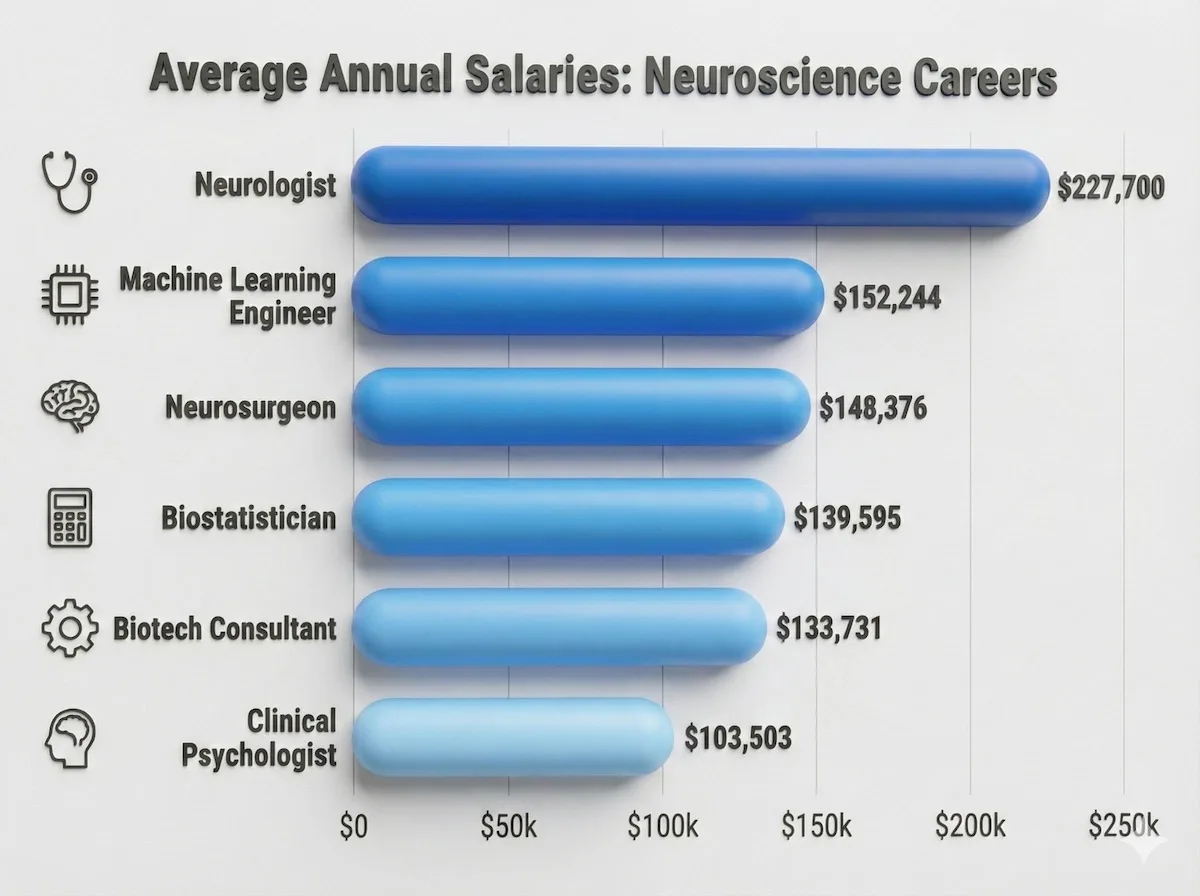
Investing in education pays off: Neuroscience careers offer some of the highest starting salaries in the STEM sector.
With entry-level positions often starting above six figures, investing in your GPA now is a direct investment in your future earning potential.
Even at the undergraduate level, neuroscience graduates find diverse opportunities in biotechnology, pharmaceutical research, academic institutions, and healthcare settings. Approximately 88.8% of neuroscience graduate students complete their PhD degrees, with career outcomes including 18.7% in biotech/pharma research, 10.7% in business development, and 9.3% in academic research faculty positions.
International Opportunities
For students in the UK and Gulf countries, neuroscience education opens doors to global career opportunities. The interdisciplinary nature of neuroscience training provides flexibility to work across various sectors and geographical locations, making the investment in quality neuroscience tutor online support even more valuable.
Specialized Areas Requiring Expert Support
Laboratory and Research Methods
One of the most challenging aspects of neuroscience education involves mastering complex research methodologies. Students must become proficient in various neuroimaging techniques, understand experimental design principles, and develop data analysis skills.
Current neuroscience methods include non-invasive techniques such as fMRI, EEG, MEG, and PET scanning, each with specific applications and limitations. Students often struggle to understand when to apply different methodologies and how to interpret complex results. A qualified neuroscience teacher can provide crucial guidance in navigating these technical aspects.
Neuroanatomy and Neurophysiology
The intricate details of brain structure and function represent another area where students frequently seek neuroscience assignment help. Understanding neuroanatomy requires three-dimensional thinking, memorization of complex structures, and comprehension of functional relationships between different brain regions.
Neurophysiology adds another layer of complexity, requiring students to master concepts related to neural communication, synaptic transmission, and neurotransmitter systems. These topics often combine biochemistry, physics, and biology in ways that challenge students to think across disciplinary boundaries.
Computational and Systems Neuroscience
As neuroscience increasingly incorporates computational approaches, students must develop quantitative skills that many find challenging. Understanding neural networks, mathematical modeling, and statistical analysis requires support that goes beyond traditional neuroscience knowledge.
Many students benefit from working with a tutor who can explain complex mathematical concepts in accessible terms while connecting them to biological realities. This is where specialized neuroscience hw help becomes invaluable.
Advantages of Online Tutoring Platforms
Flexibility and Accessibility
Online neuroscience tutoring offers unprecedented flexibility for students balancing demanding academic schedules with other commitments. Students can schedule sessions at convenient times, access tutoring from any location, and work with specialized tutors regardless of geographical constraints.
This flexibility proves particularly valuable for neuroscience students, who often have laboratory commitments, research responsibilities, and clinical observations that make traditional tutoring schedules difficult to maintain.
Not all tutoring is created equal. The table below compares the specific advantages of hiring a specialized neuroscience mentor versus a general science tutor.
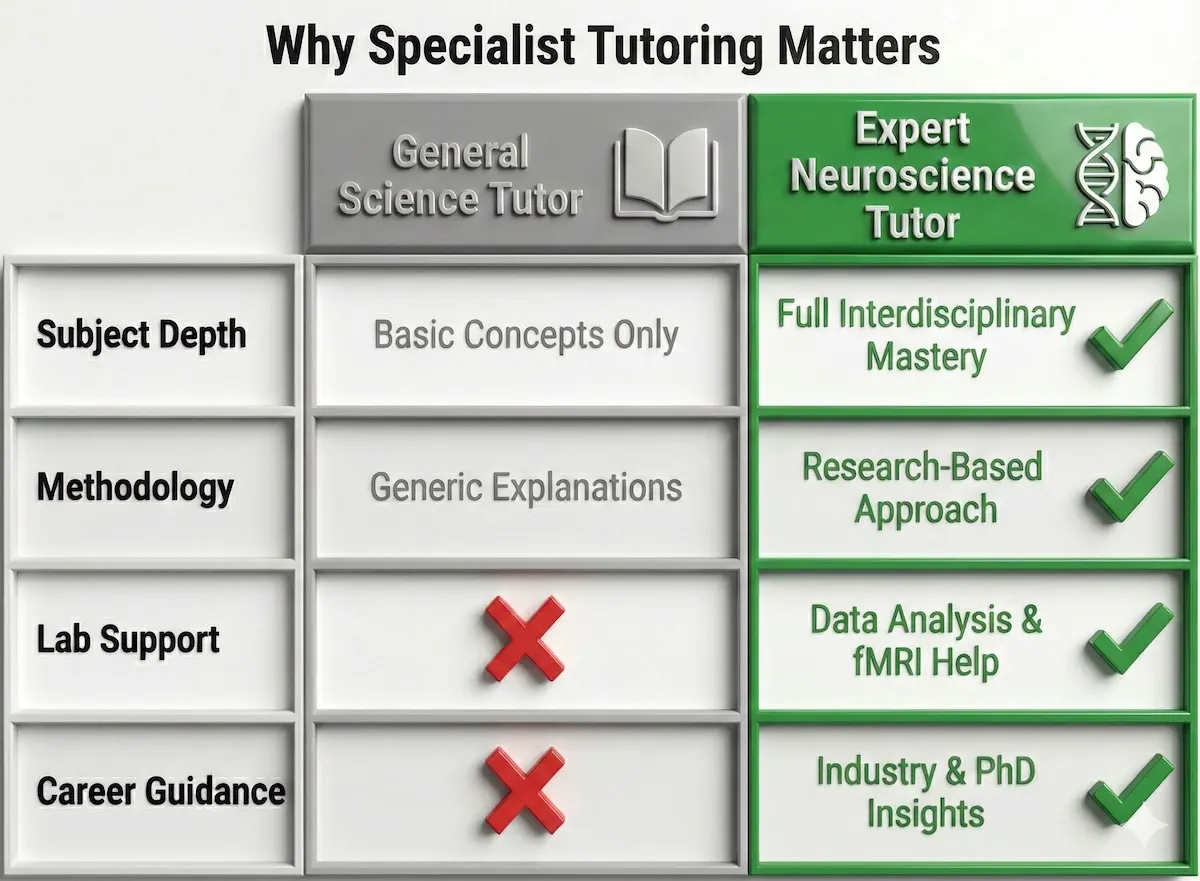
Specialized neuroscience tutors provide the depth, research support, and career mentorship that general science tutors cannot match.
While general tutors can help with basics, only a specialist can guide you through fMRI data analysis and complex research methodologies.
Broader Tutor Selection
Online platforms provide access to a much broader pool of qualified tutors than would be available locally. Students can connect with specialists in specific neuroscience subfields, from molecular neuroscience to cognitive neuroscience, ensuring they receive expert guidance tailored to their particular coursework needs.
When you hire a neuroscience tutor through reputable online platforms, you gain access to educators with advanced degrees and specialized expertise that might not be available in your local area.
Interactive Technology
Modern online tutoring platforms incorporate sophisticated tools that enhance the learning experience. Virtual whiteboards, screen sharing, and real-time collaboration features allow tutors to present complex neuroanatomical diagrams, walk through research methodologies, and provide immediate feedback on problem-solving approaches.
Also Read: 24/7 Premium 1:1 Tutoring For Standardized Tests
Selecting Quality Tutoring Services
Tutor Qualifications
When seeking professional support, students should prioritize tutors with relevant educational backgrounds and teaching experience. Ideal tutors possess advanced degrees in neuroscience or related fields, combined with proven track records in education.
Look for tutors who understand the specific challenges of neuroscience education and can adapt their teaching methods to individual learning styles. The most effective tutors combine deep subject matter expertise with pedagogical skills that make complex concepts accessible.
Personalized Learning Approaches
Quality tutoring services customize their approach to each student’s needs, learning style, and academic goals. Whether a student needs help with specific homework assignments, exam preparation, or comprehensive course support, the tutoring should be tailored accordingly.
Effective tutoring incorporates active learning principles, provides opportunities for reflection and discussion, and maintains high intrigue and engagement throughout sessions.
Assessment and Progress Tracking
Professional tutoring services implement systematic approaches to assess student progress and adjust instructional strategies accordingly. Regular evaluation helps ensure that tutoring interventions are producing desired academic outcomes.
Study Strategies and Academic Success
Evidence-Based Learning Techniques
Successful neuroscience students often employ specific study strategies that align with brain-based learning principles. These include active recall techniques, spaced repetition, and concept mapping that help organize complex interdisciplinary information.
Working with a qualified tutor can help students develop these metacognitive skills while providing subject-specific guidance that enhances academic performance. This personalized approach is what makes professional neuroscience tutoring so effective.
Collaborative Learning Benefits
Research consistently demonstrates that collaborative learning approaches improve academic outcomes. Peer tutoring and group study sessions provide opportunities for students to explain concepts to others, receive feedback, and engage in meaningful discussions about complex topics.
However, when peer support is insufficient for the challenges of advanced neuroscience coursework, professional tutoring becomes essential for academic success.
Technology Integration
Modern neuroscience education increasingly incorporates digital tools, simulation software, and online resources. Students benefit from tutors who can help them navigate these technological aspects while maintaining focus on core learning objectives.
Global Perspectives on Neuroscience Education
International Standards and Approaches
Neuroscience education varies significantly across different countries and educational systems. Students in the US, UK, and Gulf countries may encounter different curricular emphases, assessment methods, and career preparation approaches.
Understanding these differences becomes particularly important for students considering international graduate programs or career opportunities. Experienced tutors can provide valuable insights into these variations and help students prepare for global opportunities.
Cultural Considerations in Learning
Different educational cultures emphasize various aspects of neuroscience education. Some systems prioritize theoretical knowledge, while others emphasize practical research experience or clinical applications.
Quality neuroscience tutoring online services recognize these cultural differences and adapt their approaches to support students from diverse educational backgrounds.
The Future of Neuroscience Education Support
Emerging Technologies
The integration of virtual reality, artificial intelligence, and advanced simulation tools is transforming neuroscience education. These technologies offer new opportunities for immersive learning experiences that can make complex concepts more accessible.
Professional tutoring services are increasingly incorporating these technological advances to enhance their educational effectiveness, providing students with cutting-edge learning experiences.
Evolving Career Landscapes
As neuroscience continues to evolve and intersect with fields like artificial intelligence, biotechnology, and personalized medicine, the educational requirements for career success continue to change.
Professional tutoring services must stay current with these developments to provide relevant, forward-looking support that prepares students for emerging career opportunities.
Making the Investment Decision
Cost-Benefit Analysis
While professional tutoring represents a financial investment, the potential returns in terms of improved academic performance, career opportunities, and reduced academic stress often justify the expense.
Consider that neuroscience graduates often pursue careers with high earning potential, making the investment in quality education support a strategic decision for long-term success. The average cost of tutoring ranges from $20 to $40 per hour, which is minimal compared to potential career earnings.
Timing Considerations
The most effective tutoring interventions often begin early in students’ neuroscience education journey, providing foundational support that prevents academic difficulties from compounding over time.
However, students at any level can benefit from professional tutoring support, whether they need help with specific challenging courses or comprehensive preparation for graduate school applications.
Frequently Asked Questions
Q1 How effective is online neuroscience tutoring compared to in-person instruction?
Research shows that online tutoring can be equally effective as in-person tutoring when students participate consistently and tutors use appropriate interactive technologies.
Q2 What qualifications should I look for in a neuroscience tutor?
Seek tutors with advanced degrees in neuroscience or related fields, teaching experience, and demonstrated expertise in the specific areas where you need support.
Q3 How often should I schedule tutoring sessions for optimal results?
Studies suggest that 3-5 sessions per week produce the strongest academic improvements, though the optimal frequency depends on individual needs and course demands.
Q4 Can tutoring help with both homework and exam preparation?
Yes, comprehensive tutoring services address immediate assignment needs while building long-term understanding and test-taking strategies for improved exam performance.
Q5 Is neuroscience tutoring worth the investment for undergraduate students?
Given the high earning potential in neuroscience careers and the academic challenges of the field, tutoring often provides excellent return on investment through improved grades and career prospects.
Q6 How do I know if I need specialized neuroscience tutoring versus general science tutoring?
If you’re struggling with the interdisciplinary aspects, complex terminology, or specific methodologies unique to neuroscience, specialized tutoring is typically more effective than general science support.
Related Subjects
Neuro-linguistic programming Neuroanatomy Neurochemistry Neuromarketing Neurophysiology Neurosurgery Psychiatry
******************************
This article provides general educational guidance only. It is NOT official exam policy, professional academic advice, or guaranteed results. Always verify information with your school, official exam boards (College Board, Cambridge, IB), or qualified professionals before making decisions. Read Full Policies & Disclaimer , Contact Us To Report An Error