Hire Verified & Experienced
A/AS Level Computer Science (9618) Tutors
4.8/5 40K+ session ratings collected on the MEB platform
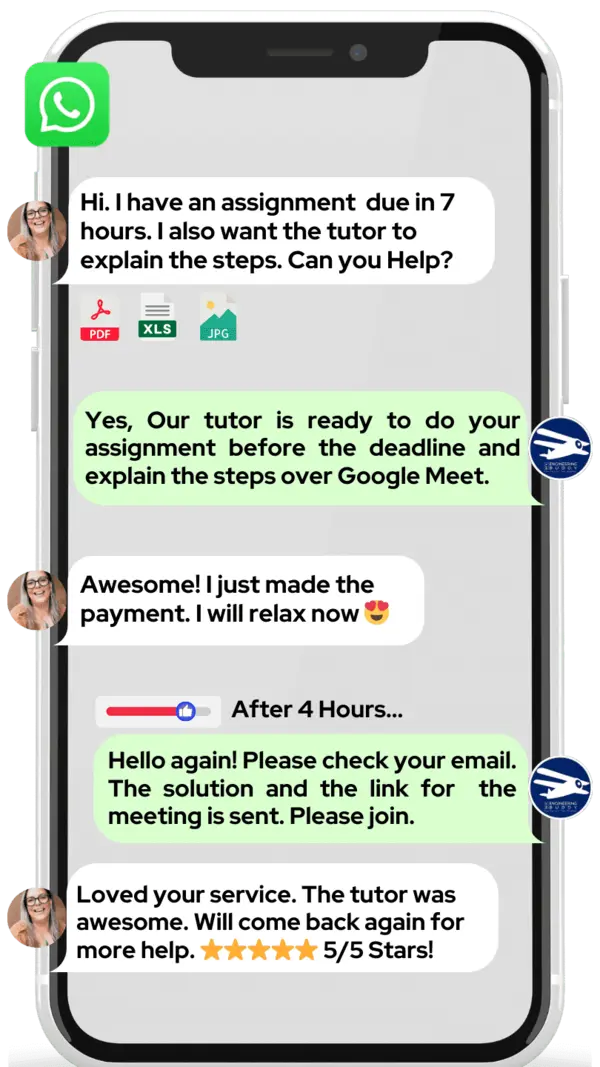



Hire The Best A/AS Level Computer Science (9618) Tutor
Top Tutors, Top Grades. Without The Stress!


52,000+ Happy Students From Various Universities






How Much For Private 1:1 Tutoring & Hw Help?
Private 1:1 Tutoring and HW help Cost $20 – 35 per hour* on average.
Paper 4 is where most 9618 students drop marks — recursive algorithms, abstract data types, and the project component all in one course.
A/AS Level Computer Science (9618) Tutor Online
Cambridge A/AS Level Computer Science (9618) is a Cambridge International qualification covering programming, algorithms, data structures, and computer systems. It equips students to think computationally, write structured code, and solve complex problems — preparation for university-level CS and engineering programmes.
Finding a qualified A/AS Level Computer Science (9618) tutor matters more than most students expect. The 9618 syllabus is technically demanding — pseudocode, trace tables, Boolean algebra, networking protocols, and a substantial programming project are not things you can revise your way through using notes alone. If you’ve searched for an A/AS Level Computer Science (9618) tutor near me and found nothing local that matches your exam board and level, MEB works entirely online. Sessions run live, 1:1, with a tutor who knows the 9618 specification specifically. Students studying A/AS Level Mathematics tutoring alongside Computer Science will find the two subjects reinforce each other — MEB covers both.
- 1:1 online sessions tailored to the Cambridge 9618 syllabus and your specific paper targets
- Verified tutors with subject-specific knowledge of 9618 — not generic CS tutors
- Flexible time zones — US, UK, Canada, Australia, Gulf, Europe
- Structured learning plan built after a diagnostic session in your first hour
- Ethical homework and assignment guidance — you understand the work, then submit it yourself
52,000+ students across the US, UK, Canada, Australia, and the Gulf have used MEB since 2008 — across 2,800+ subjects, from AP Calculus to A Level Music Technology to Data Science.
Source: My Engineering Buddy, 2008–2025.
How Much Does a A/AS Level Computer Science (9618) Tutor Cost?
Most 9618 sessions run at $20–$40 per hour, depending on the component, topic depth, and tutor availability. The $1 trial gives you 30 minutes of live tutoring or a full explanation of one homework question — no registration needed before you start.
Tutor slots fill quickly in the six weeks before Cambridge exam sessions. If your exams are approaching, book early.
WhatsApp MEB for a quick quote — average response time under 1 minute.
Who This A/AS Level Computer Science (9618) Tutoring Is For
9618 attracts students who are strong in maths and logic but often hit a wall when pseudocode becomes actual code, or when Paper 4’s project requirements land. Tutoring helps at every stage — not just crisis mode.
- AS Level students tackling Paper 1 and Paper 2 for the first time
- A Level students working through Paper 3 and the pre-release materials for Paper 4
- Students with a university conditional offer that depends on hitting a specific grade in this subject — the most common reason students contact MEB six weeks out
- Students who need structured homework and assignment guidance without shortcuts
- Students studying A/AS Level Physics homework help or maths alongside CS and need both to align
- Parents looking for a reliable, trackable tutoring setup for a child struggling with the technical components
Students who have studied at MIT, Carnegie Mellon, Imperial College London, ETH Zurich, the University of Toronto, and the University of Melbourne have reached MEB after finding that standard revision resources don’t cover the depth 9618 requires.
1:1 Tutoring vs Self-Study vs AI Tools
Self-study works for some students — revision guides and past papers get you a long way, but there’s no one to catch it when your trace table logic is consistently wrong in the same direction. AI tools are genuinely useful for explaining syntax and generating pseudocode examples, but they cannot watch you work through a Binary Search Tree insertion in real time, spot where your pointer logic breaks, and correct it mid-step. For 9618 specifically, the pre-release material for Paper 4 requires iterative planning and feedback that no static resource can replicate. MEB gives you online flexibility with a structured feedback loop — calibrated to the exact 9618 components you’re sitting.
Outcomes: What You’ll Be Able To Do in A/AS Level Computer Science (9618)
After focused 1:1 sessions on the 9618 syllabus, you will be able to write and trace recursive algorithms correctly, explain the differences between hardware components and justify design decisions in Paper 1 structured questions, apply sorting and searching algorithms with accurate Big O notation, model Boolean expressions using logic gates and Karnaugh maps, and present a well-documented programming project for Paper 4 that meets the Cambridge assessment criteria.
Supporting a student through A/AS Level Computer Science (9618)? MEB works directly with parents to set up sessions, track progress, and keep coursework on schedule. WhatsApp MEB — average response time is under a minute, 24/7.
Based on feedback from 40,000+ sessions collected by MEB from 2022 to 2025, 58% of students improved by one full grade after approximately 20 hours of 1:1 tutoring in a single subject. A further 23% achieved at least a half-grade improvement.
Source: MEB session feedback data, 2022–2025.
At MEB, we’ve found that 9618 students who bring a specific past paper question they couldn’t finish — not a general topic — make the fastest progress. One stuck question, worked through live, often unlocks the entire concept underneath it.
What We Cover in A/AS Level Computer Science (9618) (Syllabus / Topics)
The 9618 syllabus is split across AS and A Level, with Paper 4 (the programming project) sitting at A Level only. Coverage below reflects the full qualification.
| Component | Paper | Description | Typical Weighting |
|---|---|---|---|
| Theory Fundamentals | Paper 1 | Data representation, hardware, networking, security, logic gates | 40% (AS) |
| Fundamental Problem-Solving | Paper 2 | Algorithms, pseudocode, trace tables, program design | 60% (AS) |
| Advanced Theory | Paper 3 | Data structures, OOP, recursion, file handling, databases | 40% (A Level) |
| Practical Project | Paper 4 | Pre-release material, solution design, testing, documentation | 60% (A Level) |
Track 1: Theory, Hardware, and Data Systems (Papers 1 & 3)
- Number systems: binary, hexadecimal, two’s complement, BCD, and floating-point representation
- Logic gates, Boolean algebra, Karnaugh maps, and circuit simplification
- Computer architecture: Von Neumann model, fetch-execute cycle, processor performance factors
- Networking: protocols, TCP/IP stack, packet switching, network security and encryption methods
- Databases: entity-relationship modelling, normalisation (1NF–3NF), SQL queries
- Operating systems: scheduling algorithms, memory management, virtual memory
- Security: symmetric and asymmetric encryption, digital certificates, malware types
Key references: Cambridge International AS & A Level Computer Science Coursebook (Hodder Education, Watson & Sylvester) and the official Communications of the ACM for broader CS context on hardware and systems developments.
Track 2: Algorithms, Programming, and Problem-Solving (Papers 2 & 3)
- Pseudocode: Cambridge-standard syntax, variable types, procedures and functions
- Sorting algorithms: Bubble Sort, Merge Sort, Insertion Sort — written and traced
- Searching algorithms: Linear Search and Binary Search with complexity analysis
- Recursion: base cases, recursive calls, stack frames, and when recursion is appropriate
- Abstract data types: stacks, queues, linked lists, binary trees, hash tables
- Object-oriented programming: classes, inheritance, polymorphism, encapsulation
- Algorithm design: decomposition, stepwise refinement, Big O notation basics
Key references: Cambridge International AS & A Level Computer Science (Cambridge University Press, Lawson) and past Paper 2 mark schemes from Cambridge Assessment International Education.
Track 3: The Programming Project (Paper 4)
- Interpreting the pre-release material and scoping a feasible solution
- Program design: structure charts, data flow, algorithm planning before coding
- Coding in an accepted language: Python, Java, Pascal/Delphi, or Visual Basic
- Testing strategies: normal, boundary, and erroneous test data; test plans and evidence
- Documentation: technical and user documentation meeting Cambridge criteria
- Evaluation: discussing limitations, improvements, and whether success criteria were met
Key references: Cambridge 9618 specimen papers and mark schemes (Cambridge Assessment International Education) and Python Programming: An Introduction to Computer Science (Zelle) for students using Python.
 ” alt=”A/AS Level Computer Science 9618 tutoring infographic — topic difficulty, tutoring effectiveness, and career pathways” style=”width:100%; max-width:800px; display:block; margin: 20px auto;” />
Platforms, Tools & Textbooks We Support
9618 requires students to write, run, and test code in a specific language. MEB tutors support Python, Java, Pascal/Delphi, and Visual Basic across all components. Sessions use screen sharing so tutors can view and annotate your actual code in real time. Pseudocode is written collaboratively on a shared digital whiteboard.
- Python (IDLE, Thonny, Replit)
- Java (BlueJ, IntelliJ IDEA)
- Pascal / Delphi (Free Pascal, Lazarus)
- Visual Basic (.NET environment)
- Cambridge pseudocode environment (paper-based and whiteboard)
- Google Meet with screen sharing and digital pen annotation
What a Typical A/AS Level Computer Science (9618) Session Looks Like
The tutor opens by checking the previous session’s topic — say, recursive tree traversal — asking you to explain the base case in your own words before moving on. From there, the session moves to the week’s focus: perhaps writing a hash table implementation in Python and then tracing it manually against the Cambridge pseudocode equivalent. The tutor uses a digital pen-pad to annotate your code line by line, marking where the pointer logic breaks. You replicate the corrected version, explain it back, then attempt a new variant independently while the tutor watches. The session closes with a specific practice task — one past Paper 3 question on linked lists — and a note on what the next session will open with. Sessions covering A/AS Level Information Technology tutor topics can be scheduled alongside to cover overlapping systems content.
How MEB Tutors Help You with A/AS Level Computer Science (9618) (The Learning Loop)
Diagnose: In the first session, the tutor asks you to attempt a short pseudocode task and a theory question cold. This shows exactly where the gaps are — not where you think they are.
Explain: The tutor works through a live example on the pen-pad, narrating every decision. For algorithms, this means writing the full code, tracing it, and talking through why each line earns marks in a Cambridge mark scheme.
Practice: You attempt the next problem while the tutor watches in real time. No waiting for feedback after the session ends — corrections happen as you work.
Feedback: Every error gets a reason. “You lost marks here because Cambridge wants the base case stated explicitly — not implied.” That precision is what shifts grades.
Plan: The session ends with a clear next topic, a specific task to complete before the next meeting, and a progress note. Nothing is left vague.
Sessions run on Google Meet. The tutor uses a digital pen-pad or iPad with Apple Pencil for annotation; programming sessions use live screen sharing. Before your first session, share your exam board confirmation (Cambridge 9618), a recent past paper attempt or homework question you struggled with, and your exam date. The diagnostic in session one maps every remaining gap to a specific paper and question type. Start with the $1 trial — 30 minutes of live tutoring that also serves as your first diagnostic.
Students consistently tell us that the shift from understanding an algorithm to writing it correctly under exam conditions is the hardest step in 9618. That gap is exactly what the Learning Loop is designed to close — not by drilling more questions, but by fixing the reasoning underneath.
Tutor Match Criteria (How We Pick Your Tutor)
Not every CS tutor knows the 9618 specification. MEB matches on specifics.
Subject depth: Tutors are vetted on the Cambridge 9618 syllabus — Paper 1 theory, Paper 2 pseudocode, Paper 3 data structures, and Paper 4 project requirements. General programming knowledge alone is not enough.
Tools: All tutors use Google Meet with screen sharing and a digital pen-pad or iPad with Apple Pencil. Programming sessions include live code review alongside pseudocode annotation.
Time zone: MEB covers New York, Los Angeles, Chicago, London, Dubai, Toronto, Sydney, and Melbourne — all major US, UK, Gulf, Canadian, Australian, and European time zones, including evenings and weekends.
Learning style: Calibrated in session one. Some students need step-by-step narration; others need to attempt first and receive feedback after.
Communication: Clear English, adapted to the student’s current level — not jargon-heavy unless the student is ready for it.
Goals: Whether you’re targeting an A* in Paper 4, closing a gap in Paper 1 theory, or just getting Paper 2 pseudocode consistently right, the tutor aligns to that specific target.
Unlike platforms where you fill out a form and wait, MEB responds in under a minute, 24/7. Tutor match takes under an hour. The $1 trial means you test before you commit. Everything runs over WhatsApp — no logins, no intake forms.
Study Plans (Pick One That Matches Your Goal)
After the diagnostic session, your tutor builds the sequence. Three common structures: a catch-up plan (1–3 weeks, closing specific gaps before the Cambridge exam window opens), an exam prep plan (4–8 weeks, paper-by-paper revision with timed past paper practice each week), or ongoing weekly support aligned to your school’s teaching timetable so tutoring reinforces what’s being covered in class rather than racing ahead.
Pricing Guide
Most A/AS Level Computer Science (9618) sessions run at $20–$40 per hour. Rates vary by component complexity, tutor background, and how close you are to the exam. Paper 4 project sessions with tutors who have professional software development backgrounds are available at higher rates — share your specific project brief and MEB matches the tutor to what you’re building.
Slots become limited in April and October as the Cambridge exam window approaches. Book before the rush.
Start with the $1 trial — 30 minutes, no registration, no commitment. WhatsApp MEB for a quick quote.
FAQ
Is A/AS Level Computer Science (9618) hard?
It is demanding relative to other A Level subjects. Paper 2 pseudocode and Paper 4’s project component catch most students off guard. With consistent 1:1 work on the specific components you’re sitting, the difficulty becomes manageable rather than overwhelming.
How many sessions are needed to improve in 9618?
Most students see measurable improvement within 8–12 sessions targeting one specific paper. Paper 4 project support typically runs across 10–15 sessions depending on how far along the project is when tutoring starts.
Can you help with homework and assignments for 9618?
Yes — tutors explain the concepts and methods clearly so you can produce the work yourself. MEB tutoring is guided learning — you understand the work, then submit it yourself. For full details on what we help with and what we don’t, read our Academic Integrity policy and Why MEB.
Will the tutor match my exact 9618 syllabus and exam board?
Yes. MEB tutors are matched to the Cambridge International 9618 specification specifically. The tutor confirms your paper combination — AS only or full A Level — before session one and tailors every session to those components.
What happens in the first session?
The tutor runs a short diagnostic — a pseudocode task and a theory question attempted cold. This identifies your actual gaps, not the ones you reported. The rest of the session covers the most urgent topic, and a plan for subsequent sessions is set before you log off.
Is online tutoring as effective as in-person for Computer Science?
For a subject like 9618, online is often better. Screen sharing lets the tutor see your actual code. The digital pen-pad handles pseudocode and circuit diagrams as clearly as a whiteboard. Past paper marking is done live with annotations visible to both parties simultaneously.
Can I get A/AS Level Computer Science (9618) help late at night?
Yes. MEB operates across US, UK, Gulf, and Australian time zones — tutors are available in the evenings and at weekends. WhatsApp MEB at any hour and you’ll typically get a response in under a minute with available slot options.
What if I don’t get on with my assigned tutor?
Request a switch. MEB keeps the process simple — WhatsApp MEB, explain what isn’t working, and a new match happens within the hour. You are not locked into one tutor, and there is no fee for switching.
Do you offer group sessions for 9618?
No — all MEB sessions are 1:1. Group sessions dilute the diagnostic precision that makes 9618 tutoring effective. Every student has different gaps across the four papers, and a shared session cannot address them accurately.
How do I get started with A/AS Level Computer Science (9618) tutoring?
Three steps: WhatsApp MEB with your exam board, current paper targets, and exam date. MEB matches you with a verified 9618 tutor — usually within the hour. Start with the $1 trial: 30 minutes of live tutoring or one homework question explained in full.
Trust & Quality at My Engineering Buddy
Every MEB tutor goes through subject-specific vetting — not a general interview. For 9618, that means demonstrating knowledge of the Cambridge pseudocode standard, the Paper 4 marking criteria, and the specific data structures and algorithms tested at A Level. Tutors complete a live demo evaluation before being matched with students. Ongoing feedback from sessions is reviewed and used to reassess tutor quality. Rated 4.8/5 across 40,000+ verified reviews on Google.
MEB tutoring is guided learning — you understand the work, then submit it yourself. For full details on what we help with and what we don’t, read our Academic Integrity policy. See MEB’s tutoring methodology for how sessions are structured from diagnostic through to exam readiness.
MEB has served 52,000+ students across the US, UK, Canada, Australia, Gulf, and Europe in 2,800+ subjects since 2008. Students needing support across related STEM subjects will find qualified tutors for Further Mathematics tutoring, A/AS Level Biology help, and A/AS Level Economics tutoring — all from the same platform, matched the same way.
MEB has operated since 2008 — 18 years of matching students with verified subject tutors across 2,800+ courses. The $1 trial exists because we’d rather you test the match than take our word for it.
Source: My Engineering Buddy, 2008–2025.
A common pattern our tutors observe is that 9618 students often know more than they think — they’ve read the notes, they understand the concept in isolation. What breaks down is the translation from understanding to writing correct pseudocode under time pressure. That is a solvable problem.
Explore Related Subjects
Students studying A/AS Level Computer Science (9618) often also need support in:
- A/AS Level Chemistry (9701)
- A/AS Level Design Technology (9705)
- A/AS Level Global Perspectives & Research (9239)
- A/AS Level Business (9609)
- A/AS Level Psychology (9990)
- Cambridge Checkpoint Science
Next Steps
Share your exam board confirmation (Cambridge 9618), the papers you’re sitting, your current timeline, and your biggest gap — Paper 1 theory, Paper 2 pseudocode, or Paper 4 project. MEB matches you with a verified tutor, usually within 24 hours, and the first session opens with a diagnostic so every minute counts.
Before your first session, have ready:
- Your 9618 syllabus or school scheme of work and which papers you are sitting
- A recent past paper attempt or a homework question you couldn’t finish
- Your exam date or project submission deadline
Visit www.myengineeringbuddy.com for more on the MEB process, how tutors are matched, and what to expect from your first session.
WhatsApp to get started or email meb@myengineeringbuddy.com.
Reviewed by Subject Expert
This page has been carefully reviewed and validated by our subject expert to ensure accuracy and relevance.