




~1 min
Average Reply Time
~1 hour
To Be Matched With A Tutor
30 Min Trial
75% Find Their Tutor On The 1st Trial
$20-35+/hr
Premium Yet Affordable Learning
Struggling with harmonic analysis or set works for Cambridge A/AS Level Music (9483)? Most students hit the wall at exactly the same two topics.
A/AS Level Music (9483) Tutor Online
A/AS Level Music (9483) is the Cambridge International AS & A Level Music qualification, covering music theory, harmony, set works analysis, and composition. It equips students for conservatoire auditions, university music programmes, and broader arts degrees requiring critical and creative musical thinking.
Finding a reliable A/AS Level Music (9483) tutor matters more than most students expect. This syllabus covers a precise range of skills — written harmony, aural perception, contextual analysis of set works, and compositional technique — and gaps in any one area drag down the entire grade. If you have searched for an A/AS Level Music (9483) tutor near me and found nothing local that fits your schedule, MEB’s 1:1 online sessions match you to a subject-specific tutor, available across US, UK, Canada, Australia, and Gulf time zones.
- 1:1 online sessions tailored to the Cambridge 9483 syllabus
- Expert verified tutors with subject-specific knowledge of harmony, set works, and composition
- Flexible time zones — US, UK, Canada, Australia, Gulf
- Structured learning plan built after a diagnostic session
- Ethical homework and assignment guidance — you understand the work before you submit it
52,000+ students across the US, UK, Canada, Australia, and the Gulf have used MEB since 2008 — across 2,800+ subjects, from AP Calculus to A Level Music Technology to Data Science.
Source: My Engineering Buddy, 2008–2025.
How Much Does an A/AS Level Music (9483) Tutor Cost?
Most A/AS Level Music (9483) tutoring sessions run $20–$40 per hour. Specialist tutors with conservatoire or professional performance backgrounds cost more. A $1 trial gives you 30 minutes of live 1:1 tutoring or a full explanation of one assignment question before you commit to anything.
| Level / Need | Typical Rate | What’s Included |
|---|---|---|
| AS Level (most students) | $20–$35/hr | 1:1 sessions, harmony & set works guidance |
| A Level / Advanced | $35–$60/hr | Expert tutor, composition and analysis depth |
| Conservatoire-track | $60–$100/hr | Professional background, audition & portfolio support |
| $1 Trial | $1 flat | 30 min live session or 1 homework question explained |
Tutor availability tightens significantly in the weeks before Cambridge examination windows. Book early if your exam date is within eight weeks.
WhatsApp MEB for a quick quote — average response time under 1 minute.
Who This A/AS Level Music (9483) Tutoring Is For
This service suits students who know what the syllabus requires but keep losing marks in the same places — or who are trying to get ahead before those gaps become expensive. Sessions are delivered online and work for students in any country sitting the Cambridge 9483 paper.
- AS Level students building harmony and aural skills from scratch
- A Level students whose set works analysis is weak going into the written paper
- Students with a university or conservatoire conditional offer depending on their Music grade this sitting
- Students returning after a first attempt who need a structured gap-closing plan before the resit
- Parents whose child’s confidence in composition and harmony has dropped alongside recent mock results
- Students needing A Level Music Technology tutoring alongside their 9483 work
Students progressing from A/AS Level Music often go on to study at institutions such as the Royal College of Music, the Guildhall School of Music and Drama, the Royal Conservatoire of Scotland, the University of Oxford (Faculty of Music), the Royal Northern College of Music, the New England Conservatory, and the Manhattan School of Music.
1:1 Tutoring vs Self-Study vs AI Tools
Self-study works for motivated students, but Music 9483 has a particular trap: you can practise harmony exercises for weeks using a flawed approach and not realise it until the marked paper comes back. AI tools can explain voice-leading rules or summarise a set work in seconds, but they cannot hear your harmonic writing, flag exactly where a progression breaks the rules, or adapt a live explanation of counterpoint to the specific bar you are stuck on. Real-time human instruction matters here because a tutor can annotate your score on screen and correct the mistake before it becomes a habit. MEB gives you that online — structured, syllabus-specific, with a feedback loop built into every session.
Outcomes: What You’ll Be Able To Do in A/AS Level Music (9483)
After working with an MEB tutor, you will be able to write four-part harmony to SATB standard with confident handling of cadences, suspensions, and modulation. You will analyse set works from the 9483 prescribed list with specific reference to structure, texture, and historical context — the kind of detail that separates a B answer from an A. You will apply compositional techniques within a given style, demonstrating control of melody, rhythm, and harmonic language. You will approach the aural paper with a clear method for identifying intervals, chords, and structural features under timed conditions. You will present written responses on music that are precise, technically grounded, and exam-ready.
Supporting a student through A/AS Level Music (9483)? MEB works directly with parents to set up sessions, track progress, and keep coursework on schedule. WhatsApp MEB — average response time is under a minute, 24/7.
Based on feedback from 40,000+ sessions collected by MEB from 2022 to 2025, 58% of students improved by one full grade after approximately 20 hours of 1:1 tutoring in a single subject. A further 23% achieved at least a half-grade improvement.
Source: MEB session feedback data, 2022–2025.
What We Cover in A/AS Level Music (9483) (Syllabus / Topics)
Track 1: Music Theory and Harmony
- Diatonic harmony in major and minor keys, including secondary dominants
- SATB four-part writing: voice leading, doubling, spacing
- Cadences: perfect, imperfect, plagal, interrupted — recognition and application
- Modulation to related keys and chromatic harmony at A Level
- Counterpoint and suspensions in two-voice and four-voice textures
- Melodic composition within a given style, including period and phrase structure
- Figured bass realisation and chord identification from Roman numeral analysis
Recommended texts: The AB Guide to Music Theory (Eric Taylor, Parts 1 & 2); Harmony in Practice (Anna Butterworth); Grade 6–8 Theory past papers (ABRSM).
Track 2: Set Works Analysis and Music History
- Prescribed set works from the current Cambridge 9483 syllabus cycle
- Structural analysis: sonata form, rondo, theme and variations, ternary
- Texture, instrumentation, and orchestration across historical periods
- Contextual writing: placing a work within its historical and stylistic period
- Comparison questions: identifying similarities and differences between works
- Essay technique for the written paper — argument, evidence, musical terminology
Recommended texts: The Rhinegold Guide to A Level Music (relevant set works edition); The Oxford Dictionary of Music (Kennedy); relevant Cambridge set work study guides.
Track 3: Aural Perception and Listening
- Interval recognition: major, minor, perfect, augmented, diminished
- Chord identification by ear: triads, seventh chords, inversions
- Rhythmic dictation and melodic dictation under timed conditions
- Identifying structural features, cadence points, and modulations by ear
- Describing texture, dynamics, articulation, and performance character in written responses
Recommended texts: Aural Training in Practice (ABRSM, Grades 6–8); A Level Music Listening Tests (Rhinegold).
For students combining this with related Cambridge qualifications, A/AS Level Drama tutoring and A/AS Level Art & Design tutoring are also available at MEB.
The OCR A-Level specifications page at ocr.org.uk lists current Cambridge and OCR A Level subject structures for reference.

What a Typical A/AS Level Music (9483) Session Looks Like
The tutor opens by reviewing the harmony exercise or set work question from the previous session — checking whether the student’s understanding has held or whether a specific point needs revisiting. From there, the session moves into the current topic: the student might be working through a four-part harmonisation of a given melody, and the tutor uses a digital pen-pad to annotate the score directly on screen, marking parallel fifths, weak doublings, or awkward voice movement in real time. The student then attempts the next phrase independently while the tutor watches and comments before errors become embedded. The session closes with a short written or listening task set for independent practice before the next session, and the tutor notes which topic comes next.
At MEB, we’ve found that Music students make the fastest progress when the tutor works directly on their score — not on a model answer. Seeing your own writing annotated in real time is what builds the habit of self-checking before the exam.
How MEB Tutors Help You with A/AS Level Music (9483) (The Learning Loop)
Diagnose: In the first session, the tutor asks you to attempt a short harmony exercise or answer a set work question under time pressure. This is not a test — it identifies exactly which gaps are costing marks. Common findings include inconsistent modulation technique, weak aural identification of seventh chords, and set work essays that describe rather than analyse.
Explain: The tutor works through a problem live, using a digital pen-pad to annotate a score or write out a harmonic reduction on screen. You see every decision made, not just the finished answer.
Practice: You attempt the next example while the tutor stays present. This is not homework — it happens in the session, with support close enough to intervene before a misconception settles.
Feedback: The tutor goes through your attempt step by step, explaining why each error would lose marks on the Cambridge mark scheme, not just that it is wrong.
Plan: At the end of each session, the tutor sets a specific practice task and maps the next topic. You know exactly what you are doing next time and why.
Sessions run over Google Meet. The tutor uses a digital pen-pad or iPad with Apple Pencil to write on scores and exercises in real time. Before your first session, share your current syllabus year, any recent past paper attempts, and your exam or assignment deadline. The first session starts with a short diagnostic, then moves directly into the highest-priority topic. Whether you need a quick catch-up before an exam, structured revision over 4–8 weeks, or ongoing weekly support through the semester, the tutor maps the session plan after that first diagnostic.
Start with the $1 trial — 30 minutes of live tutoring that also serves as your first diagnostic.
Students consistently tell us that the moment things click in Music theory is when someone works through their own harmonic mistake with them — not a textbook example. That is why every MEB session builds from what the student actually wrote.
Tutor Match Criteria (How We Pick Your Tutor)
Not every music tutor understands the Cambridge 9483 syllabus structure. Here is what MEB checks before matching you.
Subject depth: Tutors are matched on their specific knowledge of the 9483 syllabus — the current set works cycle, the harmony paper format, and the aural component requirements. A tutor who has only taught GCSE Music or a different exam board is not matched to this subject.
Tools: All sessions use Google Meet with a digital pen-pad or iPad and Apple Pencil for score annotation and live harmony work. No static PDFs or screenshots.
Time zone: Tutors cover New York, Los Angeles, London, Dubai, Toronto, Sydney, Melbourne, and all major US, UK, Gulf, Canadian, Australian, and European time zones, including evenings and weekends.
Learning style: Calibrated from the first session. Some students need more aural work; others need more written harmony; the session balance shifts accordingly.
Communication: Clear English, adapted to the student’s level. Tutors do not over-explain concepts the student already holds.
Goals: Whether the goal is a top A Level grade, a conservatoire conditional offer, or closing a specific gap before a resit, the tutor is matched to that stated target.
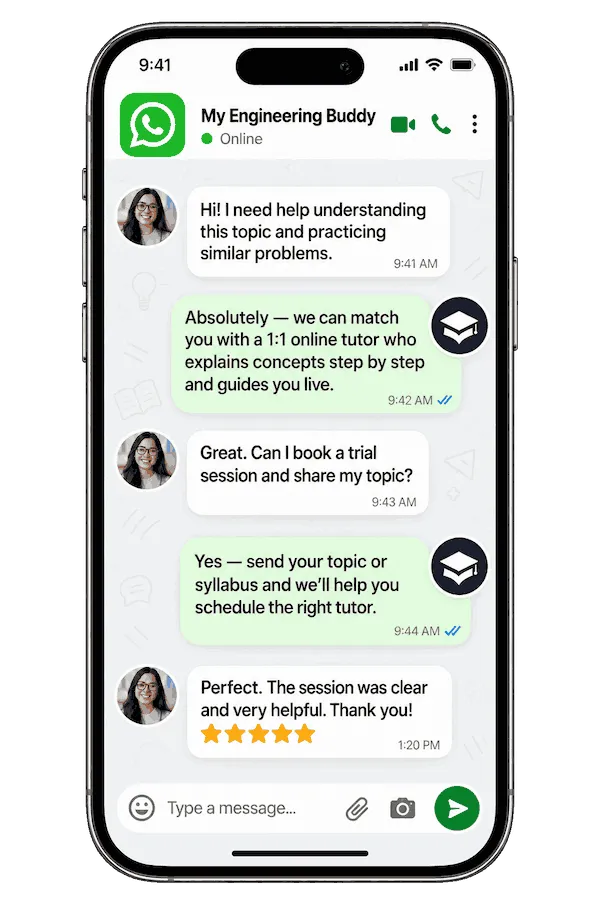
Unlike platforms where you fill out a form and wait, MEB responds in under a minute, 24/7. Tutor match takes under an hour. The $1 trial means you test before you commit. Everything runs over WhatsApp — no logins, no intake forms.
Study Plans (Pick One That Matches Your Goal)
After the first diagnostic session, your tutor builds a specific sequence. A catch-up plan (1–3 weeks) targets the two or three components costing the most marks right now — often harmony and set work essays. An exam prep plan (4–8 weeks) works through every paper component in order of weight, with timed practice built in from week three. Weekly ongoing support runs alongside your school timetable and coursework deadlines, keeping you ahead of each submission point rather than catching up after.
Pricing Guide
Most A/AS Level Music (9483) tutoring runs $20–$40 per hour. Graduate-level or specialist tutors — those with conservatoire degrees, professional performance careers, or published composition work — are available at rates up to $100/hr. Rate factors include the specific component you are targeting, how close you are to your exam date, and tutor availability.
For students targeting the Royal College of Music, Guildhall, or other conservatoire-track programmes, tutors with professional performance and composition backgrounds are available at higher rates — share your specific goal and MEB will match the tier to your ambition.
Availability narrows sharply in the six weeks before the Cambridge exam window. Start with the $1 trial — 30 minutes, no registration, no commitment. WhatsApp MEB for a quick quote.
FAQ
Is A/AS Level Music (9483) hard?
It is demanding because it combines written theory, practical aural skills, and analytical essay writing in the same qualification. Students who struggle in one area — most often harmony or set work analysis — find that targeted 1:1 sessions close the gap faster than self-study alone.
How many sessions are needed?
Most students see measurable improvement in harmony and aural skills within 8–12 hours of focused 1:1 work. Students preparing for a full A Level sitting across all components typically benefit from 20–30 hours spread across a term, with the tutor adjusting pace based on progress.
Can you help with homework and assignments?
Yes. MEB tutors explain the underlying technique so you understand the harmony or analysis question yourself, then complete and submit your own work.
MEB tutoring is guided learning — you understand the work, then submit it yourself. For full details on what we help with and what we don’t, read our Academic Integrity policy and Why MEB.
Will the tutor match my exact syllabus or exam board?
Yes. MEB matches tutors to the Cambridge 9483 specification specifically, including the current set works cycle. If you are sitting a different board’s A Level Music paper, share the board and syllabus code when you contact MEB and the match is adjusted accordingly.
What happens in the first session?
The tutor runs a short diagnostic — usually a harmony exercise and one set work question — to locate exactly where marks are being lost. The remainder of the first session moves directly into the highest-priority gap. You leave with a clear plan and a practice task.
Is online tutoring as effective as in-person?
For Music theory and analysis, yes. The tutor annotates your score live on screen using a digital pen-pad, which replicates the experience of working side by side. Aural training works equally well over audio. The main advantage is that you get a subject-specialist tutor regardless of your location.
Can I get A/AS Level Music (9483) help at midnight or late at night?
Yes. MEB covers multiple time zones with tutors available in the evenings and at weekends. Students in the Gulf, Australia, and North America regularly book sessions outside standard school hours. Contact MEB over WhatsApp and you will get a response in under a minute, whatever the hour.
What if I do not like my assigned tutor?
Request a different tutor over WhatsApp. MEB matches a replacement within hours. The $1 trial exists specifically to let you assess fit before committing to ongoing sessions — there is no obligation to continue with any tutor who is not the right match.
Do you offer group A/AS Level Music (9483) sessions?
MEB focuses on 1:1 sessions because the Cambridge 9483 paper requires individual diagnostic work — group sessions cannot identify the specific harmonic patterns or aural weaknesses that cost a particular student marks. All sessions are private and tailored.
How do I get started?
Three steps: WhatsApp MEB with your exam board, current topic, and deadline. MEB matches you with a verified A/AS Level Music (9483) tutor, usually within 24 hours. Your first session is the $1 trial — 30 minutes of live 1:1 tutoring or one full question explained.
Try your first session for $1 — 30 minutes of live 1:1 tutoring or one homework question explained in full. No registration. No commitment. WhatsApp MEB now and get matched within the hour.
Trust & Quality at My Engineering Buddy
Every MEB tutor for A/AS Level Music (9483) is screened through a subject-specific vetting process: verified degree or professional credentials in music, a live demo session assessed by MEB, and ongoing review based on student feedback after every session block. Rated 4.8/5 across 40,000+ verified reviews on Google. Tutors hold degrees from music conservatoires and universities, and many have professional performance, composition, or music examination backgrounds relevant to the Cambridge syllabus.
MEB tutoring is guided learning — you understand the work, then submit it yourself. For full details, read our Academic Integrity policy. MEB’s approach to structured 1:1 learning is described further at our tutoring methodology page.
MEB has served 52,000+ students across the US, UK, Canada, Australia, Gulf, and Europe since 2008, covering 2,800+ subjects at every level. Students working alongside A/AS Level Music often also need support in A/AS Level English Literature tutoring, A/AS Level History tutoring, or A/AS Level Classical Studies help — all available through the same platform.
MEB has operated since 2008 — 18 years of subject-specific tutoring across 2,800+ advanced courses, with tutors screened for the exact syllabus and exam board each student is sitting.
Source: My Engineering Buddy, 2008–2025.
Explore Related Subjects
Students studying A/AS Level Music (9483) often also need support in:
- A Level Music Technology
- A/AS Level Drama
- A/AS Level Art & Design
- A/AS Level English Literature
- A/AS Level History
- A/AS Level Classical Studies
- A/AS Level Media Studies
- A/AS Level Digital Media Design
Next Steps
Getting started takes one message. Have the following ready before your first session:
- Your exam board and syllabus year (Cambridge 9483 or the relevant board code)
- A recent past paper attempt, harmony exercise, or assignment you struggled with
- Your exam or submission deadline and your available time zones
MEB matches you with a verified A/AS Level Music (9483) tutor — usually within 24 hours. The first session starts with a diagnostic so every minute is used on what actually matters. Visit www.myengineeringbuddy.com to read more about how the MEB process works.
WhatsApp to get started or email [email protected].
A common pattern our tutors observe is that A/AS Level Music students arrive knowing the rules of harmony but not knowing how to apply them under exam conditions. The gap is not knowledge — it is supervised practice. That is what the first session addresses.
Reviewed by Subject Expert
This page has been carefully reviewed and validated by our subject expert to ensure accuracy and relevance.




