Psychology Tutoring Explained: A Complete Guide for Students and Parents

- One-on-one tutoring can outperform classroom learning by up to 15 months of progress.
- 85% of parents report grade improvements after their child received online tutoring.
- Online psychology tutoring is as effective as in-person, with 15% higher exam pass rates.
- Experienced psychology tutors typically charge $20–$40 per hour.
- Consistent, multi-session-per-week tutoring produces the strongest academic results.
Personalized psychology tutoring (including online) helps students grasp concepts and improve grades. Studies show one-on-one tutoring boosts learning by months and can increase test pass rates significantly.
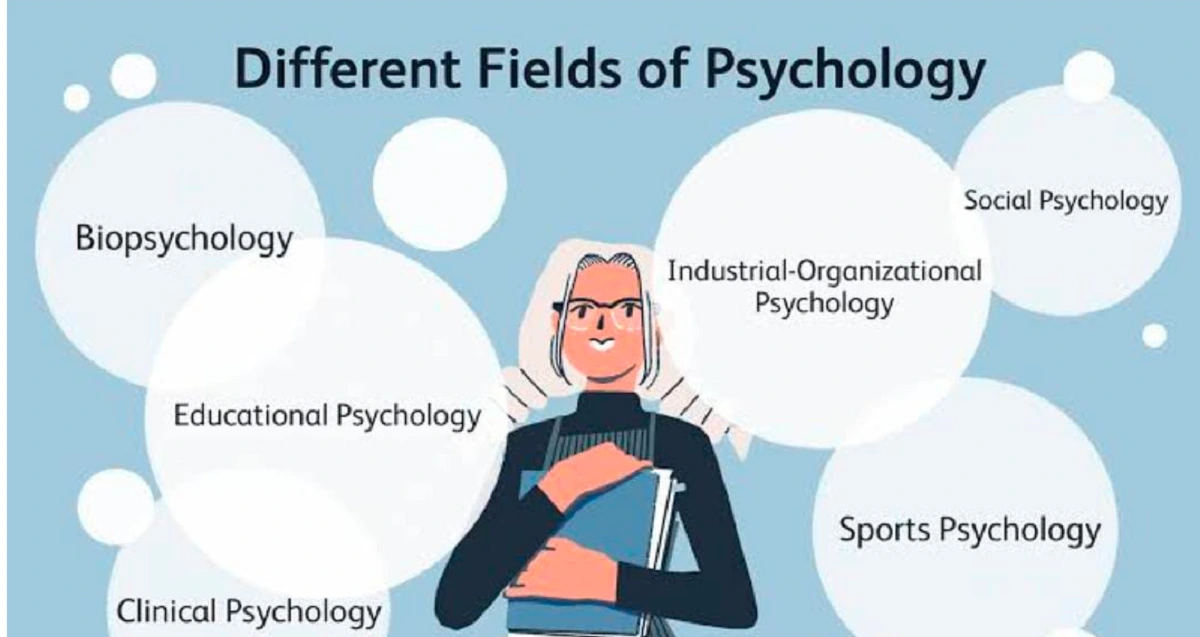
Why Psychology Tutoring Helps
Imagine a student – call her Sarah – tackling her first psychology exam. The subject fascinates her, but the many theories (like behaviorism or cognitive development) and research methods can feel overwhelming. In her large class, the psychology teacher lectures on concepts but can’t give every student one-on-one attention. That’s where psychology tutoring comes in. If you’re looking for an AP Seminar tutor or support in any related humanities subject, the same principles of personalized instruction apply.
The numbers speak for themselves regarding the effectiveness of personalized instruction. Take a look at the measurable impact tutoring can have on performance.
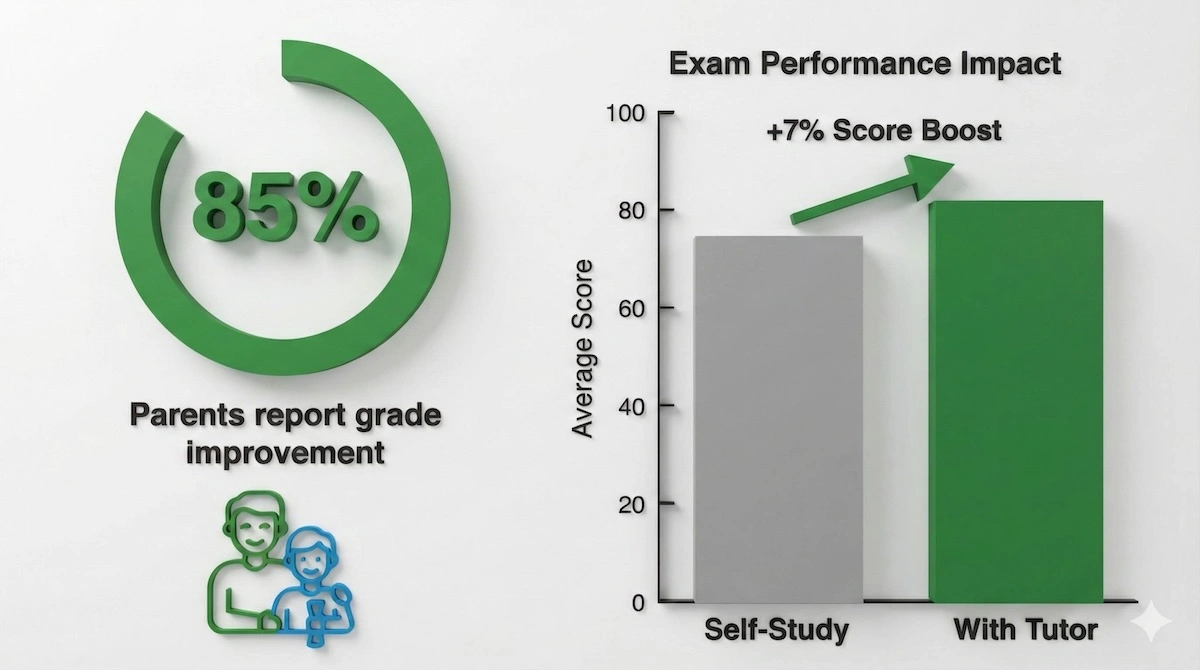
Data shows that personalized psychology tutoring leads to measurable improvements in grades and exam scores.
With such a significant potential for score improvement, tutoring is an investment that pays off on exam day.
Research shows one-on-one tutoring has a dramatic impact. In a classic study, students with private tutoring scored two standard deviations above the average classroom performance – in other words, better than 98% of their peers. Recent research echoes this: targeted high-impact tutoring can add about 3–15 months of learning compared to traditional instruction. Regular tutoring sessions help a student catch up or excel in complex psychology topics much faster than studying alone.
Besides better grades, tutoring often boosts confidence. Many students feel less anxious about class material when they understand it. In fact, one survey found 85% of parents said their child’s grades improved after online tutoring. By working with a tutor, a student like Sarah can overcome sticking points, reduce study stress, and feel more engaged in psychology.
And tutoring isn’t just for those who struggle. High achievers sometimes use it to go deeper or prepare for advanced tests. For example, a student might seek online tutoring to prepare for the AP Psychology exam. The focused help not only corrects misunderstandings but also explores additional examples and practice questions. Tutors tailor sessions to each student’s goals – whether that’s mastering brain science details or practicing case studies – making learning more engaging and effective.
When Students Need Psychology Tutoring
Students often seek psychology tutoring when they hit a wall in the coursework. For instance, if a chapter on cognitive development or brain chemistry doesn’t make sense, a tutor can break it down step-by-step. Homework and projects in psychology might require writing detailed essays or designing experiments, which can feel daunting at first. In these cases, a tutor provides personalized guidance on homework, ensuring the student understands each part of the assignment.
It isn’t always obvious when you need extra help. If you recognize any of the following signs in your own study habits, a tutor might be the solution.
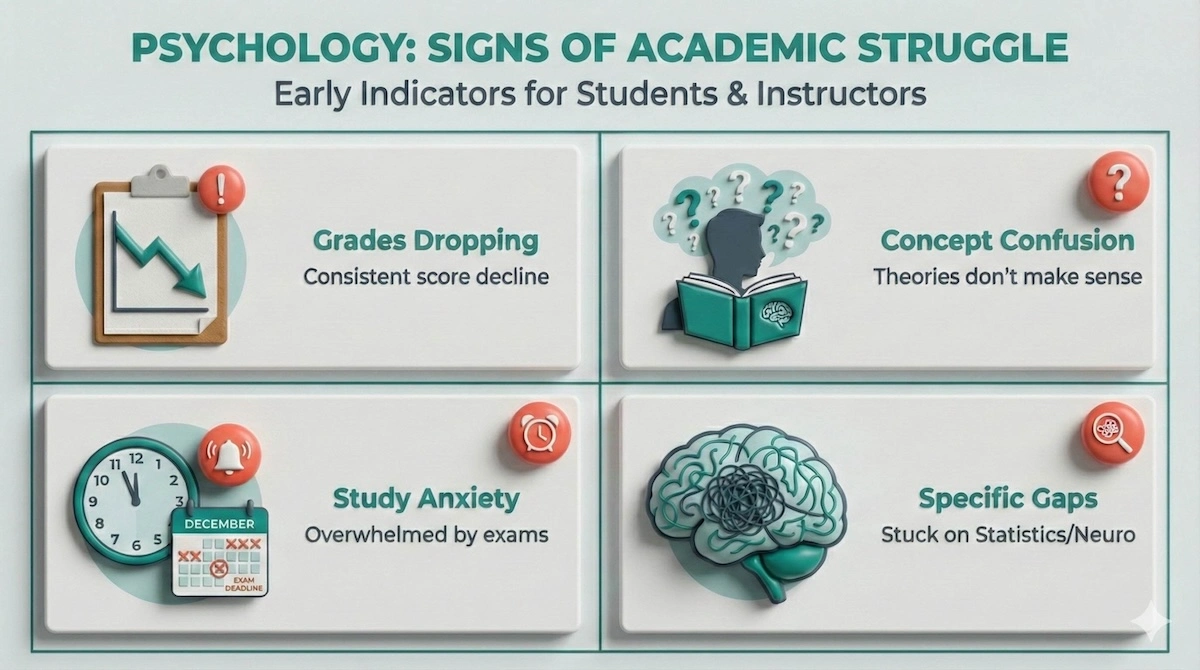
Recognizing these four key signs early can help you seek psychology tutoring before grades suffer.
Identifying these red flags early prevents them from turning into long-term grade damage.
For example, if a student is stuck on research methods or data analysis, a tutor can demystify the process. Tutors often help with psychology homework guidance; they won’t just give you the answers, but explain each step so you understand the reasoning. This approach ensures you truly learn the material, not just complete the task. Whether it’s lab reports, case study essays, or survey projects, a psychology tutor provides targeted assignment guidance tailored to your class.
In short, psychology tutoring is a personalized support system for when classroom learning isn’t enough. It can clarify lecture content and reinforce what you learn in class. If Sarah was confused by a lesson on personality theories, her tutor would address exactly that topic. If her project involves analyzing a social psychology experiment, the tutor would guide her through designing and interpreting the results. The tutor’s focus is on your specific needs, complementing what the psychology teacher provides.
Psychology Teacher vs. Psychology Tutor
Many students wonder why they need a tutor if they already have a teacher. The following comparison highlights how these two roles complement rather than duplicate each other.
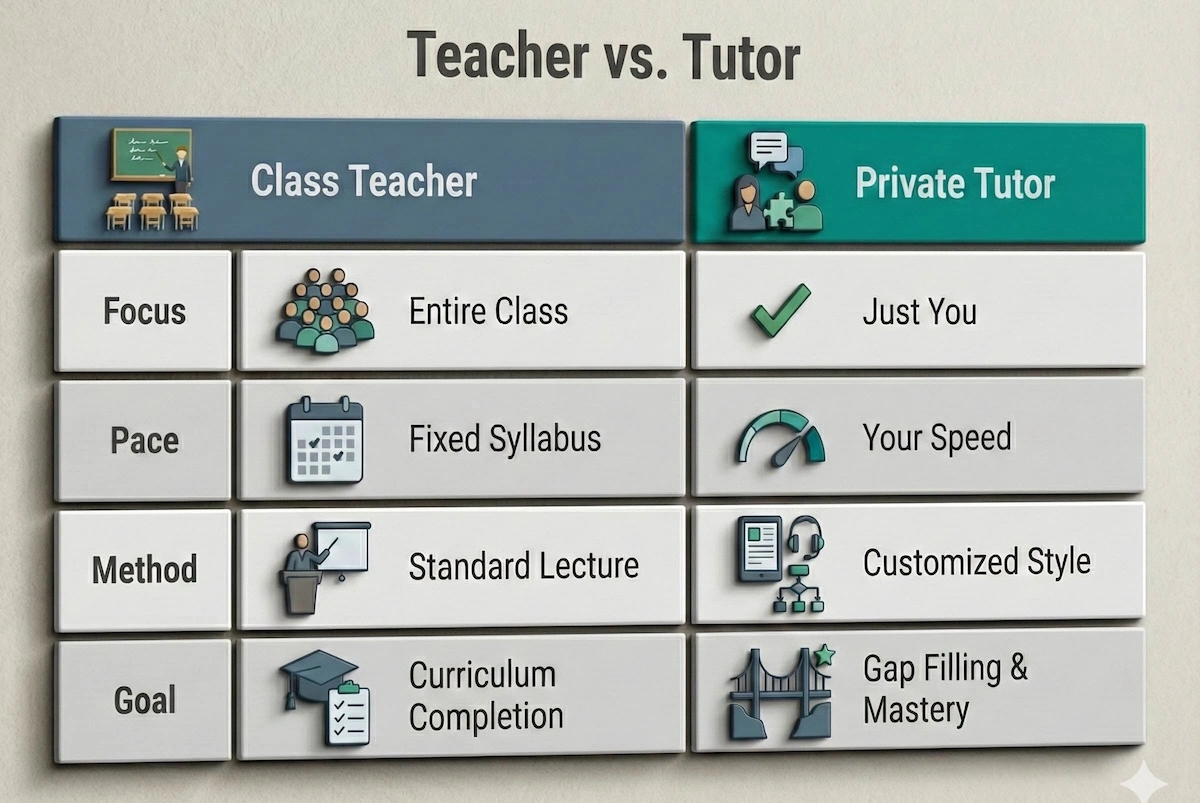
Understanding the difference between a classroom teacher and a private tutor helps you use both resources effectively.
As you can see, while teachers manage the curriculum for the group, a tutor focuses entirely on your personal mastery.
Psychology teaching usually takes place in a classroom with many students. A psychology teacher is focused on delivering the curriculum to the entire class, which means they might not have time to give each student personal attention. By contrast, a psychology tutor works one-on-one with you. The tutor can adapt explanations to your learning style and re-teach any topic at your pace. In short, a tutor provides individualized instruction to supplement the classroom.
Many effective tutors also have teaching credentials or advanced study in psychology. In fact, evidence shows that tutoring provided by qualified teachers tends to be more effective than tutoring from non-certified individuals. Whether your tutor is a former psychology professor or a graduate student, they bring strong subject knowledge to each session. This means if something clicked for your classroom teacher but still confuses you, the tutor will find another way to explain it until it makes sense.
Students preparing for high-stakes maths-heavy components of their curriculum — such as those needing an A-Level Mathematics tutor alongside their psychology studies — often find that the same one-on-one model accelerates progress across subjects.
Online Psychology Tutoring
Online tutoring offers flexibility and convenience that traditional tutoring often can’t match. You can connect with a psychology tutor online from your home or dorm room, without commuting to a tutoring center. This is especially helpful for college students in the USA, UK, or Gulf countries who may not have local experts readily available. Scheduling is easier too: you can book sessions during evenings or weekends, even late at night before a big exam.
- Flexibility: You can learn from anywhere with internet access, so location isn’t a barrier. Online platforms let you schedule tutoring at times that fit your busy life.
- Recordable sessions: Many online tutoring sessions can be recorded or include saved whiteboards, so you can revisit the material later.
- Cost-effective: Online tutoring is often more affordable than in-person. Experts report typical private tutoring costs around $11–$30 per hour, and skilled psychology tutors often charge in the $20–$40 range, which is reasonable for personalized support.
- Wide selection: You have access to a global pool of psychology tutors. Whether you need AP Psychology help in the US, A-level Psychology in the UK, or exam prep in Gulf curricula, you can find a tutor who knows your syllabus.
- Interactive tools: Online sessions use digital tools like virtual whiteboards or quizzes to make concepts clear. Tutors can show videos or diagrams on the fly to illustrate psychological experiments and theories.
Students who have explored platforms like Tutoring Club may find it useful to read a detailed Tutoring Club review and comparison of alternatives before committing to any service.
How to Find the Right Psychology Tutor
With so many tutoring options, it’s important to choose a tutor who fits your needs. Look for someone with strong psychology knowledge – for example, a tutor with a degree in psychology or teaching experience. Ask about their background in the subject before you book a session. It’s also fine to request a trial tutoring session to see if the tutor’s teaching style works for you.
- Subject expertise: The best tutors deeply understand psychology topics. For example, if you’re studying developmental psychology, make sure the tutor is comfortable explaining that. Don’t hesitate to verify their credentials in psychology or education.
- Teaching ability: A good tutor knows how to explain concepts simply. During a trial session, see if they listen to your questions and adapt their explanations to how you learn.
- Track record: Read reviews or ask others about the tutor. A strong track record of helping students improve is a good sign.
- Availability: Make sure the tutor’s schedule aligns with yours. Decide in advance how often you want sessions, whether weekly or just before major tests.
- Consistency: Try to work with the same tutor each time. Research shows consistent tutoring and having multiple sessions per week tends to give the best results. Building a steady relationship with your tutor helps you progress faster.
Finding the perfect match doesn’t have to be a guessing game. Follow this step-by-step workflow to vet candidates effectively.
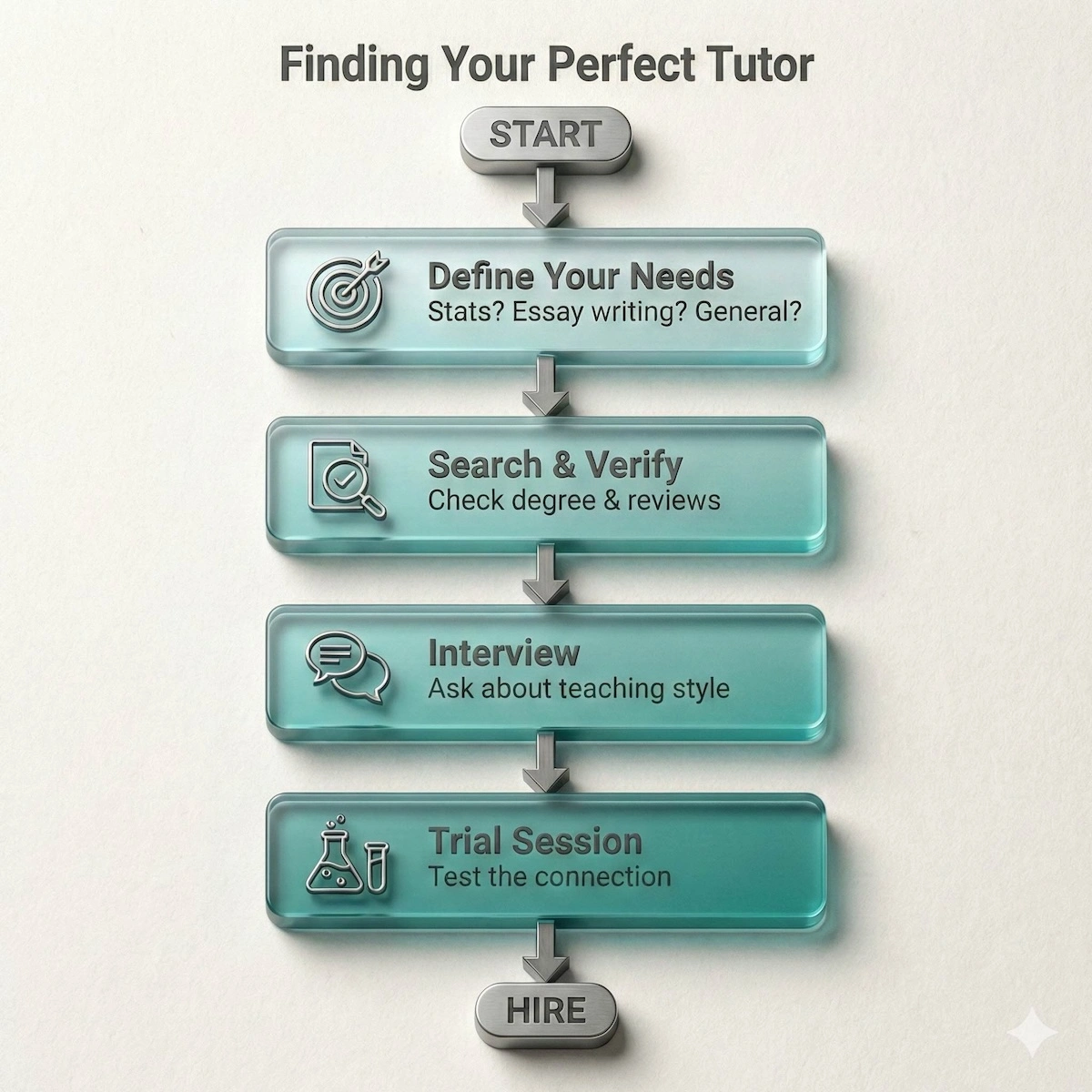
Follow this four-step process to ensure you hire a qualified tutor who matches your specific learning needs.
Don’t skip the trial session step—it’s the only way to guarantee the teaching style works for you.
Platforms like Classover are another option worth investigating; a thorough Classover review covering alternatives and pricing can help you compare before deciding. Similarly, if you are weighing peer-based platforms, reading a School Solver review with pricing and alternatives provides useful context. For those considering smaller boutique services, a Teach Me 2 tutoring service review and comparison is worth a look as well.
Students working through O-Level curricula who need support in quantitative reasoning alongside psychology can also benefit from working with an O-Level Mathematics tutor to strengthen analytical skills that carry over into research methods.
Making the Most of Psychology Tutoring
To get the most from tutoring, come prepared. Before each session, review your class notes and list specific questions or topics you find confusing. During the session, ask questions freely and take your own notes so you reinforce the material. Afterward, review what you learned and practice any problems the tutor suggests. The tutor’s role is to guide you, but your effort between sessions turns that guidance into learning.
Tutoring isn’t a passive activity; it requires a cyclical approach to really stick. Here is the most effective workflow for your weekly sessions.
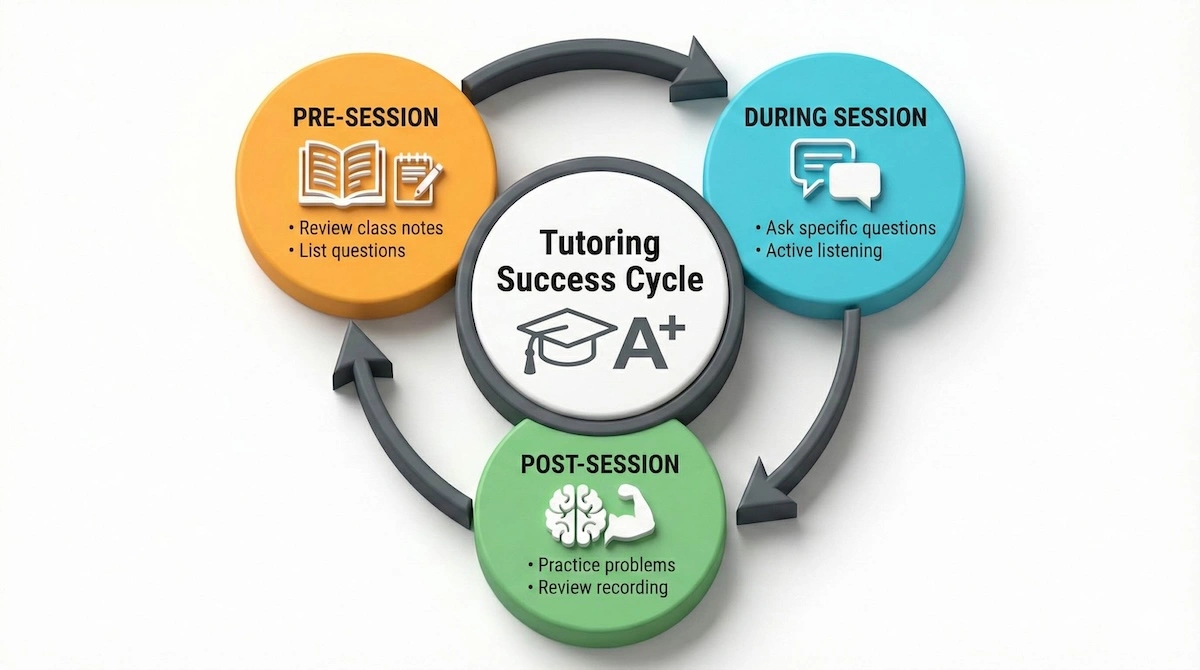
To get the best results, treat tutoring as a cycle that includes preparation and post-session practice.
By preparing beforehand and practicing afterward, you double the value of every paid hour.
Combine tutoring with regular study habits. A tutor can teach you effective study strategies (for example, using spaced practice instead of cramming). Because each tutoring session is tailored to you, even short-term tutoring can improve your grade. In fact, one study found that college students who used tutoring just once in a semester scored about 7% higher on average. The key is communication: if an explanation doesn’t make sense, speak up so the tutor can try a different approach.
Students enrolled in AP Psychology can benefit from targeted exam preparation; working with an AP Psychology tutor who knows the exam format can make a measurable difference in scores. For broader psychology coursework at any level, connecting with an online psychology teacher ensures concepts are reinforced consistently between classes.
Conclusion
Psychology tutoring (in person or online) can make a real difference for students. By offering personalized guidance on homework and clarifying tough topics, tutors help students deepen their understanding and earn better grades. With flexible scheduling and qualified experts available for everything from high school psychology to introductory college courses, support is within reach. If you or someone you know is struggling with or wanting to excel in psychology, consider hiring a psychology tutor – it’s an investment that can pay off in confidence and achievement.
FAQs About Psychology Tutoring
What is psychology tutoring?
Psychology tutoring is personalized one-on-one instruction in psychology, where a tutor explains course concepts and helps with assignments.
How can a psychology tutor help with homework and assignments?
A psychology tutor guides you step-by-step through problems and essays, ensuring you understand the reasoning behind each answer.
Is online psychology tutoring as effective as in-person tutoring?
Yes. Research shows online psychology tutoring can be as effective as face-to-face, and one study found online-tutored students were 15% more likely to pass their exam.
How do I find or hire a qualified psychology tutor?
Look on reputable tutoring websites, ask your school or academic center, or get referrals. Verify any psychology tutor has strong psychology qualifications.
When should I consider getting a psychology tutor?
If you’re struggling with concepts, falling behind, or aiming to boost your grade, a psychology tutor can provide the extra help you need.
How much does psychology tutoring cost?
Rates vary, but many experienced psychology tutors charge around $20–$40 per hour for high school and college levels.
Related Subjects
Abnormal Psychology | Animal behaviour | Association for Psychological Therapies | Behavioral Neuroscience | Biopsychology | Child Development | Cognitive psychology | Conservation psychology | Corporate social responsibility | Developmental Psychology | Evolutionary Psychology | Experimental Psychology | Factor Analysis | Health Psychology | Human Development | Industrial psychology | Industrial-Organizational Psychology | Mental Health | Moral Psychology | Neuropsychology | Organizational Psychology | Parapsychology | Positive Psychology | Psychoanalysis | Psychometrics | Psychopathology | Psychopharmacology | Psychotherapy | Quantitative psychology | Sensation and perception | Social Network Analysis | Social Psychology | Sport Psychology
Related Reading
******************************
This article provides general educational guidance only. It is NOT official exam policy, professional academic advice, or guaranteed results. Always verify information with your school, official exam boards (College Board, Cambridge, IB), or qualified professionals before making decisions. Read Full Policies & Disclaimer , Contact Us To Report An Error