




~1 min
Average Reply Time
~1 hour
To Be Matched With A Tutor
1 Trial
75% Find Their Tutor On The 1st Trial
$1
Your First 30 Minutes
Hire The Best Factor Analysis Tutor
Top Tutors, Top Grades. Without The Stress!
Related Subjects
Your factor loadings table makes no sense. Your scree plot has six components and your instructor said two. And your write-up is due in 72 hours. That’s exactly the situation MEB’s Factor Analysis tutors handle every week.
Factor Analysis Tutor Online
Factor Analysis is a statistical method used to identify underlying latent variables — called factors — that explain patterns of correlation among observed variables, applied widely in psychology, social science, and quantitative research.
MEB offers 1:1 online tutoring and homework help in 2,800+ advanced subjects, including Factor Analysis at undergraduate, graduate, and doctoral levels. If you’ve searched for a Factor Analysis tutor near me, you’ll find MEB’s online sessions are faster to access and more flexible than anything local. Our Psychology tutoring network includes specialists in multivariate statistics who have worked with students in R, SPSS, Stata, Python, and SAS. One diagnostic session is enough to know exactly where you’re losing marks — and what to fix first.
- 1:1 online sessions tailored to your course syllabus and software environment
- Expert-verified tutors with subject-specific knowledge of EFA, CFA, and SEM
- Flexible time zones — US, UK, Canada, Australia, Gulf
- Structured learning plan built after a diagnostic session
- Ethical homework and assignment guidance — you understand the work before you submit it
52,000+ students across the US, UK, Canada, Australia, and the Gulf have used MEB since 2008 — including students in Psychology subjects like Factor Analysis, Psychometrics, and Quantitative Psychology.
Source: My Engineering Buddy, 2008–2025.
How Much Does a Factor Analysis Tutor Cost?
Most Factor Analysis tutoring sessions run $20–$40/hr. Graduate-level or dissertation-support sessions with a specialist tutor can reach $60–$100/hr depending on depth and urgency. You can start with a $1 trial — 30 minutes of live 1:1 tutoring or one homework question explained in full, before committing to anything further.
| Level / Need | Typical Rate | What’s Included |
|---|---|---|
| Undergraduate (intro / methods) | $20–$35/hr | 1:1 sessions, homework guidance, output interpretation |
| Graduate / Dissertation support | $40–$70/hr | EFA/CFA model building, write-up review, software help |
| $1 Trial | $1 flat | 30 min live session or one full homework question explained |
Tutor availability tightens around semester-end submission deadlines — especially in April–May and November–December. Book early if you’re on a tight timeline.
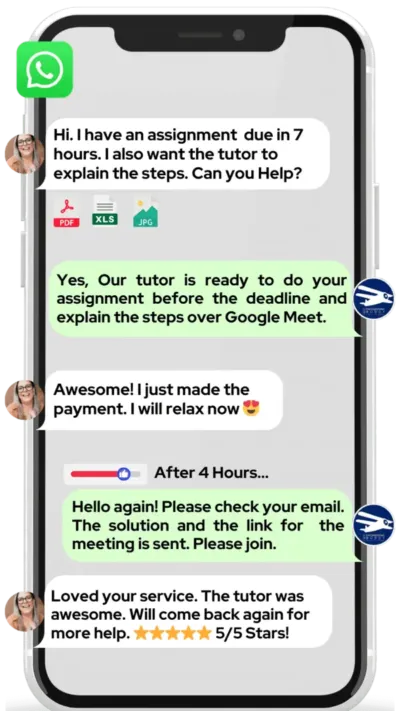
WhatsApp MEB for a quick quote — average response time under 1 minute.
Who This Factor Analysis Tutoring Is For
Factor Analysis sits in the methods section of most psychology, education, and social science programmes — and it trips up students at every level. Whether you’re running your first principal component extraction or defending a 12-factor CFA model to a dissertation committee, the gap between understanding the output and being able to write it up clearly is where most students get stuck.
- Undergraduate psychology or social science students completing a quantitative research methods module
- Masters students running EFA or CFA as part of a thesis or capstone project
- PhD candidates who need to validate a measurement instrument and defend factor structure decisions
- Students retaking after a failed first attempt — particularly those who lost marks on factor interpretation or model fit reporting
- Students with a dissertation submission deadline approaching and unresolved questions about rotation methods, communalities, or fit indices
- Parents supporting an undergraduate student whose statistics grades are slipping alongside their confidence
Students at universities including UCLA, the University of Michigan, the University of Edinburgh, the University of Toronto, the Australian National University, and King’s College London have worked through Factor Analysis with MEB tutors. Tutors are matched to your specific software, course level, and research design.
1:1 Tutoring vs Self-Study vs AI vs YouTube vs Online Courses
Self-study works if you’re disciplined, but Factor Analysis has too many decision points — extraction method, number of factors, rotation choice — where the wrong call silently breaks your analysis. AI tools give fast definitions, but they can’t look at your actual output and tell you why your Heywood case appeared or whether your fit indices justify your model. YouTube covers the theory clearly enough; it stops the moment your SPSS output looks different from the example. Online courses are structured but built for a generic learner, not your specific dataset or research question. 1:1 tutoring with MEB is calibrated to your exact course, your software environment, and the specific decisions your analysis requires — errors get caught and corrected live, not after you’ve already submitted.
Outcomes: What You’ll Be Able To Do in Factor Analysis
After working with an MEB Factor Analysis tutor, you’ll be able to select the right extraction method for your data type and justify that choice in writing. You’ll analyze a correlation matrix, interpret communalities and eigenvalues, and apply the Kaiser criterion or parallel analysis with confidence. You’ll model latent constructs using both exploratory and confirmatory approaches, explain the difference between oblique and orthogonal rotation, and present factor loadings in a publication-ready table. You’ll also apply fit indices — CFI, RMSEA, SRMR — correctly in your results section and respond to examiner or committee questions about your measurement model without hesitation.
Supporting a student through Factor Analysis? MEB works directly with parents to set up sessions, track progress, and keep coursework on schedule. WhatsApp MEB — average response time is under a minute, 24/7.
Based on feedback from 40,000+ sessions collected by MEB from 2022 to 2025, 58% of students improved by one full grade after approximately 20 hours of 1:1 tutoring in subjects like Factor Analysis. A further 23% achieved at least a half-grade improvement.
Source: MEB session feedback data, 2022–2025.
Try your first session for $1 — 30 minutes of live 1:1 tutoring or one homework question explained in full. No registration. No commitment. WhatsApp MEB now and get matched within the hour.
What We Cover in Factor Analysis (Syllabus / Topics)
Track 1: Exploratory Factor Analysis (EFA)
- Correlation matrix inspection and Bartlett’s test of sphericity
- KMO measure of sampling adequacy
- Extraction methods: principal axis factoring vs maximum likelihood
- Determining number of factors: scree plot, eigenvalue > 1, parallel analysis
- Rotation methods: Varimax (orthogonal) vs Promax / Oblimin (oblique)
- Interpreting factor loadings, cross-loadings, and communalities
- Writing up EFA results in APA format
Core texts: Fabrigar & Wegener, Exploratory Factor Analysis (2012); Tabachnick & Fidell, Using Multivariate Statistics (7th ed.).
Track 2: Confirmatory Factor Analysis (CFA) and Structural Equation Modelling
- Specifying a measurement model: indicators, latent variables, error terms
- Model identification: under-, just-, and over-identified models
- Fit indices: CFI, TLI, RMSEA, SRMR — thresholds and interpretation
- Modification indices and model respecification
- Discriminant and convergent validity assessment
- Higher-order factor models and bifactor structures
- Running CFA in R (lavaan), Mplus, or AMOS
Core texts: Brown, Confirmatory Factor Analysis for Applied Research (2nd ed.); Kline, Principles and Practice of Structural Equation Modeling (4th ed.).
Track 3: Software Implementation and Output Interpretation
- Running EFA and CFA in SPSS, R, Stata, and Python (factor_analyzer library)
- Reading and reporting SPSS Factor Analysis output tables
- Diagnosing Heywood cases and non-convergence issues
- Handling missing data before factor extraction
- Presenting results: loading tables, path diagrams, fit summary tables
- Common errors in student output and how to fix them
Core texts: Field, Discovering Statistics Using IBM SPSS Statistics (5th ed.); Hair et al., Multivariate Data Analysis (8th ed.).

What a Typical Factor Analysis Session Looks Like
The tutor opens by checking where you left off — usually the decision about how many factors to retain. From there, you share your screen or paste your output, and the tutor walks through it line by line. If your scree plot gives an ambiguous result, the tutor runs parallel analysis alongside you and explains why the two approaches may disagree. When the interpretation stage arrives, the tutor uses a digital pen-pad to annotate your loading matrix directly — circling cross-loadings above 0.3 that need a decision, marking items that might need to be dropped. You then re-run the model with adjustments and explain what changed. The session closes with a clear task: either a revised output to bring next time, or a specific section of your write-up to draft. The next topic — typically moving from EFA to CFA validation — is logged for the following session.
How MEB Tutors Help You with Factor Analysis (The Learning Loop)
Diagnose: In the first session, the tutor identifies exactly where your understanding breaks down — whether that’s the mathematics behind principal axis factoring, the logic of rotation, or the gap between running the software and interpreting the output. Most students arrive with partial knowledge; the diagnostic separates what’s solid from what needs rebuilding.
Explain: The tutor works through live examples on a digital pen-pad, drawing path diagrams, annotating eigenvalue tables, and walking through the decision tree for rotation method selection. Nothing is assumed. Every step is shown before you’re asked to replicate it.
At MEB, we’ve found that most Factor Analysis errors happen not during computation but during interpretation — students run the right model, then misread what the output is telling them. Fixing that gap is where the real grade improvement comes from.
Practice: You attempt the next problem or decision with the tutor watching. That means running a new extraction, making a rotation choice, or drafting the results paragraph — whichever step you need to own independently.
Feedback: The tutor gives step-by-step correction. If you reported a factor loading of 0.38 as “strong,” the tutor explains the conventional threshold and why that label costs marks. If your fit indices are technically acceptable but your write-up doesn’t say why, that gets addressed word by word.
Plan: Each session ends with a specific next topic and a task. Whether the plan runs over 3 sessions or 12, it’s built around your submission deadline and the gaps identified in the diagnostic.
Sessions run over Google Meet. The tutor uses a digital pen-pad or iPad with Apple Pencil. Before your first session, send your course outline or assignment brief and any output you’ve already generated. The first session is also your diagnostic — start with the $1 trial and that 30 minutes will tell both of you exactly what the plan needs to look like.
Students who arrive with messy SPSS output and no idea where to start leave their first MEB session knowing exactly which factors to retain, which rotation to use, and how to write the results section without losing marks on interpretation.
Source: My Engineering Buddy, 2008–2025.
Tutor Match Criteria (How We Pick Your Tutor)
Not every statistics tutor knows Factor Analysis at the level a dissertation student needs. MEB matches on four criteria.
Subject depth: The tutor must have hands-on experience with EFA and CFA at the level you’re working — undergraduate interpretation through to doctoral measurement validation. Tutors who only know the basics are not matched to graduate students.
Tools: Matched to your software environment — SPSS, R with lavaan, Mplus, Stata, or Python. Sessions run over Google Meet with a digital pen-pad or iPad and Apple Pencil for annotating output in real time.
Time zone: Matched to your region — US, UK, Canada, Australia, or Gulf. No scheduling across 12-hour gaps unless you request it.
Goals: Whether you need to pass a methods exam, complete a dissertation chapter, or understand the theory well enough to defend your model, the match takes that into account from the first WhatsApp message.
Unlike platforms where you fill out a form and wait, MEB responds in under a minute, 24/7. Tutor match takes under an hour. The $1 trial means you test before you commit. Everything runs over WhatsApp — no logins, no intake forms.
Study Plans (Pick One That Matches Your Goal)
A catch-up plan runs 1–3 weeks — for students who have a submission or exam within days and specific gaps to close in factor retention, rotation, or write-up. An exam prep plan runs 4–8 weeks — structured revision of EFA and CFA concepts, fit index interpretation, and software practice with past homework sets. Weekly support is ongoing, aligned to your semester’s research methods schedule or dissertation timeline. The tutor builds the specific sequence after the first diagnostic session, not before.
Pricing Guide
Factor Analysis tutoring runs $20–$40/hr for most undergraduate and early graduate work. Doctoral-level dissertation support with a specialist — including CFA model specification, SEM extensions, or measurement invariance testing — can reach $100/hr. Rate factors include topic complexity, level, timeline pressure, and tutor availability.
For students targeting top doctoral programmes or academic publishing with a validated measurement instrument, tutors with active research backgrounds in psychometrics and quantitative methods are available at higher rates — share your specific goal and MEB will match the tier to your ambition.
Availability tightens in April–May and November–December around dissertation and coursework deadlines. Start with the $1 trial — 30 minutes, no registration, no commitment. WhatsApp MEB for a quick quote.
Students consistently tell us that Factor Analysis feels abstract until someone walks through their actual output with them. The moment a tutor annotates their loading matrix and explains what to keep and what to drop, the method clicks — and it stays clicked.
FAQ
Is Factor Analysis hard?
It’s not the computation that’s hard — most software handles that. The difficulty is the decision-making: how many factors to keep, which rotation to choose, how to interpret cross-loadings, and how to write it all up in a way that survives examiner scrutiny. Those decisions are learnable with good guidance.
How many sessions are needed?
Students with a single assignment deadline typically need 3–5 sessions. Dissertation students running EFA and CFA together usually work over 8–15 sessions. The diagnostic in session one gives you a clear picture of how many are realistic for your situation.
Can you help with homework and assignments?
Yes. MEB tutoring is guided learning — you understand the work, then submit it yourself. See our Academic Integrity policy and Why MEB page for full details on what we help with and what we don’t.
Will the tutor match my exact syllabus or exam board?
Yes. Share your course outline, assignment brief, or dissertation chapter when you first message. The tutor is matched to your specific programme — whether that’s an undergraduate research methods module, a Masters thesis, or a doctoral measurement study.
What happens in the first session?
The tutor runs a diagnostic: looks at your current output or assignment, identifies the specific gaps, and maps a session plan. No time is spent on material you already know. The $1 trial session doubles as this diagnostic.
Is online tutoring as effective as in-person?
For Factor Analysis, yes — and often more so. Screen sharing lets the tutor annotate your actual SPSS or R output in real time. Google Meet with a digital pen-pad replicates everything a whiteboard session offers, without the commute or scheduling friction.
What’s the difference between EFA and CFA, and which one do I need?
Exploratory Factor Analysis finds factor structure when you don’t yet have a theory. Confirmatory Factor Analysis tests a pre-specified model against your data. Most dissertation students need both — EFA to develop the scale, CFA to validate it. Your tutor will confirm which applies to your research design in session one.
Can I get Factor Analysis help at short notice — even late at night?
Yes. MEB operates across time zones 24/7. WhatsApp a message with your deadline and your current output, and a tutor is typically matched within the hour. Late-night sessions before a submission are something MEB handles regularly.
Do I need to know statistics before starting Factor Analysis tutoring?
Basic familiarity with correlation and variance helps, but it’s not a hard prerequisite. Tutors adjust to your starting point. If your methods course threw you into Factor Analysis without enough statistical background, the tutor can backfill what’s missing in the first one or two sessions.
How do I choose between oblique and orthogonal rotation?
If your factors are likely correlated — which they usually are in psychology — oblique rotation (Promax or Oblimin) is more defensible. Orthogonal rotation (Varimax) assumes uncorrelated factors. Your tutor will look at your factor correlation matrix and help you justify the choice in your write-up.
How do I get started?
Start with the $1 trial — 30 minutes of live tutoring or one homework question explained in full. WhatsApp MEB with your subject and deadline. You’ll be matched with a verified tutor, usually within the hour, and the trial session begins from there.
Trust & Quality at My Engineering Buddy
Every MEB tutor goes through subject-specific vetting: live demo evaluation, degree and qualification verification, and ongoing review based on session feedback. For Factor Analysis, that means tutors must demonstrate they can run EFA and CFA accurately, interpret output correctly, and explain the logic clearly to a student who is learning the method for the first time. Rated 4.8/5 across 40,000+ verified reviews on Google, MEB has been matching students with expert tutors since 2008 across the US, UK, Canada, Australia, and the Gulf.
MEB tutoring is guided learning — you understand the work, then submit it yourself. For full details on what we help with and what we don’t, read our Academic Integrity policy and Why MEB.
MEB covers 2,800+ subjects across Psychology, including Psychopathology tutoring, Experimental Psychology help, and Cognitive Psychology tutoring. The platform has served 52,000+ students since 2008 and operates across the US, UK, Canada, Australia, Gulf, and Europe. For students in statistics-heavy psychology programmes, MEB’s depth in quantitative methods — including Quantitative Psychology tutoring and Psychometrics help — means you’re never passed to a generalist when you need a specialist.
Our experience across thousands of sessions shows that students who struggle with Factor Analysis almost always have the same core gap: they can run the software but they can’t explain what the output means. That explanation gap is what MEB tutors are specifically trained to close.
Explore Related Subjects
Students studying Factor Analysis often also need support in:
- Social Psychology
- Developmental Psychology
- Health Psychology
- Neuropsychology
- Industrial-Organizational Psychology
- Biopsychology
- Behavioral Neuroscience
The OpenStax Introductory Statistics textbook covers foundational statistical concepts that underpin Factor Analysis — a useful free reference alongside your course materials.
Source: OpenStax.
Next Steps
When you message MEB, share three things: your exam board or course name, the component of Factor Analysis you’re most stuck on (EFA decisions, CFA fit indices, write-up), and your submission or exam date. Also share your time zone so the match is immediate.
MEB matches you with a verified Factor Analysis tutor — usually within 24 hours, often within the hour. The first session starts with a diagnostic so every minute goes toward what actually needs fixing.
Before your first session, have ready:
- Your course outline or assignment brief (or dissertation chapter outline)
- Any output you’ve already generated — SPSS tables, R results, path diagrams
- Your submission deadline or exam date
The tutor handles the rest. Visit www.myengineeringbuddy.com for more on how MEB works.
WhatsApp to get started or email [email protected].
52,000+ Happy Students From Various Universities



Reviewed by Subject Expert
This page has been carefully reviewed and validated by our subject expert to ensure accuracy and relevance.

