




~1 min
Average Reply Time
~1 hour
To Be Matched With A Tutor
1 Trial
75% Find Their Tutor On The 1st Trial
$1
Your First 30 Minutes
Hire The Best Moral Psychology Tutor
Top Tutors, Top Grades. Without The Stress!
Related Subjects
Most students don’t fail Moral Psychology because they can’t think ethically — they fail because they can’t connect Haidt’s moral foundations to Kohlberg’s stages under exam pressure.
Moral Psychology Tutor Online
Moral Psychology is the scientific study of how people form moral judgments, develop ethical reasoning, and behave in response to right and wrong — drawing on psychology, philosophy, and neuroscience to examine conscience, fairness, and moral decision-making.
If you’re searching for a Moral Psychology tutor near me, MEB connects you with a verified 1:1 online Psychology tutor who knows exactly where students lose marks — whether that’s conflating descriptive and normative claims, misapplying dual-process theory, or writing underdeveloped essay arguments. MEB has served 52,000+ students since 2008 across every major region. One well-matched tutor, focused on your exact course, makes a measurable difference.
- 1:1 online sessions tailored to your specific course or syllabus
- Expert-verified tutors with graduate-level subject knowledge
- Flexible time zones — US, UK, Canada, Australia, Gulf
- Structured learning plan built after a diagnostic session
- Ethical homework and assignment guidance — you understand the work before you submit it
52,000+ students across the US, UK, Canada, Australia, and the Gulf have used MEB since 2008 — including students in Psychology subjects like Moral Psychology, Social Psychology, and Cognitive Psychology.
Source: My Engineering Buddy, 2008–2025.
How Much Does a Moral Psychology Tutor Cost?
Most Moral Psychology tutoring sessions run $20–$40/hr depending on level and topic complexity. Graduate or research-level support reaches up to $100/hr. The $1 trial gets you 30 minutes of live tutoring or a full explanation of one homework question — no registration required.
| Level / Need | Typical Rate | What’s Included |
|---|---|---|
| Standard (undergraduate/A Level) | $20–$35/hr | 1:1 sessions, homework guidance |
| Advanced / Graduate Level | $35–$70/hr | Expert tutor, research-level depth |
| $1 Trial | $1 flat | 30 min live session or 1 homework question |
Tutor availability tightens during semester end and dissertation submission periods. Book early if your deadline is within four weeks.
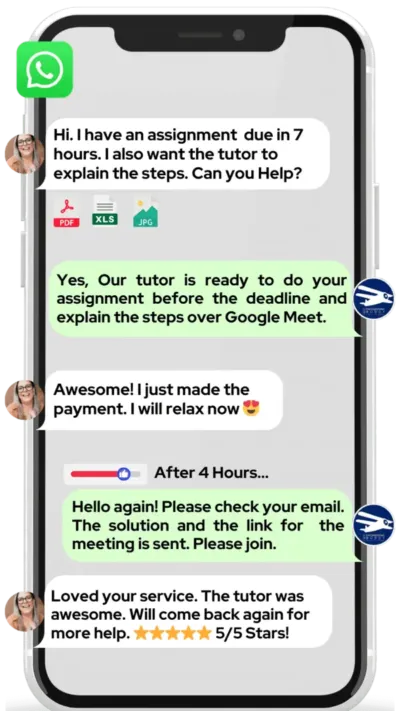
WhatsApp MEB for a quick quote — average response time under 1 minute.
Who This Moral Psychology Tutoring Is For
Moral Psychology sits at the intersection of psychology, philosophy, and neuroscience — and most courses expect students to move fluently between empirical evidence and philosophical argument. That’s a skill gap most students don’t close on their own.
- Undergraduates writing their first ethics-focused essay and unsure how to cite empirical work alongside philosophical theory
- Graduate students working on dissertation chapters involving moral cognition, trolley problems, or bystander research
- Students retaking after a failed first attempt who need to rebuild from foundations
- Students with a university conditional offer that depends on passing this module
- Parents watching a child’s confidence drop alongside their grades in a course they find overwhelming
- Students at institutions including Oxford, Cambridge, NYU, University of Toronto, University of Melbourne, LSE, and McGill who need tutor support between office hours
At MEB, we’ve found that Moral Psychology students often enter sessions knowing the names — Haidt, Kohlberg, Gilligan — but struggling to apply the frameworks analytically. The first session almost always focuses on distinguishing descriptive claims from normative ones, because that single skill unlocks the rest of the course.
1:1 Tutoring vs Self-Study vs AI vs YouTube vs Online Courses
Self-study works if you’re disciplined, but Moral Psychology essays require argument construction that self-study rarely develops without feedback. AI tools can summarise Haidt or explain trolley problems, but they can’t diagnose why your specific essay lost marks. YouTube covers the theories well — it stops when you need to connect them to a live assignment brief. Online courses are structured but fixed-pace with no adaptation to your exact syllabus. 1:1 tutoring with MEB is live, calibrated to your exact course readings and essay rubric, and corrects your reasoning in real time — including the argument structure issues that cost the most marks in Moral Psychology assessments.
Outcomes: What You’ll Be Able To Do in Moral Psychology
After working with a Moral Psychology tutor online from MEB, you’ll be able to apply Haidt’s moral foundations theory to real-world political and social case studies, analyze the strengths and limits of Kohlberg’s stage model using empirical counterexamples, explain dual-process accounts of moral judgment and their implications for responsibility attribution, write structured arguments that integrate psychological evidence with normative ethical claims, and present trolley-problem-style dilemmas with the precision exam markers and seminar leaders expect.
Based on feedback from 40,000+ sessions collected by MEB from 2022 to 2025, 58% of students improved by one full grade after approximately 20 hours of 1:1 tutoring in subjects like Moral Psychology. A further 23% achieved at least a half-grade improvement.
Source: MEB session feedback data, 2022–2025.
Try your first session for $1 — 30 minutes of live 1:1 tutoring or one homework question explained in full. No registration. No commitment. WhatsApp MEB now and get matched within the hour.
What We Cover in Moral Psychology (Syllabus / Topics)

Track 1: Foundations of Moral Judgment
- Kohlberg’s stages of moral development and empirical critiques
- Gilligan’s ethics of care and gender-based objections to Kohlberg
- Haidt’s moral foundations theory — care, fairness, loyalty, authority, sanctity, liberty
- Descriptive vs normative ethics: how to keep them distinct in written work
- Moral emotions: guilt, shame, disgust, and their role in judgment
- Trolley problems, footbridge dilemmas, and their use in experimental research
Core texts for this track include Haidt’s The Righteous Mind (2012), Kohlberg’s Essays on Moral Development (1981), and Gilligan’s In a Different Voice (1982).
Track 2: Cognitive and Neuroscientific Approaches
- Dual-process theory — System 1 intuition vs System 2 reasoning in moral contexts
- Greene’s neuroscientific work on deontological vs utilitarian responses
- The role of the prefrontal cortex and amygdala in moral cognition
- Psychopathy and moral reasoning deficits — evidence and debates
- Moral disengagement mechanisms (Bandura) and their application to harm-doing
- Implicit bias research and its relevance to moral responsibility
Key reading includes Greene’s Moral Tribes (2013), Damasio’s Descartes’ Error (1994), and Bandura’s Moral Disengagement (2016). Students working on behavioral neuroscience tutoring often carry directly applicable knowledge into this track.
Track 3: Applied and Social Dimensions
- Moral development across cultures — cross-cultural validity of Western frameworks
- Bystander effect and diffusion of responsibility in moral contexts
- Institutional ethics: corporations, governments, and collective moral agency
- Environmental and conservation ethics — where moral psychology meets policy
- Online moral behaviour: anonymity, trolling, and digital responsibility
- Research methods in moral psychology — surveys, vignettes, fMRI, priming studies
Supporting texts include Zimbardo’s The Lucifer Effect (2007), Rest’s Moral Development (1986), and Turiel’s The Culture of Morality (2002). Students with background in social psychology tutoring will find this track closely aligned.
What a Typical Moral Psychology Session Looks Like
The tutor opens by checking the previous topic — usually the student’s draft argument or the specific theory they struggled with last time, such as distinguishing Haidt’s intuition-first model from Kohlberg’s rationalist approach. From there, the session moves to the student’s current assignment brief or exam question. The tutor works through the argument structure on screen using a digital pen-pad, annotating the student’s draft in real time — marking where the empirical evidence is used correctly, where the normative claim is unsupported, and where the link to a named theorist is missing. The student then reconstructs a paragraph or argument from scratch with the tutor present. The session closes with a concrete practice task — typically one timed essay paragraph — and a note of which theory or concept to review before the next session.
How MEB Tutors Help You with Moral Psychology (The Learning Loop)
Diagnose: In the first session, the tutor identifies whether the gap is conceptual (confusing dual-process theory with simple intuition/reason dichotomies), structural (essay arguments that don’t build), or knowledge-based (incomplete recall of the empirical studies that underpin each framework). These are three different problems with three different fixes.
Explain: The tutor works through live examples using a digital pen-pad — annotating Haidt’s moral foundations diagram, walking through Greene’s fMRI study design, or modelling how to write a paragraph that integrates Bandura’s moral disengagement with a real-world case. You see the reasoning built in front of you.
Practice: You attempt the next problem or essay section while the tutor is present. Not later. Not as homework. In the session, where errors can be caught immediately.
Feedback: The tutor explains exactly where the argument broke down and why — specifically the move from psychological evidence to normative conclusion that most students get wrong in Moral Psychology essays.
Plan: Each session ends with a clear next step: one topic, one concept, one essay skill. Progress is tracked across sessions so nothing is revisited unnecessarily.
Sessions run on Google Meet with a digital pen-pad or iPad and Apple Pencil. Before your first session, share your syllabus or course outline, any essay feedback you’ve already received, and your submission or exam date. The tutor uses that to make the first session immediately productive. Start with the $1 trial — 30 minutes of live tutoring that also serves as your first diagnostic.
Students consistently tell us that the shift in Moral Psychology happens when they stop memorising theorists and start using them as tools for argument. That’s what a tutor accelerates.
Source: My Engineering Buddy tutor feedback reports, 2022–2025.
Tutor Match Criteria (How We Pick Your Tutor)
Not every psychologist can tutor Moral Psychology well. MEB matches on four criteria.
Subject depth: The tutor must have graduate-level familiarity with the specific theories on your syllabus — not just general psychology. A tutor covering Greene’s neuroscientific work needs to know the methodology debates, not just the conclusions.
Tools: All tutors use Google Meet and a digital pen-pad or iPad with Apple Pencil — the format Moral Psychology essay work requires.
Time zone: Matched to your region. US, UK, Gulf, Canada, and Australia sessions are all covered without scheduling strain.
Goals: Whether you need exam preparation, essay argument development, conceptual depth on a specific theory, or experimental psychology homework help that feeds into your Moral Psychology research methods coursework — the tutor is matched to that specific goal.
Unlike platforms where you fill out a form and wait, MEB responds in under a minute, 24/7. Tutor match takes under an hour. The $1 trial means you test before you commit. Everything runs over WhatsApp — no logins, no intake forms.
Study Plans (Pick One That Matches Your Goal)
After the diagnostic session, the tutor builds a specific sequence based on your exam date or submission deadline. A catch-up plan (1–3 weeks) targets the highest-value gaps first — usually the theoretical frameworks carrying the most essay marks. An exam prep plan (4–8 weeks) works through past questions systematically, with timed practice and feedback on argument structure each week. Weekly ongoing support runs alongside your semester, timed to coursework deadlines and seminar readings. The tutor adjusts the sequence after each session based on what’s landing and what isn’t.
Pricing Guide
Moral Psychology tutoring starts at $20/hr for standard undergraduate support. Graduate and research-level sessions — covering dissertation chapters, advanced moral cognition topics, or academic writing — run $35–$100/hr depending on tutor specialisation and timeline urgency.
Rate factors include course level, essay complexity, how close the deadline is, and tutor availability. Availability tightens at semester end and during major essay submission windows.
For students targeting competitive graduate programmes at institutions like Harvard, Oxford, or Columbia where Moral Psychology dissertations are assessed rigorously, tutors with research backgrounds in moral cognition and ethics are available at higher rates — share your specific goal and MEB will match the tier to what you’re aiming for.
Start with the $1 trial — 30 minutes, no registration, no commitment. WhatsApp MEB for a quick quote.
A common pattern our tutors observe is that students arrive with strong opinions about ethics but underdeveloped academic argument skills. The good news: argument structure is teachable in a session or two. The theories become tools once the scaffold is in place. Most students see the difference in their next piece of written work.
FAQ
Is Moral Psychology hard?
It’s conceptually demanding because it requires fluency in both empirical psychology and philosophical argument — most courses expect you to do both simultaneously. The biggest difficulty is learning to use theories analytically rather than just describing them. That’s a skill a tutor can speed up considerably.
How many sessions are needed?
For essay structure and core theoretical fluency, most students need 6–10 sessions. For full exam preparation covering multiple theories and past-paper practice, 12–20 sessions over 4–8 weeks is a realistic target. The diagnostic session produces a specific estimate based on your starting point.
Can you help with homework and assignments?
MEB tutoring is guided learning — you understand the work, then submit it yourself. The tutor explains the relevant theories, works through argument structure with you, and gives feedback on your drafts. See our Academic Integrity policy and Why MEB page for full details on what we help with and what we don’t.
Will the tutor match my exact syllabus or exam board?
Yes. Before matching, MEB asks for your course name, institution level, and any specific readings or essay briefs your course uses. The tutor is selected based on familiarity with that specific framework — not just general psychology knowledge.
What happens in the first session?
The tutor runs a diagnostic — checking which theorists you’re confident with, where your essay arguments break down, and what your assessment format looks like. By the end of the first session, you have a session plan and a clear picture of which concepts to address first.
Is online tutoring as effective as in-person?
For a text and argument-heavy subject like Moral Psychology, online tutoring with a digital pen-pad is at least as effective. The tutor can annotate your essay in real time, pull up source texts on screen, and work through argument diagrams — all things that work well in a shared digital workspace.
Can I get Moral Psychology help at midnight?
Yes. MEB operates across time zones and WhatsApp is monitored 24/7. If you’re in the US, UK, Gulf, or Australia and working late on an essay, you can message MEB and get a response — typically under a minute — to arrange a session or get a question answered.
What if I don’t like my assigned tutor?
Switch. There’s no penalty and no form. WhatsApp MEB, explain what didn’t work — pacing, explanation style, subject depth — and a different tutor is matched, usually the same day. The $1 trial exists specifically to let you test the match before committing.
Do you cover the Haidt vs Kohlberg debate specifically?
Yes — it’s one of the most commonly assessed topics in Moral Psychology courses at undergraduate and graduate level. Tutors work through the empirical and philosophical objections on both sides, including the rationalism vs intuitionism debate, so you can argue either position with precision in an essay or seminar.
How does Moral Psychology differ from Ethics as a philosophy course?
Moral Psychology is empirical — it studies how people actually form moral judgments, using psychology and neuroscience. Ethics as a philosophy course asks how people ought to reason morally. Many students confuse the two. A tutor helps you stay on the right side of that line throughout your written work.
How do I get started?
Start with the $1 trial — 30 minutes of live tutoring or one homework question explained in full. Three steps: WhatsApp MEB, get matched with a verified Moral Psychology tutor within the hour, and start your trial session. No registration, no commitment.
Trust & Quality at My Engineering Buddy
Every MEB tutor is screened through a subject-specific vetting process: application review, live demo session evaluation, and ongoing feedback monitoring across student sessions. Tutors hold graduate degrees in psychology or a closely related discipline and are assessed specifically on their ability to teach Moral Psychology at the level the student needs — not just their general subject knowledge. Rated 4.8/5 across 40,000+ verified reviews on Google.
MEB tutoring is guided learning — you understand the work, then submit it yourself. For full details on what we help with and what we don’t, read our Academic Integrity policy and Why MEB.
MEB has served 52,000+ students in 2,800+ subjects since 2008, across the US, UK, Canada, Australia, the Gulf, and Europe. Within Psychology, MEB covers Moral Psychology alongside subjects like developmental psychology tutoring, health psychology help, and neuropsychology tutoring — the full range of courses students encounter across undergraduate and graduate programmes. The psychometrics tutoring team also supports students whose Moral Psychology research methods coursework involves scale development and data analysis. See our tutoring methodology for how sessions are structured.
For reading that goes deeper on moral judgment research, Oxford University Press Very Short Introductions includes accessible, peer-reviewed entries on moral philosophy and psychology that work well alongside tutoring sessions.
Source: Oxford University Press.
Explore Related Subjects
Students studying Moral Psychology often also need support in:
- Abnormal Psychology
- Positive Psychology
- Psychopathology
- Evolutionary Psychology
- Child Development
- Psychoanalysis
- Human Development
Next Steps
Before your first session, have ready: your exam board and syllabus or course outline, a recent essay attempt or piece of homework you struggled with, and your exam or submission deadline date. The tutor handles the rest.
- Share your course level, hardest topic, and current timeline
- Share your availability and time zone
- MEB matches you with a verified Moral Psychology tutor — usually within 24 hours
The first session starts with a diagnostic so every minute is used on what matters most for your specific assessment.
Visit www.myengineeringbuddy.com for more on how MEB works.
WhatsApp to get started or email [email protected].
52,000+ Happy Students From Various Universities



Reviewed by Subject Expert
This page has been carefully reviewed and validated by our subject expert to ensure accuracy and relevance.

