




~1 min
Average Reply Time
~1 hour
To Be Matched With A Tutor
1 Trial
75% Find Their Tutor On The 1st Trial
$1
Your First 30 Minutes
Hire The Best Social Psychology Tutor
Top Tutors, Top Grades. Without The Stress!
Related Subjects
Most students who struggle with Social Psychology aren’t short on effort — they’re short on feedback. Here’s how to fix that.
Social Psychology Tutor Online
Social Psychology is the scientific study of how individuals think, feel, and behave in social contexts, examining influence, group dynamics, conformity, prejudice, and persuasion. It equips students to analyse real-world social phenomena using empirical research methods.
If you’ve searched for a Social Psychology tutor near me, you’ve probably already tried making sense of Milgram, Asch, or Tajfel’s social identity theory on your own. MEB connects you with a verified Social Psychology tutor online who knows your exact syllabus — whether that’s APA-aligned undergraduate coursework, A Level Psychology, IB, or a graduate-level module. Our Psychology tutoring covers the full discipline, and Social Psychology sits at its core. One tutor. Your pace. Real progress.
- 1:1 online sessions tailored to your course and exam board
- Expert-verified tutors with subject-specific Social Psychology knowledge
- Flexible time zones — US, UK, Canada, Australia, Gulf
- Structured learning plan built after a diagnostic session
- Ethical homework and assignment guidance — you understand before you submit
52,000+ students across the US, UK, Canada, Australia, and the Gulf have used MEB since 2008 — including students in Psychology subjects like Social Psychology, Cognitive Psychology, and Abnormal Psychology.
Source: My Engineering Buddy, 2008–2025.
How Much Does a Social Psychology Tutor Cost?
Most Social Psychology sessions run $20–$40/hr depending on level and topic complexity. Graduate and specialist modules can reach $100/hr. Not sure yet? Start with the $1 trial — 30 minutes live or one full homework question explained — before committing to anything.
| Level / Need | Typical Rate | What’s Included |
|---|---|---|
| Standard (most levels) | $20–$35/hr | 1:1 sessions, homework guidance |
| Advanced / Specialist | $35–$70/hr | Expert tutor, graduate-level depth |
| $1 Trial | $1 flat | 30 min live session or 1 homework question |
Tutor availability tightens significantly around exam periods — particularly April through June and November through January. Book early to secure your preferred slot.
WhatsApp MEB for a quick quote — average response time under 1 minute.
Who This Social Psychology Tutoring Is For
Social Psychology covers a wide range of students — from those tackling conformity experiments in A Level Psychology to PhD candidates running attitude-change studies. If the concepts feel clear in lectures but fall apart under exam conditions, a 1:1 tutor changes that quickly.
- Undergraduates struggling with research methods, statistics, or essay structure in Social Psychology modules
- A Level and IB Psychology students working through social influence, relationships, or forensic applications
- Graduate students preparing literature reviews, research proposals, or theoretical frameworks
- Students retaking after a failed first attempt — particularly those who lost marks on application questions or extended writing
- Students with a university conditional offer depending on their Psychology grade this cycle
- Parents watching a child’s confidence drop alongside their grades in Psychology
Students have come to MEB from universities including UCLA, the University of Toronto, the University of Edinburgh, Durham, Melbourne, and ANU — as well as A Level and IB programmes at schools across the UK, US, and Australia.
The $1 trial gives you a zero-risk entry point — one session or one question, for a dollar, matched within the hour.
1:1 Tutoring vs Self-Study vs AI vs YouTube vs Online Courses
Self-study works if you’re disciplined — but Social Psychology essay questions reward precise application of theory, and no textbook tells you where your argument breaks down. AI tools give fast definitions of social loafing or deindividuation, but can’t read your draft essay and tell you why it would lose marks. YouTube covers Milgram’s obedience study clearly enough, but stops the moment you need to apply it to a 16-mark exam question. Online courses are structured but run at a fixed pace with no one checking whether you’ve actually understood bystander theory before moving on. 1:1 tutoring with MEB is live, calibrated to your exact syllabus, and corrects errors in the moment — before they become exam-day habits.
Outcomes: What You’ll Be Able To Do in Social Psychology
After working with an MEB Social Psychology tutor, students consistently report sharper command of the subject’s core demands. You’ll be able to apply Tajfel’s Social Identity Theory and Zimbardo’s situational approach to novel exam scenarios without hesitation. You’ll analyse research studies — sampling methods, ethical issues, validity — with the precision that extended-writing mark schemes actually reward. Students learn to write structured 16-mark essays that move from theory to evidence to evaluation without padding. You’ll explain the difference between informational and normative social influence in a way that actually holds up under an examiner’s scrutiny. And you’ll approach research methods questions — whether that’s designing a study or interpreting a correlation — with enough confidence to stop dropping those marks.

Based on feedback from 40,000+ sessions collected by MEB from 2022 to 2025, 58% of students improved by one full grade after approximately 20 hours of 1:1 tutoring in subjects like Social Psychology. A further 23% achieved at least a half-grade improvement.
Source: MEB session feedback data, 2022–2025.
At MEB, we’ve found that Social Psychology students often know the studies — Asch, Milgram, Tajfel — but struggle to apply them under timed conditions. The fix is almost always practice with immediate feedback, not more reading. Twenty minutes of structured application beats two hours of passive revision every time.
What We Cover in Social Psychology (Syllabus / Topics)
Social Influence
- Conformity: Asch’s line studies, types (internalisation, identification, compliance)
- Obedience: Milgram’s experiments, situational variables, agency theory
- Minority influence and social change
- Normative vs informational social influence
- Resistance to social influence: locus of control, independent behaviour
- Real-world applications: jury decision-making, social movements
Key texts: Cialdini’s Influence, Milgram’s Obedience to Authority, and Aronson’s The Social Animal are used across most courses at this level.
Social Cognition and Attitudes
- Attribution theory: dispositional vs situational explanations, fundamental attribution error
- Attitude formation and change: elaboration likelihood model, cognitive dissonance
- Stereotyping, prejudice, and discrimination
- Social Identity Theory: Tajfel and Turner, in-group/out-group dynamics
- Implicit bias and its measurement
- Persuasion techniques and resistance
Core reading includes Festinger’s A Theory of Cognitive Dissonance and Myers’s Social Psychology — the latter is standard on most undergraduate reading lists.
Group Processes and Interpersonal Behaviour
- Group dynamics: social facilitation, social loafing, deindividuation
- Groupthink and decision-making errors
- Prosocial behaviour: bystander effect, diffusion of responsibility
- Aggression: biological, social learning, and environmental explanations
- Interpersonal attraction and relationship formation
- Cross-cultural variation in social behaviour
Recommended texts include Hogg and Vaughan’s Social Psychology and Baron and Branscombe’s Social Psychology, both widely assigned at undergraduate and A Level.
Students consistently tell us that Social Psychology feels easy to read but hard to write. The gap between understanding a study and using it to build a coherent argument is where most marks are lost. Sessions focus on bridging exactly that gap — application under realistic exam constraints, not just conceptual familiarity.
What a Typical Social Psychology Session Looks Like
The tutor starts by revisiting the previous topic — for example, checking whether you can distinguish between normative and informational social influence without prompting. From there, the session moves into whatever is causing the most difficulty right now: often that’s writing 16-mark evaluation paragraphs, interpreting research methods scenarios, or applying Social Identity Theory to unseen situations. The tutor works through a sample question on screen using a digital pen-pad, annotating the mark scheme in real time while you follow the reasoning. Then it’s your turn — you attempt a similar question, and the tutor reviews your answer step by step, identifying exactly where marks would be gained or lost. The session closes with one practice task and a clear note on what to cover before the next session. You leave knowing what to do — not just what to study.
How MEB Tutors Help You with Social Psychology (The Learning Loop)
Diagnose: In the first session, the tutor identifies your specific weak points — whether that’s research methods, essay structure, application of theory, or a particular topic like aggression or prejudice. This isn’t a generic assessment. It’s a targeted conversation about where your marks are going.
Explain: The tutor works through live problems using a digital pen-pad on Google Meet. You see the reasoning built from scratch — not a polished solution, but the actual thinking process behind a high-scoring answer.
Practice: You attempt questions with the tutor present. No waiting for feedback until next week. Errors surface immediately, while the context is still fresh.
Feedback: The tutor goes through your attempt line by line — not just marking it right or wrong, but explaining exactly why a mark scheme would award or withhold credit. This is the part most students never get from a classroom teacher.
Plan: At the end of every session, the tutor sets the next topic and a specific task. You’re not left wondering what to do between sessions.
Sessions run over Google Meet with a digital pen-pad or iPad and Apple Pencil. Before your first session, have your syllabus or module outline ready, plus a recent essay or homework you struggled with. The first session is diagnostic — the tutor maps the plan from there. Start with the $1 trial — 30 minutes of live tutoring that also serves as your first diagnostic. Whether you need a quick catch-up before an exam, structured revision over 4–8 weeks, or ongoing weekly support through the semester, the tutor maps the session plan after that first conversation.
Tutor Match Criteria (How We Pick Your Tutor)
Not every Psychology tutor knows Social Psychology at the level your course demands. Here’s what MEB looks for.
Subject depth: Tutors are matched to your specific course level and exam board — A Level AQA, IB, undergraduate, or graduate. Someone who tutors introductory Psychology is not the same as someone who can work through Milgram’s agency theory or attitude-change research at graduate level.
Tools: Every tutor works via Google Meet with a digital pen-pad or iPad and Apple Pencil. No static PDFs — live annotation only.
Time zone: Matched to your region — US, UK, Gulf, Canada, or Australia. No awkward scheduling compromises.
Goals: Whether you’re targeting exam scores, essay marks, research proposal support, or just keeping up with weekly coursework, the tutor is briefed on your goal before session one.
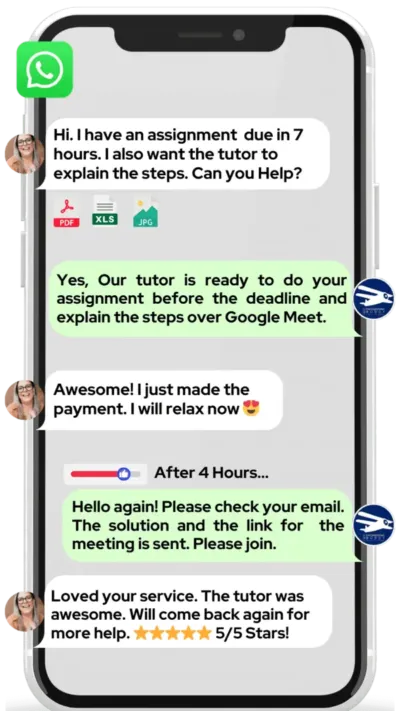
Unlike platforms where you fill out a form and wait days for a reply, MEB responds in under a minute, 24/7. Tutor match takes under an hour. The $1 trial means you test before you commit. Everything runs over WhatsApp — no logins, no intake forms.
Pricing Guide
Social Psychology tutoring starts at $20/hr for standard undergraduate and A Level work. Graduate modules, research methods support, and specialist topics run $35–$100/hr depending on tutor background and topic complexity.
Rate factors include course level, how much time remains before your exam or deadline, and tutor availability. Rates rise during peak exam periods — April–June and November–January — when demand is highest.
For students targeting postgraduate programmes at research-intensive universities, tutors with published research backgrounds in social or experimental psychology are available at higher rates — share your specific goal and MEB will match the tier accordingly.
Start with the $1 trial — 30 minutes, no registration, no commitment. WhatsApp MEB for a quick quote.
FAQ
Is Social Psychology hard?
It’s harder than it looks. The concepts are readable, but applying them precisely under exam conditions — especially in extended writing — is where most students drop marks. Research methods questions also trip up students who underestimate the statistical and design components.
How many sessions are needed?
Most students see measurable improvement in 8–12 sessions. Students close to an exam with specific gaps to close often need 4–6 targeted sessions. The tutor maps a specific plan after the first diagnostic.
Can you help with homework and assignments?
MEB tutoring is guided learning — you understand the work, then submit it yourself. The tutor explains the relevant theory, works through the approach with you, and gives feedback on your reasoning. See our Academic Integrity policy and Why MEB page for full details on what we help with and what we don’t.
Will the tutor match my exact syllabus or exam board?
Yes. AQA A Level, Edexcel, OCR, IB Psychology, and APA-aligned undergraduate modules all have different assessment structures. Your tutor is matched to your specific course — not a generic Social Psychology curriculum.
What happens in the first session?
The tutor runs a short diagnostic — asking you to explain a core concept or attempt a question — to identify exactly where your understanding breaks down. From there, the session plan is built around your specific gaps, not a generic topic list.
Is online tutoring as effective as in-person?
For Social Psychology specifically, yes. Essay planning, mark-scheme annotation, and research methods walkthroughs work well on screen with a digital pen-pad. Most MEB students report that the absence of commute and the screen-sharing setup actually improve focus compared with in-person sessions.
What’s the difference between Social Psychology and related areas like Cognitive Psychology or Developmental Psychology?
Social Psychology focuses on group and interpersonal influence. Cognitive Psychology tutoring covers internal mental processes like memory and attention. Developmental Psychology help addresses how people change across the lifespan. Many courses draw on all three — your tutor can work across them.
Can I get Social Psychology help late at night or on weekends?
Yes. MEB operates 24/7 across time zones. Students in the Gulf, Australia, and North America regularly book sessions outside standard business hours. WhatsApp MEB any time — average response under a minute.
Do you cover the research methods components examined in Social Psychology modules?
Research methods questions — designing studies, interpreting statistical outputs, identifying ethical issues — are a common weak spot. MEB tutors work through these specifically, using exam-board mark schemes to show exactly what examiners want. See our Experimental Psychology help page for more on the methods side.
How do I get started?
Start with the $1 trial: WhatsApp MEB, get matched within the hour, and begin with 30 minutes of live 1:1 tutoring or one homework question explained in full. No registration, no long-term commitment required.
Does Social Psychology involve a lot of essay writing, and can MEB help with that?
Extended writing is central to most Social Psychology assessments — 12-mark and 16-mark questions at A Level, research essays at undergraduate level. MEB tutors work on argument structure, use of evidence, and evaluation skills using real past-paper questions from your specific board.
What if I don’t understand the statistics used in Social Psychology research?
Statistics in Social Psychology — chi-square, correlation, significance testing — confuse many students. Your tutor addresses these directly, using your own course materials. For deeper quantitative support, Quantitative Psychology tutoring is also available through MEB.
Trust & Quality at My Engineering Buddy
Every MEB tutor goes through a subject-specific vetting process — not a generic interview, but a live evaluation of their ability to explain Social Psychology concepts at the level your course demands. Tutors hold relevant degrees and, where applicable, postgraduate or professional experience in psychology or related fields. Ongoing session feedback is reviewed to keep quality consistent. Rated 4.8/5 across 40,000+ verified reviews on Google.
MEB tutoring is guided learning — you understand the work, then submit it yourself. For full details on what we help with and what we don’t, read our Academic Integrity policy and Why MEB.
MEB has been serving students in Psychology and related subjects since 2008 — including Health Psychology tutoring, Organizational Psychology help, and Social Psychology across 2,800+ subjects. Over 52,000 students across the US, UK, Canada, Australia, the Gulf, and Europe have been supported through the platform. Our tutoring methodology — diagnostic first, structured practice, feedback-driven sessions — applies consistently across every Psychology sub-discipline we cover.
A common pattern our tutors observe is that Social Psychology students can recall studies accurately but can’t use them strategically in an argument. The exam rewards application and evaluation, not description. Getting that distinction clear early is the single most effective thing a tutor can do in the first two sessions.
Explore Related Subjects
Students studying Social Psychology often also need support in:
- Moral Psychology
- Positive Psychology
- Psychometrics
- Psychopathology
- Industrial-Organizational Psychology
- Social Network Analysis
- Sport Psychology
Next Steps
To get matched quickly, have these ready when you WhatsApp:
- Your exam board and syllabus (or module outline and reading list)
- A recent past paper attempt or homework question you struggled with
- Your exam or deadline date and your current availability
MEB matches you with a verified Social Psychology tutor — usually within 24 hours, often within the hour. The first session starts with a diagnostic so no time is wasted on material you already know.
Visit www.myengineeringbuddy.com for more on how MEB works.
WhatsApp to get started or email [email protected].
52,000+ Happy Students From Various Universities



Reviewed by Subject Expert
This page has been carefully reviewed and validated by our subject expert to ensure accuracy and relevance.

