Hire Verified & Experienced
Analytical Chemistry Tutors
4.8/5 40K+ session ratings collected on the MEB platform



Hire The Best Analytical Chemistry Tutor
Top Tutors, Top Grades. Without The Stress!
52,000+ Happy Students From Various Universities






How Much For Private 1:1 Tutoring & Hw Help?
Private 1:1 Tutoring and HW help Cost $20 – 35 per hour* on average.
Analytical Chemistry Online Tutoring & Homework Help
What is Analytical Chemistry?
Analytical Chemistry is the branch of chemistry that deals with the separation, identification and quantification of matter components. Real life examples include testing tap water for lead contamination, measuring blood glucose levels and verifying food additives. It uses both classical and instrumental methods.
Also known as Chemical Analysis, Qualitative Analysis and Quantitative Analysis.
A few of the major topics include sample preparation (extraction, digestion), separation techniques like chromatography (HPLC – High Performance Liquid Chromatography and GC – Gas Chromatography), spectroscopy (UV-Vis, IR, NMR), electroanalytical methods (potentiometry, voltammetry), mass spectrometry for molecular mass determination, titrimetric approaches (acid–base, redox, complexometric), and chemometrics for data analysis. These technique are applied in environmental testing (monitoring air pollutants), pharmaceutical quality control (drug potency checks), forensic investigations (identifying trace evidence) and food safety (detecting pesticide residues).
Analytical chemistry has evolved through key milestones. In the late 18th century Antoine Lavoisier introduced quantitative chemical analysis, establishing mass conservation principles. In 1828 Friedrich Wohler’s urea synthesis blurred lines between organic and inorganic realms. Around 1859 Robert Bunsen and Gustav Kirchhoff developed spectroscopy, enabling elemental fingerprinting in stars and minerals. The late 19th century saw Johan Kjeldahl’s nitrogen determination for agriculture. Flame photometry emerged in the early 20th century. Gas Chromatography appeared in the 1950s, and High Performance Liquid Chromatography in the 1960s. Computerization and microfluidics then propelled high-throughput analyses and real-time monitoring, shaping modern lab practice.
How can MEB help you with Analytical Chemistry?
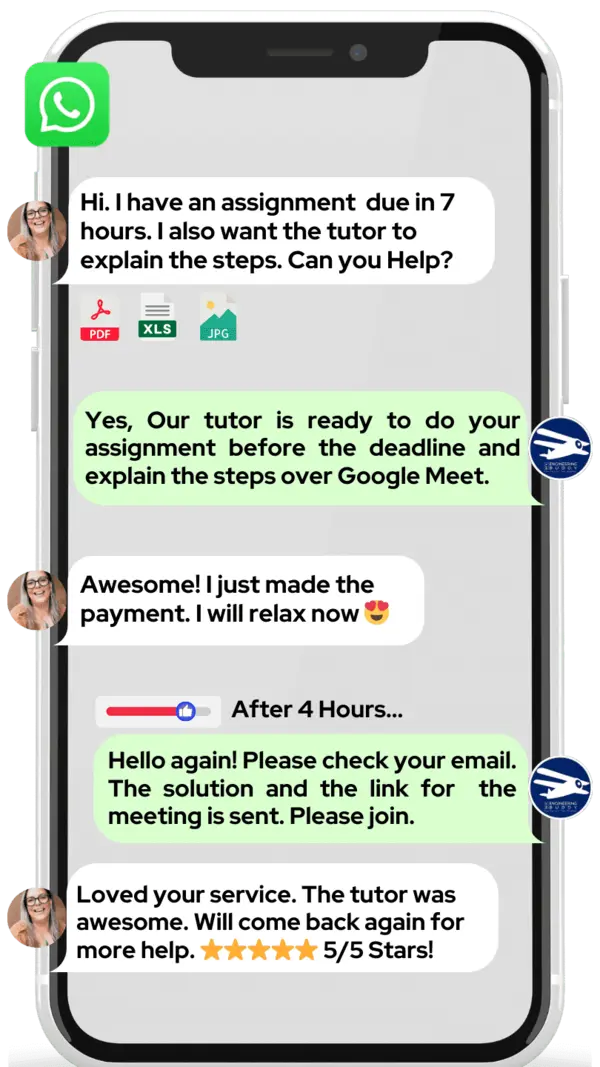
Do you want to learn Analytical Chemistry? At MEB we offer one-on-one online tutoring in Analytical Chemistry. If you are a school, college, or university student and want to get top marks on your assignments, lab reports, live tests, projects, essays, or dissertations, try our 24/7 instant online Analytical Chemistry homework help service. We prefer WhatsApp chat, but if you don’t use it, please email us at meb@myengineeringbuddy.com
Our students come from many places, like the USA, Canada, the UK, the Gulf, Europe, and Australia.
Many students ask for help because some subjects are hard, they have too much homework, or they find some ideas difficult. They might also be busy with part-time work, miss classes, have health or personal issues, or learn more slowly than others.
If you are a parent and your student is finding this subject hard, contact us today. With our help, your ward can do great on exams and homework. They will thank you.
MEB also offers help in more than 1000 other subjects. Our tutors are experts who can make learning easier. It’s important to know when you need help. Our tutors can make school less stressful.
DISCLAIMER: OUR SERVICES AIM TO PROVIDE PERSONALIZED ACADEMIC GUIDANCE, HELPING STUDENTS UNDERSTAND CONCEPTS AND IMPROVE SKILLS. MATERIALS PROVIDED ARE FOR REFERENCE AND LEARNING PURPOSES ONLY. MISUSING THEM FOR ACADEMIC DISHONESTY OR VIOLATIONS OF INTEGRITY POLICIES IS STRONGLY DISCOURAGED. READ OUR HONOR CODE AND ACADEMIC INTEGRITY POLICY TO CURB DISHONEST BEHAVIOUR.
What is so special about Analytical Chemistry?
Analytical chemistry is special because it helps us find out what stuff is made of and how much of each part there is. It uses tests and tools, like sensors or machines, to measure tiny amounts of chemicals. No other subject looks at substances in such detail. This skill is key in medicine, food safety, and checking pollution.
Compared to other subjects in chemistry, analytical chemistry shows you real‑world problems. It teaches you how to design tests and solve puzzles about mixtures. Its advantage is clear results and precise numbers. But it can be expensive because instruments cost a lot, and experiments may need long hours. You also need math skills and careful steps, which some students find tough.
What are the career opportunities in Analytical Chemistry?
Students who finish a bachelor’s degree in analytical chemistry can move on to master’s or PhD programs. Recent trends include specializations in green analytical methods, chemometrics, and data-driven instrument control. Programs now cover advanced techniques in mass spectrometry, chromatography, and portable sensing devices.
Graduates often find jobs as analytical chemists, quality control analysts, or lab managers. In these roles, they test samples, develop and validate methods, maintain instruments, and write reports. Industries hiring them include pharmaceuticals, food safety, environmental monitoring, and forensic science.
We study analytical chemistry to learn how to measure and identify substances accurately. Test preparation builds skills in critical thinking, precision, and data interpretation. Good preparation also helps students tackle lab practicals, standardized exams, and research projects with confidence.
Analytical chemistry is used in drug development, pollution tracking, clinical diagnostics, and food quality checks. Its advantages are high sensitivity, fast results, and cost-effectiveness. New tools like AI-driven data analysis and portable sensors are making testing simpler and more reliable.
How to learn Analytical Chemistry?
Start by reviewing basic concepts like atomic structure, stoichiometry and chemical equilibrium. Break Analytical Chemistry into topics—titrations, spectroscopy, chromatography, electrochemistry—and study one at a time. Read textbook sections, watch short videos and take simple notes. Solve end‑of‑chapter problems and past exams. Practice calculations and lab sketches regularly. Make summary sheets for key formulas and methods, and schedule weekly reviews to keep ideas fresh.
Analytical Chemistry mixes theory, math and lab work, so it can seem challenging at first. Mastering calculations, instrument principles and data analysis takes practice. But by breaking problems into steps, doing regular exercises and repeating techniques in the lab, you’ll find it becomes clear. Consistent effort and the right resources make it much easier than it seems.
You can self‑study Analytical Chemistry using books, online courses and lab manuals if you’re disciplined and like to learn on your own. But a tutor can explain tricky topics, give instant feedback and keep you accountable. If you hit a roadblock or need extra practice with calculations or experiments, a tutor saves you time and helps you gain confidence faster.
At MEB, we provide personalized 1:1 online tutoring in Analytical Chemistry, available 24/7. Our expert tutors explain tough concepts step by step, guide you through calculations, help design lab reports and offer assignment support. We also create tailored study plans and practice quizzes that match your syllabus—all at affordable rates so you can get top‑quality help without overspending.
How long it takes depends on your background and course depth. For a semester course, plan on 8–12 weeks of steady study, spending 1–2 hours daily. If you’re catching up or reviewing, give yourself at least 4–6 weeks of focused effort with daily problem solving and concept reviews. Adjust your schedule based on your progress and don’t rush hands‑on lab practice.
Try YouTube channels like Khan Academy Chemistry, CrashCourse Chemistry, Tyler DeWitt and ChemSurfer for clear video lessons. Websites such as KhanAcademy.org, LibreTexts.org, ChemGuide.co.uk and NPTEL offer tutorials and practice problems. Key textbooks include “Quantitative Chemical Analysis” by Daniel C. Harris, “Fundamentals of Analytical Chemistry” by Douglas A. Skoog, “Principles of Instrumental Analysis” by Skoog, Holler & Nieman and “Analytical Chemistry” by Gary D. Christian. These cover theory, lab methods and problem‑solving.
College students, parents and tutors in the USA, Canada, the UK, the Gulf and beyond: if you need a helping hand—whether 24/7 online 1:1 tutoring or assignment support—our MEB tutors can guide you at an affordable fee.
Reviewed by Subject Expert
This page has been carefully reviewed and validated by our subject expert to ensure accuracy and relevance.