Hire Verified & Experienced
Anesthesiology Tutors
Email: [email protected]
4.8/5 40K+ session ratings collected on the MEB platform



Hire The Best Anesthesiology Tutor
Top Tutors, Top Grades. Without The Stress!
Most students who struggle with anesthesiology don’t fail on pharmacology alone — they hit a wall when airway physiology, drug kinetics, and clinical monitoring collide in the same exam block.
Anesthesiology Tutor Online
Anesthesiology is the medical discipline covering pain management, sedation, and perioperative care. It equips students to understand anesthetic agents, airway management, hemodynamic monitoring, and patient safety protocols across surgical and critical care settings.
MEB provides 1:1 online tutoring and homework help in 2800+ advanced subjects, including anesthesiology at undergraduate, graduate, and professional program levels. If you’ve searched for an Anesthesiology tutor near me, MEB connects you with a subject-matched expert within the hour — no intake forms, no waiting lists. Tutors work through your exact course content, from pharmacokinetics to regional nerve blocks, so you’re prepared for what’s actually being assessed. Find a verified medicine tutor across all clinical disciplines through MEB.
- 1:1 online sessions tailored to your specific course or clinical program syllabus
- Expert-verified tutors with subject-specific knowledge in anesthesiology and perioperative science
- Flexible time zones — US, UK, Canada, Australia, Gulf
- Structured learning plan built after a diagnostic session
- Ethical homework and assignment guidance — you understand the work before you submit
52,000+ students across the US, UK, Canada, Australia, and the Gulf have used MEB since 2008 — including students in Medicine subjects like Anesthesiology, Cardiology, and Pulmonology.
Source: My Engineering Buddy, 2008–2025.
How Much Does an Anesthesiology Tutor Cost?
Most anesthesiology tutoring sessions run $20–$40/hr. Graduate-level and specialist topics — regional anesthesia techniques, advanced pharmacology, critical care pharmacodynamics — can reach $70–$100/hr. The $1 trial gets you 30 minutes of live 1:1 tutoring or one homework question explained in full before you commit to anything.
| Level / Need | Typical Rate | What’s Included |
|---|---|---|
| Undergraduate / Pre-med | $20–$35/hr | 1:1 sessions, homework guidance |
| Graduate / Residency Prep | $35–$70/hr | Expert tutor, clinical case depth |
| Advanced / Specialist | $70–$100/hr | Niche clinical topics, board exam focus |
| $1 Trial | $1 flat | 30 min live session or 1 homework question |
Tutor availability tightens around USMLE Step 1 windows and end-of-rotation exam periods. Book early if your deadline is within four weeks.
WhatsApp MEB for a quick quote — average response time under 1 minute.
Who This Anesthesiology Tutoring Is For
This is for medical and health science students who need more than a textbook and a recorded lecture. If your understanding breaks down when concepts need to connect — drug onset, receptor binding, and hemodynamic consequences all at once — that’s exactly where 1:1 anesthesiology tutoring makes the difference.
- Medical students in pre-clinical or clinical years covering pharmacology and perioperative care
- Nurse anesthesia students (CRNA programs) working through advanced physiology and clinical practice
- Students retaking after a failed anesthesiology rotation or course exam
- Students with a residency match or program conditional dependent on passing current coursework
- Graduate students in anesthesia science, pain management, or critical care programs
- Students needing guided assignment help on case studies, drug calculation problems, and clinical vignettes
MEB tutors have supported students at institutions including Johns Hopkins, University of Toronto, University of Melbourne, King’s College London, McGill University, and Duke University School of Medicine.
1:1 Tutoring vs Self-Study vs AI vs YouTube vs Online Courses
Self-study works if your gaps are small and well-defined — but anesthesiology rarely presents that way. AI tools explain terms fast but can’t walk through a clinical scenario with you or catch flawed reasoning in real time. YouTube covers induction sequences and airway algorithms at a surface level; it stops when your question gets specific. Online courses give structure but move at a fixed pace regardless of where you’re stuck. With MEB, a tutor works through your exact problem — the one pharmacology concept that keeps tripping you up on vignettes, or the hemodynamic monitoring topic your program covers differently from every textbook — live, in the moment.
Outcomes: What You’ll Be Able To Do in Anesthesiology
After consistent 1:1 anesthesiology tutoring, you’ll be able to apply pharmacokinetic principles to explain onset, duration, and offset of inhalational and intravenous agents with confidence. You’ll analyze clinical case vignettes involving airway management and correctly identify the safest induction sequence for high-risk patient profiles. You’ll explain the physiological basis of hemodynamic changes during general and regional anesthesia — not just list them. You’ll solve drug calculation problems under timed exam conditions without second-guessing unit conversions. You’ll present a coherent pain management rationale for both acute and chronic scenarios, including opioid and non-opioid approaches.
Based on feedback from 40,000+ sessions collected by MEB from 2022 to 2025, 58% of students improved by one full grade after approximately 20 hours of 1:1 tutoring in subjects like Anesthesiology. A further 23% achieved at least a half-grade improvement.
Source: MEB session feedback data, 2022–2025.
Students consistently tell us that the moment anesthesiology clicks is when someone stops explaining isolated facts and starts connecting drug mechanism, patient physiology, and clinical decision-making in one live conversation. That’s what 1:1 sessions are designed to do.
What We Cover in Anesthesiology (Syllabus / Topics)

Pharmacology of Anesthetic Agents
- Mechanisms of action of inhalational agents (sevoflurane, desflurane, isoflurane)
- Intravenous induction agents: propofol, ketamine, etomidate, thiopental
- Neuromuscular blocking agents — depolarising vs non-depolarising
- Opioid pharmacology: fentanyl, morphine, remifentanil — receptor binding and reversal
- Local anesthetic mechanisms, types, and toxicity (LAST)
- Drug interactions and combined anesthetic protocols
Core references: Miller’s Anesthesia (Miller et al.), Clinical Anesthesiology (Morgan & Mikhail), Pharmacology and Physiology for Anesthesia (Hemmings & Egan).
Airway Management and Respiratory Physiology
- Anatomical and functional assessment of the airway (Mallampati, LEMON criteria)
- Difficult airway algorithms and failed intubation protocols
- Rapid sequence induction (RSI) indications and technique
- Ventilator settings and lung-protective ventilation strategies
- Hypoxic pulmonary vasoconstriction and one-lung ventilation
- Capnography interpretation and oxygenation monitoring
Core references: Benumof and Hagberg’s Airway Management (Hagberg), Nunn’s Applied Respiratory Physiology (Lumb), Atlas of Airway Management (Hagberg).
Perioperative Care and Regional Anesthesia
- Preoperative assessment and ASA physical status classification
- Hemodynamic monitoring: arterial lines, CVP, cardiac output measurement
- Spinal and epidural anesthesia — technique, spread, complications
- Peripheral nerve blocks: anatomy, ultrasound guidance, clinical applications
- Postoperative pain management and PONV prevention protocols
- Fluid management, blood transfusion triggers, and coagulation considerations
Core references: Clinical Anesthesiology (Morgan & Mikhail), Regional Anesthesia and Pain Medicine (RAPM journal), Essentials of Pain Medicine (Benzon et al.).
What a Typical Anesthesiology Session Looks Like
The tutor opens by checking where the previous session left off — usually a pharmacology concept or a clinical case scenario that needed follow-up. From there, you work through the current sticking point together on screen: maybe it’s calculating the MAC value of an inhalational agent and understanding what it predicts clinically, or walking through why a patient’s blood pressure dropped 20 minutes post-induction. The tutor uses a digital pen-pad to annotate diagrams — receptor curves, dose-response graphs, airway anatomy cross-sections. You replicate the reasoning or rework the calculation until it holds. Before the session ends, the tutor assigns a specific practice vignette and flags the next topic so nothing is passive between sessions.
How MEB Tutors Help You with Anesthesiology (The Learning Loop)
Diagnose: In the first session, the tutor identifies exactly where your understanding breaks — whether that’s confusing inhalational MAC values with IV ED50 equivalents, misreading a capnography trace, or losing points on drug calculation steps. Generic review doesn’t apply here.
Explain: The tutor works through live problems using a digital pen-pad — annotating pharmacokinetic curves, drawing airway anatomy, or stepping through a clinical vignette line by line. You see the reasoning, not just the answer.
Practice: You attempt the next problem or case with the tutor present. If you stall, the tutor intervenes at the right moment — not too early, not too late. This is the part AI tools can’t replicate.
Feedback: Every error gets a specific explanation — why the reasoning failed, which concept it was anchored to, and what the correct pathway looks like. You know exactly why marks are lost, not just that they are.
Plan: After each session, the tutor maps the next topic in sequence. If your exam is six weeks away, that sequence is calibrated to your deadline. Progress is tracked across sessions, not session by session in isolation.
Sessions run over Google Meet. The tutor uses a digital pen-pad or iPad with Apple Pencil to annotate in real time. Before your first session, share your course syllabus or exam board, the topic you’re most stuck on, and any recent assessment feedback you have. The first session focuses on your diagnostic — identifying gaps before building the plan. Start with the $1 trial — 30 minutes of live tutoring that also serves as your first diagnostic.
A common pattern our tutors observe is that anesthesiology students can recite drug names and mechanisms but fall apart when a clinical scenario forces them to choose between two agents under time pressure. The fix is practice with real cases — not more memorisation.
Tutor Match Criteria (How We Pick Your Tutor)
MEB doesn’t assign the first available tutor. Match is based on four factors.
Subject depth: Tutors are vetted specifically for anesthesiology — covering the level you’re at (pre-med pharmacology, CRNA clinical curriculum, or graduate perioperative science) and the exam board or program structure you’re following. Need help with pathophysiology tutoring alongside anesthesiology? That’s matched separately.
Tools: Every tutor uses Google Meet plus a digital pen-pad or iPad with Apple Pencil. No exceptions — annotation is core to how anesthesiology concepts are taught at MEB.
Time zone: Matched to your region — US, UK, Gulf, Canada, Australia. Late-night sessions available for Gulf and Asia-Pacific students.
Goals: Whether you need to pass a specific block exam, get through a rotation, complete a clinical pharmacology assignment, or build conceptual depth for a board exam — the tutor is matched to that goal, not a generic anesthesiology profile.
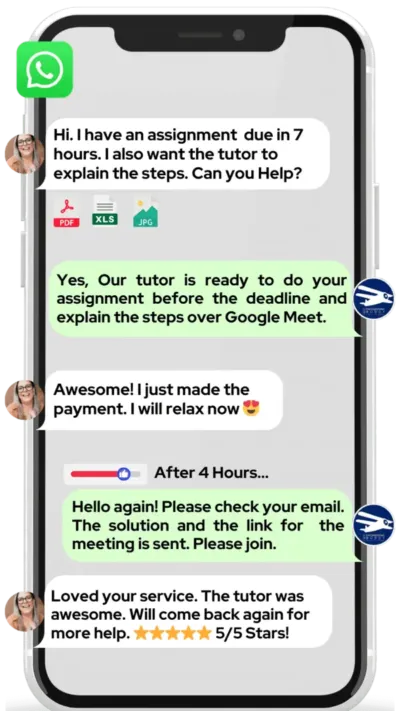
Unlike platforms where you fill out a form and wait, MEB responds in under a minute, 24/7. Tutor match takes under an hour. The $1 trial means you test before you commit. Everything runs over WhatsApp — no logins, no intake forms.
Study Plans (Pick One That Matches Your Goal)
After the diagnostic session, the tutor builds the sequence. Three common plans: a catch-up sprint (1–3 weeks) for students with a rotation exam or block test approaching fast; a structured revision plan (4–8 weeks) for students working toward a final program exam or board prep; and ongoing weekly support for students who need consistent coverage across a full semester of anesthesiology coursework. The tutor adjusts based on what the diagnostic reveals — not on a fixed template.
Pricing Guide
Anesthesiology tutoring starts at $20/hr for undergraduate and pre-med levels. Graduate, CRNA program, and board exam prep sessions typically run $35–$70/hr. Highly specialist topics — advanced regional techniques, critical care pharmacology, airway simulation prep — are available up to $100/hr.
Rate factors include your program level, topic complexity, how quickly you need sessions, and tutor availability. For students targeting competitive residency programs or specialist certifications, tutors with clinical anesthesia backgrounds are available at higher rates — share your specific goal and MEB will match the tier to your ambition.
Demand spikes during USMLE Step 1 and COMLEX season and around end-of-rotation exam windows. Availability is limited in those periods. Start with the $1 trial — 30 minutes, no registration, no commitment. WhatsApp MEB for a quick quote.
MEB has served 52,000+ students across 2,800+ subjects since 2008 — with a 4.8/5 rating across verified reviews. Anesthesiology tutoring is one of the most requested clinical medicine subjects on the platform.
Source: My Engineering Buddy, 2008–2025.
FAQ
Is anesthesiology hard?
Yes — it sits at the intersection of pharmacology, physiology, and clinical decision-making. Students find it demanding because errors in understanding don’t show up until a complex vignette forces everything to connect at once. Targeted 1:1 tutoring closes those gaps faster than review alone.
How many sessions are needed?
Most students see clear improvement in 8–12 sessions of focused 1:1 work. If your exam is within three weeks, an intensive short block may be more appropriate. The diagnostic session determines the right pace and sequence for your specific situation.
Can you help with homework and assignments?
Yes — case studies, drug calculation problems, clinical vignette analysis, and written assignments are all areas where MEB provides guided support. MEB tutoring is guided learning — you understand the work, then submit it yourself. See our Academic Integrity policy and Why MEB page for full details on what we help with and what we don’t.
Will the tutor match my exact syllabus or exam board?
Yes. Before matching, MEB asks for your program, institution, and the specific content area you’re covering. Tutors are matched to your actual curriculum — not a generic anesthesiology overview. This matters particularly for CRNA programs and international medical school formats that structure topics differently.
What happens in the first session?
The first session is a diagnostic. The tutor asks targeted questions across the main topic areas to locate exactly where your understanding breaks down. From that, a session sequence is built. No time is spent on topics you already have solid. You leave the first session knowing your specific gaps and the plan to close them.
Is online tutoring as effective as in-person?
For anesthesiology, yes — the bottleneck is usually conceptual, not hands-on. Digital pen-pad annotation over Google Meet replicates whiteboard teaching effectively. Students in the US, UK, Canada, and Gulf consistently report that MEB online sessions match or exceed what they got from in-person study groups or review courses.
What’s the difference between general anesthesia and sedation, and do tutors cover both?
General anesthesia involves full loss of consciousness and airway control; sedation exists on a spectrum from minimal to deep, preserving varying levels of protective reflexes. MEB tutors cover both — including the pharmacological agents, monitoring requirements, and clinical decision points that distinguish each level of care.
Do you cover CRNA board exam prep (NBCRNA NCE)?
Yes. MEB tutors familiar with the NBCRNA National Certification Examination content outline are available for CRNA students in the US. Topics include advanced pharmacology, airway management, regional anesthesia, and equipment. Tutor match for board prep is treated as a distinct request — share your exam date and priority content areas.
Can I get anesthesiology tutoring help at midnight or on weekends?
Yes. MEB operates across time zones, and tutors are available evenings, weekends, and overnight for Gulf and Asia-Pacific students. WhatsApp MEB at any hour — average response time is under a minute, and tutor matching for your preferred time slot happens within 24 hours.
What if I don’t get along with my assigned tutor?
Request a change. MEB re-matches without friction — no explanation required. Getting the right tutor matters more than any single session. Most re-match requests are resolved within an hour on WhatsApp.
How do I get started?
Three steps: WhatsApp MEB, get matched to a verified anesthesiology tutor within the hour, then start your $1 trial — 30 minutes of live 1:1 tutoring or one homework question explained in full. No registration. No commitment beyond the dollar.
Trust & Quality at My Engineering Buddy
Every MEB tutor goes through subject-specific vetting — not a general test. For anesthesiology, that means demonstrated knowledge across pharmacology, airway physiology, and perioperative care, plus a live demo evaluation before they take any student. Ongoing session feedback is reviewed to keep standards consistent. Rated 4.8/5 across 40,000+ verified reviews on Google.
MEB tutoring is guided learning — you understand the work, then submit it yourself. For full details on what we help with and what we don’t, read our Academic Integrity policy and Why MEB.
MEB has been serving students in the US, UK, Canada, Australia, Gulf, and Europe since 2008 — across 2,800+ subjects. In the Medicine category, anesthesiology sits alongside high-demand subjects like neurology tutoring, internal medicine help, and general surgery tutoring. Each subject has its own verified tutor pool, matched by level and syllabus. See how MEB’s tutoring methodology works for the full approach.
At MEB, we’ve found that students who struggle with anesthesiology most often have a physiology gap that was never properly addressed earlier in the program. The first session almost always surfaces it — and once it’s identified, progress is fast.
Explore Related Subjects
Students studying Anesthesiology often also need support in:
- Gross Anatomy
- Drug Metabolism
- Pulmonology
- Hematology
- Clinical Research
- Medical Ethics
- Obstetrics and Gynecology
Next Steps
When you WhatsApp MEB, share your exam board or program name, the topic or clinical area you’re struggling with most, your current timeline, and your preferred session times and time zone. MEB matches you with a verified anesthesiology tutor — usually within 24 hours, often faster.
Before your first session, have ready:
- Your course syllabus or program outline
- A recent past exam attempt, homework problem, or clinical case you struggled with
- Your exam or assignment deadline date
The tutor handles the diagnostic and builds the session plan from there. Visit www.myengineeringbuddy.com for more on how MEB works.
Try your first session for $1 — 30 minutes of live 1:1 tutoring or one homework question explained in full. No registration. No commitment. WhatsApp MEB now and get matched within the hour.
WhatsApp to get started or email [email protected].
52,000+ Happy Students From Various Universities



How Much For Private 1:1 Tutoring & Hw Help?
Private 1:1 Tutoring and HW help Cost $20 – 35 per hour* on average.
Reviewed by Subject Expert
This page has been carefully reviewed and validated by our subject expert to ensure accuracy and relevance.