~1 min
Average Reply Time
~1 hour
To Be Matched With A Tutor
30 Min Trial
75% Find Their Tutor On The 1st Trial
$20-35+/hr
Premium Yet Affordable Learning
Most doctors who fail the SCE Neurology do so on the same cluster of topics — neuro-imaging interpretation, rare movement disorders, and epilepsy management guidelines.
MRCP(UK) SCE Neurology Tutor Online
The MRCP(UK) SCE Neurology is a Specialty Certificate Examination set by the Joint Royal Colleges of Physicians Training Board, assessing advanced clinical neurology knowledge required for specialty training progression in the UK.
Finding a qualified MRCP(UK) SCE Neurology tutor near me is harder than it sounds — the exam sits at consultant level, covers a broad neurology curriculum, and most generic tutoring platforms don’t carry it at all. MEB does. Our 1:1 online MRCP(UK) SCE Neurology tutoring connects you with a specialist tutor matched to your exact weak areas, whether that’s peripheral nerve disease, neuro-ophthalmology, or critical care neurology. Part of our full MRCP(UK) tutoring offering, this is structured, exam-focused preparation — not generic revision.
- 1:1 online sessions tailored to the JRCPTB SCE Neurology syllabus
- Expert-verified tutors with clinical neurology knowledge and SCE experience
- Flexible time zones — US, UK, Canada, Australia, Gulf
- Structured learning plan built after a diagnostic session
- Ethical exam guidance — you understand the material, then apply it yourself
52,000+ students across the US, UK, Canada, Australia, and the Gulf have used MEB since 2008 — including doctors preparing for MRCP(UK) examinations like SCE Neurology, SCE Respiratory Medicine, and SCE Geriatric Medicine.
Source: My Engineering Buddy, 2008–2025.
How Much Does a MRCP(UK) SCE Neurology Tutor Cost?
Most MRCP(UK) SCE Neurology tutoring sessions run at $35–$100/hr, reflecting the specialist clinical level of the exam. A $1 trial gets you 30 minutes of live 1:1 tutoring or one exam question explained in full — no registration required.
| Level / Need | Typical Rate | What’s Included |
|---|---|---|
| SCE Neurology (standard prep) | $35–$60/hr | 1:1 sessions, syllabus-aligned question review |
| Advanced / Niche specialist | $60–$100/hr | Consultant-level tutor, rare presentations |
| $1 Trial | $1 flat | 30 min live session or 1 exam question explained |
SCE Neurology sittings are limited. Places for intensive exam-prep tutoring fill quickly in the 6–8 weeks before each sitting window.
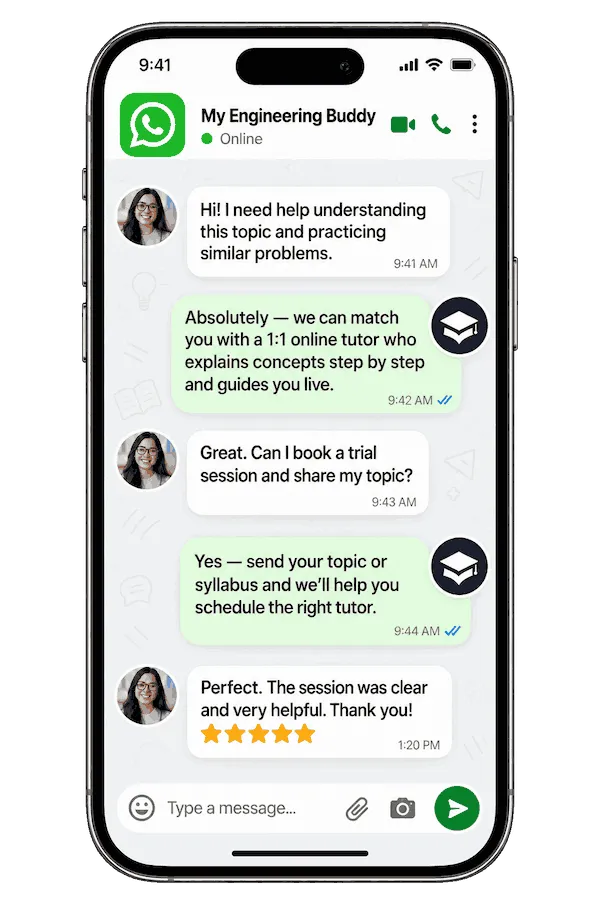
WhatsApp MEB for a quick quote — average response time under 1 minute.
Who This MRCP(UK) SCE Neurology Tutoring Is For
This tutoring is built for doctors at the specialty registrar stage who need to pass the SCE Neurology to progress. It’s also well-suited to those sitting a second time after an unsuccessful first attempt, or anyone with significant gaps in the neurology curriculum.
- Doctors retaking after a failed first attempt — the most common profile we see, and the one where targeted gap-filling makes the biggest difference
- ST3+ neurology registrars preparing for their first SCE Neurology sitting
- Doctors in the Gulf, Australia, or Canada preparing for UK specialty certification
- Registrars 4–6 weeks from the exam with specific topic gaps still to close
- Candidates who passed MRCP(UK) Part 1 and MRCP(UK) Part 2 but are finding the SCE level harder than expected
- Consultants supporting trainees who need structured SCE revision guidance
Doctors preparing for related SCEs — including SCE Acute Medicine and SCE Endocrinology and Diabetes — have found MEB’s model of specialist matching particularly useful for high-density clinical content.
1:1 Tutoring vs Self-Study vs AI vs YouTube vs Online Courses
Self-study works if you have the discipline and time — but the SCE Neurology syllabus is wide, and most candidates don’t know which gaps are costing them marks. AI tools give fast answers; they can’t adapt live or tell you why your clinical reasoning is going wrong. YouTube covers neurological concepts well at a surface level but stops short when you need to apply management guidelines to a specific case. Online courses are structured but fixed — they don’t respond to where you are right now. 1:1 tutoring with MEB is calibrated to your actual performance: the tutor works through the exact question types and clinical scenarios that the SCE Neurology tests, corrects your reasoning in real time, and adjusts pace based on what you show in each session.
Outcomes: What You’ll Be Able To Do in MRCP(UK) SCE Neurology
After consistent 1:1 MRCP(UK) SCE Neurology tutoring, you’ll be able to apply the correct diagnostic criteria for conditions like myasthenia gravis and Lambert-Eaton syndrome with confidence. You’ll analyse neuroimaging findings and link them to clinical presentations under exam time pressure. You’ll explain the management pathways for status epilepticus and dementia subtypes without relying on memory alone. You’ll solve extended matching questions on peripheral neuropathy and movement disorders by pattern recognition rather than guesswork. Progress depends on starting level and session frequency — but the goal is that by your exam date, you’re not hoping the hard topics don’t come up.
Based on feedback from 40,000+ sessions collected by MEB from 2022 to 2025, 58% of students improved by one full grade after approximately 20 hours of 1:1 tutoring in subjects like MRCP(UK) SCE Neurology. A further 23% achieved at least a half-grade improvement.
Source: MEB session feedback data, 2022–2025.
At MEB, we’ve found that SCE candidates often over-rotate on conditions they’ve seen in clinical practice and under-prepare for the rare presentations the exam specifically tests. The tutor’s job in the first session is to find exactly where that imbalance is — and build the plan from there.
What We Cover in MRCP(UK) SCE Neurology (Syllabus / Topics)

Track 1: Epilepsy and Seizure Disorders
- Classification of seizure types per ILAE criteria
- First-line and second-line AED selection and mechanisms
- Status epilepticus — acute management protocols
- Driving regulations and DVLA guidance for epilepsy
- Epilepsy in pregnancy — risk stratification and drug adjustments
- Juvenile myoclonic epilepsy and other genetic epilepsy syndromes
- Non-epileptic attack disorder — diagnosis and differentiation
Key references: Epilepsia journal guidelines; Shorvon’s Handbook of Epilepsy Treatment; NICE CG137.
Track 2: Movement Disorders and Neurodegenerative Disease
- Parkinson’s disease — diagnosis, staging, and dopaminergic therapy
- Atypical parkinsonian syndromes: PSP, MSA, CBD, DLB
- Huntington’s disease — genetics, presentation, management
- Essential tremor vs parkinsonian tremor — clinical differentiation
- Wilson’s disease — copper metabolism and neurological manifestations
- Dystonia classification and treatment options including DBS
- Chorea — causes and SCE-relevant differentials
Key references: Brain journal; Lees, Hardy & Revesz on Parkinson’s pathology; Queen Square Movement Disorders curriculum.
Track 3: Neuromuscular Disease, Stroke, and Neuro-immunology
- Stroke — TOAST classification, thrombolysis criteria, thrombectomy indications
- TIA risk stratification — ABCD2 score and early management
- Multiple sclerosis — McDonald criteria, disease-modifying therapies
- Myasthenia gravis and Lambert-Eaton — antibody profiles, management
- Guillain-Barré syndrome — subtypes, CSF findings, IVIG vs plasmapheresis
- Peripheral neuropathy — hereditary, inflammatory, and metabolic causes
- Autoimmune encephalitis — NMDAR and LGI1 antibody syndromes
Key references: NICE stroke guidelines; McDonald 2017 MS criteria; Engel & Banker’s Myology; MIT OpenCourseWare Neuroscience for foundational neuroscience context.
| SCE Neurology Assessment | Format | Notes |
|---|---|---|
| Single Best Answer (SBA) | Written paper | Core exam format; clinical scenario-based |
| Extended Matching Questions (EMQ) | Written paper | Tests differential diagnosis breadth |
| Exam sitting windows | Varies by year | Set by JRCPTB — check official dates |
What a Typical MRCP(UK) SCE Neurology Session Looks Like
The tutor opens by reviewing what you covered last time — if it was stroke management, they’ll run a quick check question before moving on. From there, you work through 5–8 SBA or EMQ questions together on screen, stopping at every point where your reasoning diverges from the mark scheme. The tutor uses a digital pen-pad to annotate the clinical scenario, draw out a nerve conduction trace, or map a differential diagnosis in real time. You answer, explain your thinking aloud, and the tutor challenges any step where the logic is shaky. The session closes with a clear task: a defined set of questions on peripheral neuropathy or movement disorder classification to complete before next time, and the topic for the following session already noted.
How MEB Tutors Help You with MRCP(UK) SCE Neurology (The Learning Loop)
Diagnose: In the first session, the tutor works through a short set of SCE-style questions with you. The goal isn’t to test you — it’s to map where clinical reasoning breaks down, whether that’s in applying diagnostic criteria, reading neuroimaging, or selecting the right management pathway.
Explain: The tutor works through the answer live. Not the answer in isolation, but the reasoning behind it — why one differential is more likely given the CSF result, or why this presentation rules out PSP. The digital pen-pad means you see the logic built out, not just stated.
Practice: You attempt a similar question while the tutor observes. This is where most of the session time goes. Passive reading doesn’t build exam technique. Working through questions does.
Feedback: The tutor identifies the exact step where marks would have been lost — not just “incorrect” but specifically what the examiner expected at each decision point.
Plan: Each session ends with a clear next topic and an accountability check. The tutor tracks which syllabus areas are closed and which still need work, so nothing falls through the gaps before your exam date.
Sessions run on Google Meet. The tutor uses a digital pen-pad or iPad with Apple Pencil. Before your first session, share your exam date, any recent practice paper attempts, and the topics you find hardest. The first session is always diagnostic — by the end of it, you’ll have a clear picture of where your preparation stands. Start with the $1 trial — 30 minutes of live tutoring that also serves as your first diagnostic.
Students consistently tell us that the first session is the most useful one they’ve had in months. Not because of what we teach — but because it’s the first time anyone has identified exactly where their reasoning is going wrong rather than just covering content again.
MEB has supported doctors preparing for MRCP(UK) PACES, SCE Neurology, and other specialty certificate examinations since 2008 — across over 2,800 advanced medical and academic subjects.
Source: My Engineering Buddy, 2008–2025.
Tutor Match Criteria (How We Pick Your Tutor)
Not every tutor who knows neurology is right for SCE preparation. MEB matches on four criteria.
Subject depth: Tutors are vetted specifically for SCE Neurology — clinical knowledge at registrar-to-consultant level, familiarity with JRCPTB curriculum structure, and experience with SBA and EMQ question formats.
Tools: All tutors use Google Meet with a digital pen-pad or iPad and Apple Pencil. No shared documents, no slides-only sessions — the work happens live and visually.
Time zone: Matched to your region. Early mornings for UK candidates, evenings for Gulf-based doctors, flexible scheduling for those in Canada or Australia.
Goals: Whether you need intensive preparation in three weeks or steady weekly support through a six-month revision cycle, the tutor builds around your exam date — not a generic timetable.
Unlike platforms where you fill out a form and wait, MEB responds in under a minute, 24/7. Tutor match takes under an hour. The $1 trial means you test before you commit. Everything runs over WhatsApp — no logins, no intake forms.
Study Plans (Pick One That Matches Your Goal)
The tutor maps your specific sequence after the diagnostic, but most SCE Neurology candidates fall into one of three tracks. Catch-up (1–3 weeks): for doctors close to their exam date with defined topic gaps — high-density sessions targeting the highest-yield areas first. Exam prep (4–8 weeks): a structured revision plan working through all three syllabus tracks, with past-paper integration in the final two weeks. Weekly support: ongoing sessions aligned to your training schedule, useful for registrars who want to build SCE readiness alongside clinical work without a single intense block.
Pricing Guide
MRCP(UK) SCE Neurology tutoring starts at $35/hr for standard preparation and runs to $100/hr for tutors with consultant-level clinical neurology backgrounds. Rate factors include topic complexity, exam timeline, and tutor availability.
Availability tightens significantly in the 6–8 weeks before each SCE sitting window. If your exam date is close, contact MEB early.
For candidates targeting specialty training posts at leading NHS teaching hospitals or equivalent centres internationally, tutors with active clinical neurology or academic backgrounds are available at higher rates — share your exam date and target goals and MEB will match the right tier.
Start with the $1 trial — 30 minutes, no registration, no commitment. WhatsApp MEB for a quick quote.
FAQ
Is the MRCP(UK) SCE Neurology hard?
Yes — the SCE Neurology is a postgraduate specialty exam pitched at the level of a completing registrar. The question style rewards clinical reasoning over recall. Many candidates who passed MRCP Part 2 find the SCE harder because the topic depth and differential complexity are significantly greater.
How many sessions are needed?
Most candidates benefit from 10–20 sessions spread over 4–8 weeks. Those with 2–3 weeks before their sitting typically need intensive daily or alternate-day sessions. The tutor sets a realistic target in the first diagnostic session based on your current performance level.
Can you help with exam preparation and past paper practice?
MEB tutoring is guided learning — you work through questions, the tutor explains the reasoning, and you apply that understanding yourself in the exam. See our Academic Integrity policy and Why MEB page for full details on what we help with and what we don’t.
Will the tutor match my exact syllabus or exam board?
Yes. MEB tutors for SCE Neurology are matched to the JRCPTB curriculum specifically. If you’re sitting under a different specialty training framework internationally, share that detail when you contact MEB and the tutor will be selected accordingly.
What happens in the first session?
The first session is diagnostic. The tutor works through a set of SCE-style questions with you to identify where clinical reasoning breaks down. By the end of the session, you’ll have a clear picture of your strongest and weakest syllabus areas and a plan for every remaining session.
Is online tutoring as effective as in-person for SCE preparation?
For this exam, yes. The SCE is written — there’s no OSCE component. Online sessions with a digital pen-pad replicate everything a face-to-face session does for question-based preparation, and the flexibility means you can fit sessions around busy rota patterns without travelling.
Can I get MRCP(UK) SCE Neurology help at short notice — even at night?
MEB operates 24/7 via WhatsApp. Response time is typically under a minute. If your exam is in two weeks and you’ve just identified a major gap in your neuro-immunology knowledge, contact MEB now — sessions can be arranged the same day.
What if I don’t get on with my assigned tutor?
Tell MEB via WhatsApp and a new tutor is matched, usually within the hour. Tutor fit matters for performance — if the working style isn’t right, swapping is straightforward and there’s no penalty for asking.
Do you offer group SCE Neurology sessions?
No. MEB provides 1:1 sessions only. The SCE requires targeted gap-filling based on individual clinical reasoning patterns — group formats can’t deliver that. Every session is built around one candidate’s performance data.
How do I find a MRCP(UK) SCE Neurology tutor in my city?
You don’t need to. All sessions are online via Google Meet — tutors are matched by subject specialism and time zone, not geography. Candidates in Dubai, Toronto, or Sydney work with the same pool of specialist tutors as those in London.
What’s the difference between SCE Neurology and MRCP(UK) PACES for neurology content?
MRCP(UK) PACES tests clinical examination and communication in a structured OSCE format — neurology stations assess bedside findings. The SCE Neurology is entirely written, testing advanced knowledge across the full neurology curriculum at a significantly greater depth. The preparation approach and tutor profile are different for each. MEB covers both — see our MRCP(UK) PACES tutoring page for PACES-specific preparation.
How do I get started?
Start with the $1 trial — 30 minutes of live tutoring or one exam question explained in full. Three steps: WhatsApp MEB, get matched to a specialist tutor (usually within the hour), then start your trial session. No forms, no waiting.
Trust & Quality at My Engineering Buddy
Every MEB tutor goes through subject-specific vetting before they take a session. For MRCP(UK) SCE Neurology, that means demonstrated clinical neurology knowledge at the appropriate level, familiarity with the JRCPTB curriculum, and a live demo evaluation before being matched to any candidate. Rated 4.8/5 across 40,000+ verified reviews on Google. Tutor performance is reviewed continuously through session feedback — tutors who don’t deliver are replaced, not retained.
MEB tutoring is guided learning — you understand the work, then submit it yourself. For full details on what we help with and what we don’t, read our Academic Integrity policy and Why MEB.
MEB has served 52,000+ students across the US, UK, Canada, Australia, the Gulf, and Europe in 2,800+ advanced subjects since 2008. Within the MRCP(UK) suite, we support candidates across SCE Neurology, SCE Nephrology, and SCE Rheumatology alongside the core Part 1, Part 2, and PACES examinations. See our tutoring methodology for how the learning loop is structured across all subjects.
A common pattern our tutors observe is that SCE candidates know the major conditions well but lose marks on the edge presentations — the atypical MS relapse, the paraneoplastic syndrome, the rare metabolic encephalopathy. Those are exactly the cases we build sessions around in the final weeks before the exam.
Explore Related Subjects
Students studying MRCP(UK) SCE Neurology often also need support in:
- MRCP(UK) SCE Dermatology
- MRCP(UK) SCE Gastroenterology
- MRCP(UK) SCE Medical Oncology
- MRCP(UK) SCE Palliative Medicine
- MRCP(UK) Part 1
MEB has been supporting postgraduate medical candidates since 2008 — across MRCP(UK) Part 1, Part 2, PACES, and the full SCE suite. No generic tutoring; every session is matched to the specific exam.
Source: My Engineering Buddy, 2008–2025.
Next Steps
Here’s what to do right now:
- Share your exam date, your hardest topic areas, and your current preparation stage
- Share your time zone and availability
- MEB matches you with a verified SCE Neurology tutor — usually within 24 hours
Before your first session, have ready: your JRCPTB curriculum guide or course outline, a recent practice paper attempt or question set you struggled with, and your exam date. The tutor handles the rest.
Try your first session for $1 — 30 minutes of live 1:1 tutoring or one homework question explained in full. No registration. No commitment. WhatsApp MEB now and get matched within the hour.
Visit www.myengineeringbuddy.com for more on how MEB works.
WhatsApp to get started or email [email protected].
Reviewed by Subject Expert
This page has been carefully reviewed and validated by our subject expert to ensure accuracy and relevance.