




~1 min
Average Reply Time
~1 hour
To Be Matched With A Tutor
30 Min Trial
75% Find Their Tutor On The 1st Trial
$20-35+/hr
Premium Yet Affordable Learning
Most students who struggle with NCEA Music aren’t short on talent — they’re short on someone who can explain music theory and assessment criteria at the same time.
NCEA Music Tutor Online
NCEA Music is a New Zealand National Certificate of Educational Achievement subject assessed across Levels 1, 2, and 3, covering music performance, theory, aural skills, and composition, equipping students for tertiary music study or creative industry pathways.
Finding a reliable NCEA Music tutor near me is harder than it sounds — most tutors cover either performance or theory, rarely both, and fewer still understand the specific achievement standards your assessor will use. MEB’s NCEA tutoring service connects you with verified tutors who know the Level 1, 2, and 3 standards inside out, from AS 91091 through to the Level 3 composition and performance portfolios. One outcome you can expect: clearer understanding of what each standard actually demands, and how to meet it on assessment day.
- 1:1 online sessions tailored to your specific NCEA Music level and achievement standards
- Expert-verified tutors with subject-specific knowledge of NCEA Music assessment criteria
- Flexible time zones — US, UK, Canada, Australia, Gulf
- Structured learning plan built after a diagnostic session
- Ethical academic guidance — you understand before you submit
52,000+ students across the US, UK, Canada, Australia, and the Gulf have used MEB since 2008 — including students in NCEA subjects like NCEA Music, NCEA Drama tutoring, and NCEA Visual Arts.
Source: My Engineering Buddy, 2008–2025.
How Much Does a NCEA Music Tutor Cost?
Most NCEA Music tutoring at MEB runs $20–$40/hr. Advanced Level 3 performance or composition work with specialist tutors can reach $60–$70/hr. New students can try a $1 trial — 30 minutes live or one assessed task explained in full — before committing to anything.
| Level / Need | Typical Rate | What’s Included |
|---|---|---|
| NCEA Level 1 Music | $20–$35/hr | 1:1 sessions, theory & aural guidance |
| NCEA Level 2 Music | $25–$40/hr | Performance, composition, written standards |
| NCEA Level 3 / Scholarship | $35–$70/hr | Expert tutor, portfolio & scholarship prep |
| $1 Trial | $1 flat | 30 min live session or 1 assessed task |
Tutor availability tightens significantly in September and October, when NCEA performance assessments and external exam prep coincide. Book early if your assessment window is approaching.
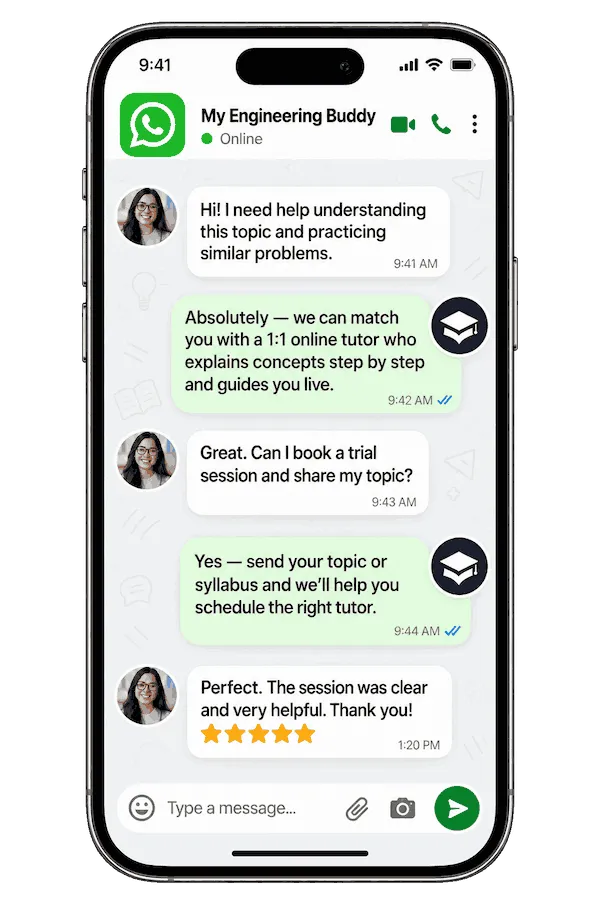
WhatsApp MEB for a quick quote — average response time under 1 minute.
Who This NCEA Music Tutoring Is For
This service suits students at any NCEA Music level who feel like their effort in practice isn’t translating into Merit or Excellence grades. It also suits students who understand their instrument but hit a wall when theory, aural, or composition standards come up.
- NCEA Level 1 students tackling music theory and aural for the first time
- Level 2 students working on composition portfolios or ensemble performance standards
- Level 3 students preparing for the external music exam or Scholarship Music
- Students who have attempted a standard before and want to improve their grade
- Students with a university audition or creative arts application depending on their NCEA Music result
- Parents watching a student’s confidence drop as performance assessment dates approach
- Students needing NCEA Visual Arts help alongside their music studies
Students who go on after NCEA Music often apply to the New Zealand School of Music (Te Kōkī), the University of Auckland Faculty of Creative Arts, Massey University, Victoria University of Wellington, the University of Canterbury, AUT, and Otago. The grade band — Achieved, Merit, or Excellence — can affect whether an audition even gets considered.
At MEB, we’ve found that students who struggle with NCEA Music’s written standards — particularly music theory and aural — often have strong practical skills that go unrecognised because they can’t translate what they hear into what the assessor needs to see on paper. That’s exactly the gap a 1:1 tutor closes fastest.
1:1 Tutoring vs Self-Study vs AI vs YouTube vs Online Courses
Self-study works if you’re consistent, but NCEA Music’s achievement standards require feedback on your specific work — not generic practice. AI tools can explain music theory quickly but can’t listen to your composition draft or diagnose why your aural transcription keeps going wrong. YouTube covers concepts well until you hit an assessment-specific question. Online courses follow a fixed sequence that ignores your weakest standard. 1:1 tutoring with MEB is live, calibrated to your exact NCEA level and achievement standards, and corrects errors in the moment — before they become habits that cost you a grade band on assessment day.
Outcomes: What You’ll Be Able To Do in NCEA Music
After working with an online NCEA Music tutor from MEB, you’ll be able to apply music theory concepts — intervals, chord progressions, cadences — accurately within NCEA’s specific assessment contexts. You’ll analyse set works at Level 2 and 3 using the language examiners expect. You’ll present a performance with the technical and expressive markers that separate Merit from Excellence. You’ll write composition annotations that justify your musical decisions clearly. These aren’t vague outcomes — they’re tied to exactly the achievement standards your school will assess you on.
Based on feedback from 40,000+ sessions collected by MEB from 2022 to 2025, 58% of students improved by one full grade after approximately 20 hours of 1:1 tutoring in subjects like NCEA Music. A further 23% achieved at least a half-grade improvement.
Source: MEB session feedback data, 2022–2025.
Supporting a student through NCEA Music? MEB works directly with parents to set up sessions, track progress, and keep assessment submissions on schedule. WhatsApp MEB — average response time is under a minute, 24/7.
Try your first session for $1 — 30 minutes of live 1:1 tutoring or one homework question explained in full. No registration. No commitment. WhatsApp MEB now and get matched within the hour.
What We Cover in NCEA Music (Syllabus / Topics)

Music Theory and Aural Skills
- Intervals, scales, and modes — recognition and application
- Chord construction, progressions, and cadence identification
- Rhythmic transcription and melodic dictation for aural standards
- Harmonic analysis using Roman numerals and figured bass
- Score reading — identifying features in printed notation
- Time signatures, syncopation, and metric patterns
- Level 3 extended harmonic vocabulary and modulation
Recommended texts: NCEA Music Theory Workbook (Rodewald), AB Guide to Music Theory (Taylor), and the NZQA achievement standard specifications for AS 91270, 91271, and 91849.
Composition and Arranging
- AS 91270 (Level 2) and AS 91849 (Level 3) composition portfolios
- Choosing and justifying compositional devices — motif development, texture, dynamics
- Writing composition annotations that meet NZQA descriptors
- Arranging for different instrumental combinations
- Use of music technology for notation and recording (Sibelius, MuseScore)
- Peer-review and iterative drafting process
Recommended texts: The Complete Guide to Music Composition (Corozine), and NZQA’s exemplar materials for Excellence-level composition annotations.
Performance and Set Works Analysis
- Solo and ensemble performance standards — technical and expressive criteria
- Merit vs Excellence markers in NCEA performance assessment descriptors
- Set works analysis for Level 2 (AS 91275) and Level 3 (AS 91850)
- Contextual analysis — historical, cultural, and stylistic placement of works
- Listening journals and analytical responses in examination format
- Preparing for the external listening examination
Recommended texts: NZQA set work resources, The New Grove Dictionary of Music and Musicians (Sadie) for contextual research, and past NCEA external examination papers available via NZQA.
NCEA Music spans three distinct assessment streams — performance, composition, and written/aural. Students who treat them as separate subjects, rather than one interconnected discipline, consistently leave Merit and Excellence grades on the table.
Source: My Engineering Buddy, tutoring observations 2008–2025.
Platforms, Tools & Textbooks We Support
NCEA Music sessions at MEB commonly involve notation software and digital audio tools alongside standard assessment resources. Tutors support students working with:
- Sibelius and MuseScore (composition notation)
- GarageBand and Audacity (recording and arrangement)
- Google Meet with shared screen for score annotation
- Digital pen-pad for real-time notation correction
- NZQA past papers and achievement standard exemplars
- Music XML files for sharing compositions between sessions
What a Typical NCEA Music Session Looks Like
The tutor opens by checking the previous session’s focus — say, cadence identification in AS 91271 aural transcription. If there’s a composition draft in progress, the student shares the MuseScore file on screen. The tutor uses a digital pen-pad to mark up notation errors and annotation weaknesses in real time, pointing out exactly where the Excellence descriptor breaks down. The student then attempts the next section — a four-bar continuation or a harmonic analysis of the set work — while the tutor watches and corrects errors before they get reinforced. The session closes with a specific task: rewrite the annotation for one compositional device using the Language of Excellence, ready to review next time.
How MEB Tutors Help You with NCEA Music (The Learning Loop)
Diagnose: In the first session, the tutor identifies which achievement standards are most at risk — whether that’s aural transcription, composition annotation quality, or performance technical criteria — and notes what’s causing the gap between the student’s current grade and the next band.
Explain: The tutor works through live examples on screen — analysing a set work passage, constructing a chord progression, or demonstrating what an Excellence annotation looks like versus an Achieved one. Digital pen-pad annotation makes every explanation visible and replayable.
Practice: The student attempts the problem — transcribing a rhythm, drafting a composition annotation, or analysing a harmonic sequence — with the tutor present. Not alone. That’s the difference.
Feedback: Step-by-step error correction follows immediately. The tutor explains which NCEA descriptor was missed, why marks were dropped, and what to write or play differently next time.
Plan: Each session ends with a specific next topic, a concrete practice task, and a note on where the student is relative to the assessment deadline.
Sessions run on Google Meet. The tutor uses a digital pen-pad or iPad with Apple Pencil to annotate scores and theory work in real time. Before the first session, share your current NCEA level, the achievement standards you’re working on, and any draft composition or past paper attempt you’ve struggled with. The first session covers a diagnostic and at least one full worked example from your actual assessed material. Start with the $1 trial — 30 minutes of live tutoring that also serves as your first diagnostic.
Students consistently tell us that the biggest NCEA Music breakthrough comes not from practising more, but from understanding precisely what the assessor’s descriptors mean — and then practising with that target in mind. One session can reframe how a student approaches every standard that follows.
Tutor Match Criteria (How We Pick Your Tutor)
Not every music tutor knows NCEA. MEB matches on specifics.
Subject depth: Tutors are vetted for knowledge of the specific NCEA Music achievement standards at the student’s level — Level 1, 2, or 3 — including performance, composition, aural, and the external listening exam.
Tools: Every tutor works on Google Meet with a digital pen-pad or iPad and Apple Pencil — essential for annotating scores and composition drafts live.
Time zone: Matched to the student’s region. New Zealand students get NZ-hours tutors; students studying NCEA Music abroad get matched accordingly.
Goals: Whether the target is an Excellence in performance, a Merit in the composition portfolio, or passing the external aural exam, the tutor match reflects that specific ambition — not a generic music background.
Unlike platforms where you fill out a form and wait, MEB responds in under a minute, 24/7. Tutor match takes under an hour. The $1 trial means you test before you commit. Everything runs over WhatsApp — no logins, no intake forms.
Study Plans (Pick One That Matches Your Goal)
The tutor builds the exact sequence after the diagnostic, but here’s how most NCEA Music students structure their support: Catch-up (1–3 weeks) — intensive work on the weakest standard before an imminent assessment deadline. Exam prep (4–8 weeks) — structured revision covering aural, set works, and written theory ahead of the external exam window. Ongoing weekly support — one or two sessions per week aligned to the school’s internal assessment calendar, covering each standard as it comes up. Students preparing for Scholarship Music typically run the 8-week track starting at least two terms out.
Pricing Guide
NCEA Music tutoring at MEB starts at $20/hr for Level 1 and Level 2 standards. Level 3 and Scholarship Music — particularly composition portfolio and advanced performance — runs $35–$70/hr depending on tutor specialisation. Rate factors include: level, assessment complexity, timeline pressure, and tutor availability.
Tutor availability narrows sharply in Term 3 and early Term 4 when NCEA internal assessments cluster. If you’re booking for that window, do it early.
For students targeting music conservatoires, university arts faculties, or Scholarship Music, tutors with professional performance or composition backgrounds are available at higher rates — share your specific goal and MEB will match the tier to your ambition.
Start with the $1 trial — 30 minutes, no registration, no commitment. WhatsApp MEB for a quick quote.
FAQ
Is NCEA Music hard?
NCEA Music has three distinct assessment streams — performance, composition, and theory/aural — and students who excel in one often struggle in another. The written and aural standards catch many students off guard. With targeted 1:1 support, the gaps close faster than most expect.
How many sessions are needed?
Most students working on a single achievement standard need 4–8 sessions. Students preparing for multiple standards or the external exam typically work across a full term. The diagnostic in session one gives a clearer picture of what’s actually needed for your specific situation.
Can you help with homework and assignments?
MEB tutoring is guided learning — you understand the work, then submit it yourself. For composition annotations, theory exercises, and aural practice tasks, the tutor explains the standard, walks through examples, and helps you understand how to meet the descriptor. See our Academic Integrity policy and Why MEB page for full details on what we help with and what we don’t.
Will the tutor match my exact syllabus or exam board?
Yes. NCEA Music is assessed under NZQA achievement standards — tutors are matched specifically to your level and the standards you’re working on, whether that’s Level 1 aural, Level 2 composition, or Level 3 set works analysis and the external listening exam.
What happens in the first session?
The tutor runs a diagnostic — identifying which standards are weakest, what’s causing the gap, and where the quickest gains are. You’ll also work through at least one live example from your actual assessed material. The session plan for subsequent sessions is set before you log off.
Is online tutoring as effective as in-person?
For NCEA Music theory, aural, composition, and set works analysis, online tutoring with shared screen and digital pen annotation is as effective as sitting next to the tutor — often more so, because session notes and annotated scores are saved and reviewable. Performance coaching works well for technique discussion, interpretation, and assessor-criteria review even without being in the same room.
What’s the difference between Achieved, Merit, and Excellence in NCEA Music?
Each achievement standard has specific descriptor language for each grade band. Excellence typically requires perceptive analysis, sophisticated compositional decisions, or highly expressive performance — not just technical accuracy. Tutors work explicitly on what the descriptors require, so students know exactly what to aim for in each assessment.
Can MEB help with NCEA Music Scholarship?
Yes. Scholarship Music is significantly more demanding than Level 3 — it requires sophisticated analytical writing, advanced aural work, and deep contextual knowledge of set works. MEB matches Scholarship candidates with tutors who have worked at that level and understand what the Scholarship assessors look for beyond the standard Excellence criteria.
Can I get NCEA Music help at short notice before an assessment?
Yes — WhatsApp MEB and a tutor can typically be matched within the hour. For internal assessment deadlines or last-minute external exam preparation, a focused 1–3 session intensive on your specific standard is a common and effective approach. Availability is tighter in Term 3, so contact MEB as early as possible.
How do I find a NCEA Music tutor in my city?
MEB tutors work fully online, so location doesn’t limit your options. Students in Auckland, Wellington, Christchurch, Dunedin, and cities outside New Zealand all access the same tutor pool. All you need is Google Meet and your course materials.
Do you offer group NCEA Music sessions?
MEB specialises in 1:1 NCEA Music tutoring. Group sessions aren’t offered — the 1:1 format is what makes it possible to target your specific achievement standards, gaps, and deadlines rather than following a generic group curriculum.
How do I get started?
Start with the $1 trial — 30 minutes of live tutoring or one assessed task explained in full. Three steps: WhatsApp MEB, get matched with a verified NCEA Music tutor (usually within the hour), and begin your trial session. No registration required, no commitment beyond the $1.
Trust & Quality at My Engineering Buddy
Every MEB tutor goes through subject-specific vetting — not a general interview. For NCEA Music, that means demonstrating knowledge of the NZQA achievement standards, the grade band descriptors for performance, composition, and aural, and the external exam format. Tutors complete a live demo evaluation before working with students, and ongoing session feedback drives continued review. Rated 4.8/5 across 40,000+ verified reviews on Google.
MEB tutoring is guided learning — you understand the work, then submit it yourself. For full details on what we help with and what we don’t, read our Academic Integrity policy and Why MEB.
MEB has been serving students across the US, UK, Canada, Australia, Gulf, and Europe since 2008 — in 2,800+ subjects, including NCEA Music, NCEA Dance tutoring, and NCEA Art History help. The platform was built for students who need expert subject knowledge and quick turnaround — not a generic tutor marketplace with a two-day wait.
MEB has served students in NCEA Music and related creative subjects — including NCEA Drama, NCEA Dance, and NCEA Visual Arts — since 2008. 52,000+ students. 18 years. The subject knowledge runs deep.
Source: My Engineering Buddy, 2008–2025.
Explore Related Subjects
Students studying NCEA Music often also need support in:
- NCEA Drama
- NCEA Media Studies
- NCEA Classical Studies
- NCEA English
- NCEA History
- NCEA Design and Visual Communication
- NCEA Digital Technologies
Next Steps
Before your first session, have ready: your NCEA level and the achievement standards you’re working on, a recent draft composition or past paper attempt you’ve struggled with, and your assessment or exam date. The tutor handles the rest.
- Share your exam board (NZQA), your hardest standard, and your current timeline
- Share your availability and time zone
- MEB matches you with a verified NCEA Music tutor — usually within the hour
First session starts with a diagnostic so every minute is used well. Visit www.myengineeringbuddy.com for more on how MEB works.
WhatsApp to get started or email [email protected].
Reviewed by Subject Expert
This page has been carefully reviewed and validated by our subject expert to ensure accuracy and relevance.




