

Contact MEB Today To Get The Best
O-Level Religious Studies (2048) Tutoring Online
Email: [email protected]



~1 min
Average Reply Time
~1 hour
To Be Matched With A Tutor
30 Min Trial
75% Find Their Tutor On The 1st Trial
$20-35+/hr
Premium Yet Affordable Learning
Most students who struggle with O-Level Religious Studies (2048) aren’t short on effort — they’re missing a structured way to handle source analysis, theological argument, and timed essay writing under exam conditions.
O-Level Religious Studies (2048) Tutor Online
O-Level Religious Studies (2048) is a Cambridge IGCSE/O-Level qualification examining world religions, sacred texts, ethical reasoning, and religious practice. It equips students to analyse belief systems and construct well-evidenced theological arguments at secondary school level.
Finding a reliable O-Level Religious Studies (2048) tutor near me — one who actually knows the Cambridge syllabus, the paper structure, and how marks are allocated — is harder than it should be. MEB connects you with verified O-Level tutors who cover the full 2048 syllabus, from world religions to ethics and sacred texts. Sessions run online, 1:1, and are built around your specific gaps — not a generic revision plan.
- 1:1 online sessions tailored to the Cambridge O-Level Religious Studies (2048) syllabus
- Expert verified tutors with theology, religious studies, and Cambridge exam board knowledge
- Flexible time zones — US, UK, Canada, Australia, Gulf
- Structured learning plan built after a diagnostic session
- Ethical homework and assignment guidance — you understand the work before you submit
52,000+ students across the US, UK, Canada, Australia, and the Gulf have used MEB since 2008 — including students in O-Level Humanities subjects like O-Level Religious Studies (2048), O-Level Global Perspectives, and O-Level Sociology.
Source: My Engineering Buddy, 2008–2025.
How Much Does an O-Level Religious Studies (2048) Tutor Cost?
Most O-Level Religious Studies (2048) tutoring sessions run $20–$40/hr. Advanced or specialist support — for students targeting top grades or working through dense theological content — may reach $50/hr. New students can start with the $1 trial: 30 minutes of live tutoring or one full homework question explained.
| Level / Need | Typical Rate | What’s Included |
|---|---|---|
| Standard (most O-Level students) | $20–$35/hr | 1:1 sessions, homework guidance, essay planning |
| Advanced / Specialist | $35–$50/hr | Expert tutor, comparative religion depth, exam strategy |
| $1 Trial | $1 flat | 30 min live session or one full homework question |
Tutor availability tightens significantly in the weeks before the Cambridge May/June and October/November exam windows. Book early if your exam date is approaching.
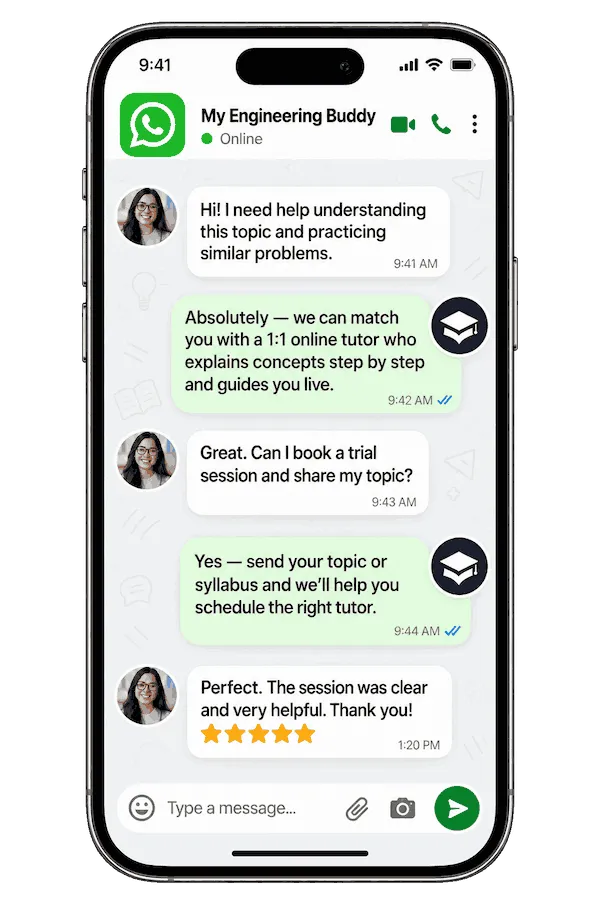
WhatsApp MEB for a quick quote — average response time under 1 minute.
Who This O-Level Religious Studies (2048) Tutoring Is For
This isn’t a course for students who just need someone to read through the textbook with them. O-Level Religious Studies (2048) demands structured argument, close textual reading, and confident essay writing under timed conditions. If any of these sound familiar, MEB can help:
- Students retaking after a failed first attempt and needing to close specific gaps before the next Cambridge window
- Students with a university conditional offer depending on their O-Level Religious Studies grade
- Students 4–6 weeks from the exam with incomplete coverage of world religions or ethics topics
- Students who understand the content but consistently lose marks on essay structure and theological argument
- Parents watching a child’s confidence drop alongside their Religious Studies grades
- International school students following the Cambridge 2048 syllabus outside the UK who need a tutor familiar with the exact paper format
MEB also works with students at schools in the UK, Australia, Canada, and the Gulf who are following the Cambridge International curriculum. The $1 trial is the lowest-risk way to see whether the tutor is the right fit before committing to regular sessions.
At MEB, we’ve found that Religious Studies students often know more than they think. The gap is rarely content — it’s translating that knowledge into the structured, evidence-backed argument the examiner expects. That’s exactly what we work on first.
1:1 Tutoring vs Self-Study vs AI vs YouTube vs Online Courses
Self-study works if you’re disciplined, but there’s no one to tell you your essay argument is circular. AI tools give fast definitions of theological concepts but can’t assess whether your paper 2 response would actually earn marks. YouTube covers world religion overviews but stops when you need to know why your specific answer lost three marks. Online courses move at a fixed pace with no syllabus alignment. 1:1 tutoring with MEB is live, calibrated to the Cambridge 2048 paper structure, and corrects your reasoning in the moment — not after the exam.
Outcomes: What You’ll Be Able To Do in O-Level Religious Studies (2048)
After consistent 1:1 O-Level Religious Studies (2048) tutoring, students build real exam-ready capability. You’ll be able to analyse primary religious sources — including Quranic verses, Gospel passages, or Buddhist suttas — with the precision the Cambridge mark scheme requires. You’ll construct structured theological arguments in timed essay conditions, using scholarly vocabulary correctly. You’ll apply ethical frameworks such as natural law, utilitarianism, and divine command theory to real-world scenarios in Paper 2. You’ll compare religious teachings on topics like life after death, the nature of God, or human rights with genuine confidence rather than surface-level description.
Supporting a student through O-Level Religious Studies (2048)? MEB works directly with parents to set up sessions, track progress, and keep coursework on schedule. WhatsApp MEB — average response time is under a minute, 24/7.
“Based on feedback from 40,000+ sessions collected by MEB from 2022 to 2025, 58% of students improved by one full grade after approximately 20 hours of 1:1 tutoring in subjects like O-Level Religious Studies (2048). A further 23% achieved at least a half-grade improvement.”
Source: MEB session feedback data, 2022–2025.
What We Cover in O-Level Religious Studies (2048) (Syllabus / Topics)
The Cambridge O-Level Religious Studies (2048) syllabus is structured around two main papers. Students choose topics from the following areas:
| Component | Description | Weighting |
|---|---|---|
| Paper 1 | Study of a world religion (e.g. Christianity, Islam, Buddhism, Hinduism) | 50% |
| Paper 2 | Ethics and philosophy of religion (moral reasoning, belief, life issues) | 50% |
Track 1: World Religions (Paper 1)
- Core beliefs and practices of Christianity, Islam, Buddhism, Hinduism, or Judaism
- Sacred texts — interpretation, authority, and application (e.g. the Bible, Quran, Dhammapada)
- Worship, ritual, and religious practice in contemporary and historical contexts
- The nature of God or ultimate reality across chosen faith traditions
- Religious identity, community, and the role of religious leaders
- Source-based questions — extracting and evaluating religious teaching from passages
Key texts: Cambridge O-Level Religious Studies Revision Guide (Hodder Education); Thinking Through Religion (Nelson Thornes); syllabusspecific sacred texts as set by Cambridge International.
Track 2: Ethics and Philosophy of Religion (Paper 2)
- Ethical theories — natural law, utilitarianism, Kantian ethics, virtue ethics, divine command theory
- Applied ethics — abortion, euthanasia, war and peace, environmental responsibility, human rights
- Arguments for and against the existence of God (cosmological, teleological, moral arguments)
- The problem of evil and suffering — theodicies and religious responses
- Life, death, and afterlife — religious and secular perspectives compared
- Structuring a theological essay response: claim, evidence, analysis, counter-argument
Key texts: Religious and Moral Education for Cambridge O-Level (Cambridge University Press); Ethics for A-Level (Open Book Publishers, also useful for O-Level ethics grounding).
Track 3: Exam Technique and Essay Writing
- How the Cambridge 2048 mark scheme allocates marks at each level of response
- AO1 (knowledge and understanding) vs AO2 (evaluation and argument) — getting the balance right
- Timed essay practice with tutor feedback on structure, evidence, and theological vocabulary
- Past paper walkthroughs — identifying where marks are lost and why
- Common error patterns: description instead of analysis, unsupported claims, weak conclusions
Key texts: Cambridge past papers and mark schemes (Cambridge Assessment International Education); How to Write Philosophy Essays (Pearson).

What a Typical O-Level Religious Studies (2048) Session Looks Like
The tutor opens by checking the previous session’s topic — often the problem of evil, a specific ethical theory, or a past paper question the student attempted. From there, the session moves into live work on screen: the student shares their draft essay or answer, and the tutor annotates directly using a digital pen-pad, showing exactly where the argument loses clarity or where evidence is missing. The student then rewrites a paragraph in real time while the tutor watches and steers. For source-based questions on Paper 1, tutor and student read the passage together, practise the specific skill of extracting meaning, and the student attempts a timed response before the session closes. A focused practice task — one timed paragraph or one past paper question — is set before the next session.
Students consistently tell us that seeing a tutor annotate their own essay in real time — marking exactly where the examiner would stop awarding marks — is more useful than any revision guide. It makes the mark scheme concrete, not abstract.
How MEB Tutors Help You with O-Level Religious Studies (2048) (The Learning Loop)
Diagnose: In the first session, the tutor identifies whether gaps are in content knowledge, essay structure, theological vocabulary, or exam timing. A past paper attempt or recent homework tells the tutor more than any intake form.
Explain: The tutor works through specific topics live — using a digital pen-pad to model an ideal answer structure, annotate a sacred text passage, or map an ethical argument visually. Nothing is left at the level of “does that make sense?”
Practice: The student attempts a question or paragraph with the tutor present. This isn’t homework — it happens in the session, so errors are caught immediately rather than reinforced through repetition.
Feedback: The tutor explains step by step where marks were lost and why, using the Cambridge mark scheme language. Students learn to self-assess in the same way an examiner would.
Plan: The session ends with a clear next topic, a short practice task, and a note on what to bring to the next session. Progress is tracked across sessions so nothing is left to chance.
Sessions run on Google Meet. The tutor uses a digital pen-pad or iPad with Apple Pencil to annotate essays and work through arguments live. Before your first session, have your exam board confirmation, a recent past paper attempt or homework question, and your exam date. Start with the $1 trial — 30 minutes of live tutoring that also serves as your first diagnostic.
Students who come to MEB with three or four weeks left before a Cambridge exam consistently make more progress in focused 1:1 sessions than in months of unstructured self-revision. The difference is corrective feedback, applied in real time.
Source: My Engineering Buddy tutor observations, 2008–2025.
Tutor Match Criteria (How We Pick Your Tutor)
Not every tutor with a theology degree is the right match for Cambridge 2048. Here’s what MEB checks:
Subject depth: The tutor must have direct experience with the Cambridge O-Level Religious Studies (2048) syllabus — not just general religious studies knowledge. Familiarity with both Paper 1 and Paper 2 structures is required.
Tools: Every MEB tutor uses Google Meet with a digital pen-pad or iPad and Apple Pencil — no static slides, no screen-sharing without annotation.
Time zone: Matched to the student’s region — US, UK, Gulf, Canada, or Australia — so scheduling doesn’t require anyone to be awake at 3am.
Goals: Whether the student is targeting an A grade, closing a content gap, or rebuilding essay confidence after a poor mock, the tutor match reflects that specific aim.
Unlike platforms where you fill out a form and wait, MEB responds in under a minute, 24/7. Tutor match takes under an hour. The $1 trial means you test before you commit. Everything runs over WhatsApp — no logins, no intake forms.
Study Plans (Pick One That Matches Your Goal)
After the diagnostic session, the tutor builds your plan. Catch-up (1–3 weeks): intensive focus on the highest-yield topics and essay technique for students with an imminent exam date. Exam prep (4–8 weeks): systematic coverage of Paper 1 religion topics and Paper 2 ethics, past paper practice, and mark scheme training. Weekly support: ongoing sessions aligned to your school’s teaching schedule, with homework guidance and essay feedback built in. The tutor maps the exact sequence after seeing your first attempt — no guesswork.
Pricing Guide
O-Level Religious Studies (2048) tutoring starts at $20/hr for standard syllabus support. More specialist work — targeted exam strategy, dense comparative religion content, or short-notice intensive prep — runs $35–$50/hr. Rate factors include your level within the course, the complexity of the topics being covered, how close your exam date is, and tutor availability in your time zone.
For students targeting top A grades at competitive schools, tutors with academic theology or philosophy backgrounds are available at higher rates — share your specific goal and MEB will match the right tier.
Availability in the Cambridge May/June window fills up fast. If you’re within eight weeks of your exam, act now. Start with the $1 trial — 30 minutes, no registration, no commitment. WhatsApp MEB for a quick quote.
FAQ
Is O-Level Religious Studies (2048) hard?
It’s more demanding than students expect. The content is manageable, but the exam requires structured theological argument and close source analysis — skills most students haven’t been explicitly taught. With targeted 1:1 tutoring on essay technique and paper structure, the jump in marks is usually significant and fast.
How many sessions are needed?
Most students see clear improvement within 8–12 sessions. Students with 4–6 weeks to an exam typically need 10–15 focused sessions. Students using MEB for ongoing weekly support through the academic year usually run 1–2 sessions per week, aligned to their school’s teaching schedule.
Can you help with homework and assignments?
Yes — MEB tutoring is guided learning. The tutor explains the question, works through the reasoning with you, and helps you understand how to structure your answer. You do the writing and submit your own work. See our Academic Integrity policy and Why MEB page for full details on what we help with and what we don’t.
Will the tutor match my exact syllabus or exam board?
Yes. MEB tutors for O-Level Religious Studies (2048) work specifically with the Cambridge International syllabus 2048. Tell us your Paper 1 religion choice (e.g. Christianity, Islam, or Buddhism) and Paper 2 topic focus at the start, and the tutor aligns every session to those exact components.
What happens in the first session?
The tutor reviews a past paper attempt or recent homework question you’ve brought. From there, they identify your specific gaps — content knowledge, essay structure, or exam timing — and set the plan for the sessions ahead. No time is wasted on topics you already understand.
Is online tutoring as effective as in-person?
For a written-exam subject like Religious Studies, online tutoring is often more effective. The tutor can annotate your essay directly on screen in real time, share past paper mark schemes instantly, and run timed practice in a distraction-free environment. Students in the UK, Gulf, Canada, and Australia report the same outcomes as face-to-face.
Can I get O-Level Religious Studies (2048) help at midnight or on weekends?
Yes. MEB operates 24/7. Tutors are available across time zones, so students in the Gulf, Australia, or the US can book sessions at times that suit their schedule — including late evenings and weekends before exam windows.
What if I don’t like my assigned tutor?
Tell us on WhatsApp and we’ll rematch you. There’s no form to fill in and no waiting period. Most rematch requests are resolved within the hour. The $1 trial is specifically designed so you can test the fit before committing to regular sessions.
Which Paper 1 religion options does MEB support?
MEB tutors cover all major Paper 1 religion options in the Cambridge 2048 syllabus — Christianity, Islam, Judaism, Buddhism, and Hinduism. Specify your chosen religion when you contact MEB and the tutor matched to you will have direct subject knowledge in that tradition.
How do I get the most out of Paper 2 ethics questions?
The key is knowing which ethical framework to apply and how to structure a two-sided argument that reaches a supported conclusion. MEB tutors work through this using Cambridge mark scheme language — students learn to write to the mark scheme, not just to the question. This alone typically adds several marks per answer.
How do I get started?
Start with the $1 trial — 30 minutes of live tutoring or one full homework question explained. Three steps: WhatsApp MEB, get matched with a verified O-Level Religious Studies (2048) tutor, and start your trial session. No registration, no commitment.
Do you offer group O-Level Religious Studies (2048) sessions?
MEB specialises in 1:1 sessions only. Group sessions don’t allow the tutor to calibrate to your specific essay weaknesses or Paper 1 religion choice. Every session is private, with the tutor’s full attention on your exact gaps and exam date.
Trust & Quality at My Engineering Buddy
Every MEB tutor goes through a structured vetting process: subject-knowledge screening, a live demo session evaluated by a senior tutor, and ongoing review based on student feedback after each session. For O-Level Religious Studies (2048), this means tutors must demonstrate direct familiarity with the Cambridge 2048 paper structure, mark scheme language, and religion-specific content across Paper 1 options. Rated 4.8/5 across 40,000+ verified reviews on Google. MEB has been running since 2008 and has served 52,000+ students across the US, UK, Canada, Australia, and the Gulf.
MEB tutoring is guided learning — you understand the work, then submit it yourself. For full details on what we help with and what we don’t, read our Academic Integrity policy and Why MEB.
MEB covers 2,800+ subjects, with particular depth in O-Level Humanities. Students working on O-Level Global Perspectives tutoring and O-Level History tutoring alongside Religious Studies will find tutors who understand the Cambridge analytical writing demands across all three subjects. Learn more about how MEB tutors teach.
Explore Related Subjects
Students studying O-Level Religious Studies (2048) often also need support in:
- O-Level Biblical Studies
- O-Level Islamiyat
- O-Level Hinduism
- O-Level Islamic Studies
- O-Level Sociology
- O-Level Literature in English
- O-Level Pakistan Studies
Next Steps
Ready to get started? Here’s what to do:
- Share your Paper 1 religion choice, hardest topic or essay component, and your exam date
- Share your availability and time zone — MEB covers US, UK, Canada, Australia, and Gulf
- MEB matches you with a verified O-Level Religious Studies (2048) tutor — usually within 24 hours
- Your first session opens with a diagnostic so every minute from the start is targeted at your actual gaps
Before your first session, have ready: your Cambridge 2048 syllabus or school course outline, a recent past paper attempt or homework question you found difficult, and your exam or deadline date. The tutor handles the rest.
Try your first session for $1 — 30 minutes of live 1:1 tutoring or one homework question explained in full. No registration. No commitment.
WhatsApp MEB now
and get matched within the hour.
A common pattern our tutors observe is that students underperform on Paper 2 not because they don’t know the ethical theories, but because they’ve never been shown how to write a properly structured evaluative response. That’s a technique problem — and it’s fixable in a handful of sessions.
Visit www.myengineeringbuddy.com for more on how MEB works.
WhatsApp to get started or email [email protected].
O-Level Religious Studies (2048) covers Cambridge-assessed content across two papers. MEB tutors know both — the religion-specific Paper 1 content and the ethics and philosophy of Paper 2 — and match to your exact choices.
Source: My Engineering Buddy, 2008–2025.
Reviewed by Subject Expert
This page has been carefully reviewed and validated by our subject expert to ensure accuracy and relevance.




