

Hire Verified & Experienced
AP Microeconomics Tutors
4.8/5 40K+ session ratings collected on the MEB platform
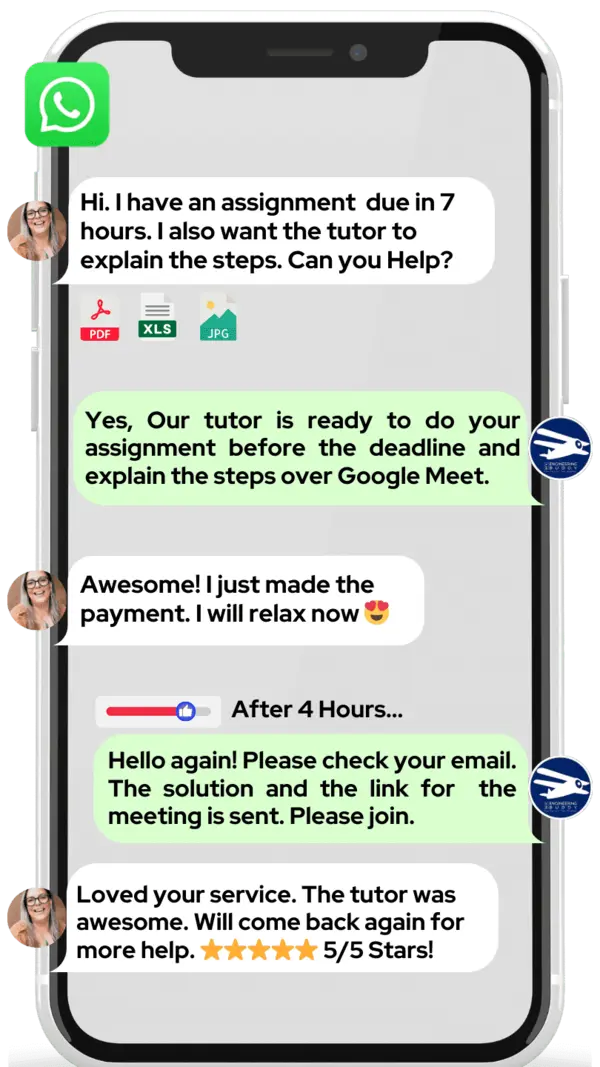



Hire The Best AP Microeconomics Tutor
Top Tutors, Top Grades. Without The Stress!




52,000+ Happy Students From Various Universities






How Much For Private 1:1 Tutoring & Hw Help?
Private 1:1 Tutoring and HW help Cost $20 – 35 per hour* on average.
Most students don’t fail AP Microeconomics because it’s hard — they fail because nobody caught the elasticity gap before the FRQ.
AP Microeconomics Tutor Online
AP Microeconomics is a College Board advanced placement course and exam covering individual economic decision-making, market structures, and resource allocation. It equips students to apply economic models — supply and demand, cost curves, game theory — at a college-credit level.
When you search for an AP Microeconomics tutor near me, you want someone who knows the College Board rubric, not just economics in general. MEB matches you with a verified 1:1 online AP Microeconomics tutor who has worked through the exact free-response question formats and multiple-choice traps that decide your score. No guarantees — but a structured plan from session one.
- 1:1 online sessions tailored to the AP Microeconomics College Board curriculum
- Expert verified tutors with subject-specific knowledge of AP scoring rubrics
- Flexible time zones — US, UK, Canada, Australia, Gulf
- Structured learning plan built after a diagnostic session
- Ethical homework and assignment guidance — you understand before you submit
52,000+ students across the US, UK, Canada, Australia, and the Gulf have used MEB since 2008 — across 2,800+ subjects, from AP Calculus to A Level Music Technology to Data Science.
Source: My Engineering Buddy, 2008–2025.
How Much Does an AP Microeconomics Tutor Cost?
Most AP Microeconomics tutoring at MEB runs $20–$40/hr. You can start for $1 — that’s 30 minutes of live 1:1 tutoring or a full explanation of one homework question.
| Level / Need | Typical Rate | What’s Included |
|---|---|---|
| Standard (most AP levels) | $20–$35/hr | 1:1 sessions, homework guidance |
| Advanced / Specialist | $35–$70/hr | Expert tutor, FRQ and exam depth |
| $1 Trial | $1 flat | 30 min live session or 1 homework question |
Tutor availability tightens in April and May — the peak AP exam window. Book early if you’re working toward a May sitting.
WhatsApp MEB for a quick quote — average response time under 1 minute.
Who This AP Microeconomics Tutoring Is For
AP Microeconomics covers a lot of ground fast. Students fall behind on one unit — elasticity, imperfect competition, factor markets — and the rest of the course stops making sense. This tutoring is designed for students who need to close specific gaps, not just review broadly.
- High school students taking AP Microeconomics for the first time
- Students retaking the AP exam after scoring a 1 or 2 and needing a 3 or higher for college credit
- Students with a university conditional offer that depends on achieving a qualifying AP score this sitting
- Students preparing for the free-response section, which accounts for one-third of the exam score
- Students who find the graphical models — cost curves, market equilibrium shifts — harder than the theory
- Parents supporting a student who is losing confidence as the May exam approaches
Students tutored by MEB have gone on to study economics, business, and public policy at universities including Cornell, Michigan, Georgetown, UC Berkeley, University of Toronto, and the London School of Economics.
1:1 Tutoring vs Self-Study vs AI Tools
Self-study works for students who are already close — but AP Microeconomics has specific FRQ conventions and graph-labeling requirements that are easy to get subtly wrong without realising it, and a textbook won’t tell you where you’re losing points. AI tools can explain consumer surplus or price discrimination clearly enough, but they cannot watch you draw a cost curve, spot that you’ve mislabeled the ATC, and correct the misconception in real time. That live annotation loop — tutor sees your work, marks the error, explains the rule, has you redo it — is what changes exam outcomes. MEB delivers that online, across every time zone, calibrated to the exact College Board AP Microeconomics curriculum.
Outcomes: What You’ll Be Able To Do in AP Microeconomics
After working with an AP Microeconomics tutor at MEB, you will be able to solve perfectly competitive and monopoly equilibrium problems under timed exam conditions. You will analyze deadweight loss and identify it correctly on a supply-and-demand diagram. You will model factor market wages using marginal revenue product theory. You will explain externalities and government intervention with the precision the College Board FRQ rubric requires. You will apply game theory concepts — dominant strategies, Nash equilibrium — to scenarios you haven’t seen before.
Supporting a student through AP Microeconomics? MEB works directly with parents to set up sessions, track progress, and keep coursework on schedule. WhatsApp MEB — average response time is under a minute, 24/7.
“Based on feedback from 40,000+ sessions collected by MEB from 2022 to 2025, 58% of students improved by one full grade after approximately 20 hours of 1:1 tutoring in a single subject. A further 23% achieved at least a half-grade improvement.”
Source: MEB session feedback data, 2022–2025.
What We Cover in AP Microeconomics (Syllabus / Topics)

Unit 1–2: Supply, Demand, and Consumer Theory
- Law of demand and supply, determinants of each
- Price, income, and cross-price elasticity of demand
- Price elasticity of supply and its determinants
- Consumer surplus, producer surplus, and allocative efficiency
- Utility maximization and marginal utility theory
- Substitution and income effects
Core texts: Microeconomics by Paul Krugman & Robin Wells; Principles of Microeconomics by N. Gregory Mankiw. The College Board course and exam description is the authoritative syllabus reference.
Unit 3–4: Production, Cost, and Market Structures
- Short-run and long-run production functions
- Fixed, variable, marginal, average total, and average variable costs
- Profit maximization: MR = MC rule
- Perfect competition: short-run and long-run equilibrium
- Monopoly: price-setting, deadweight loss, natural monopoly
- Monopolistic competition and product differentiation
- Oligopoly models and game theory (prisoner’s dilemma, Nash equilibrium)
Core texts: Microeconomics by Krugman & Wells; AP Microeconomics Crash Course by David Mayer (REA). Tutors also reference the College Board’s released free-response questions from prior years.
Unit 5–6: Factor Markets, Market Failure, and the Role of Government
- Derived demand and marginal revenue product of labor
- Labor market equilibrium and wage determination
- Monopsony and minimum wage analysis
- Positive and negative externalities; public goods
- Government intervention: taxes, subsidies, price floors, price ceilings
- Lorenz curve, Gini coefficient, and income inequality
Core texts: Principles of Economics by Mankiw; Barron’s AP Microeconomics/Macroeconomics. The College Board AP Microeconomics course page provides the official exam description and scoring guidelines.
At MEB, we’ve found that the students who improve most in AP Microeconomics are not the ones who read the most — they’re the ones who draw the most graphs under timed conditions, get corrected on labeling errors, and redo the problem immediately. Repetition with real-time feedback is what makes the difference.
What a Typical AP Microeconomics Session Looks Like
Your tutor opens by reviewing the cost-curve diagram from your last session — checking whether the labels are correct and whether you can explain the ATC-AVC relationship without prompting. From there, the session moves into whatever is scheduled: a new concept like monopsony wage determination, or FRQ practice on a past College Board question. You work through the problem on screen while the tutor annotates using a digital pen-pad — circling the error in your deadweight loss triangle, showing the correct graph, then asking you to redraw it. You explain your reasoning out loud. The session ends with a specific practice task: three timed short-answer questions on monopolistic competition before the next session, and one FRQ from a prior year’s exam.
How MEB Tutors Help You with AP Microeconomics (The Learning Loop)
Diagnose: In the first session, the tutor works through a short set of multiple-choice and FRQ questions with you. The goal is to find exactly which units are shaky — elasticity interpretation, cost curve labeling, game theory logic — rather than guessing based on a topic list.
Explain: The tutor walks through worked problems using a digital pen-pad, annotating supply-and-demand shifts or marginal cost curves in real time on screen. You see the reasoning step by step, not just the final answer.
Practice: You attempt a similar problem while the tutor watches. This is the part most students skip when studying alone — and it’s where the learning actually happens.
Feedback: The tutor goes through your attempt line by line, identifying where the College Board rubric would deduct marks and why. Not vague feedback — specific: “you drew the curve correctly but labeled P* where Q* should be.”
Plan: Each session ends with a clear next step: the topic for next time, a specific past-paper question to attempt, and an honest read on where you stand relative to your exam date.
Sessions run over Google Meet with a digital pen-pad or iPad and Apple Pencil for graph annotation. Before your first session, share your current unit and a recent homework problem or practice question you struggled with. The first session covers diagnostic review and sets the topic sequence for the weeks ahead. Start with the $1 trial — 30 minutes of live tutoring that also serves as your first diagnostic.
Tutor Match Criteria (How We Pick Your Tutor)
Not every economics tutor knows the AP Microeconomics rubric. Here’s what MEB looks at.
Subject depth: Tutors are matched on AP Microeconomics specifically — knowledge of the College Board course description, the FRQ scoring conventions, and the most common unit-level gaps students arrive with.
Tools: All tutors use Google Meet with a digital pen-pad or iPad and Apple Pencil. Graph work — cost curves, market diagrams, Lorenz curves — is annotated live on screen, not described verbally.
Time zone: MEB covers New York, Los Angeles, Chicago, London, Dubai, Toronto, Sydney, Melbourne, and all major US, UK, Gulf, Canadian, Australian, and European time zones. Evening and weekend slots are available.
Learning style: Calibrated from the first session. Some students need slower conceptual build-up; others need timed FRQ drilling. The tutor adjusts.
Communication: Clear English, adapted to where the student is — not textbook-level explanations for a student who just needs to know why the supply curve shifted right.
Goals: Whether you’re targeting a 5 for college credit, a 3 to satisfy a conditional offer, or just trying to understand the material before finals, the tutor sets the pace accordingly.
Unlike platforms where you fill out a form and wait, MEB responds in under a minute, 24/7. Tutor match takes under an hour. The $1 trial means you test before you commit. Everything runs over WhatsApp — no logins, no intake forms.
Study Plans (Pick One That Matches Your Goal)
After the first diagnostic session, your tutor builds a session sequence around your timeline. A catch-up plan over 1–3 weeks focuses on the highest-yield units for the exam — typically market structures and cost curves. An exam prep plan over 4–8 weeks works through every unit systematically, with FRQ practice built into the final two weeks. Ongoing weekly support tracks your classroom progress and keeps homework from becoming a bottleneck. The tutor maps the exact sequence after seeing your diagnostic results.
Pricing Guide
AP Microeconomics tutoring at MEB starts at $20/hr for standard high school AP level. Tutors with university teaching backgrounds or strong exam coaching track records are available at higher rates — share your exam date and target score, and MEB will match the tier to your situation.
Rate factors include your current unit, how far out the exam is, and how many sessions per week you need. Slots fill fast in March–May.
For students targeting selective universities where AP scores affect placement or credit decisions, tutors with economics research and university-level teaching backgrounds are available at higher rates — share your specific goal and MEB will match accordingly.
Start with the $1 trial — 30 minutes, no registration, no commitment. WhatsApp MEB for a quick quote.
FAQ
Is AP Microeconomics hard?
It depends heavily on which units trip you up. Most students find cost curves and the FRQ format harder than expected. The multiple-choice section is manageable with practice, but free-response questions require precise graph labeling and rubric-aware written answers that take deliberate preparation.
How many sessions are needed?
Students with significant gaps across multiple units typically need 10–20 sessions over 4–8 weeks. Students who are close but struggling with one or two units — say, factor markets or game theory — often see results in 3–6 focused sessions before the exam.
Can you help with AP Microeconomics homework and assignments?
Yes. Tutors work through problems with you, explain the reasoning, and help you understand the concept so you can complete and submit the work yourself. MEB tutoring is guided learning — you understand the work, then submit it yourself. For full details on what we help with and what we don’t, read our Academic Integrity policy and Why MEB.
Will the tutor match my exact AP Microeconomics syllabus and exam board?
Yes. AP Microeconomics is administered by the College Board. MEB tutors are matched on that specific curriculum — the unit sequence, the FRQ scoring rubric, and the exam format as published in the College Board course and exam description.
What happens in the first session?
The tutor runs a short diagnostic — a mix of multiple-choice questions and one FRQ prompt — to identify where your understanding breaks down. From there, the first session also begins covering the highest-priority unit. You don’t spend the whole session on admin.
Is online tutoring as effective as in-person for AP Microeconomics?
For a graph-heavy subject like AP Microeconomics, the digital pen-pad changes the equation. Tutors annotate cost curves and market diagrams in real time on your screen — which is often clearer than drawing on a physical whiteboard across a table. Most students adapt within the first session.
Can I get AP Microeconomics help late at night or on weekends?
Yes. MEB operates 24/7 across all major time zones. Students in New York, London, Dubai, and Sydney regularly book evening and weekend sessions. WhatsApp MEB with your availability and a tutor will be matched to your schedule, usually within an hour.
What if I don’t like my assigned AP Microeconomics tutor?
Say so over WhatsApp. MEB will rematch you — no forms, no waiting period. The $1 trial exists specifically so you can assess fit before committing to a longer session plan. A poor tutor match is not something you have to accept.
Do you offer group AP Microeconomics sessions?
No. MEB is 1:1 only. Group tutoring is cheaper per hour but means the tutor is not responding to your specific gaps in real time. For an AP exam with a fixed date and specific scoring rubric, that individual focus is what matters.
How do I get started?
Three steps: WhatsApp MEB with your exam board, current unit, and timeline. MEB matches you with a verified AP Microeconomics tutor — usually within an hour. Your first session is the $1 trial: 30 minutes of live 1:1 tutoring or one full homework question explained.
Trust & Quality at My Engineering Buddy
Every MEB tutor goes through subject-specific screening — not just a general interview. For AP Microeconomics, that means demonstrating familiarity with the College Board FRQ rubric, working through a live demo problem set, and passing ongoing feedback review. Tutors hold degrees in economics, finance, or related fields, and many have professional or university teaching experience. Rated 4.8/5 across 40,000+ verified reviews on Google.
MEB tutoring is guided learning — you understand the work, then submit it yourself. For full details on what we help with and what we don’t, read our Academic Integrity policy and tutoring methodology.
MEB has served 52,000+ students across the US, UK, Canada, Australia, the Gulf, and Europe since 2008 — covering 2,800+ subjects. Students working through AP Macroeconomics tutoring, AP Statistics help, and AP Calculus tutoring frequently pair those subjects with AP Microeconomics support as part of a broader exam-prep plan.
Students consistently tell us that the biggest shift happens not when they finally understand the theory — but when they stop losing points on graph labels and FRQ phrasing they already knew, because a tutor caught the pattern early.
Source: My Engineering Buddy, session feedback summary, 2022–2025.
Try your first session for $1 — 30 minutes of live 1:1 tutoring or one homework question explained in full. No registration. No commitment. WhatsApp MEB now and get matched within the hour.
Explore Related Subjects
Students studying AP Microeconomics often also need support in:
- AP Macroeconomics
- AP Economics
- AP Statistics
- AP Calculus AB
- AP US Government and Politics
- AP Human Geography
- AP Psychology
Next Steps
Our experience across thousands of sessions shows that students who share their exact exam date, their hardest unit, and one recent question they got wrong get matched faster and start their first session with a tutor who is already prepared — not one who spends the first 20 minutes figuring out where you are.
Here’s what to have ready before your first AP Microeconomics session:
- Your exam board (College Board AP) and the current unit you’re covering
- A recent past paper attempt or homework question you struggled with
- Your exam date or deadline
Share your availability and time zone. MEB matches you with a verified AP Microeconomics tutor — usually within 24 hours, often faster. The first session starts with a diagnostic so every minute is used well.
Visit www.myengineeringbuddy.com for more on how the MEB process works, from tutor matching through to ongoing session support.
WhatsApp to get started or email meb@myengineeringbuddy.com.
A common pattern our tutors observe is that AP Microeconomics students arrive knowing the definitions but drawing the graphs wrong under pressure. One session of timed graph practice with annotated feedback changes that faster than another week of reading.
Source: My Engineering Buddy, tutor observation summary, 2022–2025.
Reviewed by Subject Expert
This page has been carefully reviewed and validated by our subject expert to ensure accuracy and relevance.

