

Contact MEB Today To Get The Best
IB Classical languages HL/SL Tutoring Online
Email: [email protected]



~1 min
Average Reply Time
~1 hour
To Be Matched With A Tutor
30 Min Trial
75% Find Their Tutor On The 1st Trial
$20-35+/hr
Premium Yet Affordable Learning
Most IB Classical Languages students lose marks on unseen translation — not because they can’t read Latin or Greek, but because no one has drilled them on the exact construction types that Paper 1 tests.
IB Classical Languages HL/SL Tutor Online
IB Classical Languages HL/SL is an International Baccalaureate Diploma Programme course covering Latin or Ancient Greek at Higher or Standard Level, equipping students to translate unseen and prepared texts and analyse ancient literary works.
Finding a qualified IB Classical Languages HL/SL tutor who actually knows the IB syllabus — not just classical philology in the abstract — is harder than it sounds. MEB has matched students across the US, UK, Canada, Australia, and the Gulf with tutors who know the exact IB assessment model: which authors appear on the prescribed literature list, how Paper 1 unseen translation is marked, and where HL and SL requirements diverge. Search “IB Classical Languages HL/SL tutor near me” and you’ll find generalists. MEB gives you a specialist. Whether you’re working through Virgil’s Aeneid, Cicero’s speeches, Homeric Greek, or Plato, your tutor has been there before. Sessions start with a diagnostic so the first hour isn’t wasted.
- 1:1 online sessions aligned to your IB Classical Languages HL/SL syllabus and assessment components
- Expert-verified tutors with classical language and IB subject-specific knowledge
- Flexible scheduling across US, UK, Canada, Australia, and Gulf time zones
- Structured learning plan built after a diagnostic session
- Ethical academic guidance — you understand the work, then submit it yourself
52,000+ students across the US, UK, Canada, Australia, and the Gulf have used MEB since 2008 — including students in IB Languages subjects like IB Classical Languages HL/SL, IB Latin HL/SL, and IB Language A Literature.
Source: My Engineering Buddy, 2008–2025.
How Much Does an IB Classical Languages HL/SL Tutor Cost?
Most IB Classical Languages HL/SL sessions run $20–$40/hr depending on level, HL vs SL, and how close you are to exam season. The $1 trial gets you 30 minutes of live tutoring or one full homework question explained — no registration, no commitment.
| Level / Need | Typical Rate | What’s Included |
|---|---|---|
| SL (most students) | $20–$35/hr | 1:1 sessions, translation practice, grammar |
| HL / Specialist depth | $35–$70/hr | Expert tutor, prescribed literature, commentary |
| $1 Trial | $1 flat | 30 min live session or 1 homework question |
Tutor availability tightens significantly in the weeks before May exam sessions — if your IB exams are approaching, book early.
WhatsApp MEB for a quick quote — average response time under 1 minute.
Who This IB Classical Languages HL/SL Tutoring Is For
This isn’t a course for casual learners. IB Classical Languages HL/SL demands consistent grammar work, translation stamina, and literary analysis across two separate assessment tracks. The students who benefit most from 1:1 support tend to share recognisable patterns.
- Students who can read simple Latin or Greek but freeze on complex unseen constructions in timed conditions
- Students with a conditional university offer that depends on their IB grade — this subject can make or break a Classics, Ancient History, or History degree offer
- Students 4–6 weeks from the May exam with untouched sections of the prescribed literature list
- HL students struggling to keep up with the additional literary commentary requirements that SL doesn’t carry
- Students whose school offers the subject but with limited class time — one teacher covering multiple year groups
- Parents watching a child’s confidence drop alongside their grades as the grammar load builds
MEB works with students at schools across the US, UK, Canada, Australia, and the Gulf. Students who go on to study Classics, Ancient History, or Archaeology at universities such as Oxford, Cambridge, UCL, the University of Toronto, NYU, or the Australian National University often begin with IB Classical Languages as their entry point. Sessions are built around exactly where you are, not where the syllabus says you should be.
At MEB, we’ve found that the biggest gap in IB Classical Languages isn’t vocabulary — it’s grammar construction recognition under time pressure. Students who drill the 8–10 most-tested Latin or Greek constructions before the exam consistently perform better on Paper 1 unseen translation than students who rely on broad reading alone.
1:1 Tutoring vs Self-Study vs AI vs YouTube vs Online Courses
Self-study works if you’re disciplined, but translating ancient texts without immediate correction on grammar errors embeds bad habits fast. AI tools can parse individual sentences but can’t diagnose why you keep mistranslating the ablative absolute or simulate the pressure of an unseen passage. YouTube covers grammar introductions well and stops completely when you’re stuck on a specific Homeric construction. Online courses move at a fixed pace — useless if your exam is in five weeks and you’ve barely touched the literary commentary component. A 1:1 IB Classical Languages HL/SL tutor from MEB works on your exact texts, your exact gaps, and corrects errors in the session before they calcify.
Outcomes: What You’ll Be Able To Do in IB Classical Languages HL/SL
After consistent 1:1 work, you’ll be able to translate an unseen Latin or Ancient Greek passage accurately within the time constraints of Paper 1, applying morphological and syntactic analysis without needing to backtrack repeatedly. You’ll be able to analyse prescribed literary texts for theme, style, and authorial intent in the format the IB literary commentary requires. You’ll apply knowledge of metre — dactylic hexameter in Virgil, for example — as a literary tool, not just a scanning exercise. You’ll explain the historical and cultural context of your set authors at the depth HL commentary demands. And you’ll write structured, evidence-supported responses that match IB mark scheme expectations.
Supporting a student through IB Classical Languages HL/SL? MEB works directly with parents to set up sessions, track progress, and keep coursework on schedule. WhatsApp MEB — average response time is under a minute, 24/7.
Based on feedback from 40,000+ sessions collected by MEB from 2022 to 2025, 58% of students improved by one full grade after approximately 20 hours of 1:1 tutoring in subjects like IB Classical Languages HL/SL. A further 23% achieved at least a half-grade improvement.
Source: MEB session feedback data, 2022–2025.
What We Cover in IB Classical Languages HL/SL (Syllabus / Topics)
The IB Classical Languages syllabus has two language options — Latin and Ancient Greek — each examined through the same assessment structure. MEB tutors cover both. The IB curriculum is maintained by the International Baccalaureate Organization; for full subject guides refer to your school’s IB coordinator. Below is how MEB structures tutoring support across the core components.

Track 1: Translation and Unseen Language (Paper 1)
- Latin or Ancient Greek morphology — noun declensions, verb conjugations, participles, infinitives
- Syntax recognition: ablative absolute, accusative and infinitive, purpose and result clauses, conditional structures
- Sight translation technique — segmenting, identifying main verb first, working through subordinate clauses
- Vocabulary acquisition strategies — high-frequency IB word lists and root patterns
- Timed practice on past IB unseen passages with mark-scheme-aligned review
- Common error patterns: false friends, deponent verbs, irregular forms
Textbooks used include Wheelock’s Latin, Athenaze, and the IB Classical Languages Subject Guide alongside official past papers.
Track 2: Prescribed Literature and Literary Commentary (Paper 2)
- Close reading of set texts: Virgil’s Aeneid, Cicero’s speeches, Ovid, Homer’s Iliad or Odyssey, Plato, Sophocles — depending on current IB prescribed list
- Stylistic and rhetorical analysis: chiasmus, anaphora, tricolon, imagery, tone
- Metre and scansion: dactylic hexameter, elegiac couplet, Homeric Greek prosody
- Historical and cultural context — Roman Republic and Empire, Athenian polis, Hellenistic period
- Structured literary commentary writing: thesis, textual evidence, stylistic comment, conclusion
- Comparison of authors and texts where required at HL
Supporting resources include OCR and Cambridge classical texts editions, IB-specific literary commentary guides, and past Paper 2 mark schemes.
Track 3: HL Extension — Deeper Literary and Linguistic Analysis
- Extended engagement with the full prescribed text rather than selected excerpts
- Analytical essay technique: argument structure, use of quotation in the original language, critical voice
- Intertextual connections between authors on the HL reading list
- Preparing for oral or written internal assessment components where applicable
- Exam technique for longer HL responses — time allocation, prioritisation under pressure
Tutors recommend working through IB past papers from at least the last four exam sessions alongside primary texts.
What a Typical IB Classical Languages HL/SL Session Looks Like
The tutor opens by reviewing the translation passage you attempted since the last session — if you mistranslated a sequence of indirect statements in Cicero, that’s the first thing on the board. From there, the session moves into live work: you and the tutor go through a new unseen passage or a literary commentary section together on screen, the tutor using a digital pen-pad to annotate syntax and mark up your translation in real time. You attempt a sentence or paragraph, the tutor stops you at the point of error — not at the end — and walks through the construction. The session closes with a specific practice task: one unseen passage at timed speed, or a structured paragraph of literary commentary on a named section of your set text. The next topic is noted before you log off.
How MEB Tutors Help You with IB Classical Languages HL/SL (The Learning Loop)
Diagnose: In the first session the tutor identifies exactly where your translation breaks down — whether it’s noun-verb agreement, participle recognition, subordinate clause structure, or vocabulary gaps in your set text. For HL students, the tutor also checks your literary commentary output to see if you’re hitting the stylistic analysis markers the IB expects.
Explain: The tutor works through a live example on the digital pen-pad — annotating a Latin or Greek sentence, colour-coding grammatical roles, and modelling the translation decision process step by step. This isn’t a lecture. You’re watching how a trained classicist thinks through a hard construction.
Practice: You translate the next sentence or passage with the tutor watching. The tutor doesn’t correct you until you’ve committed to a decision — this replicates exam conditions and builds the habit of working through uncertainty rather than stopping.
Feedback: Every error is explained with a grammar rule or pattern attached. You don’t just hear “that’s wrong” — you hear “that’s wrong because the verb is deponent, so the passive form carries an active meaning.” Marks lost on past papers are traced to specific construction types so you know exactly what to prioritise.
Plan: The tutor maps the next 2–4 sessions before you leave — which texts, which grammar points, which past paper components. Progress is tracked session to session, not just at the end of a block.
Sessions run on Google Meet. The tutor uses a digital pen-pad or iPad with Apple Pencil to annotate passages and grammar tables in real time. Before your first session, share your IB syllabus code (Latin or Ancient Greek), your current set texts, and any past paper attempts or teacher feedback you have. The first session covers a diagnostic translation and a review of your most recent written work. Start with the $1 trial — 30 minutes of live tutoring that also serves as your first diagnostic.
Students consistently tell us that the moment things click in IB Classical Languages is when they stop translating word by word and start reading the sentence structure first. That shift — from vocabulary lookup to grammatical pattern recognition — is what 1:1 tutoring accelerates fastest.
Tutor Match Criteria (How We Pick Your Tutor)
Not every classicist is the right fit for IB. Here’s how MEB narrows it down.
Subject depth: tutors hold degrees in Classics, Ancient History, or Classical Philology, with specific IB assessment knowledge — they know which constructions are regularly tested on Paper 1 and what Paper 2 literary commentary marking criteria actually reward.
Tools: all sessions use Google Meet with digital pen-pad or iPad and Apple Pencil — essential for annotating text passages and marking up grammar in real time.
Time zone: matched to your region — US East and West, UK and Europe, Gulf, Canada, Australia — so 8pm your time stays 8pm, not 3am.
Goals: whether you need a grade 4 to 6 jump, literary commentary confidence for HL, or structured catch-up before the May exam session, the tutor is selected with your specific goal in mind.
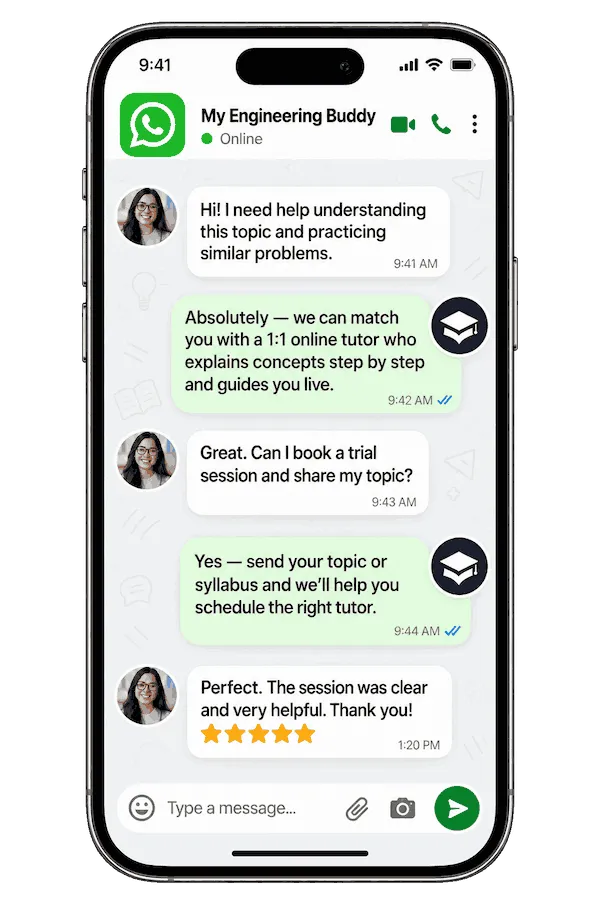
Unlike platforms where you fill out a form and wait, MEB responds in under a minute, 24/7. Tutor match takes under an hour. The $1 trial means you test before you commit. Everything runs over WhatsApp — no logins, no intake forms.
Study Plans (Pick One That Matches Your Goal)
Catch-up (1–3 weeks): students who have fallen behind on grammar or haven’t touched the literary commentary component — fast-track to the highest-priority exam content. Exam prep (4–8 weeks): structured revision through past papers, unseen translation practice, and full-text literary commentary across all set authors. Weekly support: ongoing sessions aligned to school term deadlines and internal assessment submission dates. The tutor builds the specific sequence after the diagnostic session in week one.
Pricing Guide
IB Classical Languages HL/SL tutoring runs $20–$40/hr for most SL and HL students. Tutors with graduate-level classical philology backgrounds or specialist IB examiner experience are available at rates up to $100/hr. Rate factors include level (HL vs SL), how close the exam date is, and tutor availability.
Availability is limited during the March–May IB exam preparation window — if your exams are within 8 weeks, don’t wait.
For students targeting Classics or Ancient History places at competitive universities, tutors with graduate research backgrounds in Latin or Ancient Greek literature are available at higher rates — share your specific university target and MEB will match the tier to your ambition.
Start with the $1 trial — 30 minutes, no registration, no commitment. WhatsApp MEB for a quick quote.
IB Classical Languages HL/SL is one of the smaller IB cohorts globally — which means past papers and examiner reports are limited. Students who work with a tutor who has seen the full assessment history have a clear edge in Paper 1 and Paper 2 preparation.
Source: IB subject guide and examiner report series, via My Engineering Buddy tutor review, 2022–2025.
FAQ
Is IB Classical Languages HL/SL hard?
Yes — it combines precise grammatical analysis, literary commentary, and timed unseen translation. HL adds greater depth on prescribed texts. Most students find the unseen component the steepest challenge because grammar gaps compound under time pressure.
How many sessions are needed?
Students with 8+ weeks typically need 12–18 sessions covering translation technique and literary commentary. Students 3–4 weeks from the exam usually focus on 6–10 intensive sessions targeting the highest-weight assessment components and their weakest construction types.
Can you help with practice exercises?
MEB tutoring is guided learning — you understand the work, then submit it yourself. The tutor explains constructions, models the approach, and checks your reasoning. See our Academic Integrity policy and Why MEB page for full details on what we help with and what we don’t.
Will the tutor match my exact syllabus or exam board?
Yes. IB Classical Languages has specific prescribed text lists and assessment criteria. MEB tutors are matched to your language choice (Latin or Ancient Greek), your level (HL or SL), and your current set texts — not assigned generically.
What happens in the first session?
The tutor runs a short diagnostic — a translation passage plus a review of a recent piece of written work. By the end of the first session, you have a clear picture of your grammar gaps, your strongest and weakest construction types, and a session plan for the next 4–6 weeks.
Is online tutoring as effective as in-person?
For IB Classical Languages, yes — the core work is text annotation and grammar explanation, which translates exactly to screen. The digital pen-pad replicates what a tutor does on paper, often more clearly, because colour-coding and layered annotation are faster on screen.
Can I get IB Classical Languages help at midnight or over a weekend?
MEB operates 24/7 via WhatsApp. Tutors span time zones from the US West Coast to the Gulf and Australia, so late-night and weekend sessions are available — not just 9–5 slots. Response time for a tutor match is typically under an hour.
What’s the difference between IB Latin HL/SL and IB Classical Languages HL/SL — are they the same?
IB Latin HL/SL is one option within IB Classical Languages HL/SL. The other is Ancient Greek. Both share the same assessment structure but differ in language, prescribed texts, and grammar demands. MEB covers both — specify your language when you WhatsApp.
Do you offer group IB Classical Languages sessions?
No. All MEB sessions are 1:1. IB Classical Languages grammar and translation work requires individual correction — a group format can’t diagnose your specific construction errors or adapt in real time to your translation decisions.
How do I find an IB Classical Languages tutor if my school doesn’t offer the subject?
MEB is fully online. Students who self-study IB Classical Languages or take it as an external candidate are a significant part of the cohort MEB supports. You don’t need a school offering — you need a syllabus and exam registration date.
What’s the difference between SL and HL in IB Classical Languages, and does it affect tutoring?
SL focuses on translation and a shorter prescribed text list. HL adds extended literary analysis and broader text coverage. MEB tutors cover both — the session plan and depth of literary commentary work are adjusted specifically to your level.
How do I get started?
Start with the $1 trial — 30 minutes of live 1:1 tutoring or one homework question fully explained. Three steps: WhatsApp MEB, get matched with a verified IB Classical Languages tutor, then begin your trial session. No forms, no waiting.
Trust & Quality at My Engineering Buddy
Every MEB tutor goes through a subject-specific screening process: credential verification, a live demo session reviewed against our quality criteria, and ongoing feedback checks after sessions. Tutors covering IB Classical Languages HL/SL hold relevant degrees in Classics, Ancient Languages, or Classical Philology and demonstrate familiarity with the IB assessment model — not just the subject in the abstract. Rated 4.8/5 across 40,000+ verified reviews on Google.
MEB tutoring is guided learning — you understand the work, then submit it yourself. For full details on what we help with and what we don’t, read our Academic Integrity policy and Why MEB.
MEB has been serving students across the US, UK, Canada, Australia, the Gulf, and Europe in 2,800+ subjects since 2008. The IB programme is one of our strongest areas — from IB History tutoring to IB Philosophy help, the humanities track across the IB Diploma is well covered. For students navigating the IB programme more broadly, our IB tutoring overview covers what MEB offers across the full Diploma. Learn more about how our sessions are structured at our tutoring methodology page.
A common pattern our tutors observe is that IB Classical Languages students who score a 5 or 6 instead of a 7 are usually losing marks in one specific place — often the literary commentary. One or two targeted sessions on commentary structure and stylistic analysis can close that gap faster than weeks of general revision.
Explore Related Subjects
Students studying IB Classical Languages HL/SL often also need support in:
- IB Language A: Literature HL/SL
- IB Language A: Language and Literature HL/SL
- IB World Religions HL/SL
- IB Social and Cultural Anthropology HL/SL
- IB Theory of Knowledge
- IB Extended Essay
- IB Literature and Performance HL/SL
For students who reach the literary commentary component of IB Classical Languages HL/SL without a clear method, Paper 2 becomes the biggest single source of lost marks. A structured approach — claim, textual reference in the original language, stylistic comment — is teachable in a few sessions.
Source: My Engineering Buddy tutor review, 2022–2025.
Next Steps
Ready to get started? Here’s what to do:
- Share your language (Latin or Ancient Greek), level (HL or SL), current set texts, and exam date
- Share your availability and time zone — MEB covers US, UK, Canada, Australia, and Gulf
- MEB matches you with a verified IB Classical Languages tutor — usually within the hour
- Your first session begins with a diagnostic so every minute is used well
Before your first session, have ready:
- Your IB Classical Languages syllabus (Latin or Ancient Greek), your set texts, and your HL or SL confirmation
- A recent translation attempt or past paper question you struggled with
- Your exam date or internal assessment deadline
The tutor handles the rest. Visit www.myengineeringbuddy.com for more on how MEB works.
WhatsApp to get started or email [email protected].
Reviewed by Subject Expert
This page has been carefully reviewed and validated by our subject expert to ensure accuracy and relevance.




