




~1 min
Average Reply Time
~1 hour
To Be Matched With A Tutor
1 Trial
75% Find Their Tutor On The 1st Trial
$1
Your First 30 Minutes
Hire The Best Morphology Tutor
Top Tutors, Top Grades. Without The Stress!
Related Subjects
Students who fail Morphology exams rarely misread the specimen — they misread what the examiner wants from a structural description.
Morphology Tutor Online
Morphology is the branch of biology that studies the form, structure, and external features of organisms — from cell shape to whole-body architecture. A strong Morphology tutor helps you read specimens accurately, apply structural terminology precisely, and connect physical form to function across plant, animal, and microbial systems.
MEB offers 1:1 online tutoring and homework help in 2,800+ advanced subjects, including Morphology and the wider field of biology tutoring. Whether you’re working through gross morphological descriptions, histological sections, or comparative anatomy at undergraduate or postgraduate level, a Morphology tutor near me matched by MEB will work through your exact course material — not a generic syllabus. You get a tutor who knows which structures your examiner expects you to name, which diagrams lose marks when unlabelled, and which conceptual links your assignments demand.
Sessions run over Google Meet with a digital pen-pad, so diagrams and annotations happen in real time. The $1 trial gets you started with zero commitment.
- 1:1 online sessions tailored to your course and institutional syllabus
- Expert-verified tutors with subject-specific knowledge in biological morphology
- Flexible time zones — US, UK, Canada, Australia, Gulf
- Structured learning plan built after a diagnostic session
- Ethical homework and assignment guidance — you understand before you submit
52,000+ students across the US, UK, Canada, Australia, and the Gulf have used MEB since 2008 — including students in Biology subjects like Morphology, Anatomy, and Developmental Biology.
Source: My Engineering Buddy, 2008–2025.
How Much Does a Morphology Tutor Cost?
Most Morphology tutoring sessions run at $20–$40/hr. Graduate-level or highly specialised topics — such as ultrastructural analysis or phylogenetic morphology — can reach up to $100/hr depending on tutor expertise. The $1 trial gives you 30 minutes of live 1:1 tutoring or one homework question explained in full before you commit to a rate.
| Level / Need | Typical Rate | What’s Included |
|---|---|---|
| Undergraduate (most levels) | $20–$35/hr | 1:1 sessions, homework guidance, diagram annotation |
| Advanced / Postgraduate | $35–$70/hr | Expert tutor, specialist depth, research support |
| $1 Trial | $1 flat | 30 min live session or one full homework question |
Tutor availability tightens around semester submission deadlines and lab practical assessments — if you’re within four weeks of a deadline, book early.
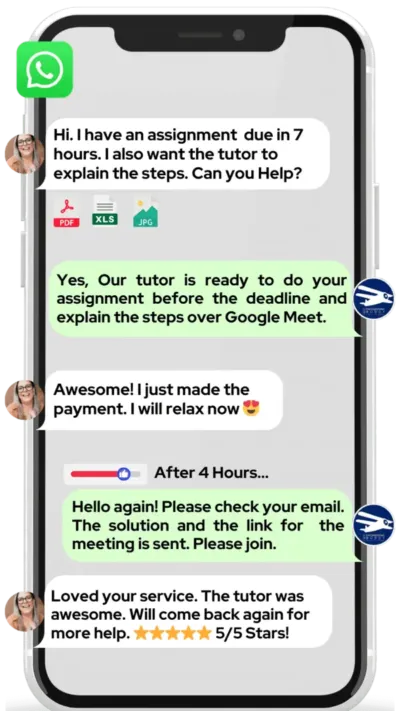
WhatsApp MEB for a quick quote — average response time under 1 minute.
Who This Morphology Tutoring Is For
Morphology sits in a frustrating gap: it feels visual and straightforward until the exam asks you to compare adaptive structures across phyla or justify your histological interpretation with functional evidence. Most students hit that wall later than they expect.
- Undergraduate biology students struggling to connect structural features to evolutionary or functional explanations
- Students retaking after a failed first attempt in a comparative anatomy or morphology module
- Students with a university conditional offer depending on their biology grade this semester
- Postgraduate students writing morphological descriptions for thesis chapters or species identification keys
- Students preparing lab practicals involving specimen dissection, microscopy, or external feature classification
- Parents watching a child’s confidence drop alongside their biology grades
MEB has worked with students at institutions including the University of Melbourne, University of Edinburgh, University of Toronto, McGill University, University of Amsterdam, and Arizona State University — across both first-year biology surveys and upper-division morphology modules.
The $1 trial is the right starting point if you’re not sure how much support you need.
1:1 Tutoring vs Self-Study vs AI vs YouTube vs Online Courses
Self-study works if you’re disciplined, but morphology requires feedback on your specimen descriptions — a textbook can’t tell you your labelling is ambiguous. AI tools explain concepts quickly but can’t look at your diagram and tell you which structure you’ve misidentified. YouTube is useful for overview videos on plant vs animal body plans, but stops short when you’re stuck on a specific histological section from your own course. Online courses follow a fixed sequence with no adjustment for your exam board or lab assessment format. 1:1 tutoring with MEB is live, calibrated to your exact Morphology course, and corrects errors in your structural reasoning the moment they appear — not after a failed submission.
Outcomes: What You’ll Be Able To Do in Morphology
After working with a Morphology tutor through MEB, students consistently report being able to analyze unfamiliar specimens using systematic morphological criteria, apply accurate anatomical terminology to both gross and microscopic structures, explain the functional significance of specific adaptive features in plants and animals, write structured comparative descriptions that meet the evidence standards most university examiners expect, and present phylogenetic arguments grounded in shared derived morphological characters. These aren’t generic outcomes — they map directly to the written practicals, essay questions, and lab assessments that determine final grades in Morphology modules at institutions across the US, UK, Canada, and Australia.
Supporting a student through Morphology? MEB works directly with parents to set up sessions, track progress, and keep coursework on schedule. WhatsApp MEB — average response time is under a minute, 24/7.
Based on feedback from 40,000+ sessions collected by MEB from 2022 to 2025, 58% of students improved by one full grade after approximately 20 hours of 1:1 tutoring in subjects like Morphology. A further 23% achieved at least a half-grade improvement.
Source: MEB session feedback data, 2022–2025.
What We Cover in Morphology (Syllabus / Topics)

Plant Morphology
- Root, stem, and leaf architecture — internal and external features
- Flower morphology: symmetry, perianth structure, inflorescence types
- Fruit and seed morphology — dispersal adaptations
- Meristematic zones and growth form variation
- Comparison of monocot vs dicot structural plans
- Adaptive morphology in xerophytes, hydrophytes, and epiphytes
Core texts used: Raven, Evert & Eichhorn Biology of Plants; Mauseth Botany: An Introduction to Plant Biology. Students needing broader support in this area also use our plant biology tutoring and botany help.
Animal Morphology and Comparative Anatomy
- External body plan features across major invertebrate and vertebrate phyla
- Homologous vs analogous structures — identifying and explaining convergent form
- Integument, appendage, and sensory organ morphology
- Skeletal morphology: axial and appendicular systems in vertebrates
- Adaptive radiation and morphological divergence case studies
- Functional morphology: form-function relationships in locomotion and feeding
Core texts used: Hickman, Roberts & Keen Animal Diversity; Kardong Vertebrates: Comparative Anatomy, Function, Evolution. Students tackling structural questions in this area also benefit from our anatomy tutoring and zoology homework help.
Cellular and Micro-Morphology
- Cell shape, organelle distribution, and structural specialisation
- Tissue-level morphology: epithelia, connective, muscle, and nervous tissue
- Histological interpretation — light and electron microscopy images
- Microbial morphology: bacterial, fungal, and protist cell forms
- Structural basis of cell function: how morphology predicts physiological role
Core texts used: Alberts et al. Molecular Biology of the Cell; Ross & Pawlina Histology: A Text and Atlas. Students working on microscopy and tissue identification also use our cell biology tutoring and microbiology help.
At MEB, we’ve found that Morphology students spend too much session time re-reading descriptions and too little time practising how to write them from scratch under timed conditions. The tutors who make the biggest difference are the ones who put a blank diagram in front of you in the first 20 minutes and watch what you do.
What a Typical Morphology Session Looks Like
The tutor opens by checking the previous topic — usually a specific structure group like vertebrate limb homologies or angiosperm floral diagrams — and asks the student to explain one example without notes. From there, the session moves to the current difficulty: the student shares their screen or a photo of the specimen diagram, the tutor annotates directly using a digital pen-pad, and they work through the identification and description together. The tutor names which terminology the examiner expects and where students commonly use imprecise language that loses marks. The student then attempts a fresh description independently, and the tutor corrects reasoning in real time. The session closes with a specific practice task — two unlabelled diagrams to annotate before the next session — and the next topic is logged.
How MEB Tutors Help You with Morphology (The Learning Loop)
Diagnose: In the first session, the tutor works through a short set of specimen questions with the student to locate the exact gap — whether that’s terminology recall, functional reasoning, diagram accuracy, or exam technique in written descriptions.
Explain: The tutor works through live examples using a digital pen-pad or iPad and Apple Pencil on Google Meet. Every structural feature is named, drawn, and connected to its functional or evolutionary context — not just memorised.
Practice: The student attempts the next example independently while the tutor watches. In Morphology, this usually means labelling a diagram, writing a comparative description, or classifying a specimen — with no prompting.
Feedback: The tutor goes through the student’s attempt step by step, naming exactly which marks would be lost and why. For Morphology, common corrections include confusing homologous with analogous structures, using colloquial rather than technical terms, and omitting functional justification from structural descriptions.
Plan: Next steps are set at the end of every session — which structure groups to review, which past paper questions to attempt, and what to bring to the next session. Progress is tracked across sessions.
All sessions run over Google Meet. The tutor uses a digital pen-pad or iPad with Apple Pencil to annotate diagrams in real time. Before your first session, have your course outline or module guide ready, along with any past papers or assignments you’ve struggled with. The first session covers both the diagnostic and an immediate first topic so no time is wasted. Start with the $1 trial — 30 minutes of live tutoring that also serves as your first diagnostic.
Students consistently tell us that the moment they stop memorising morphological descriptions and start understanding why a structure looks the way it does, the whole subject gets easier. Functional reasoning is faster to learn than rote recall — and it’s what examiners actually reward.
Tutor Match Criteria (How We Pick Your Tutor)
Match quality matters more than speed. Here is what MEB checks before assigning a Morphology tutor.
Subject depth: The tutor must have demonstrated knowledge at your specific level — first-year survey biology, upper-division comparative morphology, or postgraduate research — not just general biology.
Tools: Every tutor uses Google Meet plus a digital pen-pad or iPad with Apple Pencil. Morphology requires real-time diagram annotation; tutors without this setup are not matched.
Time zone: Matched to your region — US, UK, Gulf, Canada, Australia — so session times are practical, not inconvenient.
Goals: Tutor briefed on whether you need exam preparation, homework and assignment support, conceptual depth for lab practicals, or research-level description writing.
Unlike platforms where you fill out a form and wait, MEB responds in under a minute, 24/7. Tutor match takes under an hour. The $1 trial means you test before you commit. Everything runs over WhatsApp — no logins, no intake forms.
Study Plans (Pick One That Matches Your Goal)
If you’re behind with a lab practical or written exam approaching, a 1–3 week catch-up plan targets the highest-yield structure groups first. For students with a specific exam date 4–8 weeks out, the tutor builds a structured revision sequence that covers all testable morphological categories with past paper practice built in. Ongoing weekly support aligns sessions to your semester timetable and coursework submission schedule. The tutor maps the specific sequence after the first diagnostic — nothing is fixed before they see where you actually are.
Pricing Guide
Morphology tutoring starts at $20–$40/hr for most undergraduate levels. Postgraduate, research-support, and highly specialised topics — such as ultrastructural morphology or comparative phylogenetics — can run up to $100/hr. Rate depends on your level, the complexity of the topic, your timeline, and tutor availability.
Peak demand hits around semester end and lab practical submission periods — availability shrinks fast. Book early if you’re within six weeks of a deadline.
For students targeting competitive postgraduate programmes or research positions at institutions like Oxford, Cambridge, or leading US R1 universities, tutors with active research backgrounds in biological morphology are available at higher rates — share your specific goal and MEB will match the tier to your ambition.
Start with the $1 trial — 30 minutes, no registration, no commitment. WhatsApp MEB for a quick quote.
MEB has been running since 2008. That’s 17 years of matching students to the right tutor for the right subject — not an algorithm, not a marketplace, a person who reads your message and finds you a match within the hour.
Source: My Engineering Buddy, 2008–2025.
FAQ
Is Morphology hard?
It’s less about difficulty and more about precision. Students who struggle usually have gaps in anatomical terminology or can’t yet connect structure to function in written answers. A tutor fixes both faster than self-study because the errors get named immediately.
How many sessions are needed?
Most students working on a specific exam or assignment gap need 4–8 sessions. Students building from a weak foundation typically need 10–15. The diagnostic in the first session gives a realistic estimate — the $1 trial is where that starts.
Can you help with homework and assignments?
Yes — MEB tutors explain the concepts and methods behind your assignments so you can complete the work yourself. MEB tutoring is guided learning — you understand the work, then submit it yourself. For full details on what we help with and what we don’t, read our Academic Integrity policy and Why MEB.
Will the tutor match my exact syllabus or exam board?
Yes. Before matching, MEB asks for your institution, course code, and module guide where possible. Morphology is taught differently at different universities — the tutor is briefed on your specific materials, not a generic textbook outline.
What happens in the first session?
The tutor runs a short diagnostic — usually a few specimen questions or a diagram labelling task — to find where your understanding breaks down. From there, the session moves immediately into targeted work. No introductory filler.
Is online tutoring as effective as in-person?
For Morphology specifically, the digital pen-pad replicates what a tutor does at a whiteboard — annotating diagrams, correcting labels, drawing structural comparisons in real time. Most students find the screen-share format easier to review after sessions than handwritten notes.
Can I get Morphology help at midnight?
Yes. MEB operates across US, UK, Gulf, and Australian time zones, and WhatsApp messages are picked up around the clock. Sessions can often be arranged within a few hours of contact, even late at night, depending on tutor availability.
What if I don’t like my assigned tutor?
Tell MEB via WhatsApp and a new tutor is matched within hours. There’s no form, no complaint process, no waiting period. The $1 trial is specifically designed to let you test the match before paying standard rates.
What’s the difference between Morphology and Anatomy?
Anatomy focuses primarily on the internal structures of a specific organism — usually human or veterinary. Morphology is broader: it covers external and internal form across all organisms, with emphasis on comparative and evolutionary interpretation. The two overlap significantly at the tissue and organ level. Students often benefit from support in both — see our anatomy tutoring alongside Morphology sessions.
Do Morphology tutors help with specimen identification keys and taxonomic descriptions?
Yes. Writing dichotomous keys and formal taxonomic descriptions using morphological characters is a specific skill that appears in upper-division biology and museum studies courses. MEB tutors who work in systematics and evolutionary biology cover this directly.
How do I get started?
Message MEB on WhatsApp with your subject, level, and what you’re stuck on. MEB matches you with a verified Morphology tutor — usually within the hour. The $1 trial starts you off: 30 minutes of live tutoring or one full homework question explained step by step. No registration, no commitment.
Try your first session for $1 — 30 minutes of live 1:1 tutoring or one homework question explained in full. No registration. No commitment. WhatsApp MEB now and get matched within the hour.
Trust & Quality at My Engineering Buddy
Every MEB tutor goes through a screening process before they work with students — subject knowledge is tested, a live demo session is evaluated, and ongoing student feedback is reviewed after every session block. Tutors hold degrees and, at postgraduate level, research experience in their subject area. For Morphology, subject-specific vetting includes the ability to annotate diagrams accurately, explain functional reasoning, and match content to specific institutional syllabi. Rated 4.8/5 across 40,000+ verified reviews on Google.
MEB tutoring is guided learning — you understand the work, then submit it yourself. For full details on what we help with and what we don’t, read our Academic Integrity policy and Why MEB. MEB’s tutoring methodology is built around diagnosis first — every session plan follows from what the tutor actually finds in your work, not a generic curriculum map.
MEB has served 52,000+ students across the US, UK, Canada, Australia, the Gulf, and Europe since 2008 — across 2,800+ subjects. In the Biology category, that includes students working across Morphology, genetics help, physiology tutoring, ecology homework help, and molecular biology tutoring.
Explore Related Subjects
Students studying Morphology often also need support in:
- Anatomy
- Cell Biology
- Evolutionary Biology
- Systematics
- Developmental Biology
- Plant Biology
- Zoology
- Microbiology
Next Steps
Here’s what to do now:
- Share your course level, institution, and the specific Morphology topic or assignment giving you trouble
- Share your availability and time zone — sessions are matched accordingly
- MEB matches you with a verified tutor, usually within 24 hours (often within the hour)
Before your first session, have ready: your module guide or course outline, a recent lab report, diagram, or homework question you struggled with, and your exam or submission deadline. The tutor handles the rest.
Visit www.myengineeringbuddy.com for more on how MEB works, or go straight to WhatsApp.
WhatsApp to get started or email [email protected].
A common pattern our tutors observe is that Morphology students come in thinking they need more content — more diagrams memorised, more terms listed. What they actually need is a way to reason through an unfamiliar specimen systematically. That’s a transferable skill, and it’s what the tutor builds from session one.
52,000+ Happy Students From Various Universities



Reviewed by Subject Expert
This page has been carefully reviewed and validated by our subject expert to ensure accuracy and relevance.

