




~1 min
Average Reply Time
~1 hour
To Be Matched With A Tutor
1 Trial
75% Find Their Tutor On The 1st Trial
$1
Your First 30 Minutes
Hire The Best Advanced Concrete Technology Tutor
Top Tutors, Top Grades. Without The Stress!




Related Subjects
Concrete mix design failing at the microstructure level. W/C ratio wrong. Admixture dosage off. Six weeks to submission.
Advanced Concrete Technology Tutor Online
Advanced Concrete Technology is a graduate-level civil engineering subject covering concrete microstructure, mix design, durability, admixtures, and special concrete types, equipping students to design and analyse high-performance concrete systems for modern construction.
If you’re searching for an Advanced Concrete Technology tutor near me, MEB connects you with verified specialist tutors for 1:1 online sessions across the US, UK, Canada, Australia, and the Gulf. As part of our broader civil engineering tutoring platform, Advanced Concrete Technology is one of the most technically demanding subjects we cover — and one where the right tutor makes a measurable difference.
- 1:1 online sessions tailored to your university course or syllabus
- Expert-verified tutors with postgraduate-level concrete technology knowledge
- Flexible time zones — US, UK, Canada, Australia, Gulf
- Structured learning plan built after a diagnostic session
- Ethical homework and assignment guidance — you understand the work before you submit
52,000+ students across the US, UK, Canada, Australia, and the Gulf have used MEB since 2008 — including students in Civil Engineering subjects like Advanced Concrete Technology, Reinforced Cement Concrete (RCC), and Building Materials.
Source: My Engineering Buddy, 2008–2025.
How Much Does an Advanced Concrete Technology Tutor Cost?
Most Advanced Concrete Technology sessions run $20–$40/hr depending on level and tutor specialisation. Graduate-level and research-track modules can reach $60–$100/hr. Start with the $1 trial — 30 minutes of live 1:1 tutoring or one full assignment question explained.
| Level / Need | Typical Rate | What’s Included |
|---|---|---|
| Undergraduate (most levels) | $20–$40/hr | 1:1 sessions, homework guidance |
| Masters / Graduate Specialist | $40–$70/hr | Expert tutor, research-track depth |
| $1 Trial | $1 flat | 30 min live session or 1 homework question |
Tutor availability tightens during semester end-weeks and thesis submission windows. Book early if your deadline is within four weeks.
WhatsApp MEB for a quick quote — average response time under 1 minute.
Who This Advanced Concrete Technology Tutoring Is For
This isn’t for students who just need a quick formula reminder. Advanced Concrete Technology draws on chemistry, materials science, and structural behaviour simultaneously — and the gaps compound fast if left unaddressed.
- Undergraduate civil engineering students taking concrete technology as a third- or fourth-year module
- Masters students tackling mix design projects, durability modelling, or special concretes for the first time
- PhD candidates needing to strengthen their materials characterisation or microstructural analysis arguments
- Students retaking after a failed first attempt at a concrete materials or construction materials exam
- Students with a coursework or project submission deadline approaching with significant gaps still open
- Students at universities including MIT, Georgia Tech, TU Delft, University of Melbourne, UCL, and ETH Zurich who need subject-specific rather than generic engineering support
At MEB, we’ve found that students who struggle with Advanced Concrete Technology usually have one of two problems: they can memorise mix design steps but can’t explain why each parameter matters, or they understand the chemistry but freeze when a question asks them to apply it to a real structure. Both are fixable — but they need different approaches from a tutor.
1:1 Tutoring vs Self-Study vs AI vs YouTube vs Online Courses
Self-study works if your textbook gaps are small — but Advanced Concrete Technology problems on admixture interactions or pore structure rarely have clean answers in the index. AI tools generate explanations fast but can’t watch you draw a pore size distribution curve and tell you where your reasoning broke. YouTube covers fresh concrete workability well; it stops when you need to debug a specific mix design calculation. Online courses move at a fixed pace with no room for your exact exam board’s preferred notation. With a 1:1 Advanced Concrete Technology tutor online, the session adapts to your specific assignment, your university’s marking rubric, and the exact topic where your marks are dropping.
Outcomes: What You’ll Be Able To Do in Advanced Concrete Technology
After focused 1:1 sessions, you’ll be able to apply water-cement ratio theory to predict compressive strength outcomes for a given mix, analyse the role of pozzolanic admixtures like fly ash and silica fume in reducing permeability, model shrinkage and creep behaviour under sustained load, explain chloride ingress mechanisms and specify appropriate cover depths for marine environments, and present a complete mix design report with rational justification for every parameter. These aren’t vague skills — they’re the exact capabilities examiners test and supervisors expect.
Based on feedback from 40,000+ sessions collected by MEB from 2022 to 2025, 58% of students improved by one full grade after approximately 20 hours of 1:1 tutoring in subjects like Advanced Concrete Technology. A further 23% achieved at least a half-grade improvement.
Source: MEB session feedback data, 2022–2025.
Try your first session for $1 — 30 minutes of live 1:1 tutoring or one homework question explained in full. No registration. No commitment. WhatsApp MEB now and get matched within the hour.
What We Cover in Advanced Concrete Technology (Syllabus / Topics)

Track 1: Concrete Microstructure and Mix Design
- Hydration of Portland cement — C-S-H gel formation and portlandite
- Water-cement ratio and its effect on porosity and strength
- Aggregate grading, particle packing, and void ratio optimisation
- Chemical admixtures — plasticisers, superplasticisers, retarders, accelerators
- Mineral admixtures — fly ash, GGBS, silica fume, metakaolin
- Absolute volume method and ACI 211 mix design procedure
- Fresh concrete properties — workability, slump, flow table, VeBe time
Core references: Neville, A.M. Properties of Concrete (5th ed.); Mehta, P.K. & Monteiro, P.J.M. Concrete: Microstructure, Properties, and Materials (4th ed.).
Track 2: Durability, Transport, and Deterioration Mechanisms
- Permeability, diffusivity, and sorptivity as transport parameters
- Carbonation depth modelling and pH reduction in the cover zone
- Chloride ingress, critical threshold concentrations, and corrosion initiation
- Alkali-silica reaction (ASR) — mechanisms, diagnosis, and mitigation
- Sulphate attack, delayed ettringite formation, and thaumasite
- Freeze-thaw cycles, air entrainment, and scaling resistance
- Service life modelling — fib Model Code durability design approach
Core references: Bertolini, L. et al. Corrosion of Steel in Concrete (2nd ed.); Alexander, M. & Mindess, S. Aggregates in Concrete.
Track 3: Special Concretes and Advanced Applications
- High-performance concrete (HPC) and ultra-high-performance concrete (UHPC)
- Self-compacting concrete (SCC) — Okamura mix design and flow criteria
- Fibre-reinforced concrete — steel, polypropylene, and glass fibres
- Lightweight and heavyweight aggregate concretes
- Sprayed concrete (shotcrete) — dry and wet process, rebound loss
- Geopolymer concrete — alkali activation, curing conditions, applications
Core references: Aïtcin, P.-C. High Performance Concrete; fib Bulletin 65 Model Code 2010. See also the composite materials and structures tutoring page for overlap in fibre-reinforced systems.
What a Typical Advanced Concrete Technology Session Looks Like
The tutor opens by reviewing the previous topic — often the w/c ratio calculation or the admixture interaction question left from the last session. Then you move into the live problem: maybe it’s an ACI mix design where the unit weight assumption is throwing off your batch quantities, or a durability question asking you to justify cover depth for a coastal bridge deck exposed to XS3 conditions. The tutor works through it on a digital pen-pad, showing every calculation step and the reasoning behind parameter choices. You replicate the method on your own problem with the tutor watching. Errors get caught in real time — not after you’ve submitted. The session closes with a specific practice problem set and the next topic flagged: often shrinkage or creep modelling if mix design is now solid.
How MEB Tutors Help You with Advanced Concrete Technology (The Learning Loop)
Diagnose: In the first session, the tutor identifies exactly where your understanding breaks down. For most Advanced Concrete Technology students this is either the microstructure-to-property link (they can calculate, but can’t explain why a lower w/c ratio reduces permeability at the pore level) or the durability design section where multiple deterioration mechanisms interact.
Explain: The tutor works through live examples using a digital pen-pad — drawing pore size distributions, sketching chloride profiles, annotating mix design tables. You see the reasoning, not just the answer.
Practice: You attempt the next problem with the tutor present. This is where most sessions produce the clearest gains — the tutor sees your working method, not just your final number.
Feedback: Every error gets a step-by-step explanation of where the logic went wrong and why that specific mistake costs marks in an exam or project report context. No vague corrections.
Plan: At the end of each session, the tutor logs the topics cleared and the next sequence — mix design first, then durability, then special concretes if time allows before your submission date.
Sessions run on Google Meet. The tutor uses a digital pen-pad or iPad with Apple Pencil for worked calculations. Before your first session, share your course outline or assignment brief and any recent work you’re stuck on. That first session doubles as your diagnostic. Start with the $1 trial — 30 minutes of live tutoring that also serves as your first diagnostic. Whether you need a quick catch-up before an exam, structured revision over 4–8 weeks, or ongoing weekly support through the semester, the tutor maps the session plan after that first hour.
Students consistently tell us that Advanced Concrete Technology clicked for them only when someone sat alongside them through a full mix design calculation — not when they re-read the textbook chapter for the third time.
Source: My Engineering Buddy, student session feedback.
Tutor Match Criteria (How We Pick Your Tutor)
Not every civil engineering tutor is the right fit for Advanced Concrete Technology. Here’s what MEB checks before making a match.
Subject depth: Tutors must have postgraduate-level knowledge of concrete technology — mix design, durability modelling, and microstructural analysis. General structural engineering background alone is not sufficient for this subject.
Tools: Every tutor uses Google Meet with a digital pen-pad or iPad and Apple Pencil — essential for working through calculation-heavy concrete problems in real time.
Time zone: Matched to your region — US East/West, UK/Europe, Gulf, Canada, or Australia — so sessions run at hours that don’t compromise your study schedule.
Goals: Whether you need exam preparation, assignment help, conceptual depth for research, or structured weekly support, the tutor match reflects your stated priority.
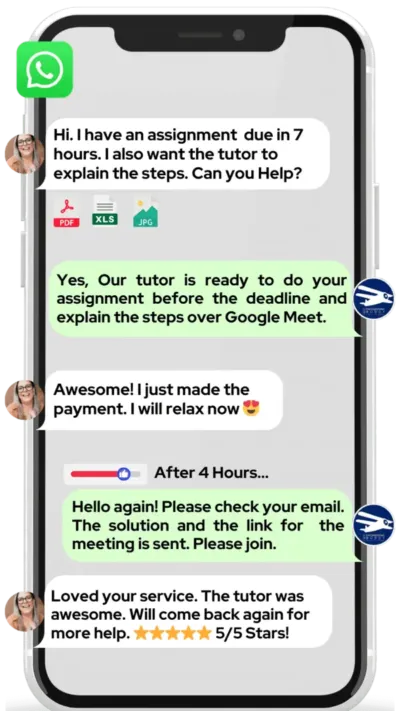
Unlike platforms where you fill out a form and wait, MEB responds in under a minute, 24/7. Tutor match takes under an hour. The $1 trial means you test before you commit. Everything runs over WhatsApp — no logins, no intake forms.
A common pattern our tutors observe is that Advanced Concrete Technology students arrive with strong calculation skills but weak conceptual links. They can run the ACI 211 procedure from memory but can’t explain why silica fume reduces the Ca(OH)2 content — and that’s the exact gap an examiner probes. We fix the concept first, then the calculation follows naturally.
Pricing Guide
Advanced Concrete Technology tutoring starts at $20/hr for undergraduate-level sessions. Masters and research-track modules typically run $40–$70/hr. Tutors with direct professional or research backgrounds in high-performance concrete, durability engineering, or materials characterisation are available at higher rates — share your specific goal and MEB will match the tier to your needs.
Rate factors: course level, topic complexity (mix design vs microstructural analysis vs special concretes), timeline urgency, and tutor availability. Availability tightens in the four weeks before semester-end submission windows.
For students targeting programmes at research-intensive universities or working toward chartered engineer status with a materials specialism, tutors with professional consultancy or laboratory research backgrounds are available — tell MEB your goal upfront.
Start with the $1 trial — 30 minutes, no registration, no commitment. WhatsApp MEB for a quick quote.
FAQ
Is Advanced Concrete Technology hard?
Yes, by most students’ accounts. It combines cement chemistry, materials science, and structural performance in one subject. The mix design procedures are rule-based and learnable; the durability and deterioration sections require conceptual understanding that can’t be memorised. Most students need 8–15 sessions to feel confident across the full syllabus.
How many sessions do I need?
Students with one specific assignment gap often close it in 2–4 sessions. Students covering the full module — mix design through special concretes — typically need 10–20 hours across the semester. The tutor gives a realistic estimate after the first diagnostic session.
Can you help with homework and assignments?
MEB tutoring is guided learning — you understand the work, then submit it yourself. The tutor explains the method, works through similar examples, and checks your reasoning. See our Academic Integrity policy and Why MEB page for full details on what we help with and what we don’t.
Will the tutor match my exact syllabus or exam board?
Yes. Share your university’s course outline or module handbook before the first session. MEB tutors work from your specific syllabus — ACI standards, EN 206, fib Model Code, or university-specific content — not a generic concrete technology curriculum.
What happens in the first session?
The tutor reviews your course outline and any recent work or past paper attempt you share. They identify your specific gaps and prioritise topics based on your deadline. You leave the first session with a clear plan and at least one topic fully worked through.
Is online tutoring as effective as in-person for Advanced Concrete Technology?
For calculation-heavy subjects like this one, yes. The digital pen-pad replicates whiteboard working exactly. Sharing your assignment PDF, past paper, or design table on screen is actually faster than passing paper. Most students prefer the flexibility of scheduling after the first session.
What’s the difference between Advanced Concrete Technology and a standard Concrete Technology module?
Standard modules cover basic mix design, curing, and fresh concrete properties. Advanced Concrete Technology adds microstructural analysis, durability design using transport parameters, service life modelling, and special concrete types like UHPC, SCC, and geopolymers. It’s typically a final-year undergraduate or postgraduate module with a research or design project component.
Do I need to know cement chemistry before starting?
Basic chemistry at first-year undergraduate level helps, but most tutors build from C3S hydration and C-S-H formation at the start of the first session. You don’t need a chemistry degree. What matters more is comfort with ratios, proportions, and reading technical data sheets — which the tutor will also cover if needed.
Can you help with mix design projects that use specific software like EMMA or mix design spreadsheets?
Yes. Tutors familiar with mix design tools and spreadsheet-based calculations are available. Share the tool or template you’re using before the session and the tutor will work within your university’s required format rather than a generic approach.
Can I get Advanced Concrete Technology help at short notice — even late at night?
Yes. MEB operates 24/7 across time zones. WhatsApp MEB any time — average response is under a minute. Tutors are matched within the hour for urgent sessions. Submission deadlines don’t keep office hours, and neither does MEB.
How do I get started?
Start with the $1 trial: 30 minutes of live tutoring or one assignment question explained in full. Three steps: WhatsApp MEB → get matched with a verified Advanced Concrete Technology tutor within the hour → start your trial session. No forms, no waiting.
Do you offer group Advanced Concrete Technology sessions?
MEB specialises in 1:1 sessions. Group formats are available on request if two or three students share the same course and want to split session costs — contact MEB via WhatsApp to discuss availability and whether a shared session suits your goals.
Trust & Quality at My Engineering Buddy
Every MEB tutor goes through subject-specific vetting — not just a general engineering check. For Advanced Concrete Technology, that means verifying postgraduate-level knowledge of concrete microstructure, mix design standards (ACI 211, EN 206, fib), and durability modelling. Tutors complete a live demo evaluation before being accepted. Ongoing session feedback is reviewed, and tutors with consistently lower ratings are removed. Rated 4.8/5 across 40,000+ verified reviews on Google. Get structural engineering tutoring and concrete-specialist support from the same platform — vetted to the same standard.
MEB tutoring is guided learning — you understand the work, then submit it yourself. For full details on what we help with and what we don’t, read our Academic Integrity policy and Why MEB.
MEB has served 52,000+ students across the US, UK, Canada, Australia, the Gulf, and Europe since 2008 — covering 2,800+ subjects. Within Civil Engineering, that includes Advanced Concrete Technology alongside subjects like foundation design engineering tutoring, geotechnical engineering help, and structural analysis tutoring. The subject knowledge runs deep — not surface-level. See our tutoring methodology for how sessions are structured and quality-controlled.
Students consistently tell us that what they remember most from their MEB Advanced Concrete Technology sessions isn’t the formula — it’s the moment the tutor explained why a 0.45 w/c ratio produces a fundamentally different pore structure than 0.55. That conceptual shift is what changes exam performance.
Explore Related Subjects
Students studying Advanced Concrete Technology often also need support in:
- Steel Structures
- Fracture Mechanics
- Masonry Structures
- Structural Dynamics
- Blast Resistant Design
- Timber Structures
- Earthquake Engineering
Next Steps
Before your first session, have ready: your exam board and syllabus (or course outline), a recent past paper attempt or assignment you struggled with, and your exam or deadline date. The tutor handles the rest.
- Share your course module, hardest topic, and current timeline
- Share your availability and time zone
- MEB matches you with a verified Advanced Concrete Technology tutor — usually within an hour
The first session starts with a diagnostic so every minute is used well. Visit www.myengineeringbuddy.com for more on how MEB works.
WhatsApp to get started or email [email protected].
52,000+ Happy Students From Various Universities





Reviewed by Subject Expert
This page has been carefully reviewed and validated by our subject expert to ensure accuracy and relevance.
