




~1 min
Average Reply Time
~1 hour
To Be Matched With A Tutor
1 Trial
75% Find Their Tutor On The 1st Trial
$1
Your First 30 Minutes
Hire The Best Biomaterials Tutor
Top Tutors, Top Grades. Without The Stress!


Related Subjects
Scaffolds, surface chemistry, cytotoxicity assays — and you’re still unclear on biocompatibility? That’s exactly where students lose marks.
Biomaterials Tutor Online
Biomaterials is the study of natural and synthetic materials designed to interact with biological systems — covering polymer chemistry, surface modification, host response, and clinical translation. A Biomaterials tutor online helps students from undergraduate through PhD level apply these principles to real device and tissue engineering problems.
MEB connects you with a verified Biomaterials tutor near me — or, more precisely, a specialist who meets your exact course level, whether that’s a second-year undergraduate module, a graduate seminar, or dissertation support. Sessions run live over Google Meet with a digital pen-pad, so worked problems on scaffold design or degradation kinetics look exactly as they would on a whiteboard. One well-structured session can clear a week of confusion on biocompatibility testing or host immune response.
- 1:1 online sessions tailored to your course syllabus and level
- Verified tutors with postgraduate subject-specific knowledge in biomaterials science
- Flexible time zones — US, UK, Canada, Australia, Gulf, Europe
- Structured learning plan built after a first diagnostic session
- Ethical homework and assignment guidance — you understand the work, then submit it yourself
52,000+ students across the US, UK, Canada, Australia, and the Gulf have used MEB since 2008 — across 2,800+ subjects, from AP Calculus to A Level Music Technology to Data Science.
Source: My Engineering Buddy, 2008–2025.
How Much Does a Biomaterials Tutor Cost?
Most Biomaterials tutoring sessions run $20–$40/hr at undergraduate level. Graduate and specialist topics — think nanocomposite scaffold design or regulatory pathways for Class III devices — sit higher, up to $100/hr. The $1 trial gives you 30 minutes of live tutoring or a full explanation of one homework question before you commit to anything further.
| Level / Need | Typical Rate | What’s Included |
|---|---|---|
| Undergraduate (most courses) | $20–$35/hr | 1:1 sessions, homework guidance, past paper review |
| Graduate / Specialist | $40–$100/hr | Expert tutor, thesis-level depth, niche topic coverage |
| $1 Trial | $1 flat | 30 min live session or one full homework question explained |
Tutor availability tightens during undergraduate exam periods and end-of-semester coursework deadlines — if you’re working to a fixed date, book early.
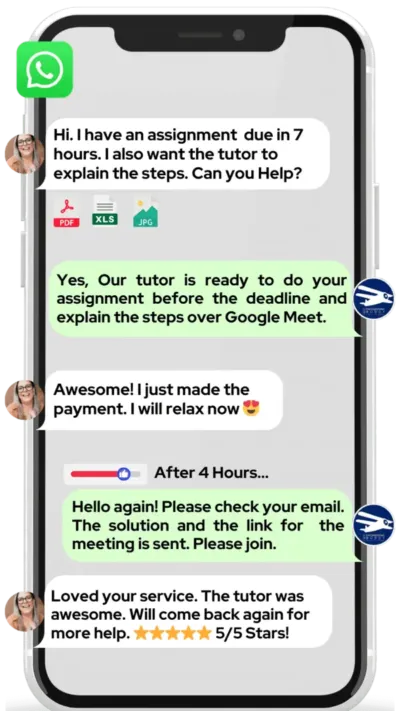
WhatsApp MEB for a quick quote — average response time under 1 minute.
Who This Biomaterials Tutoring Is For
Biomaterials draws on chemistry, biology, and engineering simultaneously. Most students hit a wall not because the subject is beyond them, but because their course moves faster than their foundational gaps allow.
- Undergraduate students in biomedical engineering, materials science, or chemistry struggling with host response, degradation mechanisms, or surface characterisation
- Masters students at institutions such as MIT, Imperial College London, ETH Zurich, Johns Hopkins, or the University of Toronto working through thesis research on scaffold fabrication or drug-eluting devices
- PhD candidates needing a structured sounding board for biocompatibility experimental design or literature framing
- Students with a university conditional offer depending on passing this module — and a resit in six weeks
- Students whose confidence has dropped after a poor mid-term on polymer mechanics or cytotoxicity assay interpretation
- Parents supporting a first or second-year undergraduate through a demanding biomedical engineering programme
1:1 Tutoring vs Self-Study vs AI Tools
Self-study works for motivated students — but without feedback, you can rehearse the wrong interpretation of a cytotoxicity result or misapply degradation kinetics for weeks without realising it. AI tools answer questions quickly and can explain a concept at three in the morning, but they cannot watch you work through a scaffold porosity calculation, catch the moment you misread a stress-strain curve, or adjust the session in real time when you’re stuck on surface energy and biocompatibility simultaneously. In Biomaterials specifically, the gap between understanding a concept in isolation and applying it across material selection, biological response, and regulatory context is where most students drop marks — and that gap requires a live, expert eye. MEB combines the flexibility of online access with the structured feedback loop that self-study and AI simply cannot replicate for a subject this layered.
Outcomes: What You’ll Be Able To Do in Biomaterials
After working with an MEB Biomaterials tutor, you will be able to solve material selection problems using biocompatibility and mechanical property criteria, analyze host immune response data from in vitro cytotoxicity assays, model degradation profiles for biodegradable polymers like PLGA in physiological conditions, explain surface modification strategies including plasma treatment and protein adsorption in the context of device-tissue interaction, and apply ISO 10993 testing frameworks to justify material choices in an assignment or viva setting. These are not abstract goals — they map directly to the assessments and research outputs that define performance in this subject.
Supporting a student through Biomaterials? MEB works directly with parents to set up sessions, track progress, and keep coursework on schedule. WhatsApp MEB — average response time is under a minute, 24/7.
Based on feedback from 40,000+ sessions collected by MEB from 2022 to 2025, 58% of students improved by one full grade after approximately 20 hours of 1:1 tutoring in a single subject. A further 23% achieved at least a half-grade improvement.
Source: MEB session feedback data, 2022–2025.
What We Cover in Biomaterials (Syllabus / Topics)

Track 1: Materials Science Foundations for Biological Applications
- Polymer chemistry: structure, synthesis, and degradation mechanisms (PLGA, PLA, PCL)
- Metallic biomaterials: titanium, cobalt-chrome alloys, corrosion behaviour
- Ceramics and bioactive glasses: hydroxyapatite, tricalcium phosphate, osseointegration
- Composite biomaterials: fibre-reinforced polymers, nanocomposites
- Mechanical property characterisation: tensile testing, fatigue, viscoelasticity
- Surface chemistry: wettability, contact angle, protein adsorption
Core texts for this track include Ratner et al. Biomaterials Science: An Introduction to Materials in Medicine and Buddy Ratner’s chapters on polymer properties.
Track 2: Biological Response and Biocompatibility
- Host response cascade: protein adsorption, cell adhesion, inflammation, encapsulation
- Cytotoxicity testing: ISO 10993, MTT assay, live/dead staining interpretation
- Immune response to implants: macrophage polarisation, foreign body reaction
- Blood-material interactions: haemocompatibility, thrombogenicity, complement activation
- In vitro vs in vivo testing models: selection criteria and limitations
- Regulatory pathways for medical devices: FDA 510(k), CE marking frameworks
Key references include Williams’ Definitions in Biomaterials and ISO 10993 series documentation for testing standards.
Track 3: Tissue Engineering and Clinical Translation
- Scaffold design principles: porosity, interconnectivity, pore size for cell ingrowth
- Fabrication techniques: electrospinning, 3D bioprinting, freeze-drying
- Hydrogels: crosslinking mechanisms, swelling behaviour, cell encapsulation
- Growth factor incorporation and controlled release from scaffolds
- Stem cell-biomaterial interactions: differentiation cues from matrix stiffness
- Case studies: bone graft substitutes, vascular grafts, cardiac patches
- Translation barriers: scale-up, sterilisation, shelf life, clinical trial design
Recommended texts include Langer and Vacanti’s foundational tissue engineering papers and Atala et al. Principles of Regenerative Medicine.
At MEB, we’ve found that students who struggle with biocompatibility testing aren’t usually confused about biology or chemistry in isolation — they haven’t seen how those two frameworks are supposed to talk to each other in a single experimental question. One session spent walking through a real assay dataset tends to fix that faster than three lectures.
What a Typical Biomaterials Session Looks Like
The tutor opens by revisiting the previous topic — often surface modification or degradation kinetics — checking what stuck and what didn’t before moving on. From there, the session moves into the current problem area: the student and tutor work through a scaffold porosity calculation or a cytotoxicity assay interpretation on screen, with the tutor annotating step-by-step using a digital pen-pad so the reasoning is visible, not just the answer. The student then replicates the approach or is asked to explain the logic back in their own words — this is where real understanding gets tested. The session closes with a concrete practice task, usually a past exam question or a specific homework problem, and the next topic is noted so the following session starts with a clear target.
How MEB Tutors Help You with Biomaterials (The Learning Loop)
Diagnose: In the first session, the tutor identifies exactly where understanding breaks down — not just which topic, but which step. A student might know polymer chemistry in principle but consistently misapply degradation rate calculations under physiological pH. That specific gap becomes the starting point.
Explain: The tutor works through problems live using a digital pen-pad or iPad with Apple Pencil. For Biomaterials, this means annotating stress-strain curves, drawing host response cascades, or walking through ISO 10993 test selection criteria in real time — not reciting definitions.
Practice: The student attempts the next problem while the tutor watches. In Biomaterials, this might mean selecting a scaffold material for a bone defect application and justifying it using mechanical and biological criteria — with the tutor present to catch errors as they happen.
Feedback: The tutor explains exactly where marks were lost and why — whether it’s a misidentified cell adhesion mechanism or an incorrectly calculated crosslink density. The correction is step-by-step, not a verdict.
Plan: At the end of each session, the tutor sets the next topic and a specific task, so there is no ambiguity about what to do before the next meeting. Progress is tracked session to session.
Sessions run over Google Meet with screen sharing and a digital pen-pad. Before your first session, share your course outline or syllabus, a recent assignment or past paper attempt you found difficult, and your exam or submission deadline. The first session uses that material as the diagnostic. Whether you need a quick catch-up before an exam, structured revision over 4–8 weeks, or ongoing weekly support through the semester, the tutor maps the session plan after the first diagnostic. Start with the $1 trial — 30 minutes of live tutoring that also serves as your first diagnostic.
Students consistently tell us that the moment things shifted for them in Biomaterials wasn’t when they read another chapter — it was the first time a tutor made them explain their own reasoning out loud and showed them exactly where it went wrong. That feedback loop is what the subject demands.
Tutor Match Criteria (How We Pick Your Tutor)
Not every tutor with a biomedical engineering degree can teach Biomaterials at depth. Here’s what MEB screens for.
Subject depth: Tutors hold postgraduate qualifications — Masters or PhD — in materials science, biomedical engineering, or a closely related discipline, with demonstrable coursework or research in biomaterials specifically. A tutor covering scaffold fabrication has worked with those systems, not just read about them.
Tools: All sessions use Google Meet with a digital pen-pad or iPad and Apple Pencil for annotation. No static slides, no passive explanation.
Time zone: MEB covers New York, Los Angeles, Chicago, London, Dubai, Toronto, Sydney, Melbourne, and all major US, UK, Gulf, Canadian, Australian, and European time zones — including evenings and weekends.
Learning style: Calibrated from the first session. Some students need conceptual grounding first; others need to work through problems immediately. The tutor adapts.
Communication: Clear English, adjusted to the student’s level — whether that’s a second-year undergraduate or a PhD candidate preparing a viva defence.
Goals: Whether the target is passing a resit, completing a dissertation chapter on hydrogel crosslinking, or achieving a first-class grade, the tutor is matched to that specific ambition.
Unlike platforms where you fill out a form and wait, MEB responds in under a minute, 24/7. Tutor match takes under an hour. The $1 trial means you test before you commit. Everything runs over WhatsApp — no logins, no intake forms.
Study Plans (Pick One That Matches Your Goal)
After the first diagnostic, the tutor builds a session sequence around your actual deadline. Students behind on scaffold design or surface characterisation ahead of an end-of-semester exam typically work through a 1–3 week catch-up focused on the highest-yield gaps. Students with an exam date 4–8 weeks out follow a structured revision plan covering all major tracks with timed practice. Ongoing weekly support aligns sessions to coursework submission dates and lecture pacing throughout the semester.
Pricing Guide
Biomaterials tutoring starts at $20/hr for standard undergraduate modules. Graduate-level work — dissertation support, research methodology, thesis chapter review — runs $40–$100/hr depending on topic complexity, tutor background, and how quickly you need to start. Rate factors include the level of the course, how niche the topic is, your timeline, and tutor availability in your time zone.
Availability contracts sharply during undergraduate exam periods in April–May and November–December. If your deadline is fixed, don’t wait.
For students targeting top graduate programmes or preparing a viva at institutions with strong biomaterials research output, tutors with active research or industry backgrounds in medical device development are available at higher rates — share your specific goal and MEB will match the tier to your ambition.
Start with the $1 trial — 30 minutes, no registration, no commitment. WhatsApp MEB for a quick quote.
FAQ
Is Biomaterials hard?
It sits at the intersection of chemistry, biology, and engineering — which means three sets of foundational knowledge need to connect simultaneously. Most students find it hard not because any single concept is impenetrable, but because courses move fast and assume fluency across all three areas at once.
How many sessions do I need?
Students with one or two specific gaps — a misunderstood degradation mechanism, a weak area in cytotoxicity testing — typically see results in 3–5 sessions. Full semester support or dissertation-level depth usually runs 10–20 sessions spread over several weeks.
Can you help with homework and assignments?
Yes — MEB tutors explain the concepts and methods behind your assignment questions so you can work through them yourself and submit your own work. MEB tutoring is guided learning — you understand the work, then submit it yourself. For full details on what we help with and what we don’t, read our Academic Integrity policy and Why MEB.
Will the tutor match my exact syllabus or exam board?
Yes. Before the first session, share your course outline, module handbook, or university department details. The tutor reviews the specific syllabus — whether it’s a US research university course, a UK MEng module, or a Canadian biomedical engineering programme — and structures sessions around what your assessment actually requires.
What happens in the first session?
The tutor runs a short diagnostic — reviewing a recent assignment, past paper attempt, or course section you flagged as difficult. From that, a session plan is built. You don’t spend the first hour doing introductions; you spend it identifying exactly where to focus.
Is online tutoring as effective as in-person?
For Biomaterials, yes — the digital pen-pad replicates whiteboard annotation, and screen sharing allows the tutor to work through data tables, diagrams, and calculations in real time. Most students report the focused 1:1 format online is more productive than in-person group study.
Can I get Biomaterials help at short notice or late at night?
MEB operates 24/7. WhatsApp response time averages under a minute. Tutor matching typically takes under an hour. If you have an assignment due at 9am and it’s midnight, message MEB now — availability in urgent slots is not guaranteed but is often possible.
What if I don’t connect with my assigned tutor?
Say so. MEB rematch requests are handled without friction — message via WhatsApp, describe what isn’t working, and a different tutor is assigned. The $1 trial exists precisely so this isn’t a costly decision to discover.
Do you cover niche Biomaterials topics like bioprinting or regulatory science?
Yes — MEB has tutors covering 3D bioprinting, electrospinning, FDA regulatory pathways, ISO 10993 testing frameworks, and nanocomposite scaffold design. Share your specific topic when you message and MEB will confirm tutor availability before you commit.
How do I get started?
Message MEB on WhatsApp, share your subject and current situation, and get matched with a tutor — usually within the hour. The $1 trial covers 30 minutes of live tutoring or one homework question explained in full. No registration. No commitment until you decide to continue.
Trust & Quality at My Engineering Buddy
Every MEB tutor goes through subject-specific screening before taking a session. That means a live demo evaluation, a review of their academic and professional background, and ongoing feedback monitoring after sessions begin. Tutors covering Biomaterials hold postgraduate qualifications in materials science, biomedical engineering, or related disciplines — and many have active or recent research experience in scaffold fabrication, biocompatibility testing, or medical device development. Rated 4.8/5 across 40,000+ verified reviews on Google.
MEB tutoring is guided learning — you understand the work, then submit it yourself. For full details on what we help with and what we don’t, read our Academic Integrity policy. We guide — you submit your own work. Read more about our approach at MEB’s tutoring methodology.
MEB has served 52,000+ students in the US, UK, Canada, Australia, the Gulf, and Europe across 2,800+ subjects since 2008. If you need support in a related area alongside Biomaterials, MEB covers drug delivery tutoring, biomolecular engineering help, and nanotechnology tutoring — all at the same standard.
Our experience across thousands of sessions shows that students who stay with a single tutor for a full module — rather than switching between sources — retain the material differently. Consistency in the feedback loop is what builds the kind of understanding that holds under exam pressure.
Explore Related Subjects
Students studying Biomaterials often also need support in:
- Biomedical Science
- Biomechanics
- Cellular Engineering
- Biotechnology
- Biosensors
- Systems Biology
- Computational Biology
Next Steps
Getting started takes under two minutes. Here’s what to do:
- Share your course level, the topics giving you the most trouble, and your current deadline or exam date
- Share your availability and time zone — MEB covers all major US, UK, Gulf, Canadian, Australian, and European time zones
- MEB matches you with a verified Biomaterials tutor, usually within 24 hours — often faster
Before your first session, have ready: your course outline or module handbook, a recent assignment or past paper attempt you struggled with, and your exam or deadline date. The tutor handles the rest.
Visit www.myengineeringbuddy.com to learn more about how MEB works.
WhatsApp to get started or email [email protected].
Try your first session for $1 — 30 minutes of live 1:1 tutoring or one homework question explained in full. No registration. No commitment. WhatsApp MEB now and get matched within the hour.
52,000+ Happy Students From Various Universities





Reviewed by Subject Expert
This page has been carefully reviewed and validated by our subject expert to ensure accuracy and relevance.
