

Hire Verified & Experienced
Cosmology Tutors
Email: [email protected]
4.8/5 40K+ session ratings collected on the MEB platform



Hire The Best Cosmology Tutor
Top Tutors, Top Grades. Without The Stress!


Most students who struggle with cosmology don’t have a physics gap — they have a scale gap. The universe is 93 billion light-years wide and their textbook gives them two pages on dark matter.
Cosmology Tutor Online
Cosmology is the scientific study of the origin, structure, evolution, and ultimate fate of the universe. It draws on general relativity, quantum mechanics, and observational astronomy to model phenomena including the Big Bang, dark matter, dark energy, and large-scale structure formation.
MEB connects you with a qualified cosmology tutor online — someone who has worked through Friedmann equations, CMB power spectra, and nucleosynthesis, not just watched a documentary about it. Whether you’re an undergraduate wrestling with metric tensors or a graduate student prepping a thesis chapter, our physics tutoring platform matches you with a tutor who knows your exact syllabus. If you’ve been searching for a cosmology tutor near me and finding local options thin on the ground, online 1:1 sessions solve that immediately. One outcome you can count on: you’ll stop confusing the symptoms of not understanding with the subject being too hard.
- 1:1 online sessions tailored to your course or research programme
- Expert-verified tutors with graduate-level cosmology knowledge
- Flexible time zones — US, UK, Canada, Australia, Gulf
- Structured learning plan built after a diagnostic session
- Ethical homework and assignment guidance — you understand the work before you submit it
52,000+ students across the US, UK, Canada, Australia, and the Gulf have used MEB since 2008 — including students in Physics subjects like Cosmology, Astrophysics, and General Relativity, as well as those taking Particle Physics and Quantum Mechanics alongside their cosmology coursework.
Source: My Engineering Buddy, 2008–2025.
How Much Does a Cosmology Tutor Cost?
Most cosmology tutoring sessions run $20–$40/hr. Graduate-level topics — tensor calculus, inflationary models, gravitational wave theory — can reach $70–$100/hr depending on the tutor’s research background. The $1 trial gets you 30 minutes of live 1:1 tutoring or a full explanation of one homework question, flat.
| Level / Need | Typical Rate | What’s Included |
|---|---|---|
| Undergraduate cosmology | $20–$40/hr | 1:1 sessions, homework guidance |
| Graduate / research level | $40–$100/hr | Expert tutor, thesis-level depth |
| $1 Trial | $1 flat | 30 min live session or 1 homework question |
Tutor availability tightens significantly in the weeks before end-of-semester exams and thesis submission deadlines. Book early if your timeline is fixed.
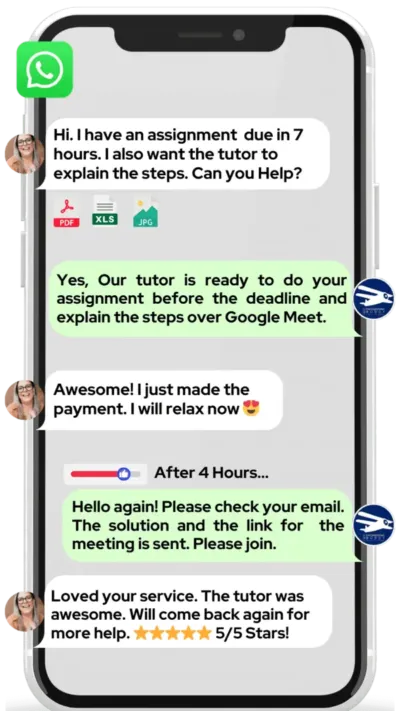
WhatsApp MEB for a quick quote — average response time under 1 minute.
Who This Cosmology Tutoring Is For
Cosmology sits at the intersection of the very large and the very abstract. Students who struggle here usually aren’t weak at physics — they’re dealing with unfamiliar mathematical frameworks (Riemannian geometry, Boltzmann equations) applied to phenomena no one has ever directly observed. If that sounds familiar, this is for you.
- Undergraduate students in physics, astronomy, or astrophysics taking a dedicated cosmology module
- Graduate students preparing for qualifying exams that include cosmology or writing thesis chapters on structure formation, dark matter models, or the CMB
- Students with a university conditional offer depending on this grade — cosmology is increasingly a filter subject at research-intensive programmes
- Students 4–6 weeks from an exam with significant gaps still to close in topics like inflation, nucleosynthesis, or the Friedmann equations
- Students in adjacent courses — astrophysics tutoring, general relativity help — who need cosmology support alongside their main subject
- Parents supporting a student through a rigorous physics degree at institutions like MIT, Caltech, Cambridge, Oxford, ETH Zurich, or the University of Toronto
Try the $1 trial first — it’s a 30-minute session that also acts as your diagnostic.
1:1 Tutoring vs Self-Study vs AI vs YouTube vs Online Courses
Self-study works if you already have strong mathematical intuition and just need to fill gaps — most cosmology students don’t fit that description at first. AI tools explain the Friedmann equation quickly but can’t tell you why your derivation went wrong on line four. YouTube is excellent for visualising the expanding universe but stops when you hit a tensor identity you’ve never seen. Online courses give you structure but run at a fixed pace, with no one to catch errors in your working. A 1:1 online cosmology tutor from MEB works through your specific problem set, on your timeline, correcting misconceptions before they compound into exam failures. Cosmology builds on itself fast — a shaky foundation in FLRW metrics makes everything from dark energy to baryon acoustic oscillations harder than it needs to be.
Outcomes: What You’ll Be Able To Do in Cosmology
After working with an MEB cosmology tutor, you’ll be able to derive and apply the Friedmann equations to model an expanding universe, analyse the CMB power spectrum and explain what each peak tells us about early-universe physics, solve problems involving nucleosynthesis timescales and particle freeze-out, apply the concepts of dark matter and dark energy to observed galactic rotation curves and supernova data, and write coherently about the inflationary paradigm and its observational predictions. These aren’t generic physics skills. They’re the specific capabilities your examiner or thesis supervisor is looking for.
Supporting a student through Cosmology? MEB works directly with parents to set up sessions, track progress, and keep coursework on schedule. WhatsApp MEB — average response time is under a minute, 24/7.
Based on feedback from 40,000+ sessions collected by MEB from 2022 to 2025, 58% of students improved by one full grade after approximately 20 hours of 1:1 tutoring in subjects like Cosmology. A further 23% achieved at least a half-grade improvement.
Source: MEB session feedback data, 2022–2025.
What We Cover in Cosmology (Syllabus / Topics)

Track 1: Foundations — Relativity, Geometry, and the Standard Model of Cosmology
- Special and general relativity as applied to cosmological spacetimes
- The FLRW metric and its derivation from the cosmological principle
- Friedmann equations: derivation, solutions, and physical interpretation
- Equation of state for matter, radiation, and dark energy
- Hubble’s Law, the Hubble constant, and observational measurements (Planck, HST)
- Cosmic redshift and its relationship to scale factor evolution
- Horizons: particle horizon, event horizon, and Hubble radius
Key texts: Ryden’s Introduction to Cosmology; Kolb & Turner’s The Early Universe; Liddle’s An Introduction to Modern Cosmology.
Track 2: Early Universe — Thermal History, Nucleosynthesis, and Inflation
- Thermal equilibrium in the early universe and the concept of freeze-out
- Big Bang Nucleosynthesis (BBN): helium abundance predictions and observations
- Recombination, decoupling, and the origin of the CMB
- The horizon problem and flatness problem — motivating inflation
- Inflationary models: slow-roll inflation, the inflaton field, and observational signatures
- Reheating and the transition to radiation domination
- Baryogenesis and the matter-antimatter asymmetry
Key texts: Baumann’s Cosmology (Cambridge); Weinberg’s Cosmology; Mukhanov’s Physical Foundations of Cosmology.
Track 3: Structure Formation, Dark Matter, Dark Energy, and the CMB
- Linear perturbation theory and the growth of density fluctuations
- Transfer function, matter power spectrum, and large-scale structure
- Baryon Acoustic Oscillations (BAO) as a standard ruler
- CMB anisotropies: Sachs-Wolfe effect, acoustic peaks, and polarisation
- Dark matter candidates: WIMPs, axions, and observational constraints
- Dark energy models: cosmological constant vs dynamical quintessence
- Gravitational lensing as a probe of mass distribution
Key texts: Dodelson’s Modern Cosmology; Peebles’ Physical Cosmology; Peacock’s Cosmological Physics.
At MEB, we’ve found that cosmology students who struggle most aren’t confused by the physics — they’re uncomfortable with the mathematical scaffolding underneath it. Once a tutor works through the tensor notation and coordinate conventions explicitly, the physical content clicks much faster than students expect.
What a Typical Cosmology Session Looks Like
The tutor opens by checking the previous session’s topic — say, the derivation of the Friedmann equations — and asking you to walk through one step before moving forward. From there, you and the tutor work through new material on screen: the tutor uses a digital pen-pad to annotate the FLRW metric live, showing exactly where each term comes from. If you’re working on perturbation theory or CMB power spectra, the tutor sets a problem, watches you attempt it, and corrects the specific line where the reasoning breaks down — not just the final answer. The session closes with a concrete task: re-derive the result independently, or attempt a past-paper question on nucleosynthesis timescales, with the next session’s topic already noted. Get quantum mechanics help in the same format if that’s where your gaps start.
How MEB Tutors Help You with Cosmology (The Learning Loop)
Diagnose: In the first session, the tutor identifies whether your difficulties sit in the mathematical prerequisites (tensor calculus, differential equations), the physical concepts (inflation, freeze-out), or the ability to connect formalism to observable predictions. These are three very different problems and they need different fixes.
Explain: The tutor works through problems live using a digital pen-pad or iPad with Apple Pencil, showing every step of a derivation — not just writing the result. You see the reasoning, not the shortcut.
Practice: You attempt a problem with the tutor present. This is where most students discover their actual gap — not where they thought it was.
Feedback: The tutor goes through your working step by step, identifies the exact point of error, and explains why that error costs marks. Vague corrections don’t happen here.
Plan: After each session, the tutor notes what’s solid, what needs a second pass, and which topic comes next. You’re never left guessing what to do before the next session.
Sessions run on Google Meet. Before your first session, have your course syllabus or reading list ready, along with a recent problem set or past-paper question you couldn’t finish. The first session covers the diagnostic and starts the first content topic in the same hour. Start with the $1 trial — 30 minutes of live tutoring that also serves as your first diagnostic. Whether you need a quick catch-up before an exam, structured revision over 4–8 weeks, or ongoing weekly support through the semester, the tutor maps the session plan after that first hour.
Students consistently tell us that the first session in cosmology is often the most useful thing they’ve done all semester — not because we cover the most ground, but because the tutor identifies the one or two misunderstandings that have been blocking everything else.
Tutor Match Criteria (How We Pick Your Tutor)
Not every physics tutor is a cosmology tutor. MEB’s matching process checks four things before confirming a match.
Subject depth: The tutor must have graduate-level exposure to cosmology — coursework, research, or teaching — not just a general physics background. For thesis-level support, MEB looks for tutors with research experience in your specific area, whether that’s CMB analysis, structure formation, or dark matter phenomenology. Find particle physics tutoring through the same rigorous match process if your work spans both fields.
Tools: Every tutor works on Google Meet with a digital pen-pad or iPad and Apple Pencil. No whiteboard photos, no screen-shares of PDFs with no annotation.
Time zone: Matched to your region — US, UK, Gulf, Canada, Australia — so you’re not scheduling sessions at 2am.
Goals: Exam scores, conceptual depth, homework completion, or thesis support all require different session structures. The tutor is briefed on yours before session one.
Unlike platforms where you fill out a form and wait, MEB responds in under a minute, 24/7. Tutor match takes under an hour. The $1 trial means you test before you commit. Everything runs over WhatsApp — no logins, no intake forms.
Study Plans (Pick One That Matches Your Goal)
For students with a fixed exam or submission date, the tutor builds a specific sequence after the diagnostic. A catch-up plan over 1–3 weeks focuses on the highest-yield gaps — typically the Friedmann equations, nucleosynthesis, and CMB basics. An exam prep plan over 4–8 weeks works through the full syllabus systematically with past-paper practice built in. Ongoing weekly support is structured around your semester schedule and coursework deadlines, keeping you ahead of each new topic rather than catching up after lectures.
Pricing Guide
MEB cosmology tutoring runs $20–$40/hr for most undergraduate modules. Graduate and research-level work — tensor perturbation theory, Boltzmann hierarchy, gravitational wave backgrounds — is priced at $40–$100/hr depending on tutor specialisation and topic complexity. Rate factors include your level, the specificity of the topic, your timeline, and tutor availability.
For students targeting research programmes at institutions like Princeton, Imperial College London, the University of Chicago, or ETH Zurich, tutors with active research backgrounds in observational or theoretical cosmology are available at higher rates — share your specific goal and MEB will match the tier to your ambition.
Availability tightens sharply in the four weeks before end-of-semester exams. If your deadline is fixed, book sooner rather than later.
Start with the $1 trial — 30 minutes, no registration, no commitment. WhatsApp MEB for a quick quote.
FAQ
Is cosmology hard?
Yes — honestly. Cosmology requires comfort with general relativity, thermodynamics, and statistical mechanics simultaneously. Most students find the mathematics harder than the concepts. With a tutor who can address both layers, the difficulty drops noticeably within a few sessions.
How many sessions are needed?
Most students making a targeted grade push need 10–20 hours. Thesis-level support typically runs longer and is ongoing. The diagnostic session gives the tutor enough information to estimate a realistic number for your specific situation.
Can you help with homework and assignments?
MEB tutoring is guided learning — you understand the work, then submit it yourself. The tutor explains the method, works through a similar example, and you complete the assignment independently. See our Academic Integrity policy and Why MEB page for full details on what we help with and what we don’t.
Will the tutor match my exact syllabus or exam board?
Yes. Before matching, MEB checks your course outline, institution, and exam format. Cosmology syllabi vary significantly between universities — what Imperial covers in year three differs from what a US research university assigns in a graduate seminar. Your tutor is matched to your specific version.
What happens in the first session?
The tutor runs a diagnostic — asking you to work through a problem or explain a concept — to locate exactly where your understanding breaks down. The second half of the session addresses one of those gaps directly. You leave with a clear picture of what to work on next.
Is online tutoring as effective as in-person?
For cosmology, yes. The work is mathematical, screen-based, and annotation-heavy — all of which translate well to Google Meet with a digital pen-pad. Many students find online sessions easier to schedule and just as productive as sitting in a room with someone.
What’s the difference between cosmology and astrophysics tutoring?
Cosmology focuses on the universe as a whole — its origin, geometry, and large-scale evolution. Astronomy tutoring covers observational techniques and individual objects. Astrophysics sits between them. MEB tutors who cover cosmology typically cover all three, and many students need support across at least two of these areas simultaneously.
Do you cover observational cosmology and data from missions like Planck or JWST?
Yes. MEB tutors can work through CMB power spectrum data from the Planck mission, galaxy survey analysis, and interpretation of results from JWST and other observational programmes. If your course or research involves working with real datasets, flag that when you make contact.
Can I get cosmology help at midnight?
Yes. MEB operates 24/7 across time zones. WhatsApp a message at any hour and you’ll get a response within minutes. Session scheduling depends on tutor availability, but initial contact and matching happen around the clock.
What if I don’t like my assigned tutor?
Tell MEB via WhatsApp. Tutor changes happen quickly — usually within the same day. The $1 trial is specifically designed so you can assess the fit before committing to a full block of sessions.
How do I get started?
WhatsApp MEB, share your subject, level, and exam or deadline date. MEB matches you with a verified cosmology tutor — usually within an hour. Start with the $1 trial: 30 minutes of live tutoring or one question explained in full. No registration required.
Do you help with the mathematical prerequisites for cosmology — like differential geometry or tensor calculus?
Yes. Many cosmology students need to shore up their mathematical foundations before the physics makes sense. MEB tutors can run sessions specifically on Riemannian geometry, covariant derivatives, and index notation — the tools cosmology uses constantly but rarely teaches from scratch. Get classical mechanics tutoring or special relativity help to build those foundations systematically.
Trust & Quality at My Engineering Buddy
Every MEB tutor goes through subject-specific vetting — not a generic background check. For cosmology, that means verifying graduate-level coursework or research experience, running a live demo session, and reviewing ongoing student feedback after every session block. Tutors without demonstrated depth in the specific sub-areas of cosmology (not just physics broadly) are not matched to cosmology students. Rated 4.8/5 across 40,000+ verified reviews on Google.
MEB tutoring is guided learning — you understand the work, then submit it yourself. For full details on what we help with and what we don’t, read our Academic Integrity policy and Why MEB.
MEB has served 52,000+ students across the US, UK, Canada, Australia, the Gulf, and Europe since 2008 — across 2,800+ subjects. In Physics specifically, that includes students working on quantum field theory tutoring, statistical mechanics help, and nuclear physics tutoring alongside cosmology. The platform has operated continuously since 2008 — 18 years of subject-specific expertise, not a recent pivot from a generic homework site. Read more about our approach at MEB’s tutoring methodology.
Our experience across thousands of sessions shows that students who share their syllabus and a recent problem attempt before session one get through the diagnostic faster and start making real progress in the first 30 minutes rather than the second hour.
Explore Related Subjects
Students studying Cosmology often also need support in:
- Galactic and Space Dynamics
- Orbital and Celestial Mechanics
- Modern Physics
- Plasma Physics
- Thermal Physics
- Computational Physics
- Waves and Optics
Next Steps
Getting started takes about two minutes.
- Share your exam board or course outline, your hardest topic, and your current timeline
- Share your availability and time zone
- MEB matches you with a verified cosmology tutor — usually within 24 hours
- First session starts with a diagnostic so every minute is used well
Before your first session, have ready:
- Your course syllabus or reading list (or the name of your university module)
- A recent problem set or past-paper question you struggled with
- Your exam date or thesis submission deadline — the tutor handles the rest
Visit www.myengineeringbuddy.com for more on how MEB works.
WhatsApp to get started or email [email protected].
Try your first session for $1 — 30 minutes of live 1:1 tutoring or one homework question explained in full. No registration. No commitment. WhatsApp MEB now and get matched within the hour.
52,000+ Happy Students From Various Universities



How Much For Private 1:1 Tutoring & Hw Help?
Private 1:1 Tutoring and HW help Cost $20 – 35 per hour* on average.
Reviewed by Subject Expert
This page has been carefully reviewed and validated by our subject expert to ensure accuracy and relevance.

